Transport
Nigeria may reintroduce Cargo Tracking Note to stem rising insecurity.

Amaechi has therefore directed the Nigerian Shippers’ Council(NSC), the implementing agency, to commence preparation to undertake the responsibility of administering CTN as it takes off.
The Cargo Tracking Note (CTN) or the ECTN (Electronic Cargo Tracking Note), is a system for collecting documents and processing information, when exporting by sea in order to obtain prior information, to participate in security measures, statistics, and generally in order to participate in the World Trade Organization (WTO) and the World Customs Organization (WCO) recommendations on trade facilitation and security.
Shippers’ Council has been encouraged to introduce the system in a way that shouldn’t add to the cost of doing business at the ports, but enable the nation to track imports from ports of origin to drastically reduce import of arms.
Recall that in 2017 alone, 2671 pump-action rifles were intercepted at Nigerian seaports. The guns were legally registered for export in Turkey as pump-action rifles for hunting but the manifests were changed in Morocco to become steel doors to enable the container gain entry into Nigeria.
With CTN, however, Nigeria would have been able to see the original manifests from Turkey and intercept the guns before the consignments arrived in Nigeria.
Twenty-four African countries presently use CTN and these nations include; Angola, Benin Republic, Burkina Faso, Burundi, Cameroon, Central African Republic, Chad, Congo, Democratic Republic Congo, Equatorial Guinea, Gabon, Ghana and Guinea.
Others include; Guinea-Bissau, Ivory Coast, Liberia, Libya, Madagascar, Mali, Niger, Senegal, Sierra Leone, South Sudan and Togo.
Although CTN has had two stints at Nigerian ports previously, under the administration of Nigerian Ports Authority (NPA) and later NSC, Nigeria would have to prequalify the possible companies via a bidding process.
Speaking on the reintroduction of CTN, a maritime lawyer, technocrat and Director of Education and Research in the Council for the Regulation of Freight Forwarding in Nigeria (CRFFN), Dr. Alban Igwe said CTN remains the best answer to issues of anomalies and security challenges in the country.
Igwe explained that this was because CTN will improve the security and safety of the supply chain as it will profile cargoes being imported into the country.
“The objective is to improve the security and safety of the supply chain and help us see the profile of products we are bringing in. It will help us know the origin and destination of cargoes and help us know our enemies,” he said.
Besides insecurity, CTN has also been described as the best platform in checking revenue leakages in imports as well as obtaining information about the content of the cargoes.
CTN will address situations in which importers under-invoice their goods from the suppliers at the point of purchases to pay less duties. The platform will check the trend to ensure manifests are not tampered with by ships for the purpose of cheating on GT.
The Executive Secretary, NSC, Barrister Hassan Bello, whose Council is to handle CTN describes it as “another instrument that will add tremendously in shipping development”.
According to Bello, “It will boost the revenue of the government in customs revenue collection in the sense that it will abate under – declaration and concealment. It will boost the revenue of NPA because there will be no more alteration of the manifests. It will boost the revenue of NIMASA because under – declaration on the weight of ships will not be there any longer.
CTN is also a veritable source of data and some economic experts describe this as the best quality of the electronic based platform.
“You will know everything that is coming into your country. We have had many African countries having this because it is the initiation of the Union of African Shippers Council (UASC),” the NSC boss said about CTN last year

Headlines
NRC joins global community to celebrate customers’ loyalty
Funso OLOJO, Editor
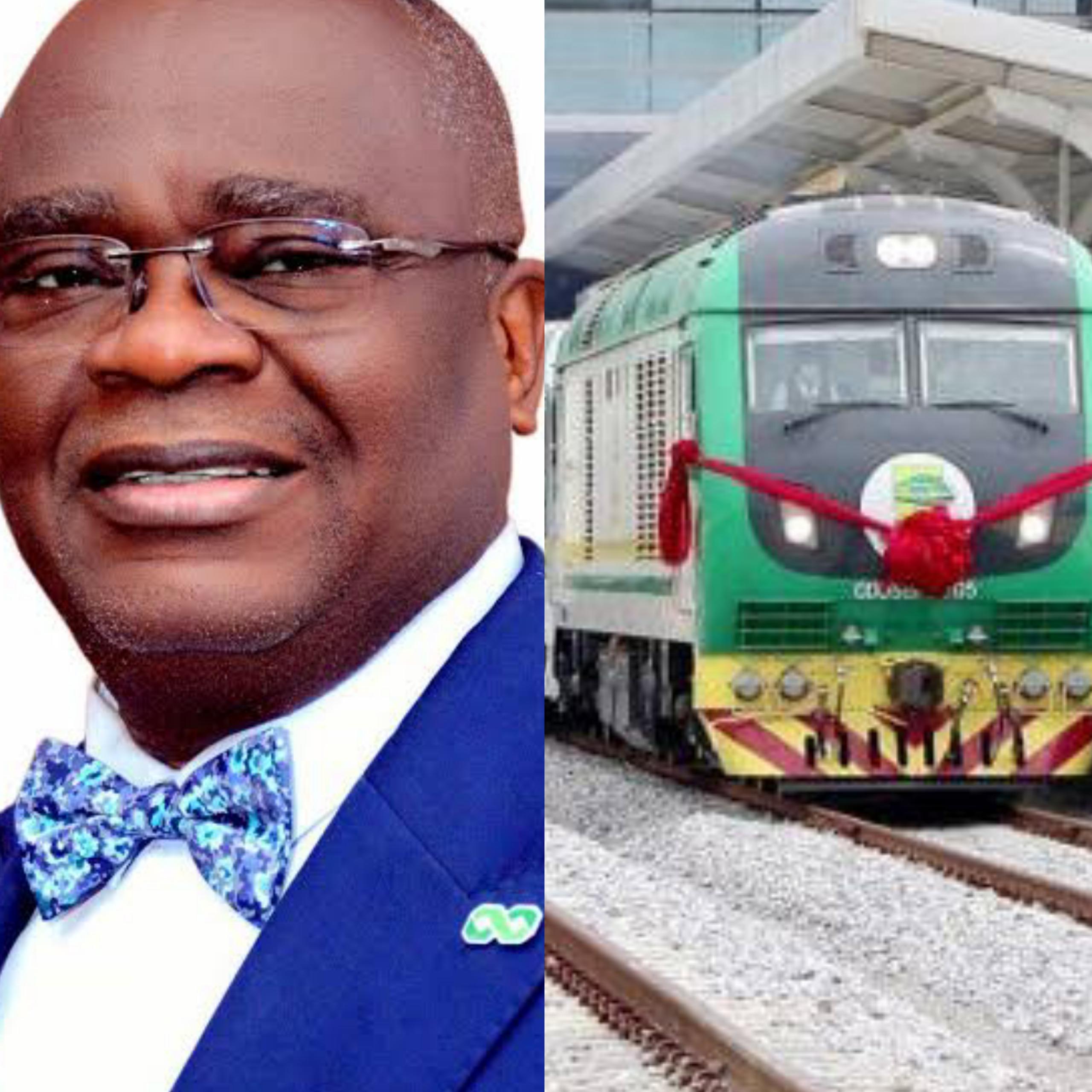
For the first time in its 128 years of existence, the Nigerian Railway Corporation(NRC) joins the global community to commemorate 2026 Customer Service Week from October 5 to 9, with a renewed commitment to putting passengers at the centre of its operations.
The week, being celebrated under the theme, “The Extra Mile,” marks a significant milestone for the 128-year-old Corporation, which is observing Customer Service Week for the first time in its history.
For the NRC, the celebration goes beyond appreciating its passengers. It is also an opportunity to recognise employees who have demonstrated exceptional commitment to service delivery while reinforcing a culture of customer-centricity across the Corporation.
The initiative is in line with the vision of the Managing Director of the NRC, Dr. Kayode Opeifa, who has consistently emphasised the need to place passengers at the heart of the Corporation’s operations and improve their overall travel experience.
Opeifa said the experiences of the Corporation in recent times had further underscored the importance of listening to customers and responding more effectively to their needs.
“Customers are at the heart of everything we do. Their feedback, trust and partnership challenge us to keep improving and delivering value every day.
“Customer Service Week is an opportunity to recognise that relationship and remind ourselves that great service must go beyond expectations,” he said.
According to the NRC, the theme, “The Extra Mile,” reflects the changing expectations of modern train passengers and the need for service providers to go beyond routine obligations.
Going the extra mile, the Corporation noted, could mean listening more attentively to passengers, resolving complaints more quickly, providing clearer and timely information, anticipating customer needs, simplifying processes or demonstrating empathy when it matters most.
The NRC said the commitment would apply across all its operational areas nationwide, with emphasis on providing passengers with a consistent, responsive and dependable experience regardless of where or how they interact with the Corporation.
The Corporation also pledged to strengthen its customer-feedback mechanisms and establish a closer link between passenger insights and continuous improvements in service delivery.
It said its objective was to ensure that exceptional customer service becomes an everyday practice rather than an activity reserved for Customer Service Week.
“Every interaction presents an opportunity to listen better, respond faster, show genuine care and create greater value for our customers,” the Corporation stated.
For the NRC, therefore, “The Extra Mile” is more than a theme for a week-long celebration. It represents a commitment to making every passenger interaction count and ensuring that customers enjoy a safer, more responsive and rewarding experience throughout their journey on Nigerian trains.
Headlines
Lagos govt.donates operational vehicles to NRC to boost railway security
Funso OLOJO Editor
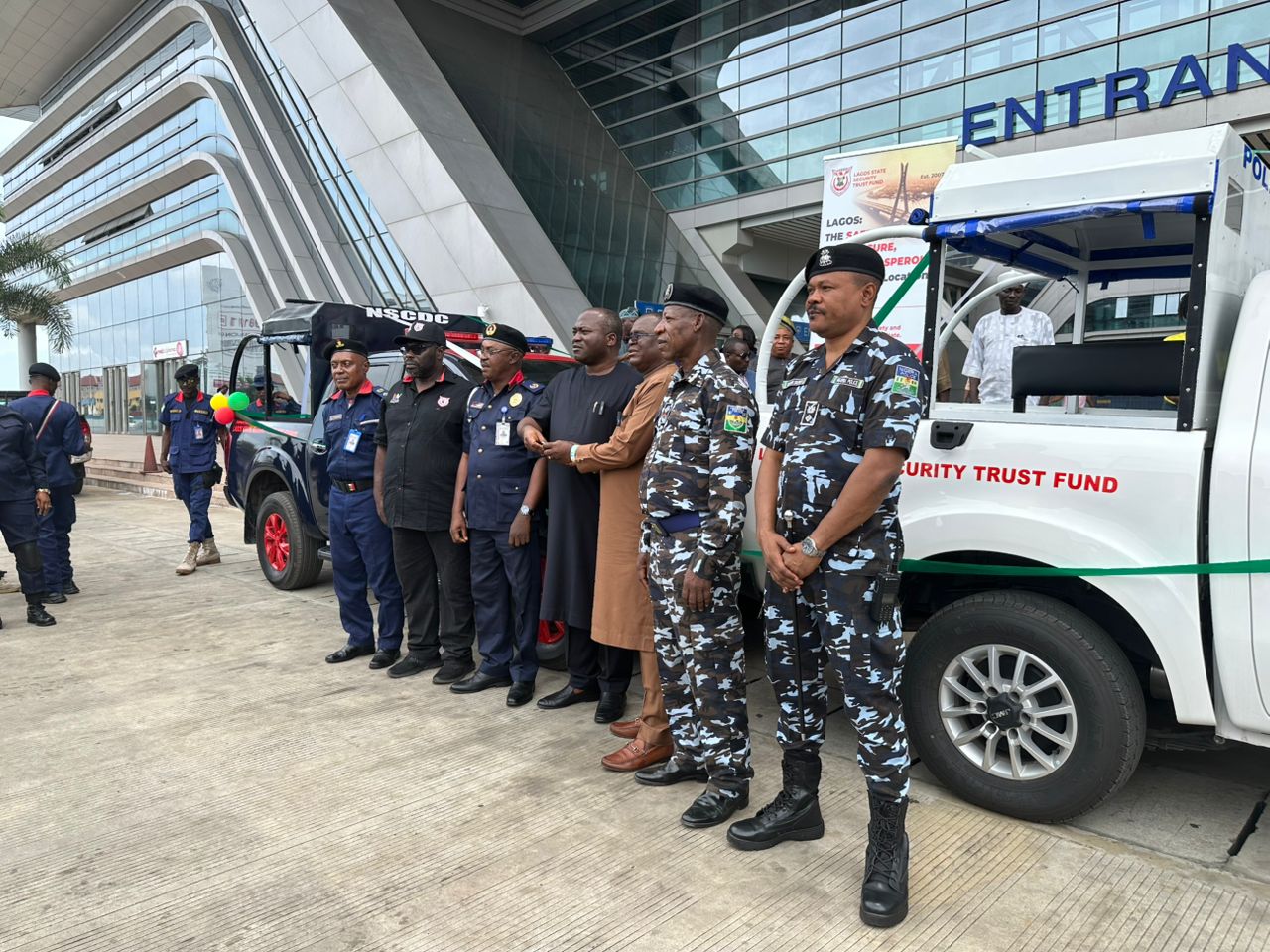
The Lagos State Government, through the Lagos State Security Trust Fund (LSSTF), has donated two operational vehicles to the Nigerian Railway Corporation (NRC) to strengthen security operations and enhance the protection of railway infrastructure and other critical national assets.
The vehicles were formally handed over to the Managing Director/Chief Executive Officer of the NRC, Dr. Kayode Opeifa, at the Mobolaji Johnson Train Station, Ebute Metta, Lagos.
Presenting the vehicles, the Executive Secretary/CEO of the LSSTF, Dr. Ayodele Ogunsan, said the intervention was part of the state government’s continued support for security agencies and institutions operating within Lagos.
Ogunsan, who was accompanied by the Administrative Secretary of the Fund, Mr. Demola Lewis, said the vehicles would enhance the capacity of security personnel attached to the railway to respond promptly to vandalism, theft and other criminal activities along the railway corridor.
He commended the ongoing transformation at the NRC under Opeifa’s leadership, saying the state government considered it necessary to provide additional support to safeguard railway infrastructure and improve operational effectiveness.
The LSSTF chief urged the Nigeria Police Railway Command and the Nigeria Security and Civil Defence Corps (NSCDC), which are expected to deploy the vehicles for railway security operations, to ensure their judicious use.
He said the Fund had a monitoring mechanism to ensure that security assets provided through its interventions were deployed strictly for the purposes for which they were donated.
According to Ogunsan, responsible utilisation of the vehicles would encourage the state government and the Fund to provide additional support whenever necessary.
Responding, Opeifa expressed appreciation to the Lagos State Government, particularly Governor Babajide Olusola Sanwo-Olu, for its continued support for the NRC and its efforts to improve railway security and operations.
He also commended the leadership and staff of the LSSTF for their commitment, partnership and sustained support towards the safety and security of the railway system in Lagos.
Opeifa said the donation would significantly strengthen the capacity of security agencies attached to the railway to protect passengers, railway infrastructure and other critical assets.
He assured the Lagos State Government and the LSSTF that the vehicles would be deployed strictly for the purposes for which they were donated.
The NRC Managing Director also appealed to other state governments, particularly the 26 states where the Corporation has operational presence, to support efforts to protect railway infrastructure.
He stressed that stronger collaboration between the NRC, state governments and security agencies would facilitate faster responses to vandalism and other criminal activities affecting railway assets.
Opeifa also made a personal donation to the LSSTF and called on NRC employees, corporate organisations and residents of Lagos to continue supporting the Fund’s efforts to enhance security across the state.
Beyond the provision of the vehicles, he disclosed that the Lagos State Government had expressed readiness to rehabilitate some roads within the railway compound and install solar-powered streetlights after the completion of the ongoing works.
He further disclosed that work was ongoing on a major storm-water drainage project designed to channel water from the railway compound towards the Mile 2 lagoon.
According to him, the drainage project, which commenced earlier in the year, has significantly improved the environment around the railway compound and helped address the perennial flooding previously experienced during heavy rainfall.
Police, NSCDC pledge responsible use
Speaking on behalf of the security agencies, the representative of the Commissioner of Police, Nigeria Police Railway Command, Deputy Commissioner of Police (DCP) Yahaya Usman, thanked the Lagos State Government and the LSSTF for the donation to the Nigeria Police Force and the NSCDC.
He assured that the vehicles would be deployed strictly for railway security operations and used responsibly to strengthen surveillance, patrol and rapid-response capabilities along the railway corridor.
The intervention further underscores the growing partnership between the NRC and the Lagos State Government in promoting safer railway operations, protecting critical infrastructure and improving the security of passengers and communities along the railway network.
Headlines
As NRC recovers ₦200m stolen railway assets, Opeifa vows diligent prosecution of suspects
— assures sustained collaboration with security agencies
Funso OLOJO, Editor
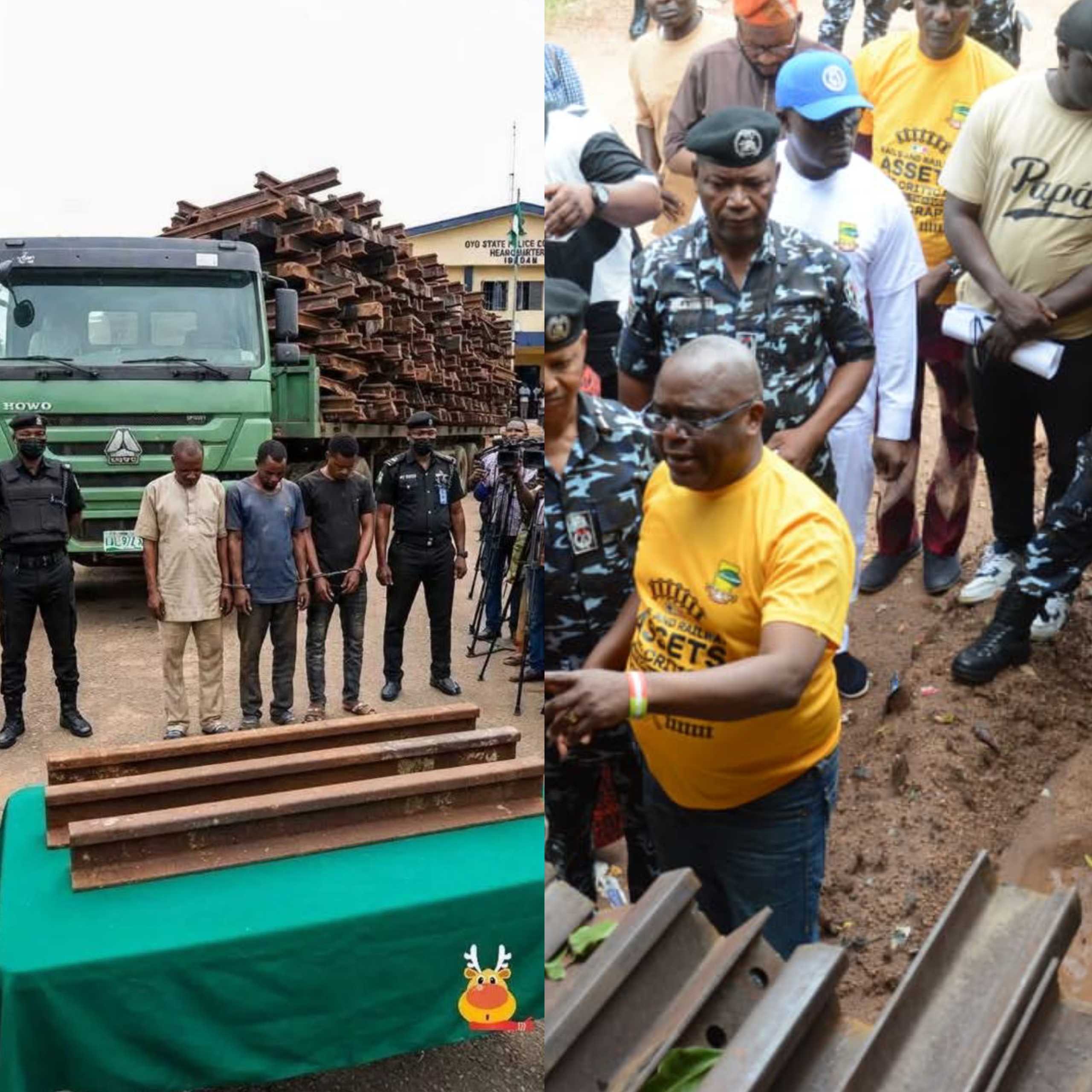
The Managing Director of the Nigerian Railway Corporation (NRC), Dr. Kayode Opeifa, has reaffirmed the Corporation’s commitment to protecting railway infrastructure through sustained collaboration with the Nigeria Police Force and other security agencies, following the recovery of stolen railway materials valued at about ₦200 million.
Dr. Opeifa gave the assurance during a courtesy visit to the Commissioner of Police, Oyo State Command, CP Olugbenga Ayodeji Abimbola, at the Command Headquarters, Eleyele, Ibadan.
The NRC boss, who was accompanied by the Commissioner of Police, Nigeria Railway Police Command, CP Lasisi Titilola, stressed that the Corporation would ensure the diligent prosecution of all suspects arrested for vandalising railway facilities to serve as a strong deterrent against future acts of sabotage.
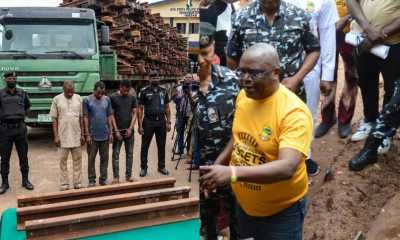
He praised the Oyo State Police Command and the Nigeria Railway Police Command for their professionalism and swift response, which led to the arrest of three suspected railway vandals and the recovery of railway materials worth approximately ₦200 million.
According to him, the suspects were apprehended during an intelligence-led operation while allegedly transporting vandalised railway materials from Niger State to Lagos.
Describing the operation as a significant breakthrough in the fight against railway vandalism, Dr. Opeifa said it underscored the effectiveness of the growing partnership between the NRC and security agencies in safeguarding critical national infrastructure.
He reiterated the Corporation’s resolve to deepen collaboration with the Police, other security agencies, state governments, host communities and relevant stakeholders to curb vandalism, theft and other criminal activities capable of disrupting railway operations across the country.
The NRC Managing Director also appealed to members of the public to support the campaign against railway vandalism by providing credible and timely information to security agencies.
“The Nigerian Railway Corporation remains committed to delivering safe, reliable and sustainable rail transportation while working closely with security agencies and other stakeholders to protect the nation’s railway infrastructure,” Dr. Opeifa said.
In his response, the Commissioner of Police, Oyo State Command, CP Olugbenga Ayodeji Abimbola, called on the National Assembly to strengthen existing laws protecting critical national infrastructure by prescribing stiffer penalties for vandals.
He warned criminals to steer clear of Oyo State, assuring that the Command would continue to track, arrest and prosecute anyone involved in the destruction or theft of public assets.
CP Abimbola disclosed that the three suspects, along with the recovered railway materials, would be handed over to the Nigeria Railway Police Command for further investigation and prosecution.

 Customs3 months ago
Customs releases final recruitment list for ASC II, ends nearly one-year wait for applicants
- Headlines3 months ago
As NRC recovers ₦200m stolen railway assets, Opeifa vows diligent prosecution of suspects
- Headlines1 month ago
Oyetola presents three-year score card as blue economy industry revenue hits ₦1.83trn
- Customs2 months ago
Apapa Customs sets new record of monthly revenue haul with ₦323bn collection in July
- Customs2 months ago
Apapa Customs sets new single-day revenue record with ₦28.1bn collection
- Customs3 months ago
Customs launches MIS file tracker at PTML in fresh digitalisation drive