Connect with us

Headlines

Feel free, unleash the talents in you

Oluwatoyin Mercy Olojo
Feel free! Love yourself! The role of self-love in truly being free cannot be overemphasized.
It goes beyond the feeling. Man! Woman! When you look in the mirror, who do you see? Do you see only your weaknesses or you can see your strengths too? Do you see just a baby-making factory, a common babysitter, just a breadwinner or you see a nurturer, husbandman, and builder of nations?
Do you see yourself as unworthy or weak? Do you see a trouble maker and gossip or a peacemaker? Do you see your filthy past or your glorious future? It is time to speak who you truly are into existence. This gradually helps you to consciously be who you should be.
You will have to accept yourself before you can have the world accept you. It’s not rocket science, you have to understand a product very well before you can successfully sell the same product to another person except you don’t mind looking silly to people.
You need to permit yourself to be the person God created you to be without apologies or fear. Be unapologetically successful. If Mary was not consecrated enough for the Savior to have come through her, He would have still been born of another virgin.
If she had given excuses to the angel Gabriel when He visited her instead of rejoicing, she might have been replaced. Luke 1:38 says that: “Mary responded, ‘I am the Lord’s servant, May everything you have said about me come true. And then the angel left her”.
If also Elizabeth had allowed strife, she would not have blessed her younger cousin, Mary as in Luke 1:42-45. Realize the power of being you. Understand your uniqueness. You are not just unique for nothing but God’s unique use. Deuteronomy 9:5-6 (KJV) says:
“Not for thy righteousness, or the uprightness of thine heart, dost thou go to possess their land: but for the wickedness of these nations, the Lord thy God doth drive them out from before thee, and that he may perform the word which the Lord sware unto thy fathers, Abraham, Isaac, and Jacob. Understand, therefore, that the Lord thy God giveth thee not this land to possess it for thy righteousness; for thou art a stiff-necked people”
This shows that even though you are special, you are highly replaceable. This is because you are not chosen. After all, you are perfect but that God should be glorified. If God has shown you a place to function, someone else was most likely meant to be there before you but failed God. Would you also do the same?
Do not let yourself shrink. Society might have relegated you to certain roles as a woman especially as a second in command. However, you choose to understand or believe that, it is imperative to note that whoever you have been called by God to be could have been given to a man if he could do it the same way you can do it.
Refuse to be in the background when you’re designed for the spotlight. Be bold to be you; Love yourself, feel free and follow your purpose. True authenticity is being truly you! Hiding in the shadows of someone else for the sake of validation is tantamount to being fake.
Understand your uniqueness and make sure it portrays and glorifies God.
Does your approach to work and relationship with people point to God’s will? Do people see you and thank God? They won’t thank God for you if you are underutilized; they won’t thank God if you shrink or hide.
Learn to differentiate humility from timidity.
Not rising to responsibility is not being humble. Not fulfilling destiny is not being humble. Wouldn’t you rather die empty?
Commitment and consistency cannot be overemphasized as instruments to being free to be you. True success is being committed to who you were created to be. Avoid distractions! Stay on God’s word, be consistent!
“And Jesus said unto him, No man, having put his hand to the plow, and looking back is fit for the kingdom of God” (Luke 9:62) KJV
There is never a time to look back. A man once said that if looking back was more important, the side mirrors and rearview mirrors of a vehicle will be bigger than its windshields.
Your future is not behind you.  It is trapped inside of you; unleash it! It is not about claiming sonship in God, it takes self-discovery. Sit down and ask yourself the value of your purpose to you and what it takes to fulfill it! To be truly free is to manifest God without any restrictions.
These are the days of His power and power is mainly reserved for people in authority. What do you exercise authority over? Are you ready to take charge of your territory for Christ?
Conclusion
The extent to which you can be convinced enough and be at liberty to be you is determined by the extent of God’s Spirit you carry. The Holy Spirit convinces, teaches, and guides you as well as encourages you in the Lord. God’s Spirit in you enables you to do the mind of God; to love as God loves, forgive as He does, and be kind to all mankind.
These are not the days of Esther, Deborah, Mary, or Hannah; these are your days and my days. Unfortunately, our time here on earth is limited and is a strong determinant of our place in eternity. Pending when you discover your place, be free to fit into God’s general purpose for mankind which is to bring Glory to Him, witnessing His love to all mankind.
You can’t be too old to make Heaven. You can only be too old to make an impact or to be who you were created to be. Begin now and regain the freedom to be you as to when you were a child!
Toyin, a motivational speaker, lives in Lagos


Continue Reading
Click to comment

Leave a Reply

Your email address will not be published. Required fields are marked *

Headlines

Oyetola presents three-year score card as blue economy industry revenue hits ₦1.83trn

Funso OLOJO,  Editor

The Minister of Marine and Blue Economy, Adegboyega Oyetola, has declared that Nigeria’s maritime sector has undergone a far-reaching transformation in the three years since President Bola Ahmed Tinubu created the Federal Ministry of Marine and Blue Economy in August 2023.

Oyetola, while presenting the Ministry’s three-year scorecard, said the administration had made significant progress in unlocking the economic potential of Nigeria’s 853-kilometre coastline and extensive inland waterways, with the marine and blue economy increasingly emerging as a major driver of revenue, trade, security and employment.

According to him, the reform programme has produced measurable gains in revenue generation, port infrastructure, maritime security, regulation, indigenous shipping, human-capital development, fisheries and inland-waterway safety.

“At the heart of our mandate is a simple but powerful objective: to turn Nigeria’s vast marine resources into sustainable economic value for Nigerians,” Oyetola said.

Revenue climbs 160 per cent

The Minister identified revenue growth as one of the clearest indicators of the sector’s transformation.

Agencies under the Ministry generated ₦1.83 trillion in 2025, representing a 160 per cent increase over the ₦700.79 billion recorded in 2023.

Oyetola attributed the surge to regulatory reforms, stronger revenue assurance, digitisation and the systematic closure of financial leakages.

He said the improved revenue performance was part of a broader strategy to establish a more transparent, efficient and investment-friendly maritime economy.

Nigeria gets first blue economy policy

A major milestone of the reform programme, according to Oyetola, was the approval in May 2025 of Nigeria’s first National Policy on Marine and Blue Economy.

He said the policy provided, for the first time, a unified framework for developing shipping, fisheries, offshore energy, marine biotechnology and other emerging opportunities within the marine economy.

“This policy gives us a clear roadmap. It provides the predictability and transparency investors need while ensuring that our marine resources are developed sustainably,” he said.

The Minister said the policy would guide government intervention while providing greater certainty for private-sector investment across the marine and blue economy value chain.

Ports undergo major transformation

Port modernisation, Oyetola said, remained at the centre of the Ministry’s transformation agenda.

He said the Federal Government was implementing a comprehensive programme to upgrade major seaports, including Apapa, Tin Can Island, Onne, Rivers, Calabar and Warri.

The programme covers channel improvements, modern cargo-handling infrastructure and increased digitisation of terminal operations, aimed at improving efficiency and enabling Nigerian ports to handle larger volumes of international trade.

The reforms have also attracted international recognition.

The World Bank and S&P Global Market Intelligence ranked Tin Can Island Port 10th and Lagos Port Complex, Apapa, 12th among the world’s 20 most improved container ports between 2020 and 2025.

Oyetola said government had also made progress in tackling congestion around the Apapa port environment through the electronic truck call-up system, dedicated holding bays and expanded inland barging.

The acquisition of modern tugboats, pilot cutters and dredging equipment by the Nigerian Ports Authority, he added, had further strengthened port operations.

“We have moved from managing congestion to building a port system that can compete globally,” Oyetola said.

He said the Federal Government was also pursuing an expansion of port capacity through deep-seaport projects in Akwa Ibom, Cross River, Bayelsa, Ondo, Lagos and Rivers states.

The operationalisation of inland dry ports, including the Funtua Inland Dry Port in Katsina State, is similarly expected to take cargo-handling and clearance services closer to businesses in the hinterland and reduce pressure on coastal ports.

Regulation, lower costs for port users

The Minister said regulatory reforms had also delivered tangible benefits to businesses operating in the maritime sector.

According to him, the new Nigeria Ports Economic Regulatory Authority framework will strengthen economic regulation of the port sector, while interventions by the Ministry and its agencies have saved port users more than ₦86 billion in unjustified demurrage.

He added that nearly 300 commercial disputes had been resolved through Alternative Dispute Resolution.

Oyetola said government had introduced measures to eliminate unauthorised shipping charges and strengthen freight and foreign-exchange verification in an effort to reduce leakages and curb capital flight.

He said the objective was to create a maritime business environment where legitimate operators could compete on a level playing field while Nigerian businesses were protected from avoidable costs.

Maritime security records major gains

Improved port efficiency, Oyetola said, had been accompanied by significant gains in maritime security.

Nigeria has maintained zero piracy in its territorial waters for four consecutive years, according to the Minister, with maritime security assets deployed under the Deep Blue Project helping to secure the country’s waters.

He said the achievement had eliminated costly piracy-related surcharges on vessels calling at Nigerian ports while strengthening Nigeria’s reputation as a safer maritime corridor.

Nigeria also regained its seat on the International Maritime Organization Category C Council in November 2025, following a 14-year absence.

Through the Nigerian Maritime Administration and Safety Agency, the country also secured the lifting of the 12-year United States Coast Guard Condition of Entry restrictions affecting vessels arriving from Nigerian ports.

“These achievements demonstrate that Nigeria is not only reforming its maritime sector at home; we are reclaiming our rightful voice and influence internationally,” Oyetola said.

Indigenous shipping gets renewed attention

Oyetola said the Federal Government remained committed to increasing Nigerian participation in the shipping industry.

He disclosed that plans were at an advanced stage to revive a national shipping carrier through a public-private partnership, while the long-awaited process for disbursing the Cabotage Vessel Financing Fund (CVFF) had commenced.

The fund, he said, would enable Nigerian shipowners to acquire modern vessels and strengthen indigenous capacity.

“We cannot build a truly blue economy if Nigerians remain spectators in their own maritime industry,” he said.

Human-capital development has also received increased attention, with seafarer training and sea-time placements expanded to create more opportunities for Nigerians seeking careers at sea.

According to Oyetola, the interventions have contributed to an increase of more than 80 per cent in average seafarer earnings.

He added that the Ministry, through the Nigeria Port Economic Regulatory Agency, facilitated a ₦200,000 monthly minimum wage for maritime and shipping workers.

Blue economy expands beyond ports

Oyetola said the Ministry’s transformation agenda extends beyond shipping and ports to fisheries, inland waterways, marine safety and environmental sustainability.

He said the Ministry supported the Federal Government’s Naira-for-Crude policy by streamlining marine logistics for domestic refineries.

On inland waterways, safety interventions have included the distribution of thousands of lifejackets and plans to replace unsafe wooden boats with modern fibreglass vessels.

The fisheries sector, he said, recorded further growth, with fish production reaching 1.4 million metric tonnes in 2025.

Nigeria also achieved 100 per cent compliance with Turtle Excluder Device requirements among inspected commercial shrimp trawlers, helping to protect marine biodiversity and preserve access to international markets.

Oyetola said the interventions reflected the Ministry’s broader philosophy that economic development and environmental sustainability should reinforce rather than undermine each other.

Digitisation and new institutions

Institutional reform has also featured prominently in the Ministry’s three-year programme.

Oyetola said the Ministry had digitised its internal operations through an Enterprise Content Management System (ECMS) to improve efficiency, transparency and accountability.

He also disclosed that the Ministry helped resolve a 16-year impasse that paved the way for the operationalisation of the Regional Maritime Development Bank (RMDB) in Nigeria.

According to him, the development would improve access to financing for businesses and projects across the maritime value chain.

Foundation for the next phase

Oyetola said the achievements recorded over the past three years should be regarded as the foundation for a much larger economic opportunity.

He said the ultimate objective was to establish a maritime ecosystem in which efficient ports support trade, stronger security attracts shipping, Nigerian businesses capture a greater share of the maritime value chain, coastal and inland communities benefit from new economic opportunities, and marine resources are developed sustainably.

According to him, the combination of rising revenues, a new national policy framework, port modernisation, improved maritime security, stronger regulation, investment in human capital and renewed international engagement had placed Nigeria’s marine and blue economy on a stronger trajectory.

“The blue economy is no longer an untapped frontier. It is becoming a major engine of national prosperity, regional competitiveness and sustainable growth,” Oyetola said.


Continue Reading

Headlines

NIHOTOUR promotes culinary, cultural exchange at Nigeria-China food festival

Gloria Odion, Reporter

The National Institute for Hospitality and Tourism (NIHOTOUR), in collaboration with the China Cultural Centre in Nigeria, has used the 2026 Nigeria-China Food Festival to promote culinary diplomacy, cultural exchange and stronger people-to-people relations between the two countries.

The festival, held on August 27 at the China Cultural Centre in Abuja, was themed “From Farm to Feast” and formed part of activities marking 55 years of diplomatic relations between Nigeria and China.

The event brought together more than 200 participants, including hospitality professionals, chefs, tourism stakeholders, government officials, diplomats, entrepreneurs and cultural practitioners from both countries.

A major attraction of the festival was the presentation of 14 Chinese dishes representing seven regions of China alongside 12 Nigerian dishes reflecting the country’s six geopolitical zones.

The diverse selection offered guests an opportunity to experience the distinctive ingredients, preparation techniques and culinary traditions of both countries while learning about the communities and cultures behind the food.

For NIHOTOUR, the festival also served as a platform to showcase Nigerian cuisine as an important component of the country’s tourism proposition and draw attention to the wide range of people and enterprises that make up the food and hospitality value chain.

Speaking at the event, the Director-General/Chief Executive Officer of NIHOTOUR, Aare Abisoye Fagade, reaffirmed the Institute’s commitment to developing the skills and human capacity needed to strengthen Nigeria’s hospitality and tourism industry.

Fagade said such initiatives could help create opportunities for young people, professionals and entrepreneurs while promoting Nigeria’s rich culinary heritage to domestic and international audiences.

The theme, “From Farm to Feast,” also highlighted the extensive value chain behind every meal—from farmers and food producers to processors, chefs, hospitality operators and businesses that ultimately serve consumers.

NIHOTOUR used the occasion to emphasise the tourism potential embedded in Nigeria’s diverse culinary traditions. Each of the country’s six geopolitical zones has distinctive dishes, ingredients and methods of preparation that can be developed into authentic cultural and tourism experiences.

The Chargé d’Affaires ad interim of the Embassy of the People’s Republic of China in Nigeria, Mr. Zhou Hongyou, underscored the importance of food in promoting cross-cultural understanding and strengthening people-to-people relations.

Also in attendance was the Cultural Counsellor of the Chinese Embassy and Director of the China Cultural Centre in Nigeria, Mr. Yang Jianxing.

Their participation reinforced the role of cultural diplomacy in deepening the longstanding relationship between Nigeria and China.

Beyond the food presentations, the festival featured cultural activities and opportunities for interaction between Nigerian and Chinese participants. It also opened avenues for potential collaboration in hospitality, tourism, culinary training, cultural exchange and enterprise development.

The event comes at a significant point in Nigeria-China relations, with both countries commemorating 55 years of diplomatic ties. While bilateral relations have expanded into areas such as trade, investment, infrastructure and education, cultural initiatives provide an important avenue for strengthening the relationship at the people-to-people level.

NIHOTOUR said it would continue to pursue partnerships capable of advancing Nigeria’s hospitality and tourism sector, strengthening professional capacity, supporting enterprise development and creating opportunities across the tourism value chain.

Through initiatives such as the Nigeria-China Food Festival, the Institute is positioning food and hospitality not only as avenues for economic development but also as powerful instruments of cultural diplomacy and international engagement.

Continue Reading

Headlines

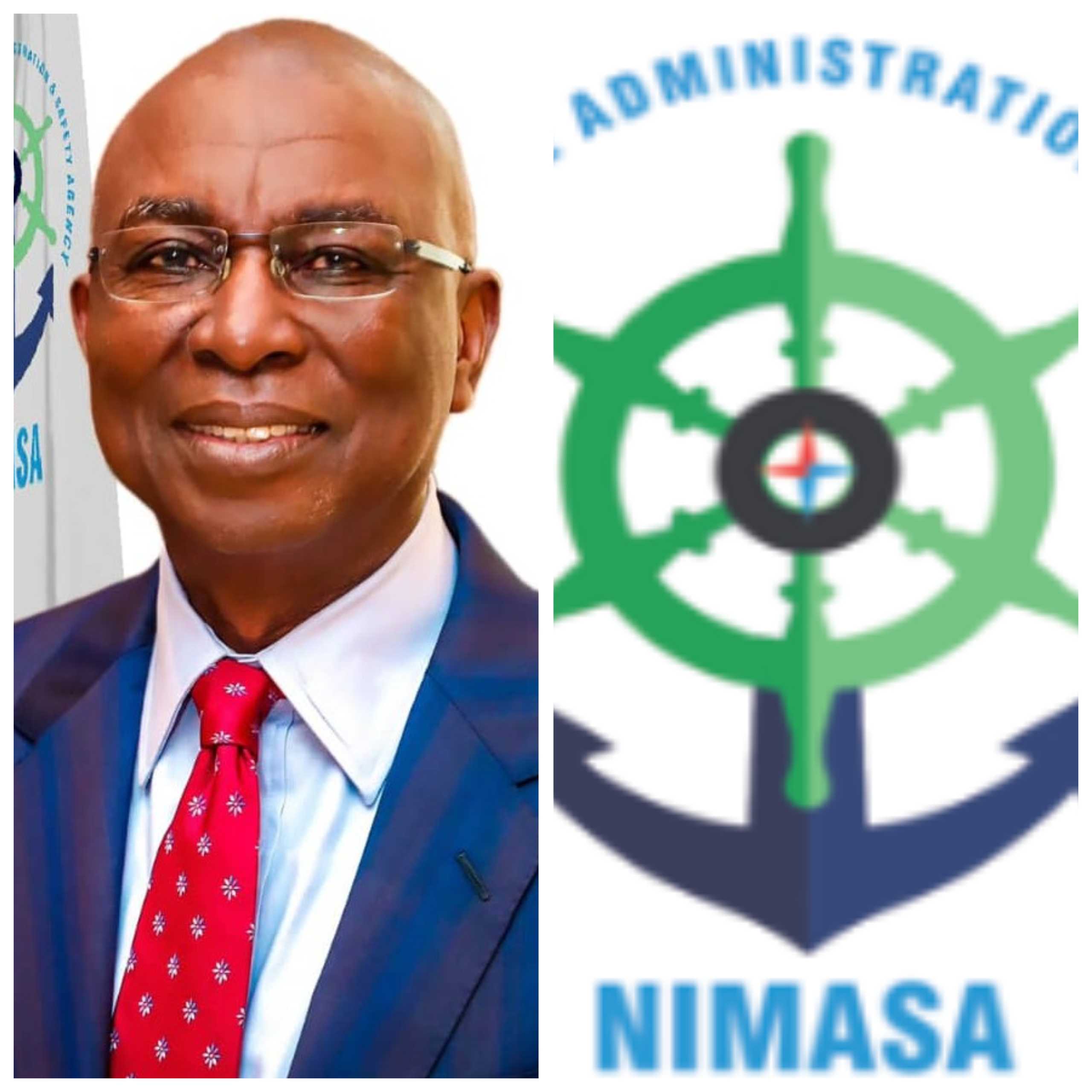
NIMASA DG, Mobereola, briefs Tinubu on maritime development in Nigeria

Funso OLOJO, Editor

The Director General of the Nigerian Maritime Administration and Safety Agency (NIMASA), Dr Dayo Mobereola, has briefed President Bola Ahmed Tinubu on the agency’s efforts to develop Nigeria’s maritime industry.

Mobereola, who met with the President at the State House, Abuja, also briefed him on developments within NIMASA over the past two years, highlighting the progress recorded by the agency as well as the challenges confronting the maritime sector.

Following the briefing, President Tinubu reaffirmed his administration’s commitment to the continuous development of Nigeria’s maritime industry, stressing the strategic importance of the sector to the nation’s economic growth.

The President noted that the creation of the Ministry of Marine and Blue Economy was a deliberate policy initiative aimed at unlocking the enormous potential of the maritime sector and increasing its contribution to Nigeria’s Gross Domestic Product (GDP).

While commending NIMASA for the progress recorded so far, President Tinubu charged Mobereola and his management team to sustain the momentum and remain focused on delivering reforms capable of transforming the maritime sector.

He urged the agency to intensify its efforts towards strengthening Nigeria’s maritime administration, improving the operating environment for stakeholders and positioning the sector as a major driver of economic growth and national development.

The meeting further underscored the Federal Government’s determination to harness Nigeria’s vast maritime resources as part of its broader economic diversification and blue economy agenda.

Continue Reading

Trending