Connect with us

Foreign

EU freezes Russian oligarchs’ assets worth over 10 billion Euro  (Rs82K crore )

Russian President Vladimir Putin

In retaliation to the Russian military offensive against Ukraine, the European Union has blocked the assets of Russian oligarchs worth nearly €10 billion (over Rs 82K crore) as part of sanctions, TASS reported.

Further, another set of frozen assets was reported in the month of April.

As the war in Ukraine has reached its 91st day, the EU has provided billions of euros in military aid to war-torn Ukraine to fight against Russia’s unjustified invasion, further imposing severe sanctions on Moscow.

Earlier in April, the European Union had frozen about €30 billion (Rs 2,48,418 crore) in assets of Russian and Belarusian oligarchs and businesses.

 This came on April 8, when European Justice Commissioner Didier Reynders presided over the fifth meeting of the EU’s Freeze and Seize Task Force, which included members from the United States and Ukraine.

Assets worth €29.5 billion have been frozen, and transactions worth €196 billion have been banned, according to the EU statement.

 Didier Reynders had deemed it essential for the EU and its foreign allies so that they can step up their efforts to cease supporting Russian President Vladimir Putin’s war machine.
He emphasised that, in addition to implementing punishments, it is also necessary to track their progress.
He urged all members to take the necessary steps to implement the sanctions on Russia.

Josep Borrell has also recommended taking frozen Russian foreign exchange assets to reconstruct Ukraine.

Apart from this, to fund the costs of reconstructing the war-torn country, the European Union’s top official had recommended taking frozen Russian foreign exchange assets.
 Josep Borrell, the EU’s high representative for foreign policy, spoke to the Financial Times on May 8 about how the US used Afghanistan’s blocked funds to pay compensation to terrorism victims and to provide humanitarian help to the country.
He emphasised that using Russian funds to restore a country devastated by conflict makes sense.
According to the Financial Times report, EU authorities are looking into whether Russian reserves may be redirected towards Ukraine’s building.

Meanwhile, the European Union has approved a 500 million euro military aid tranche for Ukraine.

 After the approval of three tranches of military assistance totaling 1.5 billion euros this year, the fourth tranche would add 500 million euros to financing previously assigned to Ukraine underneath the European Peace Facility (EPF), bringing the total amount to 2 billion euros, according to a statement released by the European Council on Tuesday.

Continue Reading
Click to comment

Leave a Reply

Your email address will not be published. Required fields are marked *

Foreign

Oil prices expected to crash as President Trump announces reopening of Strait of Hormuz 
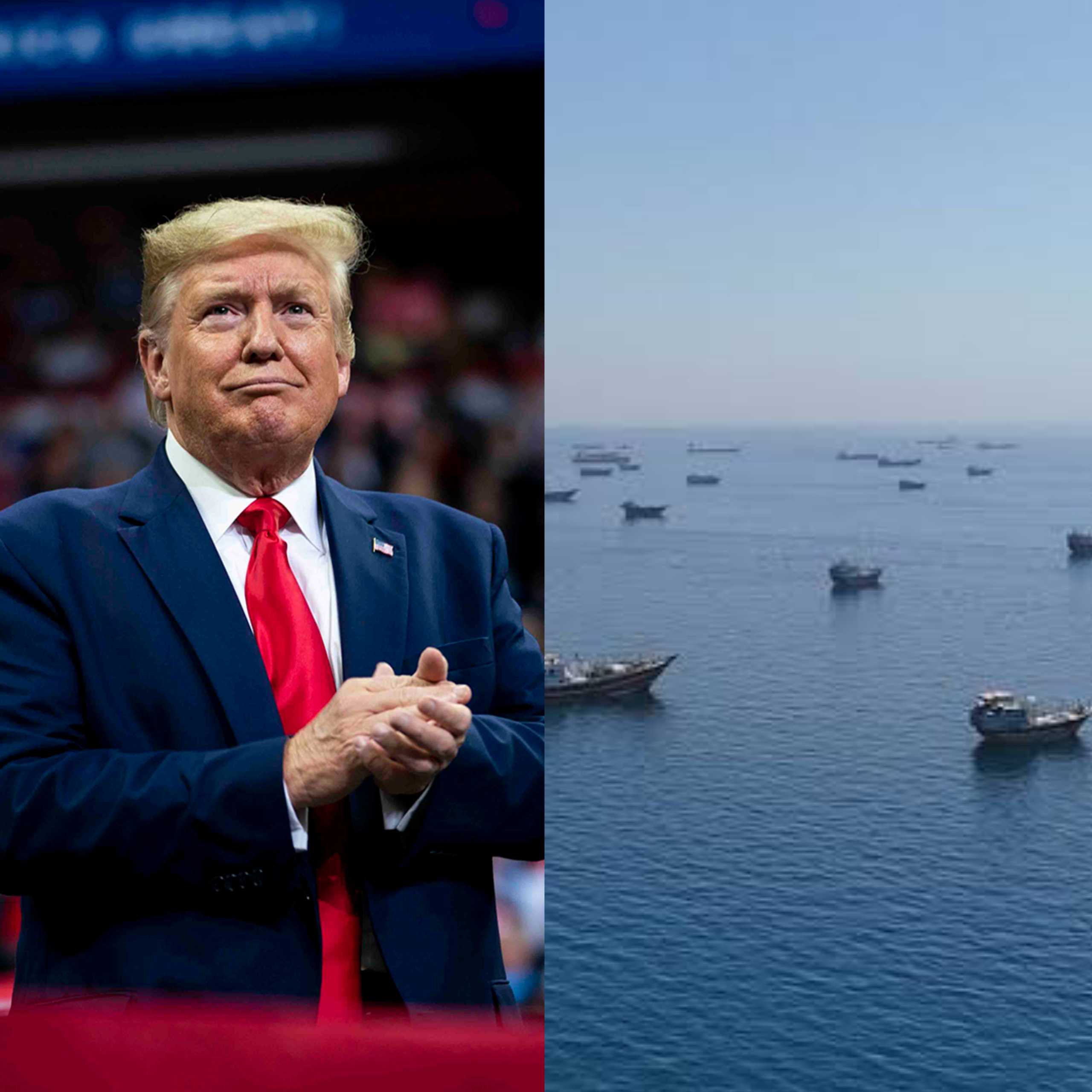
— US- Iran complete ceasefire agreement 
Funso OLOJO with Agency Report 
A soothing air of relief swept through the global shipping and oil markets as the United States of America and the Islamic Republic of Iran, in the late hours of Sunday, June 14th, 2026, announced a permanent ceasefire agreement to end the three months hostilities.
The USA and Israel have been at war with Iran since March 2nd, 2026 which has led to the closure of the Strait of Hormuz by Iran, an action that has thrown the global energy market into an unprecedented tumult due to the resultant high energy costs.
About 20 percent of the world’s seaborne oil trade passes through the Strait of Hormuz which is controlled by the Iran.
The closure of the Strait has restricted the movement of oil tankers through the vital route which led to an astronomical increase of petroleum products.
However, after three months of hostilities between the Israeli /US armies and Iran, a  ceasefire deal was announced by the President of the United States, Mr Donald Trump while ordering the opening of Strait of Hormuz and the removal of US Naval blockage of the Strait.
“The Deal with the Islamic Republic of Iran is now complete. Congratulations to all!,” Trump declared in a post on his Truth Social platform.

“I hereby fully authorize the toll free opening of the Strait of Hormuz, and, simultaneously herewith, authorize the immediate removal of the United States Naval blockade,” he added.

Trump also signaled the resumption of maritime traffic and energy shipments through the strategic waterway, writing: “Ships of the World, start your engines. Let the oil flow!”

He did not provide additional details about the agreement or implementation of the measures in his statement.

Pakistani Prime Minister, Shehbaz Sharif, also announced early Monday that the US and Iran have reached a peace agreement following intensive negotiations.

“Following intensive talks, we are pleased to announce that the Peace Deal between the United States of America and Islamic Republic of Iran has been REACHED,” Sharif said in a post on the US social media platform X.

He added that “both sides have declared the immediate and permanent termination of military operations on all fronts, including in Lebanon.”

According to Sharif, the official signing ceremony is scheduled to take place on June 19 in Switzerland.

The development is expected to restore confidence in global energy markets, as approximately one-fifth of the world’s seaborne oil trade passes through the waterway.
Analysts believe the resumption of tanker traffic could ease supply concerns and reduce the geopolitical risk premium that has driven up crude oil prices in recent months.
They also claimed that market reaction is expected to be bearish for crude oil because:
Roughly 20 percent  of global seaborne oil trade moves through the Strait of Hormuz.
It is also expected that reopening the route would restore tanker traffic from major Gulf producers.
The reopening of the Strait is likely to  lead to reduced geopolitical risk which will generally lowers the “war premium” built into oil prices.
The Freight and insurance costs for tankers are likely to fall as security concerns ease.
For Nigeria, lower global crude prices could mean:
Reduced foreign exchange earnings from oil exports, potential pressure on government revenue projections, lower import costs for refined petroleum products and possible moderation of domestic fuel prices if international prices decline significantly.
The Strait of Hormuz was officially declared closed by Iran on June 11, 2026, following US attacks on Iranian targets. This followed a previous ,prolonged period of effective closure that began on March 2rd, 2026, stemming from heightened military conflict.
On March 2, 2026, the IRGC announced the strait closed, causing a significant reduction in shipping traffic and a spike in global oil prices.
While briefly opened on April 17th, 2026, after a short-lived ceasefire, the strait was quickly closed again on April 18th, 2026, due to continued tensions.
On June 11, 2026, Iranian military command announced a total shutdown of the strait, targeting commercial shipping and oil tankers.
.
Continue Reading

Foreign

David Nwamini, Ekweremadu accuser, seeks asylum in UK

” they will kill me if I come to Nigeria” — he pleads to court

The eyewitness reporter
David Nwamini, the accuser of Senator Ike Ekweremadu who sent the lawmaker to 10 years jail term in the United Kingdom over an organ trafficking case, has raised an alarm that he may be killed in Nigeria if he comes back.
Consequently, he has asked the court to allow him to stay back in the UK for safety reasons.
“They would arrest me and kill me in Nigeria” he reportedly told the court.
His impact statement was read in court, at the sentencing that saw Ekweremadu, his wife, Beatrice, 56, and the doctor-middleman, Obinna Obeta, 51, jailed, for 10 years and 8 months, 4 years and six months, and 10 years, respectively.

The three were found guilty at the Old Bailey of conspiring to arrange the travel of a young man with a view to exploiting him for his body part.

The Ekweremadus’ 25-year-old daughter, Sonia, has a severe kidney disease. It was for her the donor was sourced and brought to the UK.

According to David, he was approached with an opportunity to work in the UK, which he had always dreamed of but never thought would happen.

“He (Dr Obina Obeta) did not tell me he brought me here for this reason. He did not tell me anything about this.

“I would have not agreed to any of this. My body is not for sale.

“I worry for my safety in Nigeria. Those people can do anything. I think they could arrest me or kill me in Nigeria.

“My plan now is to work and to get an education and to play football,” David said, adding that he does not want to claim compensation from the “bad people” as it would be “cursed and bad luck”.

He also said someone visited his father in Nigeria and asked the father to get him to drop the case.

Although it is lawful to donate a kidney, it becomes criminal if there is a reward.

The Ekweremadus were arrested on June 21 last year as they arrived at Heathrow Airport.

Continue Reading

Foreign

UK court shuns Nigeria, ECOWAS pleas as it sentences Ekweremadu to 10 years imprisonment for organ trafficking


The eyewitness reporter

The United Kingdom court on Friday sentenced former Deputy Senate President of Nigeria, Ike Ekweremadu, to nine years and eight months in prison for organ trafficking plot.
This was despite the plea for clemency made by the Nigerian government and the Economic Community of West African States (ECOWAS) that the court should temper justice with mercy.
The court also sentenced his wife, Beatrice, to four years six months while the medical doctor, who act as a ‘middleman’ in the plot, Dr Obinna Obeta, was sentenced to 10 years and his medical licence was also suspended.
The Ekweremadus’ daughter Sonia, who has a serious kidney condition, wept as she was cleared of the same charge.
Mr Justice Johnson told the defendants: “In each of your cases the offence you committed is so serious that neither a fine nor a community sentence can be justified.”
It was alleged that the 21-year-old street trader was to be rewarded for donating the organ to Sonia Ekweremadu, in an £80,000 private procedure at London’s Royal Free Hospital.
The case marked the first-time defendants have been convicted under the Modern Slavery Act of an organ harvesting conspiracy.
While it is lawful to donate a kidney, it becomes criminal if money or another material advantage is rewarded.
The prosecution claimed the donor was offered up to £7,000 along with the promise of a better life in the UK.
The donor did not understand until his first appointment with a consultant at the hospital that he was there for a kidney transplant, the Old Bailey was told
On March 23, the jury pronounced a guilty verdict on the senator, his wife, Beatrice, and Obinna Obeta, a doctor who acted as the middleman.
The jury held that they conspired to bring the 21-year-old at the centre of the matter to London to exploit him for his kidney.


Continue Reading

Trending