
Business
Marine insurers express frustration, confusion over loosely -worded EU sanctions on Russia.
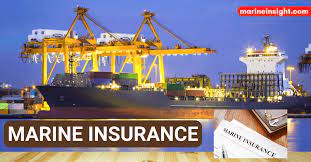
WESTERN SANCTIONS TARGETING RUSSIAN PRESIDENT VLADIMIR PUTIN’S ABILITY TO SHIP OIL VIA INSURANCE RESTRICTIONS ARE PROVING TO BE A DIFFICULT CHALLENGE FOR THE INSURANCE MARKET TO NAVIGATE. The lack of detail and loosely worded legislation in Europe’s latest set of sanctions against Russia has posed a series of difficult legal scenarios for the insurance sector to considerMarine insurers are struggling to interpret the ambiguous detail behind the European Union’s sixth package of sanctions targeting Russia and have warned that pending UK legislation may yet complicate matters further. According to the legal framework released last week, EU countries will phase out imports of seaborne Russian crude over a six-month period and prohibit insurance and reinsurance of maritime transport of crude and petroleum products to third countries. However, because the EU legislation is not immediate and contains several staging points with multiple caveats allowing continuation in given circumstances, the porous nature of the rules is proving difficult for insurers who demand legal clarity. There are also concerns over how the UK plans to treat the issue of EU states as ‘Third Countries’. It is widely expected that the UK, home to the world’s largest shipping insurance market, will follow the bloc’s move with its own insurance bans, however no details have yet been shared by the UK Treasury with the industry. The UK is a third country from an EU perspective, and it remains unclear whether the UK would treat supplies to the EU differently to supplies to other countries, especially as the EU is treating the UK as a third country. That means that EU insurers, including the subsidiaries of UK insurers, cannot insure transportation of spot cargoes coming to the UK, and likely vice versa. ‘The issue of supply insurance can be closed at the expense of state guarantees within the framework of interstate agreements with third countries,’ says former president The lack of details has posed a series of difficult legal scenarios for the insurance sector to consider. It is not clear, for example, how the Luxembourg-based insuring subsidiary of a P&I Club headquartered in the UK would respond to questions about cover from a Greek member which is asked to carry a spot cargo from Russia to the UK during the wind-down period. Even if the UK is able to iron out any inconsistencies, the loose wording of the EU’s current guidance has left insurers scratching their heads trying to work out how to apply the EU legislation. Phrases such as “as soon as possible”, “should be possible” and “exceptional temporary derogation” contrasts with the insurance sector’s requirement for legal black and white. The EU guidance details an eight-month transition in relation to the transport of crude oil and more than 80 different petroleum products. There are five wind-down dates, the latest being December 31, 2024 for Bulgaria, with at least 11 other caveats on top. Specific exemptions such as those detailed under Article ‘3m’ allow for one-off transactions for near term delivery — the implication being that these are for delivery into the EU. However, Article ‘3n’ does not, so any insurer of a vessel carrying crude or petroleum products to a third country must check that there is a pre-existing contract in place, and not just rely on what could be called the spot cargo exemption. Lawyers still in the process of interpreting the EU guidance also argue that the notification framework is very unclear in its current format. The responsibility lies with member states to notify the commission, but there is no guidance on who tells the member state and which one if there is a nexus to multiple different member states. What happens if a commercial party fails to inform a member state is not yet clear. Given the extensive nature of caveats and clauses, implementation of the sanctions is likely to prove difficult. According to guidance note 19 in the EU legislation, states could theoretically declare a temporary derogation. The clause states: “If the supply of crude oil by pipeline from Russia to a landlocked member state is interrupted for reasons beyond the control of that member state, the import of seaborne crude oil from Russia into that member state should be allowed, by way of an exceptional temporary derogation, until the supply by pipeline is resumed or until the council decides that the prohibition on the import of crude oil delivered by pipeline is to apply with regard to that member state.” “The implementation of ‘19’ is likely to be particularly challenging in practice as it’s entirely subjective,” explained one senior insurance expert. EU ban covers ‘insurance and re-insurance of Russian ships by EU companies’. Compromise will allow Russia’s pipeline oil exports to the EU to continue temporarily, while seaborne shipments are blocked by the end of the year Despite the lack of clarity, assuming that the UK eventually prohibits the insurance and reinsurance of Russian oil shipments to third countries, lawyers and insurers agree that the combination of jurisdictional approaches will likely prevent many mainstream tanker owners from lifting Russian cargoes. According to Broker BRS, however, it will not completely choke off Russian exports. As Lloyd’s List reported this week, alternative, albeit smaller, insurance markets, notably in China and Russia, will remain open. “Although this will discourage mainstream tanker owners from lifting cargoes, it will not likely discourage ‘niche’ tanker owners whose vessels are already involved in the transport of illicit Iranian and Venezuelan oil,” BRS said in its latest research note. “Since the sanctions package was finalised, we are already hearing of significant insurance issues.” Western companies are reluctant to insure voyages passing via the Black Sea. Meanwhile, due to the restrictions placed on the Russian banking sector, companies are reluctant to insure tankers loading from the CPC terminal close to the Russian port of Novorossiysk. Although CPC blend is composed of 90% Kazakhstani crude and thus not embargoed, if there was an accident at the terminal, it would be difficult to compensate Russian entities without falling foul of sanctions. Lawyers and insurers await details from UK Treasury over planned Russian sanctions to match EU sixth package as concern mounts over ‘Third Party’ countries application of rules
|




Business
Obejor Computers unveils new E-Commerce platform, showcases array of E-Solutions.

Gloria Odion, reporter
In a landmark and well-attended event on Friday, October 9th, 2026, Obejor Computers Ltd, a trusted brand in the nation’s highly competitive communications and technology industry, unveiled its budding e-commerce portal to the Nigerian public.
As a key player in the bulk and retail sales and distribution of computers, laptops, sophisticated communication gadgets, and related equipment, the company also showcased an array of innovative e-solutions wholly developed by ObejorDev, a subsidiary of the Obejor Group.
The occasion, which took place at the company’s corporate headquarters in Ikeja, Lagos, attracted industry leaders, stakeholders, dignitaries, and loyal customers from all walks of life.
In his welcome address at the event, which commenced around midday, the CEO of the company, Mr. Ndubuisi Okechukwu Obed, expressed his appreciation to the guests for attending and stated that the many successes recorded over the past 23 years since the company commenced operations were largely attributable to its expertise and commitment to delivering top-tier laptops, PCs, telephones, communication gadgets, accessories, equipment, and related solutions.
The Chief Executive Officer further treated the guests to a presentation of the unique features of the e-commerce platform, noting that the company offers both online and offline sales and services.
Specifically, he demonstrated how these innovations would revolutionise online shopping and after-sales services by ensuring seamless transactions and real-time assistance for customers nationwide.
The Managing Director explained that the unveiling of the platform was aimed at creating awareness and educating users about its highly dynamic and robust features.
Giving further insight into the uniqueness of the Obejor e-commerce platform, he disclosed that the platform is integrated with AI assistants and bulk and single-selling options, thereby making it stand out in the highly competitive e-commerce and IT industry.
Notably, the system supports both wholesale and retail business models, including official stores for regional manufacturers, entrepreneurs, and individuals. Other unique features include Buy Now, Pay Later, multiple African currencies as payment options, and more.
Similarly, the management of the Obejor Group used the opportunity to present and demonstrate various e-solutions developed by ObejorDev, the e-solutions company under the Obejor Group.
Throwing more light on the solutions, he explained that some of the company’s highly sophisticated e-solution products include School Management Solutions, Hospital Management Solutions, and POS Management Systems for businesses, among others.
He explained that the POS system is equipped with advanced features such as balance sheets and opening balances, designed to facilitate swift and secure business operations.
He also stated that the platform utilises end-to-end encryption to address cybersecurity concerns, protecting data from the device level to the server level.
He further stated that trust and good conduct are the foundations of long-term business continuity and good supplier relationships, maintaining that integrity, even during financial difficulties, is essential for building lasting professional connections.
He advised the younger generation to pursue their passions and remain committed to achieving success in their respective fields.
The Managing Director disclosed that the company’s vision is centred on long-term growth within the technology industry, even as he encouraged entrepreneurs to remain resilient despite government policies and economic challenges in Nigeria.
He expressed a desire for greater government support through reduced taxes, improved infrastructure, and a reliable power supply to help lower the cost of doing business.
Some prominent figures in attendance also shared glowing remarks about Obejor Computers’ impact on Nigeria’s technology industry.
Business
Taiwo Afolabi calls on African businesses to scale up their operations for global relevance
Business
National Single Window goes live in March, 2026


 Headlines2 months ago
Oyetola presents three-year score card as blue economy industry revenue hits ₦1.83trn

 Customs2 months ago
Apapa Customs sets new single-day revenue record with ₦28.1bn collection

 Customs3 months ago
Apapa Customs sets new record of monthly revenue haul with ₦323bn collection in July
 Customs3 months ago
NCS intercepts container concealing pump-action rifle parts, seizes ₦373.8m worth of cannabis products at Tincan Port

 Customs4 weeks ago
FOU Zone ‘A’: Aliyu retires after ₦3.19bn revenue recovery, Afeni takes over

 Headlines3 months ago
Osun 2026:The shinning path of AMBO to electorial victory