Commentaries
Who is afraid of Bashir Jamoh, NIMASA boss?

Commentaries
Our Oceans, Our Wealth: The real benefits of new fishing port
Monday Discourse with Nasiru Ibrahim
Nigeria has a very long coastline, but we have ignored our oceans for decades. Our major sea gateways, from Apapa to Port Harcourt, are mostly built to handle crude oil exports and heavy manufacturing containers.
Meanwhile, the local fishing industry—which has the capacity to feed the entire nation and create vast wealth—has been left to survive entirely on its own.
This is why the recent announcement by the Managing Director of the Nigerian Ports Authority (NPA), Dr. Abubakar Dantsoho, makes a lot of sense.
Speaking through a representative at the National Conference on Sustainable Fishing in Lagos, the NPA boss stated that Nigeria plans to build a specialized fishing port to finally harness the true value of our ocean resources.
As the country tries to grow its marine and blue economy, this move is completely long overdue.
For a very long time, Nigeria has suffered from an intense oil blindness, focusing all investments on petroleum while ignoring the massive economic potential floating right on our waters.
Right now, our deep seas are teeming with valuable fish, but because we lack proper docks, specialized marine structures, and secure landing sites for large fishing vessels, foreign ships enter our territory and steal our marine resources every single year.
A dedicated fishing port will change this entirely. It will give our local operators and commercial fishing trawlers a safe, modern, and legally protected base to harvest, dock, and process their catch.
Instead of letting foreign poachers dominate our waters, a specialized port ensures that Nigeria profits directly from its own geographical blessings.
We cannot talk about maritime infrastructure without looking at the kitchen table, especially since the average Nigerian family is facing a massive food crisis.
Severe inflation has turned basic proteins like fish and beef into luxury items that ordinary people can no longer afford.
A specialized fishing port will help fix this supply chain problem. The NPA’s plan involves creating dedicated fish terminals equipped with modern cold-room facilities, meaning local fishermen can preserve their catch immediately without it spoiling on the high seas.
When fish can be safely stored and transported into local markets without rotting, the overall supply goes up. When supply goes up, the price goes down, helping ordinary citizens put affordable protein back on their dining tables.
Furthermore, a modern fishing port is much more than just a place to park boats; it is a full-scale industrial business hub.
Building a specialized facility will spark immediate economic activity along our coastlines, naturally attracting seafood processing factories, boat repair yards, ice-making companies, and specialized transport networks.
This infrastructure will create thousands of genuine jobs for young people, refrigeration technicians, boat mechanics, and market women who dominate the local seafood trade. It bridges the gap between rural, traditional fishing and modern, industrial maritime commerce, bringing life back to struggling coastal communities.
The NPA has presented a great vision, and using a Public-Private Partnership model to fund it is a smart strategy.
But as Nigerians, we know our main problem is never a shortage of good plans—it is making those plans actually happen on the ground.
If this fishing port is going to transform our economy, the government must move quickly from conference papers to physical construction. We need to see real investments start on our coastlines.
Utilizing our ocean resources is one of the smartest ways to build a country that does not rely solely on oil. It is time to stop looking at our waters as just shipping lanes, and start treating them as the goldmines they really are.
Ibrahim Nasiru, a public affairs analyst, writes from Abuja.
Commentaries
Nigeria At 66: AMBO Media stirs hope of Nigerians in Nigerian project.
Funso OLOJO, Editor
As Nigeria marks its 66th Independence Anniversary, the Asiwaju Munirudeen Bola Oyebamiji (AMBO) Media Fronts has congratulated Nigerians at home and abroad, celebrating the resilience, courage and enduring faith of our people in the Nigerian project.
The journey of the last 66 years has undoubtedly been turbulent and, at different periods, chaotic.
The nation has passed through political upheavals, economic difficulties, insecurity, military interventions and other challenges that have tested our collective resolve. Yet, through all these difficulties, Nigeria has survived and continued to evolve
Today, there are compelling signs on the horizon that the future can be steadier, stronger and more prosperous for our country.
The AMBO Media Fronts believes that the Renewed Hope Agenda of President Bola Ahmed Tinubu represents an assurance that when a government is resolute and determined to lift its people out of poverty, rebuild the economy and leave a legacy of prosperity for the incoming generation, the results of such determination will ultimately be reflected in the wellbeing of citizens, notwithstanding the difficulties that may accompany necessary reforms.
We acknowledge that some of the economic policies of the Federal Government have imposed significant hardships on citizens. The removal of fuel subsidy, for instance, has contributed to higher living costs and transportation expenses.
However, it has also significantly altered the revenue profile of the federation, creating substantially more resources for the three tiers of government.
In Osun State, the impact of the Renewed Hope Agenda is becoming increasingly visible, even though the effects of some economic policies continue to weigh heavily on the people.
For instance, the Federation Allocation to Osun State for July was in the region of ₦17 billion, compared with about ₦4 billion before the removal of fuel subsidy in 2023.
This represents an increase of approximately 350 per cent.
Ordinarily, such a substantial increase in available public resources should translate into greater succour for the people through improved education, healthcare, social security services, infrastructure and a more efficient transportation system, provided the resources are properly and transparently channelled.
The Federal Government has also taken specific steps to cushion the effects of the reforms on Nigerians in Osun State.
In 2023, the Federal Government provided palliatives worth ₦15 billion to Osun State, including a ₦2 billion grant for the purchase of CNG buses, to cushion the effects of fuel subsidy removal on citizens.
It is believed that a solid and effective public transportation system built around these buses would not only provide cheaper transportation for the people of Osun but could also encourage commercial transport operators to gradually adopt the CNG regime for their vehicles.
The Federal Government also refunded the state government arrears of personnel taxes due from federal government staff working in Osun State.
The repayment, put at around ₦8 billion, provided additional resources to the state government for the implementation of its programmes.
The Tinubu-led Federal Government is also undertaking major road projects in Osun State, with the projects cited at a combined value of over ₦300 billion.
These include the Osogbo–Iwo–Ibadan Road, the reconstruction of the Gbongan–Osogbo Road, and the Ilesa–Ife–Ibadan corridor.
The Federal Government has also approved the construction of the Ilobu–Ogbomoso Road, which, when completed, will further improve connectivity, facilitate the movement of people and goods and open up new economic opportunities for communities across Osun State.
These investments are important because road infrastructure is not merely about transportation.
Good roads connect farmers to markets, businesses to consumers, workers to places of employment and communities to economic opportunities.
The Tinubu administration has also, through the implementation of the Zonal Intervention Projects (ZIPs), popularly known as constituency projects, funded projects facilitated by federal legislators from Osun State to the tune of approximately ₦10 billion in the last three years.
These interventions include road construction, renovation of school buildings and facilities, installation of solar-powered street lights and other community-based projects.
Such projects bring the presence of the Federal Government directly to communities and have contributed to improving basic infrastructure and the living conditions of beneficiaries.
The Federal Government, through institutions such as the Tertiary Education Trust Fund (TETFund) and the Universal Basic Education Commission (UBEC), has also supported public universities, polytechnics, colleges of education and basic education infrastructure in Osun State with interventions running into ₦12 billion since 2023.
The NELFUND student loan scheme has equally expanded access to financial support for over 50,000 Osun students in tertiary institutions, including students in the 11 technical colleges owned by the state.
These interventions demonstrate that the Federal Government’s education reforms are not limited to Abuja but are reaching institutions and students across the states.
In the area of housing, the Federal Ministry of Housing and Urban Development has completed and handed over 24 housing units constructed under the National Housing Programme to the University of Ilesa.
This intervention is part of the Tinubu-led government effort to improve staff welfare and strengthen institutional development.
The Federal Housing Authority is equally making frantic efforts in ensuring Osun people benefit adequately in the federal government’s plan to provide 154,800 housing units to Nigerian citizens.
This year’s October 1 celebration, therefore, is not one being marked in a vacuum.
It provides an opportunity to reflect on the challenges of the past 66 years, acknowledge the difficulties confronting citizens today, and equally recognise tangible interventions being undertaken by the Federal Government across Nigeria and, specifically, in Osun State.
The journey to national prosperity is never without challenges. What matters is the ability of leadership to remain focused, make difficult decisions, correct mistakes where necessary and ensure that the gains of reform ultimately translate into better lives for the people.
The AMBO Media Fronts therefore calls on Nigerians to remain hopeful and committed to the Nigerian project.
We believe that with sustained reforms, prudent management of resources, greater accountability and continued investments in infrastructure, education, healthcare, agriculture, industry and human capital, Nigeria can realise its enormous potential.
We equally believe that as citizens continue to pray for and support the administration of President Bola Ahmed Tinubu, more dividends of democracy and development will come the way of Nigerians, including the people of Osun State.
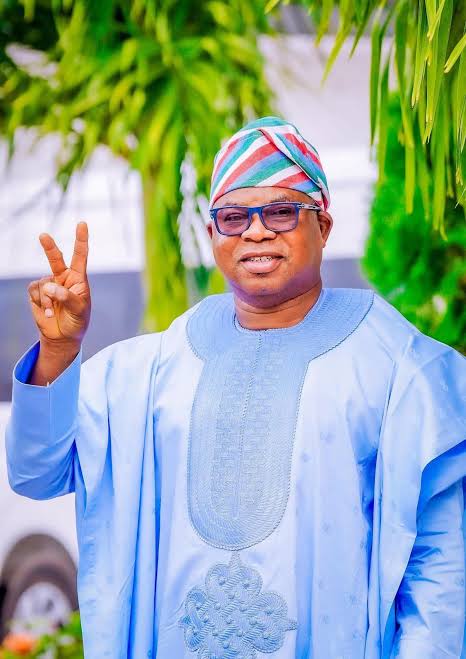
On behalf of our Principal and APC Governorship Candidate in the 2026 Election in Osun, Asiwaju Munirudeen Bola Oyebamiji (AMBO), we once again felicitate with the people of Osun State and Nigerians across the world on the occasion of Nigeria’s 66th Independence Anniversary.
Commentaries
NIgeria at 66: The Uncrushable Giant in the Sun
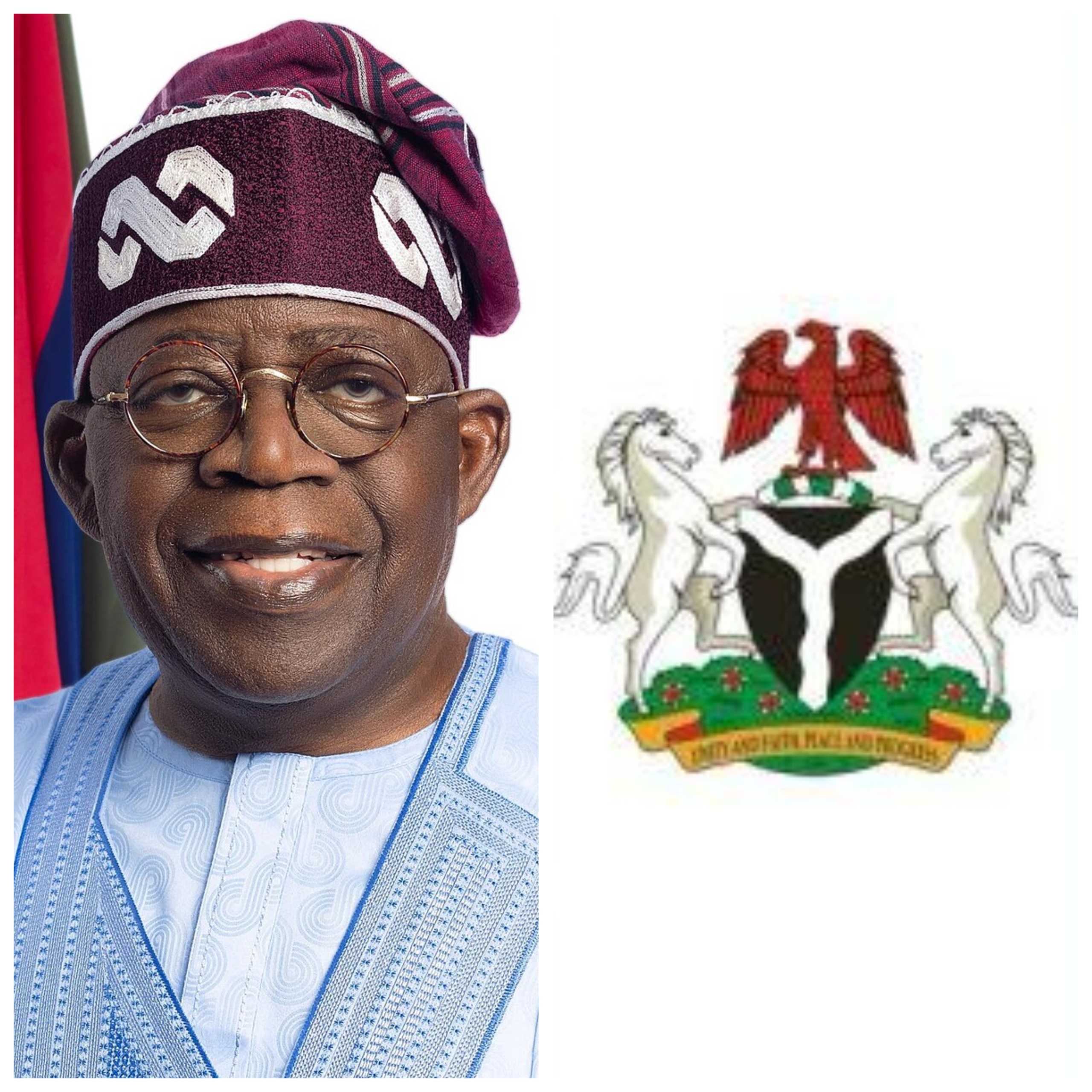
Reflection by Ibrahim Nasiru
As the dawn breaks over the West African coastline this morning, Thursday, October 1st, 2026, a sovereign milestone unfurls across the continent.
Nigeria turns 66 today.
Let the professional pessimists sound their usual annual trumpets of despair, and let the elite commentators count our structural bruises. But let no man mistake our scars for our obituary.
Six decades and six years after the Union Jack was lowered, this sprawling, kinetic, and beautiful madness we call home still stands—obstinately united, fiercely proud, and completely unbowed.
We are not just a country on a map; we are an demographic continent unto ourselves. From the rain-swept shores of the Atlantic to the wind-kissed sands of the Sahel, north and south of the Sahara, Nigeria remains the undisputed, heavy-hearted, but magnificent Giant in the Sun.
We are the most populous black nation on God’s green earth. To think that 230 million human beings, speaking over 500 distinct languages, can wake up under the same green-white-green flag every single morning and survive the tectonic pressures of modern history is not an accident—it is a daily, living miracle of resilience.
Look closely at our geography. The world marvels at how our diverse nationalities—the Hausa, Yoruba, Igbo, Ijaw, Ibibio, Kanuri, Tiv, Jukun, Fulani, Alago, Gomai, Ganawuri, Taroh, Kutep and Idoma—refuse to fit into any neat, predictable Western caricature.
We are not a monolith of sorrow. We are a kaleidoscope of unyielding human ambition. When the global economic winds howl and domestic pressures bite hard, the Nigerian does not fold. The Nigerian reinvents.
The street-vendor in Lagos, the tech-wizard in Yaba, the grain-merchant in Kano, and the resilient farmer in the valleys of Nasarawa all share the exact same DNA: an absolute refusal to be defeated by circumstances.
Our democracy is young, loud, and inherently messy. Our economic reforms are painful, complex, and currently testing the very fabric of our patience. But as the flags go up today, let us remember that the destiny of this giant does not belong to the ephemeral politicians who occupy temporary offices in Abuja or the state capitals.
The destiny of Nigeria belongs to the uncrushable spirit of the everyday citizen. We are the rhythm of Afrobeat, the intellectual weight of Nobel laureates, the raw grit of the global diaspora, and the anchor of regional stability.So, let the cynics argue in their air-conditioned rooms.
Today, we salute the market women, the youth driving the digital frontier, the labourers, and the fathers keeping the peace. We are still here. We are still giant. And our sun is nowhere near setting.
Happy 66th Independence Anniversary to the Federal Republic of Nigeria!
Ibrahim Nasiru lives in Abuja

 Customs3 months ago
Customs releases final recruitment list for ASC II, ends nearly one-year wait for applicants
- Headlines3 months ago
As NRC recovers ₦200m stolen railway assets, Opeifa vows diligent prosecution of suspects
- Customs3 months ago
Customs launches MIS file tracker at PTML in fresh digitalisation drive
- Customs2 months ago
Apapa Customs sets new record of monthly revenue haul with ₦323bn collection in July
- Customs2 months ago
Apapa Customs sets new single-day revenue record with ₦28.1bn collection
- Headlines1 month ago
Oyetola presents three-year score card as blue economy industry revenue hits ₦1.83trn