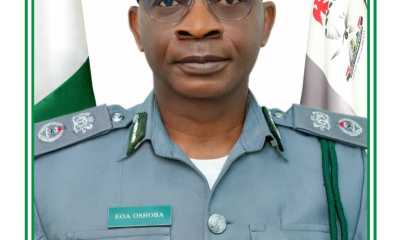
Customs
Adeniyi’s odyssey: 100 days of reformative leadership as Customs boss

His partnership with professionals and global experts is geared towards making informed decisions that will promote trade facilitation, security, and operational effectiveness.
This 100-day voyage has proven CGC Adewale’s unrelenting commitment to unlocking NCS’s full potential, which is hinged on his policy thrust of Collaboration, Consultation and Innovation.
COLLABORATION
The NCS is tasked with three core mandates, which are: robust revenue generation, suppressing smuggling and trade facilitation.

Experts noted that these mandates can be optimally achieved through deliberate, revolutionary, collaborative engagements with stakeholders, at home and abroad, besides leveraging the deployment of cutting-edge technology.
Upon his appointment, CGC Adeniyi has stressed collaboration with international partners, local law enforcement agencies, government agencies (MDAs), Media and other countries’ customs administrations
He said, “As we embark on this new journey, we recognize the need for collaboration and partnerships.
“We will strengthen these partnerships and engage with stakeholders through revitalized platforms.

NCS’ PARTNERSHIP WITH FOREIGN BODIES/COUNTRIES
The Acting CG has engaged in strategic discussions with partners such as the WCO, Japan International Cooperation Agency (JICA), and the Japan Customs Administration.
The NCS Laboratory will provide comprehensive solutions to address challenges such as counterfeit goods, smuggling, and non-compliant imports, thereby bolstering revenue generation and ensuring the protection of public health and safety.
His engagements extended to fruitful discussions with relevant experts and donors, focusing on crucial areas such as conducting a Time Release Study (TRS), implementing the Authorized Economic Operator (AEO) program, leadership, and management development.

On Tuesday, 12th September 2023, The Acting Comptroller-General of Customs, Bashir Adeniyi, expressed his commitment to synergize with the Benin Republic to enhance trans-border security and regulate trade between the two countries.
This was disclosed when he officially received Senior Officers of Benin Customs, led by their Director-General, Alain Hinkati, at the Nigeria Customs Headquarters Abuja, in continuation of their two-day interactive session.
The session, which started on Monday, 11th September 2023, in Abuja, aimed at deepening the relationship between Nigeria and Benin while promoting their age-old bilateral trade ties.
Other areas that the partnership will address include enhancing the proper use of International Transit Guidelines to govern transit-bound goods and fees from Cotonou Port to Nigeria; Integration of Nigeria into the Interconnected System for the Management of Goods in Transit
He said the treaty between the two Agencies “will prepare the way for an in-depth mechanism to harmonize the import prohibition lists of products banned by the two countries.

Meanwhile, the joint communiqué signed by the Ag. Comptroller-General of the Customs, Bashir Adewale Adeniyi MFR, and Director-General of the Bennese Customs, Alain Hinkati, highlighted that their meeting favours the desire of the two countries’ presidents: Bola Ahmad Tinubu and Patrice Talon to strengthen the shared commitment to enhancing trade facilitation and promoting economic development.
Other areas that will benefit the countries are fostering closer ties to Nigeria and Benin and reactivating the joint committee for monitoring trade and transit relations.
The Ag. CGC has also affirmed his partnership with the United Nations Human Settlements Programme, UN—Habitat, to Combat Smuggling.
The CGC stated this on Tuesday, 19 September 2023, when he received Ambassadors of the UN—Habitat, led by Dr. Raymond Edoh, at the Customs Headquarters, Abuja.
The CGC appreciated the collaborative effort between the Nigeria Customs Service and UN—Habitat and believes that the collaboration signifies a commitment to tackling smuggling and enhancing trade facilitation in the nation, setting the stage for a more prosperous future.

The CGC said, “What we’re trying to do is to raise a modern Customs Service through partnering with stakeholders to achieve our goals because we value partnership, and I am happy that you extended your hands of collaboration to work with us.”
On his part, the Director of UN—Habitat, Dr. Raymond Edoh, appreciated President Bola Ahmed Tinubu for reposing the responsibility of heading the Nigeria Customs Service on the Acting Comptroller-General, describing him as “a competent Customs officer who knows the terrain and masters the job.”
UN-Habitat is the United Nations entity responsible for developing urban policies and translating them into action to create sustainable cities and promote viable urban development and adequate shelter for all.
PARTNERSHIP AND COLLABORATION WITH MDAs, STATE GOVERNMENTS, MEDIA

At the meeting, The Ag. Comptroller-General of Customs Bashir Adewale Adeniyi stressed the need to implement policies that create sufficient space at the ports.
The Permanent Secretary also assured the CGC that overtime cargo disposal committee is working assiduously to implement policies that will decongest the four major ports in the country. “we are working in different dimensions, but the result will be prodigious, after launching sensitization exercise to stakeholders and members of the ports community about the process.” She said.
The Ag. Comptroller-General of Customs, Bashir Adewale Adeniyi, on Tuesday, 11 July 2023, paid a courtesy visit to the National Security Adviser, Mallam Nuhu Ribadu, at his Office in Abuja to seek Support on Border Security.
“The porous nature of the nation’s borders necessitates this visit to the NSA to fashion the best way to tackle the menace of smuggling, which has adverse effects on our economy and security,” the CGC stated.
In a bid to strengthen the working relationship between the Nigeria Customs Service and the Media, the Ag. Comptroller-General of Customs Bashir Adewale Adeniyi met with Customs Area Controllers in Zone ‘A’ and the Guild of Editors in Lagos on Sunday, 16th July 2023.

In his remarks, the Ag. CGC noted that the Service has made remarkable progress in different areas over the years and will be soliciting the support, guidance and collaboration of the Media while at the helm of affairs of the Service.
“We will be open to collaborating with our partners in bringing more comprehensive reports to let Nigerians know what our challenges are, what the gaps are, what we can do to bridge those gaps to improve border security and, generally, Nigeria”, he said.
In his speech, the President of the Nigeria Guild of Editors, Eze Anaba, congratulated the Customs Boss on his appointment and assured them of their support while noting the importance of Communication.
“Your coming on board is a refreshing development, and I am sure we will enjoy such interactions on behalf of my colleagues. I assure you that if you continue this way, the Nigeria Customs Service will have it good in the media”, he said.
In the same vein, the Ag. CGC also had dinner with Public Relations Officers in Zone A’, as well as maritime journalists in Lagos Ikeja.

He assured them of an open-door policy and the need for cooperation and partnership in steering the affairs of the Service.
“I will open my doors to you; it’s going to be an open governance system; you will have the opportunity to contribute, to check the directions in which the customs would go while I am in charge”. He concluded.
Still in the spirit of collaboration, the CGC on Friday, 21st July 2023, during his official visit to Seme and Badagry Environs, urged local communities to support Law Enforcement Agencies in enhancing border security
His first port of call was the Palace of the Akran of Badagry Kingdom, His Royal Majesty, De Wheno Aholu, Menu-Toyi I.
According to him, Customs Officers who have served in Badagry have enjoyed a long-standing relationship with the people of Badagry.
From the palace, the Ag. CGC and his entourage moved to Seme Area Command, where he was welcomed by a large crowd who defied the rain, including Officers and Men of the Command, Hon. Joseph Gbenu, Chairman, Badagry West LCDA, representatives from Customs Krake, Federal Republic of Benin, representatives from sister Agencies, Royal fathers, stakeholders, as well as community leaders.

The Ag. CGC, while calling for synergy among sister Agencies and community leaders, said, “We must draw strength from the complementarity of our operations and, of course, our traditional rulers, always being there to guarantee the support of the communities that we serve”.
“National security is the business of every citizen. It should not be for only Security Agencies, so as we make life easier for business, I want to charge you all to make life and the work of our Security Agencies easier”, he said.
Considering the fact that Lagos controls 70 to 75 percent of NCS’ total revenue collection, the Ag. CGC, on Tuesday, 25th July 2023, paid a courtesy visit to the Governor of Lagos State, Babajide Sanwo-Olu and pledged a partnership with the state government.
He assured the Governor of the Services’ commitment to operate within the framework of the law and supported his drive to make Lagos a mega city.
He said, “We just secured presidential approval to undertake decongestion at our ports, using a combination of public auction and transferring some of the containers to the Government Warehouse in Ikorodu.
“I’ve visited all the facilities, and very soon, while working with all the stakeholders, we will be able to kickstart this process and create the space necessary inside the port and around the premises of the port”, he added.

Governor Sanwo-Olu also pledged to provide a good working environment for businesses to thrive. He hinted that approval for a Badagry port had been secured.
“I also need to inform you that there’s an approval for a Badagry port. The whole idea is to build strategic infrastructure for our citizens; Lekki is on the eastern part, Badagry is on the western part so that we can decongest Apapa and Tin-can that have stretched their capacity”, he noted.
In what seems like one of the most productive collaborations towards enhancing national security and curbing revenue loss, the Federal Road Safety Corps (FRSC) and Nigeria Customs Service (NCS) commenced an intensive vehicle database integration of the two government agencies.
The collaboration was effected during the official visit of the Acting Comptroller-General of Nigeria Customs Service, Bashir Adewale Adeniyi, to the Corps Marshal, Federal Road Safety Corps, Dauda Ali Biu, at the national headquarters of the Commission.
Speaking during the visit, the Acting-Comptroller General emphasised NCS’s renewed commitment towards working together with the Corps in the area of human resource development, information and communication technology, as well as sports.

He stated, among others, that a handshake and effective consolidation of existing vehicle information in the National Vehicle Identification Scheme database domiciled with the FRSC and vehicle database of the NCS will curb vehicle smuggling, improve revenue generation and enhance national security.
While responding to the Comptroller-General, the Corps Marshal applauded the initiative, stating that the handshake and data sharing would not only strengthen the bond between the two agencies but also positively impact the fight against the smuggling of vehicles.
Biu stated emphatically that the collaboration will also entrench ease of doing business as it will make tracking vehicles without customs duty certificates very easy for the Corps at the point of registration.
On Thursday, 3rd August 2023, the Customs Boss visited the Ag. Inspector-General of Police, Kayode Egbetokun, at the Force Headquarters, Abuja. The visit sought inter-agencies’ cooperation and collaboration to fast-track sustainable working relationships between the Nigeria Customs Service and Nigeria Police Force to ensure adequate security of lives and properties in the country.
Addressing the leadership of the Force, the Ag. CGC Adeniyi assured the IGP that Nigeria Customs is willing to learn more from the Nigeria Police Force in investigation and other operations through coordinated capacity-building programs.
“Criminal activities are inter-connected, thus a need for the two security agencies to collaborate to mitigate the menace of smuggling, which will help the Nigeria Customs Service to generate revenue for the nation. I will therefore request to build a strong relationship between the Nigeria Customs Service and the Nigeria Police Force.” The CGC said.

He said the major issues that bother the two organizations can be mitigated through sharing intelligence to help achieve a common goal in the fight against criminals.
In his remarks, the Ag. Inspector-General of Police Kayode Egbetokun described the CGC’s visit to the Force Headquarters as timely, affirming his readiness to unanimously establish a solid working bond with the Nigeria Customs Service.
Just after the decision by President Ahmed Tinubu to shut down the borders, the Customs Boss visited the Governor of Katsina State, Dikko Radda, to Solicits Cooperation of Border Communities
He emphasized that while implementing the closure of the Jibia border, the Service will also devote energy to sensitize members of the communities on the reason behind the decision.
Responding, the Katsina State Deputy Governor, Farouk Lawal, who represented Governor Dikko Umaru Radda at the meeting, welcomed the Ag. CGC and assured him of his unflinching support.
The CGC pledged renewed collaboration with Yobe State to ensure the state continues to benefit from the Service. He also Strengthened Customs Community Relations in Oyo while Charging Indigenes to Embrace Locally Made Goods.

Customs also Synergized with Borno State Government to Re-establish Cross-border Trade in the Northeastern part of Nigeria.
Speaking on enhancing community relations, the CGC said, “Moving forward, we will need your support to engage with members of the border communities in Borno, especially as the insurgency has been degraded. We will build on the good relationship that we have and leverage on it to re-establish a good relationship with Cameroon and, of course, the Southern part of Chad.”
He has also expressed the readiness of his management team to collaborate with the National Center for the Control of Small Arms and Light Weapons (NCCSALW) in the fight against the trafficking of Small Arms and Light Weapons.
Recall that the Service has, in the second week of August 2023, succeeded in intercepting over 1,000 live ammunition concealed in 203 bags of foreign rice in Abeokuta, the Ogun State Capital.
The Customs Boss, who appreciated the National Coordinator for leading his team to visit the Service’s Headquarters to knot ties with him, also emphasized the need to venture more into intelligence and data sharing.
He disclosed that it was done to also allow for more accountability and reduce multiple checkpoints. He ordered all arms, records, and operational vehicles to be submitted to the FOUs.
The Ag. CG also inspected the proposed 100 Hectares of land for the Federal Operations Unit A, Government Warehouse and Customs Training School, close to the Ogun Agro International Airport Project Site, on Monday, 7th August, 2023.

In asserting the relevance and authority of the Zonal Headquarter, Adewale Adeniyi said the office will be relocated and given a face-lift after 48 years.
On the Officer’s welfare, he assured that some gaps in the area of insurance would be bridged and more accommodation would be provided for the officers.
Similarly, the Ag. Comptroller-General of Customs Bashir Adewale Adeniyi MFR, following his tour to the Kaduna Area Command, paid a sightseeing visit to Customs Primary School, Barnawa, to assess the condition of the facility with the aim of renovating the school.
This aligns with his efforts to promote education through Customs’ Social Program to the society.
Speaking to the School’s Assistant Headmaster, Adeshina Fatai, the CGC vowed to address both the short, medium and long-term needs of the school to create a conducive atmosphere for teaching and learning.
According to him, the Nigeria Customs Service, under his leadership, will view the problem at a superficial level and will do its best to raise the spirit of the school to educate the wards of the residents properly.
The Ag. CGC, on Monday, 14th August, extended a hand of fellowship to Dorian Home in Akure, Ondo State, an Orphanage home for Charity and Social Development.

According to him, the service has a responsibility to support and assist communities where they operate and carry out their mandates. Dorian Home has the structure, commitment and passion to drive its objectives.
He said the home has a capacity for almost a thousand kids, as there will be a need to feed, clothe and administer the proper medication to them. He assured of the assistance of the Service to the home.
The Customs CG also pledged his support to establish Customs primary and Secondary Schools Nationwide; he pledged after receiving the COWA delegation led by the National President and Wife of the CGC, Mrs. Kikelomo Adewale Adeniyi.
The Ag. Comptroller-General of the Nigeria Customs Service, Bashir Adewale Adeniyi, on Thursday, 7th September 2023, performed a groundbreaking ceremony for the massive construction of Customs Service Zone B Headquarters.
The extraordinary edifice of 25 hectares of land situated in the Mando area of Kaduna State is part of CGC’s unalloyed commitment to improve the welfare and efficiency of the Service.
Speaking at the ceremony, the CGC described the initiative as a magnificent project that will pave the way to establishing a solid and efficient infrastructure to drive the activities of the Service.

In a significant development on the facilitation of trade, the Acting Comptroller-General of Customs Service (NCS), Bashir Adewale Adeniyi, took decisive action in response to selected Authorized Dealer Banks failing to meet Service-Level Agreements (SLAs) related to Customs Duty and statutory charge remittances.
This decision followed a thorough audit and due process, aligning with the NCS’s commitment to upholding transparency, accountability, and efficiency in revenue collection.
The primary objective is to ensure the accurate and timely remittance of Customs duties and other essential funds for national development.
Despite the deactivation of these banks, the Comptroller-General of Customs implemented measures to minimize disruptions for importers and stakeholders within the trading ecosystem. He assures the trading community that all pending assessments will undergo clearance processes in line with international best practices.
Importers who previously relied on the deactivated banks for duty payments were advised to utilize other Authorized Dealer Banks that comply with NCS regulations. Stakeholders encountering challenges with a particular bank are encouraged to use alternatives that function appropriately.
The deactivated banks will have the opportunity to be reactivated once they meet all regulatory requirements and settle outstanding remittances. Collaborative efforts with financial regulators and stakeholders are underway to ensure the efficiency and integrity of the Customs Duty Collection system.
The most recent of his strategy is the organizational reshufflement. The Acting Comptroller General of Customs, Bashir Adewale Adeniyi MFR, made strategic appointments and announced a significant redeployment within the Customs department.
In a press statement signed on the 6th of September, 2023, the Chief Superintendent of Customs, Abdullahi Maiwada, the National Public Relations officer, stated that the appointment and redeployment are aimed at ensuring operational efficiency.

According to the statement, Comptrollers Florence Nanu Ogar-Modey and Queen Ogbudu have been appointed Acting Assistant Comptroller Generals Training and Doctrine Command (TRADOC) and Zonal Coordinator Zone B, respectively, while some of the Comptrollers redeployed to various Customs formations, include; Compt. Jaiyeoba Jide from Oyo/Osun Area Command to Apapa Area Command, Compt. Dera Nnadi from Seme to Tin-Can Island Port, Compt. Timi Bomodi from KLT to Seme, Compt. Ahmed Abe from PCA Zone ‘C’ to Kaduna Area Command and Compt. Babandede Mohammad from Lilypond Export Command to Lagos Free Trade Zone Command.
In addition to the redeployment, Compt. Dauda Ibrahim Chana from Investigation Headquarters to Kano/Jigawa Area Command, Compt. Martina Tilleygyado from Non-Intrusive Inspection to KLT Area Command, Compt. Oloyode Adekunle from Tin-Can Island Port to Import &/Export Headquarters while Compt. Zanna Chiroma will be leaving Import & Export for PCA Zone ‘C, among many others.
The Customs boss congratulated the newly appointed and redeployed officers as well as charged them to put more effort into achieving the service’s core mandates of Revenue Generation, Suppression of Smuggling, and Trade Facilitation.
THE ACTING CGC’s CONSULTATION STRATEGIES

Recall that he was attending the Policy Commission and Council meetings of the World Customs Organisation (WCO) in Brussels, Belgium when the announcement of his appointment as the Ag.CGC was made in June 2023.
The Acting CGC has held strategic alliances and talks with partners to promote good relationships and service efficiency.
The Acting CGC underscores the need to promote dialogue across all levels, which would resolve disputes and advance mutually beneficial solutions for efficient and effective service.

Furthermore, the Acting Comptroller General of the Nigeria Customs Service, on Wednesday, 20th September 2023, reiterated that the Service will maintain its unwavering position of consulting relevant stakeholders to enable its administration to succeed.
The Ag. CGC made this known when he received members of the Customs Consultative Committee led by the Chairman of the Council, Aare Hakeem Olanrewaju, at the Customs Headquarters, Abuja, along with newly elected excos of the Association of Nigeria License Customs Agents.
He urged the newly elected leaders of the Association to consider their peculiar privilege in sustaining peace amongst them, which, according to him, will encourage the Service to take them as vital partners.
“I want to use this opportunity to rekindle the good understanding and peace between yourselves so that we will be able to synergize in eradicating threats against revenue collection and national security.”
He said the Nigeria Customs Service would henceforth share the challenge of consolidating the recent victory with the association – which will clear the way for innovations in the automation of procedures and benefit official economic operators.

He told the new leaders of ANLCA that the Nigeria Customs Service is willing to collaborate with them to ensure the successful facilitation of trade, adding, “We are going to hold a meeting to Customs Agents to ensure that we bring the required sanity into our operations.”
In his response, Mr Hakeem Olanrewaju, the Chairman of the Customs Consultative Committee who led the delegation, said they were at the Corporate Headquarter of the Customs to present the newly elected National Executive Council of ANLCA to the Ag. CGC.
Olanrewaju congratulated the Ag. CGC, on his appointment by President Bola Ahmad Tinubu, and equally assured the Ag. CGC that the Association had been put back on the rail after having a long time of experiencing hot fracas, adding that “with the intervention of the Ag. Comptroller General of Customs, the Association of Nigeria Licensed Customs Agents has embraced a collaborative peace.”
NCS Training College: The Passing Out of Basic Course I/2023 Cadets

The Ag. CGC congratulated the cadets on their successful completion of training and welcomed them into the service. He expressed hope for a better service, equipped them with knowledge and skills, and urged them to make a meaningful difference in the nation.
He emphasized the importance of discipline, good conduct, and the highest level of integrity in their actions, reminding them that they represent excellence and the Nigeria Customs Service, and also announced there would be a significant enhancement to the service’s training and development framework while stating that officers within the superintendent cadre – starting from those graduating that day, would undergo a mandatory refresher course every five years.
The Deputy Governor of Gombe State, Manasseh Jatau – a retired Deputy Comptroller General of Customs, senior Officers of the service, and representatives of sister agencies equally attended the occasion alongside the Training College Commandant, Deputy Comptroller Haniel Hadisson. The Commandant advised the cadets to maintain the high standard of discipline they experienced during their compulsory six-month training while executing their duties. He expressed gratitude for the support provided by the Acting Comptroller-General and his team.
As a reward for excellence, awards were presented to outstanding cadets who had distinguished themselves through dedication and hard work. And in total, 81 Cadets successfully completed their training and passed out of the Training College after six months of rigorous preparation.

*The Acting CGC’s Strategies for Physical and Mental Fitness*
The Acting Comptroller-General of the Nigeria Customs Service, Bashir Adewale Adeniyi MFR, has recently led Officers and men of the Service, including members of the management team and representatives of military and paramilitary institutions, to a marathon route march – as part of his tactics to keep his men in a state of rejuvenated physical and mental fitness.
The trekking exercise, which had a theme “Work-Life Balance: Balancing For A Better Tomorrow”, commenced in the early hours of Saturday, 23 September 2023, from Customs Headquarters Wuse Zone 3 to the newly built Customs House in Maitama Area, all in Abuja – the Federal Capital Territory.
This is seen as one of the Ag. CGC’s strategic approaches to enhance the agility of the Officers and men of the Nigeria Customs Service.
Speaking after the route march, the Ag. CGC stated that the exercise is aimed at keeping officers physically and mentally fit to enable them to face their constitutional duties effectively, emphasizing that “we have gathered here to launch a transformative initiative that reflects the core values of our beloved Service – the Work-Life Balance Initiative.”
He said that the physical exercise, however, attests to the Customs’ commitment to consolidate key areas of national development, binding its ties with stakeholders and embracing technological innovations.

“As officers and men, we come under lots of pressure to fulfill various obligations, and most of the time, these pressures come from our workplaces – emanating from the nature of our tasks, which are usually physically and mentally demanding; thus, the exercise will help reduce such pressure for us and enhance our productivity at work,” he said.
The Ag. CGC noted that the Nigeria Customs Service had, over the past 15 years, established 32 clinics and medical centres all over the country to take care of the Officers’ health, adding that “as we embark on this journey, it is vital to understand the essence of this initiative and why we need to flag it off.”
He motivated everyone present at the marathon route match to continue to engage themselves in extra exercises such as jogging, hiking, dancing and all other curricular activities while advising them to embrace a work-life balance as it will continue to improve their health and also contribute to enhancing their efficiency at the Service.
The Customs Chief also stated that the exercise will facilitate the unity and love between Customs Officers across the federation.
“Participating in this brisk walking exercise fosters friendship and unity and a sense of shared purpose amongst us,” he said.
The brisk walking exercise was attended by Deputy Comptroller-Generals of Customs in charge of different Units, Assistant Comptroller-Generals, and all Comptrollers down to Customs Assistant III. Other participants from sister agencies who graced the ‘Walk-Life Balance’ exercise were from the Ministry of Investment, Trade and Industry, Nigerian Correctional Centre, Immigration Service, National Drug Law Enforcement Agency, and Nigeria Army.
b
The Acting Comptroller-General, Bashir Adewale Adeniyi, having embarked on a journey of consolidation, and collaboration focused on reforms, restructuring, and innovation has most importantly shown that he is fully committed to the successful implementation of the new Customs Act 2023, as he has continued to work diligently to familiarize the Officers and stakeholders with its provisions, ensuring its effective application across all the Service operations.
Through his continuous engagements with stakeholders across different sectors, he has not relented in creating the much-needed awareness and understanding of the Customs Act and the importance of successfully achieving the Service shared goals, which he sees as a collective effort of all the Officers, personnel, stakeholders and the public while emphasizing the need to embrace the spirit of compliance and collaboration, thereby arriving at a continuous improvement of the NCS, along with contributing to the prosperity of our beloved nation, Nigeria.
The Ag. CGC’s administration has shown that it is committed to adopting a bottom-up approach, where the needs of our dear nation take precedence over everything else.



Customs
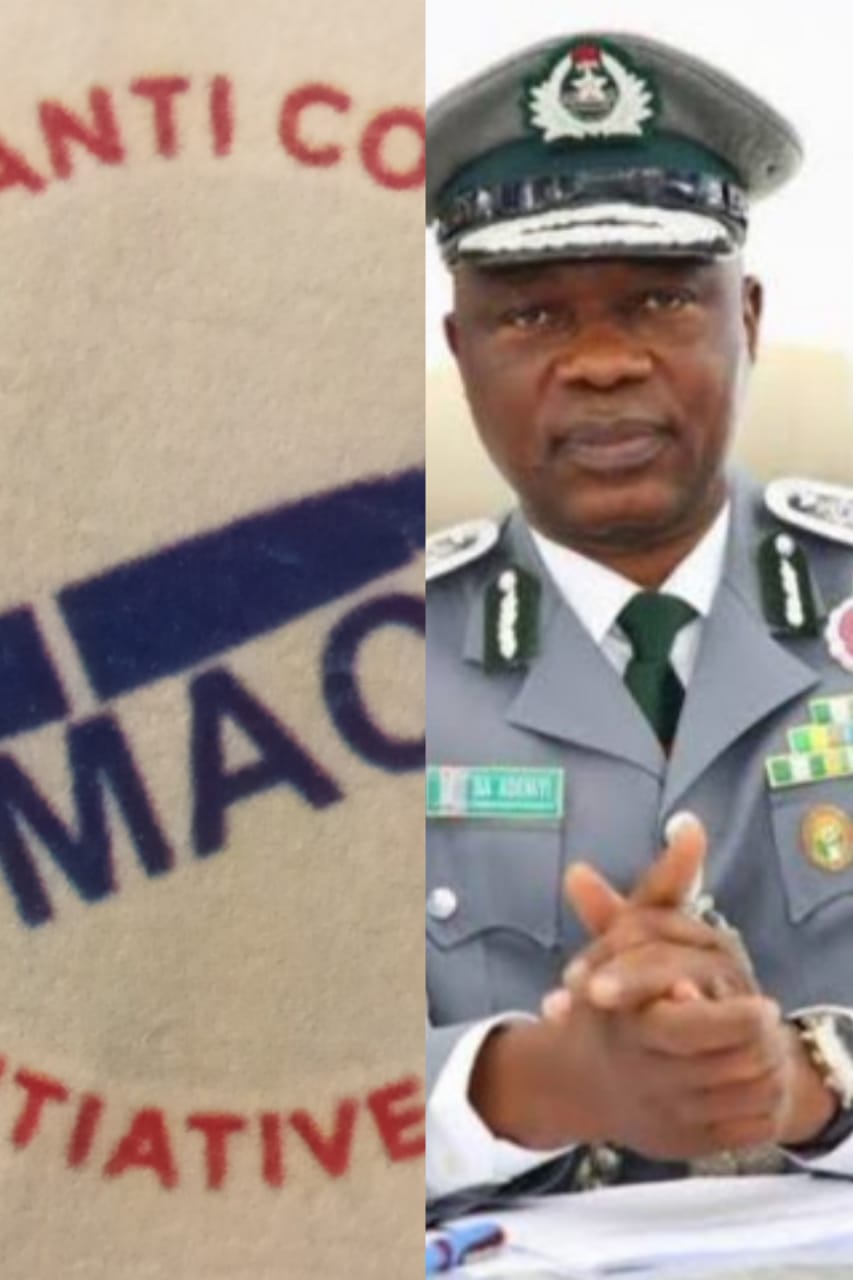
MACI hails Customs’ anti-corruption framework, demands full implementation
Funso OLOJO, Editor
The Media Anti-Corruption Initiative (MACI) has applauded the Comptroller-General of Customs, Adewale Adeniyi, for introducing a comprehensive anti-corruption framework aimed at identifying institutional vulnerabilities, strengthening internal controls and promoting integrity across the operations of the Nigeria Customs Service (NCS).
The initiative, which MACI described as a significant milestone in the fight against corruption within the Service, is anchored on three key documents signed by the Customs chief: the Standard Operating Procedure (SOP) for Internal Corruption Risk Analysis and Mapping (ICRAM), the ICRAM Handbook and the Integrity Action Plan (IAP).
In a statement jointly signed by MACI President, Funso Olojo, and Project Coordinator, Lod Onyeji, the organisation described the development as a “pivotal moment in the fight against corruption within the Nigeria Customs Service.”
Mr Olojo, who commended the initiative of the Customs, noted that the stance of the agency on corruption is in alignment with the aims and objectives of MACI which is an advocate for corruption- free society.
The signing ceremony, held on October 6th, 2026, at the NCS Headquarters in Abuja, also witnessed the inauguration of the ICRAM Steering Committee, which is responsible for identifying, assessing and mapping corruption risks across the Service’s operations.
According to the statement, the framework represents a proactive institutional approach to tackling corruption by identifying vulnerabilities in Customs processes and establishing measures to prevent abuse of office, improve accountability and strengthen public confidence in the Service.
The Comptroller-General, Adeniyi, disclosed that the framework was developed in collaboration with the World Customs Organisation (WCO) and partner administrations, including His Majesty’s Revenue and Customs (HMRC) of the United Kingdom.
He explained that the documents provide practical guidance for Customs officers operating at seaports, land borders and airports, equipping them with procedures and controls designed to promote integrity, transparency and accountability in the discharge of their responsibilities.
MACI noted that the introduction of the framework followed a pilot programme conducted across seven Customs Commands and Units, covering 66 processes spanning regulatory activities, core Customs operations and support functions.
The exercise culminated in the development of a comprehensive Integrity Action Plan containing 101 action items and 295 sub-actions designed to address identified corruption risks and strengthen institutional safeguards.
Key measures outlined in the plan include increased automation and improved audit trails, stronger supervisory mechanisms, clearer accountability structures, effective segregation of duties, regular staff rotations and targeted training programmes.
The framework also seeks to strengthen controls governing interactions between Customs officers and stakeholders, an area considered critical to reducing opportunities for corrupt practices and improving compliance with established procedures.
MACI commended the Customs leadership for adopting a risk-based approach to corruption prevention, noting that identifying and addressing institutional weaknesses before they are exploited is essential to building a transparent and accountable public institution.
The organisation, however, stressed that the effectiveness of the initiative would ultimately depend on the consistent implementation of the prescribed measures across all commands and operational units of the Service.
It therefore urged Customs management, officers, stakeholders and relevant partner institutions to support the full implementation of the framework to ensure that the initiative delivers measurable improvements in institutional integrity.
MACI expressed confidence that effective implementation of the ICRAM framework and Integrity Action Plan would strengthen internal controls, reduce corruption risks, promote ethical conduct and enhance public trust in the Nigeria Customs Service.
The organisation emphasised that the new framework should not merely remain a collection of policy documents but should translate into tangible changes in operational practices, staff conduct and the overall culture of accountability within the Service.
Customs
FOU Zone ‘A’: Aliyu retires after ₦3.19bn revenue recovery, Afeni takes over
Gloria Odion, Maritme reporter
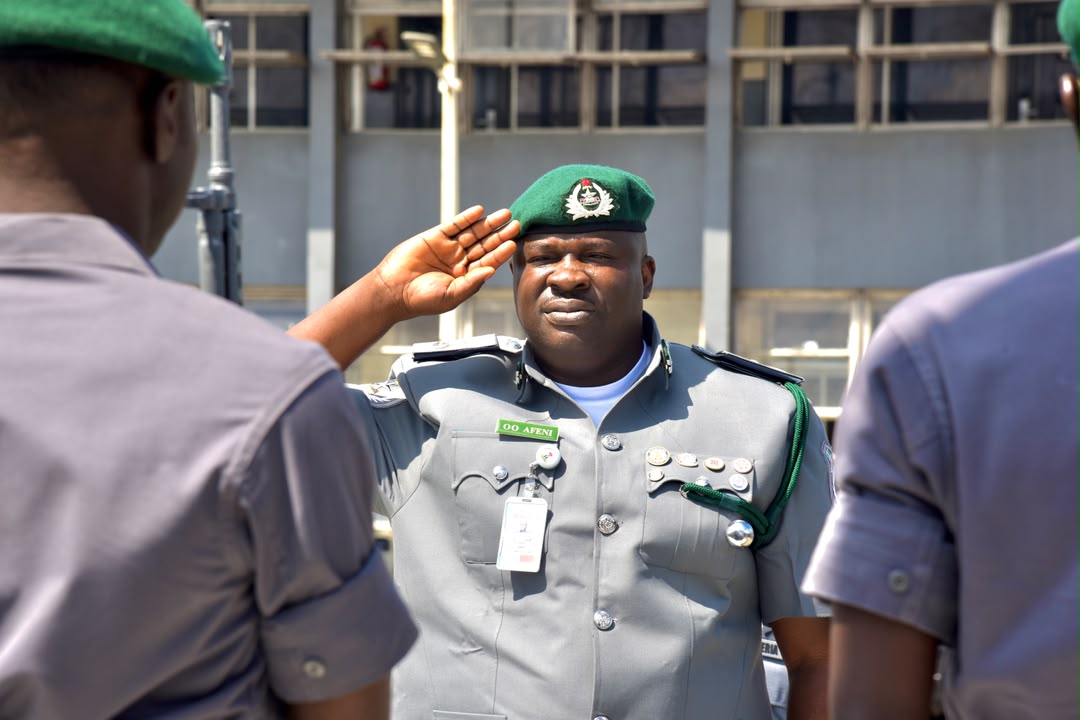
The Nigeria Customs Service (NCS), Federal Operations Unit (FOU) Zone ‘A’, Ikeja-Lagos, on Wednesday, 30th September 2026, welcomed Deputy Comptroller Oladapo Olukayode Afeni as the unit’s 30th Acting Comptroller, following the retirement of Comptroller Gambo Aliyu after a distinguished career in the Service.
The formal handing-over ceremony, held at the unit’s conference hall, was attended by colleagues, friends, well-wishers, senior Customs officers and other stakeholders.
Among those present were the Acting Customs Area Controllers of the Port and Terminal Multipurpose Limited (PTML), Ogun 1 Area Command, and the Enugu/Ebonyi/Anambra Area Command.
Addressing officers and stakeholders for the first time as Acting Comptroller, DC Afeni pledged to provide purposeful, professional and accountable leadership in advancing the mandate of the Nigeria Customs Service.
He expressed appreciation to the Comptroller-General of Customs, Bashir Adewale Adeniyi and the management of the Service for the confidence reposed in him.
The new Acting Comptroller said his administration would strengthen intelligence- led enforcement,tackle revenue leakages and safeguard Nigeria’s economic and security interests.
He said that enforcement operations under his leadership would remain firm, lawful and respectful of human dignity, while legitimate trade would be facilitated through constructive engagement with traders, manufacturers, importers, exporters, customs brokers and other stakeholders.
DC Afeni also called for stronger collaboration with sister security and law enforcement agencies to combat trans -border crimes, particularly the illicit movement of drugs, arms, currencies, counterfeit goods and other prohibited items across the Nigeria border.
He also pledged to prioritise officers’ welfare and professional development, strengthen institutional discipline and encourage regular sporting activities to promote physical fitness, teamwork and work-life balance among personnel.
In his handing-over address, the immediate past Comptroller, retired Comptroller Gambo Aliyu, expressed gratitude to God and the Service, describing the ceremony as an important transition in leadership and an opportunity to reflect on the responsibilities and challenges of commanding the unit.
Comptroller Aliyu said his administration persevered on combating smuggling, revenue fraud, concealment, under-declaration, false declaration and the illicit movement of prohibited goods.
The report,according to him includes, recorded 779 seizures during his tenure, involving various prohibited and illegally imported items, including:
- More than 20,900 bags of foreign parboiled rice;
- 61 used vehicles;
- Thousands of used compressors and clothing items;
- Foreign poultry products;
- 4,418 jerrycans of vegetable oil;
- 12,606 parcels of cannabis weighing 6,194.3kg;
- 2.30kg of cocaine;
- More than 3,000 jerrycans of Premium Motor Spirit (PMS), equivalent to 76,505 litres; and
- 22 elephant tusks weighing 130.84kg.
According to him, the seizures had a combined duty-paid value of ₦13,075,056,616.00.
On revenue recovery, Comptroller Aliyu disclosed that the unit recovered ₦3,192,511,547.52 between 10 December 2025 and 24 September 2026.
He said the figure represented 798 per cent of the unit’s ₦400 million annual revenue recovery target for 2026, while also recording a 776 per cent increase over the ₦411,451,901.18 recovered during the corresponding period in 2025.
Aliyu attributed the performance to strengthen risk profiling, stricter compliance checks, targeted examination of suspicious declarations, teamwork,and collaboration with sister agencies and stakeholders.
He stressed that effective enforcement required collective efforts, noting that “no enforcement agency can succeed in isolation.”
Concluding his address, the retired Comptroller congratulated his successor and expressed confidence that the new administration would build on the operational foundation already established.
He urged DC Afeni to lead with fairness, firmness, courage and sound judgment, while assuring him of the cooperation and support necessary to sustain the unit’s mandate.
Comptroller Aliyu also commended officers of the unit for their loyalty, discipline and resilience throughout his tenure.
He prayed for the success of the new leadership, the continued growth of the Nigeria Customs Service and the security and prosperity of Nigeria.
Customs
Mu’azu steps in as 33rd CAC at Apapa port as Oshoba bows out
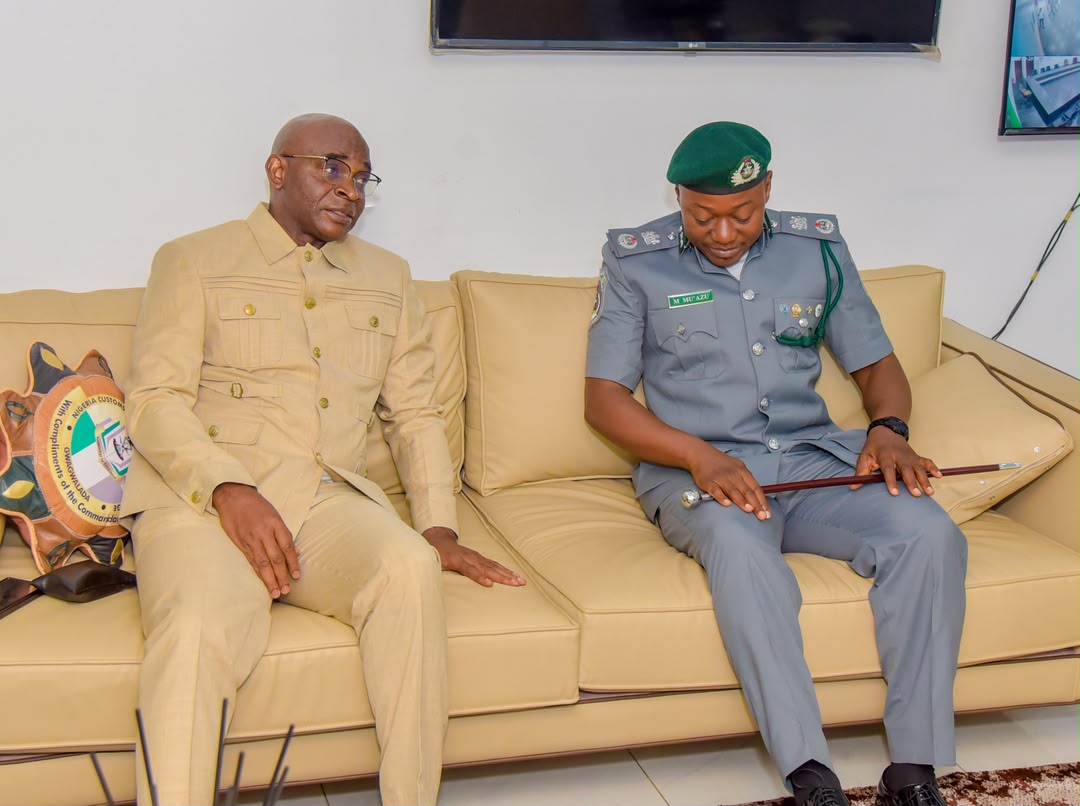
— Vows to sustain ₦323bn monthly revenue record, end cargo delays
Funso OLOJO, Editor
Comptroller Murtala Mu’azu has assumed duty as the 33rd Customs Area Controller (CAC) of the Apapa Area Command, pledging to sustain the Command’s revenue momentum while eliminating avoidable delays in cargo clearance and strengthening trade facilitation at Nigeria’s busiest port.
Mu’azu formally took over from Comptroller Emmanuel Oshoba (rd) on Tuesday, September 29th, 2026, at a ceremony held at the Auditorium of the Apapa Area Command, Lagos, attended by senior security and regulatory officials, government agencies, terminal operators, shipping companies, customs brokers, importers, exporters and other port stakeholders.
The new Controller inherits a Command that recently posted some of the most impressive revenue figures in its history, including a record ₦323 billion monthly collection in July 2026 and a single-day collection of ₦28.102 billion on August 18, 2026.
Acknowledging the weight of the responsibility before him, Mu’azu described his appointment as “a great honour and privilege,” thanking the Comptroller-General of Customs, Bashir Adewale Adeniyi, for the confidence reposed in him.
He pledged to discharge the responsibility with “a deep sense of duty” and in line with the economic interests of the country, promising to build on the Command’s achievements in revenue generation, enforcement, trade facilitation and institutional discipline.
The new CAC said his administration would be anchored on the three strategic pillars of the Comptroller-General — consolidation, collaboration and innovation — with particular attention to revenue integrity, efficient trade facilitation, professionalism and meaningful engagement with stakeholders.
On revenue collection, Mu’azu was unequivocal, declaring that every revenue due to government must be properly assessed and collected.
“Every revenue due to government must be properly assessed and collected, and every decision taken by our officers must be capable of standing the test of scrutiny over time,” he said.
But beyond revenue, the new Controller signalled that reducing bottlenecks in cargo clearance would be a major priority of his administration.
He declared that avoidable human delays in cargo processing, which he described as “Non-Tariff Barriers”, would no longer be tolerated.
“Unnecessary human delays in cargo processing otherwise known as Non-Tariff Barriers shall not be tolerated henceforth,” Mu’azu said.
According to him, once all statutory requirements have been met, legitimate cargo should be allowed to move without unnecessary obstruction.
He consequently charged Customs officers to maintain discipline, professionalism, courtesy and decorum in their dealings with importers, exporters, customs brokers and other members of the trading public.
Mu’azu also promised to deepen collaboration with importers, exporters, licensed customs agents, shipping companies, terminal operators, the Nigerian Ports Authority and other government agencies operating within the port environment.
He said such collaboration was essential to making Apapa Port more efficient, predictable and responsive to legitimate trade.
The new CAC openly acknowledged the scale of the revenue challenge left by his predecessor, Oshoba, particularly the unprecedented figures recorded under the outgoing Controller.
“This is indeed a record to reckon with and strive towards matching same. It is therefore a Herculean task upon myself and my team to match and surpass such a record,” Mu’azu said.
He also commended Oshoba for his contributions to enforcement, trade facilitation and the implementation of key modernisation initiatives of the Nigeria Customs Service.
Among the initiatives highlighted were B’Odogwu, Advance Ruling, the Authorised Economic Operator Programme, the One-Stop Shop and Non-Intrusive Inspection technology.
The Advance Ruling programme, in particular, has been positioned as a mechanism for providing greater predictability to legitimate traders by enabling them to obtain clarity on Customs treatment before importation.
Oshoba had, in his farewell address, described Advance Ruling as an initiative that provides legitimate traders with greater predictability and clarity on Customs treatment before importation, thereby reducing uncertainty and strengthening confidence in the trading environment.
In his farewell remarks, Oshoba attributed the achievements recorded during his tenure to the collective efforts of officers, stakeholders and partners of the Command.
“The achievements recorded during my tenure do not belong to one individual. They belong to all of us,” he said.
He charged officers to sustain the standards established during his tenure, stressing that discipline, professionalism and excellence must remain central to the Command’s operations.
“Discipline must remain our foundation, professionalism our standard and excellence our aspiration,” Oshoba said.
He also appealed to officers and stakeholders to extend the same cooperation and support to his successor.
Mu’azu, in turn, called for collective ownership of the Command’s mandate, stressing that the responsibility for sustaining Apapa’s performance could not rest on the CAC alone.
“The success we seek cannot be achieved by the CAC alone. It requires our collective efforts, operational integrity and willingness to uphold the standards of the Service,” he said.
He assured stakeholders that his administration would operate an open and constructive engagement framework based on fairness, mutual respect and the national interest.
With the transition now completed, the new Apapa Customs administration faces the dual task of protecting the Command’s record-breaking revenue performance while making cargo clearance faster, more predictable and less burdened by avoidable administrative delays.
Mu’azu expressed confidence that, with the support of officers and stakeholders, Apapa Area Command would continue to serve as a model of efficient revenue administration, legitimate trade facilitation and professional Customs conduct.

 Customs3 months ago
Customs releases final recruitment list for ASC II, ends nearly one-year wait for applicants
- Headlines3 months ago
As NRC recovers ₦200m stolen railway assets, Opeifa vows diligent prosecution of suspects
- Customs3 months ago
Customs launches MIS file tracker at PTML in fresh digitalisation drive
- Customs2 months ago
Apapa Customs sets new record of monthly revenue haul with ₦323bn collection in July
- Customs2 months ago
Apapa Customs sets new single-day revenue record with ₦28.1bn collection
- Headlines1 month ago
Oyetola presents three-year score card as blue economy industry revenue hits ₦1.83trn