Commentaries
Atiku’s border promise: Between political expediency and Nigeria’s national interest
Okey IBEKE
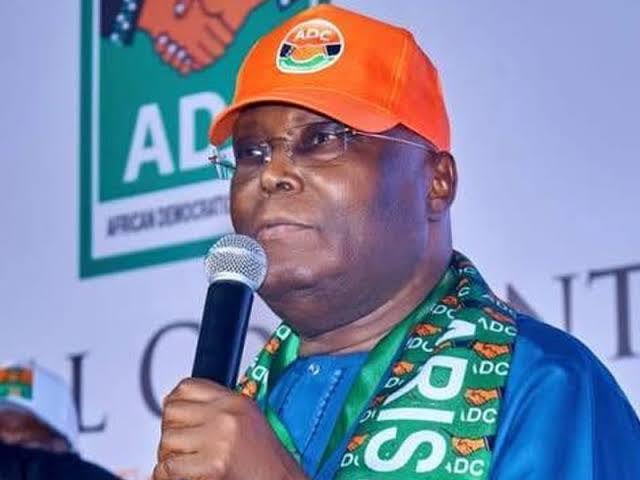
Former Vice President Atiku Abubakar’s promise to reopen Nigeria’s land borders if elected president in 2027 may appeal to traders and border communities who depend on cross-border commerce.
But the promise raises a more important question: what exactly does he intend to reopen?
The Federal Government has challenged the premise of the proposal, insisting that Nigeria’s borders are not closed.
Minister of Interior, Olubunmi Tunji-Ojo, recalled that Seme, Illela, Maigatari and Mfum borders were reopened in December 2020, followed by Idiroko and Ikom for goods and services in April 2022.
The present administration also opened Kamba and Tsamiya borders in Kebbi State in February 2026.
Atiku reportedly made his promise on August 26th, 2026 while receiving a political support group in Abuja.
He said he would reopen the land borders and develop southern ports to boost trade if elected in 2027, arguing that restrictions had hurt legitimate trans-border commerce, contributed to business failures and pushed some young entrepreneurs into unemployment.
There is undoubtedly a case for making Nigeria’s border administration more efficient. Border communities depend on trade with neighbouring countries, while Nigerian businesses need access to regional markets.
Unnecessary delays, poor infrastructure, excessive bureaucracy and multiple checkpoints are already being addressed.
Legitimate traders should be able to move their goods without avoidable obstacles.
But legitimate trade is not the same as smuggling.
The fact that Nigerians have traded across these borders for generations does not, by itself, make every such activity lawful.
Trade is legitimate when it complies with the law: goods are brought through approved entry points, properly declared and documented, applicable duties and taxes are paid, and the relevant regulations are observed.
A trader who meets those requirements is engaged in legitimate commerce. Someone who avoids approved routes, conceals goods, evades duties or brings prohibited commodities into the country is smuggling, irrespective of how long the practice has existed.
This distinction matters because compliant businesses already bear the costs of operating within the law.
Importers and manufacturers pay duties, taxes, regulatory charges, transportation costs and other expenses.
Allowing competitors to evade those obligations gives the law-abiding businessman a disadvantage and distorts the market.
This is why the Nigeria Customs Service is simultaneously facilitating legitimate trade, protecting government revenue and enforcing import and export regulations.
Its growing use of automation, risk management and digital processing is aimed at reducing friction for compliant traders while improving the detection of suspicious transactions.
The sensible objective, therefore, is smarter border administration that makes lawful commerce easier without giving illicit trade room to flourish.
There is also a security dimension that any serious border policy must confront. Nigeria’s borders are vulnerable to the movement of arms, narcotics, trafficked persons and other illicit goods, while some restrictions have been imposed specifically because of terrorism and insecurity.
Tunji-Ojo made this point in responding to Atiku’s references to Cameroon, Chad, Niger and Benin.
He explained that the Banki and Amchidé crossings with Cameroon were closed in 2014 because of the Boko Haram insurgency, rather than because of the 2019 trade policy.
Some crossings were subsequently reopened following security and stabilisation efforts involving Nigeria and neighbouring countries.
That history makes it difficult to treat border management as simply a matter of removing economic restrictions.
A crossing that is commercially useful can also be exploited by criminal networks, making security considerations an unavoidable part of any decision to relax controls.
If Atiku’s proposal is to simplify documentation, improve infrastructure, eliminate unnecessary bureaucracy, strengthen regional trade and make it easier for legitimate small-scale traders to operate, then those objectives are difficult to oppose.
They are consistent with Nigeria’s efforts to deepen regional commerce under the African Continental Free Trade Area.
But if “reopening the borders” means changing the rules that distinguish legitimate commerce from illicit activity, Nigerians deserve to know.
Which controls would be removed? Which duties would change? Would Customs declarations remain compulsory? Would prohibited goods remain prohibited? How would legitimate businesses be protected from cheaper smuggled alternatives? And what safeguards would remain against the movement of arms, narcotics and other illicit commodities?
These questions are not technicalities. They are the substance of a credible border policy.
There is also an unmistakable political attraction in Atiku’s promise. With the 2027 election approaching, appealing directly to traders and border communities offers a politically convenient message: remove the restrictions and revive commerce.
But presidential policy cannot be reduced to what sounds attractive during an election campaign.
Atiku has every right to challenge the policies of the present administration and offer an alternative.
Indeed, criticism of government policy is an essential part of democratic politics. But a presidential candidate should also be expected to explain how his alternative would work, what it would cost and what safeguards would protect the wider national interest.
Nigeria needs more legitimate trade with its neighbours, not less. It needs better border infrastructure, faster clearance, simpler procedures and stronger regional integration.
None of these requires abandoning the government’s responsibility to regulate what enters the country.
The better approach is to make legitimate trade easier without making illegal trade easier.
That means technology-driven customs procedures, transparent documentation, efficient border infrastructure, predictable charges and risk-based inspections.
Traders who comply with the law should encounter fewer obstacles; those who deliberately evade it should not be allowed to gain an unfair advantage.
Atiku’s 2027 proposal should therefore be judged not by the emotional appeal of “reopening the borders” but by the policy behind the slogan.
If he believes the present system is unnecessarily restrictive, he should identify the specific restrictions he intends to remove.
If he believes legitimate border trade is being suffocated, he should explain how he would formalise and facilitate it without encouraging smuggling.
And if security controls are to be relaxed in particular areas, he should explain how the resulting risks would be managed.
That is the level of debate Nigerians should expect from someone seeking the presidency, especially one like him that was a very senior Customs officer.
The danger is that, in the rush to distinguish himself politically ahead of 2027, Atiku may be offering a simple answer to a problem that is anything but simple.
Border communities need economic opportunities, but Nigeria also needs revenue, lives and economic protection, regulatory compliance and national security. These interests are not mutually exclusive.
Atiku’s ambition to return to the presidency is legitimate. But the pursuit of that ambition should not turn border policy into a political bargaining chip.
The question Nigerians should ultimately ask is not whether the borders should be “opened”.
It is whether Atiku’s proposal would expand legitimate trade while protecting Nigeria’s economic and security interests—or simply loosen rules that exist for a political reason.
That is the real issue behind the 2027 border promise.
Mr Okey IBEKE is the Principal Consultant, International Trade Advisory Services Ltd





Commentaries
Choking in Apapa, idle in Calabar: Fixing Nigeria’s one-sided maritime system
Monday Discourse with Ibrahim Nasiru
For decades, Nigeria has been doing something completely upside down with its maritime business
We have over 850 kilometers of beautiful coastline, yet we force almost all our international trade to squeeze through just two choked locations: Apapa and Tin Can Island in Lagos.
The result? Nightmare traffic jams, crazy demurrage fees, and local businesses dying because their goods are trapped at sea for weeks.
But from what we saw at the World Maritime Day celebration in Lagos, a real, common-sense change might finally be on the horizon.
The Minister of Marine and Blue Economy, Adegboyega Oyetola, laid out a very clear plan under the theme, “From Policy to Practice: Powering Maritime Excellence.” ,
He promised that the government is fully committed to modernizing ports outside Lagos—specifically Onne, Warri, and Calabar—while building new deep seaports in places like Ondo, Ibom, and Bonny.
He also unveiled a big drive to train young Nigerian sailors to global standards so they can compete for jobs anywhere in the world.
As an analyst who looks at the actual numbers, this is where we need to pay close attention.
The ministry has already scored some big wins. Getting the United States Coast Guard to lift its long-standing security restrictions on ships coming from Nigeria is a massive deal.
It means fewer delays, lower shipping insurance costs, and cheaper goods for ordinary Nigerians when those savings drop down the supply chain.
Also, moving our local fish production from 1.1 million to 1.4 million metric tonnes shows that things are actually moving.
However, during her keynote presentation at the event, maritime expert, Mrs. Mfon Ekong Usoro, hit the nail on the head.
She reminded stakeholders that Nigeria’s maritime future depends entirely on moving from sound paperwork to actual, visible results.
Let’s tell ourselves the home truth: the real success of Oyetola’s ministry will not be judged by the fine speeches or brilliant policies presented at luxury hotels.
It will be judged by how quickly we can break the monopoly of the Lagos ports.
Opening up the eastern and southern ports is no longer just a good idea; it is a matter of economic survival.
When you make Onne, Warri, and Calabar fully functional, you instantly bring life back to regional economies, create thousands of local jobs, and make things cheaper for tens of millions of citizens living outside the South-West.
But a port is completely useless if you cannot get goods out of it. You cannot run a modern port if you rely only on heavy trucks fighting broken roads.
Oyetola’s ministry must work hand-in-hand with the Ministry of Transport. We need to see working rail lines laid straight into the ports of Onne and Calabar, connecting them directly to Inland Dry Ports like Baro and Onitsha.
Also, the government must use the new Nigerian Ports Economic Regulatory Agency(NPERA) Act to completely crush the official corruption, crazy hidden charges, and delays that have historically scared international shipping lines away from our eastern ports.
The roadmap is there, and the international community is already noticing through the lifted US security restrictions.
Now, the federal government needs the political muscle to build the rail and road connections to back it up.
It is time to move from policy to practice, open up our eastern waterways, and let the whole country breathe.
Ibrahim Nasiru, a public affairs analyst, writes from Abuja
Commentaries
The Olokola Conundrum: DP World, Dangote, and ghosts of Nigeria’s contractual sanctity
Monday Discourse with Ibrahim Nasiru
The Ogun State Government’s recent signing of a $7 billion Memorandum of Understanding (MoU) in Paris with Dubai’s DP World has been loudly celebrated by state publicists as a monumental triumph for foreign direct investment.
The ambitious agreement aims to develop the Gateway Deep Sea Port and the Blue Marine Special Economic Zone within the strategic Olokola axis.
However, to seasoned watchers of Nigeria’s industrial policy and maritime concessions, this fresh diplomatic foray triggers a profound sense of deja vu.
By overlapping a fresh international agreement onto a maritime asset where the Dangote Group still holds an active, multi-billion naira partnership and controlling stake, the current administration is navigating a legal and political minefield.
The Olokola project is not a blank canvas; it is a highly contested zone haunted by historical policy reversals and unresolved sovereign commitments.
To understand the volatile structural foundations of Olokola, one must revisit its ambitious inception in 2004.
Conceived under the visionary yet politically fraught collaboration between former Governor Gbenga Daniel of Ogun State and the late Governor Olusegun Agagu of Ondo State, the Olokola Free Trade Zone was designed to be the ultimate crown jewel of Nigeria’s maritime and energy independence.
It attracted an elite, multi-billion dollar investment profile, headlined by the ill-fated Olokola Liquefied Natural Gas (OKLNG) project, backed by global giants including the NNPC, Shell, Chevron, and the BG Group.
Yet, despite its peerless economic blueprint, the entire enterprise famously collapsed under the weight of inter-state political rivalries, bureaucratic paralysis, and sudden federal policy shifts.
When international oil companies pulled out due to a lack of institutional guarantees, local conglomerates like the Dangote Group stepped in to secure strategic stakes, preserving the asset’s industrial viability for the future.
Bypassing this historical footprint without a clean legal resolution is an invitation to systemic friction.
Therefore, the current strategy of double tracking agreements over the exact same geographical and maritime asset represents a dangerous institutional risk.
While the state’s aggressive drive to unlock the economic potential of the Ogun coastline and expand the nation’s blue economy is highly commendable, courting a Middle Eastern maritime giant like DP World while ignoring an existing domestic investor creates severe legal vulnerabilities.
In global shipping and port development, international operators look for absolute clarity regarding terminal operations, land titles, and concession limits
You cannot sustainably attract premium global capital by exposing them to immediate, multi-billion naira litigation from entrenched domestic players who have already sunk enormous resources into the zone’s foundational layout.
International project financiers and global port operators do not just look at shiny executive MoUs signed in European capitals; they look closely at local title security, asset de-risking, and a host state’s history of respecting contract sanctity.
If Nigeria is to successfully position its emerging seaports as competitive hubs within the West African sub-region, it must learn to operate under the global standard of a landlord port model where rights are clearly defined and legally unassailable.
Overlapping political promises only serve to drive away serious developers and delay actual infrastructure delivery.
The global investment community is watching how Nigeria treats its premier industrial actors, and any sign of flip-flopping on contractual terms acts as a major red flag for foreign direct investment.
Ultimately, if Ogun State truly wants the Olokola Deep Seaport to transition from a twenty year boardroom dream into a world class maritime reality, it must aggressively clear its legal debts first.
The administration must pivot away from performative international signings and sit down at a transparent renegotiation table to cleanly buy out or harmonize interests with the Dangote Group.
Failing to do so will ensure that this $7 billion UAE deal suffers the exact same paralyzing fate as the 2004 OKLNG blueprint.
In the high stakes theater of global infrastructure, true economic growth is built on the unyielding sanctity of existing laws and contracts—not on the shifting sands of political expediency.
Ibrahim Nasiru, a public affairs analyst, writes from Abuja
Commentaries
Our Oceans, Our Wealth: The real benefits of new fishing port
Monday Discourse with Nasiru Ibrahim
Nigeria has a very long coastline, but we have ignored our oceans for decades. Our major sea gateways, from Apapa to Port Harcourt, are mostly built to handle crude oil exports and heavy manufacturing containers.
Meanwhile, the local fishing industry—which has the capacity to feed the entire nation and create vast wealth—has been left to survive entirely on its own.
This is why the recent announcement by the Managing Director of the Nigerian Ports Authority (NPA), Dr. Abubakar Dantsoho, makes a lot of sense.
Speaking through a representative at the National Conference on Sustainable Fishing in Lagos, the NPA boss stated that Nigeria plans to build a specialized fishing port to finally harness the true value of our ocean resources.
As the country tries to grow its marine and blue economy, this move is completely long overdue.
For a very long time, Nigeria has suffered from an intense oil blindness, focusing all investments on petroleum while ignoring the massive economic potential floating right on our waters.
Right now, our deep seas are teeming with valuable fish, but because we lack proper docks, specialized marine structures, and secure landing sites for large fishing vessels, foreign ships enter our territory and steal our marine resources every single year.
A dedicated fishing port will change this entirely. It will give our local operators and commercial fishing trawlers a safe, modern, and legally protected base to harvest, dock, and process their catch.
Instead of letting foreign poachers dominate our waters, a specialized port ensures that Nigeria profits directly from its own geographical blessings.
We cannot talk about maritime infrastructure without looking at the kitchen table, especially since the average Nigerian family is facing a massive food crisis.
Severe inflation has turned basic proteins like fish and beef into luxury items that ordinary people can no longer afford.
A specialized fishing port will help fix this supply chain problem. The NPA’s plan involves creating dedicated fish terminals equipped with modern cold-room facilities, meaning local fishermen can preserve their catch immediately without it spoiling on the high seas.
When fish can be safely stored and transported into local markets without rotting, the overall supply goes up. When supply goes up, the price goes down, helping ordinary citizens put affordable protein back on their dining tables.
Furthermore, a modern fishing port is much more than just a place to park boats; it is a full-scale industrial business hub.
Building a specialized facility will spark immediate economic activity along our coastlines, naturally attracting seafood processing factories, boat repair yards, ice-making companies, and specialized transport networks.
This infrastructure will create thousands of genuine jobs for young people, refrigeration technicians, boat mechanics, and market women who dominate the local seafood trade. It bridges the gap between rural, traditional fishing and modern, industrial maritime commerce, bringing life back to struggling coastal communities.
The NPA has presented a great vision, and using a Public-Private Partnership model to fund it is a smart strategy.
But as Nigerians, we know our main problem is never a shortage of good plans—it is making those plans actually happen on the ground.
If this fishing port is going to transform our economy, the government must move quickly from conference papers to physical construction. We need to see real investments start on our coastlines.
Utilizing our ocean resources is one of the smartest ways to build a country that does not rely solely on oil. It is time to stop looking at our waters as just shipping lanes, and start treating them as the goldmines they really are.
Ibrahim Nasiru, a public affairs analyst, writes from Abuja.

 Customs3 months ago
Customs releases final recruitment list for ASC II, ends nearly one-year wait for applicants
- Headlines2 months ago
Oyetola presents three-year score card as blue economy industry revenue hits ₦1.83trn
- Customs2 months ago
Apapa Customs sets new single-day revenue record with ₦28.1bn collection
- Customs2 months ago
Apapa Customs sets new record of monthly revenue haul with ₦323bn collection in July
- Customs3 months ago
Customs launches MIS file tracker at PTML in fresh digitalisation drive
- Customs3 months ago
NCS intercepts container concealing pump-action rifle parts, seizes ₦373.8m worth of cannabis products at Tincan Port