Headlines
Lagos govt.donates operational vehicles to NRC to boost railway security
Funso OLOJO Editor
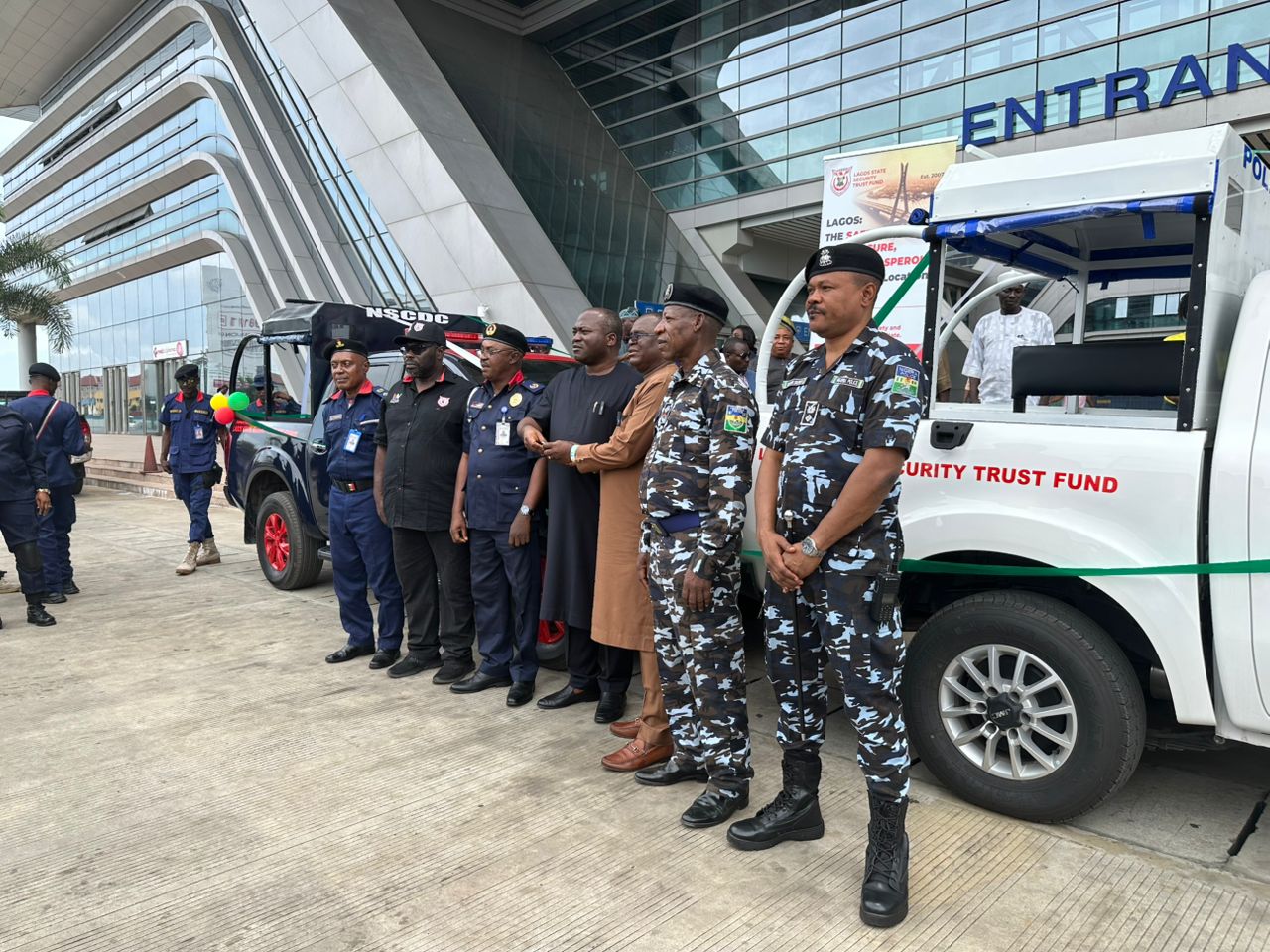
The Lagos State Government, through the Lagos State Security Trust Fund (LSSTF), has donated two operational vehicles to the Nigerian Railway Corporation (NRC) to strengthen security operations and enhance the protection of railway infrastructure and other critical national assets.
The vehicles were formally handed over to the Managing Director/Chief Executive Officer of the NRC, Dr. Kayode Opeifa, at the Mobolaji Johnson Train Station, Ebute Metta, Lagos.
Presenting the vehicles, the Executive Secretary/CEO of the LSSTF, Dr. Ayodele Ogunsan, said the intervention was part of the state government’s continued support for security agencies and institutions operating within Lagos.
Ogunsan, who was accompanied by the Administrative Secretary of the Fund, Mr. Demola Lewis, said the vehicles would enhance the capacity of security personnel attached to the railway to respond promptly to vandalism, theft and other criminal activities along the railway corridor.
He commended the ongoing transformation at the NRC under Opeifa’s leadership, saying the state government considered it necessary to provide additional support to safeguard railway infrastructure and improve operational effectiveness.
The LSSTF chief urged the Nigeria Police Railway Command and the Nigeria Security and Civil Defence Corps (NSCDC), which are expected to deploy the vehicles for railway security operations, to ensure their judicious use.
He said the Fund had a monitoring mechanism to ensure that security assets provided through its interventions were deployed strictly for the purposes for which they were donated.
According to Ogunsan, responsible utilisation of the vehicles would encourage the state government and the Fund to provide additional support whenever necessary.
Responding, Opeifa expressed appreciation to the Lagos State Government, particularly Governor Babajide Olusola Sanwo-Olu, for its continued support for the NRC and its efforts to improve railway security and operations.
He also commended the leadership and staff of the LSSTF for their commitment, partnership and sustained support towards the safety and security of the railway system in Lagos.
Opeifa said the donation would significantly strengthen the capacity of security agencies attached to the railway to protect passengers, railway infrastructure and other critical assets.
He assured the Lagos State Government and the LSSTF that the vehicles would be deployed strictly for the purposes for which they were donated.
The NRC Managing Director also appealed to other state governments, particularly the 26 states where the Corporation has operational presence, to support efforts to protect railway infrastructure.
He stressed that stronger collaboration between the NRC, state governments and security agencies would facilitate faster responses to vandalism and other criminal activities affecting railway assets.
Opeifa also made a personal donation to the LSSTF and called on NRC employees, corporate organisations and residents of Lagos to continue supporting the Fund’s efforts to enhance security across the state.
Beyond the provision of the vehicles, he disclosed that the Lagos State Government had expressed readiness to rehabilitate some roads within the railway compound and install solar-powered streetlights after the completion of the ongoing works.
He further disclosed that work was ongoing on a major storm-water drainage project designed to channel water from the railway compound towards the Mile 2 lagoon.
According to him, the drainage project, which commenced earlier in the year, has significantly improved the environment around the railway compound and helped address the perennial flooding previously experienced during heavy rainfall.
Police, NSCDC pledge responsible use
Speaking on behalf of the security agencies, the representative of the Commissioner of Police, Nigeria Police Railway Command, Deputy Commissioner of Police (DCP) Yahaya Usman, thanked the Lagos State Government and the LSSTF for the donation to the Nigeria Police Force and the NSCDC.
He assured that the vehicles would be deployed strictly for railway security operations and used responsibly to strengthen surveillance, patrol and rapid-response capabilities along the railway corridor.
The intervention further underscores the growing partnership between the NRC and the Lagos State Government in promoting safer railway operations, protecting critical infrastructure and improving the security of passengers and communities along the railway network.




Headlines
Oyetola pledges Independent port regulation as he unveils NPERA Act, Logo in Lagos
– directs transition committee as FG targets balanced modernisation of ports nationwide
Funso OLOJO with Gloria Odion
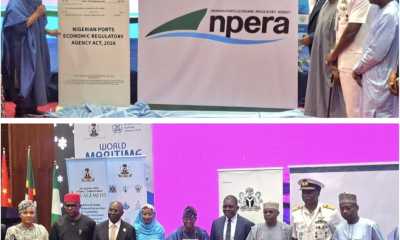
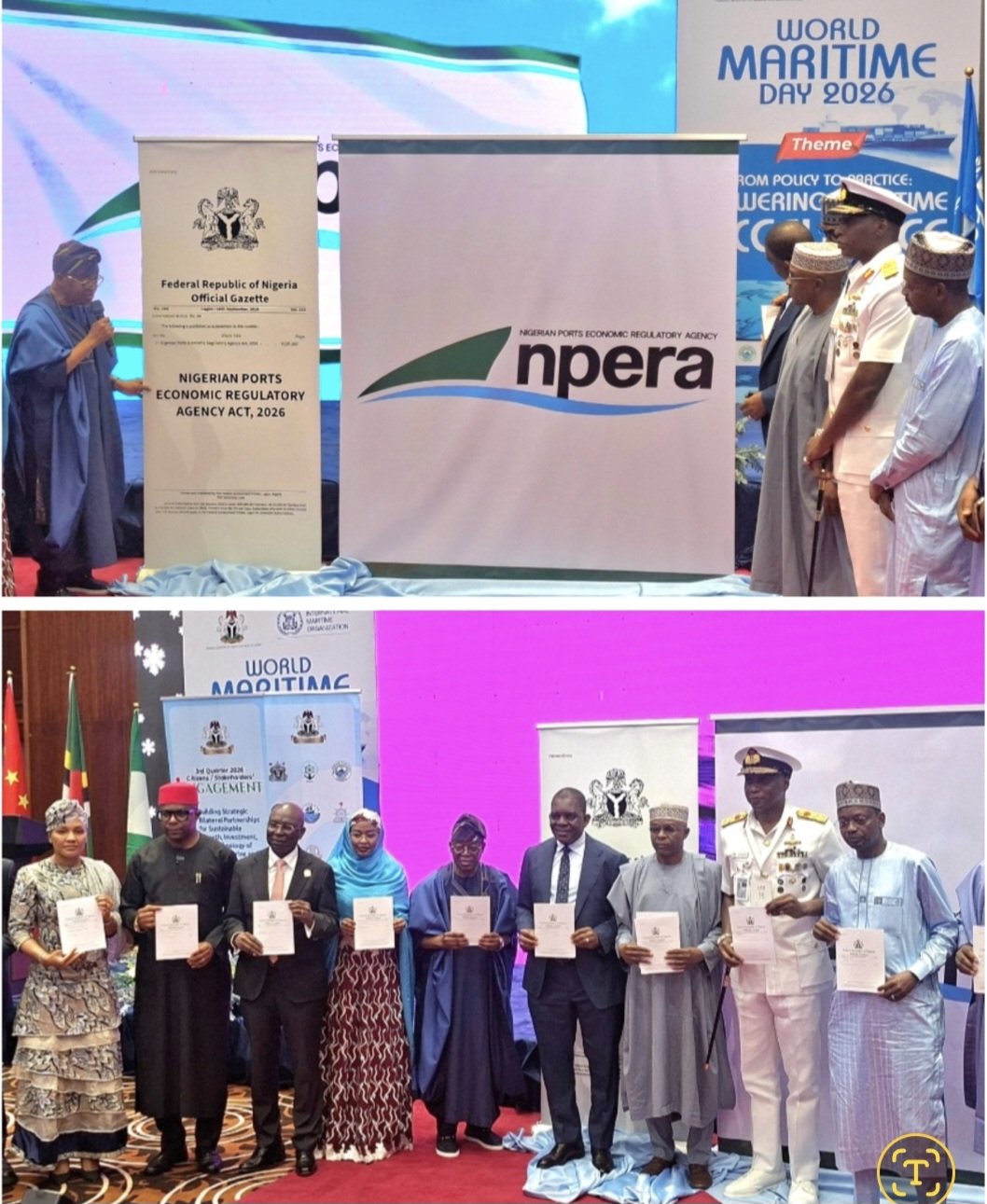
The Minister of Marine and Blue Economy, Adegboyega Oyetola, has unveiled the gazetted Nigeria Ports Economic Regulatory Agency (NPERA) Act, 2026, alongside the agency’s official logo, signalling the Federal Government’s move to establish a substantive framework for economic regulation of Nigeria’s port industry.
Oyetola, who made the announcement on Friday, October 16th,2026 at the Third Quarter 2026 Citizens’ and Stakeholders’ Engagement of the Federal Ministry of Marine and Blue Economy in Victoria Island, Lagos, said the new regulatory framework would strengthen investor confidence, promote fair competition and improve the global competitiveness of Nigerian ports.
The development follows President Bola Ahmed Tinubu’s assent to the NPERA Act in June 2026, bringing nearly two decades of efforts to institutionalise port economic regulation closer to fruition.
Speaking at the engagement, themed “Building Strategic Bilateral Partnerships for Sustainable Growth, Investment, and Technology of Nigeria’s Marine and Blue Economy,” the minister disclosed that he had directed the immediate constitution of a ministerial committee to oversee the transition of the Nigerian Shippers’ Council, which has served as the interim port economic regulator since 2014, into the new agency.
Under the new framework, NPERA will regulate port tariffs and charges, promote competition, enforce service standards, resolve commercial disputes and protect the interests of port users.
Oyetola stressed that the effectiveness of the agency would depend largely on its independence, impartiality and ability to discharge its statutory responsibilities without conflicts of interest.
“The credibility of an economic regulator rests, in no small measure, on its independence, impartiality and freedom from responsibilities that could give rise to actual or perceived conflicts of interest,” he said.
He therefore directed the agency to operate as an impartial arbiter, insulated from competing regulatory and operational responsibilities.
The establishment of NPERA is expected to provide a more structured framework for addressing commercial disputes, improving transparency in port pricing and strengthening accountability across the maritime value chain.
Beyond regulatory reforms, Oyetola reaffirmed the Federal Government’s commitment to modernising ports across the country, stressing that the programme would not be concentrated in Lagos at the expense of other maritime gateways.
He identified Apapa, Tin Can Island, Onne, Rivers, Delta and Calabar ports among the facilities earmarked for modernisation, describing balanced port development as essential to expanding trade opportunities and stimulating economic activities across Nigeria.
“No part of our national port system will be left behind in this modernisation programme,” the minister declared.
He emphasised that ports outside Lagos remained critical to Nigeria’s economic future and would play important roles in improving cargo distribution, strengthening regional trade and reducing pressure on the country’s busiest maritime gateways.
Oyetola also disclosed that the Federal Government had approved the development of six deep seaport projects at Ibom, Bakassi, Agge, Gateway, Ondo and Bonny.
According to him, the proposed projects are intended to expand the country’s maritime capacity, improve logistics infrastructure and strengthen Nigeria’s position as a regional shipping and trade hub.
The projects, alongside the planned modernisation of existing ports, form part of the government’s broader strategy to improve the efficiency of the maritime sector and unlock the economic potential of the nation’s coastline and inland waterways.
On maritime security, the minister said Nigeria had maintained zero piracy incidents in its territorial waters through the Deep Blue Project, describing the achievement as evidence of progress in securing the country’s maritime domain.
He also highlighted the removal, in August 2026, of the 12-year United States Coast Guard Condition of Entry imposed on vessels arriving in the United States from Nigeria.
The restriction, which had been in place since 2014, required affected vessels to comply with additional security measures before arriving at US ports.
Oyetola said its removal reflected improvements in Nigeria’s maritime security architecture and compliance with the International Ship and Port Facility Security Code.
The development is expected to ease additional security requirements previously imposed on affected vessels and support the competitiveness of Nigerian shipping and international trade.
The minister also reiterated the Federal Government’s commitment to strengthening indigenous shipping capacity through improved access to financing for qualified Nigerian shipowners.
He disclosed that he had directed the Nigerian Maritime Administration and Safety Agency (NIMASA) to work with approved Primary Lending Institutions to accelerate the processing and disbursement of the Cabotage Vessel Financing Fund (CVFF) to eligible applicants.
The fund was established to support the development of indigenous capacity in coastal and inland shipping, including the acquisition and operation of vessels by Nigerian operators.
Faster access to the fund is expected to help address financing constraints facing local shipping companies and improve their ability to participate in the maritime transport market.
Oyetola further underscored the importance of international cooperation in advancing Nigeria’s marine and blue economy, citing the country’s election into Category C of the International Maritime Organization Council in November 2025.
He also highlighted ongoing engagements with Denmark, India, Norway and the United Kingdom as part of efforts to attract investment, facilitate technology transfer and strengthen institutional capacity.
“Our approach to international cooperation is purposeful and results-oriented,” he said, adding that partnerships must strengthen local capabilities and deliver measurable, sustainable outcomes.
As part of the engagement, Denmark’s Ambassador to Nigeria, Jens Ole Bach Hansen, delivered a presentation on “Denmark’s Experience in Building a Sustainable Blue Economy: Lessons for Strategic Partnerships, Investment and Technology Transfer with Nigeria.”
The presentation provided a platform for discussions on how Nigeria could draw on international experience to develop its marine resources, attract investment and expand technology-driven opportunities across the blue economy.
The stakeholders’ engagement brought together government officials, industry leaders, development partners and other participants to deliberate on investment opportunities, regulatory reforms and strategic partnerships capable of advancing Nigeria’s maritime industry.
With the unveiling of the NPERA Act and the planned transition to a substantive port economic regulator, the Federal Government is seeking to strengthen the institutional foundations of the port sector while pursuing infrastructure modernisation, indigenous shipping development and international cooperation.
Headlines
Oyetola reiterates commitment to extend port modernisation beyond Lagos, names Onne, Warri, Calabar as beneficiaries
Funso OLOJO, Editor
The Federal Government has reaffirmed its commitment to modernising Nigeria’s seaports outside Lagos, with Onne, Warri and Calabar among the ports earmarked for improved infrastructure and operational efficiency in a renewed drive to decentralise maritime activities and unlock the country’s blue economy potential.
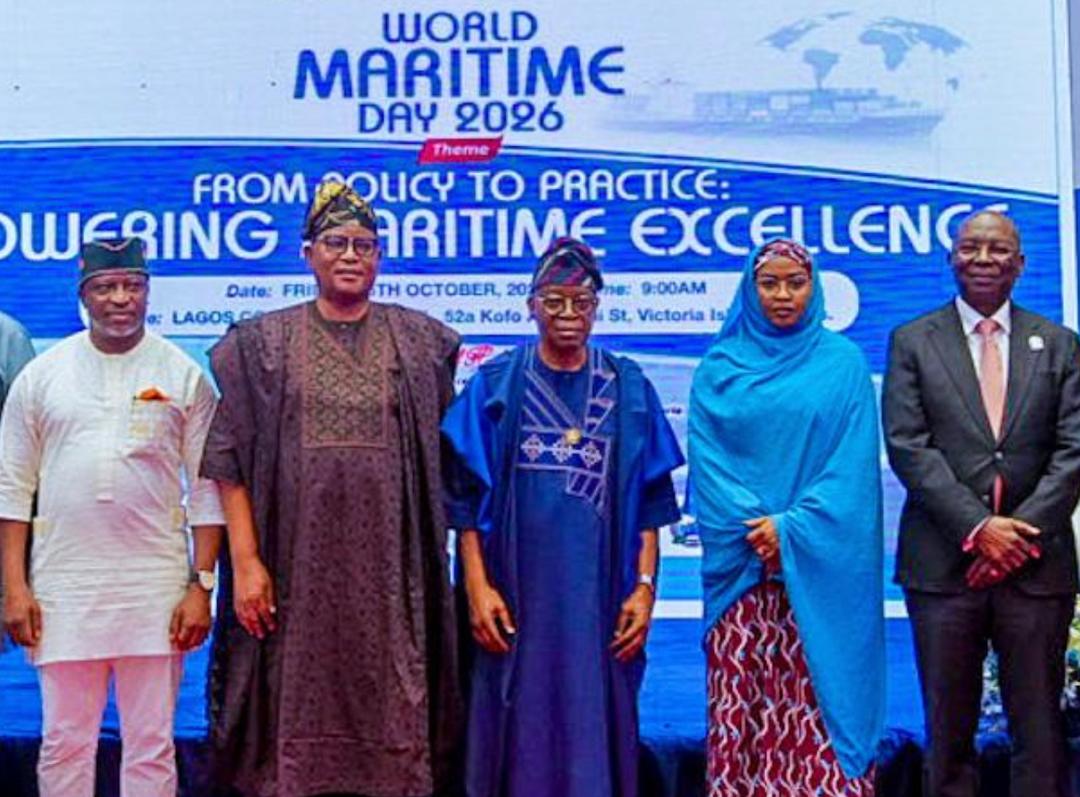
The Minister of Marine and Blue Economy, Adegboyega Oyetola, gave the assurance on Friday, October 16th, 2026 at the 2026 World Maritime Day celebration held at the Lagos Continental Hotel, Victoria Island, Lagos.
He said the port modernisation drive formed a critical component of the Federal Government’s broader blue economy agenda, aimed at expanding cargo-handling capacity, improving trade efficiency and distributing maritime-driven economic opportunities more evenly across the country.
According to the minister, the programme complements ongoing efforts to modernise the Apapa and Tin Can Island ports in Lagos, while extending infrastructure development to other strategic maritime gateways.
Oyetola also reaffirmed the government’s commitment to its deep seaport development agenda, which includes proposed projects at Agge, Bakassi, Bonny, Gateway, Ibom and Ondo.
“This is a deliberate effort to expand capacity, improve efficiency and build a more balanced national network of maritime gateways,” he said.
The minister stressed that developing ports outside Lagos was essential to reducing the concentration of cargo traffic in the commercial capital, lowering transportation costs and bringing maritime services closer to businesses, manufacturers and consumers across the country.
He explained that the ministry’s broader vision was to establish an integrated transport system connecting seaports, inland dry ports and production centres through road, rail and inland waterways.
“By linking our seaports to Inland Dry Ports and production centres through an integrated multimodal network of road, rail and inland waterways, we are bringing cargo closer to producers and consumers, reducing haulage costs, easing pressure on Lagos, strengthening exports and stimulating industrial and logistics clusters across the Federation,” Oyetola said.
He further emphasised that Nigeria’s maritime development strategy extended beyond coastal communities, highlighting the importance of inland ports and waterways in connecting businesses and production centres to domestic and international markets.
According to him, facilities such as the Onitsha and Baro ports are important to efforts to expand access to maritime transportation, improve cargo movement and stimulate economic activities in the hinterland.
Oyetola said the government was collaborating with relevant agencies and private investors to ensure that its port development plans translated into functional infrastructure, efficient cargo-handling operations, navigable channels and reliable transport connections.
He noted that the success of port modernisation depended not only on upgrading terminals but also on improving the supporting infrastructure required to move cargo seamlessly between ports and their hinterlands.
Oyetola also highlighted the Nigerian Ports Economic Regulatory Agency Act, 2026, as a significant component of ongoing reforms to strengthen economic regulation, promote fair competition and improve service delivery across the port system.
He maintained that sustained investment in port infrastructure, supported by effective regulation and improved multimodal connectivity, would help lower logistics costs, attract private investment, boost exports and create employment opportunities across different parts of the country.
The development of additional maritime gateways is expected to provide businesses with more port options, improve access to international shipping routes and strengthen the competitiveness of Nigeria’s trade and logistics sector.
The 2026 World Maritime Day celebration attracted maritime industry leaders, heads of government agencies, lawmakers and other stakeholders to deliberate on the development of Nigeria’s maritime sector.
In a goodwill message, the Chairman of the Senate Committee on Marine Transport, Senator Wasiu Eshinlokun, called for an end to attacks on seafarers in the Strait of Hormuz, drawing attention to the security risks confronting maritime workers and the importance of protecting seafarers on international shipping routes.
Customs
FOU ‘A’ seeks stronger security synergy with sister agencies ahead of presidential elections
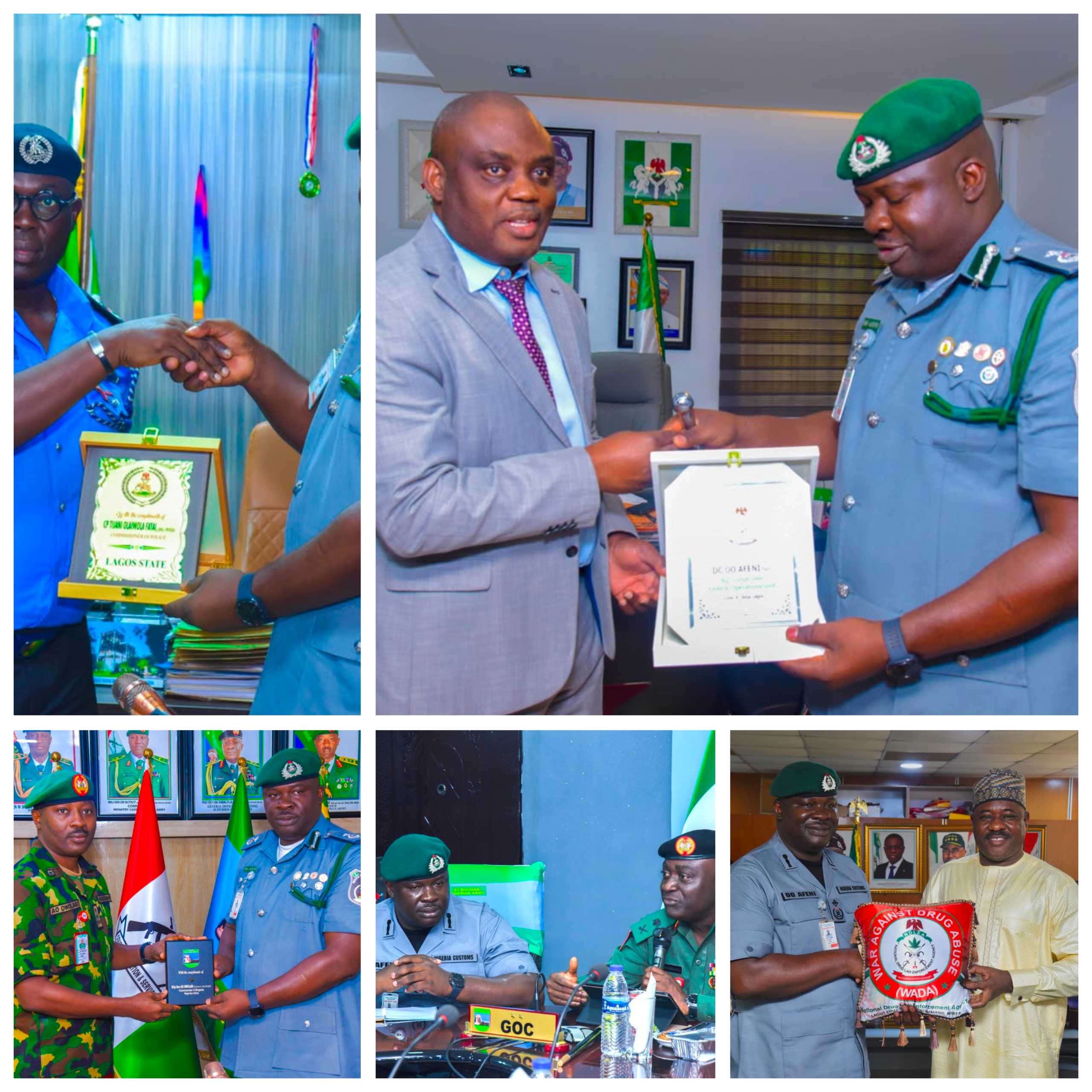
— as Acting Comptroller Afeni visits Police, Army, DSS, NDLEA, Immigration
Funso OLOJO, Editor
The Acting Comptroller of the Nigeria Customs Service (NCS), Federal Operations Unit (FOU), Zone ‘A’, Ikeja, Lagos, Deputy Comptroller Oladapo Olukayode Afeni, has called for stronger collaboration among security agencies to combat smuggling, cross-border crimes and other threats to national security, particularly as the country approaches another election period.
Afeni made the call during a familiarisation tour of sister security and law enforcement agencies in Lagos, which commenced on Wednesday, October 14, 2026.
The tour took him to the Lagos State Police Command Headquarters, Ikeja; the Department of State Services (DSS); Headquarters, 81 Division, Nigerian Army; the National Drug Law Enforcement Agency (NDLEA) Strategic Command; the Nigeria Immigration Service (NIS); and the 9 Brigade, Nigerian Army, Ikeja.
The visits were aimed at strengthening existing institutional relationships and identifying practical areas of cooperation in intelligence sharing, joint operations, information exchange and the enforcement of relevant laws across Lagos State and the wider operational jurisdiction of FOU Zone ‘A’.
At the Lagos State Police Command Headquarters, Afeni was received by the Commissioner of Police, CP Tijani Fatai, where he stressed the importance of coordinated security operations in preventing criminal elements from exploiting the election period to undermine public safety.
“We know that crime rates often increase as the country approaches the election period, as some people may attempt to take advantage of the period to perpetrate illicit activities capable of causing crises during the elections.
“Therefore, we are here to call for closer synergy so that these bad elements do not have their way,” he said.
The Customs chief emphasised that the responsibilities of FOU Zone ‘A’ extended beyond border protection to include collaboration with other security institutions in safeguarding national interests.
He noted that no security agency could effectively discharge its responsibilities in isolation, stressing that sustained cooperation was essential to tackling the increasingly complex nature of criminal activities.
Afeni particularly acknowledged the Nigeria Police Force’s intelligence-gathering capabilities, describing effective information sharing and coordinated operations as critical to achieving better security outcomes.
In his response, CP Fatai welcomed the visit, describing sustained engagement among security agencies as an established practice that had contributed to their operational successes over the years.
“In Lagos, we have a very strong and robust relationship with all security agencies, notwithstanding the huge population of the state,” the police commissioner said.
The Customs delegation also visited the Headquarters of the Nigerian Army’s 81 Division, where Afeni was received by the General Officer Commanding (GOC), Major General Adebayo Abdulrahman Babalola.
Babalola underscored the importance of joint operations and inter-agency cooperation in combating criminality, while cautioning against unnecessary administrative bottlenecks that could impede operational effectiveness.
The engagement highlighted the need for security institutions to streamline their operational processes, improve coordination and ensure that bureaucratic procedures do not frustrate timely responses to security threats.
Other agencies visited equally reaffirmed their commitment to sustaining cooperation with the Nigeria Customs Service in the collective effort to combat smuggling and other unlawful activities.
The familiarisation tour underscores FOU Zone ‘A’s commitment to strengthening inter-agency partnerships as a vital instrument for effective enforcement, national security and economic protection.
Beyond combating smuggling and trans-border crimes, the initiative is expected to reinforce efforts to protect government revenue, facilitate legitimate trade and safeguard Nigeria’s broader economic interests through coordinated security operations.

 Customs3 months ago
Customs releases final recruitment list for ASC II, ends nearly one-year wait for applicants
- Headlines2 months ago
Oyetola presents three-year score card as blue economy industry revenue hits ₦1.83trn
- Customs2 months ago
Apapa Customs sets new record of monthly revenue haul with ₦323bn collection in July
- Customs2 months ago
Apapa Customs sets new single-day revenue record with ₦28.1bn collection
- Customs3 months ago
Customs launches MIS file tracker at PTML in fresh digitalisation drive
- Customs2 months ago
NCS intercepts container concealing pump-action rifle parts, seizes ₦373.8m worth of cannabis products at Tincan Port