
Commentaries
The Olokola Conundrum: DP World, Dangote, and ghosts of Nigeria’s contractual sanctity
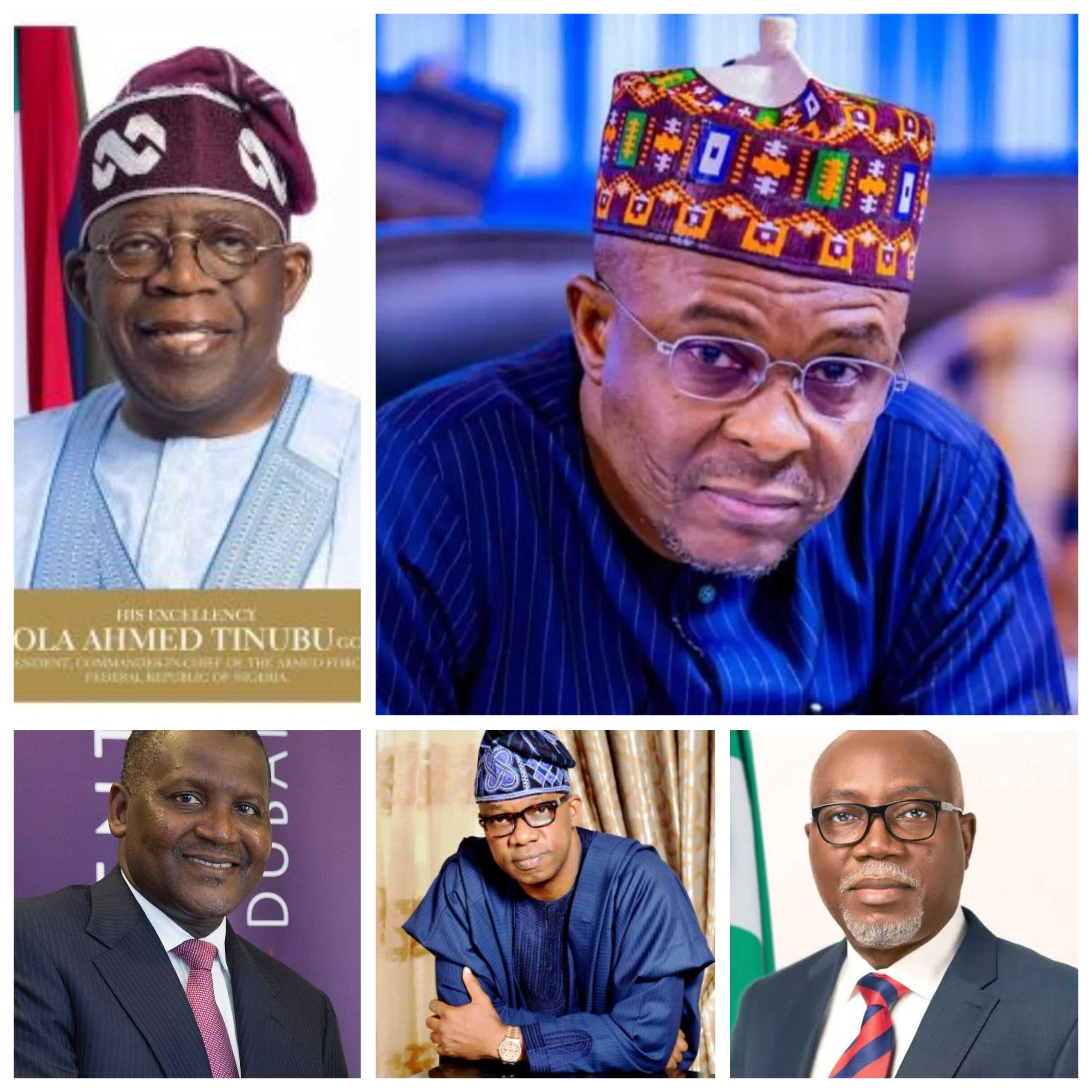
Monday Discourse with Ibrahim Nasiru
The Ogun State Government’s recent signing of a $7 billion Memorandum of Understanding (MoU) in Paris with Dubai’s DP World has been loudly celebrated by state publicists as a monumental triumph for foreign direct investment.
The ambitious agreement aims to develop the Gateway Deep Sea Port and the Blue Marine Special Economic Zone within the strategic Olokola axis.
However, to seasoned watchers of Nigeria’s industrial policy and maritime concessions, this fresh diplomatic foray triggers a profound sense of deja vu.
By overlapping a fresh international agreement onto a maritime asset where the Dangote Group still holds an active, multi-billion naira partnership and controlling stake, the current administration is navigating a legal and political minefield.
The Olokola project is not a blank canvas; it is a highly contested zone haunted by historical policy reversals and unresolved sovereign commitments.
To understand the volatile structural foundations of Olokola, one must revisit its ambitious inception in 2004.
Conceived under the visionary yet politically fraught collaboration between former Governor Gbenga Daniel of Ogun State and the late Governor Olusegun Agagu of Ondo State, the Olokola Free Trade Zone was designed to be the ultimate crown jewel of Nigeria’s maritime and energy independence.
It attracted an elite, multi-billion dollar investment profile, headlined by the ill-fated Olokola Liquefied Natural Gas (OKLNG) project, backed by global giants including the NNPC, Shell, Chevron, and the BG Group.
Yet, despite its peerless economic blueprint, the entire enterprise famously collapsed under the weight of inter-state political rivalries, bureaucratic paralysis, and sudden federal policy shifts.
When international oil companies pulled out due to a lack of institutional guarantees, local conglomerates like the Dangote Group stepped in to secure strategic stakes, preserving the asset’s industrial viability for the future.
Bypassing this historical footprint without a clean legal resolution is an invitation to systemic friction.
Therefore, the current strategy of double tracking agreements over the exact same geographical and maritime asset represents a dangerous institutional risk.
While the state’s aggressive drive to unlock the economic potential of the Ogun coastline and expand the nation’s blue economy is highly commendable, courting a Middle Eastern maritime giant like DP World while ignoring an existing domestic investor creates severe legal vulnerabilities.
In global shipping and port development, international operators look for absolute clarity regarding terminal operations, land titles, and concession limits
You cannot sustainably attract premium global capital by exposing them to immediate, multi-billion naira litigation from entrenched domestic players who have already sunk enormous resources into the zone’s foundational layout.
International project financiers and global port operators do not just look at shiny executive MoUs signed in European capitals; they look closely at local title security, asset de-risking, and a host state’s history of respecting contract sanctity.
If Nigeria is to successfully position its emerging seaports as competitive hubs within the West African sub-region, it must learn to operate under the global standard of a landlord port model where rights are clearly defined and legally unassailable.
Overlapping political promises only serve to drive away serious developers and delay actual infrastructure delivery.
The global investment community is watching how Nigeria treats its premier industrial actors, and any sign of flip-flopping on contractual terms acts as a major red flag for foreign direct investment.
Ultimately, if Ogun State truly wants the Olokola Deep Seaport to transition from a twenty year boardroom dream into a world class maritime reality, it must aggressively clear its legal debts first.
The administration must pivot away from performative international signings and sit down at a transparent renegotiation table to cleanly buy out or harmonize interests with the Dangote Group.
Failing to do so will ensure that this $7 billion UAE deal suffers the exact same paralyzing fate as the 2004 OKLNG blueprint.
In the high stakes theater of global infrastructure, true economic growth is built on the unyielding sanctity of existing laws and contracts—not on the shifting sands of political expediency.
Ibrahim Nasiru, a public affairs analyst, writes from Abuja





Commentaries
Ports Without Rail: Why Nigeria keeps losing maritime billions to Togo
Monday Discourse with Nasiru Ibrahim
For years, Nigerian policymakers have celebrated the construction of new deep seaports as the magic bullet for our trade and revenue challenges.
Ribbon-cutting ceremonies at new waterfront terminals often dominate headlines, creating the impression that our maritime troubles are over.
Yet, as former Director-General of the Nigerian Maritime Administration and Safety Agency (NIMASA), Barrister Temisan Omatseye, rightly warned at the November 13, 2026 Network of Nigeria Maritime Journalists (NNMJ) Unity Conference in Lagos, pouring concrete into the ocean without building rail links, evacuation corridors, and marine fuel hubs is simply reproducing old gridlocks in new locations.
While neighbouring countries like Togo continue to capture transshipment cargo and lucrative maritime services meant for West Africa’s largest economy, Nigeria is leaving billions of naira on the table through fragmented planning.
Over 70 percent of cargo destined for the West African sub-region is bound for the Nigerian market, yet a painful share of that business still docks in Cotonou or Lomé before entering Nigeria through informal land borders or smaller feeder vessels.
Omatseye’s intervention at the Ikeja gathering spotlights four urgent policy blind spots that the Federal Ministry of Marine and Blue Economy and the Nigerian Ports Authority (NPA) must fix if Nigeria wants to reclaim its rightful maritime dominance:
First,the Refining and Bunkering Paradox
Nigeria now boasts the massive Dangote Refinery alongside several modular refineries capable of producing high-grade marine fuel.
Yet, international ocean-going vessels still bypass Nigerian waters to refuel elsewhere along the West African coast.
Ship bunkering—the business of supplying fuel and lubricants to commercial vessels—is a multi-billion-dollar global industry.
However, a thriving bunkering hub does not happen automatically just because domestic refineries exist.
It requires clear maritime security guarantees, competitive pricing benchmarks, transparent regulatory licensing, and seamless offshore supply logistics.
Until Nigeria aligns its refining boom with a deliberate marine fuel strategy, neighbouring ports will keep collecting the foreign exchange that belongs right here in our waters.
Second, Ports Without Hinterland Rail Connections
Building deep seaports at Lekki, Ibaka, or Calabar without corresponding heavy-duty rail lines and dedicated bypass roads is an economic dead end.
A seaport is not a storage warehouse; it is a transit corridor. As conference keynote speaker Barrister Emeka Akabogu, SAN, noted, approximately 90 percent of cargo movement from Nigerian ports still depends on road transport.
Consequently, as Omatseye pointed out, we are already watching the notorious Apapa traffic gridlock slowly replicate itself along the Lekki–Epe corridor because articulated trucks are forced to share congested urban roads instead of using dedicated cargo evacuation routes through neighbouring Ogun State.
Worse still, how do we transport solid minerals from the North-East or North-Central zones to proposed ports like Ibaka for export without a functional rail spine?
Contrast this fragmented approach with Guinea’s $20 billion Simandou iron ore project, which integrated a 600-kilometre heavy-haul railway directly into its port infrastructure from day one.
Nigeria sits on over 50 commercially viable solid minerals, yet our inability to link mines to ports keeps that wealth locked underground.
Third, Revenue Collection vs.Trade Facilitation
As NNMJ Chairman, Elder Dele Aderibigbe also noted at the conference, Nigerian port agencies often treat seaports purely as revenue-collection tailgates rather than trade engines.
Every year, agencies celebrate record-breaking customs and port revenue targets while ignoring the hidden economic cost of cargo delays.
Excessive cargo dwell times, manual physical examinations, overlapping security checkpoints, and unpredictable charges drive importers away to faster, cheaper regional competitors like the Port of Lome.
Modern global ports compete on turnaround speed and digital automation. You cannot sustainably tax trade that has already fled to your neighbour’s coastline.
Fourth, Holding the System Accountable
Finally, the challenge thrown to maritime journalists at the conference applies equally to policy analysts and citizens.
Maritime reporting must move beyond reproducing agency press releases and covering ceremonial workshops.
We need deeper investigative scrutiny into why cargo evacuation projects stall, why marine fuel policies remain disjointed, and why inter-agency rivalry continues to slow down cargo clearance at our terminals.
Nigeria does not suffer from a shortage of cargo volume, solid minerals, or maritime talent. What we lack is integrated execution.
A seaport is only as efficient as the railway tracks, highways, and digital clearance systems connected to its gates.
Until we link our ports directly to our factories, farms, and mining corridors, our massive maritime potential will remain trapped at the waterfront.
Ibrahim Nasiru, public affairs analyst, writes from Abuja.
Commentaries
The CVFF Controversy: Why war of words won’t buy Nigerian ships
Monday Discourse with Ibrahim Nasiru
The ongoing conversation regarding the disbursement of the Cabotage Vessel Financing Fund (CVFF) to indigenous shipping owners has taken a dramatic and highly confusing turn.
For over twenty years, local shipowners have looked forward to this fund as the critical lifeline that would finally allow Nigerians to own high-capacity vessels, dominate our own coastal waters, and stop foreign ships from taking over our maritime economy.
But while the bureaucracy delayed, the narrative became deeply fractured.
The maritime industry was recently rocked by a shocking revelation from former NIMASA Director-General ,Temisan Omatseye, at the 2026 Shipping Correspondents Association of Nigeria (SCAN) Summit.
Omatseye exposed what he described as a legacy structural error, claiming that dollar receipts collected from local operators were historically swept and converted into Naira by the Accountant-General’s office to chase higher domestic interest rates.
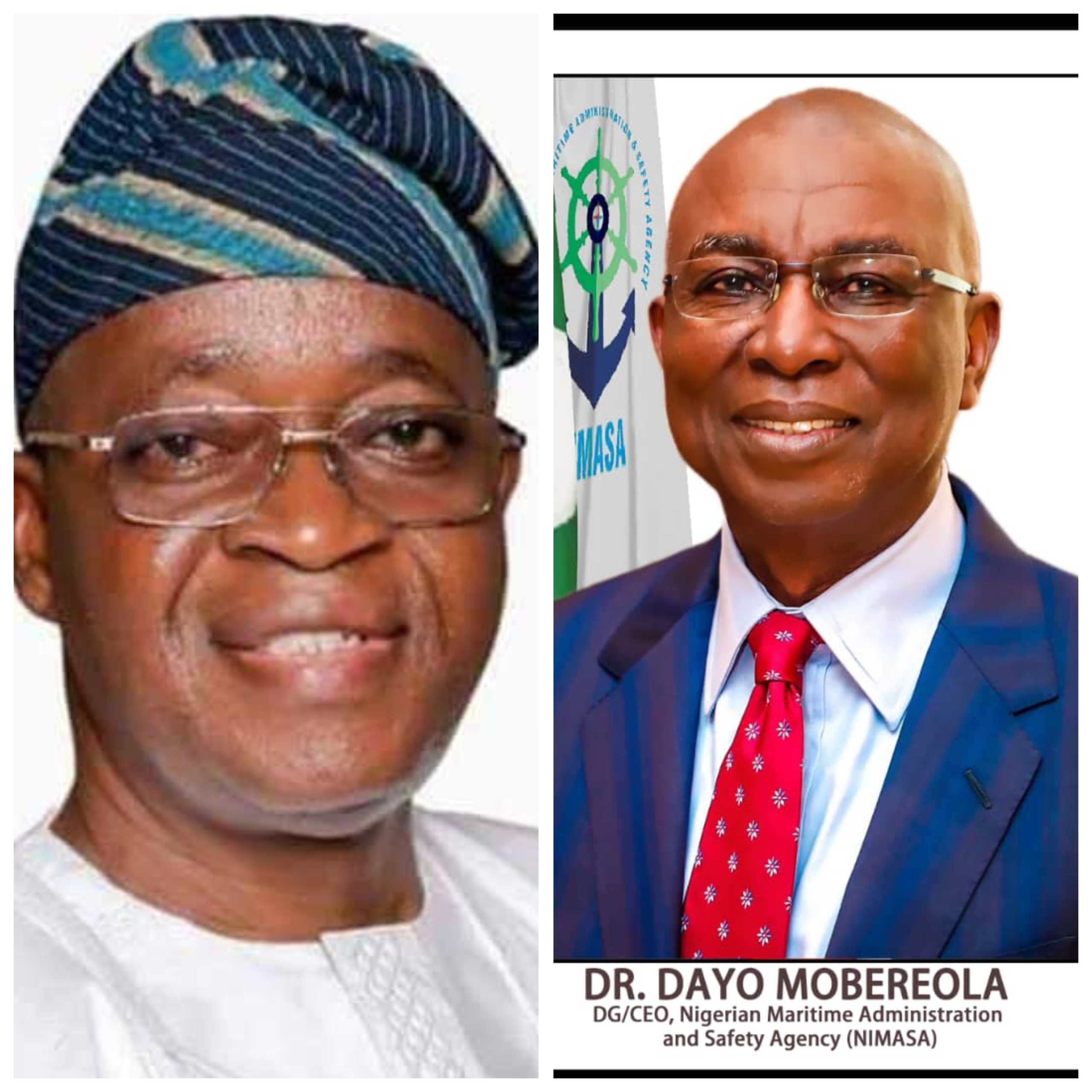
In a swift and aggressive counter-response dated November 1, 2026, the current Director-General of NIMASA, Dr. Dayo Mobereola, flatly dismissed the claims.
Mobereola insisted that there has been absolutely no conversion of the dollar-denominated component of the fund, asserting that all USD contributions remain fully intact within the Central Bank of Nigeria (CBN).
This public clash between a former helmsman and the current leadership creates a massive transparency crisis.
In the global maritime industry, shipping assets are priced strictly in US Dollars. If Omatseye’s account of past historical conversion is true, then a massive portion of the fund’s purchasing power has vapourized due to the recent steep devaluation of the Naira.
If Mobereola’s denial is correct, then the full $700 million value remains intact.
To settle this confusion once and for all, the Ministry of Marine and Blue Economy must move beyond mere press statements.
The government must immediately open its financial records and publish the certified CBN account balances of the CVFF.
Stakeholders deserve an independent audit, not a war of words.
Meanwhile, the long-awaited application portal launched by the Ministry continues to run straight into a banking brick wall.
Out of nearly a hundred applications, disbursements remain stalled because Primary Lending Institutions (PLIs) are demanding rigid credit terms, strict 15% cash equity, and long-term cargo guarantees.
As leaders within the Nigerian Indigenous Ship-owners Association (NISA) and the Shipowners Association of Nigeria (SOAN) have long lamented, many local shipowners are already heavily indebted, with their existing assets trapped by AMCON.
Demanding heavy cash equity and unachievable bank conditions to access their own contributed funds is simply setting local operators up to fail.
What does this portend for Nigeria?
Foreign vessels will continue to dominate our coastal waters, taking away billions of dollars in freight capital, while our youth lose out on thousands of seafaring jobs.
Minister Adegboyega Oyetola and NIMASA must stop the endless circular arguments. The government must immediately engage genuine indigenous shipowners, simplify the rigid banking rules, and provide full account transparency.
Our blue economy cannot float on a sea of endless delays and conflicting balance sheets. It is time to let Nigerian shipowners see the books, access the funds, and secure our waters.
Ibrahim Nasiru, a public affairs analyst, writes from Abuja
Commentaries
Beyond Shiny Tech: Why Africa’s smart ports must build plumbing before AI
Monday Discourse with Ibrahim Nasiru
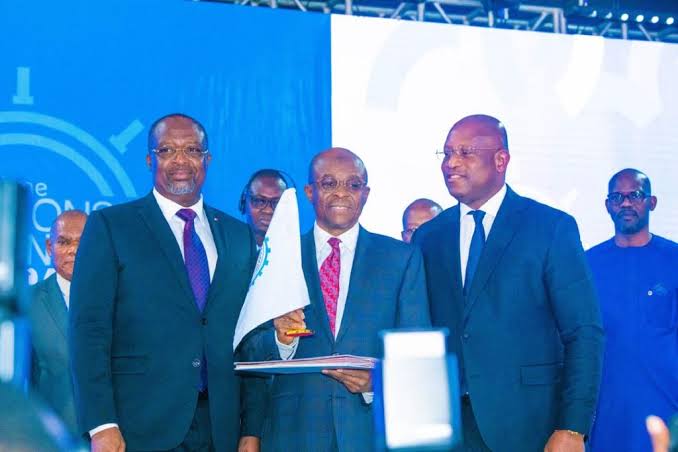
At the African Ports Conference (COPAF 2026) in Casablanca, Morocco, the Managing Director of the Nigerian Ports Authority (NPA), Dr. Abubakar Dantsoho, dropped a piece of unvarnished realism that should govern all future maritime discourse on the continent.
Speaking on the theme of artificial intelligence and cybersecurity, Dantsoho issued a vital warning: African ports must establish effective, uncompromised digital foundations before they rush to deploy artificial intelligence (AI).
In an era where public officials routinely weaponize trendy buzzwords like “AI,” “Big Data,” and “Smart Governance” to perform administrative progress, Dantsoho’s perspective is a refreshing return to structural logic.
Smart ports, he rightly argued, must be measured by tangible operational realities—faster vessel turnaround times, shorter cargo dwell times, lower costs, and watertight revenue accounting—not by the sheer volume of technology purchases.
The numbers coming out of Nigeria’s maritime sector suggest that getting the basic digital foundations right yields immediate economic dividends.
The deployment of foundational tools like the “Eto” truck call-up system, alongside initial frameworks for the Port Community System, catalyzed a staggering 24.8 per cent increase in Nigeria’s cargo throughput.
This foundational digitisation is precisely why the World Bank’s Container Port Performance Index recently recorded strong upward trajectory rankings for both the Tin Can Island and Apapa Ports.
But as Nigeria embarks on its massive $1 billion Lagos ports modernization program, we must face the hard, structural truth that lies beneath these celebratory statistics.
Digitisation is not merely about software procurement; it is about political will and institutional harmonization.
For over a decade, Nigeria’s biggest maritime bottleneck has not been a lack of computers, but the fierce, territorial resistance from various state agencies refusing to plug into a single, unified data ledger.
A “Smart Port” cannot exist in a vacuum where customs, immigration, terminal operators, and security agencies run isolated, analogue silos designed to preserve bureaucratic fiefdoms and rent-seeking opportunities.
If the $1 billion modernization fund is spent buying sophisticated AI predictive maintenance tools and automated vessel planning systems while the National Single Window remains structurally sabotaged by agency politics, we will simply end up with a highly automated system that accelerates corruption and bottlenecks.
You cannot run a predictive AI algorithm on data that is manually altered or hidden by a human clearing agent at the wharf.
Dantsoho is entirely correct: we must build the digital plumbing before we chase the AI crown.
Going into 2027, the yardstick for evaluating the NPA’s modernization program must not be the number of smart cameras or automated gates installed.
The true metric of success will be the complete, legally enforced integration of all port stakeholders into a single data ecosystem.
Until the data flows seamlessly and transparently from the vessel to the final exit gate without human friction, any talk of an “AI-driven smart port” is mere window dressing.
We must fix the foundations first, or watch a billion dollars clear out into the ocean of unfulfilled potential.
Ibrahim Nasiru, a public affairs analyst, writes from Abuja.

 Headlines3 months ago
Oyetola presents three-year score card as blue economy industry revenue hits ₦1.83trn

 Customs2 months ago
FOU Zone ‘A’: Aliyu retires after ₦3.19bn revenue recovery, Afeni takes over

 Customs3 weeks ago
FOU Zone A: Afeni intensifies anti-smuggling operations, seizes N511.4m drugs, rescues eight pangolins

 Customs2 months ago
Nigeria, Benin Customs move to harmonise trans-border trade, establish joint border post at Seme-Krake

 Headlines3 weeks ago
Tension heightens at Osborne Foreshore Estate over alleged environmental breach by property developer
 Commentaries4 weeks ago
Beyond Shiny Tech: Why Africa’s smart ports must build plumbing before AI