Headlines
Joe Sanni feeding fat on ANLCA crisis —-Prince Ozo Chukurah

Prince Ozo Chukwrah is one the most visible freight forwarders in the country and the Vice-Chairman of the Board of Trustees (BOT) of the Association of Nigerian Licensed Customs Agents(ANLCA).
He was at the forefront of the various peace efforts to resolve the protracted crisis which has bedeviled the association for almost five years now.
In this exclusive interview with our reporter, the ANLCA chieftain highlighted the latest peace moves by the BOT to end the lingering crisis and restore peace to the battle-weary association.
He however accused Joe Sanni, the former Senior Special Assistant(SSA) on Media and Publicity to Prince Olayiwola Shittu, the immediate past president of ANLCA, as the killjoy to all the various peace efforts in the association, accusing him of making merchandise of the crisis as he was continuously fanning the embers of discord through his inflammatory statements which he alleged were bare-faced lies to profit from the unfortunate situation.
What is your reaction to reopening the ANLCA secretariat after it was shut for about two months following the unfortunate incident at Tin Can port where one person was killed?
That narration was totally wrong. The secretariat had been long closed before the incident t your referred to. The Police shut the secretariat over the petition they received that some people wanted to burn the place from the Western zone group. All efforts to dissuade the police from shutting down the place fell through. The police insisted that they will close it for security reasons. That was the reason the secretariat was shut.
Both warring groups went to the Lagos state commissioner of police. I led our team while Taiwo Mustapha led his team. There, the Commissioner of police expressed frustration at the seeming perpetuity of the crisis, saying he was tried. I made my own submission, saying that we too are tired because the matter is so simple. It was a matter between the two boards. The New board and the past board. The new board came and inherited the problems.
The NECOM was initially not part of the problem, but at a stage, they got the NECOM involved because they accused the NECOM of taking sides.
As I have earlier explained in my past interview, there were court cases that barred Tony Iju-led NECOM not to recognize the other party.
It was a court declaration and nobody contested or appealed against that judgment.
Now that the Secretariat has been opened and handed to Tony Iju-led NECOM, what is your reaction? What is the way forward? Where does the association go from there?
Before I answer that question, let me conclude the analysis of our peace efforts before now.
The two groups went to the Commissioner of police where I told him that he has a legal department, and let the other party submit what they have as evidence of being in charge of the secretariat because they were then claiming they have taken over the secretariat when they appointed Pius Ejubomon as interim President while we still have Tony Iju as our President who is in charge.
I asked the police to investigate to find out which of the two contending boards is in charge, is it the one led by Taiwo Afolabi or the one led by Taiwo Mustapha?
That was where we left it with the police.
The Mustaha-led board was genuinely registered but no longer active as of August 26th, 2022 while the new board led by Dr. Afolabi came in on September 7th, 2022. These dates are very sacrosanct and germane to the issue on the ground. they are verifiable.
The Mustapha-led board ceases to be active in the status of the Corporate Affairs Commission(CAC) as at August 26th, 2022. While the new board led by Afolabi came in and issued a certificate on September 7th, 2022. with the names of the nine members of the board printed on the certificate.
This is what we asked the Police to investigate to determine which of the two boards is fake and genuine.
So the police took all legal steps to investigate and found out that the authentic board genuinely registered by the CAC is the one led by Dr. Taiwo Afolabi which is supporting the Tony Iju-led NECOM.
That is why they reopened the secretariat and handed it over to Tony Iju-led NECOM as a confirmation of the authenticity and genuineness of Afolabi-led BOT.
This action by the police has finally vindicated us and settled the issue of the legitimacy of our board.
To be sincere with you, everyone, including Mustapha, knows the truth, probably with the exception of one man, Joe Sanni.
But why are still contesting the ownership of the secretariat with the authentic board?
All this while, Joe Sanni was the lawyer, the judge and the complainant. He has been the one who determines what to say, dishing out falsehood to the public.
I am sure he is feeding fat on this crisis, he is not losing anything. He is massively reaping from it otherwise who among these people is the enemy of Prince Ozo?
Sir Ernest Elochucku, whom I regard as the most intelligent freight forwarder in Nigeria, is my boss and friend. Dennis Okafor is the closest friend to my brother, Chief Mike Nwoko and a close friend to me.
Taye Oyeniyi is another close friend who once made me relinquish my hard-won victory in Tin Can which I later reclaimed with the support of others, including Dayo Aziz who supported me to become the first Igbo ANLCA chapter chairman in Tin Can.
They all also rallied around me when I contested for Zonal coordinator which I eventually won unopposed.
”We should all be concerned, especially those who are close to this man, about his state of sanity.
Is Joe Sanni normal and of sound mind?”
So who among these people is my enemy: none, not even Mustapha whom I have severally met in private to seek peace in ANLCA.
This is a new year, I plead and sue for peace, even if it means going down on my knees. I will do everything possible for us to achieve peace.
We should embrace peace and shun bitterness because time is fast running out.
I will make a proposal to our board and NECOM so that we can convene an AGM/NEC meeting where the suspension of some members could be reversed and they would be reabsorbed into the association for peace to reign.
Most of us in the elective positions in the association are on the final lap of our tenure. We need youths to come up and take over.
Beyond rhetorics sir, what are the concrete steps the Dr. Afolabiled BOT is making to ensure a lasting peace and to placate the aggrieved party?
Only four people from the Mustapha group are qualified to recontest their positions and they are Dayo Aziz, Ernest Elochukwu, Taiwo Mustapha and Dennis Okafor who can join the nine members of the Taiwo Afolabi-led board. We need to amend the constitution to accommodate them. This should not be a problem because laws are made for man and not man for the law.
This is part of the peace efforts the board is willing to make to ensure that this crisis is resolved and lasting peace is restored back to the ANLCA.
Even these people I mentioned, some of them don’t have time for the association again because they are heavyweight. They don’t even have enough time for their numerous business interests. So we need to start to groom some capable youths to take over the leadership of the association.
The second aspect is we should allow all the actions and inactions of Tony Iju to pawn out. Every chapter where he conducted elections should be allowed to serve out its tenure.
Also, if we come together, the board will allow them to be part of the ASECO that will conduct the next elections.
They are too big to be ASECO members but they can send in their representatives to the association’s electoral body.
We run an inclusive government not by appointment but elections.
I was elected as a member of the BOT for six years and I have served out two years, the remaining four years. I am not willing to resign but intend to serve out my tenure.
I have supported all the past members who have served on the board, I never called for their sack or resignation before they served out their tenure, including Taye Oyeniyi, until this crisis started.
Therefore, I am begging everyone concerned to allow peace to reign in the association.
I am calling on all of them to an enlarged meeting where we all jaw-jaw and not war-war so that we can bring the association back to the path of peace.
No victor, no vanquished. We are all winners in this matter.
What happens if the much sought-after peace is not achieved and you know that by April this year when the tenure of the incumbent NECOM expires and we know that constitutionally, the BOT will kick start the process of a new election, What happens if the other group does not back down?
Constitutionally, the BOT takes over the running of the NECOM for 90 days in case of a crisis. Has it not dawned on you now which is the authentic BOT?
Anyway, don’t let us count our chickens before they are hatched. We shall get to the bridge first before we attempt to cross it.
What is going to happen to all the pending court cases? They are numerous and distractive.
I think all the court cases have been disposed off and all their judgments are in the favour of the parent NECOM and the Board. However, only one court case is pending and judgment will come in February. Even at that, the event has overtaken the court case because the man that was praying the court to be allowed to serve out his tenure of office has already served out his tenure. That was Aziz in the Seme chapter.
However, the court will still make its pronouncement despite this fact.
The one in Kano too has been decided.
We have had enough of delays and waste of time. It is time to come together and chart a new course for ANLCA. The crisis has led to lots of pain and loss of time and resources. So I bed all concerned to sheath their swords.
Another criminal case pending was the one where Tony Iju and his group were attacked. We shall look into that and prevail on the complainants to withdraw it if only the other group agrees to embrace peace.
What efforts is the current BOT making to forestall a reoccurrence of this crisis that has nearly torn ANLCA apart?
A. As far as I know, a crisis is part of human life. It is bound to happen where are two or more people, not to talk of a group like ANLCA. Crisis happens in families, countries, religious groups and professional or trade groups like ANLCA and political groups.
What is important is the ability to manage a crisis and navigate through the crisis. That does not mean there will be no crisis.
There are people who were created to foment trouble and create crises while some were born as peacemakers. Both groups will cohabit and coexists.
I wish to appeal to all well-meaning members of this association to prevail on Joe Sanni to stop his current efforts to further destabilize ANLCA despite all efforts to resolve the issues.
He has been fanning the ember of discord and disunity in the association through his inflammatory statement, and the spread of falsehoods, half-truths and outright lies.
He has been peddling lies the certificate of Dr. Taiwo Afolabi-led BOT is fake. Yet he has not been able to take us to the police for forgery which is a criminal case.
He knew that the certificate is fake, why has he not written to the man whose signature was forged on the certificate to take legal action, yet he chooses to spread uncoordinated and incoherent narratives that do not add up to the discerning minds?
In another breath, he was telling the whole world the so-called fake certificate has been canceled and withdrawn by the CAC.
Is that not illogical and laughable? How can the CAC cancel a document that is supposed to be fake which they did not issue?
All these incoherent and illogical narratives of Joe Sanni are a sad reflection of his state of mind.
I enjoined the industry stakeholders to be circumspect and take time to analyse the logic behind some of these mendacious narratives this character is dishing out to the public on this matter.
A fake document cannot be canceled because it is already fake. And the man who is well versed in deciphering fake objects is supposed to write to the police without much ado for investigation.
I think by now we should all have been arrested because forgery is a criminal case.
But instead, the man chooses to spew out falsehood to the public.
We should all be concerned, especially those who are close to this man, about his state of sanity.
Is Joe Sanni normal and of sound mind?
I am as concerned as other true friends of this character called Sanni because he is doing more harm to the peace and progress of ANLCA through his illogical and incorrect utterances.
I appeal to those who are sponsoring him, those paying him for this hatchet job he is doing to desist from paying him if they truly love ANLCA.
He cannot contribute one Kobo in ANLCA, so he enjoying the crisis because he is feeding fat on it.
I am appealing to him to sheath his sword. This is not a personal war.
Enough is enough.



Commentaries
The Olokola Conundrum: DP World, Dangote, and ghosts of Nigeria’s contractual sanctity
Monday Discourse with Ibrahim Nasiru
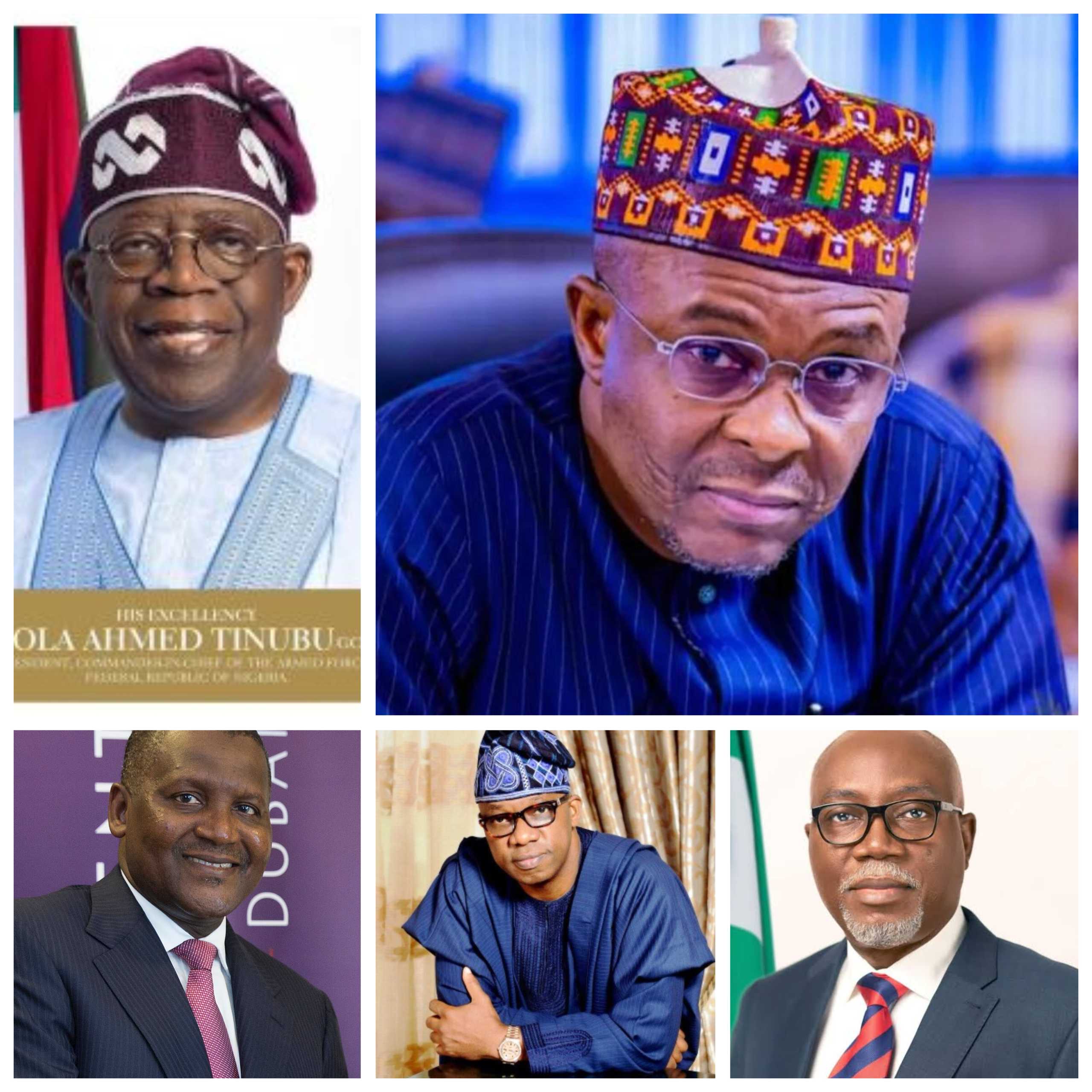
The Ogun State Government’s recent signing of a $7 billion Memorandum of Understanding (MoU) in Paris with Dubai’s DP World has been loudly celebrated by state publicists as a monumental triumph for foreign direct investment.
The ambitious agreement aims to develop the Gateway Deep Sea Port and the Blue Marine Special Economic Zone within the strategic Olokola axis.
However, to seasoned watchers of Nigeria’s industrial policy and maritime concessions, this fresh diplomatic foray triggers a profound sense of deja vu.
By overlapping a fresh international agreement onto a maritime asset where the Dangote Group still holds an active, multi-billion naira partnership and controlling stake, the current administration is navigating a legal and political minefield.
The Olokola project is not a blank canvas; it is a highly contested zone haunted by historical policy reversals and unresolved sovereign commitments.
To understand the volatile structural foundations of Olokola, one must revisit its ambitious inception in 2004.
Conceived under the visionary yet politically fraught collaboration between former Governor Gbenga Daniel of Ogun State and the late Governor Olusegun Agagu of Ondo State, the Olokola Free Trade Zone was designed to be the ultimate crown jewel of Nigeria’s maritime and energy independence.
It attracted an elite, multi-billion dollar investment profile, headlined by the ill-fated Olokola Liquefied Natural Gas (OKLNG) project, backed by global giants including the NNPC, Shell, Chevron, and the BG Group.
Yet, despite its peerless economic blueprint, the entire enterprise famously collapsed under the weight of inter-state political rivalries, bureaucratic paralysis, and sudden federal policy shifts.
When international oil companies pulled out due to a lack of institutional guarantees, local conglomerates like the Dangote Group stepped in to secure strategic stakes, preserving the asset’s industrial viability for the future.
Bypassing this historical footprint without a clean legal resolution is an invitation to systemic friction.
Therefore, the current strategy of double tracking agreements over the exact same geographical and maritime asset represents a dangerous institutional risk.
While the state’s aggressive drive to unlock the economic potential of the Ogun coastline and expand the nation’s blue economy is highly commendable, courting a Middle Eastern maritime giant like DP World while ignoring an existing domestic investor creates severe legal vulnerabilities.
In global shipping and port development, international operators look for absolute clarity regarding terminal operations, land titles, and concession limits
You cannot sustainably attract premium global capital by exposing them to immediate, multi-billion naira litigation from entrenched domestic players who have already sunk enormous resources into the zone’s foundational layout.
International project financiers and global port operators do not just look at shiny executive MoUs signed in European capitals; they look closely at local title security, asset de-risking, and a host state’s history of respecting contract sanctity.
If Nigeria is to successfully position its emerging seaports as competitive hubs within the West African sub-region, it must learn to operate under the global standard of a landlord port model where rights are clearly defined and legally unassailable.
Overlapping political promises only serve to drive away serious developers and delay actual infrastructure delivery.
The global investment community is watching how Nigeria treats its premier industrial actors, and any sign of flip-flopping on contractual terms acts as a major red flag for foreign direct investment.
Ultimately, if Ogun State truly wants the Olokola Deep Seaport to transition from a twenty year boardroom dream into a world class maritime reality, it must aggressively clear its legal debts first.
The administration must pivot away from performative international signings and sit down at a transparent renegotiation table to cleanly buy out or harmonize interests with the Dangote Group.
Failing to do so will ensure that this $7 billion UAE deal suffers the exact same paralyzing fate as the 2004 OKLNG blueprint.
In the high stakes theater of global infrastructure, true economic growth is built on the unyielding sanctity of existing laws and contracts—not on the shifting sands of political expediency.
Ibrahim Nasiru, a public affairs analyst, writes from Abuja
Headlines
MARAN trains 20 members at shipping institute, pledges sustained capacity building
Gloria Odion, Maritme reporter
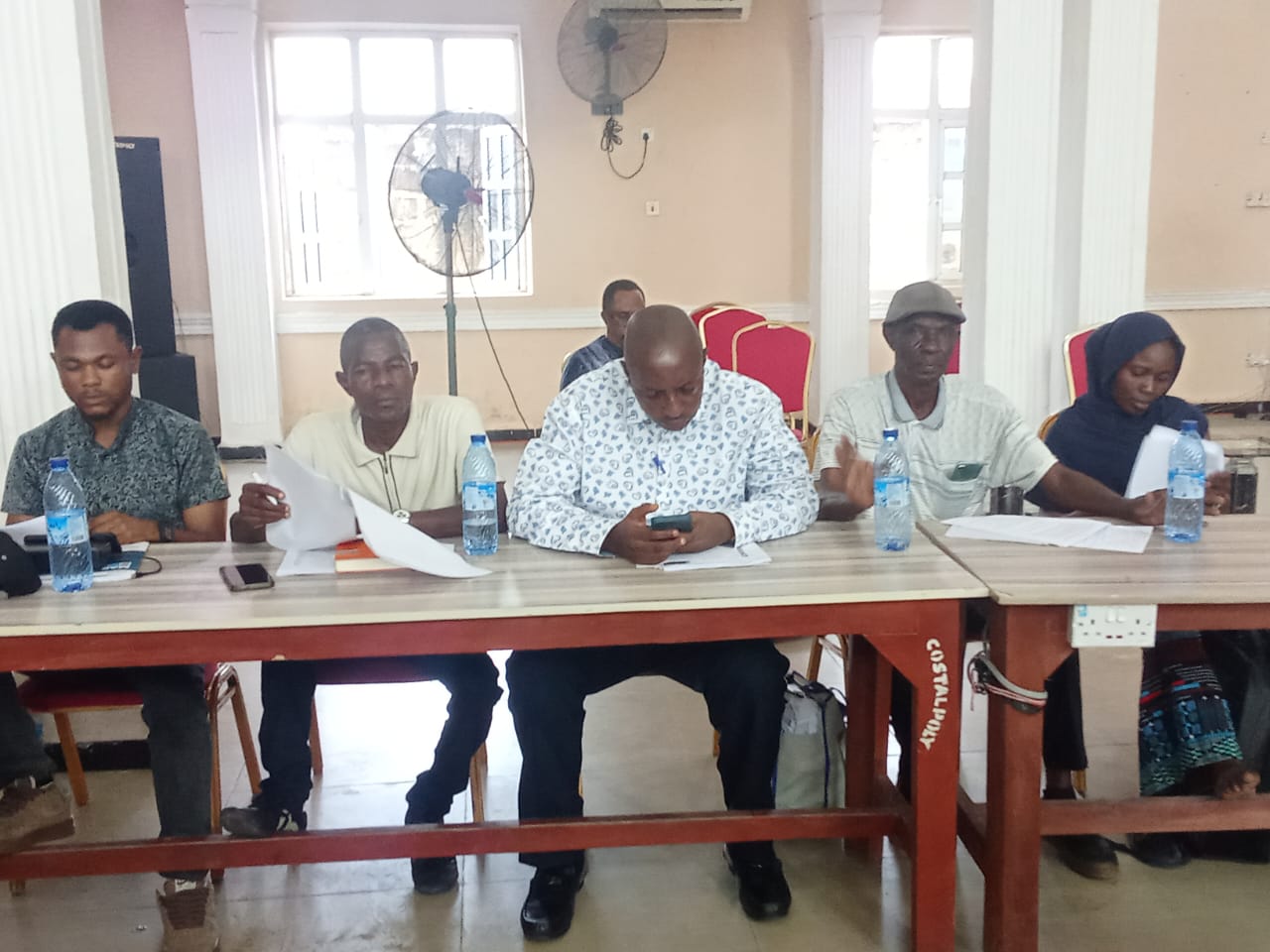
The Maritime Reporters Association of Nigeria (MARAN) has trained 20 of its members at the Chartered Institute of Shipping of Nigeria (CISN) in a renewed effort to deepen maritime journalists’ technical knowledge, strengthen professional competence and improve the quality of reporting on Nigeria’s shipping industry and emerging blue economy.
The Graduate Induction Training Programme, which ended on Saturday, October 10, 2026, exposed participants to the technical, regulatory, operational and environmental dimensions of the maritime industry.
Participants are expected to obtain a Postgraduate Diploma Certificate in Shipping upon successful completion of the programme.
The training covered critical areas, including maritime safety and security, integrated marine environment management, shipping and port management, cargo clearance procedures and documentation, as well as the marine and blue economy.
The initiative underscores MARAN’s determination to bridge the knowledge gap between maritime journalism and the technical realities of the shipping industry, equipping its members with the expertise required to report more accurately and analytically on developments across the sector.
Delivering the first lecture, a CISN lecturer, Mr Patrick Ambakederimo, examined the principles of maritime safety and security, highlighting their significance to efficient shipping operations, the protection of lives and property, and the sustainability of maritime activities.
He discussed the identification and management of risks associated with vessel operations, cargo handling and other maritime activities, emphasising the need for strict compliance with safety regulations, regular inspections, adequate crew training and effective emergency response mechanisms.
Participants were also exposed to the importance of intelligence sharing, effective surveillance, coordinated security operations and adherence to relevant international maritime security standards.
The lecture distinguished between maritime safety, which focuses on preventing accidents and operational hazards, and maritime security, which addresses deliberate threats, unlawful activities and other hostile acts within the maritime domain.
Another CISN lecturer, Mr Sunday Duru, delivered a lecture on integrated marine environment management, examining the need for coordinated strategies to protect marine and coastal ecosystems from the environmental pressures associated with shipping, port operations and coastal development.
Duru stressed the importance of collaboration among government agencies, maritime operators, environmental organisations, coastal communities and other stakeholders in addressing environmental challenges confronting the maritime industry.
He identified marine pollution, oil spills, improper waste disposal, plastic pollution and the degradation of coastal ecosystems as critical concerns requiring sustained attention.
He also highlighted the importance of environmental monitoring, pollution prevention, proper waste management and effective enforcement of environmental regulations in safeguarding Nigeria’s marine resources.
Other courses covered shipping and port management, cargo clearance procedures and documentation, and the marine and blue economy.
These sessions were designed to broaden participants’ understanding of the commercial and operational processes underpinning shipping and port activities, while exposing them to the economic opportunities available in fisheries, coastal tourism and other ocean-related industries.
Speaking on the initiative, MARAN President, Oluyinka Onigbinde, reaffirmed the association’s commitment to sustained capacity building as a strategy for producing a corps of maritime journalists equipped to report the industry with greater accuracy, depth and professionalism.
Onigbinde maintained that effective maritime journalism required more than the ability to gather information and write news reports, stressing that journalists must understand the policies, regulations, commercial transactions and operational processes that shape the industry.
According to him, a technically informed maritime press would be better positioned to interrogate policy decisions, scrutinise industry practices, hold stakeholders accountable and explain complex maritime issues to the public.
He said MARAN would sustain its professional development initiatives through strategic partnerships with maritime institutions, government agencies and private-sector operators, creating more opportunities for members to acquire specialised knowledge and practical industry experience.
The association, he added, would continue to explore training programmes that expose members to emerging trends in shipping, port operations, maritime security, international trade and the blue economy.
Onigbinde stressed that continuous professional development was essential to strengthening the credibility of maritime journalism and improving public understanding of the sector’s contribution to national economic growth.
He expressed optimism that the knowledge acquired by participants would translate into improved reporting, particularly in the coverage of port efficiency, shipping operations, maritime safety, environmental sustainability and government policies affecting the industry.
The training comes at a time when Nigeria is intensifying efforts to improve port competitiveness, strengthen maritime security, promote environmental sustainability and unlock the economic potential of its marine resources.
For MARAN, the programme represents an investment not only in the professional development of its members but also in the quality of public discourse on the maritime industry.
By equipping journalists with a deeper understanding of the sector’s technical and commercial realities, the association hopes to promote more informed reporting, strengthen accountability and enhance public appreciation of the maritime industry’s role in Nigeria’s economic development.
Customs
MACI hails Customs’ anti-corruption framework, demands full implementation
Funso OLOJO, Editor
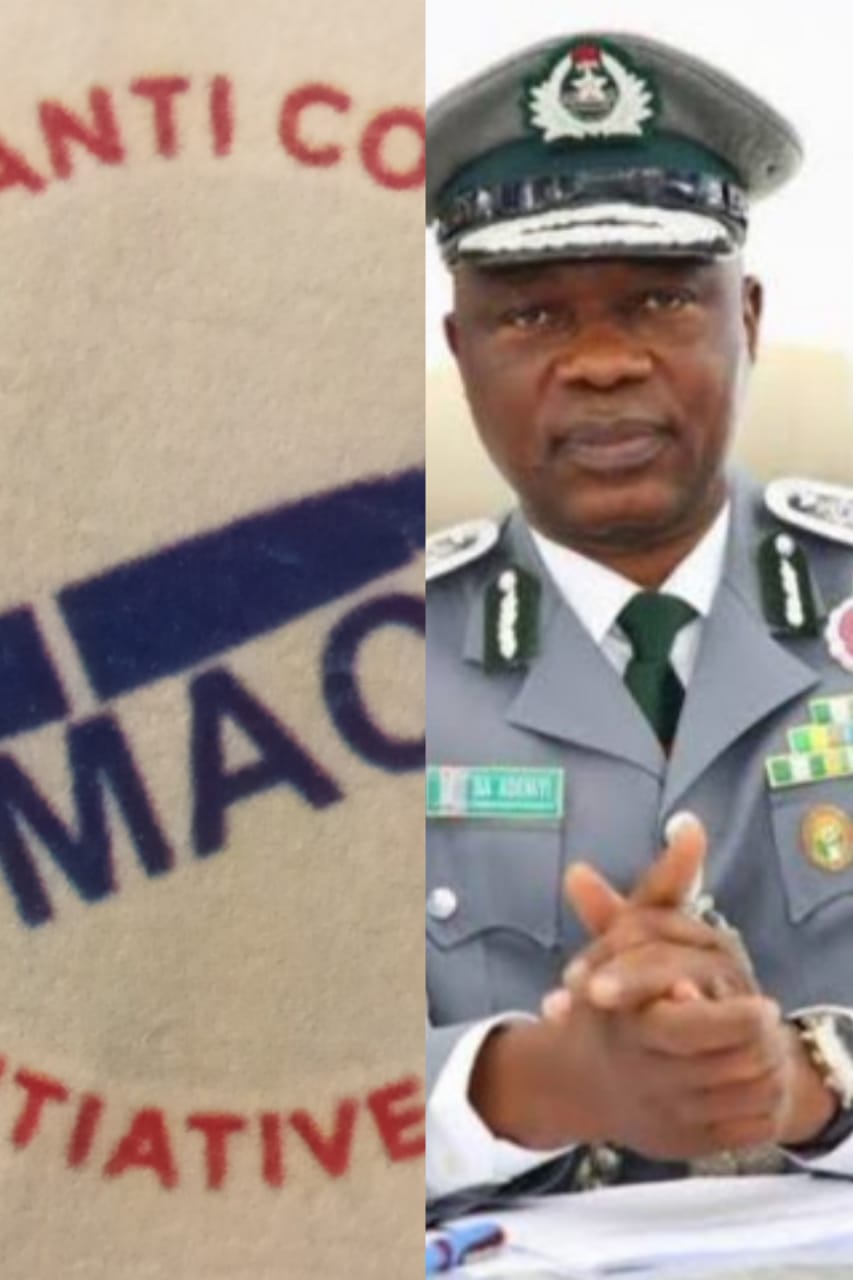
The Media Anti-Corruption Initiative (MACI) has applauded the Comptroller-General of Customs, Adewale Adeniyi, for introducing a comprehensive anti-corruption framework aimed at identifying institutional vulnerabilities, strengthening internal controls and promoting integrity across the operations of the Nigeria Customs Service (NCS).
The initiative, which MACI described as a significant milestone in the fight against corruption within the Service, is anchored on three key documents signed by the Customs chief: the Standard Operating Procedure (SOP) for Internal Corruption Risk Analysis and Mapping (ICRAM), the ICRAM Handbook and the Integrity Action Plan (IAP).
In a statement jointly signed by MACI President, Funso Olojo, and Project Coordinator, Lod Onyeji, the organisation described the development as a “pivotal moment in the fight against corruption within the Nigeria Customs Service.”
Mr Olojo, who commended the initiative of the Customs, noted that the stance of the agency on corruption is in alignment with the aims and objectives of MACI which is an advocate for corruption- free society.
The signing ceremony, held on October 6th, 2026, at the NCS Headquarters in Abuja, also witnessed the inauguration of the ICRAM Steering Committee, which is responsible for identifying, assessing and mapping corruption risks across the Service’s operations.
According to the statement, the framework represents a proactive institutional approach to tackling corruption by identifying vulnerabilities in Customs processes and establishing measures to prevent abuse of office, improve accountability and strengthen public confidence in the Service.
The Comptroller-General, Adeniyi, disclosed that the framework was developed in collaboration with the World Customs Organisation (WCO) and partner administrations, including His Majesty’s Revenue and Customs (HMRC) of the United Kingdom.
He explained that the documents provide practical guidance for Customs officers operating at seaports, land borders and airports, equipping them with procedures and controls designed to promote integrity, transparency and accountability in the discharge of their responsibilities.
MACI noted that the introduction of the framework followed a pilot programme conducted across seven Customs Commands and Units, covering 66 processes spanning regulatory activities, core Customs operations and support functions.
The exercise culminated in the development of a comprehensive Integrity Action Plan containing 101 action items and 295 sub-actions designed to address identified corruption risks and strengthen institutional safeguards.
Key measures outlined in the plan include increased automation and improved audit trails, stronger supervisory mechanisms, clearer accountability structures, effective segregation of duties, regular staff rotations and targeted training programmes.
The framework also seeks to strengthen controls governing interactions between Customs officers and stakeholders, an area considered critical to reducing opportunities for corrupt practices and improving compliance with established procedures.
MACI commended the Customs leadership for adopting a risk-based approach to corruption prevention, noting that identifying and addressing institutional weaknesses before they are exploited is essential to building a transparent and accountable public institution.
The organisation, however, stressed that the effectiveness of the initiative would ultimately depend on the consistent implementation of the prescribed measures across all commands and operational units of the Service.
It therefore urged Customs management, officers, stakeholders and relevant partner institutions to support the full implementation of the framework to ensure that the initiative delivers measurable improvements in institutional integrity.
MACI expressed confidence that effective implementation of the ICRAM framework and Integrity Action Plan would strengthen internal controls, reduce corruption risks, promote ethical conduct and enhance public trust in the Nigeria Customs Service.
The organisation emphasised that the new framework should not merely remain a collection of policy documents but should translate into tangible changes in operational practices, staff conduct and the overall culture of accountability within the Service.

 Customs3 months ago
Customs releases final recruitment list for ASC II, ends nearly one-year wait for applicants
- Headlines3 months ago
As NRC recovers ₦200m stolen railway assets, Opeifa vows diligent prosecution of suspects
- Customs3 months ago
Customs launches MIS file tracker at PTML in fresh digitalisation drive
- Headlines1 month ago
Oyetola presents three-year score card as blue economy industry revenue hits ₦1.83trn
- Customs2 months ago
Apapa Customs sets new record of monthly revenue haul with ₦323bn collection in July
- Customs2 months ago
Apapa Customs sets new single-day revenue record with ₦28.1bn collection