
Headlines
Fashola attributes slow work on Lagos- Badagry Expressway to lack of funds

The Minister of Works and Housing, Mr Babatunde Fashola, has attributed the slow pace of work on Lagos-Badagry Expressway to lack of adequate funding.
“If we succeed, Lagos-Badagry Expressway is one of the top roads we are penciling down for the Sukuk in 2021.
“If that happens, then the contractor will do his work but I think it is important to help us communicate to the people who use that axis that they are not forgotten.
“Work has started. There was a time when there was no contractor there, so, there is now a contractor,’’ Fashola claimed.
On the Lagos-Ibadan Expressway, the Minister stated that about 85km had been completed out of the 127km project being funded by Presidential Infrastructure Development Fund while the Lagos-Ota-Abeokuta Expressway was recording accelerated construction because of the Sukuk funding.

Headlines
NRC targets 10,000km rail network in five years, 20,000km long-term
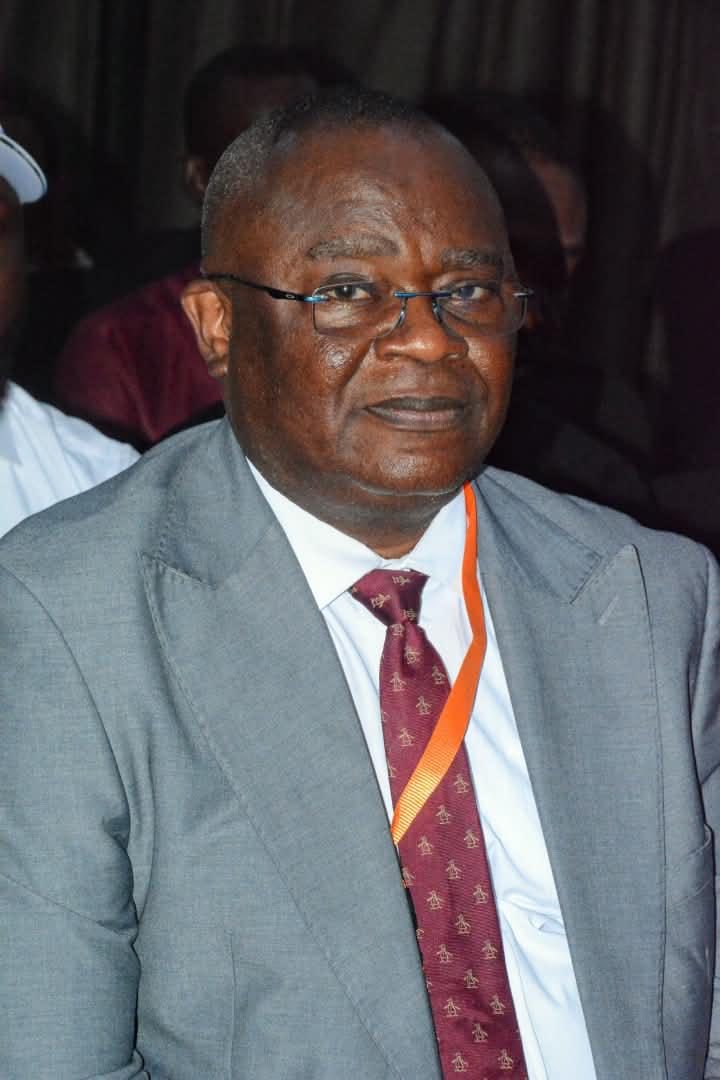
-as Opeifa believes integrated transport system key to Nigeria’s economic competitiveness
Funso OLOJO Editor
The Managing Director of the Nigerian Railway Corporation (NRC), Dr Kayode Opeifa, has identified an integrated transportation and logistics system as critical to strengthening Nigeria’s economic resilience, reducing the cost of doing business and enhancing the competitiveness of Nigerian products.
Opeifa said an efficient transport network that connects production centres, seaports, industrial clusters, inland terminals and consumption markets would significantly reduce logistics costs, improve trade and stimulate economic growth.
He made this submission while speaking on the theme, “Scaling the Future: Building a Resilient and Efficient Mobility and Logistics Ecosystem in Nigeria,” at the BusinessDay Mobility and Logistics Conference held at Four Points by Sheraton, Victoria Island, Lagos.
According to him, persistent inefficiencies in Nigeria’s transportation network contribute to congestion, rising logistics costs, delayed deliveries, declining productivity and higher prices of goods and services.
He argued that rail transportation must occupy a strategic position in the development of an integrated national transport system, noting that improved connectivity across the different modes of transportation would translate into greater economic efficiency and competitiveness.
The NRC boss explained that rail offers high-capacity solutions for long-distance passenger and freight transportation, reduces pressure on highways and provides an important connection between seaports, industrial centres, inland terminals and urban markets.
He stressed that road, rail, maritime and air transportation should operate as complementary components of a unified logistics network rather than competing alternatives.
“Rail should not be viewed as a competitor to road, maritime or air transportation, but each should continue to develop as complementary components of an effective integrated transport system,” he said.
He noted that while road transportation remained essential for cargo collection and last-mile delivery, maritime transport facilitated international trade, while inland terminals supported cargo handling and distribution. Rail, he added, provided the high-capacity link connecting these facilities with production and consumption centres.
Opeifa maintained that seamless coordination among the various transportation modes would reduce avoidable logistics expenses, facilitate regional commerce, improve access to markets and strengthen the competitiveness of Nigerian businesses.
Outlining the NRC’s strategic direction, the managing director highlighted the corporation’s track access policy, which allows private investors to explore opportunities in passenger and freight operations along the country’s railway corridors.
He also unveiled the corporation’s Vision 2:5:10:20, a strategic framework designed to optimise existing railway assets, revive viable dormant corridors, expand freight operations, deepen private-sector participation and progressively extend the national rail network.
Under the ambitious plan, the NRC is targeting an expansion of Nigeria’s railway network from approximately 4,000 kilometres to 10,000 kilometres within five years, with a long-term ambition of reaching about 20,000 kilometres.
“Our ambition is to consistently grow the networks from approximately 4,000 kilometres that we met, to 10,000 kilometres within five years and ultimately achieving about 20,000 kilometres over the long term.
“These are no doubt strategic targets that require sustained investment and implementation,” he said.
Opeifa identified the immediate priorities as improving the utilisation of the country’s two legacy narrow-gauge lines and three standard-gauge lines, restoring operational capacity, expanding freight services and strengthening connections between railway infrastructure, seaports and inland terminals.
He explained that maximising the performance of existing railway assets would provide a foundation for future expansion while improving the corporation’s capacity to support freight and passenger movement.
On ongoing and proposed railway infrastructure projects under President Bola Ahmed Tinubu’s administration, Opeifa disclosed that efforts were being made to extend the standard-gauge railway to Apapa Port and establish a connection to Tin Can Island Port.
The proposed connections, he said, were intended to improve cargo evacuation, reduce pressure on road infrastructure and strengthen the interface between Nigeria’s railway network and maritime trade facilities.
He further disclosed that the Kano-Maradi railway project was expected to be completed in 2027, while plans were underway for a central railway corridor linking the Warri-Itakpe line to Abuja.
According to him, the government also plans to commence construction of the Marina-Lekki railway line, alongside efforts to support the Kaduna-Kano inter-state train service and the proposed intra-state railway services of the Kano State Government.
He said the projects formed part of broader efforts to expand railway connectivity, improve passenger mobility and facilitate the movement of goods across the country.
Also speaking at the conference, the Director-General of the Africa Centre for Supply Chain (ACSC), Dr Obiora Madu, warned that small-scale businesses would continue to struggle unless Nigeria addressed the fragmentation and inefficiencies within its transportation and logistics networks.
Madu estimated that the country loses more than N3.6 trillion to inefficiencies and distortions in the transportation and logistics sector, arguing that an interconnected system would unlock significant economic opportunities.
“If we don’t get the logistics right, the small-scale businesses would not be optimised. We do not need digital islands, we do not need superlative infrastructure, what we need is connected systems,” he said.
He maintained that developing a resilient logistics ecosystem required more than the expansion of individual infrastructure components, stressing the importance of coordination, connectivity and the ability of the entire system to withstand disruptions.
Similarly, the Managing Director of JanksMay Global Services Ltd., Ifeanyi Onwuachu, identified persistent infrastructure deficits as a major constraint affecting small-scale operators in the logistics industry.
He said the difficulties confronting operators underscored the need for improved infrastructure and more efficient transportation connections to support business activities.
Earlier, in his welcome address, the Deputy Editor-in-Chief of BusinessDay, Dr Innocent Nna, described the Mobility and Logistics Conference as an important platform for examining persistent challenges in Nigeria’s logistics sector and exploring practical solutions.
Nna urged industry stakeholders to engage in constructive discussions on the gaps confronting the country’s transportation and logistics systems, with a view to identifying measures that would improve efficiency and strengthen the sector.
The conference brought together stakeholders across the transportation, logistics and business sectors to examine strategies for building an integrated, efficient and resilient mobility ecosystem capable of supporting economic growth and improving the competitiveness of Nigerian businesses.
Headlines
Omatseye blows hot as he maintains stance over CVFF dollar to naira conversion controversy.
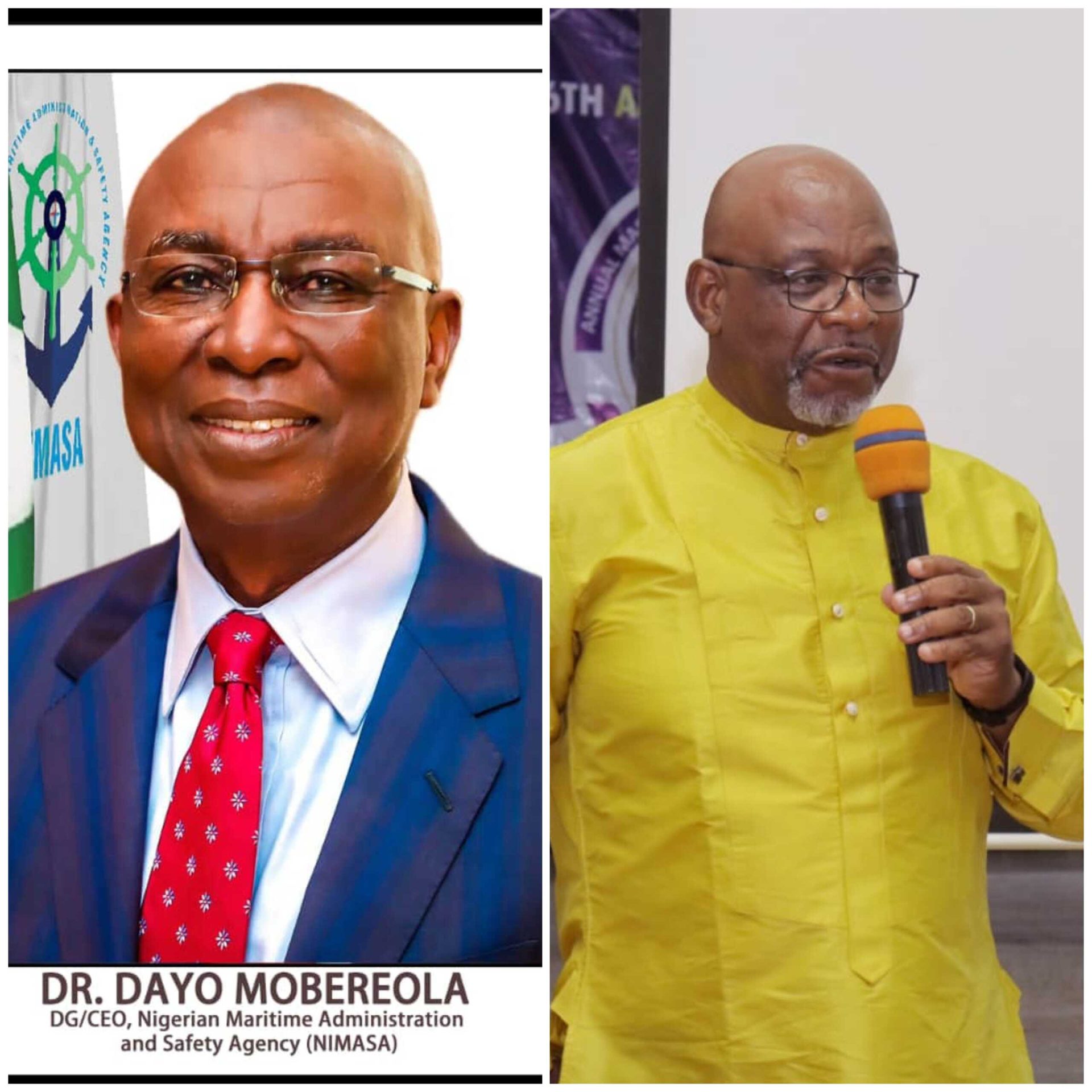
— claims he left N52 bn in fixed deposit at his exit in 2010
Funso OLOJO, Editor
The last may not have been heard about the war of words between the two helmsmen at the Nigerian Maritime Administration and Safety Agency (NIMASA) over the alleged controversial conversion of the dollar component of the Cabotage Vessels Financing Funds (CVFF) into Naira.
Temisan Omatseye, the former Director General of NIMASA from July 2009 to December 2010, had claimed that the Agency converted the dollar remittances into the CVFF pool into Naira for higher interest rates.
Temisan made this claim at a public function in Lagos where he was speaking on the controversial CVFF delayed disbursement.
In a swift reaction, the incumbent NIMASA DG, Dr Dayo Mobereola, fired back, dismissing Temisan’ s claim as “misleading which does not reflect the true situation of CVFF”
In a press statement he personally signed on Sunday, November 1st, 2026, Mobereola said all the remittances into the CVFF pool are retained in their original currencies of remittance.
He explained that the revenue streams accruing to the CVFF are denominated in different currencies.
“Accordingly, funds remitted in United States dollars are retained in dollars with the Central Bank of Nigeria (CBN), while contributions remitted in naira are retained in the local currency.
“There has been no conversion of the dollar-denominated component of the CVFF to naira, contrary to the allegation”
However, Temisan, in his reaction to the rebuttal by Mobereola as reported by our reporter, maintained his stance on the controversy.
In his defence of his position on the matter, which he made in reference to the report by this platform, Omatseye declared emphatically that such conversion was made during his tenure as the DG of NIMASA.
“By virtue of the seasonal headline that I lied, there is a need to clarify exactly what was said.
“When I became DG NIMASA in 2009. the Agency’s account, be it CVFF or 3% ,were held in commercial banks.
” Several banks were nominated as collection banks but on the 23rd of each month, there was what we called sweep, where all monies, be it dollars or naira, were swept from the different collection banks accounts to designated naira and dollar accounts.
“By virtue of a memo from the Accountant General’s office, the Agency was directed to change all foreign internally generated revenue, be it 3% or CVFF, into naira and fix it in naira.
” The reason I was made to understand was that the dollar earned 1-2% interest whereas naira earned upward of 15% interest. Which made sense.
“This was the practice until I left office. I was explaining to the audience what had transpired during my tenure.
“What has been the practice since the advent of TSA is better explained by NIMASA.
“In the light of that, I stand fully by my statement that during my tenure, all dollar funds received as CVFF were converted into naira.
“I really don’t understand where I’m being accused of lying by NIMASA.
” I read NIMASA position which is correct based on correct realities and my position is based on my realities at the time I was in office.
” On the day I left NIMASA which was 13th December 2010, there was being held in fixed deposit N52 billion which included both CVFF and Maritime fund” Temisan declared , clarifying his position on the controversial matter.
Headlines
Tension heightens at Osborne Foreshore Estate over alleged environmental breach by property developer
Funso OLOJO, Editor
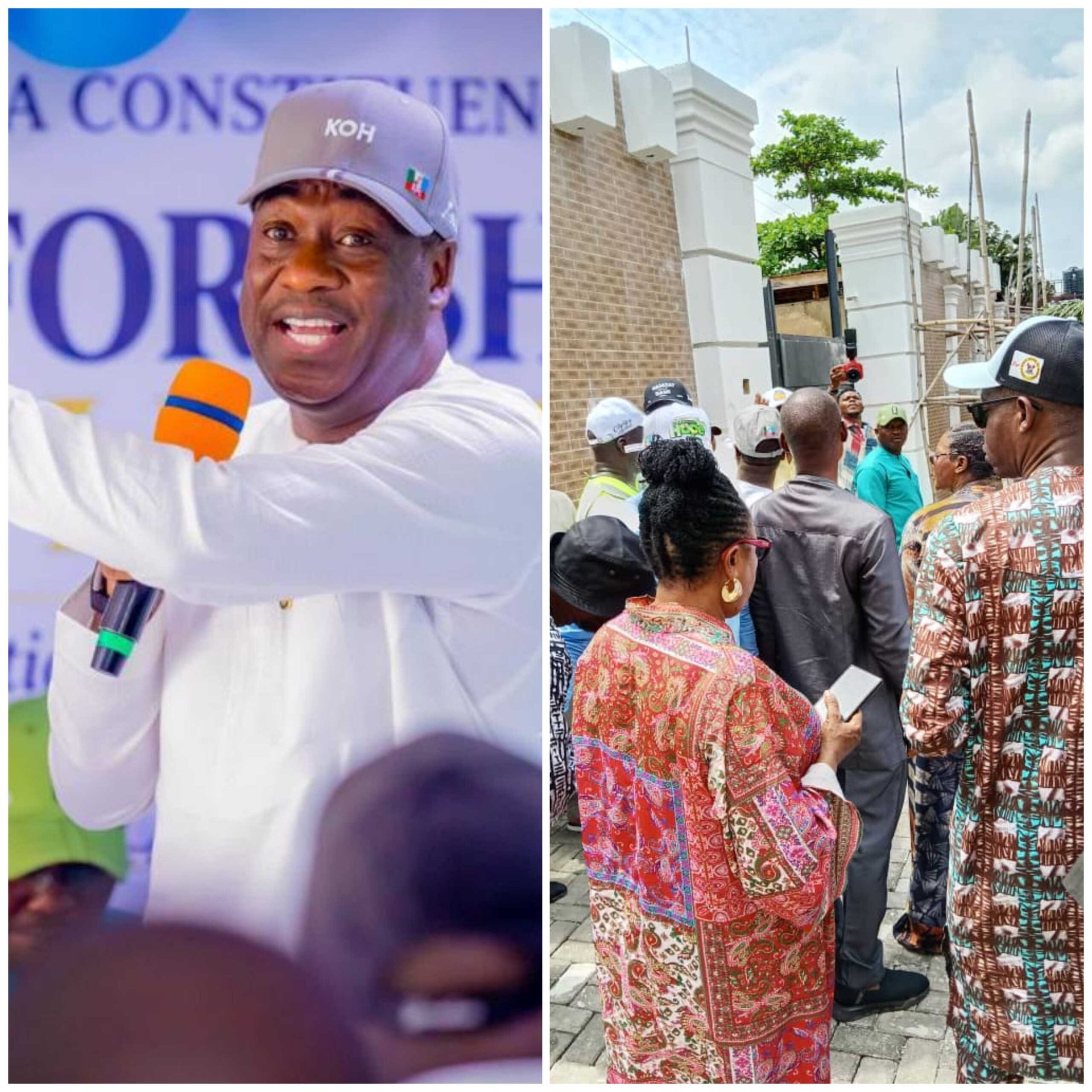
A visit by Lagos State Deputy Governor, Dr. Kadri Obafemi Hamzat, to a disputed construction site at Osborne Foreshore Phase II Estate, Ikoyi, on Saturday, October 31st, 2026 ended in a dramatic confrontation after the developer, Kenshad International Limited, failed to open the gates to the property.
Hamzat, who led a high-powered government delegation to the estate following complaints by residents over alleged planning violations and environmental infractions, reportedly waited for more than 30 minutes at the entrance to the development, known as Abba Court, on Mahogany Close, without gaining access.
The incident has heightened tensions over the controversial development, with residents questioning the developer’s refusal to grant access to the deputy governor and his entourage, while the company has dismissed suggestions that it deliberately locked out the government delegation.
The deputy governor’s visit followed mounting complaints from residents, who alleged that the developer had embarked on construction activities capable of compromising the safety, drainage infrastructure and environmental integrity of the estate.
At a meeting with Hamzat, tagged Osborne Phase II Residents and Public Leaders Dialogue, residents accused Kenshad International Limited of constructing beneath high-tension electricity lines, laying concrete slabs over a canal and undertaking sand-filling activities that had allegedly narrowed water outlets within the estate.
They warned that the alleged obstruction of the canal could disrupt the natural flow of water, undermine the estate’s drainage system and increase the risk of flooding, with possible consequences for adjoining communities.
The residents also accused the developer of creating an unauthorised rear entrance into the estate, allegedly used to bring in suspected thugs to intimidate residents opposed to its construction activities.
They further alleged that soldiers, police personnel and officials of the Federal Ministry of Housing and Urban Development had been deployed or involved in attempts to harass and intimidate them.
The residents called on the Lagos State Government to investigate the allegations against Kenshad International Limited and its owner, Ken Ukaoha, and determine whether the development complied with applicable planning, environmental and safety regulations.
They also questioned the legal basis of the developer’s claimed joint-venture arrangement with the Federal Ministry of Housing and Urban Development, urging the state government to scrutinise the agreement and establish whether it conferred the necessary authority to undertake the disputed activities.
Responding to the complaints, Hamzat maintained that physical planning, land use and development control were matters within the constitutional jurisdiction of state governments.
Citing Supreme Court decisions, the deputy governor argued that the Federal Government could not unilaterally assume the functions of state planning authorities or issue building approvals in place of the relevant state agencies.
He assured the residents that the Lagos State Government would investigate the allegations and take appropriate steps based on its findings.
Hamzat was accompanied on the visit by former Minister of Finance and Coordinating Minister of the Economy, Mr. Wale Edun; Senator Wasiu Eshilokun Sanni, representing Lagos Central Senatorial District; Hon. Gbolahan Yishawu, representing Eti-Osa Constituency in the Lagos State House of Assembly; commissioners and other government officials.
Hamzat is also the All Progressives Congress (APC) governorship candidate for the February 6, 2027 Lagos State governorship election.
However, reacting to the controversy, Managing Director of Kenshad International Limited, Ken Ukaoha, denied that his company deliberately locked out the deputy governor or obstructed a canal at the estate.
Ukaoha explained that the construction site was closed because of a government-issued circular directing a temporary suspension of construction activities ahead of a scheduled meeting.
He insisted that the gates were not shut to prevent Hamzat or any government official from accessing the property, but because workers and other personnel had vacated the site in compliance with the directive.
The developer also said he was not in Lagos when the incident occurred and had not received any formal notification that the deputy governor or other government officials intended to inspect the property.
“Nobody locked the deputy governor out of the site. The site was locked because nobody was there. They gave a circular that we were meeting. So, everybody was away. It is a construction site, and nobody was there,” he said.
Ukaoha, who confirmed that he had been invited to a meeting over the allegations of canal obstruction and land grabbing, described the controversy as a disagreement between his company and a neighbouring property owner.
On the allegation that Kenshad had blocked a canal, the developer maintained that he personally financed the construction of part of the drainage infrastructure in the estate.
“As I am talking to you, that canal in question, I did the canal with my money. The Royal Palm, where I did half of it with my money,” he said.
He further claimed that the canal in dispute was not connected to any other drainage channel, adding that his company had undertaken drainage construction in the area with the involvement of government officials.
Ukaoha also maintained that Kenshad had obtained the necessary government approvals for its construction activities and paid the prescribed fees.
He said officials of the Lagos State Ministry of the Environment had visited the site on several occasions, insisting that the company had not violated any applicable law.
The conflicting accounts have brought renewed attention to the dispute over the development, particularly the allegations concerning drainage infrastructure, construction beneath high-tension power lines, land-use approvals and the respective regulatory responsibilities of federal and state authorities.
The outcome of the Lagos State Government’s proposed investigation is expected to clarify the circumstances surrounding the development and establish whether the disputed construction activities comply with the relevant planning, environmental and safety requirements.

 Headlines2 months ago
Oyetola presents three-year score card as blue economy industry revenue hits ₦1.83trn
 Customs3 months ago
Apapa Customs sets new single-day revenue record with ₦28.1bn collection
 Customs3 months ago
Apapa Customs sets new record of monthly revenue haul with ₦323bn collection in July
 Customs3 months ago
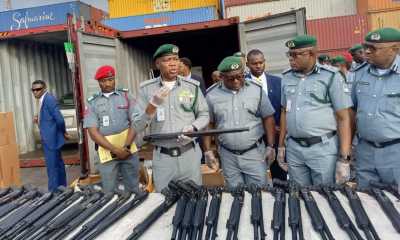
NCS intercepts container concealing pump-action rifle parts, seizes ₦373.8m worth of cannabis products at Tincan Port

 Customs1 month ago
FOU Zone ‘A’: Aliyu retires after ₦3.19bn revenue recovery, Afeni takes over

 Customs2 months ago
Nigeria, Benin Customs move to harmonise trans-border trade, establish joint border post at Seme-Krake