
Customs
KLT Customs reaffirms commitment to stronger maritime stakeholder engagement

Gloria Odion, Maritime reporter
The Acting Customs Area Controller (CAC) of the Kirikiri Lighter Terminal (KLT) Area Command of the Nigeria Customs Service (NCS), Deputy Comptroller Bolaji Adigun, has reaffirmed the Command’s commitment to deepening engagement with stakeholders across the maritime industry in line with efforts to promote trade facilitation, transparency, and sustainable economic growth.
Adigun gave the assurance through the Deputy Comptroller in charge of Administration, Comptroller T.A. Jonah, who represented him during a courtesy visit by the newly elected Executive Committee of the Maritime Reporters Association of Nigeria (MARAN) to the Command in Lagos.
The Acting CAC, who was unavoidably absent, underscored the importance of sustained collaboration between the Nigeria Customs Service and key industry stakeholders, particularly the maritime media, in advancing the Service’s mandate and supporting national economic development.
He described the media as a critical partner in disseminating information on government policies, customs reforms, trade facilitation initiatives, revenue generation, and anti-smuggling operations.
According to him, maritime journalists occupy a strategic position in shaping public understanding and perception of activities within the port and maritime sector, stressing the need for professionalism, accuracy, and balanced reportage in the discharge of their duties.
Adigun further assured the MARAN delegation that the KLT Area Command would continue to operate an open-door policy while fostering cordial and productive relationships with stakeholders within the maritime community.
Earlier in his remarks, the President of MARAN, Mr. Oluyinka Onigbinde, stated that the visit formed part of the association’s ongoing stakeholder engagement initiative following the inauguration of its newly elected executive committee.
Onigbinde explained that the purpose of the visit was to formally introduce the new leadership of the association to the Command and strengthen the longstanding relationship between MARAN and the Nigeria Customs Service.
He commended the KLT Area Command for its contributions to trade facilitation, revenue generation, and enforcement activities, describing the Command as a vital component of Customs operations within Nigeria’s port system.
The MARAN President also reaffirmed the association’s commitment to professional, objective, and development-driven journalism, noting that maritime reporters play a significant role in promoting informed discourse on issues affecting the industry.
He further assured the Command of MARAN’s continued support for initiatives aimed at enhancing efficiency, transparency, and competitiveness within Nigeria’s maritime sector through responsible and factual reporting.

Customs
Adeniyi highlights role of effective communication in institutional success , operational efficiency
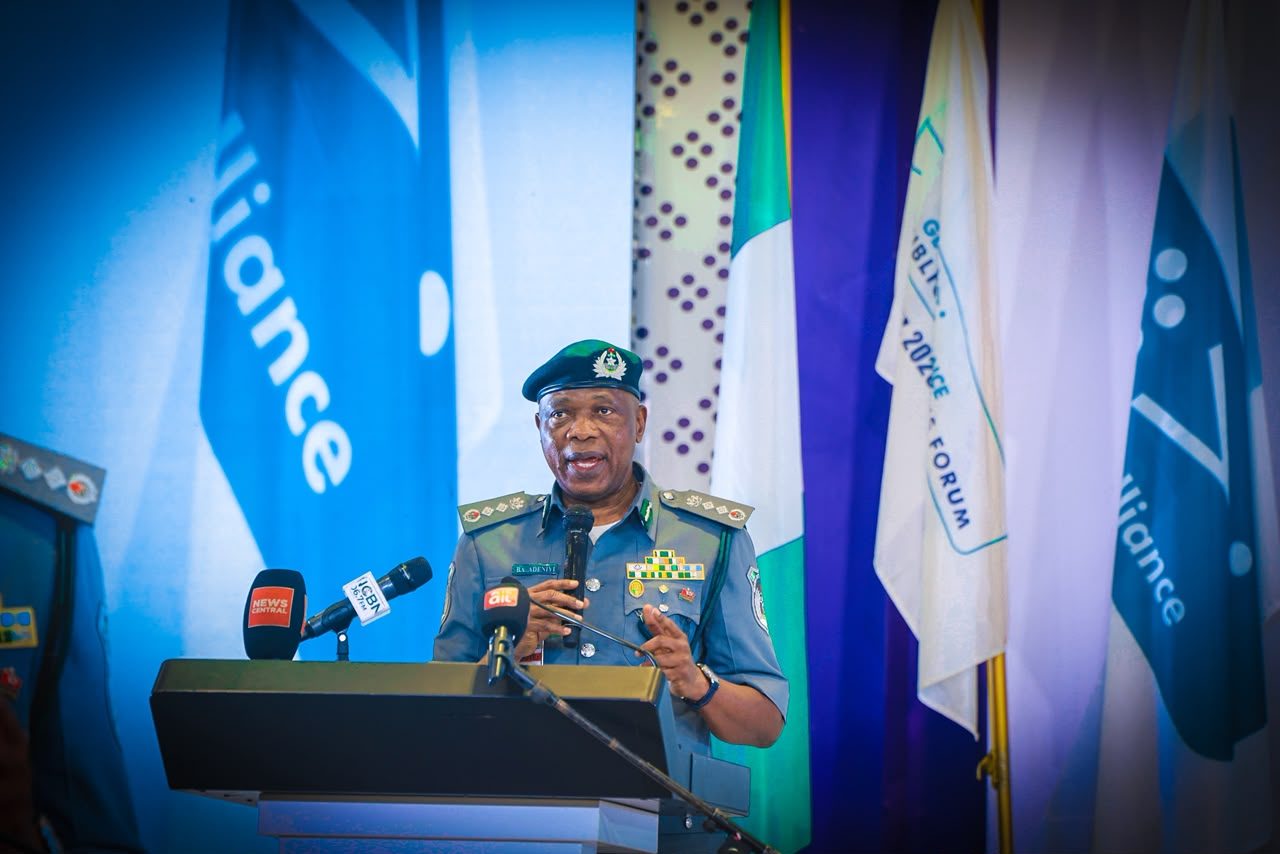
Gloria Odion Maritme Reporter
The Comptroller-General of Customs, Adewale Adeniyi, has called on public institutions to integrate effective communication into their decision making processes, warning that poorly communicated policies could undermine implementation and weaken public trust.
Adeniyi made the call on November 17th, 2026, at the World Public Relations Forum (WPRF) in Abuja, where he shared five key public relations lessons drawn from the Nigeria Customs Service’s (NCS) reform experience.
He stressed that the success or failure of institutional policies often depends not only on their objectives but also on how effectively they are communicated to stakeholders and the general public.
The Customs boss explained that an institution’s reputation is shaped by its everyday interactions with the public, noting that a rude officer at an airport, an unanswered complaint or a poorly managed encounter could influence public perception more than official statements and publicity campaigns.
Drawing from the Service’s ongoing reforms, Adeniyi outlined five key lessons for public relations professionals: communicating before implementing changes, telling the truth even when it is uncomfortable, verifying information before speaking, ensuring that promises align with actual results, and actively listening to stakeholders.
On the importance of communicating ahead of reforms, he cited the introduction of the B’Odogwu platform, which replaced the Nigerian Integrated Customs Information System (NICIS) II.
He explained that early engagement with importers, licensed customs agents, terminal operators and Customs officers, supported by helpdesks and a phased implementation strategy, helped improve stakeholders’ understanding and acceptance of the new platform.
He added that the initiative had also attracted recognition from the African Continental Free Trade Area (AfCFTA) Secretariat as a model for the continent.
Addressing the need for transparency, Adeniyi cited the Time Release Study, which revealed that cargo spent an average of about five days at Nigerian ports, with more than 90 per cent of the time spent idle.
According to him, making the findings public helped identify operational bottlenecks and demonstrate that delays in cargo clearance were not attributable to a single agency but involved multiple stakeholders across the port value chain.6
On the importance of verifying information before making public statements, the CGC referenced major enforcement operations, including the seizure of 844 rifles at Onne in June 2024, as well as the interception of 399 rifles from a Mitsubishi Delica vehicle and another 389 rifles aboard MV Vega.
He emphasised that accurate information, proper verification and effective inter-agency collaboration were essential to maintaining credibility, particularly when communicating sensitive enforcement activities.
“Communication must not be treated as an afterthought in institutional reforms; it must be part of the decision making process from the beginning. When people understand a policy’s purpose, they are more likely to support its implementation.
“For us in the Nigeria Customs Service, our experience has shown that effective communication, transparency, stakeholder engagement and listening are essential to building public trust and achieving sustainable reforms,” Adeniyi said.
The Customs chief further cited the Authorised Economic Operator (AEO) programme as a practical demonstration of how promoting compliance can enhance trade facilitation, accelerate cargo clearance and foster stronger collaboration between the Service and the private sector.
He disclosed that 51 companies had attained AEO status, with cargo clearance time reduced from 168 hours to 41 hours, while more than 200 other companies had also benefited from the programme.
Adeniyi concluded by urging public relations professionals to take their rightful place at the decision making table, stressing that communication alone cannot conceal poor institutional performance.
He maintained that an organisation’s relevance and reputation are ultimately determined by the relationship between what it says, what it does and the actual experiences of the people it serves.
Customs
Customs suspends training of recruits over dispute with Federal Character Commission on recruitment exercise

Customs
Customs reviews B’Odogwu system in Lisbon, targets faster cargo clearance, higher revenue


 Headlines3 months ago
Oyetola presents three-year score card as blue economy industry revenue hits ₦1.83trn

 Customs2 months ago
FOU Zone ‘A’: Aliyu retires after ₦3.19bn revenue recovery, Afeni takes over

 Customs4 weeks ago
FOU Zone A: Afeni intensifies anti-smuggling operations, seizes N511.4m drugs, rescues eight pangolins

 Customs2 months ago
Nigeria, Benin Customs move to harmonise trans-border trade, establish joint border post at Seme-Krake

 Headlines3 weeks ago
Tension heightens at Osborne Foreshore Estate over alleged environmental breach by property developer

 Commentaries4 weeks ago
Beyond Shiny Tech: Why Africa’s smart ports must build plumbing before AI