
Headlines
SIFAX Group’s Wunmi Eniola-Jegede joins prestigious economic club of Africa network


Headlines
Oyetola flags off ₦1.3trn modernisation project of Apapa, Tin Can ports November 25
Funso OLOJO, Editor
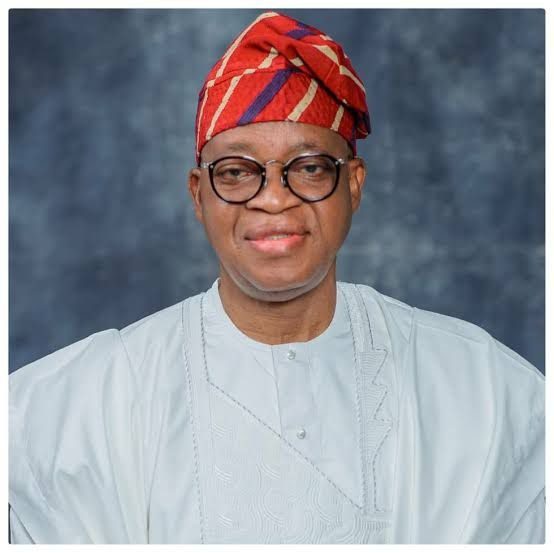
The Federal Government will on November 25th, 2026, begin the comprehensive modernisation and upgrade of Nigeria’s two busiest seaports, the Lagos Port Complex, Apapa, and the Tin-Can Island Port Complex, in a major infrastructure intervention expected to reshape the country’s maritime industry and strengthen its capacity to compete in global trade.
The Minister of Marine and Blue Economy, Adegboyega Oyetola, is scheduled to perform the groundbreaking ceremony and official turning of the soil for the projects, marking the commencement of what the government describes as a historic overhaul of the two strategic port facilities.
The initiative represents the Federal Government’s renewed push to address decades of infrastructure decay, operational bottlenecks and capacity constraints that have continued to undermine the efficiency and competitiveness of Nigeria’s seaports.
Oyetola said the modernisation of Apapa and Tin-Can ports was critical to expanding Nigeria’s trade capacity, facilitating exports and consolidating the country’s position as a major maritime and commercial hub in West and Central Africa.
The two ports jointly handle more than 70 per cent of Nigeria’s non-oil export cargo, making them indispensable to the country’s international trade and economic activities.
Oyetola described the proposed intervention as the first comprehensive modernisation initiative of its scale at the two facilities in about five decades.
He explained that the projects were designed to tackle ageing infrastructure, inadequate facilities, operational inefficiencies and increasing pressure on the country’s busiest port corridors.
According to the minister, the modernisation programme is expected to significantly improve cargo-handling capacity, reduce vessel turnaround time and cargo dwell time, enhance port access and logistics, and strengthen safety and security.
The intervention is also expected to create a more efficient and technologically advanced operating environment for shipping companies, terminal operators, importers, exporters, investors and other port users.
Beyond the Lagos ports, the Federal Government has approved similar modernisation and upgrade programmes for four other major seaports across the country: Warri, Onne, Calabar and Rivers ports.
Oyetola said the simultaneous focus on the six ports was part of a broader national strategy to develop a balanced and interconnected port system rather than concentrate maritime activities in Lagos.
“Our objective is to build a modern, efficient and interconnected port system that serves every region of the country. While Apapa and Tin-Can Island remain critical to Nigeria’s international trade, we cannot afford to concentrate the nation’s maritime activities around Lagos alone.
“The modernisation of Warri, Onne, Calabar and Rivers ports will complement the Lagos project, expand our national cargo-handling capacity and promote balanced economic development,” the Minister stated.
The government believes that the modernisation drive will also provide critical support for its economic diversification agenda, particularly efforts to increase non-oil exports, strengthen domestic industries, improve the ease of doing business and attract greater maritime investments.
A major component of the strategy is the integration of seaports with road and rail infrastructure, inland waterways and inland dry ports to establish a more efficient multimodal transportation network.
Such integration is expected to facilitate the movement of cargo from production centres to domestic and international markets, reduce logistics costs and improve the competitiveness of Nigerian exports.
The November 25 groundbreaking ceremony is therefore expected to signal the beginning of a wider transformation of Nigeria’s port infrastructure, with the success of the programme likely to be measured by improved operational efficiency, reduced cargo clearance delays, increased trade volumes and greater private-sector confidence in the nation’s maritime industry.
Headlines
Denmark offers seatime training to Nigerian Cadets onboard Maerskline vessels
Funso OLOJO, Editor
The Danish Government has expressed interest in creating seafaring opportunities for Nigerian cadets aboard Danish vessels through engagements with global shipping giant Maersk.
They also signalled readiness to collaborate with the Nigerian Maritime Administration and Safety Agency (NIMASA) on its Blue Economy Acceleration Programme (N-BEAP) Hackathon.
The proposed partnership is expected to open new pathways for Nigerian cadets to gain valuable onboard experience as ratings on Danish vessels, while strengthening bilateral cooperation in maritime innovation, technology development and human capacity building.
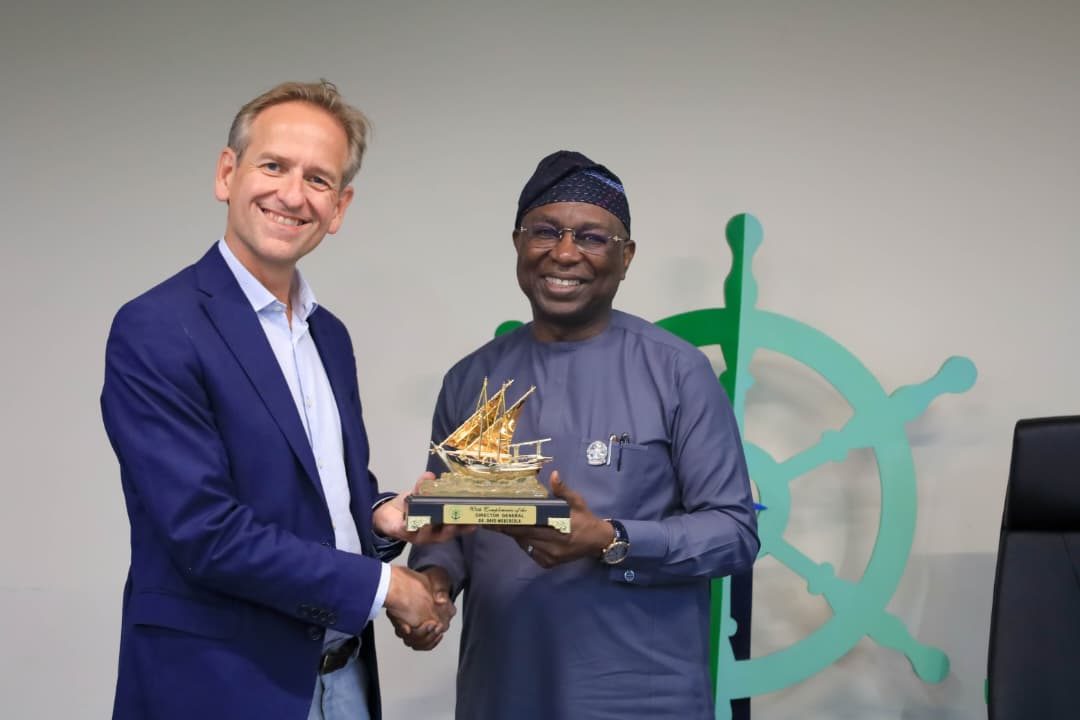
The Danish Ambassador to Nigeria, His Excellency, Jens Ole Bach Hansen, disclosed this during a visit to NIMASA, where he led a delegation to explore opportunities for expanding maritime cooperation between the two countries.
The Ambassador revealed that discussions were ongoing with Maersk Shipping on the possibility of engaging Nigerian cadets as ratings aboard Danish vessels, a development that could provide practical sea-time experience and enhance their professional development in the global maritime industry.
He also expressed interest in NIMASA’s N-BEAP Hackathon, describing it as a promising platform for encouraging innovation, developing technology-driven solutions and unlocking investment opportunities within Nigeria’s Blue Economy.
Other areas identified for possible cooperation include maritime security, intelligence sharing, digitalisation, seafarer education, cadet training, institutional collaboration and maritime financing.
Receiving the delegation, the Director-General of NIMASA, Dr. Dayo Mobereola, welcomed Denmark’s renewed interest in Nigeria’s maritime industry, describing the engagement as an opportunity to deepen the longstanding relationship between both countries and translate diplomatic goodwill into practical sectoral benefits.
He expressed appreciation for Denmark’s hospitality during the Agency’s visit in September and its support for Nigeria’s successful election into the International Maritime Organization (IMO) Council.
“Our priority is to translate the longstanding diplomatic relationship between Nigeria and Denmark into practical partnerships that deliver measurable benefits to both maritime industries.
“We look forward to strengthening collaboration in seafarer development, maritime innovation, technical capacity building and other strategic areas that will create sustainable opportunities for Nigeria’s maritime sector,” Mobereola stated.
The NIMASA chief stressed the need for a structured follow-up mechanism to connect the Agency with relevant Danish government institutions, maritime organisations, training establishments and private-sector operators capable of providing technical expertise, institutional support and strategic partnerships.
According to him, direct engagement with these institutions would enable both countries to identify areas of mutual interest, develop practical implementation frameworks and ensure that proposals arising from previous engagements translate into sustainable outcomes for their respective maritime industries.
He reaffirmed NIMASA’s readiness to work closely with the Royal Danish Embassy and relevant Danish institutions to advance the proposed areas of cooperation.
Mobereola expressed optimism that the renewed engagement would strengthen Nigeria’s seafarer development efforts, accelerate maritime innovation, enhance institutional capacity and create new opportunities for Nigerian maritime professionals.
He also assured the Danish delegation of NIMASA’s openness to exploring additional areas of cooperation capable of advancing the shared maritime development objectives of both countries.
Commentaries
Ports Without Rail: Why Nigeria keeps losing maritime billions to Togo

Monday Discourse with Nasiru Ibrahim
For years, Nigerian policymakers have celebrated the construction of new deep seaports as the magic bullet for our trade and revenue challenges.
Ribbon-cutting ceremonies at new waterfront terminals often dominate headlines, creating the impression that our maritime troubles are over.
Yet, as former Director-General of the Nigerian Maritime Administration and Safety Agency (NIMASA), Barrister Temisan Omatseye, rightly warned at the November 13, 2026 Network of Nigeria Maritime Journalists (NNMJ) Unity Conference in Lagos, pouring concrete into the ocean without building rail links, evacuation corridors, and marine fuel hubs is simply reproducing old gridlocks in new locations.
While neighbouring countries like Togo continue to capture transshipment cargo and lucrative maritime services meant for West Africa’s largest economy, Nigeria is leaving billions of naira on the table through fragmented planning.
Over 70 percent of cargo destined for the West African sub-region is bound for the Nigerian market, yet a painful share of that business still docks in Cotonou or Lomé before entering Nigeria through informal land borders or smaller feeder vessels.
Omatseye’s intervention at the Ikeja gathering spotlights four urgent policy blind spots that the Federal Ministry of Marine and Blue Economy and the Nigerian Ports Authority (NPA) must fix if Nigeria wants to reclaim its rightful maritime dominance:
First,the Refining and Bunkering Paradox
Nigeria now boasts the massive Dangote Refinery alongside several modular refineries capable of producing high-grade marine fuel.
Yet, international ocean-going vessels still bypass Nigerian waters to refuel elsewhere along the West African coast.
Ship bunkering—the business of supplying fuel and lubricants to commercial vessels—is a multi-billion-dollar global industry.
However, a thriving bunkering hub does not happen automatically just because domestic refineries exist.
It requires clear maritime security guarantees, competitive pricing benchmarks, transparent regulatory licensing, and seamless offshore supply logistics.
Until Nigeria aligns its refining boom with a deliberate marine fuel strategy, neighbouring ports will keep collecting the foreign exchange that belongs right here in our waters.
Second, Ports Without Hinterland Rail Connections
Building deep seaports at Lekki, Ibaka, or Calabar without corresponding heavy-duty rail lines and dedicated bypass roads is an economic dead end.
A seaport is not a storage warehouse; it is a transit corridor. As conference keynote speaker Barrister Emeka Akabogu, SAN, noted, approximately 90 percent of cargo movement from Nigerian ports still depends on road transport.
Consequently, as Omatseye pointed out, we are already watching the notorious Apapa traffic gridlock slowly replicate itself along the Lekki–Epe corridor because articulated trucks are forced to share congested urban roads instead of using dedicated cargo evacuation routes through neighbouring Ogun State.
Worse still, how do we transport solid minerals from the North-East or North-Central zones to proposed ports like Ibaka for export without a functional rail spine?
Contrast this fragmented approach with Guinea’s $20 billion Simandou iron ore project, which integrated a 600-kilometre heavy-haul railway directly into its port infrastructure from day one.
Nigeria sits on over 50 commercially viable solid minerals, yet our inability to link mines to ports keeps that wealth locked underground.
Third, Revenue Collection vs.Trade Facilitation
As NNMJ Chairman, Elder Dele Aderibigbe also noted at the conference, Nigerian port agencies often treat seaports purely as revenue-collection tailgates rather than trade engines.
Every year, agencies celebrate record-breaking customs and port revenue targets while ignoring the hidden economic cost of cargo delays.
Excessive cargo dwell times, manual physical examinations, overlapping security checkpoints, and unpredictable charges drive importers away to faster, cheaper regional competitors like the Port of Lome.
Modern global ports compete on turnaround speed and digital automation. You cannot sustainably tax trade that has already fled to your neighbour’s coastline.
Fourth, Holding the System Accountable
Finally, the challenge thrown to maritime journalists at the conference applies equally to policy analysts and citizens.
Maritime reporting must move beyond reproducing agency press releases and covering ceremonial workshops.
We need deeper investigative scrutiny into why cargo evacuation projects stall, why marine fuel policies remain disjointed, and why inter-agency rivalry continues to slow down cargo clearance at our terminals.
Nigeria does not suffer from a shortage of cargo volume, solid minerals, or maritime talent. What we lack is integrated execution.
A seaport is only as efficient as the railway tracks, highways, and digital clearance systems connected to its gates.
Until we link our ports directly to our factories, farms, and mining corridors, our massive maritime potential will remain trapped at the waterfront.
Ibrahim Nasiru, public affairs analyst, writes from Abuja.

 Headlines3 months ago
Oyetola presents three-year score card as blue economy industry revenue hits ₦1.83trn

 Customs3 months ago
Apapa Customs sets new single-day revenue record with ₦28.1bn collection

 Customs2 months ago
FOU Zone ‘A’: Aliyu retires after ₦3.19bn revenue recovery, Afeni takes over

 Customs2 weeks ago
FOU Zone A: Afeni intensifies anti-smuggling operations, seizes N511.4m drugs, rescues eight pangolins

 Customs2 months ago
Nigeria, Benin Customs move to harmonise trans-border trade, establish joint border post at Seme-Krake

 Headlines2 weeks ago
Tension heightens at Osborne Foreshore Estate over alleged environmental breach by property developer