
Headlines
Tinubu flags off $3.5bn Bakassi Deep Seaport, targets new maritime gateway for Nigeria
Funso OLOJO, Editor
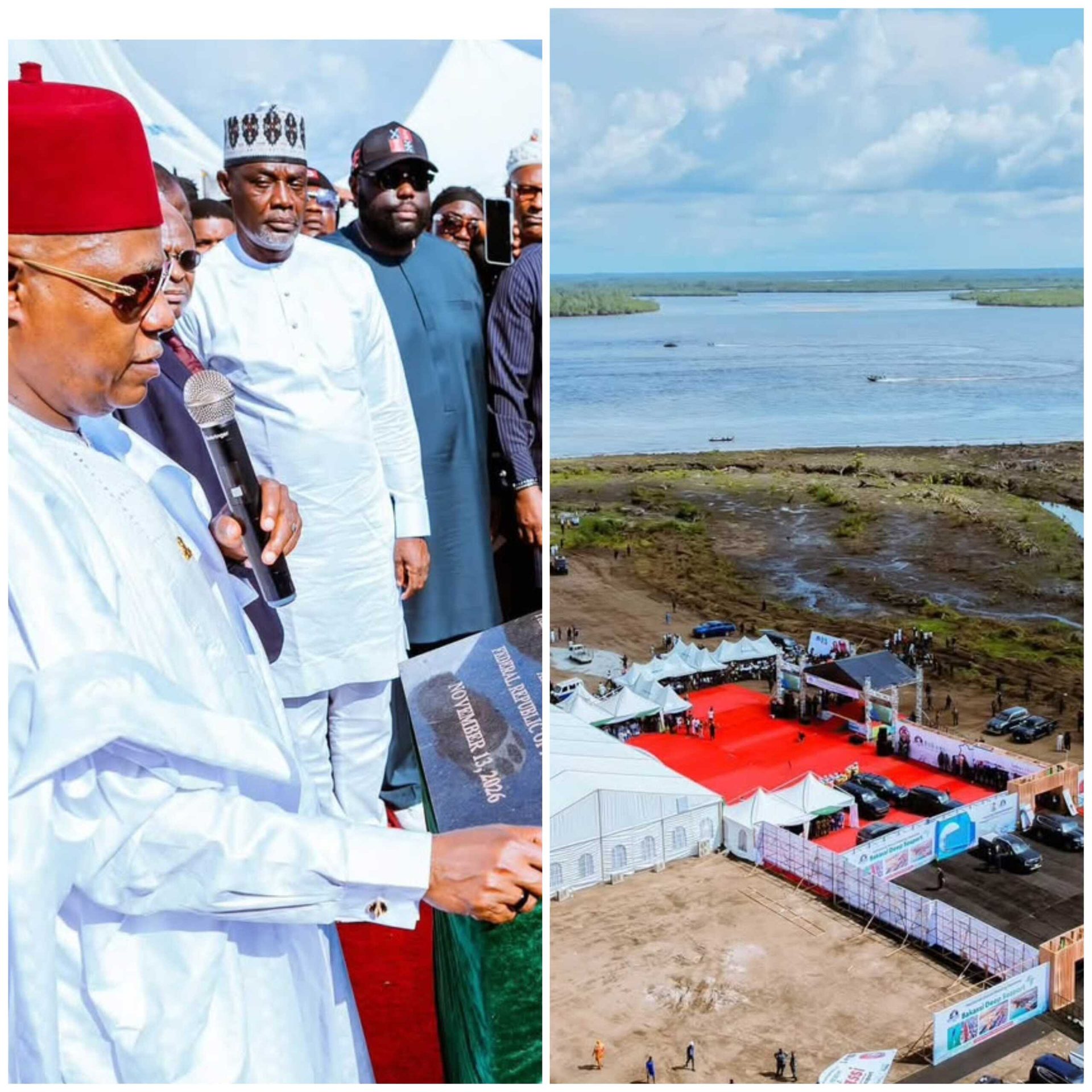
Nigeria is set to expand its maritime infrastructure beyond the traditional Lagos port corridor as President Bola Ahmed Tinubu has flagged off the construction of the $3.5 billion Bakassi Deep Seaport in Cross River State, a landmark project expected to open a new gateway for international trade, stimulate industrialisation and strengthen the country’s position in West and Central African maritime commerce.
The project, located in Bakassi Local Government Area of Cross River State, is designed with a 20-metre navigational draft, giving it the capacity to accommodate large commercial vessels and potentially position it as a major destination for international shipping lines.
With an estimated investment of $3.5 billion, the proposed facility is expected to feature a deep-water harbour, container terminals, cargo-handling facilities, berthing infrastructure and supporting logistics installations.
Beyond providing additional port capacity, the project is conceived as an integrated maritiÏme and industrial development designed to attract manufacturing, logistics and other value-adding businesses around the proposed port.
A critical component of the development is the proposed 275-kilometre Calabar–Ogoja–Gakem Superhighway, a six-lane tolled road expected to provide an efficient cargo evacuation corridor and connect the coastal port with inland commercial centres.
The Federal Government, however, referred to a 260-kilometre highway during the groundbreaking ceremony, leaving a discrepancy in the published project figures that requires clarification.
The wider infrastructure plan also envisages an economic corridor linking the seaport, Calabar airport and the Lagos–Calabar Coastal Highway, creating a multimodal transportation network to support cargo movement, trade and industrial activities.
The economic prospects of the project extend considerably beyond conventional port operations.
Cross River State Governor, Bassey Otu, identified logistics, shipping, fishing, tourism and shipbuilding as some of the sectors expected to benefit from the development.
Other potential investment opportunities include seafood processing, cold-chain facilities, warehousing, freight forwarding, marine engineering and agro-processing.
The proposed port could also provide an alternative export gateway for Cross River’s agricultural commodities, including cocoa, oil palm and other products, by improving access to domestic and international markets.
The broader industrialisation strategy is to attract businesses capable of processing raw materials, manufacturing products, packaging and distributing goods within the port’s economic corridor, rather than limiting the facility to cargo loading and discharge operations.
The project is being developed through a partnership between the Cross River State Government and Arise Integrated Industrial Platforms (Arise IIP), with an ownership structure providing for 80 per cent private-sector participation and 20 per cent state government ownership.
Afreximbank has been identified as the project’s financing partner, with Governor Otu announcing an initial funding approval of $2.27 billion at the groundbreaking ceremony against the overall projected investment of $3.5 billion.
Conceived in 2014, the Bakassi Deep Seaport project has endured years of institutional, financial, legal and environmental challenges. Its preparatory processes have included environmental assessments, hydrographic investigations, geotechnical studies and other technical evaluations necessary for a development of its scale.
The project recorded a major milestone on Friday, November 13, 2026, when Tinubu, represented by Vice-President Kashim Shettima, performed the groundbreaking ceremony, signalling the formal commencement of its implementation phase.
Speaking at the ceremony, Shettima underscored the need for Nigeria to diversify its maritime infrastructure and reduce excessive dependence on a limited number of port gateways.
“Lagos is not our enemy. Lagos is our elder brother in trade. No country eats with one hand. No country carries all its loads on one shoulder. That shoulder will break,” he declared.
The Vice-President argued that developing alternative maritime gateways was essential to strengthening the country’s trade infrastructure and expanding economic opportunities across different regions.
“When Calabar works, Nigeria works on two legs,” he further declared.
Describing the project as a national economic investment rather than a regional initiative, Shettima said: “This is beyond a Cross River dream. It is a Nigerian project. It is a poverty breaker.”
For the Cross River State Government, the port is expected to serve as a catalyst for a broader economic transformation, with the potential to reposition the state as a major maritime, logistics and industrial hub.
Governor Otu said the state was already preparing its residents for the opportunities expected from the project through specialised training programmes, with plans to expand capacity-building initiatives for artisans, skilled workers and professionals.
The human capital development component is expected to improve local participation in construction, port operations, logistics and the industries that may emerge around the proposed economic corridor.
However, the actual scale of employment and investment opportunities will depend on the successful execution of the project and the ability to attract commercial operators and industrial users.
For Nigeria’s maritime industry, the proposed Bakassi facility represents an opportunity to expand port capacity, diversify cargo gateways, encourage competition and improve the country’s ability to attract regional and international trade.
Its deep-water capability could provide an additional option for large vessels, while its supporting road infrastructure, if delivered as planned, could strengthen connections between coastal shipping operations and inland markets.
The project could also complement existing ports, particularly those in Lagos, by providing additional capacity and potentially redistributing cargo traffic across the country’s maritime network.
Nevertheless, the ambitious investment faces important implementation requirements. Beyond the construction of the harbour and terminals, its long-term commercial viability will depend on efficient cargo evacuation, reliable power supply, competitive port operations, effective customs procedures, security and the availability of supporting logistics services.
Equally critical will be the ability to attract shipping lines, terminal operators, manufacturers, freight companies and other commercial interests that will generate sustained cargo volumes and economic activities.
The November 13th groundbreaking therefore represents the beginning of a major infrastructure undertaking, not the completion of the project.
Its ultimate success will be determined by how effectively the promoters translate the ambitious investment plan into a functioning maritime and industrial ecosystem capable of attracting cargo, stimulating production, creating jobs and generating sustainable economic returns.
For Cross River State, the ambition is to transform its coastal advantage into a powerful engine of trade and industrial development. For Nigeria, it is an opportunity to build another strategic maritime gateway and strengthen the country’s competitiveness in international commerce.





Customs
Seme Customs intercepts live olive ridley sea turtle, reaffirms commitment to combating wildlife trafficking
Gloria Odion, Maritme Reporter
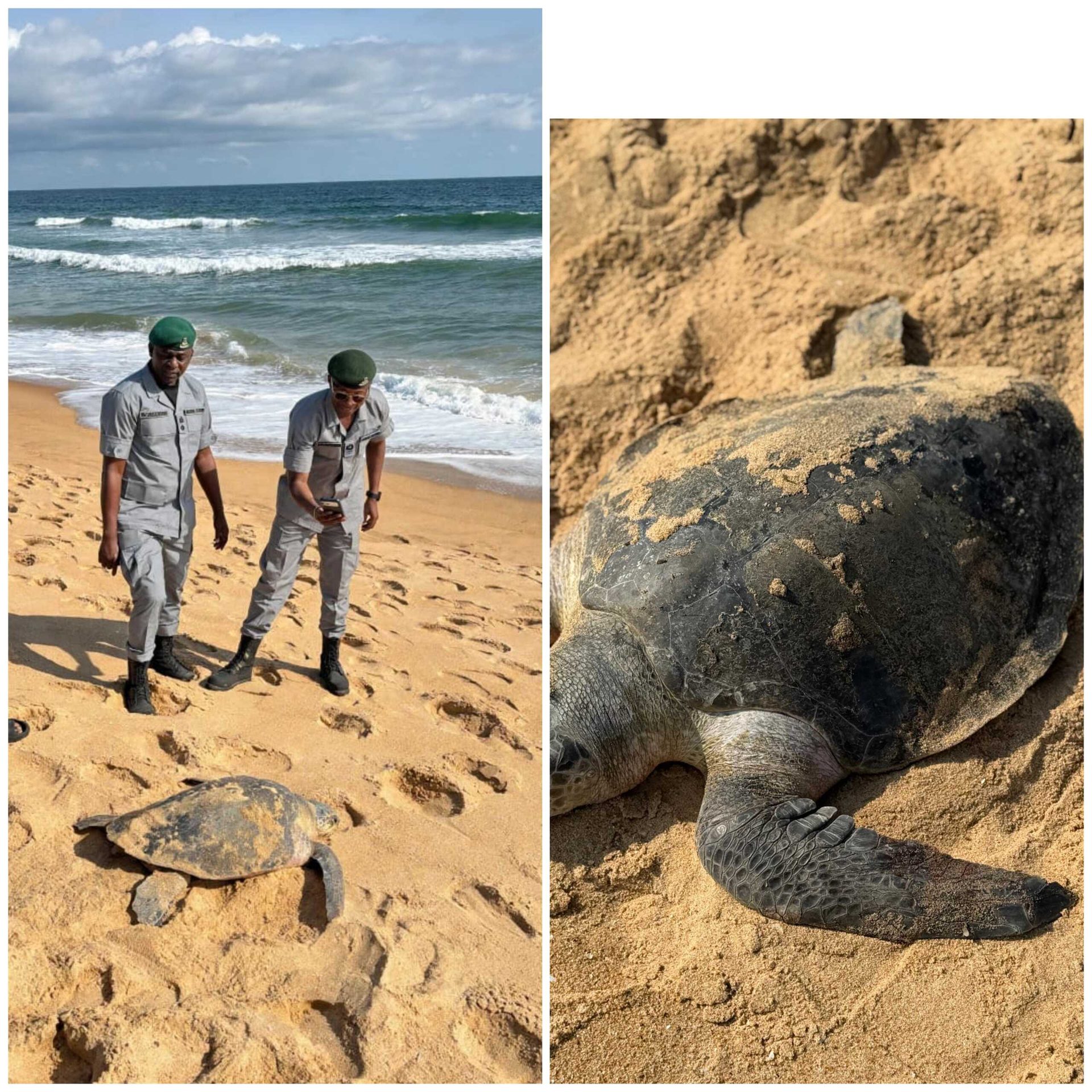
The Nigeria Customs Service (NCS), Seme Area Command, has recorded another significant achievement in its ongoing efforts to combat smuggling and protect endangered wildlife following the interception of a live Olive Ridley Sea Turtle along the Nigeria-Benin border.
The interception was made on Thursday, November 12, 2026, at about 10:30 p.m., during a routine patrol by officers along a footpath linking Nigeria and the Republic of Benin.
According to the Command, officers on patrol sighted a suspicious individual carrying a sack.
On noticing the approaching officers, the individual abandoned the sack and fled into a nearby bush, escaping arrest despite efforts by the patrol team to apprehend him.
A search of the abandoned sack led to the discovery of a live Pacific Ridley Sea Turtle, also known as the Olive Ridley Sea Turtle (Lepidochelys olivacea), concealed inside.
The animal was immediately rescued and placed in safe custody before being handed over to the appropriate wildlife authorities for professional care, rehabilitation and eventual release into its natural habitat in accordance with established conservation procedures.
Wildlife trafficking remains a major form of transnational organised crime, posing serious threats to biodiversity, ecological balance and environmental sustainability.
Sea turtles, particularly the Olive Ridley species, face increasing threats from illegal exploitation and trafficking for their meat, eggs, shells, traditional medicine and the exotic pet trade.
Such activities continue to undermine conservation efforts and threaten the survival of vulnerable wildlife species.
The Nigeria Customs Service recognises wildlife trafficking as a serious environmental offence and remains committed to supporting national and international efforts aimed at protecting endangered species and preserving the country’s natural heritage.
Nigeria is a signatory to the Convention on International Trade in Endangered Species of Wild Fauna and Flora (CITES), adopted in 1973 to ensure that international trade in wild animals and plants does not threaten their survival.
The country domesticated the Convention through the Endangered Species (Control of International Trade and Traffic) Act, Cap E9, Laws of the Federation of Nigeria, 2004, which prohibits unauthorised hunting, capture, possession, trade, importation and exportation of protected species.
Similarly, the Nigeria Customs Service Act, 2023, empowers the Service to enforce relevant laws and regulations governing international trade, including measures against smuggling and the illicit movement of endangered wildlife across the nation’s borders.
Speaking on the interception, the Acting Customs Area Controller, Seme Area Command, Deputy Comptroller of Customs Norman Olisah Alumanah, reaffirmed the Command’s determination to tackle wildlife trafficking and other forms of illegal cross-border activities.
He described the successful interception as a reflection of the vigilance, discipline and professionalism of officers, stressing that the Service would not allow Nigeria’s borders to become safe corridors for the illegal exploitation and trafficking of protected wildlife.
Alumanah expressed appreciation to the Comptroller-General of Customs, Bashir Adewale Adeniyi, PhD, MFR, DSM, fnipr, fniia, psc+, and the Management of the Service for providing the Command with improved logistics and operational equipment to strengthen its enforcement capacity.
He also called on residents of border communities and other stakeholders to support the Service with credible and timely information, emphasising that the fight against wildlife trafficking requires collective commitment and cooperation.
The Acting Controller warned smugglers, poachers and their collaborators to desist from activities capable of endangering wildlife and violating conservation laws.
He further disclosed that the Command had intensified patrols, surveillance and intelligence-gathering operations across its area of responsibility to prevent the illegal movement of prohibited goods and protected species.
He added that the Command would complement its enforcement activities with increased stakeholder engagement, public education and sensitisation on the importance of endangered species, their role in maintaining ecological balance and the legal consequences of their unauthorised exploitation and trade.
The Nigeria Customs Service, Seme Area Command, reiterated its commitment to its statutory responsibilities of revenue generation, suppression of smuggling, trade facilitation and border security, while strengthening its contribution to environmental protection and the preservation of Nigeria’s biodiversity for present and future generations.
Headlines
Bakassi deep sea port to position Nigeria as West Africa’s leading maritime gateway – NPA
Funso OLOJO, Editor
The proposed Bakassi Deep Sea Port is expected to significantly strengthen Nigeria’s position as a leading maritime gateway in West Africa and the African continent, while opening new trade corridors to landlocked countries across the Sahel region.
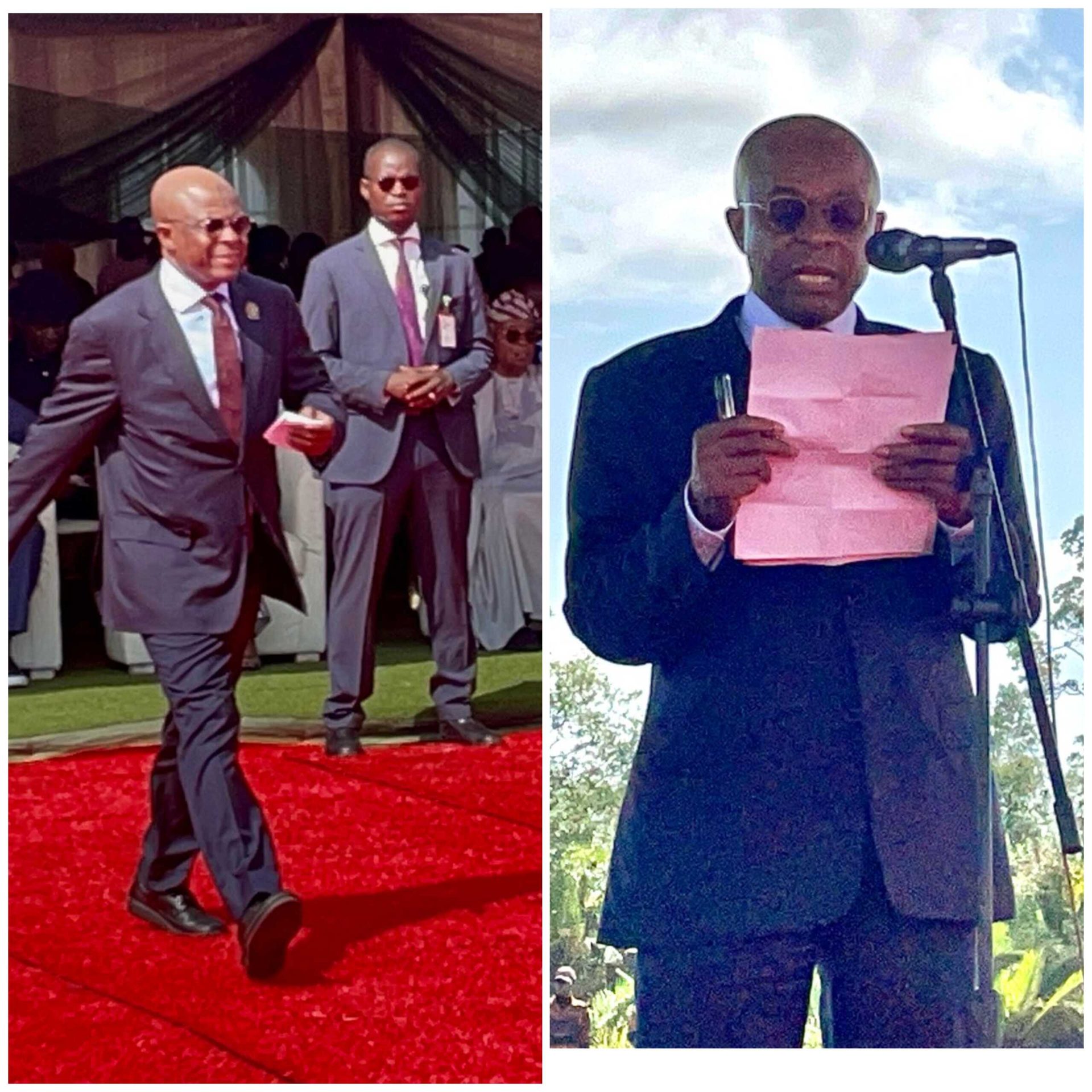
The Managing Director of the Nigerian Ports Authority (NPA), Dr Abubakar Dantsoho, stated this at the Presidential Groundbreaking Ceremony of the Bakassi Deep Sea Port, where he described the project as a major milestone in Nigeria’s quest to expand its maritime capacity, deepen regional trade and unlock the economic potential of its blue economy.
According to Dantsoho, the port, upon completion, will transform Nigeria’s maritime landscape, improve connectivity with neighbouring countries, attract substantial investments and enhance the country’s competitiveness in international shipping and logistics.
He explained that the project, being developed under a Public-Private Partnership (PPP) arrangement and backed by a $3.5 billion facility from the African Export-Import Bank (Afreximbank), is strategically positioned to serve Nigeria, the wider Gulf of Guinea and countries across the Sahel.
A major feature of the proposed facility, he noted, is its capacity to accommodate Ultra Large Container Vessels (ULCVs), a development expected to enhance shipping efficiency and reduce the frequency of maintenance dredging.
Dantsoho said the port’s strategic location, coupled with supporting road infrastructure, would give Nigeria a significant competitive advantage in the regional and international maritime industry.
He identified the proposed 275-kilometre, six-lane Calabar-Ogoja-Gakem Superhighway as a critical component of the project, explaining that the road would provide an efficient cargo evacuation corridor from the port to Nigeria’s North-Central and North-Eastern regions.
He added that the highway, alongside the ongoing Lagos-Calabar Coastal Highway project, would improve connectivity, ease transportation bottlenecks and strengthen the country’s coastal logistics network.
Beyond domestic connectivity, the NPA chief said the proposed superhighway would position Bakassi as a competitive transshipment gateway for landlocked countries, including Chad, Niger Republic, Mali and Burkina Faso.
He stressed that the enormous population and trade potential of these countries presented a significant opportunity for Nigeria to expand its maritime influence and capture a larger share of regional cargo traffic.
“Bakassi Deep Sea Port therefore presents an important opportunity to strengthen regional trade connectivity, facilitate access to international shipping routes and position Nigeria as a preferred maritime gateway for the wider West and Central African markets,” he said.
Dantsoho noted that Africa accounts for 16 of the world’s 44 landlocked countries, with four located in West Africa.
He put the combined population of Mali, Niger, Burkina Faso and Chad at approximately 101 million, describing the market as a major economic opportunity for the proposed port.
The NPA Managing Director also drew attention to the relationship between economic size, population and maritime infrastructure, arguing that countries with large economies and populations require efficient seaports to facilitate international trade and sustain economic growth.
Citing the United States and Brazil as examples, he observed that major economies often rely on strategic maritime facilities to support their international commerce.
He referenced the Port of Los Angeles in the United States and the Port of Santos in Brazil, describing the latter as one of South America’s leading maritime facilities.
According to him, Nigeria must aspire to develop ports capable of competing with leading maritime hubs across the world through sustained investment in infrastructure, modern technology and operational efficiency.
Drawing a comparison between Nigeria and Brazil, Dantsoho noted that both countries have long-established port systems requiring continuous modernisation to meet the changing demands of international shipping.
While the Port of Santos is approximately 200 years old, he said Apapa Port is about a century old, underscoring the need to modernise existing brownfield ports while developing new greenfield deep-sea facilities.
“The Brazilian experience offers an interesting comparison with Nigeria because both countries have ports with long histories.
“The Port of Santos is about 200 years old, while Apapa Port is approximately 100 years old.
“These ports require continuous modernisation to meet the evolving demands of international shipping.
“This underscores the urgent need for Nigeria to modernise its existing brownfield ports while simultaneously developing greenfield deep-sea ports,” he said.
He commended President Bola Ahmed Tinubu for prioritising the transformation of the maritime sector through ongoing port modernisation, expansion and infrastructure upgrade programmes.
Dantsoho said the investments across the Western and Eastern Ports were essential to expanding cargo-handling capacity, improving operational efficiency and enabling Nigerian ports to accommodate larger vessels.
He particularly appreciated the President for supporting the ongoing modernisation projects, describing them as critical to repositioning the country’s maritime infrastructure for the demands of contemporary global shipping.
The NPA chief congratulated President Tinubu, Cross River State Governor, Prince Bassey Edet Otu, the Minister of Marine and Blue Economy, Dr Adegboyega Oyetola, and Nigerians on the groundbreaking ceremony, describing it as an important step towards unlocking Nigeria’s maritime and economic potential.
He reaffirmed the Authority’s commitment to collaborating with the Cross River State Government, private-sector investors, technical partners, regulatory agencies and other stakeholders to ensure the successful delivery and eventual operation of the port.
Dantsoho also assured that the NPA, under the supervision of the Minister of Marine and Blue Economy, would ensure compliance with safety standards, environmental sustainability requirements, operational regulations and international best practices throughout the construction and operational phases.
He expressed optimism that the Bakassi Deep Sea Port, alongside ongoing investments in existing port infrastructure, would expand Nigeria’s maritime capacity, stimulate regional integration, create employment and investment opportunities, and consolidate the country’s position as a major maritime and logistics hub in Africa.
Headlines
Akodu, Lagos NUJ Chair, calls for stronger media collaboration, Journalists’ capacity building to support port modernisation
Gloria Odion, Maritme Reporter
Comrade Adewale Akodu, the newly elected Chairman of the Lagos Council of Nigeria Union of Journalists (NUJ),has called for stronger collaboration among maritime media organisations and increased investment in journalists’ professional development to support Nigeria’s ongoing efforts to modernise its seaports, improve trade facilitation and strengthen the maritime sector.
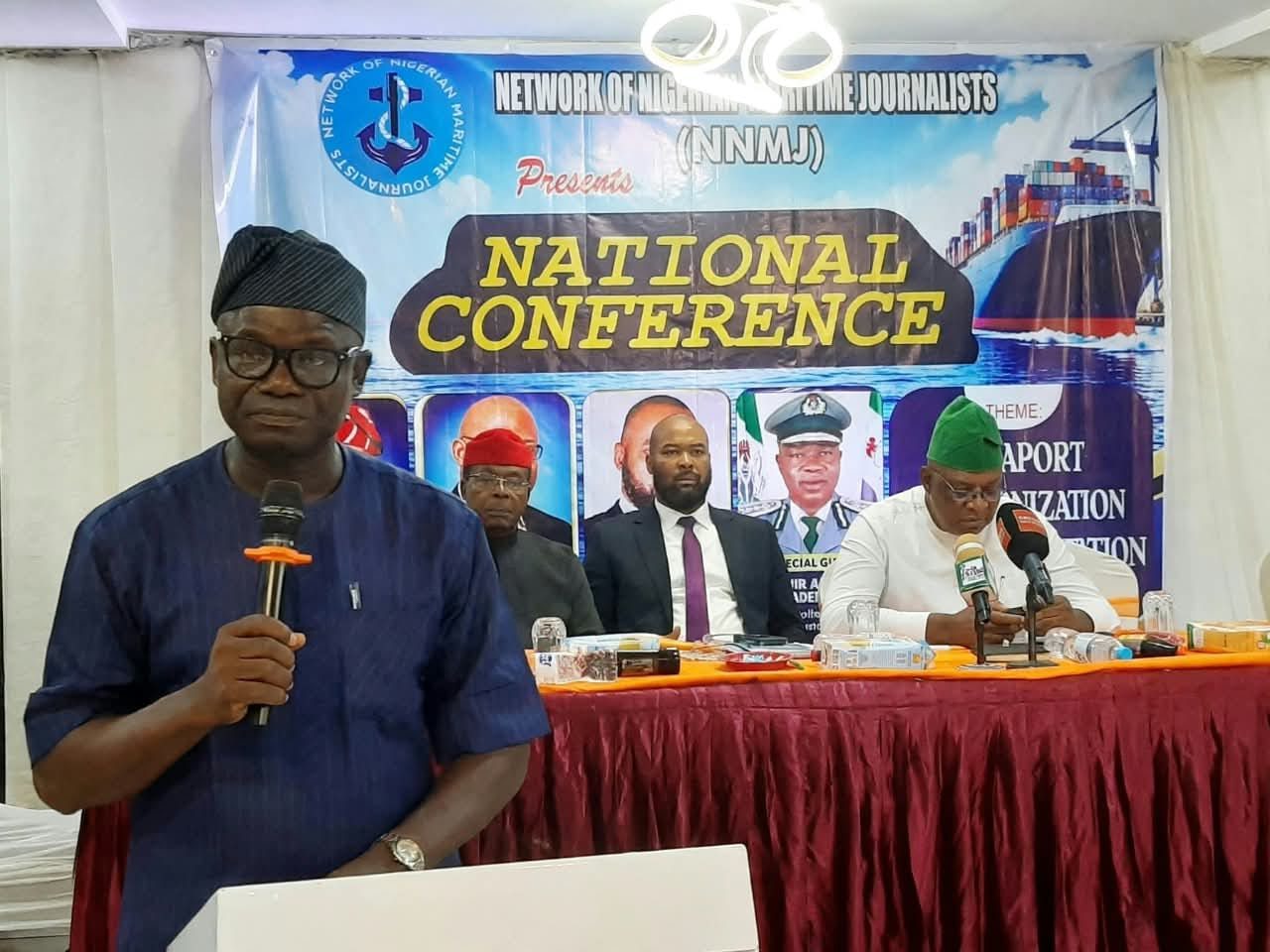
Akodu made the call while addressing participants at the Unity Conference organised by the Network of Nigerian Maritime Journalists (NNMJ), where he commended the organisation’s leadership for providing a platform for stakeholder engagement, constructive dialogue and the exchange of ideas on the future of Nigeria’s maritime industry.
He described the conference theme, which focuses on supporting seaport modernisation, trade facilitation and revenue generation, as timely and relevant, particularly as the Federal Government intensifies efforts to reposition the economy and strengthen Nigeria’s competitiveness in international trade.
According to him, the nation’s seaports remain critical to economic growth, international commerce and revenue generation, making it necessary to invest in modern infrastructure, improve operational efficiency and strengthen trade facilitation processes.
He noted that achieving an efficient and competitive port system requires a coordinated approach involving government agencies, private sector operators, industry stakeholders and the media.
Akodu stressed that addressing operational bottlenecks, reducing delays, improving cargo clearance processes and resolving other challenges affecting port operations would enhance the ease of doing business and position Nigeria’s maritime industry for sustainable growth.
He further described the media as an indispensable partner in the implementation of government policies, noting that maritime journalists play a significant role in promoting public understanding, institutional accountability and constructive engagement among stakeholders.
He urged maritime media organisations and professional associations to strengthen their relationships, emphasising that differences in affiliations and platforms should not undermine their shared responsibility to advance the interests of the maritime industry.
“While our platforms and affiliations may differ, our professional interests and responsibilities remain interconnected.
“We must therefore put aside our differences, promote unity and work collectively to advance the welfare, credibility and professional standards of maritime journalism,” he said.
The Lagos NUJ Chair also called on relevant government agencies and industry operators to deepen their engagement with the media by supporting journalism-related programmes, particularly in the areas of capacity building, professional development, specialised training and continuous education.
He maintained that investing in journalists would ultimately strengthen responsible journalism, improve the quality of industry reporting and promote a better-informed society.
Akodu observed that maritime journalism has become increasingly specialised, requiring practitioners to develop adequate knowledge of international trade, customs administration, port operations and other technical aspects of the maritime industry.
He therefore encouraged stakeholders to move beyond discussions and resolutions by establishing practical partnerships and sustainable initiatives that would strengthen professional capacity and promote the development of Nigeria’s maritime sector.
He added that the future of the industry would depend not only on modern infrastructure and efficient administrative processes but also on credible information, institutional transparency, responsible leadership and effective stakeholder collaboration.
According to him, the media must continue to play an active role in shaping public discourse, monitoring policy implementation and communicating the impact of government initiatives to Nigerians.
While congratulating the Network of Nigerian Maritime Journalists on the successful organisation of the conference, Akodu commended all stakeholders who contributed to its success and urged participants to engage in the deliberations with open minds and a shared commitment to national development.
He expressed confidence that the outcome of the conference would produce actionable recommendations, stronger stakeholder relationships and meaningful reforms capable of improving efficiency, competitiveness and sustainable growth in Nigeria’s maritime industry.
He wished participants fruitful deliberations and expressed optimism that the resolutions reached would translate into practical actions for the benefit of the maritime sector and the nation at large.

 Headlines3 months ago
Oyetola presents three-year score card as blue economy industry revenue hits ₦1.83trn
 Customs3 months ago
Apapa Customs sets new single-day revenue record with ₦28.1bn collection
 Customs1 month ago
FOU Zone ‘A’: Aliyu retires after ₦3.19bn revenue recovery, Afeni takes over

 Customs2 weeks ago
FOU Zone A: Afeni intensifies anti-smuggling operations, seizes N511.4m drugs, rescues eight pangolins

 Customs2 months ago
Nigeria, Benin Customs move to harmonise trans-border trade, establish joint border post at Seme-Krake

 Headlines2 weeks ago
Tension heightens at Osborne Foreshore Estate over alleged environmental breach by property developer