
Customs
Customs processes 9,195 PAARs, 99,839 SGDs in two months

—generates ₦1.42trn revenue, records $752.85m export value, highlights anti-money laundering drive
Funso OLOJO, Editor
The Nigeria Customs Service (NCS) processed 9,195 Pre-Arrival Assessment Reports (PAARs) and 99,839 Single Goods Declarations (SGDs) between September and October 2026, while generating a combined revenue of ₦1.42 trillion, underscoring its growing role in trade facilitation, revenue mobilisation and border security.
The figures, which reflect the Service’s operational performance over the two-month period, were disclosed at a joint security press briefing organised at the National Counter Terrorism Centre (NCTC), under the Office of the National Security Adviser (ONSA), on Thursday, November 5, 2026.
Speaking at the briefing, the National Public Relations Officer of the Service, Deputy Comptroller Abdullahi Aliyu Maiwada, said the performance demonstrated Customs’ sustained commitment to streamlining trade processes through efficient documentation, digital interventions and stronger collaboration with stakeholders across the trade value chain.
A breakdown of the figures showed that the Service processed 2,102 PAARs in September and 7,093 in October, bringing the total to 9,195 within the period.
Similarly, 48,832 SGDs were processed in September, while 51,007 were recorded in October, representing a combined 99,839 declarations.
Revenue collection also maintained an upward trajectory, rising from ₦697.84 billion in September to ₦722.91 billion in October. The two-month collection amounted to ₦1.42 trillion, specifically ₦1,420,751,629,260.44.
The figures highlight the Service’s dual responsibility of facilitating legitimate international trade while strengthening revenue collection through improved compliance, efficient cargo documentation and enhanced operational procedures.
Beyond import processing and revenue generation, the NCS reported significant growth in export trade facilitation, particularly at the Lilypond Export Command.
The Command recorded an export value of $752.85 million in the third quarter of 2026, compared with $586.15 million in the corresponding period of 2025.
The performance represents an increase of approximately 22.14 per cent, pointing to the growing contribution of export activities and the impact of measures introduced to facilitate non-oil exports.
The development reinforces the importance of Customs’ role in supporting Nigeria’s export diversification agenda by improving documentation, reducing procedural bottlenecks and facilitating the movement of locally produced goods to international markets.
On the enforcement front, the Service recorded seizures of prohibited and restricted items with a combined Duty Paid Value exceeding ₦8.1 billion during the period under review.
The interceptions covered several categories of prohibited and restricted goods, including illicit drugs, pharmaceutical products, other prohibited items and petroleum products.
The NCS said it continued to work with relevant regulatory and security agencies to ensure the appropriate handling and disposition of seized items, reinforcing its commitment to protecting the nation’s economic and security interests.
A major highlight of the briefing was the Service’s ongoing efforts to strengthen its capacity to combat money laundering and the financing of terrorism through cross-border trade.
The NCS disclosed that it was participating in a four-week World Customs Organisation (WCO) Mentoring Mission inaugurated on October 19, 2026, and scheduled to run until November 13, 2026.
The engagement is designed to strengthen the capacity of Customs officers to identify, investigate and address trade-based money laundering and other illicit financial activities associated with international trade.
As part of the programme, the Service held engagements with six relevant agencies between October 27 and 29, including the Economic and Financial Crimes Commission (EFCC), the Nigeria Financial Intelligence Unit (NFIU) and the National Counter Terrorism Centre.
The inter-agency engagements are expected to strengthen intelligence sharing, improve institutional coordination and deepen collaboration in tracking suspicious financial transactions linked to cross-border trade.
The Service also highlighted its transition to an electronic currency declaration platform, describing the initiative as part of broader efforts to improve transparency, strengthen monitoring and enhance the detection of illicit financial flows across Nigeria’s borders.
The digital platform is expected to support more effective monitoring of currency movements and reinforce Customs’ contribution to the country’s anti-money laundering and counter-financing of terrorism framework.
The Service also highlighted its contribution to environmental protection and the fight against illegal wildlife trafficking.
During the period under review, six live pangolins were rescued in separate operations in Ogun State. Three were intercepted by the Ogun I Area Command, while another three were rescued by the Federal Operations Unit (FOU), Zone A.
The rescued animals were subsequently handed over to the Green Fingers Wildlife Conservation Initiative for appropriate care and rehabilitation.
The intervention, according to the Service, was in line with Nigeria’s obligations under the Convention on International Trade in Endangered Species of Wild Fauna and Flora (CITES).
The rescue operations underscore the expanding responsibilities of the NCS beyond conventional revenue collection and anti-smuggling activities to include environmental protection, wildlife conservation and the disruption of illegal international wildlife trade.
Taken together, the two-month performance figures and enforcement interventions illustrate the Service’s expanding operational mandate, encompassing trade facilitation, revenue mobilisation, export promotion, border security, financial crime prevention and environmental protection.

Customs
How Afeni combines hybrid mandate of anti-smuggling with revenue mobilisation at FOU A

Funso OLOJO, Editor
When Deputy Comptroller Oladapo Olukayode Afeni took over the Federal Operations Unit (FOU), Zone A, of the Nigeria Customs Service (NCS) on September 30, 2026, he inherited an enforcement formation with an established record of anti-smuggling operations. But his early actions suggest that he intends to broaden the Unit’s traditional operational focus by placing revenue protection and compliance enforcement firmly alongside its anti-smuggling responsibilities.
His first four weeks in office have offered a glimpse of this emerging strategy.
At his maiden press briefing in Ikeja, Lagos, on November 3, Afeni disclosed that FOU Zone A recorded 195 interceptions involving prohibited and restricted goods with a combined Duty Paid Value (DPV) of ₦6.194 billion. In a parallel revenue mobilisation exercise, the Unit recovered ₦683.661 million through compliance checks, scrutiny of import declarations, corrections of under-valuations and demand notices.
The figures tell two different but complementary stories.
While the ₦6.194 billion represents the DPV of goods intercepted during enforcement operations, the ₦683.661 million represents revenue actually recovered through interventions in the Customs assessment and compliance process.
That distinction is significant. It suggests that Afeni is seeking to move the performance conversation beyond the familiar measurement of Customs enforcement by the volume and monetary value of seizures to include the less visible but equally important business of plugging revenue leakages.
For an enforcement formation whose responsibilities extend across Lagos, Ogun and other parts of the South-West, this represents an important operational dimension.
Afeni’s approach appears to rest on a simple proposition: Customs must not only prevent prohibited goods from entering the country; it must also ensure that government collects every legitimate revenue due from importation and other regulated trade activities.
Revenue mobilisation beyond seizures
Afeni’s growing emphasis on revenue protection is particularly evident in his engagement with officers occupying strategic positions in the Customs clearance chain.
His recent intervention with the leadership of various entry points, including Releasing Officers and Compliance Seats, was accompanied by a clear warning that officers must take their revenue responsibilities seriously and ensure optimal revenue collection.
His insistence that Customs revenue must be jealously guarded goes beyond routine management rhetoric. It reflects an understanding that significant revenue losses can occur within the regular import clearance process, long before any consignment becomes the subject of an enforcement operation.
Incorrect tariff classification, deliberate under-declaration, undervaluation, false documentation, improper concessions and other forms of non-compliance can undermine government revenue without necessarily attracting the immediate attention generated by physical seizures.
This is where the responsibilities of Releasing Officers, compliance personnel, examination officers and supervisors become critical.
Their decisions determine whether import declarations are properly scrutinised, applicable duties accurately assessed and statutory requirements satisfied before consignments are released.
A weakness at any of these points can create opportunities for revenue leakage.
Afeni’s decision to bring these officers into sharper focus suggests an effort to make revenue consciousness an integral part of everyday Customs administration rather than an occasional management directive.
The ₦683.661 million recovered within four weeks provides an early indication of the practical implications of this approach.
According to Afeni, the recovery resulted from enhanced risk profiling, targeted examination of questionable declarations, teamwork and closer collaboration with relevant stakeholders.
The emerging strategy is therefore not limited to chasing smugglers. It also involves identifying revenue deficiencies within the legitimate importation process and ensuring that identified infractions translate into actual recoveries for government.
The Ogun I experience: A foundation for the new assignment
Afeni’s current disposition is not entirely unexpected. His record at the Ogun I Area Command, Idiroko, provides useful insight into the operational philosophy he appears to be bringing to FOU Zone A.
Between January and August 2026, Ogun I generated ₦896.539 million against an assigned revenue target of ₦545.348 million.
The command also processed 31,177 metric tonnes of exports valued at ₦4.64 billion Free on Board (FOB), compared with no recorded export activity during the corresponding period of 2025.
These figures demonstrated the revenue and trade facilitation possibilities of a border command operating in an environment where legitimate commercial activities coexist with persistent smuggling challenges.
The enforcement record was equally substantial.
Between December 4, 2025 and September 29, 2026, the command recorded 327 seizures with a combined DPV of approximately ₦14.75 billion.
The interceptions included foreign parboiled rice, petroleum products, illicit drugs, arms and ammunition, endangered wildlife and other prohibited items.
The significance of this record lies not merely in the figures but in the combination of responsibilities reflected in them.
At Idiroko, Afeni’s administration pursued revenue generation, export facilitation and anti-smuggling enforcement as complementary aspects of Customs operations.
His transfer to FOU Zone A therefore presents an opportunity to apply that experience within a considerably broader enforcement structure.
However, the operational scale and complexity of FOU Zone A mean that the challenge is not simply to replicate the Idiroko experience but to adapt its underlying principles to a different institutional environment.
Consolidating an established enforcement legacy
Afeni also inherited a Unit with a significant performance record under his predecessor, retired Comptroller Gambo Aliyu.
At the September 30th handover ceremony, Aliyu disclosed that FOU Zone A recovered ₦3,192,511,547.52 between December 10, 2025 and September 24, 2026, representing 798 per cent of its ₦400 million annual revenue recovery target.
The Unit also recorded 779 interceptions involving goods with a combined DPV of ₦13.075 billion.
These figures constitute the operational baseline against which Afeni’s administration will eventually be assessed.
They also underscore the importance of recognising the foundation inherited by the new leadership rather than presenting subsequent achievements as though they emerged from an entirely new enforcement structure.
Afeni’s immediate task is to sustain the existing operational momentum while strengthening the revenue recovery and compliance dimensions of the Unit’s activities.
His first four-week performance report suggests that both responsibilities are receiving attention.
The ₦683.661 million recovered during the period is particularly noteworthy because it demonstrates that revenue mobilisation is being pursued alongside conventional anti-smuggling operations.
The challenge ahead will be to institutionalise the processes responsible for these recoveries and ensure that they deliver consistent results.
Beyond economic crime: The wider security implications of smuggling
Afeni’s maiden briefing also provided a revealing account of the public health, environmental and national security implications of smuggling.
The 195 interceptions recorded within four weeks covered narcotics, food products, petroleum products, pharmaceutical substances, used vehicles, wildlife and other restricted imports.
Among the most significant seizures were 5,986 parcels of Cannabis sativa and Cannabis indica weighing 3,407.83 kilogrammes, alongside 400 grammes of cocaine and 100 grammes of methamphetamine.
The Unit also intercepted 57 cartons, 37 packs and six pieces of codeine syrup, as well as 1,250 rounds of 12-calibre Red Star cartridges.
Another notable interception involved 23,220 pieces of new machetes imported without the requisite End User Certificates and permits.
Afeni expressed concern over the possible security implications of such a consignment, particularly as the country approaches another electoral cycle.
He warned that illegally imported weapons and implements could provide materials for organised violence.
“Election violence is rarely an isolated incident but facilitated and aided by smuggling activities like the one thwarted by our operatives,” he cautioned.
The statement underscores the growing recognition that smuggling is not merely a trade-related offence. Depending on the nature of the goods involved, it can create pathways for activities that threaten public safety and national security.
The cannabis seizure also attracted particular attention from the Acting Controller, who referenced the 2025 World Drug Report of the United Nations Office on Drugs and Crime (UNODC).
He noted that cannabis remains the most widely available and commonly used illicit drug globally, accounting for an estimated 42 per cent of drug use disorder cases worldwide.
Afeni expressed concern about the growing availability of increasingly potent cannabis varieties, particularly the strain popularly marketed as Colorado, warning of their consequences for young people, families and the healthcare system.
His position was captured in a declaration that provides an important insight into his enforcement philosophy:
“We will not measure our success by how much we seize, but by how much harm we prevent.”
The statement shifts attention from the monetary value of intercepted merchandise to the broader social and economic consequences of preventing dangerous goods from entering the country.
Other interceptions during the period included eight live pangolins, 21 foreign-used vehicles, 11 means of conveyance and a 40-foot container, number SEGU 5347239, containing 2,760 pieces of office chairs in completely knocked-down condition.
The Unit also intercepted 173 cartons of imported frozen poultry products, 6,949 cartons of smuggled spaghetti, 459 bales and 39 jumbo sacks of second-hand clothing, 1,236 used tyres, 33 used rims and 8,025 litres of Premium Motor Spirit.
Food-related seizures included 3,028 bags of 50kg imported rice, 995 bags of 25kg, 104 bags of 20kg and 207 bags of 5kg; 101 bags of imported sugar weighing 50kg each; eight bags of imported creamer powdered milk; 12 bags of grain oat products; 20 cartons of couscous and 250 cartons of Lotus sardine without NAFDAC registration numbers.
The breadth of these interceptions illustrates the multiple dimensions of the smuggling challenge, ranging from economic sabotage and public health risks to environmental degradation and national security concerns.
For FOU Zone A, the task is to sustain enforcement pressure while ensuring that intelligence gathered from these operations contributes to a more effective Customs compliance and revenue protection system.
Intelligence sharing and inter-agency cooperation
Afeni’s early engagements with other security and regulatory agencies indicate that he recognises the limitations of an enforcement strategy built exclusively around Customs patrols and interceptions.
On October 14, he commenced a familiarisation tour of strategic security and law enforcement agencies in Lagos, including the Nigeria Police Force, Department of State Services, Nigerian Army’s 81 Division, National Drug Law Enforcement Agency, Nigeria Immigration Service and 9 Brigade.
The engagements were aimed at strengthening intelligence sharing, information exchange and joint operations against smuggling and other trans-border crimes.
At his maiden briefing, he reiterated the importance of collaboration with the NDLEA, Police, DSS, Immigration Service, Nigerian Army, National Agency for Food and Drug Administration and Control (NAFDAC) and National Environmental Standards and Regulations Enforcement Agency (NESREA).
He explained that narcotics and suspects intercepted by the Unit would be handed over to the NDLEA for further investigation and prosecution, while other prohibited items would be transferred to the appropriate agencies in accordance with their statutory responsibilities.
The October interception of illicit drugs and pharmaceutical products valued at ₦511.4 million, subsequently handed over to the NDLEA and NAFDAC for appropriate action, illustrates the operational importance of these institutional relationships.
Similarly, the rescue of eight live pangolins in two separate operations in Ogun State demonstrates the environmental protection responsibilities that increasingly form part of Customs enforcement.
For Afeni, the value of inter-agency cooperation goes beyond the immediate apprehension of smugglers and seizure of prohibited goods.
Effective intelligence sharing can help uncover smuggling networks, identify recurring patterns of fraudulent importation and expose weaknesses that criminal operators exploit across institutional boundaries.
It can also strengthen the risk management process, allowing Customs to direct enforcement resources towards consignments and operators presenting greater compliance risks.
The next challenge will be to translate these intelligence relationships into a more systematic approach to identifying revenue exposure and preventing repeat violations.
Administrative discipline as a revenue protection instrument
An important but sometimes overlooked dimension of Customs performance is the quality of internal administration.
In FOU Zone A, where enforcement activities frequently intersect with the commercial interests of importers, manufacturers, transport operators and licensed Customs agents, administrative discipline is essential to maintaining institutional credibility.
Afeni has emphasised firm but lawful enforcement, respect for human dignity and constructive engagement with legitimate businesses.
This position is important because revenue mobilisation must remain anchored on the law, established procedures and professional standards.
The pursuit of government revenue cannot justify arbitrary assessments, unnecessary delays or indiscriminate restrictions on legitimate commercial activities.
At the same time, officers cannot afford to approach their responsibilities as routine administrative exercises detached from the broader performance objectives of the Service.
Releasing Officers must ensure that consignments satisfy applicable requirements before release. Compliance personnel must scrutinise declarations thoroughly, while examination and assessment officers must remain alert to irregularities that could result in revenue losses.
Supervisory officers, in turn, must ensure that established procedures are followed and that administrative lapses do not create opportunities for abuse.
This is particularly relevant in an increasingly technology-driven Customs environment where risk profiling, data analysis and electronic compliance systems are becoming central to modern Customs administration.
The ₦683.661 million recovered through compliance interventions reinforces the importance of these administrative responsibilities.
It demonstrates that revenue protection is not exclusively an enforcement activity conducted on highways, border routes and warehouses. It also takes place within the Customs assessment and clearance system.
For Afeni, strengthening this internal culture could prove as consequential as increasing the frequency of physical interceptions.
The trade facilitation imperative
Afeni’s experience at Idiroko also offers another important dimension to his new assignment: the need to protect legitimate trade while maintaining strict enforcement against smuggling.
His previous assignment demonstrated the potential of border commands to contribute to economic development through legitimate export processing and constructive engagement with traders and border communities.
At FOU Zone A, that experience should inform an approach that avoids treating enforcement and trade facilitation as competing responsibilities.
Nigeria’s ambitions to expand non-oil exports, improve industrial competitiveness and strengthen its participation in regional and international trade require a Customs administration capable of distinguishing legitimate commercial activities from fraudulent practices.
For businesses operating in the import and export value chain, unnecessary delays and indiscriminate enforcement can increase transaction costs and undermine commercial confidence.
Conversely, ineffective enforcement exposes compliant businesses to unfair competition from smugglers who evade duties, disregard import regulations and introduce prohibited products into the domestic market.
At his November 3 briefing, Afeni assured importers, licensed Customs agents and the trading public that FOU Zone A would continue to distinguish between legitimate trade and fraudulent activities.
He maintained that compliant businesses would receive the necessary support, while duty evasion, falsification of declarations and other economic crimes would attract firm enforcement.
This is an important operational distinction.
The ultimate objective should be an environment in which legitimate businesses can operate within predictable regulatory conditions, government receives the revenue legally due to it and smugglers are denied the commercial advantages of operating outside the law.
From impressive early figures to sustainable performance
Ultimately, Afeni’s leadership at FOU Zone A will be judged by more than the volume of seizures recorded or the number of warnings issued to officers.
Neither should the ₦683.661 million recovered within his first four weeks become the sole measure of his administration.
The more enduring test will be whether the Unit can institutionalise a stronger compliance culture, reduce revenue leakages, improve intelligence-led enforcement, strengthen inter-agency coordination and protect legitimate commercial activities.
His first four-week scorecard provides an early picture of the priorities emerging under his leadership.
The 195 interceptions with a combined DPV of ₦6.194 billion reflect an active enforcement posture, while the ₦683.661 million revenue recovery demonstrates a parallel effort to strengthen compliance and protect government earnings.
The two figures represent complementary dimensions of Customs performance, but their long-term significance will depend on the sustainability of the processes behind them.
There is also a larger institutional expectation.
The Comptroller-General of Customs, Bashir Adewale Adeniyi, has consistently emphasised modernisation, improved revenue performance, professional standards and the protection of national economic interests.
Afeni’s responsibility is to translate these institutional priorities into practical outcomes within FOU Zone A, ensuring that officers understand the relationship between operational efficiency, revenue protection and the wider economic mandate of the Service.
His previous record at Ogun I provides useful context for understanding the expectations surrounding his appointment. However, FOU Zone A presents a different scale and complexity of responsibility, requiring an approach that combines intelligence gathering, enforcement, administrative discipline and revenue consciousness.
The emerging picture is that of an administration seeking to make anti-smuggling enforcement and revenue mobilisation mutually reinforcing responsibilities.
But the real measure of this approach will be its ability to move beyond impressive opening statistics and establish a sustainable system in which revenue leakages are detected early, legitimate trade is protected and enforcement intelligence consistently produces measurable economic value.
Afeni’s assignment, therefore, is about more than keeping smugglers on the run. It is equally about ensuring that government does not lose revenue to avoidable administrative weaknesses, that compliant businesses are not disadvantaged and that every component of Customs enforcement contributes to national economic interests.
The bigger test is whether FOU Zone A can become not only a formidable anti-smuggling formation but also a more effective instrument of revenue protection. That is the broader meaning of Afeni’s emerging hybrid mandate: fighting what must not enter the economy while ensuring that government collects what is legally due from what legitimately does.
Customs
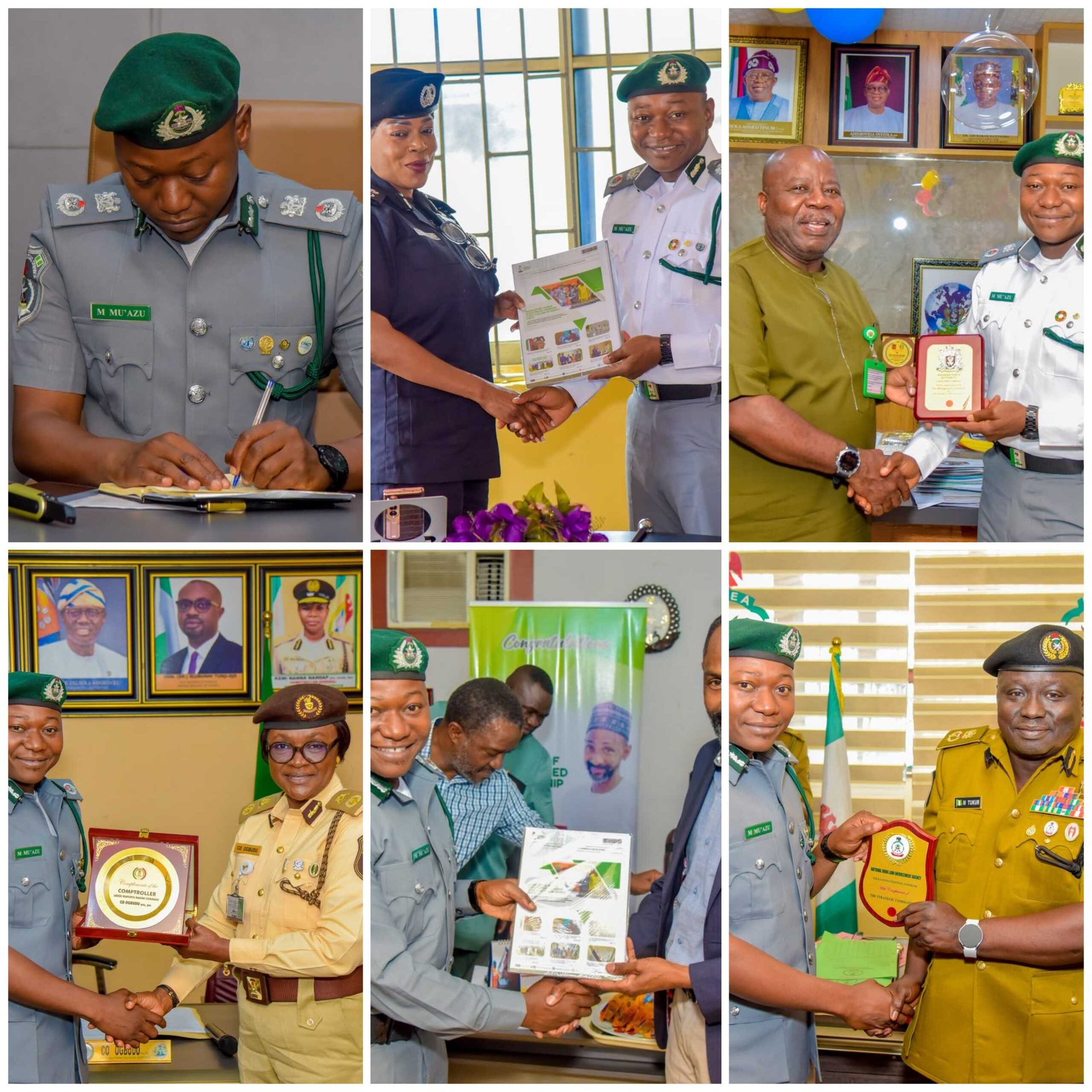
Apapa Customs records ₦302.9bn revenue in October as Mu’azu intensifies trade facilitation reforms.
Gloria Odion, Maritme reporter
The Nigeria Customs Service (NCS), Apapa Area Command, has generated ₦302.95 billion in revenue for October 2026, representing an increase of ₦20.16 billion over the ₦282.79 billion collected in September.
The October revenue performance reflects a 7.13 per cent month on month increase and marks another significant milestone for the Command, following its record collection of over ₦323 billion in July 2026.
The development also highlights the Command’s sustained commitment to revenue generation,operational efficiency and trade facilitation under the leadership of its new Customs Area Controller (CAC), Comptroller Murtala Mu’azu, who assumed duty on September 29, 2026.
Since taking over the Command, Mu’azu has placed considerable emphasis on stakeholder collaboration, improved service delivery and operational reforms in line with the policy direction of the Comptroller General of Customs, Bashir Adewale Adeniyi, anchored on Consolidation, Collaboration and Innovation.
As part of this approach, the CAC convened a stakeholder engagement meeting on October 5th, 2026, bringing together importers, exporters, licensed customs agents, shipping companies and terminal operators to address operational challenges affecting port activities.
Discussions at the meeting centred on issues such as delays in the issuance of Demand Notices, cargo clearance bottlenecks and other concerns affecting the smooth movement of goods through the port.
Beyond the meeting, Mu’azu has embarked on courtesy visits to key stakeholders and strategic partners within the port community to strengthen institutional relationships, promote mutual understanding and encourage greater cooperation towards improving the business environment for traders and other port users.
In a further move to improve operational efficiency, the Apapa Area Command has intensified efforts to review and streamline the processing of Transire, with the objective of eliminating unnecessary bureaucratic procedures, strengthening interdepartmental coordination and reducing processing time without compromising regulatory compliance.
Mu’azu explained that the reform was designed to address avoidable administrative delays and ensure that officers involved in the process discharge their responsibilities more efficiently.
He said the Command was committed to identifying operational challenges and implementing practical solutions that would improve service delivery and make legitimate trade less cumbersome.
He emphasised that,traders should not be made to bear the consequences of avoidable administrative lapses or delays, stressing the need for officers to adopt a more responsive and efficient approach to their responsibilities.
The CAC further emphasised that improving trade facilitation remained a major priority, noting that addressing operational inefficiencies would contribute to seamless business transactions and a more business-friendly port environment.
To further accelerate cargo clearance, Comptroller Mu’azu has directed officers to ensure that cargo examinations are conducted strictly in accordance with established procedures, relevant documentation and the required authorisations.
He warned against unnecessary, repetitive and unwarranted examinations capable of frustrating legitimate business activities and prolonging cargo clearance processes.
The CAC charged officers to carry out their duties promptly and professionally, while maintaining the necessary standards of compliance, revenue protection and national security.
The directive, according to the Command, is aimed at improving cargo turnaround time, strengthening operational transparency and creating a more predictable trading environment in line with the provisions of the Nigeria Customs Service Act, 2023.
The Command is also strengthening collaboration among relevant departments and port stakeholders to identify and resolve operational challenges affecting cargo movement.
Meanwhile, the Command has sustained its enforcement activities with the interception of 437 sachets of Cannabis Sativa weighing 392.5 kilogrammes in two separate containers during the period under review.
The seized consignments comprised 162 sachets weighing 125 kilogrammes in container number MSKU0486747 and 275 sachets weighing 267.5 kilogrammes in container number TEMU6149358.
The combined Duty Paid Value (DPV) of the intercepted narcotics stands at ₦196,131,606.82.
The seizures were recorded during joint examinations conducted with relevant sister agencies, underscoring the Command’s determination to prevent the use of Nigeria’s maritime gateway for the movement of prohibited substances and other illicit goods.
The operation also reinforces the Service’s commitment to protecting public health, strengthening border security and combating activities capable of undermining national security.
Reaffirming the Command’s commitment to its statutory responsibilities, the Apapa Area Command said it would continue to consolidate its revenue performance, strengthen enforcement operations and deepen stakeholder partnerships to improve port efficiency.
Under Mu’azu’s leadership, the Command is pursuing a balanced operational strategy that prioritises revenue generation, regulatory compliance and national security while promoting legitimate trade, improving cargo clearance and supporting economic growth.
Customs
Customs FOU A intercepts N6.19bn smuggled goods in four weeks, recovers N683.66m
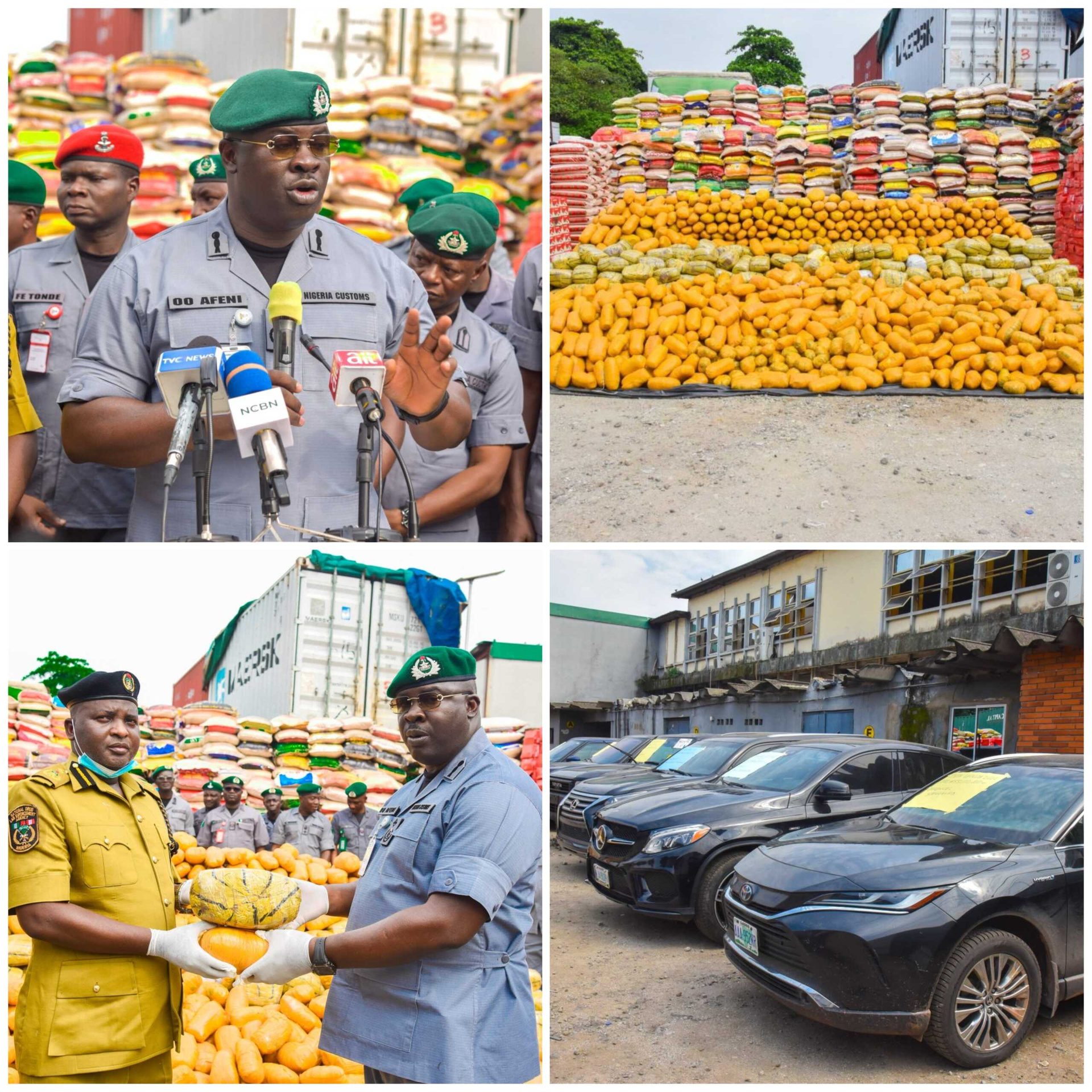
–Seizes 23,220 matchets, barcotics, 21 vehicles, others
Funso OLOJO, Editor
The Nigeria Customs Service (NCS), Federal Operations Unit (FOU), Zone ‘A’, has intercepted smuggled and prohibited goods with a Duty Paid Value (DPV) of N6.19 billion in just four weeks, while recovering an additional N683.66 million in revenue through intensified anti-smuggling operations and compliance enforcement.
The Acting Comptroller of FOU Zone ‘A’, DC Oladapo Afeni, disclosed this on Tuesday, November 3rd, 2026, during his maiden press briefing in Ikeja, Lagos, where he revealed that the unit recorded 195 seizures arising from smuggling attempts across its area of responsibility.
Afeni said the seized goods had a cumulative Duty Paid Value of N6,194,695,947.05, reflecting the scale of smuggling activities confronting the unit and the intensity of its enforcement operations.
The seized items included 3,028 bags of 50kg imported rice, 6,949 cartons of smuggled spaghetti, 173 cartons of frozen poultry products, 101 bags of imported sugar and 21 foreign-used vehicles.
Other intercepted goods comprised 3,407.83kg of cannabis, 400g of cocaine, 100g of methamphetamine, 1,250 cartridges, 23,220 new matchets, 8,025 litres of petrol, used tyres, second-hand clothing and pharmaceutical products.
The Acting Comptroller said the seizures demonstrated the unit’s determination to protect government revenue, defend local industries against unfair competition and prevent dangerous and prohibited goods from entering the country.
He expressed particular concern over the interception of 23,220 new matchets allegedly smuggled into the country without the necessary certificates and permits.
According to him, the interception was especially significant given concerns that such items could be deployed to disrupt peaceful elections in the coming months.
On revenue recovery, Afeni disclosed that the unit generated an additional N683,661,304.05 between September 30 and November 3, 2026, through enhanced risk profiling, closer scrutiny of import declarations, correction of under-valuations and the issuance of demand notices.
He attributed the revenue recovery to improved intelligence gathering, stronger compliance monitoring and more rigorous examination of cargo transactions suspected of involving duty evasion.
The Comptroller said the unit had also intensified surveillance and intelligence-driven enforcement while strengthening collaboration with other government agencies to tackle smuggling and other forms of economic sabotage.
He assured importers and licensed customs agents that the unit remained committed to facilitating legitimate trade, stressing that its enforcement measures were not intended to obstruct genuine business activities.
However, he warned that the unit would not tolerate duty evasion, false declarations, smuggling or any activities capable of undermining national security and the Nigerian economy.
Afeni further disclosed that seized narcotics and arrested suspects would be handed over to the National Drug Law Enforcement Agency (NDLEA) for further investigation and possible prosecution, while other prohibited items would be transferred to the appropriate regulatory and enforcement agencies.
He reaffirmed the unit’s resolve to dismantle smuggling networks, strengthen border security and protect the national economy through professionalism, intelligence-led operations and sustained enforcement of customs laws.
-

 Headlines2 months ago
Oyetola presents three-year score card as blue economy industry revenue hits ₦1.83trn
-

 Customs3 months ago
Apapa Customs sets new single-day revenue record with ₦28.1bn collection
-

 Customs3 months ago
Apapa Customs sets new record of monthly revenue haul with ₦323bn collection in July
-

 Customs1 month ago
FOU Zone ‘A’: Aliyu retires after ₦3.19bn revenue recovery, Afeni takes over
-

 Customs1 week ago
FOU Zone A: Afeni intensifies anti-smuggling operations, seizes N511.4m drugs, rescues eight pangolins
-

 Customs2 months ago
Nigeria, Benin Customs move to harmonise trans-border trade, establish joint border post at Seme-Krake