
Customs
Afeni’s anti-smuggling drive yields ₦6.19bn seizures, strengthens agency partnerships
Gloria Odion, Maritme Reporter
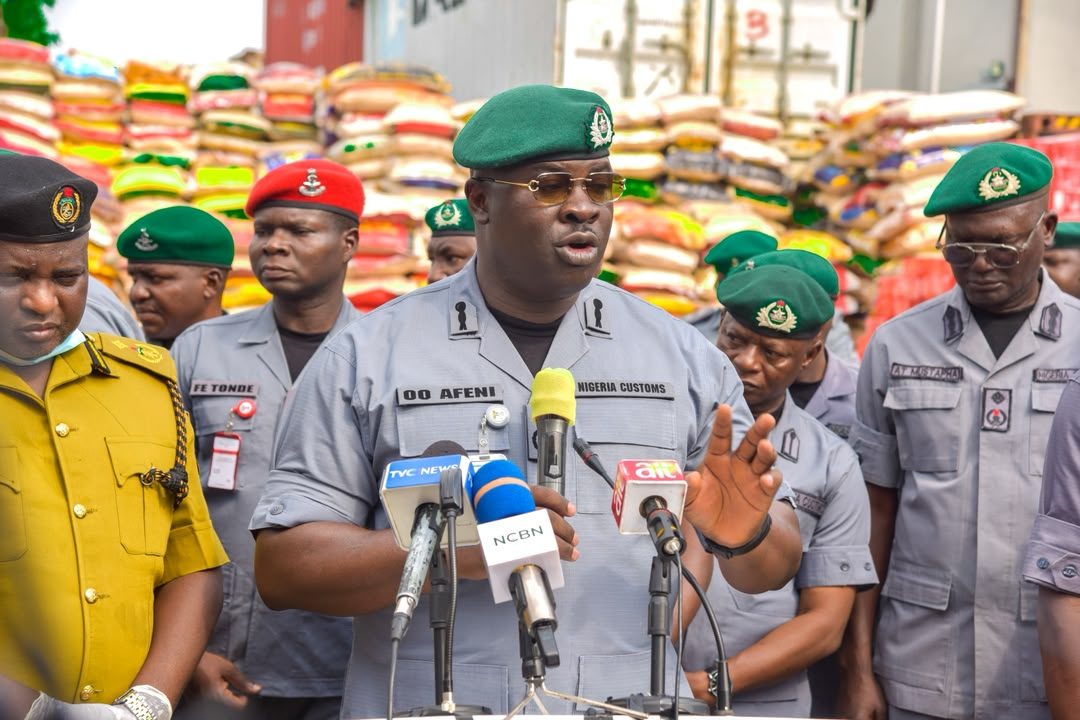
Since assuming office as Acting Comptroller of the Federal Operations Unit (FOU), Zone A, of the Nigeria Customs Service (NCS), Deputy Comptroller Oladapo Afeni has intensified anti-smuggling operations across the South-West, recording seizures with a combined Duty Paid Value of ₦6.19 billion within four weeks, while strengthening collaboration with security and regulatory agencies to combat illicit trade and safeguard the national economy.
The renewed enforcement drive reflects a strategy focused on intelligence gathering, improved surveillance, revenue protection and coordinated operations to combat illicit trade and safeguard the national economy.
Within the first four weeks of the intensified operations, the Unit recorded 195 interceptions involving prohibited and restricted goods with a combined Duty Paid Value (DPV) of ₦6.194 billion.
The seizures included 3,028 bags of 50kg imported rice, 995 bags of 25kg rice, 104 bags of 20kg rice and 207 bags of 5kg rice, alongside 173 cartons of imported frozen poultry products and 6,949 cartons of smuggled spaghetti.
Other intercepted items comprised 5,986 parcels of cannabis weighing 3,407.83 kilogrammes, 400 grammes of cocaine, 100 grammes of methamphetamine and various quantities of codeine syrup.
The Unit also seized 459 bales and 39 jumbo sacks of second-hand clothing, 1,236 used tyres, 101 bags of imported sugar, 250 cartons of unregistered sardines, 21 foreign-used vehicles and 11 means of conveyance.
Additional interceptions included 23,220 new machetes and 1,250 rounds of 12-calibre cartridges, raising concerns about the security implications of the uncontrolled movement of prohibited items.
Afeni said the operations were designed not only to suppress smuggling but also to protect government revenue, legitimate businesses and public safety. He warned that the consequences of illicit trade extended beyond the monetary value of seized goods.
“We will not measure our success by how much we seize, but by how much harm we prevent,” he said.
Beyond border enforcement, the Unit recovered ₦683.66 million in revenue between September 30 and November 3, 2026, through compliance monitoring, risk profiling and the correction of fraudulent import declarations.
Afeni said compliant traders would continue to receive necessary facilitation, while importers and agents involved in duty evasion, under-valuation and other fraudulent practices would face the full weight of the law.
A major component of his strategy is stronger collaboration with the National Agency for Food and Drug Administration and Control (NAFDAC), particularly in combating counterfeit and substandard pharmaceutical products.
During a recent visit to NAFDAC’s Investigation and Enforcement Directorate in Apapa, Lagos, Afeni pledged sustained intelligence sharing and coordinated operations to disrupt criminal networks responsible for distributing fake medicines.
He stressed that protecting Nigerians from unsafe products required collective action, adding that Customs would support NAFDAC in identifying suspicious consignments and preventing dangerous products from reaching consumers.
The Unit’s enforcement activities have also extended to wildlife protection.
On November 8, 2026, Customs operatives intercepted six pangolins at Eruwa-Oni in Oyo State during an intelligence-led patrol.
The animals were recovered alive after their suspected handlers abandoned them and fled.
Two later died, while four survived and were handed over to relevant wildlife officials for further action.
Afeni has also strengthened cooperation with the National Drug Law Enforcement Agency, Nigeria Police Force, Department of State Services, Nigeria Immigration Service, Nigerian Army and environmental enforcement agencies.
The partnerships are aimed at improving intelligence exchange, conducting joint operations and ensuring that intercepted narcotics, wildlife and other prohibited goods are transferred to the appropriate authorities for investigation and prosecution.
Afeni said the Unit would sustain its offensive against smuggling networks while protecting legitimate trade and encouraging public participation through credible information.
He acknowledged the support and policy direction of the Comptroller-General of Customs, Bashir Adewale Adeniyi, noting that institutional backing had strengthened operational effectiveness.
The ₦6.19 billion seizures, ₦683.66 million revenue recovery and renewed agency partnerships underscore Afeni’s enforcement priorities.
Sustaining the momentum, however, will require continued intelligence-led operations, successful prosecution of offenders and coordinated efforts to dismantle the networks behind illicit trade.





Customs
Customs dramatises officers’ operational hazards in 79-episode TV Series
Funso OLOJO, Editor
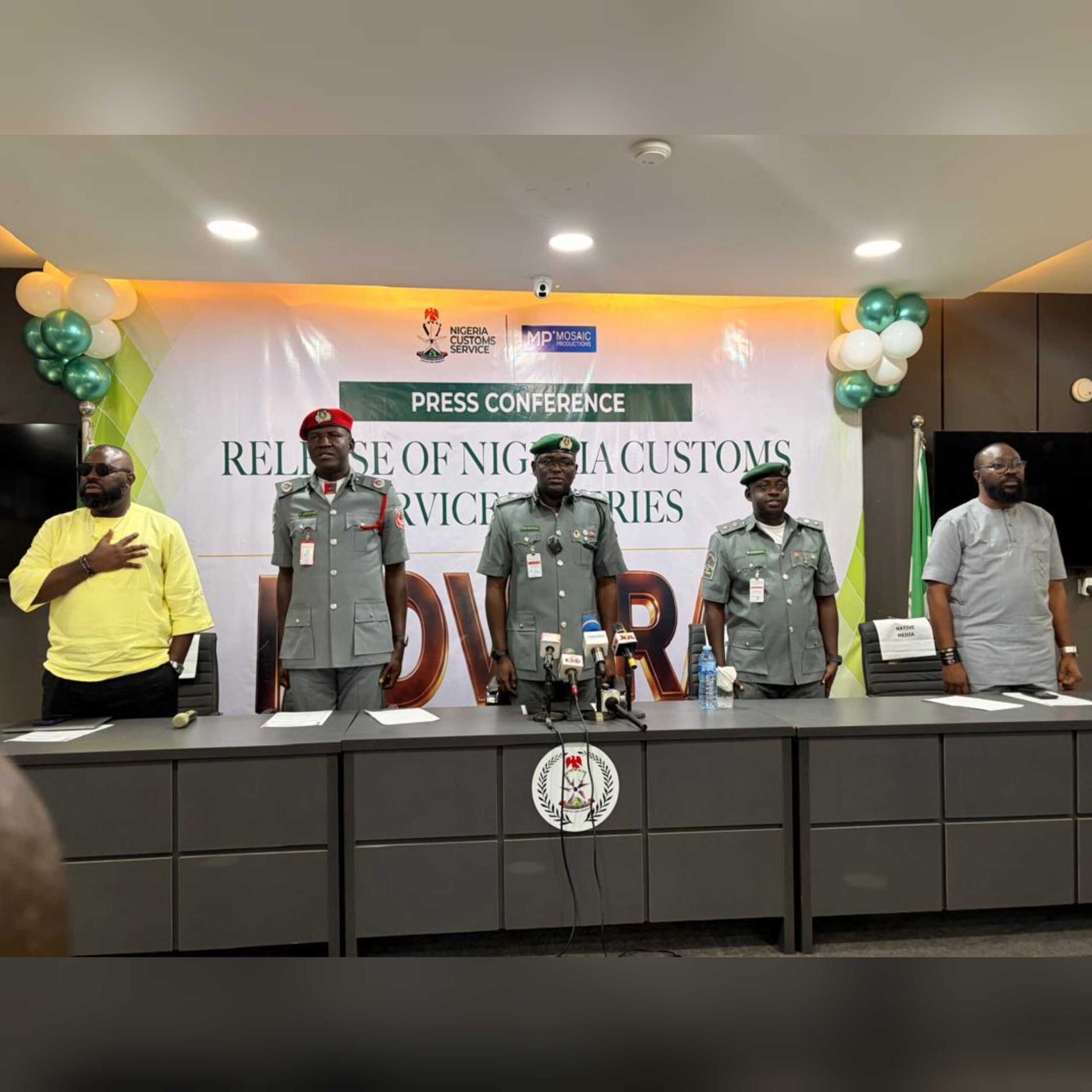
The dangerous world of smuggling, arms trafficking, drug cartels and the personal sacrifices of officers battling transnational criminal networks will take centre stage in a new 79-episode television drama series unveiled by the Nigeria Customs Service (NCS).
The series, titled Novara, is part of the Service’s efforts to give Nigerians a deeper understanding of the risks associated with Customs operations, showcase the human experiences behind the uniform and strengthen public engagement through creative storytelling.
Unveiled in Lagos on Tuesday, November 24th, 2026, the production is scheduled to premiere on Africa Magic Showcase on Thursday, January 7th, 2027.
Speaking at the unveiling, the National Public Relations Officer of the NCS, Abdullahi Aliyu Maiwada, described the initiative as a significant milestone in the Service’s strategic communication approach, marking a departure from conventional institutional messaging to the use of entertainment as a tool for public enlightenment.
He said Novara was conceived to educate, inform and entertain audiences while projecting the core values of integrity, courage, professionalism, patriotism, resilience and responsible service to the nation.
According to him, while the statutory responsibilities of the Service revolve around revenue generation, trade facilitation and border security, the human sacrifices and operational hazards associated with these duties are often overlooked or poorly understood by the public.
He noted that Customs officers routinely operate in difficult and dangerous environments, confront sophisticated transnational criminal networks and sometimes risk their lives to protect Nigeria’s economic interests and territorial integrity.
The drama, he explained, seeks to bring these realities to the screen by presenting Customs officers beyond their official identities as law enforcement personnel, portraying them as parents, spouses and members of society whose demanding professional responsibilities often take a toll on their family lives.
At the heart of Novara is the story of Pancha, a Customs officer torn between his family obligations and his professional commitment to protecting Nigeria against economic sabotage and transnational organised crime.
His assignment draws him into the dangerous operations of an organised criminal cartel involved in the smuggling of illicit drugs and arms into Nigeria.
The syndicate, headed by a notorious drug lord identified as Jambala, is said to operate in collaboration with a Mexican drug network with links to the United States.
As the criminal organisation expands its activities, Pancha and his colleagues in the Customs Intelligence Unit embark on a high-risk undercover operation to infiltrate, expose and dismantle the network.
But the mission comes at a heavy personal cost, placing his family in danger and testing his resolve to remain committed to national service.
Maiwada said the storyline explores the difficult choices officers must make in balancing professional obligations with family responsibilities, while exposing the wider dangers posed by drug trafficking, arms smuggling and other forms of transnational organised crime.
Beyond the dramatic storyline, the production also highlights the importance of intelligence-led operations, inter-agency collaboration and institutional vigilance in tackling emerging security threats.
The series brings together professionals from Nigeria’s film and television industry, with Agbode Ugo and Roger Oppen serving as producers.
Filmed in Lagos, Nigeria, and Los Angeles, United States, the production combines local storytelling with an international outlook, reflecting the cross-border dimensions of contemporary security and economic crimes.
The first season features actors including Topher Olowuya, Ray Adeka, Sharon Owojimi, Charles Okwong, Similayo Hassan and Iwande Osioma, among others.
It is directed by Daniel Oranyi and Ben Cheadika.
Maiwada disclosed that the 79-episode production is being released in two batches, with the first season comprising 39 episodes already completed and ready for broadcast, while the remaining 40 episodes are still in production.
Following its premiere on January 7th, 2027, new episodes will be aired every Tuesday and Friday at 9pm on Africa Magic Showcase.
He added that private screenings and preview engagements had already been organised in Lagos, Port Harcourt, Abuja and Kaduna ahead of the official television premiere.
Addressing questions about the financing of the project, the Customs spokesman said Novara was developed through a public-private partnership arrangement, stressing that the Service’s contribution was primarily in kind rather than through direct cash financing.
He explained that the NCS provided institutional support through access to operational facilities and relevant locations, personnel, costumes, uniforms, props and supporting actors drawn from its workforce.
On the production side, Mosaic Theater Production and Native Media provided professional expertise in script development, creative conceptualisation, filming and post-production.
Native Media also supplied camera and other technical production equipment, he added.
The Service said the arrangement demonstrated how public institutions could harness private-sector partnerships to execute impactful communication projects without bearing the entire financial burden of production.
It also acknowledged the contributions of corporate sponsors, including SIFAX Group, ASR Africa Foundation, BUA and Pacific Finance Group, among others.
Maiwada described the initiative as part of a deliberate repositioning of the Service’s strategic communication framework, arguing that public institutions must continually explore innovative ways of explaining their mandates and connecting with citizens.
He maintained that conventional communication channels, particularly the media, remained indispensable, but that creative storytelling offered an additional opportunity to translate complex institutional responsibilities into relatable and memorable experiences.
Through Novara, the NCS hopes to move public engagement beyond the familiar presentation of enforcement statistics, revenue figures, seizures and policy announcements to a more personal account of the men and women behind the uniform and the families who share the burden of their national assignments.
The initiative, he said, also aligns with the broader vision of the Comptroller-General of Customs, Bashir Adewale Adeniyi, to promote innovation, deepen stakeholder relationships and communicate the Service’s contributions to national development.
The NCS called on Nigerians, members of the international community, stakeholders in the maritime and trading sectors, security institutions and entertainment enthusiasts to watch the series when it premieres.
The Service expressed optimism that the production would deepen public appreciation of Customs operations and provide greater insight into the challenges associated with border management, anti-smuggling campaigns, trade facilitation and national security.
Customs
Adeniyi highlights role of effective communication in institutional success , operational efficiency
Gloria Odion Maritme Reporter
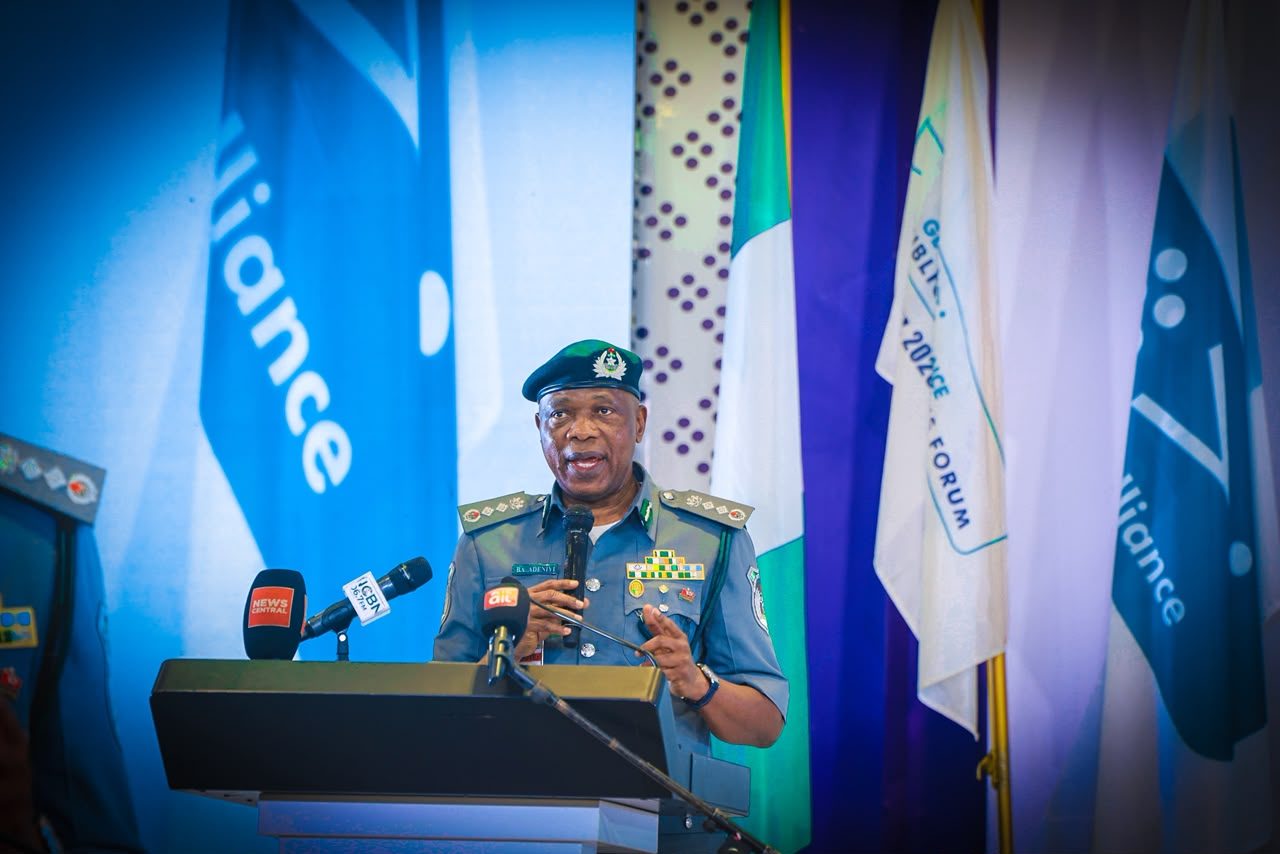
The Comptroller-General of Customs, Adewale Adeniyi, has called on public institutions to integrate effective communication into their decision making processes, warning that poorly communicated policies could undermine implementation and weaken public trust.
Adeniyi made the call on November 17th, 2026, at the World Public Relations Forum (WPRF) in Abuja, where he shared five key public relations lessons drawn from the Nigeria Customs Service’s (NCS) reform experience.
He stressed that the success or failure of institutional policies often depends not only on their objectives but also on how effectively they are communicated to stakeholders and the general public.
The Customs boss explained that an institution’s reputation is shaped by its everyday interactions with the public, noting that a rude officer at an airport, an unanswered complaint or a poorly managed encounter could influence public perception more than official statements and publicity campaigns.
Drawing from the Service’s ongoing reforms, Adeniyi outlined five key lessons for public relations professionals: communicating before implementing changes, telling the truth even when it is uncomfortable, verifying information before speaking, ensuring that promises align with actual results, and actively listening to stakeholders.
On the importance of communicating ahead of reforms, he cited the introduction of the B’Odogwu platform, which replaced the Nigerian Integrated Customs Information System (NICIS) II.
He explained that early engagement with importers, licensed customs agents, terminal operators and Customs officers, supported by helpdesks and a phased implementation strategy, helped improve stakeholders’ understanding and acceptance of the new platform.
He added that the initiative had also attracted recognition from the African Continental Free Trade Area (AfCFTA) Secretariat as a model for the continent.
Addressing the need for transparency, Adeniyi cited the Time Release Study, which revealed that cargo spent an average of about five days at Nigerian ports, with more than 90 per cent of the time spent idle.
According to him, making the findings public helped identify operational bottlenecks and demonstrate that delays in cargo clearance were not attributable to a single agency but involved multiple stakeholders across the port value chain.6
On the importance of verifying information before making public statements, the CGC referenced major enforcement operations, including the seizure of 844 rifles at Onne in June 2024, as well as the interception of 399 rifles from a Mitsubishi Delica vehicle and another 389 rifles aboard MV Vega.
He emphasised that accurate information, proper verification and effective inter-agency collaboration were essential to maintaining credibility, particularly when communicating sensitive enforcement activities.
“Communication must not be treated as an afterthought in institutional reforms; it must be part of the decision making process from the beginning. When people understand a policy’s purpose, they are more likely to support its implementation.
“For us in the Nigeria Customs Service, our experience has shown that effective communication, transparency, stakeholder engagement and listening are essential to building public trust and achieving sustainable reforms,” Adeniyi said.
The Customs chief further cited the Authorised Economic Operator (AEO) programme as a practical demonstration of how promoting compliance can enhance trade facilitation, accelerate cargo clearance and foster stronger collaboration between the Service and the private sector.
He disclosed that 51 companies had attained AEO status, with cargo clearance time reduced from 168 hours to 41 hours, while more than 200 other companies had also benefited from the programme.
Adeniyi concluded by urging public relations professionals to take their rightful place at the decision making table, stressing that communication alone cannot conceal poor institutional performance.
He maintained that an organisation’s relevance and reputation are ultimately determined by the relationship between what it says, what it does and the actual experiences of the people it serves.
Customs
Customs suspends training of recruits over dispute with Federal Character Commission on recruitment exercise

-

 Customs2 months ago
FOU Zone ‘A’: Aliyu retires after ₦3.19bn revenue recovery, Afeni takes over
-

 Customs3 months ago
Nigeria, Benin Customs move to harmonise trans-border trade, establish joint border post at Seme-Krake
-

 Customs4 weeks ago
FOU Zone A: Afeni intensifies anti-smuggling operations, seizes N511.4m drugs, rescues eight pangolins
-

 Headlines4 weeks ago
Tension heightens at Osborne Foreshore Estate over alleged environmental breach by property developer
-

 Commentaries1 month ago
Beyond Shiny Tech: Why Africa’s smart ports must build plumbing before AI
-
 Headlines3 weeks ago
Oyetola leads Nigeria’s delegation to IMO Council meeting in London, reaffirms commitment to maritime safety