Connect with us

Headlines

After Malabo: Dantsoho’s legacy and  hard test ahead for West African ports
Monday Discourse with Ibrahim Nasiru

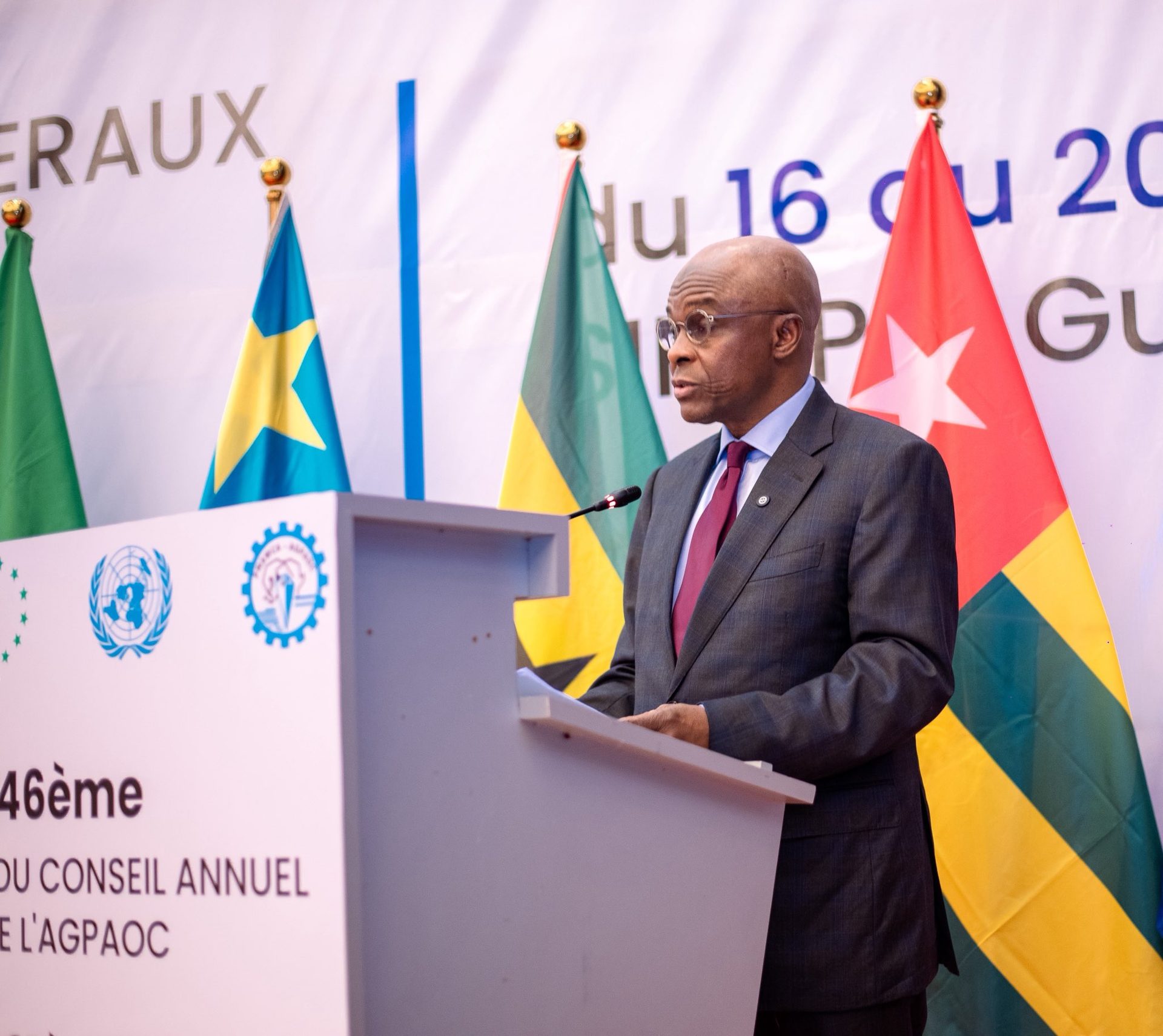
When the curtain fell on the 46th Annual Council Meeting and 21st Roundtable of Managing Directors of the Port Management Association of West and Central Africa (PMAWCA) in Sipopo, Malabo, Equatorial Guinea, one historic chapter closed and a harder test began.

After two eventful years as the first Nigerian President and Chairman of Council of PMAWCA, the Managing Director of the Nigerian Ports Authority (NPA), Dr. Abubakar Dantsoho, handed over the baton to Aly Koita, Director-General of the Autonomous Port of Conakry.

Representing 20 coastal countries and five landlocked nations, PMAWCA sits at the economic lifeline of over 400 million people.

Yet for decades, regional maritime bodies along the Gulf of Guinea were often criticized as polite talking shops where port chiefs met annually, read speeches, and returned home to the exact same bottlenecks.

Between November 2024 and November 2026, Dr. Dantsoho worked deliberately to change that culture—shifting PMAWCA from a ceremonial club into a reform-minded technical bloc.

What legacies did Dr. Dantsoho leave behind?

Dr. Dantsoho’s presidency stood on three practical pillars that reshaped both PMAWCA and Nigeria’s standing in global shipping:

Putting Digitalisation and Interoperability at the Centre:

Rather than treating technology as cosmetic window dressing, Dantsoho pushed the doctrine that modern ports win on turnaround time, lower cargo dwell time, and system interoperability.

By anchoring Nigeria’s own rollout of the Port Community System (PCS) and National Single Window alongside deeper regional data-sharing, he proved that West and Central African ports cannot afford fragmented, paper-heavy border clearance while global shipping lines automate.

Linking Port Efficiency to Maritime Security:

Hosting the Joint Gulf of Guinea Commission–PMAWCA Forum in Malabo underscored a vital truth: a modern port is useless if the sea lanes leading to it are unsafe or if subsea cables and offshore pipelines are vulnerable.

Bridging port operators with Gulf of Guinea security institutions elevated PMAWCA’s strategic relevance.

*Global Voice and Youth Capacity:

From elevating Africa’s voice within the International Association of Ports and Harbors (IAPH)—where he serves as Vice President for Africa to championing youth training through the PMAWCA Professional Training Centre in Cotonou, Dantsoho raised the association’s diplomatic weight in the international maritime comity of nations.

Dissecting the Malabo Message: Cooperation Over Cutthroat Rivalry

The core message emerging from the Malabo deliberations and communique is blunt and overdue: West and Central African ports must choose strategic collaboration over destructive rivalry.

For too long, neighbouring ports along the Nouakchott–Luanda coastline have viewed one another purely as competitors fighting for transshipment cargo—even as shippers across the sub-region suffer from high port charges, slow customs clearance, weak hinterland rail and road links, and expensive transit corridors.

Geopolitical disruptions in global shipping routes have recently diverted more vessel calls toward West and Central Africa.

Nigeria’s own port performance illustrates the scale of what is possible when capacity meets reform.

In Q1 2026 alone, Nigerian ports recorded an 83.1 percent surge in transshipment container volume alongside a sharp rise in total cargo throughput.

That momentum is a golden regional opportunity, yet it is also a stress test.

Ports operating near capacity with aging equipment and shallow drafts will lose diverted vessels to better-organized hubs unless regional standards improve together.

The Future of PMAWCA: Four Hard Tests for the New Leadership

As Conakry’s Aly Koita assumes the presidency, PMAWCA’s relevance in global shipping will not be judged by the warmth of its Malabo communique, but by four concrete benchmarks over the next two years:

Enforcing Accountability, Not Just Declarations:

In his parting charge in Malabo, Dr. Dantsoho proposed that a dedicated implementation progress report be tabled at the 47th Annual Council.

PMAWCA must adopt that discipline so member ports report measurable reductions in cargo dwell time and clearance costs rather than repeating old pledges.

.Seamless Customs and Hinterland Corridors

Digital single windows inside individual ports will fail if cargo still stalls for days at land borders or lacks efficient road and rail evacuation to the five landlocked member nations.

Green Ports and Climate Finance.

Global shipping is rapidly enforcing maritime decarbonisation rules.

As Dantsoho warned in Malabo, transitioning toward “green port” standards—shore power, clean marine fuels, and coastal erosion protection—is no longer optional; it is the ticket to accessing international climate and infrastructure finance.

Cybersecurity Resilience:

As West African ports digitize cargo clearance and vessel traffic management, they become prime targets for cyberattacks.

Shared regional cyber-defense protocols must become a core PMAWCA priority.

The Bottom Line

Dr. Abubakar Dantsoho leaves PMAWCA stronger, more visible, and better respected in global maritime circles than he met it.

Now, the association must prove that coastal solidarity across its 25 member states can lower the cost of doing business for ordinary traders, manufacturers, and consumers across West and Central Africa.

Ibrahim Nasiru, a public affairs analyst, writes from Abuja

Continue Reading
Click to comment

Leave a Reply

Your email address will not be published. Required fields are marked *

Customs

Customs suspends training of recruits over dispute with Federal Character Commission on recruitment exercise 
Gloria Odion, Maritme Reporter 
The Nigeria Customs Service (NCS) has temporarily suspended training activities at its two training colleges following concerns raised by the Federal Character Commission (FCC) over the ongoing recruitment exercise.
The suspension is intended to allow both institutions to undertake further consultations and resolve issues arising from the recruitment process through dialogue and mutual understanding.
The decision followed engagements between the Commission and a delegation of the NCS, during which both institutions reaffirmed their commitment to resolving the concerns through constructive dialogue, sustained engagement and institutional collaboration.
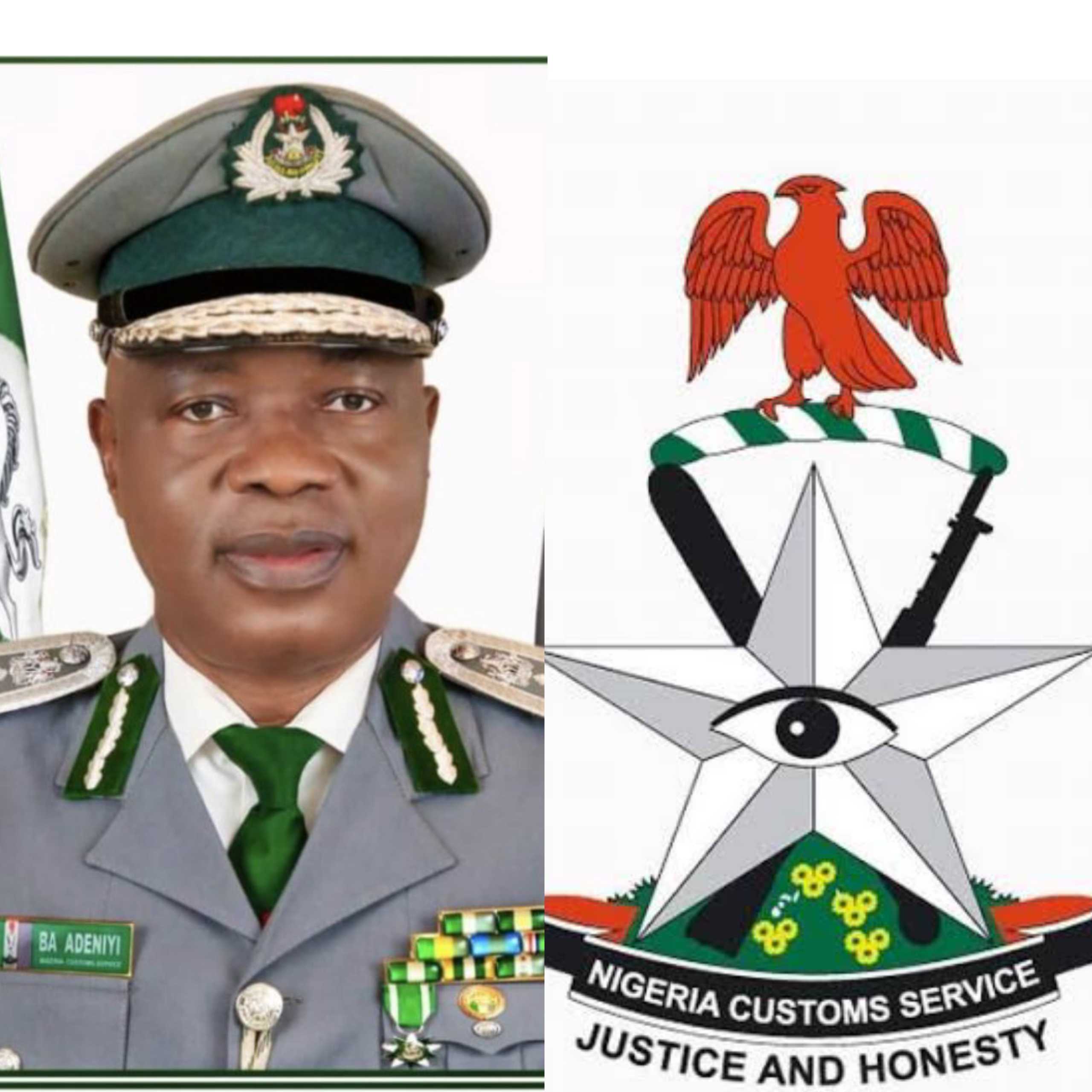
The Comptroller-General of Customs, Bashir Adewale Adeniyi,reiterated the Service’s commitment to maintaining cordial relations with relevant government institutions and addressing concerns in the overall interest of the nation.
Adeniyi acknowledged the constitutional responsibility of the FCC in promoting national unity, fairness and equitable representation in public service appointments.
He stressed the importance of the Commission’s mandate in advancing inclusiveness and ensuring adherence to the principles of federal character in public sector recruitment and appointments.
The Customs Service also reaffirmed its longstanding relationship with the Commission, expressing confidence that ongoing consultations would provide an effective platform for addressing the issues raised and arriving at a mutually acceptable resolution.
Both institutions reiterated their commitment to promoting fairness, national cohesion and effective public service delivery.
The NCS further restated its commitment, under the leadership of the Comptroller-General and his management team, to upholding accountability, transparency and institutional responsibility.
It assured that it would continue to engage relevant government institutions, strengthen inter-agency cooperation and pursue resolutions that reinforce public confidence, promote national unity and support the effective discharge of its statutory responsibilities.
Continue Reading

Headlines

NIWA clears water hyacinth on Jabi Lake to boost navigation, tourism
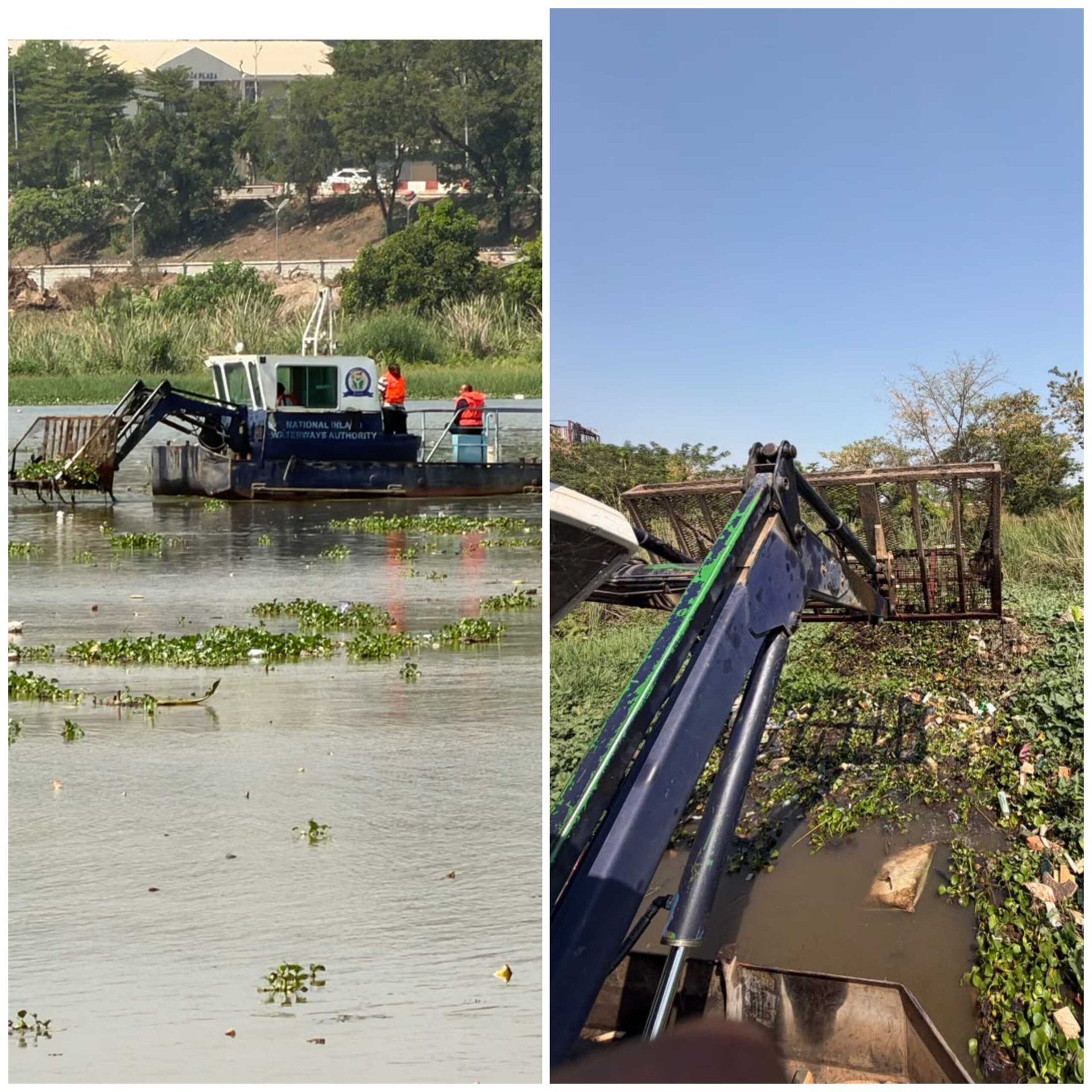
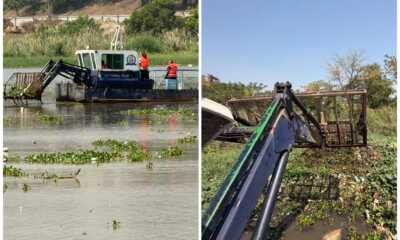
Water hyacinth clearance exercise on Jabi Lake
Funso OLOJO, Editor 
The National Inland Waterways Authority (NIWA) has launched a major water hyacinth clearance operation on Jabi Lake, Abuja, in a renewed effort to restore the water body’s navigability, improve its environmental condition and sustain tourism and recreational activities around the popular waterfront.
The exercise, which commenced on Monday, November 17, 2026, is designed to tackle the proliferation of water hyacinth, an invasive aquatic weed that poses a threat to safe navigation, undermines the aesthetic appeal of the lake and disrupts water-based recreational activities.
The operation is being coordinated and closely supervised by NIWA’s Abuja Area Manager, Hajia Aisha Eri, who said considerable progress had been recorded in removing the invasive vegetation and restoring the lake to a condition conducive to boating and other recreational activities.
Eri’s direct involvement in the exercise reflects the Authority’s determination to translate its environmental sustainability commitments into practical interventions that promote safe inland water transportation, protect aquatic environments and unlock the tourism potential of Nigeria’s inland waterways.
The ongoing operation has also received the attention of NIWA’s Acting Managing Director, Mr. Umar Yusuf Girei, who visited the site to underscore the Authority’s commitment to effective waterway management, environmental protection and the development of inland waterfront destinations.
Girei explained that the clearance exercise formed part of NIWA’s broader strategy to reclaim waterways, improve navigational channels and reduce safety risks associated with the uncontrolled spread of invasive aquatic vegetation.
“NIWA remains steadfast in reclaiming our waterways for safe human navigation. By clearing these invasive weeds, the Authority is opening up unobstructed channels and drastically reducing the risk of marine accidents, ensuring that commerce, transportation and tourism around hubs like Jabi Lake remain smooth, reliable and secure,” Girei said
Beyond restoring the lake’s navigability, the intervention is expected to enhance its environmental quality, improve its attractiveness to tourists and create a more conducive environment for boating, leisure and other waterfront activities.
Jabi Lake is one of Abuja’s prominent recreational destinations, attracting visitors and supporting businesses that depend on water-based leisure and tourism.
The unchecked spread of water hyacinth, however, can obstruct navigation, compromise the lake’s appearance and undermine its potential as a sustainable tourism destination.
The clearance exercise therefore represents an important intervention in protecting the economic and recreational value of the water body.
NIWA reiterated its commitment to maintaining cleaner, safer and more navigable inland waterways across the country, stressing that effective waterway management remains critical to the growth of inland water transportation, environmental sustainability and Nigeria’s emerging blue economy.
Continue Reading

Customs

Customs reviews B’Odogwu system in Lisbon, targets faster cargo clearance, higher revenue
Gloria Odion Maritime Reporter 
The Nigeria Customs Service (NCS) has concluded a three-day strategic review of its B’Odogwu Unified Customs Management System in Lisbon, Portugal, with a series of resolutions designed to address operational bottlenecks, accelerate cargo clearance, strengthen cargo tracking and optimise revenue collection.
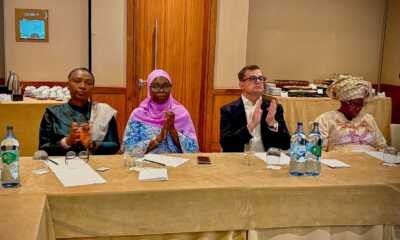
The workshop, held from November 9 to 11, 2026, at the Corinthia Hotel, brought together senior NCS management and officers, Trade Modernisation Project Limited (TMPL) and CB-XP representatives to assess the system’s performance, identify implementation gaps and develop a roadmap for improving its efficiency.
The review focused on consolidating the gains recorded since the introduction of B’Odogwu while addressing technical and operational challenges affecting its deployment across Customs commands.
Speaking at the opening ceremony on November 9, the Deputy Comptroller-General of Customs in charge of ICT Modernisation, Oluyomi Adebakin, commended the Comptroller-General of Customs, Adewale Adeniyi, for his commitment to technological innovation and capacity development within the Service.
The Managing Director of TMPL, Jummai Umar-Ajijola, who represented the company’s Chairman, Saleh Ahmadu, disclosed that the B’Odogwu platform had attracted the attention of the African Continental Free Trade Area (AfCFTA) Secretariat, reflecting its growing relevance to regional trade facilitation.
She added that improvements to the system had contributed to increased revenue generation and strengthened the Customs revenue ecosystem.
Umar-Ajijola said the workshop provided an opportunity to develop a concrete roadmap for consolidating the achievements recorded over the past three years and identifying priorities for the next phase of the project.
“We are to work to find a concrete plan not only to consolidate but to build a change roadmap going forward at the assessment of the three years so far,” she said.
She also commended the NCS Public Relations Unit for its consistent communication and reporting on the project.
Among the major resolutions reached was the upgrading of the Electronic Cargo Tracking System (ECTS), alongside measures to strengthen bond and transit management, automate Customs Procedure Code approvals and streamline the processing of import, export, re-importation and transit declarations.
Participants also agreed on the need to harmonise Customs Procedure Code nomenclature to promote uniformity, operational efficiency and accountability across Customs operations.
On cargo monitoring, the workshop considered plans to integrate the upgraded ECTS with B’Odogwu and replace 200 obsolete electronic seals with 2,000 newly procured units.
The proposed improvements also include individual container tracking for applicable transit declarations, enhanced bond registration and validation processes, and tighter monitoring of bonded cargo movements to curb diversion and other transit-related infractions.
In another major area of deliberation, participants examined the proposed integration of B’Odogwu with the Nigeria Export Processing Zones Authority (NEPZA), as well as improvements to the Transire Processing System.
The workshop further identified the need to upgrade the platform’s reporting dashboard, search filters and Harmonised System (HS) Code search functionality to make information retrieval and transaction monitoring more efficient.
Other proposed enhancements include providing access to previously processed declarations, improving the monitoring of procedure code applications, introducing system alerts to reduce processing errors and incorporating Time Release Study requirements into the platform.
The resolutions also addressed operational procedures, with participants reviewing Standard Operating Procedures (SOPs) for Bond Management, Transire Commands and Export Commands to ensure conformity with the Nigeria Customs Service Act 2023.
To strengthen project governance and prevent unauthorised system changes, the workshop resolved that all requests for modifications to B’Odogwu must undergo review and receive approval from the Officer in Charge of the Project Management Office before deployment.
Participants also reviewed the project’s communication plan, emphasising the importance of stronger engagement with stakeholders to ensure effective implementation and wider acceptance of the system.
At the closing ceremony on November 11, the Deputy Comptroller-General of Customs in charge of Finance, Administration and Technical Services (FATS), Kikelomo Adeola, stressed the importance of translating the workshop’s resolutions into measurable operational improvements.
The closing session featured a presentation by the Customs Area Controller, Comptroller Murtala Mu’azu, while the Chairman of CB-XP, Edward Bowen, delivered goodwill remarks.
To ensure effective implementation, specific responsibilities were assigned to relevant NCS and TMPL units, with the expectation that the agreed technical and operational interventions would translate into improved system performance.
The Lisbon review marks another phase in the NCS’s efforts to strengthen digital Customs administration through B’Odogwu, with the ultimate objective of reducing cargo clearance delays, improving transparency, tightening cargo monitoring and enhancing revenue optimisation.
Continue Reading

Trending