
Headlines
Oyetola woos polish investors to Nigeria’s fisheries, aquaculture sectors
Gloria Odion Maritme, Reporter
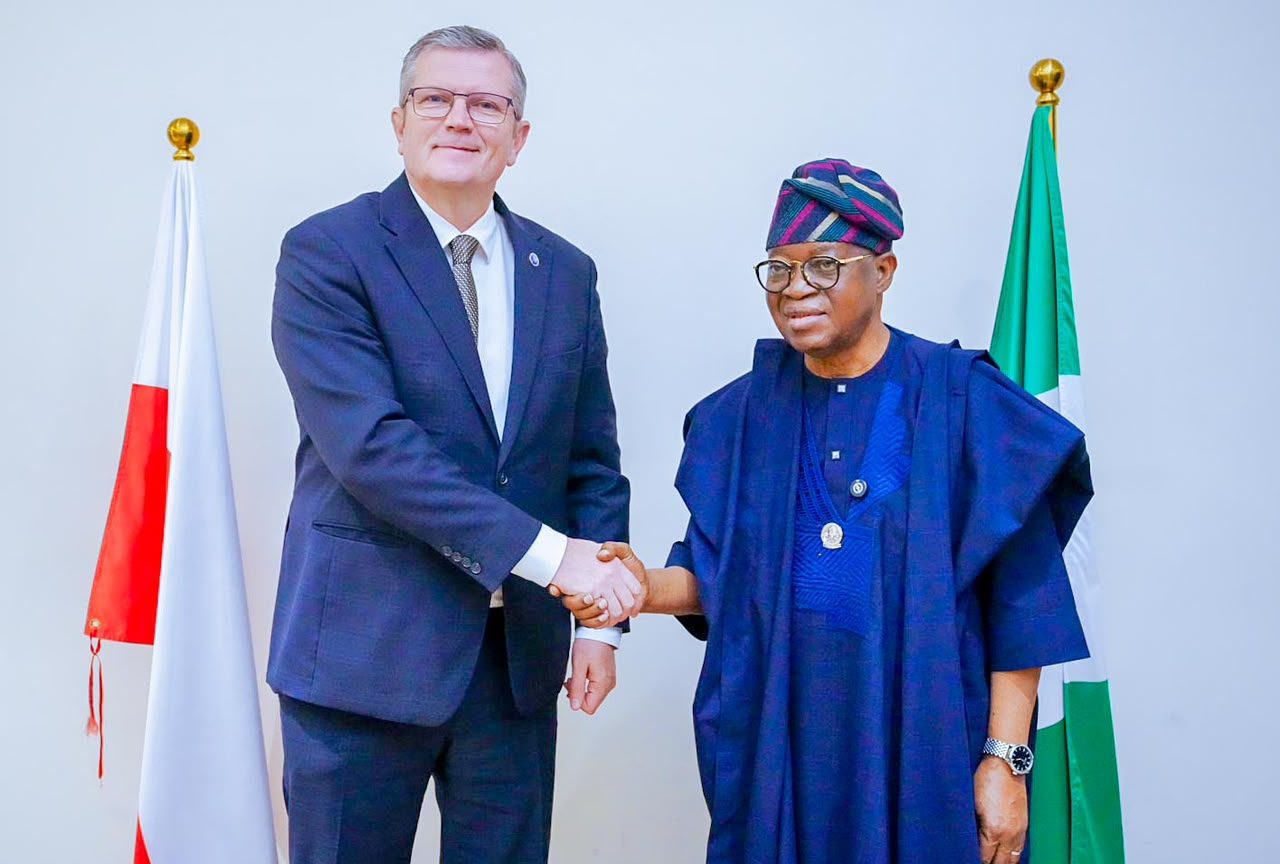
The Minister of Marine and Blue Economy, Dr Adegboyega Oyetola, has called on Polish investors to tap into the vast investment opportunities in Nigeria’s fisheries and aquaculture sectors, stressing that stronger economic cooperation between both countries could boost domestic production, create jobs and enhance national food security.
Oyetola made the call on Tuesday, November 24th, 2026, while delivering a goodwill message at the Polish-Nigerian Economic Forum held at the Lagos Continental Hotel, Lagos.
He described Nigeria’s marine and blue economy as a promising frontier for bilateral economic cooperation, urging Polish businesses to bring investment capital, modern technology, technical expertise and sustainable production systems into the country.
“I therefore wish to invite Polish investors, businesses and technical partners to take a closer look at Nigeria’s fisheries and aquaculture sector,” the minister said.
He identified fish production, processing, storage, cold-chain logistics, aquaculture technology, fish-feed production, equipment manufacturing and export development as areas offering significant investment opportunities.
According to him, investments across these value chains would expand domestic fish production, reduce Nigeria’s dependence on imports, generate employment, empower coastal communities and unlock greater economic value from the country’s aquatic resources.
“These investments can help boost local production, reduce fish import dependence, create employment, strengthen food security, empower coastal communities and generate significant economic value,” he stated.
Beyond fisheries and aquaculture, Oyetola commended the Polish Government for its support for Nigeria’s Port Modernisation Programme, describing the partnership as a demonstration of confidence in Nigeria’s economic prospects and a commitment to strengthening bilateral relations.
He said the collaboration would contribute to the development of efficient, modern and competitive maritime infrastructure, disclosing that the programme was scheduled for flag-off in Lagos on Wednesday, November 25, 2026.
The minister, however, emphasised the need to broaden Nigeria-Poland economic cooperation beyond port infrastructure to cover other strategic components of the marine and blue economy, particularly fisheries, aquaculture, marine technology and logistics.
“Our vision is to build a marine and blue economy that is productive, sustainable, resilient and investment driven,” he declared.
Oyetola expressed optimism that deeper economic relations between Nigeria and Poland would facilitate technology transfer, attract new investments and accelerate sustainable growth across Nigeria’s marine and blue economy.
He said sustained collaboration between the two countries could help unlock the enormous economic potential of Nigeria’s aquatic resources while positioning the country for greater participation in the global blue economy.

Customs
Customs dramatises officers’ operational hazards in 79-episode TV Series
Funso OLOJO, Editor
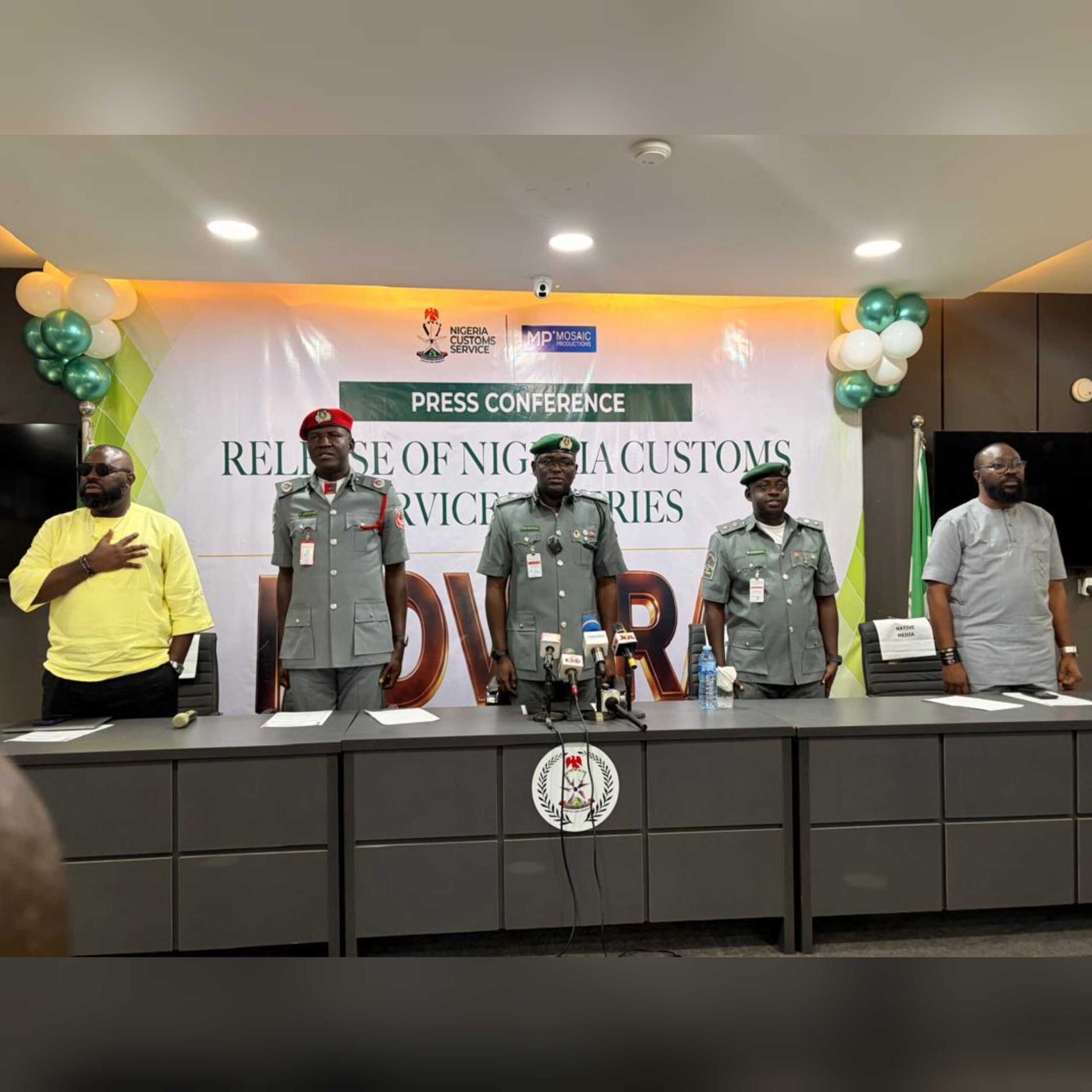
The dangerous world of smuggling, arms trafficking, drug cartels and the personal sacrifices of officers battling transnational criminal networks will take centre stage in a new 79-episode television drama series unveiled by the Nigeria Customs Service (NCS).
The series, titled Novara, is part of the Service’s efforts to give Nigerians a deeper understanding of the risks associated with Customs operations, showcase the human experiences behind the uniform and strengthen public engagement through creative storytelling.
Unveiled in Lagos on Tuesday, November 24th, 2026, the production is scheduled to premiere on Africa Magic Showcase on Thursday, January 7th, 2027.
Speaking at the unveiling, the National Public Relations Officer of the NCS, Abdullahi Aliyu Maiwada, described the initiative as a significant milestone in the Service’s strategic communication approach, marking a departure from conventional institutional messaging to the use of entertainment as a tool for public enlightenment.
He said Novara was conceived to educate, inform and entertain audiences while projecting the core values of integrity, courage, professionalism, patriotism, resilience and responsible service to the nation.
According to him, while the statutory responsibilities of the Service revolve around revenue generation, trade facilitation and border security, the human sacrifices and operational hazards associated with these duties are often overlooked or poorly understood by the public.
He noted that Customs officers routinely operate in difficult and dangerous environments, confront sophisticated transnational criminal networks and sometimes risk their lives to protect Nigeria’s economic interests and territorial integrity.
The drama, he explained, seeks to bring these realities to the screen by presenting Customs officers beyond their official identities as law enforcement personnel, portraying them as parents, spouses and members of society whose demanding professional responsibilities often take a toll on their family lives.
At the heart of Novara is the story of Pancha, a Customs officer torn between his family obligations and his professional commitment to protecting Nigeria against economic sabotage and transnational organised crime.
His assignment draws him into the dangerous operations of an organised criminal cartel involved in the smuggling of illicit drugs and arms into Nigeria.
The syndicate, headed by a notorious drug lord identified as Jambala, is said to operate in collaboration with a Mexican drug network with links to the United States.
As the criminal organisation expands its activities, Pancha and his colleagues in the Customs Intelligence Unit embark on a high-risk undercover operation to infiltrate, expose and dismantle the network.
But the mission comes at a heavy personal cost, placing his family in danger and testing his resolve to remain committed to national service.
Maiwada said the storyline explores the difficult choices officers must make in balancing professional obligations with family responsibilities, while exposing the wider dangers posed by drug trafficking, arms smuggling and other forms of transnational organised crime.
Beyond the dramatic storyline, the production also highlights the importance of intelligence-led operations, inter-agency collaboration and institutional vigilance in tackling emerging security threats.
The series brings together professionals from Nigeria’s film and television industry, with Agbode Ugo and Roger Oppen serving as producers.
Filmed in Lagos, Nigeria, and Los Angeles, United States, the production combines local storytelling with an international outlook, reflecting the cross-border dimensions of contemporary security and economic crimes.
The first season features actors including Topher Olowuya, Ray Adeka, Sharon Owojimi, Charles Okwong, Similayo Hassan and Iwande Osioma, among others.
It is directed by Daniel Oranyi and Ben Cheadika.
Maiwada disclosed that the 79-episode production is being released in two batches, with the first season comprising 39 episodes already completed and ready for broadcast, while the remaining 40 episodes are still in production.
Following its premiere on January 7th, 2027, new episodes will be aired every Tuesday and Friday at 9pm on Africa Magic Showcase.
He added that private screenings and preview engagements had already been organised in Lagos, Port Harcourt, Abuja and Kaduna ahead of the official television premiere.
Addressing questions about the financing of the project, the Customs spokesman said Novara was developed through a public-private partnership arrangement, stressing that the Service’s contribution was primarily in kind rather than through direct cash financing.
He explained that the NCS provided institutional support through access to operational facilities and relevant locations, personnel, costumes, uniforms, props and supporting actors drawn from its workforce.
On the production side, Mosaic Theater Production and Native Media provided professional expertise in script development, creative conceptualisation, filming and post-production.
Native Media also supplied camera and other technical production equipment, he added.
The Service said the arrangement demonstrated how public institutions could harness private-sector partnerships to execute impactful communication projects without bearing the entire financial burden of production.
It also acknowledged the contributions of corporate sponsors, including SIFAX Group, ASR Africa Foundation, BUA and Pacific Finance Group, among others.
Maiwada described the initiative as part of a deliberate repositioning of the Service’s strategic communication framework, arguing that public institutions must continually explore innovative ways of explaining their mandates and connecting with citizens.
He maintained that conventional communication channels, particularly the media, remained indispensable, but that creative storytelling offered an additional opportunity to translate complex institutional responsibilities into relatable and memorable experiences.
Through Novara, the NCS hopes to move public engagement beyond the familiar presentation of enforcement statistics, revenue figures, seizures and policy announcements to a more personal account of the men and women behind the uniform and the families who share the burden of their national assignments.
The initiative, he said, also aligns with the broader vision of the Comptroller-General of Customs, Bashir Adewale Adeniyi, to promote innovation, deepen stakeholder relationships and communicate the Service’s contributions to national development.
The NCS called on Nigerians, members of the international community, stakeholders in the maritime and trading sectors, security institutions and entertainment enthusiasts to watch the series when it premieres.
The Service expressed optimism that the production would deepen public appreciation of Customs operations and provide greater insight into the challenges associated with border management, anti-smuggling campaigns, trade facilitation and national security.
Customs
Adeniyi highlights role of effective communication in institutional success , operational efficiency
Gloria Odion Maritme Reporter
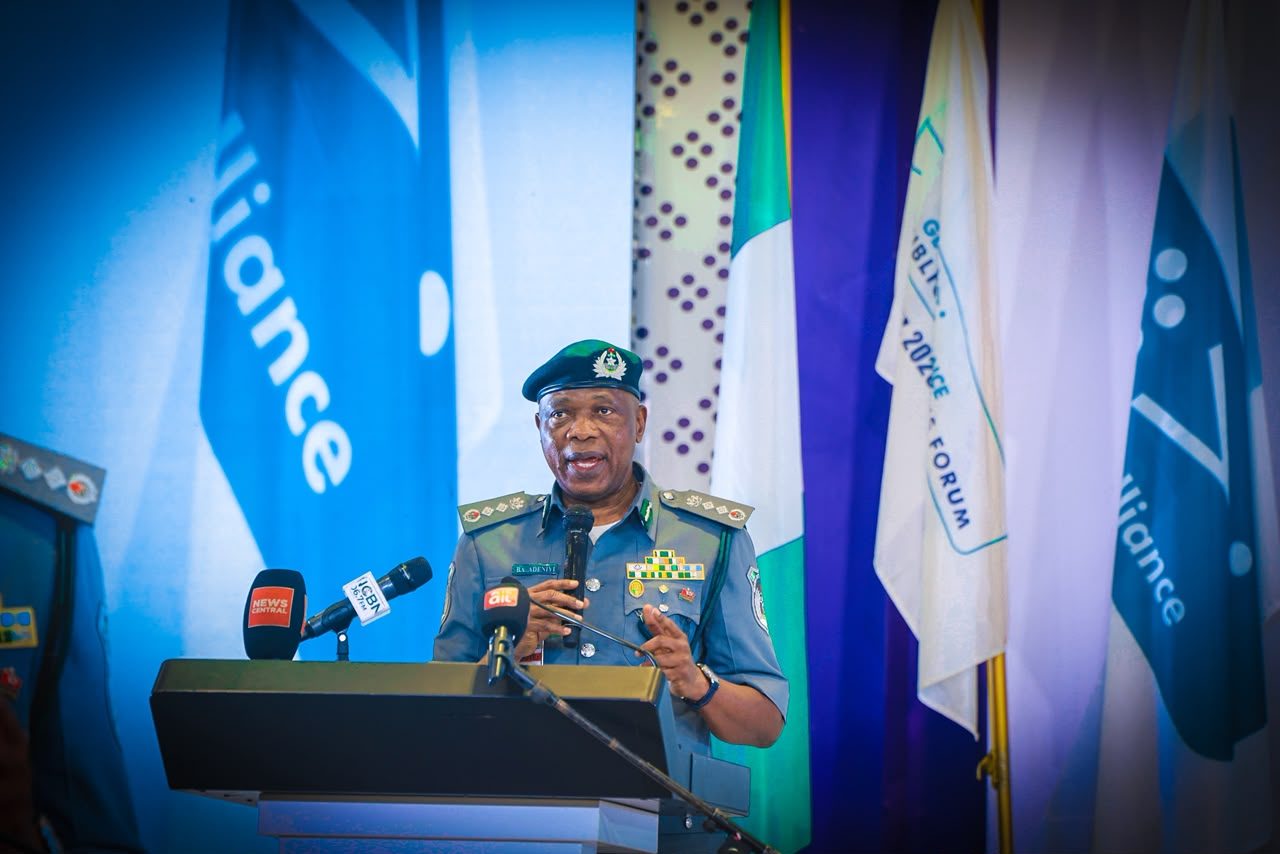
The Comptroller-General of Customs, Adewale Adeniyi, has called on public institutions to integrate effective communication into their decision making processes, warning that poorly communicated policies could undermine implementation and weaken public trust.
Adeniyi made the call on November 17th, 2026, at the World Public Relations Forum (WPRF) in Abuja, where he shared five key public relations lessons drawn from the Nigeria Customs Service’s (NCS) reform experience.
He stressed that the success or failure of institutional policies often depends not only on their objectives but also on how effectively they are communicated to stakeholders and the general public.
The Customs boss explained that an institution’s reputation is shaped by its everyday interactions with the public, noting that a rude officer at an airport, an unanswered complaint or a poorly managed encounter could influence public perception more than official statements and publicity campaigns.
Drawing from the Service’s ongoing reforms, Adeniyi outlined five key lessons for public relations professionals: communicating before implementing changes, telling the truth even when it is uncomfortable, verifying information before speaking, ensuring that promises align with actual results, and actively listening to stakeholders.
On the importance of communicating ahead of reforms, he cited the introduction of the B’Odogwu platform, which replaced the Nigerian Integrated Customs Information System (NICIS) II.
He explained that early engagement with importers, licensed customs agents, terminal operators and Customs officers, supported by helpdesks and a phased implementation strategy, helped improve stakeholders’ understanding and acceptance of the new platform.
He added that the initiative had also attracted recognition from the African Continental Free Trade Area (AfCFTA) Secretariat as a model for the continent.
Addressing the need for transparency, Adeniyi cited the Time Release Study, which revealed that cargo spent an average of about five days at Nigerian ports, with more than 90 per cent of the time spent idle.
According to him, making the findings public helped identify operational bottlenecks and demonstrate that delays in cargo clearance were not attributable to a single agency but involved multiple stakeholders across the port value chain.6
On the importance of verifying information before making public statements, the CGC referenced major enforcement operations, including the seizure of 844 rifles at Onne in June 2024, as well as the interception of 399 rifles from a Mitsubishi Delica vehicle and another 389 rifles aboard MV Vega.
He emphasised that accurate information, proper verification and effective inter-agency collaboration were essential to maintaining credibility, particularly when communicating sensitive enforcement activities.
“Communication must not be treated as an afterthought in institutional reforms; it must be part of the decision making process from the beginning. When people understand a policy’s purpose, they are more likely to support its implementation.
“For us in the Nigeria Customs Service, our experience has shown that effective communication, transparency, stakeholder engagement and listening are essential to building public trust and achieving sustainable reforms,” Adeniyi said.
The Customs chief further cited the Authorised Economic Operator (AEO) programme as a practical demonstration of how promoting compliance can enhance trade facilitation, accelerate cargo clearance and foster stronger collaboration between the Service and the private sector.
He disclosed that 51 companies had attained AEO status, with cargo clearance time reduced from 168 hours to 41 hours, while more than 200 other companies had also benefited from the programme.
Adeniyi concluded by urging public relations professionals to take their rightful place at the decision making table, stressing that communication alone cannot conceal poor institutional performance.
He maintained that an organisation’s relevance and reputation are ultimately determined by the relationship between what it says, what it does and the actual experiences of the people it serves.
Headlines
Bayelsa Boat Mishap: We pray it never happens again, but prayer alone cannot save us

Coalition of Maritime Journalists of Nigeria warns
Another boat mishap. Another community in mourning. Another list of lives lost on our waterways, leaving families devastated and communities in grief.
On Friday, November 20, 2026, a wooden passenger boat conveying mourners from Ayama to Ukubie for a burial ceremony capsized near the river junction between Oweikorogha and Otuan communities in Southern Ijaw Local Government Area of Bayelsa State.
The incident reportedly occurred at about 11 a.m. after the boat developed a mechanical fault and capsized.
The National Emergency Management Agency (NEMA) confirmed that 24 people died while another 24 were rescued. However, other reports put the death toll at 29.
We extend our heartfelt condolences to the bereaved families, the Bayelsa State Government and the entire people of the state. Our thoughts are particularly with the mothers, fathers, children and relatives who waited at the jetty for their loved ones, only to receive the devastating news that they would never return.
But condolences alone are not enough. Nigeria must move beyond mourning and take decisive action to prevent the recurrence of these avoidable tragedies.
WHAT REALLY HAPPENED IN BAYELSA?
Preliminary findings announced by Bayelsa State Governor, Senator Douye Diri, indicated that the boat was overloaded, no passenger manifest was available, and most of the passengers were not wearing life jackets.
These revelations are deeply troubling.
Overloading. Absence of a passenger manifest. Failure to wear life jackets. A reported mechanical fault. These are serious safety concerns that must be thoroughly investigated.
The tragedy raises fundamental questions about compliance with established water transportation safety regulations and the effectiveness of enforcement at departure points.
Governor Diri also confirmed that neither the passengers nor the boat operator wore life jackets.
This is particularly unfortunate given the Federal Government’s previous interventions to improve safety awareness and provide life-saving equipment to water transport users in Bayelsa and other riverine communities.
THE FEDERAL GOVERNMENT HAS NOT FOLDED ITS ARMS
For the sake of accuracy, it is important to acknowledge the interventions already undertaken by the Federal Government to address boat mishaps across the country.
On May 2, 2025, the Minister of Marine and Blue Economy, Dr. Adegboyega Oyetola, personally visited Bayelsa State to distribute 3,500 life jackets to water transport users as part of efforts to promote safety and protect lives on inland waterways.
This was part of a broader nationwide campaign across the 28 littoral states, aimed at encouraging compliance with safety regulations and reducing avoidable deaths.
Following the Bayelsa tragedy, the Minister promptly ordered an investigation into its immediate and remote causes, directing the National Inland Waterways Authority (NIWA) to conduct a thorough investigation and submit its findings.
He also instructed NIWA to collaborate with relevant government agencies and the Bayelsa State Government to ensure a comprehensive, transparent and credible investigation.
In his reaction, Oyetola said:
“Safety lapses on our waterways are no longer acceptable. The Federal Government will not fold its arms and watch its citizens perish on the waterways.
“We must get to the root of this tragedy and ensure that those responsible for enforcing safety regulations do their jobs.”
The Minister also expressed concern over the reported absence of a passenger manifest, emphasising that proper passenger documentation remains a critical safety requirement that must be strictly enforced.
These interventions demonstrate that the Federal Government recognises the dangers confronting inland water transportation and has taken steps to address them.
However, the Bayelsa incident underscores the need to translate policy interventions into consistent compliance and effective enforcement at the grassroots.
The objective of the Bola Ahmed Tinubu administration should be to ensure that no Nigerian loses his or her life to preventable negligence on the waterways.
NIWA: FROM BOLA OYEBAMIJi TO YUSUF GIREI — SUSTAINING THE SAFETY AGENDA
The National Inland Waterways Authority has continued to play a central role in the Federal Government’s efforts to improve safety standards, eliminate substandard vessels and promote responsible operations across Nigeria’s inland waterways.
Under the leadership of former Managing Director, Bola Oyebamiji, water transportation safety received renewed attention through stakeholder engagement, regulatory advocacy and efforts to strengthen operational procedures at jetties across the country.
Appointed in October 2023, Oyebamiji was given the responsibility of driving the implementation of the National Inland Waterways Transportation Code to reduce boat accidents and standardise water transportation operations.
During his tenure, reported fatalities on Nigeria’s waterways declined from 330 in 2022 to 92 in the first eight months of 2025.
This represented significant progress, although sustaining and improving on the gains requires continuous commitment from regulators, operators and passengers.
Oyebamiji also encouraged a nationwide engagement initiative involving the Coalition of Maritime Journalists of Nigeria, particularly in states such as Niger, to investigate the socio-cultural factors contributing to boat mishaps and identify practical solutions.
The engagements examined the roles of traditional institutions and community leaders in influencing public attitudes towards water safety.
The positive outcomes reported from these engagements in Niger State, including improved community support for safety measures, demonstrated the importance of combining public enlightenment with traditional institutions and regulatory enforcement.
The lesson is clear: when communities understand and embrace safety regulations, when traditional rulers lend their voices to compliance, and when regulators enforce the rules, the risk of accidents can be significantly reduced.
THE ACCIDENT PREVENTION COMMITTEE: A BLUEPRINT FOR REFORM
In a further demonstration of its commitment to addressing boat mishaps, the Ministry of Marine and Blue Economy inaugurated a Special Committee on the Prevention of Boat Mishaps in Nigeria, chaired by former NIWA Managing Director, Bola Oyebamiji.
The committee, inaugurated on February 27, 2025, included representatives of the Association of Tourist Boat Operators and Water Transporters of Nigeria (ATBOWATON), led by Dr. Gani Tarzan Balogun, and the Waterways Boat Operators and Transporters Association of Nigeria (WABOTAN), led by Tope Fajemirokun.
It was mandated to undertake a comprehensive review of commercial boat operations, identify the underlying causes of boat mishaps and recommend sustainable solutions.
The committee produced a six-chapter report containing 64 recommendations, with 17 key proposals highlighted.
Among its recommendations were the establishment of a Coastal Guard to enforce waterway safety regulations; the development of a National Boat Design Policy to standardise permitted vessel types; mandatory certification and formal training for boat operators; increased funding for NIWA to strengthen its hydrographic and marine engineering functions; and the establishment of search and rescue stations at strategic locations across inland waterways.
The recommendations provide a framework for addressing the structural, operational and regulatory challenges responsible for recurring boat accidents.
Beyond the committee’s work, Oyetola also approved a nationwide distribution of life jackets to riverine and coastal communities.
NIWA has reportedly distributed 42,000 life jackets across states including Bayelsa, Anambra, Akwa Ibom and Ogun, while the Minister has been acknowledged for distributing 45,000 life jackets across 12 states.
Other interventions include the deployment of more than 1,500 navigational buoys in parts of River Niger, the introduction of a Water Transportation Code to sanction offenders, an increase in the number of water marshals responsible for enforcing safety regulations, and the clearance of water hyacinths in Omu Creeks, Lekki and Ikorodu in Lagos State.
NIWA has also taken enforcement action against operators whose negligence resulted in fatalities. In Kogi State, two boat operators were prosecuted over the deaths of 19 passengers following their failure to heed warnings against night journeys and travelling without life jackets.
These initiatives are commendable. However, the Bayelsa incident reminds us that the existence of safety policies and interventions must be matched by strict compliance and sustained enforcement.
YUSUF GIREI: SUSTAINING THE QUEST FOR SAFER WATERWAYS
The Acting Managing Director of NIWA, Yusuf Girei, is expected to sustain the momentum of the Federal Government’s drive to eliminate avoidable deaths on Nigeria’s inland waterways.
Girei recently led an initiative to clear water hyacinths on the iconic Jabi Lake in Abuja to improve navigation and sustain water-based recreational activities.
He also directed Area Managers across the country to intensify safety awareness campaigns, oversight and monitoring activities as part of efforts to achieve zero accidents on the nation’s waterways.
Water hyacinth clearance is not merely an environmental intervention. It improves navigability, reduces operational risks and supports tourism and other economic activities on inland waterways.
Following the Bayelsa tragedy, Girei also dispatched a high-powered delegation to the state at the directive of the Minister of Marine and Blue Economy.
These actions are welcome and should be complemented by sustained monitoring, stronger enforcement and community engagement, particularly in riverine areas where water transportation remains an essential means of mobility.
THE HARD QUESTION: ARE OUR PEOPLE WILLING TO OBEY?
Beyond government interventions, there is an uncomfortable question that Nigerians must confront: Are passengers and boat operators willing to take responsibility for their own safety by complying with established regulations?
The Coalition of Maritime Journalists of Nigeria has, on several occasions, reported incidents in which NIWA officials and river marshals were allegedly attacked by passengers and boat operators during routine safety inspections before departure.
Some of these confrontations reportedly resulted in serious injuries to enforcement personnel.
This situation is unacceptable.
The same officers tasked with protecting lives are sometimes attacked for insisting that passengers wear life jackets, operators avoid overloading and boats comply with safety requirements.
An enforcement officer who insists on compliance is not an enemy of the people. Such an officer is performing a responsibility that could ultimately save lives.
Safety regulations are not designed to inconvenience passengers or frustrate boat operators. They exist because the consequences of non-compliance can be fatal.
Water is not our enemy. It is a blessing, a means of transportation, a source of livelihood, a tourism asset and an important component of Nigeria’s emerging Blue Economy.
However, its benefits can only be fully realised when users respect the rules governing safe navigation.
No life jacket, no boarding. No passenger manifest, no departure. No overloading. No night travel between 6 p.m. and 6 a.m. No substandard passenger vessel. No unlicensed operator. No departure without the necessary safety checks.
These are not arbitrary restrictions. They are essential safeguards for human lives.
WHAT THE TINUBU ADMINISTRATION WANTS FOR NIGERIA’S WATERWAYS
The Bola Ahmed Tinubu administration’s ambition for inland water transportation should be anchored on a clear objective: safer waterways, modern vessels, responsible operators and zero avoidable fatalities.
This vision requires sustained action in six critical areas.
Zero avoidable deaths: Reducing fatalities is important, but the ultimate objective must be to eliminate preventable deaths on Nigerian waterways. Every life lost through negligence is one too many.
Safe and modern boats:
Oyetola has repeatedly advocated the gradual phasing out of wooden boats by state governments and their replacement with safer, more durable and better-equipped fibreglass or fibre-reinforced plastic vessels, particularly for passenger transportation.
A Coastal Guard
The proposed establishment of a Coastal Guard would strengthen safety enforcement and ensure effective monitoring of activities at jetties and departure points.
Certified operators
Boat operators must possess the necessary training, competence and certification to operate passenger vessels. The era of untrained and unqualified operators must end.
Search and rescue stations.
Strategic search and rescue facilities are necessary to ensure that emergency response is swift and that assistance reaches accident scenes without unnecessary delays.
A thriving Blue Economy: Safe waterways will encourage water transportation, tourism, investment and employment opportunities. Safety must therefore be recognised as a foundation for the successful implementation of Nigeria’s Blue Economy agenda.
It would be unfair to conclude that the Federal Government has done nothing because another tragedy has occurred in Bayelsa.
Equally, it would be wrong to suggest that the provision of life jackets and the issuance of safety directives automatically absolve regulatory authorities of responsibility.
Government has a duty to provide the necessary safety infrastructure, strengthen regulation and ensure effective enforcement. Passengers and operators also have a responsibility to comply with the rules.
Providing life jackets is important, but ensuring that they are worn is equally critical. Issuing warnings is necessary, but enforcing those warnings is indispensable.
The Bayelsa tragedy must therefore lead to a comprehensive examination of the conduct of the boat operator, the circumstances surrounding the mechanical failure, the reported overloading, the absence of a passenger manifest and the effectiveness of safety checks at the point of departure.
Accountability must accompany condolence.
OUR CALL: A COALITION APPEAL
The Coalition of Maritime Journalists of Nigeria makes the following appeal to all stakeholders:
To Nigerians: Take safety regulations seriously whenever you travel by water. Wear your life jacket, refuse to board overloaded boats, avoid night journeys and insist on a passenger manifest. Report reckless operators and refuse to compromise your safety for convenience.
If a boat is overloaded, do not board. If life jackets are unavailable, do not embark on the journey. If an operator is unlicensed or appears unfit to operate, report the situation to the relevant authorities.
It is better to arrive late than never to arrive.
To the 28 littoral states: Invest in modern passenger boats and ferries to transform water transportation in your respective states. The responsibility for safer waterways cannot rest on the Federal Government alone.
State governments must support the gradual replacement of unsafe wooden passenger boats, develop functional jetties, invest in safety infrastructure and provide the necessary resources to protect their citizens.
To traditional institutions, community leaders and religious organisations: Make water safety an integral part of community sensitisation. Use your influence to encourage compliance and discourage attacks on enforcement personnel.
Help NIWA protect lives. Support the river marshals who are working to ensure that passengers return safely to their families.
To boat operators .
Recognise that you are not merely transporting passengers; you are responsible for human lives.
Do not overload your vessels for additional revenue. Do not compromise safety to meet schedules or maximise profits. Ensure that your boats are properly maintained, that passengers wear life jackets and that all required safety procedures are observed before departure.
One reckless decision can destroy lives, livelihoods and reputations.
To NIWA
Do not relent in your efforts to improve safety on Nigerian waterways. Intensify public enlightenment, strengthen monitoring and enforcement, sustain life jacket distribution, prosecute offenders where necessary and ensure that safety regulations are applied consistently across all operational areas.
The authority must also ensure that its personnel are adequately protected and equipped to discharge their responsibilities without intimidation or attacks.
CONCLUSION: WATER IS NOT OUR ENEMY
The Coalition of Maritime Journalists of Nigeria sympathises with the families of the victims, the Bayelsa State Government and the entire people of the state over this painful tragedy.
We pray that such an incident never happens again. But prayer must be accompanied by responsibility, discipline and obedience to safety regulations.
The Bayelsa tragedy must not become another statistic that attracts public outrage for a few days before the nation moves on.
Let it be a turning point in Nigeria’s approach to inland water transportation safety.
Let it compel passengers to insist on life jackets, operators to prioritise safety over profit, state governments to invest in modern vessels, and regulatory authorities to enforce existing laws without compromise.
Let us collectively say no to avoidable deaths, overloaded boats, unprotected passengers, reckless operations and attacks on safety officers.
The responsibility to save lives on our waterways belongs to all of us.
Wear the life jacket. Obey the rules. Arrive alive.

 Headlines3 months ago
Oyetola presents three-year score card as blue economy industry revenue hits ₦1.83trn
 Customs2 months ago
FOU Zone ‘A’: Aliyu retires after ₦3.19bn revenue recovery, Afeni takes over

 Customs4 weeks ago
FOU Zone A: Afeni intensifies anti-smuggling operations, seizes N511.4m drugs, rescues eight pangolins

 Customs2 months ago
Nigeria, Benin Customs move to harmonise trans-border trade, establish joint border post at Seme-Krake

 Headlines3 weeks ago
Tension heightens at Osborne Foreshore Estate over alleged environmental breach by property developer

 Commentaries4 weeks ago
Beyond Shiny Tech: Why Africa’s smart ports must build plumbing before AI