
Connect with us

Analyses

THE IBOM DEEP SEAPORT: Nigeria’s ultimate counterweight in West African maritime race
Monday Discourse with Ibrahim Nasiru
“A nation’s maritime greatness is not measured by the size of its conferences, but by the depth of its waters and the speed of its cargo.”
As the Port Management Association of West and Central Africa (PMAWCA) gathers in Lagos this week to deliberate on “Ports of the Future,” the conversation surrounding regional maritime supremacy has never been more urgent.
 While the Nigerian Ports Authority (NPA) and the Ministry of Marine and Blue Economy discuss logistical resilience, the structural limitations of Nigeria’s traditional Ports remain an elephant in the room.
To truly dominate the West and Central African sub-region and checkmate aggressive expansion from rivals like Lome and Tema, Nigeria must aggressively accelerate its ultimate maritime trump card: the Ibom Deep Sea Port (IDSP).
For decades, Nigeria’s economic heartbeat has been throttled by the geographical limitations of the Lagos Port Complex.
Even with the laudable arrival of the Lekki Deep Sea Port, the nation’s maritime infrastructure remains heavily centralized, leaving the eastern flank underutilized.
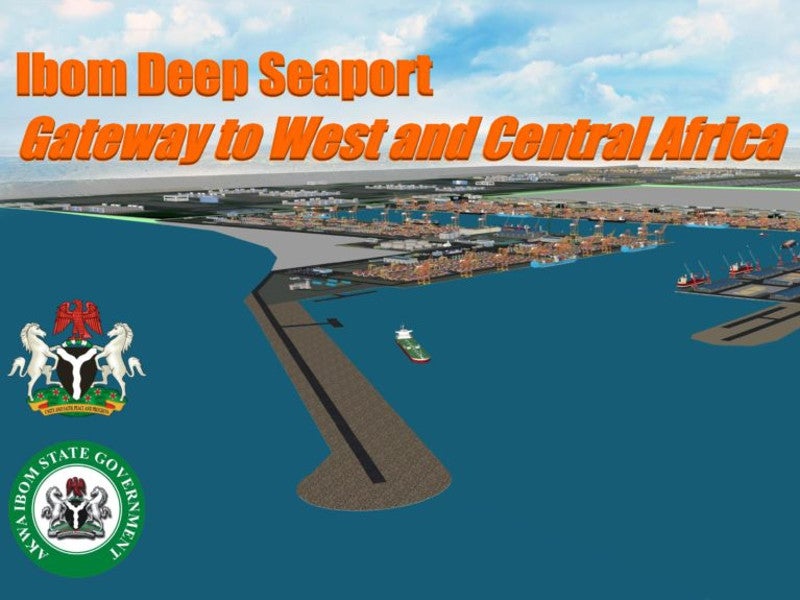
The Ibom Deep Sea Port, strategically carved into the coastline of Akwa Ibom State, offers a game-changing natural advantage with its 16.5-meter design draft coupled with a wide, unrestricted navigation channel.
 Unlike the shallow, continually dredged channels of Apapa or Tin Can, IDSP requires no heavy maintenance dredging to welcome the world’s largest modern container vessels.
It is engineered to comfortably host Post-Panamax ships, effectively breaking the structural monopoly of regional hubs and positioning Nigeria as the definitive transshipment destination for the Gulf of Guinea.
Beyond these engineering metrics, the actualization of the Ibom Deep Sea Port represents a masterstroke in economic decentralization.
Strategically located within the Ibom Industrial City multi-product free zone, the Port sits squarely along major global shipping routes.
For Akwa Ibom State and the broader South-South and South-East geopolitical zones, IDSP is the catalyst for a massive industrial rebirth, promising to unlock over 10,000 direct jobs and establish a new industrial manufacturing corridor that feeds directly into the African Continental Free Trade Area (AfCFTA).
Yet, in the theater of governance, the standard remains Facta Non Verba—deeds, not words.
The recent submission of the Comprehensive Feasibility Report to Governor Umo Eno in April 2026 has reignited a fierce debate: does this document signal the dawn of a maritime revolution, or is it merely another chapter in a long-running political anthology?
For the people of Akwa Ibom State, the story of the IDSP has, for decades, been governed by Res Ipsa Loquitur—the thing speaks for itself—where the prolonged absence of an operational Port tells its own story of political promises fading into the sunset.
To change this narrative, the project must escape what is currently a technical reality trapped in a financial purgatory.
The road to actualizing the Port remains entangled in bureaucratic bottlenecks, complex Public-Private Partnership (PPP) negotiations, and shifting federal priorities.
 A project of this magnitude, requiring billions in investment, cannot bypass rigorous technical gestation periods.
However, as Minister Gboyega Oyetola champions the Blue Economy agenda at PMAWCA, the IDSP must move from a recurring item on the promotional checklist to a top-tier national infrastructure priority.
 Securing international consortium backing and streamlining regulatory approvals from the Infrastructure Concession Regulatory Commission (ICRC) must be handled with the utmost urgency because public necessity outweighs private or localized interests.
The real test of sincerity lies in the immediate transition from documentation to mobilization.
The next true sign of life for the IDSP will not be found in another boardroom presentation, but in the finalization of the concession agreement with the Bollore Consortium and the actual flag-off of dredging and breakwater construction, currently projected for late 2026.
Only when the first piling is driven into the seabed will the project move from the realm of political possibility into the undeniable light of economic reality.
Ultimately, you cannot build a “Port of the Future” on yesterday’s infrastructure.
 While the PMAWCA roundtable in Lagos offers a fantastic platform for regional diplomacy, Nigeria’s true maritime liberation lies in the completion of deep-water frontiers like Ibom.
If the Federal Government is serious about Port resilience, trade connectivity, and sub-regional domination, the Ibom Deep Sea Port must be treated as what it truly is: a non-negotiable national security and economic imperative.
Chief Ibrahim Nasiru, a public affairs analyst, writes from Abuja. 
Continue Reading
Click to comment

Leave a Reply

Your email address will not be published. Required fields are marked *

Analyses

Tomorrow on ‘Monday Discourse with Nasiru’

Ahead of Tomorrow’s PMAWCA 2026 Opening: A Maritime Awakening or Continued Rhetoric?

Good evening, distinguished leaders and stakeholders.

As the Port Management Association of West and Central Africa (PMAWCA) Board of Directors converges on Lagos tomorrow , Monday, May 18th, 2026, the sub-regional race for maritime supremacy enters a critical week.

With our own NPA Managing Director, Abubakar Dantsoho, holding the gavel as PMAWCA President, Nigeria has a rare diplomatic leverage.

Yet, as we prepare to discuss “Ports of the Future” tomorrow morning, a sobering reality remains: can we truly checkmate aggressive infrastructure expansions from regional rivals like Lome and Tema using yesterday’s centralized, shallow-draft Port architectures?

True maritime power is governed by Res Ipsa Loquitur—the thing speaks for itself—and the prolonged underutilization of our Eastern maritime flank tells its own story.

While conferences celebrate regional integration, Nigeria’s ultimate economic counterweight remains trapped in the balance: The Ibom Deep Sea Port.

Tomorrow morning, I will be dropping a comprehensive, feature analysis titled: “THE IBOM DEEP SEA PORT: Nigeria’s Ultimate Counterweight in the West African Maritime Race.”

We will dissect the technical realities of the April 2026 Feasibility Report, the legal maxims governing public infrastructure delivery, and the high-stakes timeline of the Bolloré Consortium as we approach the late-2026 dredging benchmarks.

Let’s watch the opening statements closely tomorrow, but more importantly, let’s prepare to interrogate the execution metrics.

Full analysis drops tomorrow.

Have a productive night ahead.

Continue Reading

Analyses

MONDAY DISCOURSE WITH NASIRU

Chief Nasiru Ibrahim

Chief Nasiru Ibrahim, the former General Manager, Corporate and Strategic Communications, Nigerian Ports Authority (NPA), has joined the stable of theeyewitnessnews as a guest columnist.

Every Monday, Chief Nasiru will  delve into the diverse world of  maritime, politics and business in a rich and engaging prose.

He will lay bare the intriguing issues in these areas of human endeavours in his Monday Discourse.

Please stay tuned!!!

Tomorrow, join Nasiru as he takes us into the depth of “money politics, the  delicate case of delegates, the NDC as a new political bride and many more.

Is the “Delegate Disease” Finally Cured? 🗳️💻

“Whatever is hidden by the fog of political intrigue is eventually revealed by the light of the ballot.”

As Nigeria hits the May 10th deadline for digital membership registers, the 2027 primary cycle has reached its first major “survival” test.

In tomorrow’s deep dive:

🔹 The ₦100M Ticket: Why “Direct Primaries” are bankrupting party treasuries.
🔹 The NDC Surge: Following the May 3rd defection, can the new Obi-Kwankwaso alliance mobilize 10 million members in time to beat the clock?
🔹 The Death of the Delegate: Is power really moving back to the people, or just moving to a different kind of “money politics”?From the BVAS overhaul to the ₦135B legal “war chest,” we break down the high-tech, high-cost future of Nigerian democracy.

Keep a date with us as we drop the full article tomorrow

Continue Reading

Analyses

Dantsoho: Turning Eastern ports to beautiful bride among Shippers through infrastructural upgrade, focused leadership

Funso Olojo
Apart from reviving the Eastern ports, the Nigerian Ports Authority is at the heart of the Federal government ‘s drive to strengthen Nigeria’s economic diversification options through a sustainable blue economy ventures like ship building, ship repair and other dry dock activities
The Managing Director of the Nigerian Ports Authority (NPA), Dr. Abubakar Dantsoho, is sustaining conscious steps aimed at improving ship traffic to  the eastern ports and repositioning them for optimum efficiency.
As part of the Authority’s contribution to boosting the national economy, Dantsoho is working tirelessly to maximise the potentials of Onne and Port Harcourt ports while also reviving the existing ports in Calabar, Warri and other parts of the South South without losing focus on greenfield port projects.
Proximity to Northern Industrial Clusters
For years, shipping into Nigeria meant Lagos ports first, everywhere else second.
The Eastern Ports- Port Harcourt, Onne, Warri, and Calabar- were left in the shadows despite their proximity to key markets and resource corridors.
Despite its potential, weak infrastructure and limited connectivity kept the Eastern ports underused.
Lagos absorbed over 90 per cent of maritime traffic while Eastern facilities ran below a third of their capacity.
But today, that story is beginning to change.
Under the leadership of Dantsoho, Eastern ports are being repositioned as a competitive gateway.
For shippers, the benefits are obvious- shorter turnaround times, closer access to the South-East and North-Central industrial clusters, lower transportation costs, and the ability to move agricultural and mineral products more efficiently.
All these are aimed at deepening Nigeria’s participation in the African Continental Free Trade Area (AfCFTA) regime.
To demonstrate his hands on approach, Dantsoho embarked on a series of tours and focussed on driving investment into the Eastern Ports.
These tours have started to yield expressions of interest for Rivers, Calabar, and Burutu Ports.
 One of these is the recently celebrated call of the wholly Nigerian-owned MV Ocean Dragon at Onne’s West African Container Terminal (WACT) on July 31, 2025.
With a 349 TEU capacity, the MV Ocean Dragon shall be plying routes across West, Central, and Southern Africa, exemplifying the “Nigeria First” policy and pronouncing Nigeria as a key player in intra African trade.
Through these efforts, the NPA is showing its commitment to integrating Nigerian producers with global markets and maximising the immediate benefits of the proximate African trade corridor by water.
Dantsoho’s management introduced new tariffs, which became effective on March 1, 2025.
 The tariffs reflect operational costs while maintaining competitiveness and enhancing the actualisation of the Authority’s 25-year master plan which emphasizes automation, cybersecurity, and sustainability, including a proposed “Green Craft Acquisition Fund” for IMO-compliant vessels.
Partnerships, Achievements Touching on Exports
The NPA has continued to pursue strategic partnerships, which are driving growth.
For instance, Hapag-Lloyd launched a weekly service at Onne, connecting Eastern Nigeria to global routes and enhancing transshipment under the African Continental Free Trade Area (AfCFTA).
Collaborations with relevant agencies of government like the Nigeria Customs Service (NCS) for 24-hour operations also aim at reducing cargo release times and curb diversions to neighbouring ports.
And performance metrics reflect success so far.
Records show that service boat Gross Registered Tonnage (GRT) rose 129.3% to 4.58 million tons in 2024.
 The Eastern Ports have also seen larger vessels berth safely, with stakeholders like Indorama reporting higher export tonnages.
In anticipation of the growth that this progress growth indicates, the NPA projects ₦1.28 trillion in revenue for 2025, up from ₦894.86 billion in 2024.
 And the development in the Eastern Ports contributes significantly to the projected revenue rise.
Buoyed by the fruits of its effort so far, the NPA introduced new incentive regime to encourage patronage of non-Lagos ports, including discounts and streamlined processes for Eastern corridors.
And in achieving that, the Authority is aligning with the Federal Government’s “Nigeria First” which emphasises infrastructure modernization, operational efficiency, and indigenous participation in the maritime sector.
Discussions with stakeholders like the Seaport Terminal Operators Association of Nigeria (STOAN) have therefore, focussed on boosting indigenous ownership and short-sea shipping.
Driving FG’s Economic Diversification
Apart from rebuilding investors’ confidence to attract foreign direct investments (FDI) to viable private sector initiatives like ship building and repairs, NPA is presently at the heart of the federal government’s drive to strengthen Nigeria’s economic diversification options through a sustainable blue economy Ventures like ship building, ship repair and other dry dock activities are attracting attention.
At a recent forum in Lagos, Founder of Starz Marine and Engineering Limited in Rivers State, Engr. Greg Ogbeifun, disclosed the commitment of $350 million loan by Afrexim Bank to facilitate shipbuilding and expansion of the yard.
This, he stated, will aid the expansion of the Starz’s shipyard from 500 tons to 10,000 ton lifting capacity, 120 meter long circle lift, for the purpose of achieving quality ship repair and building which Nigerians have had cause to travel for.
Infrastructure Modernisation, Capacity Building.
A cornerstone of the NPA’s strategy is significant investment in port infrastructure to accommodate larger vessels and reduce vessel turnaround times.
Port Harcourt, though historic, was underdeveloped, Onne thrived as an oil and gas base but not for as container-handling, Warri struggled with shallow approaches through Escravos, while Calabar, battled draft restrictions that discouraged major carriers.
These barriers created a cycle of neglect and reinforced Lagos’ dominance.
The Dantsoho led administration at Nigerian Ports Authority, has however made breaking cycle a priority.
With reforms that include infrastructural and equipment upgrades, financial incentives, and stakeholder engagement have been put forward.
Channel dredging and rehabilitation are said to be ongoing at Warri, Onne, and Calabar to accommodate larger vessels.
At Onne Port Complex, a Public-Private Partnership (PPP) with West African Container Terminal (WACT) Nigeria Limited has advanced Terminal ‘B’ expansion (Berths 7 and 8) to 62% completion, with over $110 million invested.
This upgrade is part of a broader $2.9 billion Onne Port Expansion Phase 4B project which is the largest port investment in Africa over the past decade.
Additionally, a 6,000 metric tonne bitumen tank is nearing completion at Rivers Port Complex, enhancing storage and supporting regional infrastructure needs.
The NPA has now secured $1.1 billion for comprehensive rehabilitation across Eastern Ports, including Onne, Rivers, Calabar, and Warri.
Key projects include road network integration at Onne’s Berths 9-11, installation of marine fenders authority-wide, and surveys for shore protection at Escravos breakwaters in Warri.
Navigational aids and buoys have been deployed in Warri and Calabar Pilotage Districts to improve channel marking and safety.
These enhancements have led to unprecedented cargo traffic, particularly at Onne, attributed to improved channel security and reduced attacks on vessels.
Dredging efforts are also ongoing to increase draught depths, such as targeting 11 meters at Onne and Calabar to handle bigger ships with a mind on avoiding past situations like the stalled $12.5million contract and legal conundrum.
Although Onne has welcomed ships that once avoided the corridor, security patrols across the Niger Delta are supported by partner agencies, thereby reducing piracy and other threats at sea while reassuring international shipping lines of the security of their vessels.
On the commercial side, tariff rebates on harbour dues has lowered cost for users of the Eastern ports, while terminal concessions are driving private investment in modern cargo-handling equipment.
Hopefully through the Port Harcourt-Maiduguri rail, the North-East would have a direct maritime outlet, where agricultural produce and solid minerals can be exported from.
This is exactly what an efficient port system is.
Furthermore, the NPA has acquired state-of-the-art harbour crafts, including two 80-tonne Bollard Pull tugboats (M.T. Maikoko and M.T. Da-Opukuro), the first of their kind in Africa to eliminate berthing and sailing delays .
These vessels, complemented by additional tugboats and pilot cutters, have improved efficiency, with average vessel turnaround time dropping to 5.16 days so far.
The Electronic Call-up (Eto) system and Export Processing Terminals (EPTs) have also streamlined operations, boosting export volumes by 60% in some terminals.
Opening of ‘Road D’ at Onne has also alleviated logistics bottlenecks, attracting commendations from truckers.
That is in addition to several other initiatives that support multimodal transport and align with International Association for Ports and Harbours (IAPH) standards for port-hinterland connectivity.
Future Outlook: Thriving Eastern Maritime Hub
The NPA’s multifaceted approach —combining infrastructure upgrades, equipment acquisitions, incentives, and partnerships, to improve delivery position the Eastern Ports as vital economic engines.
Under the supervision of His Excellency, Gboyega Oyetola, these efforts promise sustained ease of doing business and blue economy optimization.
As transshipment figures from Lekki Deep Seaport rise and trade surpluses grow, the Eastern Ports, with continued focus on security, dredging, and indigenous capacity, are poised for even greater vessel traffic and investment, contributing to Nigeria’s maritime renaissance.
Succour for Aba Manufacturers, Onitsha Traders.
Thanks to NPA, manufacturers in Aba, traders in Onitsha, and industrial clusters in Nnewi can now route their cargo through the Eastern ports nearest to them, saving time and money.
With this new dawn, Onne will strengthen its dominance as the Gulf of Guinea’s offshore logistics hub.
Port Harcourt and Calabar can become lifelines to South-East and linkages to Cameroon and Central Africa.
Like the legendary King Midas, whose hands turned anything he touched to gold, Dr Dantsoho is championing a regime of deploying human resources and materials to where matters most, focusing attention on critical areas of NPA functions that affects the economy.
His hands on approach to management and leadership is providing a hybrid of government, private and sector collaboration that daily draws Nigeria closer to the full realisation of becoming the leading maritime country in West and Central Africa.
His impactful work in progress mode is a testament to his decades of involvement in port activities as a youth corps member in NPA to an employee who grew through the ranks that providence has seen to now lead the NPA as MD.
 There is a consensus that he is President Tinubu’s most experienced maritime appointee who justifies the trust by creating an enabling environment for unfettered growth in the nation’s blue economy ecosystem.
Continue Reading

Trending