
Headlines
27 shipyards in Lagos, Rivers,Delta States get NIMASA’s accreditation for operations in Nigeria
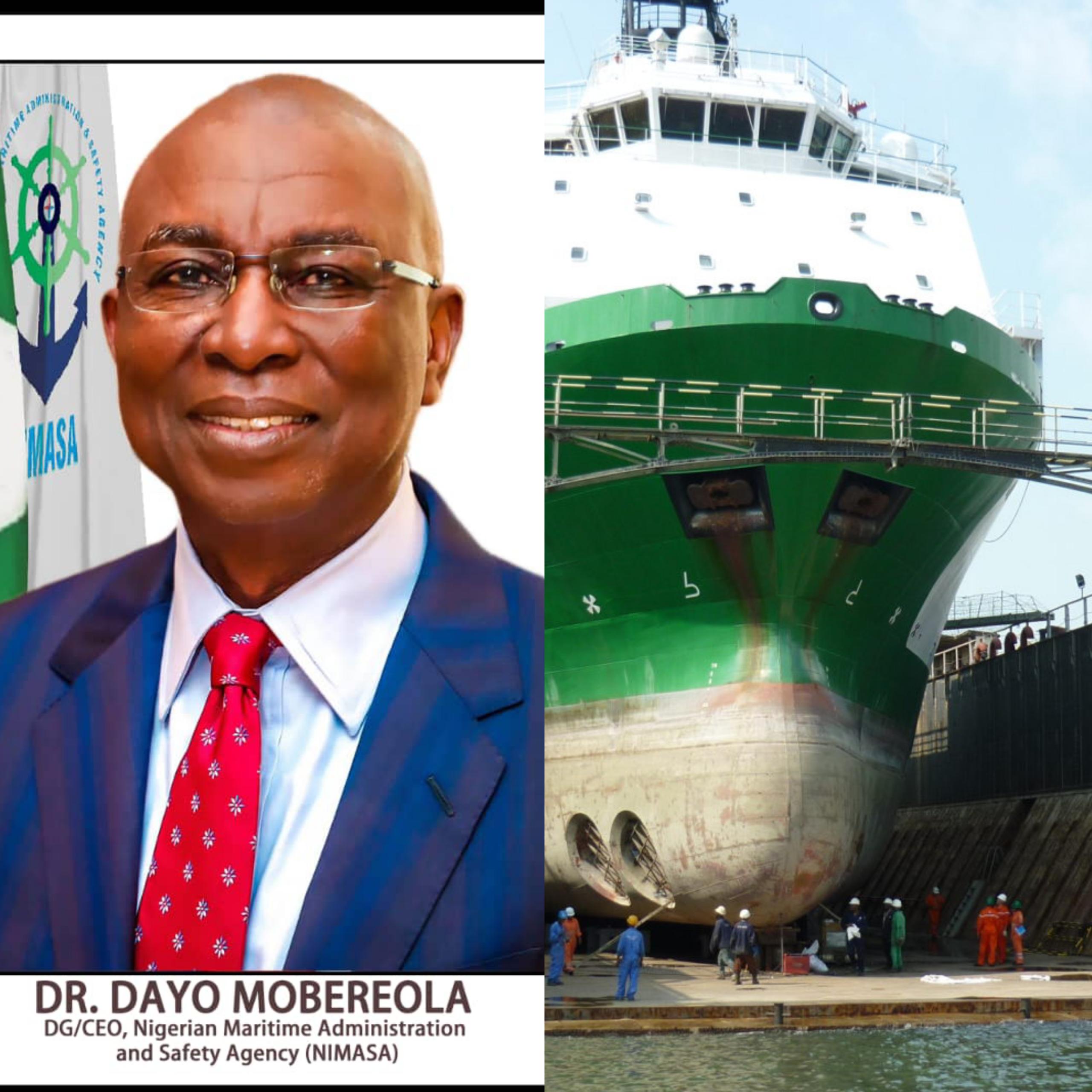
The agency said the accredited shipyards were those that have so far complied with the Agency’s stringent regulatory, safety, and operational standards.
Releasing the list of accredited shipyards in Lagos, the Director General of NIMASA, Dr. Dayo Mobereola, emphasized that the accreditation exercise forms part of the Agency’s broader drive to enhance safety and streamline operational efficiency in the maritime industry.
“Our goal is to ensure that every shipyard operating in Nigeria adheres to international standards of safety, environmental protection, and operational efficiency.
“This underscores the Agency’s sustained commitment to promoting transparency, safety, and quality service delivery in ship repair, dry-docking, and vessel construction within Nigeria,” Dr. Mobereola stated.
As a direct benefit of this accreditation, vessels to be built at these facilities will be assigned a Keel Identification Number (KIN) by the Agency’s Maritime Safety and Seafarers Standards Department at the time of construction, in accordance with the “Certificate of Plan and Specification Approval”.
This KIN will make such vessel eligible to obtain an IMO Number.
The verification and accreditation process is a continuous one, aimed at ensuring operational excellence across the nation’s maritime value chain.
By maintaining an updated and transparent registry of accredited facilities, NIMASA seeks to enhance industry confidence, protect investments, and align local operations with global best practices.

Headlines
Nigeria calls for equity, fairness, support for developing countries towards IMO’s shipping decarbornisation policy
Headlines
Nigeria seeks regional dominance in cargo throughput through port modernisation, infrastructural upgrade
Gloria Odion, Maritime reporter
Nigeria’s drive to unlock the full potential of its marine and blue economy is gaining traction, supported by a combination of policy reforms, infrastructure development, and institutional realignment under the administration of President Bola Ahmed Tinubu.
Central to this effort is a comprehensive overhaul of the nation’s port system aimed at expanding maritime capacity and positioning Nigeria as a leading trade hub in West Africa.
This multi dimensional strategy spanning legislative support, financing, regulatory reforms, and digital transformation represents what industry stakeholders describe as a long-overdue restructuring of Nigeria’s maritime framework.
The objective is to maximise opportunities under the African Continental Free Trade Area (AfCFTA) and strengthen Nigeria’s role in intra-African trade.
Historically, Nigeria’s ports have handled over 90 per cent of the country’s cargo by volume.
However, persistent challenges such as congestion, infrastructure deficits,inefficiencies and fragmented processes have constrained their competitiveness,allowing smaller regional economies to capture a larger share of maritime traffic.
Speaking at an industry forum in Lagos, the Managing Director of the Nigerian Ports Authority (NPA), Dr. Abubakar Dantsoho, emphasised the need for Nigeria’s ports to evolve in line with the demands of an increasingly integrated African market.
He noted that while Nigeria’s geographical advantage remains significant, it is no longer sufficient to guarantee leadership in regional trade.
According to him, efficiency, speed, innovation, and reliability will be the defining factors in determining dominance under AfCFTA.
The foundation for ongoing reforms was established with the creation of the Federal Ministry of Marine and Blue Economy, led by Adegboyega Oyetola.
The ministry is tasked with harmonising maritime functions and unlocking the country’s estimated $3 trillion blue economy potential.
As part of the reform agenda,the Federal Government has prioritised port modernisation.
The House of Representatives recently approved a $1 billion loan request to rehabilitate the Lagos Port Complex and Tin Can Island Port, addressing longstanding infrastructure challenges and enhancing operational efficiency.
The Nigerian Ports Authority has commenced targeted upgrades at key facilities,including berth expansion, improved cargo handling systems, and measures to reduce vessel turnaround time.
Modernisation efforts are also being extended to other ports such as Warri, Port Harcourt, Onne, and Calabar to ensure balanced national development.
In addition,new deep seaports are being developed across coastal states, including Bayelsa, Cross River, Akwa Ibom and Ondo to increase capacity and reduce pressure on existing infrastructure.
Facilities like Lekki Deep Sea Port are already transforming the maritime landscape by accommodating larger vessels and boosting cargo throughput.
Beyond physical infrastructure, the government is advancing digital reforms through the deployment of a Port Community System and the National Single Window platform.
These initiatives are designed to streamline documentation, enhance transparency, and significantly reduce cargo clearance times.
Efforts are also underway to improve multimodal connectivity through rail integration, inland dry ports, barging systems, and dedicated export corridors.
These measures aim to address long-standing bottlenecks in cargo evacuation and inland logistics.
On maritime security,Nigeria has recorded over four years without piracy incidents, largely attributed to the Deep Blue Project and improved surveillance capabilities.
This has strengthened investor confidence and created a more stable operating environment.
Private sector participation remains a key component of the reform strategy, with the NPA adopting project financing models to support infrastructure development and improve operational efficiency.
Early indicators suggest positive outcomes. Revenue generated by agencies under the Marine and Blue Economy Ministry increased significantly from approximately ₦700.79 billion in 2023 to about ₦1.83 trillion in 2025, reflecting gains from improved efficiency and regulatory reforms.
Despite its economic strength, Nigeria currently accounts for only about 25 per cent of cargo traffic in West Africa, despite contributing over 60 per cent of the region’s GDP.
Dantsoho described this disparity as evidence of underutilised potential and stressed the urgency of ongoing reforms.
With AfCFTA creating a more competitive trade environment, countries with efficient,technology driven port systems are better positioned to capture increased cargo flows.
Nigeria’s reform agenda is therefore critical to both closing existing gaps and establishing leadership in regional trade.
While challenges such as infrastructure gaps, funding constraints,and bureaucratic inefficiencies persist, stakeholders remain optimistic that sustained reforms will reposition Nigeria as a major maritime and logistics hub in Africa.
If effectively implemented and maintained,these initiatives are expected to enhance trade efficiency,reduce logistics costs,and strengthen Nigeria’s economic diversification efforts, ultimately transforming the country’s ports into key drivers of long term growth.
Headlines
Jolapamo retrieves Ikoyi home, N473.347m from ex- wife, as court awards N5m damages against estranged wife


-

 Headlines3 months ago
FIFA sends Nigeria’s Super Eagles to 2026 World Cup, awards boardroom scoreline of 3 goals to nil against DR Congo
-

 Aviation3 months ago
Why we increased cargo tariff at Airports– FAAN
-
 Aviation3 months ago
Tension de-escalates at Lagos Airport as FAAN, Cargo agents reach truce over new tariff
-

 Aviation3 months ago
Freight forwarders warn FAAN’s new charges regime could cripple airport operations
-

 Headlines3 months ago
Customs agents seek clarification on status of B’Odogwu on National Single Window platform.
-

 Headlines3 months ago
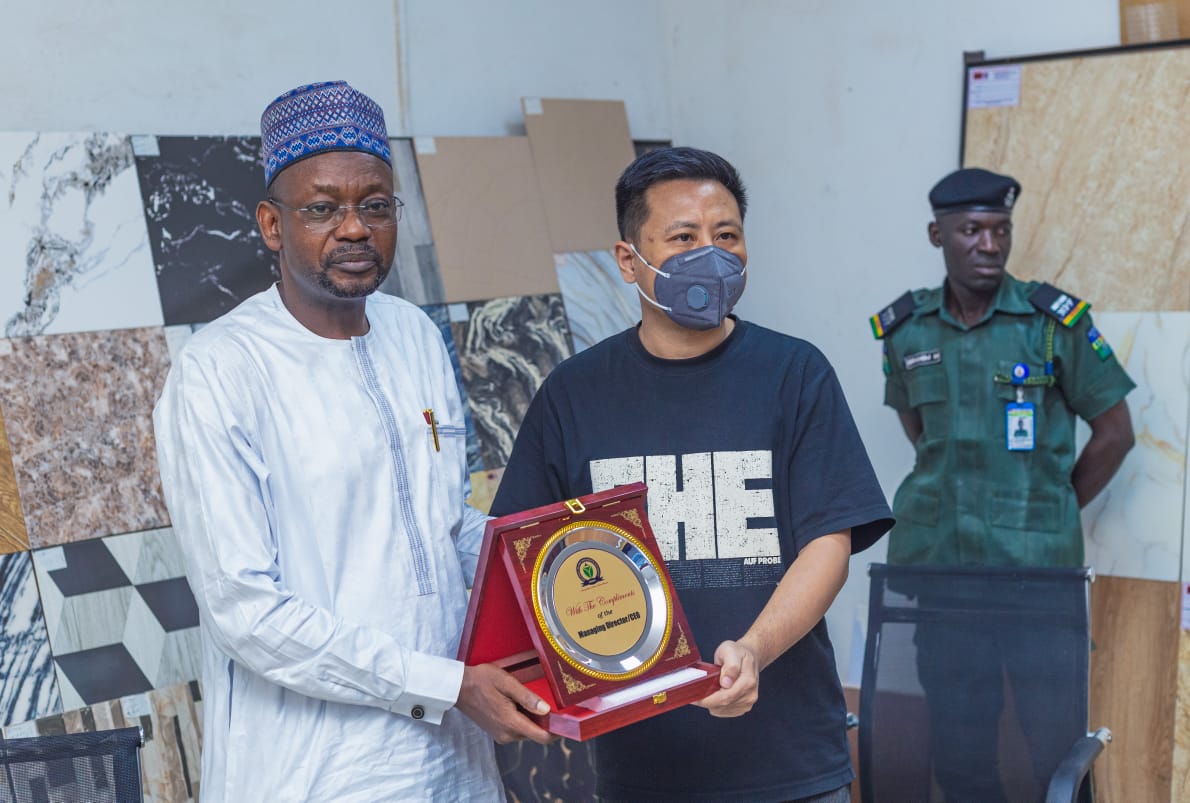
NIWA pledges to enhance business operations of factories in Kogi state