Connect with us

Headlines

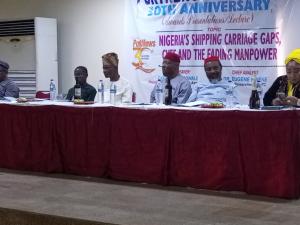
At Portnews Summit, Captain Olubowale raises concern over protracted delay in disbursement of CVFF
Funso OLOJO 
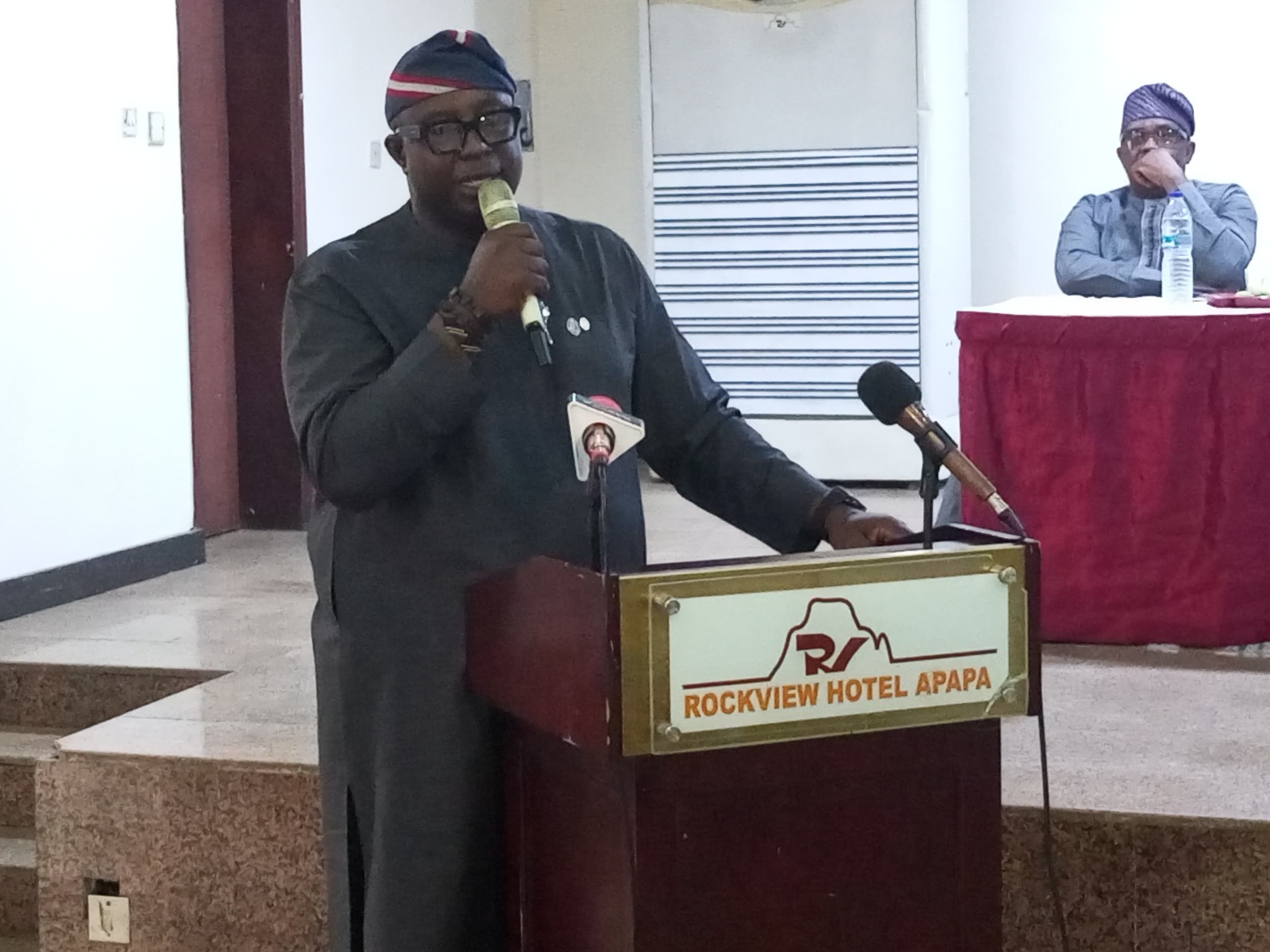
Captain Ladi Olubowale, the President of African Shipowners Association(ASA) has expressed a grave concern over the  continued delay in the disbursement of the Cabotage Vessels Financing funds(CVFF), raising doubt if the fund is still available.
Captain Olubowale, who was the lead speaker at the Portnews 2025 Summit held in Lagos on Thursday, November 6th, 2025 ,lamented that for everyday the disbursement is delayed, Nigeria is losing and its shipyard industry is dying.
The President of African Shipowners Association, who spoke on the theme of the Summit” Nigeria’s Shipping Carriage Gaps, CVFF, and the Fading Manpower” said the the expectant indigenous Shipowners have suffered series of disappointments and failed promises from government whom he accused of insincerity on the disbursement.
“The question we will ask is, is the money still available? Is the money real?
” For every day we spend not using that money, there’s a loss. For every day we spend, our shipyard industry is dying.
 It could be recalled that the successive administration of the Nigerian Maritime Administration and Safety Agency (NIMASA), the agency charged with the disbursement of the fund, have made series of unfulfilled promises since the creation of the fund in 2003.
The latest of such failed promises was made by the incumbent Director- General of NIMASA, Dr Dayo Mobereola, who said he has secured the approval of the Minister of Marine and Blue Economy, Adegboyega Oyetola, to disburse the fund in August,2025.
However Captain Olubowale said the non- disbursement of the fund has created the gap in Nigeria’s  shipping carriage.
According to him, the country carries less than 10 percent of its cargo due to lack of vessels owned by Nigerians.
“Today, Nigeria moves over 150 million tonnes of cargo annually; crude oil, gas, containers, and dry bulk.
“Yet, less than 10% of that trade is carried by Nigerian-owned  vessels.
Foreign shipping lines dominate our trade. This means billions of dollars in freight revenue leave our economy
every year.
” In 2023 alone, freight payments exceeded $9 billion, mostly earned by non-Nigerian operators.
“This dependence makes us vulnerable to global shocks and limits our economic sovereignty.”
“Nigeria exports oil, LNG, and agricultural
products. Yet our shipping presence is
minimal. We’ve become cargo owners without shipping power.
“This gap weakens our trade balance,
employment base, and technical capacity.

“Every vessel we don’t own represents lost jobs, lost taxes, and lost experience” Captain Olubowale lamented.
Prince Wale Oni, the Publisher of Portnews and the convener of the annual maritime summit recalled the cherry years of Nigerian National Shipping Line(NNSL) in the 80s when Nigeria was the proud owners of several sea- going vessels and vibrant Seafarers.
He however lamented that few years after, the NNSL and all its vessels have gone under while the Seafarers of those years have either died or old without much effort of replacement them.
“At the zenith of  its glory, the Nigerian National Shipping Line paraded about thirty ocean going vessels with brilliant and respected master mariners like our captain lheanacho resplendent behind the wheels. Good and shining ambassadors of Nigeria.
“Ironically, this only lasted from the pre oil boom years of the 60s through the 70s up until the 80s.
“But where are we today? Despite the survival stamina of our industry, the NNSL and all its vessels have gone under.
“Where are the hundreds of super trained staff of NNSL and other crew of MV Kudirat Abiola, MV Binta Yaradua? We all remember the fate of MV Abuja” Prince Oni recalled with nostalgia.
He however queried the propriety of keeping huge sum of accrued CVFF idle by NIMASA while indigenous shipping, which is supposed to benefit from the fund are suffering.
“NIMASA is  to superintend the Coastal and lnland Shipping Act of 2003 otherwise known as Cabotage Vessels Finance Fund.
“The Cabotage Vessels Finance Fund primarily  provides funds for indigenous ship owners for medium size coastal vessels acquisition and maintenance.
” The fund was to be sourced through 2 percent surcharge and other levies.
“Between 2003, it is being mouthed that about 800 million dollars has been realized into the CVFF purse
“Some rumour it to be one billion dollars.
“Why can’t government tell us the exact amount? Why this level of opaqueness.
“Why this humongous volume of public money remain idle for so long, especially now that virtually all the indigenous companies in coastal carriage business have gone under ?
” Ask Chief Jolapamo,  ask Otunba Sola Adewunmi of Nigeria l indigenous Ship Owners Association, (NlSA).
“Lets us imagine the volumes of cargo and the revenue being lost to smart foreigners in the West Coast.
“I admit that a few upstarts have taken advantage of  Dangote Refinery and big time tank farms. But on a scrutiny, are they really in charge?
 “Must we continue playing second fiddle even to our West African brothers in this trade?
“At this juncture, l will salute NIMASA for keeping such large sums unscathed in its vault for  over twenty years.
” It is a national record in fidelity.
But, why would a nation deem it wise to save about 800 million dollars for so long without finding it expedient to dispense it for the purpose it was generated?
“When thousands of its skilled seamen, master mariners, professionals trained at exorbitant costs in the best shipping schools around the world are loafing around, wasting away?” the Publisher queried
Continue Reading
Click to comment

Leave a Reply

Your email address will not be published. Required fields are marked *

Headlines

Nigeria calls for equity, fairness, support for developing countries towards IMO’s shipping decarbornisation policy 
Gloria Odion, Maritime reporter 
‎Nigeria has urged the international maritime community to ensure fairness, equity, and targeted support for developing countries in the global transition to net-zero emissions in shipping.
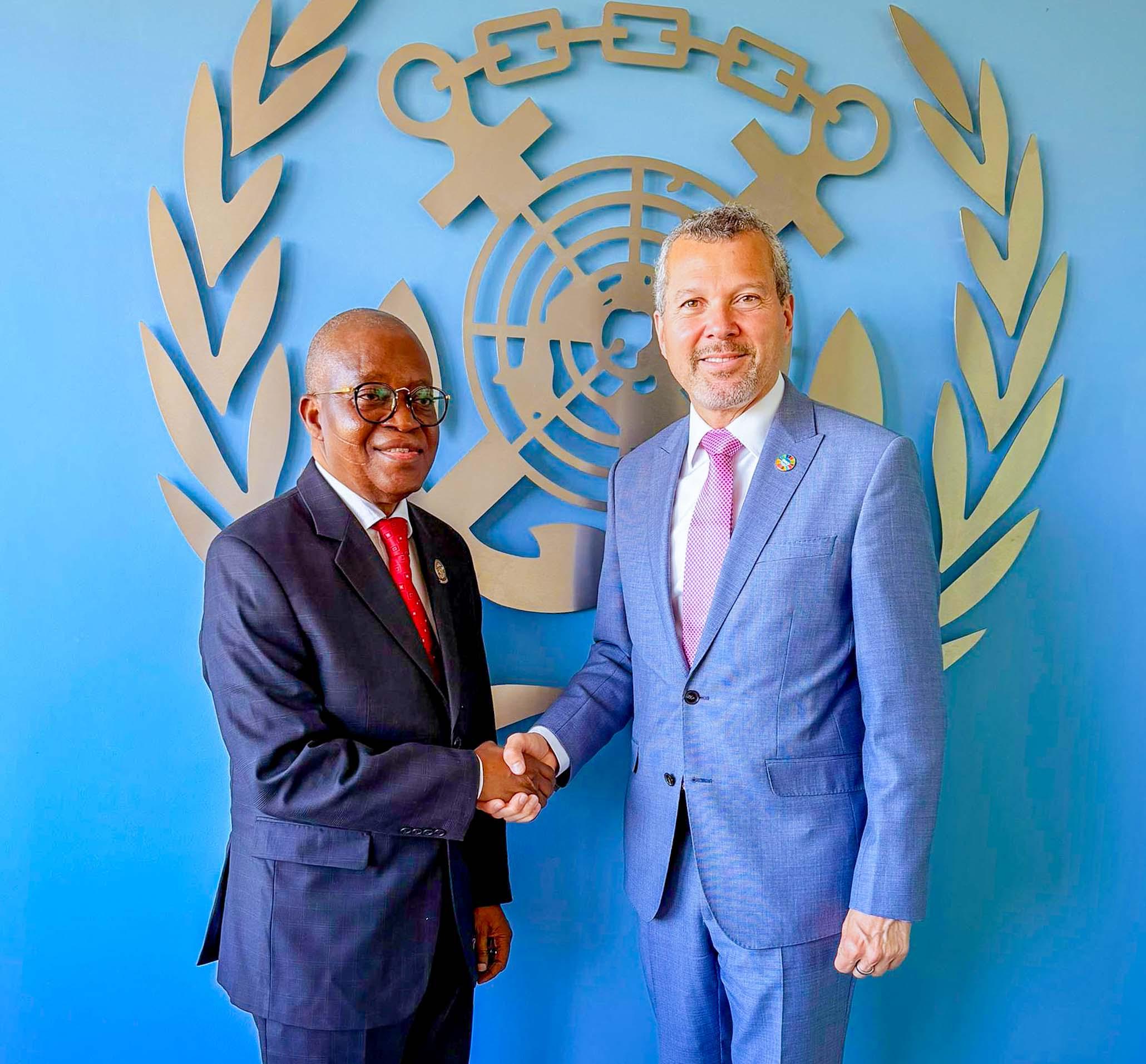
‎The Minister of Marine and Blue Economy, Adegboyega Oyetola, made this position known while speaking at the 84th session of the Marine Environment Protection Committee (MEPC 84) of the International Maritime Organization (IMO) in London.
He reaffirmed Nigeria’s commitment to decarbonisation, noting that progress must be guided by frameworks that reflect the economic realities and capacities of developing nations.
‎Oyetola stressed that efforts to achieve net-zero emissions by 2050 should be aligned with broader sustainable development objectives.
‎On the sidelines of the meeting, the Minister held high-level bilateral discussions with the IMO Secretary-General, Arsenio Dominguez, and the President of Saudi Arabia’s Transport General Authority, H.E. Fawaz Al Sehali.
 The engagements focused on strengthening cooperation in key areas, including maritime security, capacity building, blue economy development, and promoting an inclusive and balanced energy transition.
‎He reiterated Nigeria’s commitment to a constructive partnership with the IMO, anchored on shared priorities such as maritime safety, institutional capacity development, and sustainable growth of the blue economy.
‎In his remarks, Dominguez commended Nigeria’s commitment to maritime governance and expressed appreciation for the warm reception during his recent visit, including his engagement with President Bola Ahmed Tinubu.
He described the visit as a strong indication of Nigeria’s dedication to advancing global maritime standards.
‎The IMO Secretary-General also praised Nigeria’s leadership in improving maritime security in the Gulf of Guinea, noting the significant reduction in piracy incidents and enhanced regional collaboration.
He added that Nigeria’s approach provides a useful model for other regions.
‎Discussions further addressed Nigeria’s growing role within the IMO Council, ongoing reforms in port modernisation and digitalisation, and initiatives to strengthen human capital in line with international maritime standards.
‎The bilateral meeting with Saudi Arabia highlighted the strengthening of relations between both countries, with a shared commitment to continued cooperation and mutual support within the IMO framework.
Continue Reading

Headlines

Nigeria seeks regional dominance in cargo throughput through port modernisation, infrastructural upgrade
Gloria Odion, Maritime reporter 

Nigeria’s drive to unlock the full potential of its marine and blue economy is gaining traction, supported by a combination of policy reforms, infrastructure development, and institutional realignment under the administration of President Bola Ahmed Tinubu.

Central to this effort is a comprehensive overhaul of the nation’s port system aimed at expanding maritime capacity and positioning Nigeria as a leading trade hub in West Africa.

This multi dimensional strategy spanning legislative support, financing, regulatory reforms, and digital transformation represents what industry stakeholders describe as a long-overdue restructuring of Nigeria’s maritime framework.

The objective is to maximise opportunities under the African Continental Free Trade Area (AfCFTA) and strengthen Nigeria’s role in intra-African trade.

Historically, Nigeria’s ports have handled over 90 per cent of the country’s cargo by volume.

However, persistent challenges such as congestion, infrastructure deficits,inefficiencies and fragmented processes have constrained their competitiveness,allowing smaller regional economies to capture a larger share of maritime traffic.

Speaking at an industry forum in Lagos, the Managing Director of the Nigerian Ports Authority (NPA), Dr. Abubakar Dantsoho, emphasised the need for Nigeria’s ports to evolve in line with the demands of an increasingly integrated African market.

He noted that while Nigeria’s geographical advantage remains significant, it is no longer sufficient to guarantee leadership in regional trade.

According to him, efficiency, speed, innovation, and reliability will be the defining factors in determining dominance under AfCFTA.

The foundation for ongoing reforms was established with the creation of the Federal Ministry of Marine and Blue Economy, led by Adegboyega Oyetola.

The ministry is tasked with harmonising maritime functions and unlocking the country’s estimated $3 trillion blue economy potential.

As part of the reform agenda,the Federal Government has prioritised port modernisation.

The House of Representatives recently approved a $1 billion loan request to rehabilitate the Lagos Port Complex and Tin Can Island Port, addressing longstanding infrastructure challenges and enhancing operational efficiency.

The Nigerian Ports Authority has commenced targeted upgrades at key facilities,including berth expansion, improved cargo handling systems, and measures to reduce vessel turnaround time.

Modernisation efforts are also being extended to other ports such as Warri, Port Harcourt, Onne, and Calabar to ensure balanced national development.

In addition,new deep seaports are being developed across coastal states, including Bayelsa, Cross River, Akwa Ibom and Ondo to increase capacity and reduce pressure on existing infrastructure.

Facilities like Lekki Deep Sea Port are already transforming the maritime landscape by accommodating larger vessels and boosting cargo throughput.

Beyond physical infrastructure, the government is advancing digital reforms through the deployment of a Port Community System and the National Single Window platform.

These initiatives are designed to streamline documentation, enhance transparency, and significantly reduce cargo clearance times.

Efforts are also underway to improve multimodal connectivity through rail integration, inland dry ports, barging systems, and dedicated export corridors.

These measures aim to address long-standing bottlenecks in cargo evacuation and inland logistics.

On maritime security,Nigeria has recorded over four years without piracy incidents, largely attributed to the Deep Blue Project and improved surveillance capabilities.

This has strengthened investor confidence and created a more stable operating environment.

Private sector participation remains a key component of the reform strategy, with the NPA adopting project financing models to support infrastructure development and improve operational efficiency.

Early indicators suggest positive outcomes. Revenue generated by agencies under the Marine and Blue Economy Ministry increased significantly from approximately ₦700.79 billion in 2023 to about ₦1.83 trillion in 2025, reflecting gains from improved efficiency and regulatory reforms.

Despite its economic strength, Nigeria currently accounts for only about 25 per cent of cargo traffic in West Africa, despite contributing over 60 per cent of the region’s GDP.

Dantsoho described this disparity as evidence of underutilised potential and stressed the urgency of ongoing reforms.

With AfCFTA creating a more competitive trade environment, countries with efficient,technology driven port systems are better positioned to capture increased cargo flows.

Nigeria’s reform agenda is therefore critical to both closing existing gaps and establishing leadership in regional trade.

While challenges such as infrastructure gaps, funding constraints,and bureaucratic inefficiencies persist, stakeholders remain optimistic that sustained reforms will reposition Nigeria as a major maritime and logistics hub in Africa.

If effectively implemented and maintained,these initiatives are expected to enhance trade efficiency,reduce logistics costs,and strengthen Nigeria’s economic diversification efforts, ultimately transforming the country’s ports into key drivers of long term growth.

Continue Reading

Headlines

Jolapamo retrieves Ikoyi home, N473.347m from ex- wife, as court awards N5m damages against estranged wife 
Funso OLOJO with agency report 
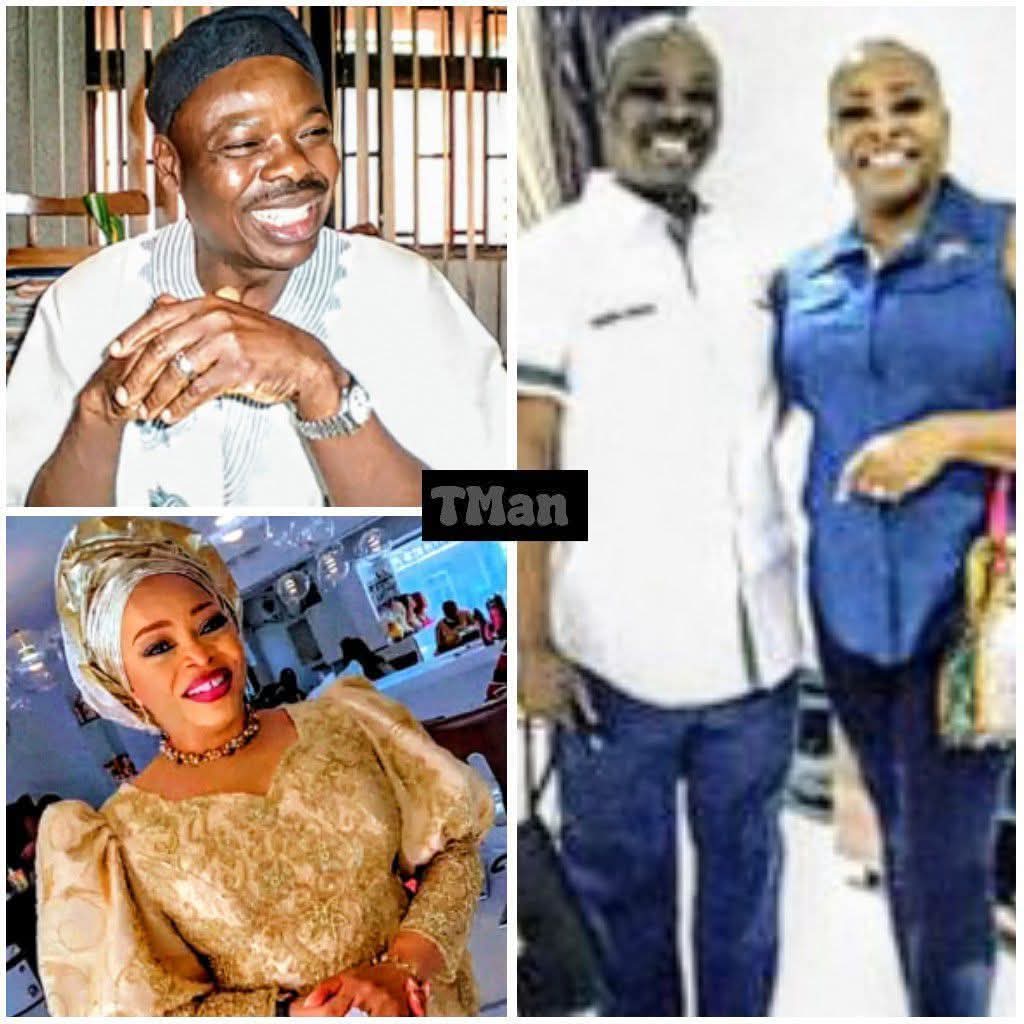
Chief Isaac Morakinyo Jolapamo, the CEO of Molap Shipping Company, has won a hard- fought and long- drawn legal battle against his ex- wife , Ms Olufunke Otti, a former staff of the Nigeria Television Authority(NTA) and a Lagos – based business woman.
Delivering judgment in suit No. LD/3034LM/2022 on March 26th, 2026, Justice Olufolake Olufolashade Adewunmi-Oshin, declared that the property located at 23A & B Olusegun Aina Street, Parkview Estate, Ikoyi, Lagos, rightfully belongs to Chief Jolapamo and not Ms. Otti.
The court consequently ordered her to relinquish the property to him.
In addition, the court directed Ms. Otti to refund N410,347,000.00 to Chief Jolapamo, representing the outstanding balance from the proceeds of the sale of two vessels.
 She was also ordered to remit N63,000,000.00, being rental income collected from tenants between 2018 and 2021.
Furthermore, the court awarded N5 million in general damages against her.
Ms. Otti and Chief Jolapamo were formerly married.
Their relationship began at the Mountain of Fire and Miracles Ministries (MFM), where Chief Jolapamo had gone in search of spiritual and personal support during a difficult period.
 Ms. Otti, a senior member of the church, was assigned to assist him, and their relationship eventually developed into a romantic one.
The couple formalized their union on February 23rd, 2017, at the Federal Marriage Registry in Ikoyi, Lagos.
During the marriage, Chief Jolapamo entrusted his wife with significant business responsibilities, including the sale of two vessels—M.T. MOR Prosperity and M.T. Power—with instructions to use the proceeds to acquire a matrimonial home in Parkview Estate.
Ms. Otti sold the vessels for N810,347,000.00 and purchased the property as directed.
However, she allegedly registered the property solely in her name without her husband’s knowledge.
Their relationship later collapsed dramatically in 2019 after Ms. Otti reportedly informed her husband via WhatsApp messages, while he was abroad, that she was no longer interested in the marriage and asked him to vacate the home. They had since lived apart.
This revelation marked the beginning of a prolonged legal dispute between the couple, who had ceased living together as husband and wife since March 2019.
 Their marriage was officially dissolved in April 2025.
With the court’s judgment delivered on March 26th, 2026, Chief Jolapamo has now successfully reclaimed his property and financial entitlements.
Justice Michael Awe of Osun State High Court, Osogbo, had dissolved the eight-year-old marriage in 2025 between the Septuagenarian former President of Nigerian Indigenous Shipowners Association (NISA) and partner over threat to life by wife.
Continue Reading

Trending