
Headlines
Efforts to Revive the Abuja–Kaduna Train Service: Progress, Promises, and Struggles

Muhammad Iskeel Abdullahi,
The scene at Idu Train Station in Abuja reflects an institution actively working to recover from a challenging year marked by a major derailment in August 2025.
Visible repairs, coordinated efforts among staff, and a clear focus on restoration indicate that the Nigerian Railway Corporation (NRC) is genuinely committed to revitalizing the Abuja–Kaduna train service (AKTS).
However, while tangible progress is evident, deep-rooted structural issues ranging from limited rolling stock to funding constraints continue to hinder full recovery and long-term sustainability.
On the ground, substantial repair work is underway following the August 26, 2025, derailment at Asham, which involved a Kaduna-bound train with 618 passengers.
NRC engineers successfully re-railed and recovered all affected coaches and locomotives shortly after the incident, moving them to workshops for comprehensive repairs.
One previously damaged locomotive has been fully restored and is poised to re-enter service, providing concrete evidence of measurable advancement.
Mechanics, engineers, and technicians remain actively engaged in rehabilitating other accidented units, demonstrating a committed, hands-on recovery approach.
Service quality on the route has remained consistent in terms of passenger experience; clean coaches, reliable onboard amenities, and adherence to safety protocols, but the frequency has been impacted.
Following resumption on October 1, 2025, operations typically run with two daily round trips (morning and afternoon departures from both Idu and Rigasa stations), with Wednesdays often dedicated to maintenance.
This reduced schedule stems primarily from a shortage of operational locomotives rather than any intentional reduction in standards.
NRC management has indicated that adding a third daily trip is viable with the availability of a standby locomotive for redundancy, a critical measure to prevent disruptions from mechanical faults.
Journey times, currently around three hours (depending on temporary speed restrictions post-derailment), were initially lengthened as a precautionary safety step.
Officials have stated that gradual reductions in travel time are expected as system confidence builds and repairs stabilize, potentially returning closer to the pre-incident average of about 2 hours and a quarter.
Management’s projections suggest that enhanced frequency, optimized travel times, and improved reliability could be achieved by early 2026, assuming no major setbacks.
Recent initiatives, such as the nationwide 50% Yuletide fare discount in December 2025, have boosted passenger turnout, underscoring demand and operational capability when supported adequately.
Human resource development is another key area. NRC structures training into in-house, local outdoor, and international programs.
Budgetary and logistical limitations have shifted reliance toward weekly in-house sessions to maintain core competencies, sponsored foreign training by CCECC and some few technical partners remain one of the only hope for foreign training.
While in house training is effective for immediate needs, this falls short of the expected, as there is need for more advanced, hands-on foreign training.
A report from the Nigerian Safety Investigation Bureau (NSIB) following the 2025 derailment highlighted maintenance lapses, though NRC has contested some findings and implemented internal corrections.
The overarching challenge remains government funding, essential for any meaningful rail revival.
Capital-intensive requirements fleet expansion, spare parts procurement, infrastructure upgrades, and advanced staff training cannot rely solely on internal revenue or short-term fixes.
Inconsistent allocations have forced practices like parts cannibalization, where components are stripped from damaged units to keep others running.
This offers temporary solutions but depletes the asset pool, exacerbating vulnerabilities over time.
Ticket access also demands urgent attention.
Despite private sector controlled e-ticketing platforms and reduced trips at times, complaints of racketeering persist, with reports of touts and insiders hoarding tickets for resale at inflated prices. Such practices erode public trust, skew passenger data, and undermine revenue integrity.
NRC has previously investigated similar allegations and increased service frequencies to mitigate this, but stronger enforcement and digital improvements are needed.
Fleet age is a defining long-term issue. Introduced primarily in 2016, the core rolling stock is now approaching a decade in service without new equipment acquisition to complement aging ones and to support passengers increasing demands inline with global recommendations for replacement every 4 to 5 years in high-utilization environments (though some standards suggest major overhaul may be recommended).
This aging infrastructure impacts safety, reliability, scheduling flexibility, and growth potential.
In summary, progress at Idu and along the corridor is undeniable: repairs advancing, services resumed with enhanced safety checks, and clear timelines for improvements.
Promises from NRC leadership are specific and tied to achievable milestones.
Yet pitfalls abound limited redundancy, aging equipment, external training training gaps, funding shortfalls, and governance issues like racketeering.
True revival of the Abuja–Kaduna service demands more than NRC’s dedicated efforts; it requires sustained government commitment through predictable funding, strategic fleet renewal, periodic refurbishment institutional reforms, and robust oversight.
Rail transport is inherently capital-intensive, and without shifting from episodic support to a long-term modernization plan, recovery will remain fragile.
Nigerians eagerly awaits the NRC management planned revitalization, restoration, expansion and modernization plans, as they promised to optimize existing infrastructure as well as improving customer experience. The wait is getting too long.
With consistent investment and policy clarity, however, the route can transition from cautious resumption to dependable, high-frequency service, restoring public confidence and unlocking economic benefits for northern Nigeria.
Muhammad Iskeel Abdullahi is of the Journalists For Development

Continue Reading
Headlines
Greg Ogbeifun confirms chairmanship of 10th AMSAY Conference Anniversary on May 27th.
Gloria Odion, Maritime reporter
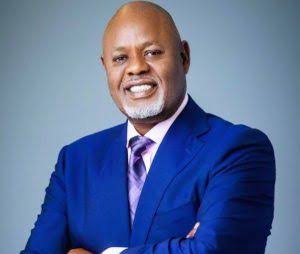
The organisers of the Annual Maritime Students and Youth (AMSAY) Conference have announced that renowned ship owner and Chairman of Starzs Investment Company Ltd, Engr Greg Ogbeifun will chair the 10th anniversary of the event scheduled to hold in Lagos on May 27, 2026.
The announcement comes as preparations intensify for what is widely regarded as a landmark edition of the youth-focused maritime conference.
The 10th AMSAY Conference marks a decade of sustained youth engagement, innovation, and impact in Nigeria’s maritime sector.
It is expected to bring together industry leaders, policymakers, stakeholders, and young professionals from across the maritime ecosystem.
Engr. Ogbeifun’s confirmation as Chairman adds significant weight to the anniversary event.
He previously served as the Pioneer Chairman during the maiden edition of the conference in 2016, and his return ten years later is described by the organisers as both symbolic and strategic.
According to the Convener and CEO of Platforms Communications, Mr Sylvanus Obasi, the decision reflects a deliberate effort to connect the conference’s origins with its current status, noting that the AMSAY Conference has evolved significantly over the past decade.
He highlighted that several key initiatives now associated with the conference were not part of its original design.
Among these are the Best Graduating Maritime Students Awards (BEGMASA); the Fola Ojutalayo Annual Maritime Speech-Making Competition (FOAMSC), including the Maritime Career Mentoring Program (M-CAMP).
These programmes, according to him, have become integral components and offshoot of the AMSAY Conference brand.
Speaking further, Obasi stated that the initiatives have delivered measurable impact in youth development and professional capacity building, even as he further described the growth of these programmes as evidence of the conference’s commitment to continuous improvement.
“Bringing Engr. Ogbeifun back after ten years is a strategic move. It gives us the opportunity to reflect on our journey and showcase our achievements.”, the Convener said, adding that the anniversary edition will also provide a platform to draw from Engr Greg’s wealth of experience and industry insight.
Also speaking, the Chairman, Central Planning Committee of AMSAY Conference, Mr Nnamdi Eronini hinted that the 10th AMSAY Conference is expected to feature robust discussions, mentorship engagements, and knowledge-sharing sessions.
He reaffirmed the organisers commitment to advancing the maritime sector through sustained youth engagement and innovation, noting that the event is positioned as a leading platform for shaping the future of Nigeria’s maritime industry.
Customs
Oyo/Osun Customs Command collects 27.2billon revenue in Q1 2026
Funso OLOJO, Editor
The Oyo/Osun Command of the Nigeria Customs Service (NCS) has posted an impressive 95% increase in revenue collection in the first quarter of 2026 compared to the same period in 2025.
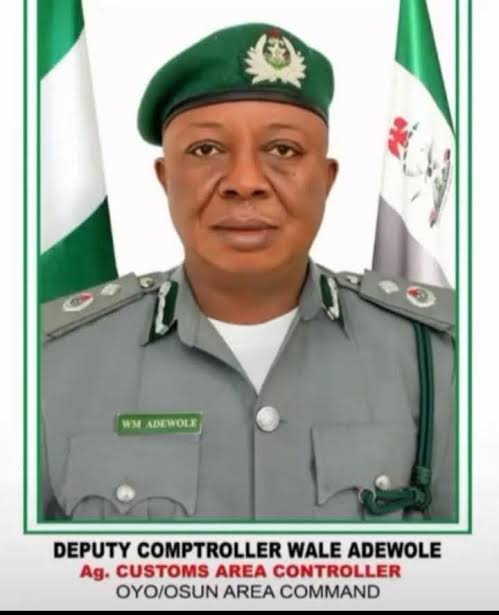
Led by Acting Comptroller Wale Moses Adewole, the command generated ₦27.2 billion between January and March 2026, up from ₦13.97 billion in Q1 2025.
A breakdown of the generated revenue revealed that the command raked in a total sum of N5,977,766,941.65 in January 2026 which was about N2 billion lower (23% down) than the total sum of N7,804,408,776.88 collected in the same period of 2025.
However, despite a dip in January, revenue rebounded strongly in February and March.
In February , the command’s revenue collection jumped up astronomically to a total sum of N8,767,974,864.40 against the very low total revenue of N2,289,193,870 realized in the corresponding period of 2025.
This year’s February revenue is over 383% higher than the revenue collected the same period last year.
February’s performance was the standout, with collections nearly quadrupling year-on-year.
In March 2026, Acting Comptroller Adewole’s administrative ingenuity and thoroughness further shored up the revenue generation of the command in the month under review to a total sum of N12,454,516,158.62.
In the corresponding period of last year, the command’s generated revenue was a patry sum of N3,877,668,667.
This year’s March revenue achievement represents 321% rise over last year’s.
Acting Comptroller Adewole’s administrative reforms and enforcement measures are credited with driving the surge.
Overall, the command’s Q1 results underscore a significant improvement in efficiency and compliance, positioning Oyo/Osun as one of the strongest performing Customs Commands in the country.
Headlines
NRC decries ceaseless attacks, vandalism on trains along Abuja- Kaduna rail corridor
Funso OLOJO, Editor
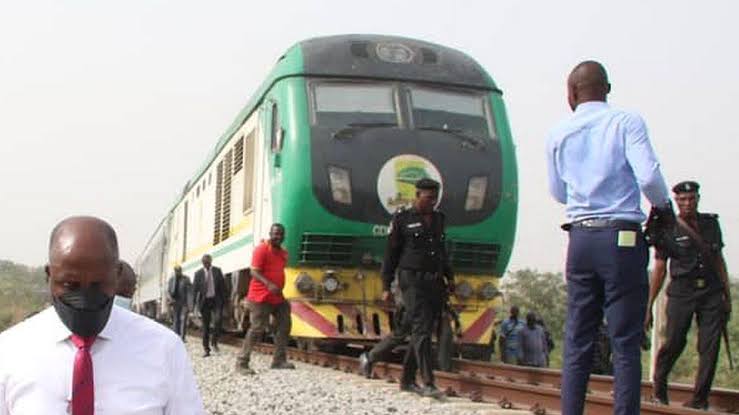
The Nigerian Railway Corporation (NRC) has lamented the ceaseless attacks on its train operations along the notorious Abuja–Kaduna rail corridor by suspected vandals and criminal elements.
In a statement by the Corporation,the latest incident occurred around Kilometer 177 along the Abuja–Kaduna rail corridor, where some unknown persons reportedly gathered along the rail track and began pelting stones at a moving train, leading to damage to the windscreen of the leading locomotive.
The NRC noted with deep concern that within the last two weeks, similar attacks have also been witnessed in other locations, including Gidan Busa/Sarki Gora Village, Kakau District, Chikun Local Government Area of Kaduna State, among others, a development it feared is posing serious danger to railway operations, passengers, and operational personnel.
The NRC management disclosed that similar incidents have so far been recorded in more than six locations along the corridor, thereby worsening the already challenging and stressful operational conditions under which the Corporation continues to provide essential transport services to Nigerians.
The NRC stated that these persistent attacks not only endanger lives and damage critical railway infrastructure, but also constitute acts of economic sabotage capable of disrupting national transportation and undermining the huge investments of the Federal Government in the railway sector.
The Corporation however assured that despite the unfortunate development, train operations have continued with necessary safety precautions and strict operational vigilance by railway personnel who have continued to demonstrate commitment and professionalism in ensuring that passengers reach their destinations safely.
The Management of the Corporation specially acknowledged the efforts and support of security operatives working tirelessly with the NRC to secure railway corridors and safeguard passengers and railway assets despite the persistent attacks.
It said it is currently working closely with security agencies, community leaders, and other relevant stakeholders to strengthen surveillance along the corridor, identify the perpetrators, and bring them to justice.
The NRC therefore called on residents and communities along railway corridors to support efforts aimed at protecting railway infrastructure by reporting suspicious activities and discouraging criminal attacks on trains and railway installations.
NRC further expressed concerns that continuous attacks on railway operations could negatively affect smooth service delivery if urgent collective action is not taken to curb the menace.
“The Nigerian Railway Corporation remains committed to ensuring safe, secure, and efficient train operations across the country and assures passengers that every necessary measure is being taken to safeguard lives and railway assets” the statement concluded.
-

 Headlines3 months ago
FIFA sends Nigeria’s Super Eagles to 2026 World Cup, awards boardroom scoreline of 3 goals to nil against DR Congo
-

 Aviation3 months ago
Why we increased cargo tariff at Airports– FAAN
-
 Aviation3 months ago
Tension de-escalates at Lagos Airport as FAAN, Cargo agents reach truce over new tariff
-

 Aviation3 months ago
Freight forwarders warn FAAN’s new charges regime could cripple airport operations
-

 Headlines3 months ago
Customs agents seek clarification on status of B’Odogwu on National Single Window platform.
-

 Headlines3 months ago
Niger- Delta activist defends Tantita pipeline surveillance contract, warns against sabotage