
Headlines
Lekki Port boosts Nigeria’s trade surge as NPA releases 2025 operational performance

Funso OLOJO, Editor
The Lekki Deep Sea Port played a significant role in the trade surplus recorded by the Nigerian ports Authority (NPA) in 2025 with a staggering 129.3m metric tons of cargo throughout over the 2024 figures of 103.6m metric tons, representing 24.8 percent increase.
According to the operational performance report released by the NPA, Lekki Port was identified as the leading port in Nigeria, handling 40.6 percent of the nation’s total cargo throughput.
Onne Port followed with 19.1 percent, and Apapa Port handled 16.7 percent.
In addition to volume, Lekki Port attracted the largest vessels, with an average Gross Registered Tonnage (GRT) of 55,712, slightly higher than Onne Port at 53,022 GRT.
Apapa and Tin Can Island Port received ships averaging 33,251 GRT and 36,909 GRT, respectively, while Delta Ports handled vessels averaging 17,414 GRT.
The report underscores a structural shift in vessel traffic: although Tin Can Island Port recorded the highest frequency of ship arrivals accounting for 22.7 percent of total ship calls, Lekki and Onne are increasingly receiving the industry’s “heavyweight” vessels, enhancing Nigeria’s capacity to handle larger, more valuable cargoes.
Overall, total ship calls rose by nearly 12 percent to 4,477 vessels, reflecting broad-based growth across all operational metrics.
The report revealed that total cargo throughput surged by 24.8 percent rising from approximately 103.6 million metric tons in 2024 to over 129.3 million metric tons in 2025.
The report emphasized that the Managing Director of the Nigerian Ports Authority (NPA), Dr. Abubakar Dantsoho, described the growth as one of the most significant annual increases in Nigeria’s maritime history, noting that the milestone strengthens the country’s position as a more competitive and strategic player in regional and global trade.
While imports continue to dominate overall cargo traffic, the report highlights a steady rise in outward trade, with exports accounting for 39.0 percent of total cargo throughput.
Inward traffic represented 59.2 percent, and transshipment contributed 1.8 percent.
Analysts view the growth in export volumes as a direct validation of the Federal Government’s economic diversification initiatives, aimed at reducing dependence on crude oil and promoting non-oil sector exports.
Containerized cargo, a key indicator of export trade activity, grew significantly.
Total container traffic increased by 25.7 percent, surpassing 2.1 million Twenty-foot Equivalent Units (TEUs).
Of this, export containers grew by 3.1 percent, while import-laden containers surged by 32.8 percent.
The report also noted a remarkable 205.8 percent increase in transshipment containers, signaling Nigeria’s emergence as a pivotal regional logistics and trade hub.
Liquid bulk cargo, including fuel and chemicals, remained the dominant commodity at 54.7 percent, while containerized cargo accounted for 24 percent.
Analysts note that the increasing size and sophistication of vessel traffic, coupled with container growth, points to a maritime sector gradually aligning with global shipping standards.
The report also highlights the rising importance of transshipment cargo, particularly for containerized goods destined for other West and Central African ports.
The 205.8 percent surge in transshipment containers positions Nigeria as a strategic regional hub, attracting international shipping lines and increasing revenue for the Nigerian Ports Authority.
The 2025 NPA Operational Performance Report signals a transformative phase in Nigeria’s maritime industry.
Export-led growth, rising container traffic, and the strategic role of Lekki Port illustrate that the nation is not only handling more cargo but is also diversifying the type of goods moving through its ports.
“This is a pivotal moment for Nigeria’s trade ecosystem,” maritime analysts said.
“The growth in exports and transshipment reflects the success of policy reforms aimed at reducing reliance on oil revenues, while enhancing the competitiveness of Nigerian ports in regional trade.”
With the nation’s ports showing resilience and dynamism, the report reinforces the Federal Government’s efforts to expand non-oil exports, attract investment into port infrastructure, and integrate Nigeria more fully into global supply chains.
As Nigeria continues to welcome larger vessels and diversify its cargo base, the 2025 NPA report positions Lekki Port and the broader port network as central to the country’s economic diversification strategy, regional trade prominence, and global maritime ambitions.
Looking ahead, Dantsoho expressed confidence that the next phase of growth will be driven by the Federal Government–approved bold port modernization programme and the implementation of the National Single Window system.
The comprehensive port modernization project is designed to overhaul ageing infrastructure, deepen berths, rehabilitate quays, expand cargo-handling capacity, and deploy advanced digital solutions across Nigeria’s port network.
The initiative is expected to improve vessel turnaround time, reduce cargo dwell time, enhance safety standards, and significantly boost operational efficiency across all terminals.






Customs
Oyo/Osun Customs Command collects 27.2billon revenue in Q1 2026

Funso OLOJO, Editor
The Oyo/Osun Command of the Nigeria Customs Service (NCS) has posted an impressive 95% increase in revenue collection in the first quarter of 2026 compared to the same period in 2025.
Led by Acting Comptroller Wale Moses Adewole, the command generated ₦27.2 billion between January and March 2026, up from ₦13.97 billion in Q1 2025.
A breakdown of the generated revenue revealed that the command raked in a total sum of N5,977,766,941.65 in January 2026 which was about N2 billion lower (23% down) than the total sum of N7,804,408,776.88 collected in the same period of 2025.
However, despite a dip in January, revenue rebounded strongly in February and March.
In February , the command’s revenue collection jumped up astronomically to a total sum of N8,767,974,864.40 against the very low total revenue of N2,289,193,870 realized in the corresponding period of 2025.
This year’s February revenue is over 383% higher than the revenue collected the same period last year.
February’s performance was the standout, with collections nearly quadrupling year-on-year.
In March 2026, Acting Comptroller Adewole’s administrative ingenuity and thoroughness further shored up the revenue generation of the command in the month under review to a total sum of N12,454,516,158.62.
In the corresponding period of last year, the command’s generated revenue was a patry sum of N3,877,668,667.
This year’s March revenue achievement represents 321% rise over last year’s.
Acting Comptroller Adewole’s administrative reforms and enforcement measures are credited with driving the surge.
Overall, the command’s Q1 results underscore a significant improvement in efficiency and compliance, positioning Oyo/Osun as one of the strongest performing Customs Commands in the country.
Headlines
NRC decries ceaseless attacks, vandalism on trains along Abuja- Kaduna rail corridor
Funso OLOJO, Editor
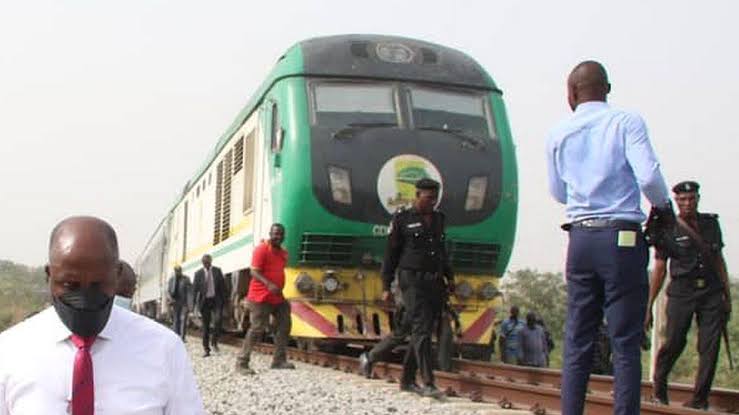
The Nigerian Railway Corporation (NRC) has lamented the ceaseless attacks on its train operations along the notorious Abuja–Kaduna rail corridor by suspected vandals and criminal elements.
In a statement by the Corporation,the latest incident occurred around Kilometer 177 along the Abuja–Kaduna rail corridor, where some unknown persons reportedly gathered along the rail track and began pelting stones at a moving train, leading to damage to the windscreen of the leading locomotive.
The NRC noted with deep concern that within the last two weeks, similar attacks have also been witnessed in other locations, including Gidan Busa/Sarki Gora Village, Kakau District, Chikun Local Government Area of Kaduna State, among others, a development it feared is posing serious danger to railway operations, passengers, and operational personnel.
The NRC management disclosed that similar incidents have so far been recorded in more than six locations along the corridor, thereby worsening the already challenging and stressful operational conditions under which the Corporation continues to provide essential transport services to Nigerians.
The NRC stated that these persistent attacks not only endanger lives and damage critical railway infrastructure, but also constitute acts of economic sabotage capable of disrupting national transportation and undermining the huge investments of the Federal Government in the railway sector.
The Corporation however assured that despite the unfortunate development, train operations have continued with necessary safety precautions and strict operational vigilance by railway personnel who have continued to demonstrate commitment and professionalism in ensuring that passengers reach their destinations safely.
The Management of the Corporation specially acknowledged the efforts and support of security operatives working tirelessly with the NRC to secure railway corridors and safeguard passengers and railway assets despite the persistent attacks.
It said it is currently working closely with security agencies, community leaders, and other relevant stakeholders to strengthen surveillance along the corridor, identify the perpetrators, and bring them to justice.
The NRC therefore called on residents and communities along railway corridors to support efforts aimed at protecting railway infrastructure by reporting suspicious activities and discouraging criminal attacks on trains and railway installations.
NRC further expressed concerns that continuous attacks on railway operations could negatively affect smooth service delivery if urgent collective action is not taken to curb the menace.
“The Nigerian Railway Corporation remains committed to ensuring safe, secure, and efficient train operations across the country and assures passengers that every necessary measure is being taken to safeguard lives and railway assets” the statement concluded.
Headlines
Nigeria calls for equity, fairness, support for developing countries towards IMO’s shipping decarbornisation policy
Gloria Odion, Maritime reporter
Nigeria has urged the international maritime community to ensure fairness, equity, and targeted support for developing countries in the global transition to net-zero emissions in shipping.
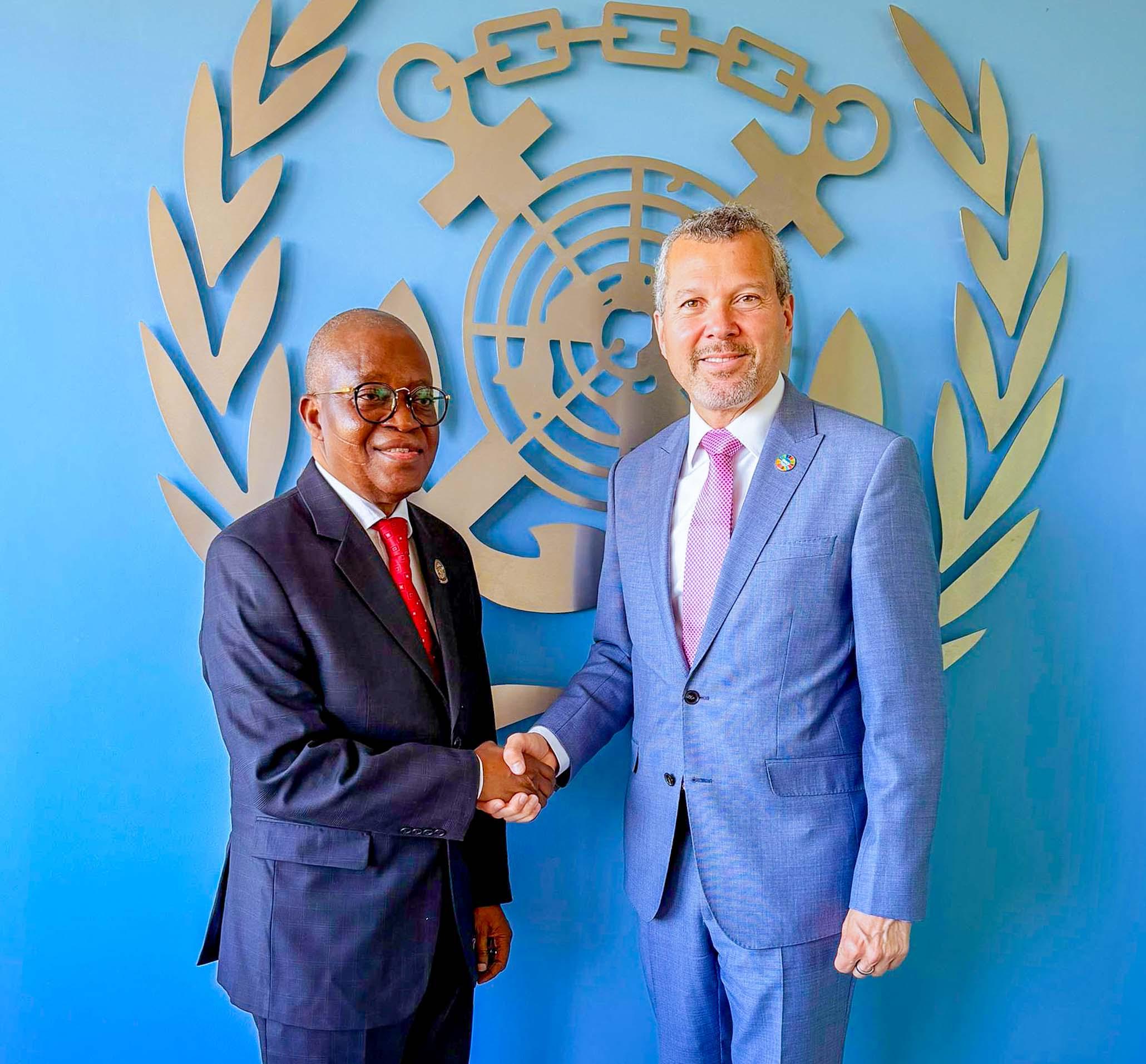
The Minister of Marine and Blue Economy, Adegboyega Oyetola, made this position known while speaking at the 84th session of the Marine Environment Protection Committee (MEPC 84) of the International Maritime Organization (IMO) in London.
He reaffirmed Nigeria’s commitment to decarbonisation, noting that progress must be guided by frameworks that reflect the economic realities and capacities of developing nations.
Oyetola stressed that efforts to achieve net-zero emissions by 2050 should be aligned with broader sustainable development objectives.
On the sidelines of the meeting, the Minister held high-level bilateral discussions with the IMO Secretary-General, Arsenio Dominguez, and the President of Saudi Arabia’s Transport General Authority, H.E. Fawaz Al Sehali.
The engagements focused on strengthening cooperation in key areas, including maritime security, capacity building, blue economy development, and promoting an inclusive and balanced energy transition.
He reiterated Nigeria’s commitment to a constructive partnership with the IMO, anchored on shared priorities such as maritime safety, institutional capacity development, and sustainable growth of the blue economy.
In his remarks, Dominguez commended Nigeria’s commitment to maritime governance and expressed appreciation for the warm reception during his recent visit, including his engagement with President Bola Ahmed Tinubu.
He described the visit as a strong indication of Nigeria’s dedication to advancing global maritime standards.
The IMO Secretary-General also praised Nigeria’s leadership in improving maritime security in the Gulf of Guinea, noting the significant reduction in piracy incidents and enhanced regional collaboration.
He added that Nigeria’s approach provides a useful model for other regions.
Discussions further addressed Nigeria’s growing role within the IMO Council, ongoing reforms in port modernisation and digitalisation, and initiatives to strengthen human capital in line with international maritime standards.
The bilateral meeting with Saudi Arabia highlighted the strengthening of relations between both countries, with a shared commitment to continued cooperation and mutual support within the IMO framework.
-

 Headlines3 months ago
FIFA sends Nigeria’s Super Eagles to 2026 World Cup, awards boardroom scoreline of 3 goals to nil against DR Congo
-

 Aviation3 months ago
Why we increased cargo tariff at Airports– FAAN
-
 Aviation3 months ago
Tension de-escalates at Lagos Airport as FAAN, Cargo agents reach truce over new tariff
-

 Aviation3 months ago
Freight forwarders warn FAAN’s new charges regime could cripple airport operations
-

 Headlines3 months ago
Customs agents seek clarification on status of B’Odogwu on National Single Window platform.
-

 Headlines3 months ago
NIWA pledges to enhance business operations of factories in Kogi state