Headlines
Nigerian ports gain global recognition as World Bank ranks Apapa, Tin Can among world’s most improved ports.

Gloria Odion, Maritime reporter
Nigeria’s ongoing port modernisation and infrastructure upgrade programme has earned international recognition, with two of the country’s busiest seaports—Apapa and Tin Can Island Ports—listed among the world’s top 20 most improved ports by the World Bank.
The recognition came in the World Bank’s 2025 Container Port Performance Index (CPPI), released in June 2026, which highlighted both Lagos ports in its global ranking of ports that recorded the most significant improvements in operational efficiency.
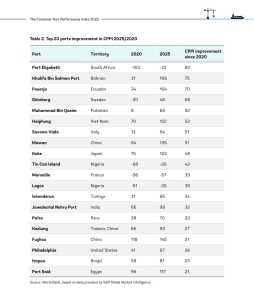
The CPPI provides a consistent, data-driven assessment of port performance worldwide by measuring the time vessels spend in port.
The index enables stakeholders to compare port efficiency across different countries and over time, while identifying areas of progress and operational challenges.
The latest ranking is a major endorsement of the Federal Government’s efforts to modernise Nigeria’s port infrastructure and enhance trade facilitation through reforms spearheaded by the Nigerian Ports Authority (NPA).
According to the Authority, the achievement further reinforces its contribution to sustaining Nigeria’s trade surplus by providing efficient port services that support growing import and export activities.
Nigeria has recorded consecutive annual trade surpluses since 2024, with the most recent figure standing at N7.54 trillion in the first quarter of 2026, according to data released by the National Bureau of Statistics (NBS).
Reacting to the development, the Managing Director of the Nigerian Ports Authority, Abubakar Dantsoho, attributed the achievement to the Federal Government’s investor-friendly policies and the ongoing port modernisation drive.
“With the investor-friendliness of President Bola Ahmed Tinubu providing the gravitas needed for increased investment to implement our port infrastructure and equipment modernisation drive, coupled with the unflinching support of the Honourable Minister of Marine and Blue Economy, Gboyega Oyetola, we have all it takes to advance the fortunes of trade and boost the national economy,” Dantsoho stated.
The World Bank recognition is expected to further strengthen investor confidence in Nigeria’s maritime sector and support ongoing efforts to position the country’s ports as competitive gateways for regional and international trade.

Headlines
Nigeria at 66: WIMA President advocates unity,women’s inclusion,national development
Gloria Odion, Maritme reporter
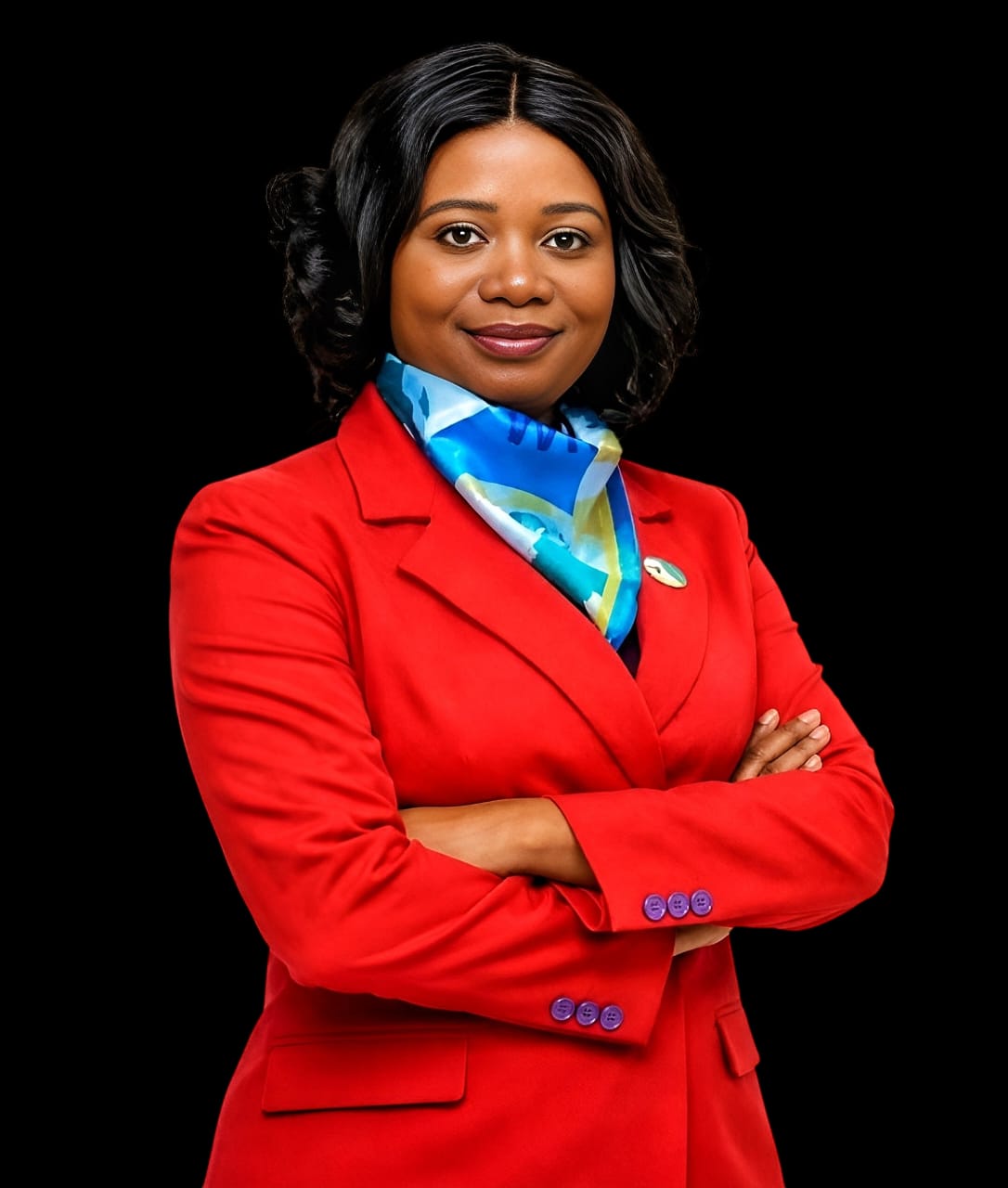
The President of Women in Maritime in Nigeria (WIMA Nigeria), Mrs. Theodora Nwaeze, has called on Nigerians to use the nation’s 66th Independence Anniversary to renew their commitment to national unity, responsible citizenship, integrity and collective development.
Nwaeze, in her Independence Day message, acknowledged the challenges that have characterised Nigeria’s journey since independence, but noted that the nation’s history has equally been shaped by the resilience, ingenuity, courage and determination of its people.
She portrayed the anniversary as an important moment for national reflection, urging Nigerians to honour the sacrifices of previous generations while recognising their shared responsibility in shaping the country’s future.
“Independence Day is more than a date on the calendar. It is a time to reflect on our journey, honour those who came before us and renew our commitment to building the Nigeria we desire.
“Our journey has not always been easy, but through every difficult season, Nigerians have continued to demonstrate courage, creativity, enterprise and an extraordinary ability to rise again,” she said.
The WIMA Nigeria President also highlighted the immense opportunities within the maritime sector, particularly the Blue Economy, describing it as an important avenue for economic diversification, job creation and sustainable national development.
She stressed the need for greater participation of women in the sector, urging women in maritime to take advantage of emerging opportunities, strengthen professional collaboration and contribute meaningfully to the growth of the national economy.
“As women in maritime, we understand that progress requires the courage to sail into new waters. We must continue to break barriers, create opportunities, support one another and ensure that women are fully represented in the economic development of our nation,” Nwaeze said.
She called on members of WIMA Nigeria and Nigerians generally to embrace unity, innovation and collective responsibility, stressing that national development requires the active participation of citizens across all sectors of society.
According to her, the task of building a stronger Nigeria should not be left to government alone, as citizens also have a critical role to play through their conduct and contributions in their homes, workplaces, communities and institutions.
“Nigeria belongs to all of us. Its future will be shaped not only by government, but by the choices we make every day,” she stated.
Nwaeze further advocated a nation where citizens build bridges rather than walls, promote inclusiveness, support one another and create sustainable opportunities for present and future generations.
She reaffirmed WIMA Nigeria’s commitment to advancing women’s participation and leadership in the maritime sector, while supporting initiatives that promote economic inclusion, sustainability and national development.
The WIMA President urged Nigerians to mark the anniversary not only with celebration, but also with a renewed sense of duty to the nation, calling for greater commitment to peace, unity, productivity and responsible citizenship.
She said the best way to honour the sacrifices and aspirations of Nigeria’s founding generation is to contribute positively to the country’s continued growth and development.
“May our nation continue to grow in peace, strength and prosperity. May the sacrifices of those who came before us never be forgotten, and may we have the wisdom and courage to build the Nigeria they dreamed of.
“Happy 66th Independence Anniversary, Nigeria!” she enthused.
Commentaries
NIgeria at 66: The Uncrushable Giant in the Sun
Reflection by Ibrahim Nasiru
As the dawn breaks over the West African coastline this morning, Thursday, October 1st, 2026, a sovereign milestone unfurls across the continent.
Nigeria turns 66 today.
Let the professional pessimists sound their usual annual trumpets of despair, and let the elite commentators count our structural bruises. But let no man mistake our scars for our obituary.
Six decades and six years after the Union Jack was lowered, this sprawling, kinetic, and beautiful madness we call home still stands—obstinately united, fiercely proud, and completely unbowed.
We are not just a country on a map; we are an demographic continent unto ourselves. From the rain-swept shores of the Atlantic to the wind-kissed sands of the Sahel, north and south of the Sahara, Nigeria remains the undisputed, heavy-hearted, but magnificent Giant in the Sun.
We are the most populous black nation on God’s green earth. To think that 230 million human beings, speaking over 500 distinct languages, can wake up under the same green-white-green flag every single morning and survive the tectonic pressures of modern history is not an accident—it is a daily, living miracle of resilience.
Look closely at our geography. The world marvels at how our diverse nationalities—the Hausa, Yoruba, Igbo, Ijaw, Ibibio, Kanuri, Tiv, Jukun, Fulani, Alago, Gomai, Ganawuri, Taroh, Kutep and Idoma—refuse to fit into any neat, predictable Western caricature.
We are not a monolith of sorrow. We are a kaleidoscope of unyielding human ambition. When the global economic winds howl and domestic pressures bite hard, the Nigerian does not fold. The Nigerian reinvents.
The street-vendor in Lagos, the tech-wizard in Yaba, the grain-merchant in Kano, and the resilient farmer in the valleys of Nasarawa all share the exact same DNA: an absolute refusal to be defeated by circumstances.
Our democracy is young, loud, and inherently messy. Our economic reforms are painful, complex, and currently testing the very fabric of our patience. But as the flags go up today, let us remember that the destiny of this giant does not belong to the ephemeral politicians who occupy temporary offices in Abuja or the state capitals.
The destiny of Nigeria belongs to the uncrushable spirit of the everyday citizen. We are the rhythm of Afrobeat, the intellectual weight of Nobel laureates, the raw grit of the global diaspora, and the anchor of regional stability.So, let the cynics argue in their air-conditioned rooms.
Today, we salute the market women, the youth driving the digital frontier, the labourers, and the fathers keeping the peace. We are still here. We are still giant. And our sun is nowhere near setting.
Happy 66th Independence Anniversary to the Federal Republic of Nigeria!
Ibrahim Nasiru lives in Abuja
Customs
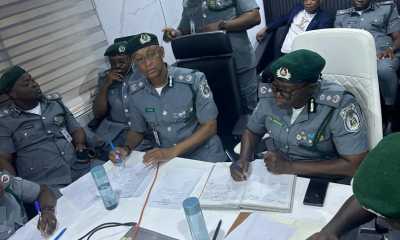
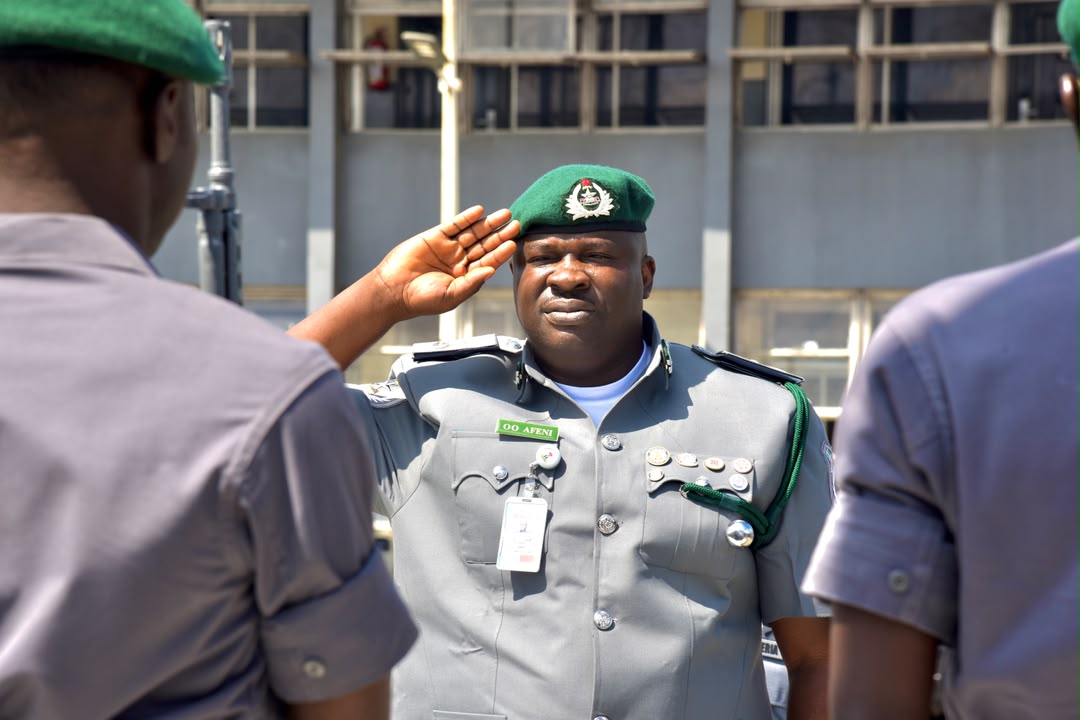
FOU Zone ‘A’: Aliyu retires after ₦3.19bn revenue recovery, Afeni takes over
Gloria Odion, Maritme reporter
The Nigeria Customs Service (NCS), Federal Operations Unit (FOU) Zone ‘A’, Ikeja-Lagos, on Wednesday, 30th September 2026, welcomed Deputy Comptroller Oladapo Olukayode Afeni as the unit’s 30th Acting Comptroller, following the retirement of Comptroller Gambo Aliyu after a distinguished career in the Service.
The formal handing-over ceremony, held at the unit’s conference hall, was attended by colleagues, friends, well-wishers, senior Customs officers and other stakeholders.
Among those present were the Acting Customs Area Controllers of the Port and Terminal Multipurpose Limited (PTML), Ogun 1 Area Command, and the Enugu/Ebonyi/Anambra Area Command.
Addressing officers and stakeholders for the first time as Acting Comptroller, DC Afeni pledged to provide purposeful, professional and accountable leadership in advancing the mandate of the Nigeria Customs Service.
He expressed appreciation to the Comptroller-General of Customs, Bashir Adewale Adeniyi and the management of the Service for the confidence reposed in him.
The new Acting Comptroller said his administration would strengthen intelligence- led enforcement,tackle revenue leakages and safeguard Nigeria’s economic and security interests.
He said that enforcement operations under his leadership would remain firm, lawful and respectful of human dignity, while legitimate trade would be facilitated through constructive engagement with traders, manufacturers, importers, exporters, customs brokers and other stakeholders.
DC Afeni also called for stronger collaboration with sister security and law enforcement agencies to combat trans -border crimes, particularly the illicit movement of drugs, arms, currencies, counterfeit goods and other prohibited items across the Nigeria border.
He also pledged to prioritise officers’ welfare and professional development, strengthen institutional discipline and encourage regular sporting activities to promote physical fitness, teamwork and work-life balance among personnel.
In his handing-over address, the immediate past Comptroller, retired Comptroller Gambo Aliyu, expressed gratitude to God and the Service, describing the ceremony as an important transition in leadership and an opportunity to reflect on the responsibilities and challenges of commanding the unit.
Comptroller Aliyu said his administration persevered on combating smuggling, revenue fraud, concealment, under-declaration, false declaration and the illicit movement of prohibited goods.
The report,according to him includes, recorded 779 seizures during his tenure, involving various prohibited and illegally imported items, including:
- More than 20,900 bags of foreign parboiled rice;
- 61 used vehicles;
- Thousands of used compressors and clothing items;
- Foreign poultry products;
- 4,418 jerrycans of vegetable oil;
- 12,606 parcels of cannabis weighing 6,194.3kg;
- 2.30kg of cocaine;
- More than 3,000 jerrycans of Premium Motor Spirit (PMS), equivalent to 76,505 litres; and
- 22 elephant tusks weighing 130.84kg.
According to him, the seizures had a combined duty-paid value of ₦13,075,056,616.00.
On revenue recovery, Comptroller Aliyu disclosed that the unit recovered ₦3,192,511,547.52 between 10 December 2025 and 24 September 2026.
He said the figure represented 798 per cent of the unit’s ₦400 million annual revenue recovery target for 2026, while also recording a 776 per cent increase over the ₦411,451,901.18 recovered during the corresponding period in 2025.
Aliyu attributed the performance to strengthen risk profiling, stricter compliance checks, targeted examination of suspicious declarations, teamwork,and collaboration with sister agencies and stakeholders.
He stressed that effective enforcement required collective efforts, noting that “no enforcement agency can succeed in isolation.”
Concluding his address, the retired Comptroller congratulated his successor and expressed confidence that the new administration would build on the operational foundation already established.
He urged DC Afeni to lead with fairness, firmness, courage and sound judgment, while assuring him of the cooperation and support necessary to sustain the unit’s mandate.
Comptroller Aliyu also commended officers of the unit for their loyalty, discipline and resilience throughout his tenure.
He prayed for the success of the new leadership, the continued growth of the Nigeria Customs Service and the security and prosperity of Nigeria.

 Customs2 months ago
Customs releases final recruitment list for ASC II, ends nearly one-year wait for applicants
- Headlines3 months ago
As NRC recovers ₦200m stolen railway assets, Opeifa vows diligent prosecution of suspects
- Customs3 months ago
Nigeria Customs prepares 100 Deputy Comptrollers for leadership roles with strategic refresher course
- Headlines3 months ago
Nigerian Shippers’ Council prevents ₦90.6bn, $1.348m losses to Nigeria’s economy in less than three years — Akutah
- Commentaries3 months ago
The NIMASA claim of 150 percent salary raise for Nigerian Seafarers : A fiction or reality?
- Customs2 months ago
Customs launches MIS file tracker at PTML in fresh digitalisation drive