
Headlines
NIWA concessions Nigeria’s waterways clean-up project to private firm

–Seeks safer, cleaner, seamless inland water transportation
Funso OLOJO, Editor
In a bold move to promote cleaner, safer and more secure inland waterways transportation in Nigeria, the National Inland Waterways Authority (NIWA) has concessioned the cleaning of the nation’s waterways to PartsCentral Limited, a multi-sector indigenous environmental company.
Under the arrangement, the company will provide strategic oversight and implementation support for a comprehensive clean-up initiative aimed at restoring Nigeria’s inland waterways and enhancing their economic potential.
The project, initiated during the administration of the immediate past Managing Director of NIWA, Asiwaju Bola Oyebamiji, is seen as a major step towards creating a cleaner, safer and more investment-friendly inland waterways ecosystem in Nigeria.
According to NIWA, the initiative is designed to tackle the persistent challenges of waste pollution, indiscriminate dumping of refuse, oil spillage and environmental degradation across the country’s vast inland waterways through a structured and sustainable approach.
In a press statement, the Authority said the project would identify major sources of pollution, facilitate systematic waste removal and promote innovative waste-to-wealth solutions capable of creating employment opportunities for communities located along the waterways.
NIWA added that beyond environmental restoration, the project is expected to improve navigational safety by removing obstacles that hinder the smooth movement of vessels and other watercraft.
“It is also expected to support the conservation of aquatic resources, strengthen the fisheries value chain, and contribute significantly to the realisation of the Federal Government’s Renewed Hope Agenda of President Bola Ahmed Tinubu for the Marine and Blue Economy sector.
“As part of its broader objectives, the initiative seeks to reposition Nigeria’s inland waterways as attractive destinations for local and foreign investment by promoting environmental sustainability and enhancing the overall efficiency of water transportation,” the Authority stated.
Stakeholders believe that cleaner waterways will stimulate economic activities, encourage tourism, boost commerce and unlock the enormous untapped potential within the nation’s blue economy.
Speaking on the forthcoming rollout of the project, the Managing Director of PartsCentral Limited, the concessionaire, Henry Olaoluwa Onifade, assured Nigerians that every aspect of the programme would be professionally executed to deliver lasting results.
He described the initiative as a historic intervention in the management of Nigeria’s inland waterways and reaffirmed the commitment of the project team to ensuring transparency, sustainability and measurable environmental impact.
Onifade also called on government agencies, private sector operators, host communities, environmental groups and other stakeholders in the maritime sector to support the initiative, stressing that collective participation would be crucial to its success.
He expressed confidence that with sustained collaboration, Nigeria would soon witness cleaner, safer and more productive inland waterways, setting a new benchmark for environmental stewardship and waterway management in the country.




Headlines
Blue Lagos, New Generation Directorate bring 250 riverine youths together for development dialogue
Gloria Odion, Maritme reporter
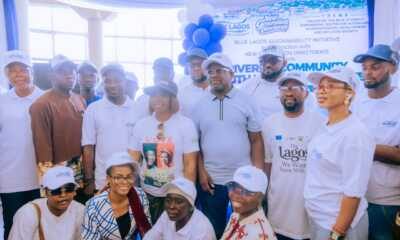
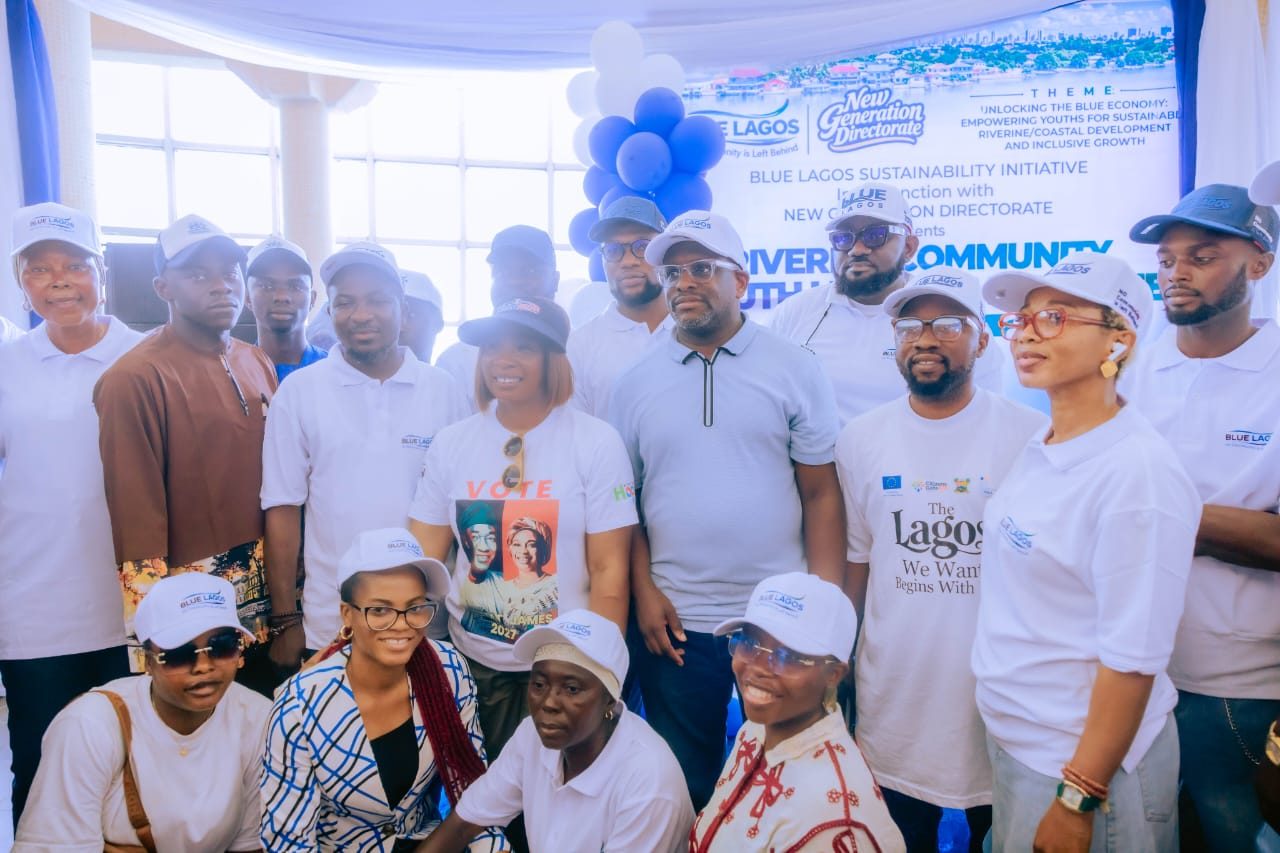
The Blue Lagos Sustainability Initiative, in partnership with the New Generation Directorate, has brought together 250 young people representing 125 riverine and coastal communities across Lagos State to discuss grassroots development,youth empowerment, and inclusive governance.
The Lagos Riverine Community Youth Leaders Dialogue, held at the Badore Ferry Terminal, Ajah, provided a platform for youth representatives to present community challenges, identify development priorities, and propose practical solutions to issues affecting underserved riverine and coastal settlements.
The initiative aimed to strengthen engagement between government institutions and grassroots communities while ensuring that young people in hard-to-reach areas have a voice in decisions concerning their welfare, opportunities, and future.
Mr Oluwadamilola Emmanuel, Special Adviser to the Governor of Lagos State on Blue Economy, stressed the importance of involving young people in governance and development planning, particularly in communities facing geographical and socioeconomic challenges.
Emmanuel emphasised that sustainable development requires effective communication between government and the people, noting that understanding local needs and incorporating community perspectives into policy formulation and implementation are essential to achieving meaningful progress.
During the interactive session, youth leaders outlined pressing challenges confronting their communities, drawing attention to gaps in essential services, infrastructure, and economic opportunities.
The issues raised included inadequate access to education and healthcare, unemployment, environmental sustainability, transportation, poor infrastructure, youth empowerment, and limited access to essential social services.
Participants also called for improved access to government programmes and the implementation of targeted interventions that reflect the unique circumstances of riverine and coastal communities.
Emmanuel acknowledged the concerns presented by the youth representatives and assured them that their requests and recommendations would be communicated to the appropriate government authorities for consideration and necessary action.
He reiterated the importance of maintaining constructive engagement with grassroots communities to identify development priorities and explore practical approaches to addressing their needs.
In her goodwill message, Princess Damilola Sonayon James, APC Deputy Governorship Candidate in Lagos State and Director of the New Generation Directorate, urged young people across the state’s riverine and coastal communities to take an active role in governance and contribute meaningfully to the development of their communities.
She encouraged the youth leaders to move beyond expressing concerns about government policies by actively contributing ideas, engaging constructively with public officials, and participating in decision-making processes at both grassroots and state levels.
According to her, young people possess the energy, creativity, innovation, and community level understanding needed to promote responsive leadership and sustainable development.
James also urged the participants to remain united, organised, and committed to the progress of their respective communities, stressing the need for continuous engagement with government institutions and other relevant stakeholders.
She further called on young people to see themselves not merely as beneficiaries of government programmes but as active partners in governance, community development, and the future of Lagos State.
The dialogue also featured engagement with Mr Mobolaji Ogunlende, Commissioner for Youth and Social Development, alongside other stakeholders from the New Generation Directorate.
The engagement provided an opportunity to discuss issues affecting young people in riverine and coastal settlements, particularly youth development, employment and livelihood opportunities, education, healthcare, infrastructure, environmental protection, and community welfare.
Participants emphasised the need to strengthen communication between grassroots communities and public institutions, improve awareness of available government initiatives, and ensure that the needs of underserved settlements are adequately reflected in development plans.
With 250 young people representing 125 riverine and coastal communities in attendance, the dialogue underscored the importance of grassroots participation in shaping policies and programmes that respond to the realities of local communities.
The partnership between Blue Lagos and the New Generation Directorate also highlighted the role of collaboration in promoting youth inclusion, strengthening community engagement, and expanding development opportunities across Lagos State.
The initiative further reinforced the need for a coordinated approach involving government agencies, traditional and community leaders, youth organisations, civil society groups, and other stakeholders to address the challenges confronting riverine and coastal settlements.
For the Blue Lagos Sustainability Initiative, the dialogue represents a step towards strengthening grassroots participation, promoting inclusive governance, and ensuring that the concerns of underserved communities receive attention in development planning.
Through the engagement, Blue Lagos and the New Generation Directorate reaffirmed the importance of sustained dialogue with young people as partners in building stronger communities, improving access to opportunities, and advancing sustainable development across Lagos State’s riverine and coastal areas.
Headlines
Germany-Nigeria film week ends on high note, honours Schlöndorff, Musawa, Gani Adams, others
Funso OLOJO, Editor
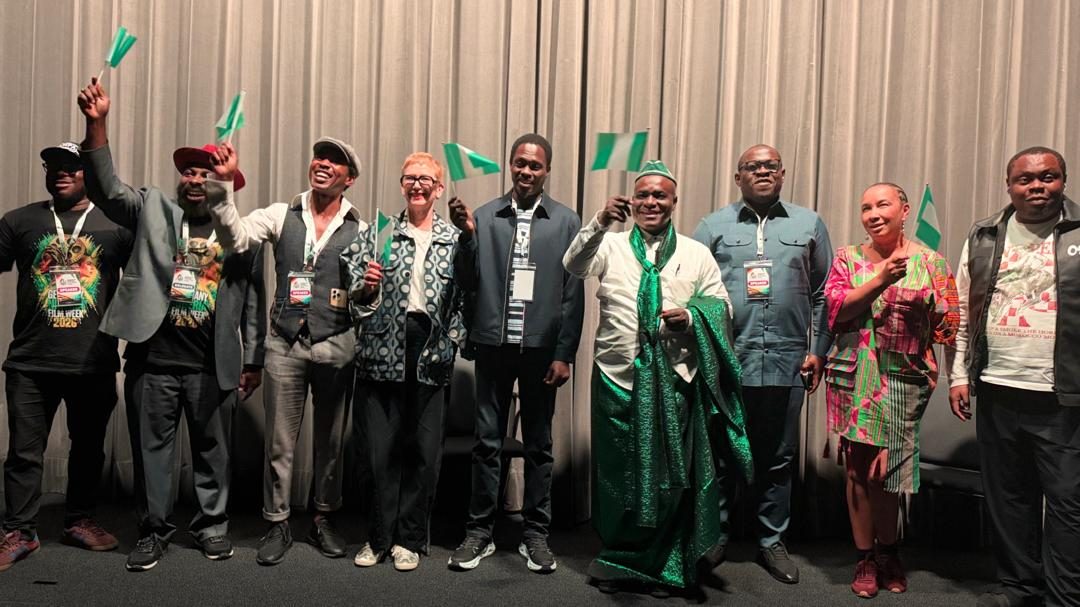
The inaugural Germany-Nigeria Film Week has concluded successfully after ten days of film screenings, industry engagements, cultural exchanges and award presentations across four German cities, marking a significant step towards strengthening cinematic collaboration between Nigeria and Germany.
Held from October 1 to 10, 2026, the festival brought together filmmakers, government representatives, cultural institutions and creative industry stakeholders from both countries to promote cross-cultural engagement, explore co-production opportunities and expand the international reach of Nigerian cinema.
The festival opened on October 1 at the Arsenal Film Institut in Berlin with the screening of The Chronicles of Afrobeats, directed by Nigerian filmmaker and music executive Oluseun John Abisagboola, popularly known as Bankuli.
The opening ceremony featured a fireside chat between the Managing Director of the Nigerian Film Corporation (NFC), Ali Nuhu, and the Executive Director of the National Film and Video Censors Board (NFVCB), Dr. Shaibu Husseini.
Their discussion examined the growth of Nigeria’s film industry, international partnerships and opportunities for deeper collaboration between Nigerian and German filmmakers.
Among the dignitaries at the event were Nigeria’s Ambassador to Germany, Senator Ita Enang, and the Director of Arsenal Film Institut, Stefanie Schulte Strathaus, alongside filmmakers, producers and other creative industry stakeholders.
A major highlight of the Berlin programme was the presentation of a Lifetime Achievement Award to renowned German filmmaker Volker Schlöndorff in recognition of his contributions to international cinema. His distinguished career spans several decades and includes documentary filmmaking in Africa, including Nigeria.
The Honourable Minister of Arts, Culture, Tourism and the Creative Economy, Hannatu Musawa, also received a Special Recognition Award for her contributions to the development and promotion of Nigeria’s creative industry. The award was received on her behalf by Dr. Husseini.
From Berlin, the festival moved to Hannover, where SONNENKINDFILM e.V., led by Michael Davies, co-founder of the Germany-Nigeria Film Week, hosted a press conference attended by festival delegates, filmmakers and industry representatives.
During the Hannover programme, a Special Recognition Award was presented to Chief Gani Adams, the Aare Ona Kakanfo of Yorubaland, in recognition of his contributions to promoting and preserving African culture and heritage.
The city also hosted screenings of Nigerian productions, including Amanyanabo: The Eagle King, produced by veteran Nollywood actress and filmmaker Ibinabo Fiberesima and directed by Fred Amata and Ibinabo Fiberesima.
Another featured production was Evi, directed by Uyoyou Adia. Adia received an award in recognition of her creativity and artistic achievement in directing the film, while Fiberesima was also honoured for her contributions to the Nigerian film industry.
The festival subsequently extended to Bremen and Hamburg, further showcasing Nigerian filmmaking to German audiences.
Love and New Notes, directed by Kayode Kasum, was screened in both cities, while On Different Grounds, directed by Mildred Okwo, was screened in Bremen.
The Germany-Nigeria Film Week was founded by Mykel Parish Ajaere of Nigeria’s Pan-African Film Development & Advancement Foundation (PAFDAF) and Michael Davies of Germany’s SONNENKINDFILM e.V.
The initiative was established to create a sustainable platform for filmmakers from both countries to exchange ideas, build professional relationships, develop co-production partnerships and explore international distribution and other commercial opportunities.
Beyond showcasing films, the festival seeks to strengthen cultural relations between Nigeria and Germany while providing Nigerian filmmakers with greater access to European audiences and international industry networks.
The organisers said the inaugural edition received institutional and logistical support from the Office of the Mayor of Hannover, Arsenal Film Institut Berlin, KoKi Cinema Hannover, City 46 Cinema Bremen and Metropolis Kino Hamburg.
The Nigerian Film Corporation and the National Film and Video Censors Board also supported the initiative, reinforcing its objective of building sustainable partnerships between the two countries’ film industries.
With its inaugural edition completed, the organisers have scheduled the second Germany-Nigeria Film Week for October 4–9, 2027. The next edition is expected to feature expanded programming, broader industry participation and stronger international partnerships.
The successful conclusion of the maiden festival underscores the potential of cinema as a vehicle for cultural diplomacy, creative-sector development and stronger economic ties between Nigeria and Germany.
Customs
Export activities surge at Lilypond Export Command, records export value of US$752.9m in Q3 of 2026
— as Agricultural, Solid minerals exports plunge
Funso OLOJO, Editor
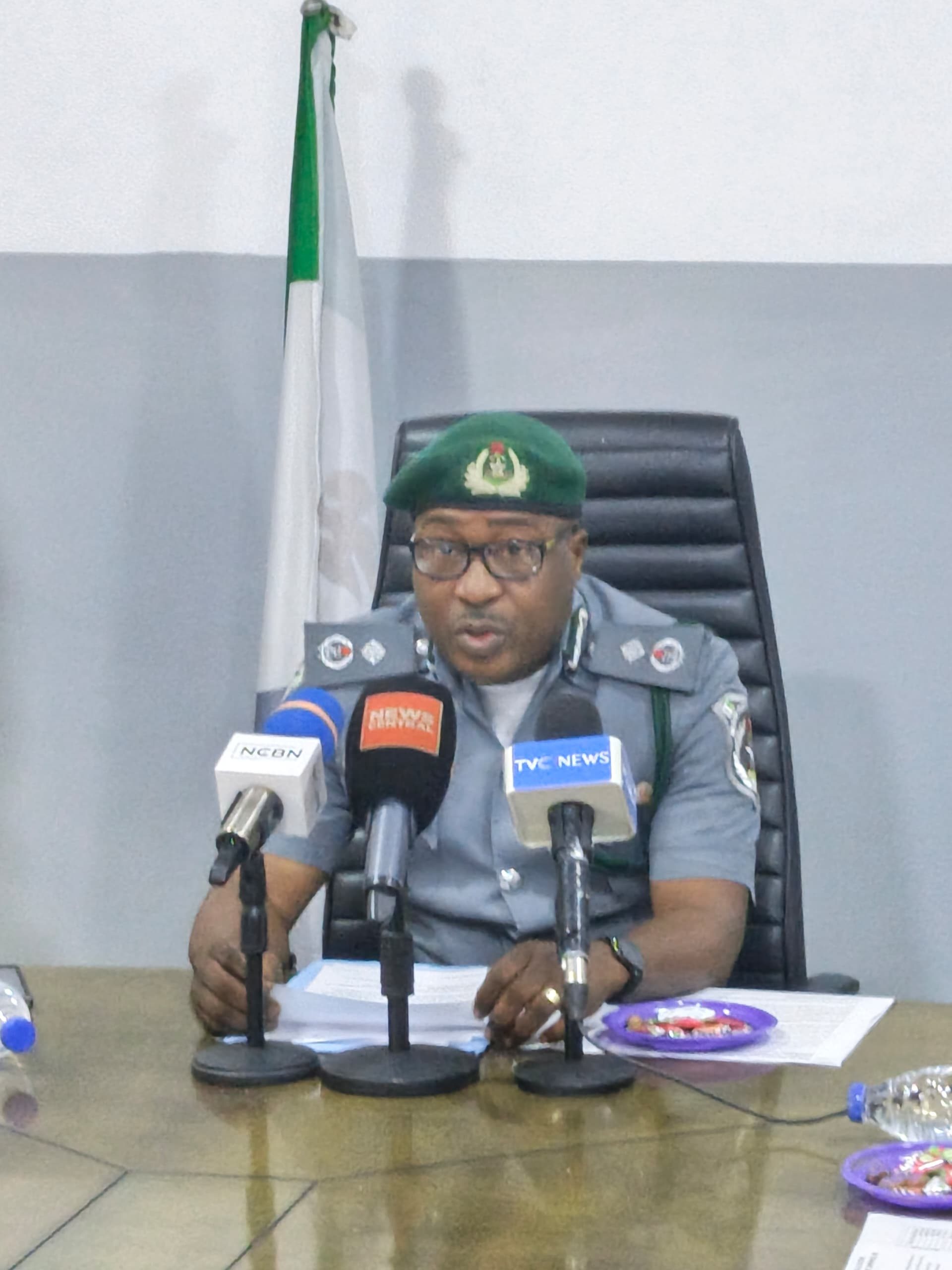
The Lilypond Export Command of the Nigeria Customs Service (NCS), Ijora, Lagos, recorded export transactions valued at $752.9 million in the third quarter of 2026, representing a 22.14 per cent increase over the $586.152 million recorded in the corresponding period of 2025.
The growth was driven largely by a sharp increase in manufactured goods exports, which more than doubled during the period, offsetting declines in agricultural produce and solid minerals exports.
The Acting Controller of the Command, Deputy Comptroller Olusola Oluyemi Salako, attributed the overall improvement to favourable government export policies, the Customs Service’s commitment to trade facilitation and the support of the NCS management under the Comptroller-General of Customs, Adewale Adeniyi.
Salako disclosed the figures while briefing the media on the Command’s third-quarter performance on October 28, 2026.
A breakdown of the monthly figures showed that export value rose from $202.604 million in July 2025 to $217.526 million in July 2026, representing a 6.86 per cent increase.
In August, exports increased from $176.628 million to $297.919 million, reflecting a reported growth of 40.71 per cent, while September exports rose from $206.919 million to $237.406 million, representing a 12.84 per cent increase.
Manufactured goods drive export growth
An analysis of the sectoral performance showed that manufactured goods emerged as the leading driver of export growth, with export value increasing from $169.902 million in the third quarter of 2025 to $402.520 million in the corresponding period of 2026.
The performance underscores the growing contribution of manufactured and value-added products to Nigeria’s non-oil export earnings.
Salako said the trend reflected the Federal Government’s drive to encourage domestic processing and value addition rather than continued dependence on the export of raw commodities.
“This performance underscores the growing contribution of manufactured and value-added products to Nigeria’s non-oil export earnings,” he said.
According to the Acting Controller, the Customs Command has continued to sensitise exporters on the need to move beyond the export of raw agricultural produce and embrace processing and value-added production.
He explained that more agricultural commodities were being processed into manufactured and value-added products for export, a development that he said was contributing to the growth in manufactured goods exports and supporting greater foreign exchange repatriation into the Nigerian economy.
Agricultural exports suffer decline
Despite the overall growth in export value, agricultural exports recorded a decline, falling from $346.107 million in the third quarter of 2025 to $310.981 million in the corresponding period of 2026.
Salako, however, maintained that agriculture remained a significant component of the Command’s export portfolio.
He attributed the decline partly to the Federal Government’s increasing emphasis on processing agricultural commodities and improving their value before export.
The policy direction, he said, was intended to encourage domestic value addition, expand manufacturing activities and improve the returns Nigeria earns from its exports.
The Command, he added, would continue to engage exporters and provide guidance on compliance with government policies aimed at strengthening the country’s non-oil export base.
Solid minerals exports plunge
Solid minerals exports recorded the steepest decline among the major export categories, falling from $62.271 million in the third quarter of 2025 to $6.487 million in the same period of 2026.
Salako attributed the sharp drop to government policies discouraging the export of unprocessed solid minerals and requiring greater processing and conversion into derivatives before export.
He also cited efforts to curb illegal mining activities, particularly those involving foreign operators, as another factor contributing to the decline.
The Acting Controller said the Command would continue engaging stakeholders in the solid minerals sector to better understand operational challenges and support legitimate export activities within the framework of existing government policies.
In contrast, exports classified under the other-products category increased from $7.870 million to $32.863 million during the period under review, reflecting improved performance.
Export container throughput rises
Beyond the increase in export value, the Command recorded significant growth in export container throughput.
The number of export containers processed rose from 10,987 in the third quarter of 2025 to 16,345 in the corresponding period of 2026, an increase of 5,358 containers.
The growth points to increased cargo movement through the facility and an expansion in the volume of export transactions handled during the quarter.
The Command also reported increases in export-related collections.
According to Salako, the 2.5 per cent re-export surcharge increased by ₦90.019 million, while the Nigerian Export Supervision Scheme (NESS) charges rose by ₦517.923 million during the period.
He said the increase in collections highlighted the importance of efficient cargo processing, accurate documentation and compliance with established Customs procedures in supporting legitimate trade.
Customs pledges faster processing, stronger compliance
Salako commended compliant exporters, licensed Customs agents, export processing terminals, relevant government agencies and other stakeholders for their cooperation and commitment to the export process.
He said the Command would sustain its support for legitimate trade through improved trade facilitation, timely dissemination of relevant information and consistent enforcement of applicable Customs regulations.
“The Command will continue to support legitimate trade through effective trade facilitation, timely dissemination of relevant information and consistent application of extant rules and regulations. At the same time, we will sustain our commitment to enforcing compliance with all applicable Customs laws and government policies,” he said.
Looking ahead, the Acting Controller said the Command would intensify efforts to sustain export growth through faster and more efficient cargo processing, stakeholder engagement, advocacy and the effective deployment of the Unified Customs Management System (UCMS), also known as B’Odogwu.
He said the system continued to support Customs operations and trade facilitation by improving the management of export transactions.
The Command would also leverage World Customs Organization (WCO) trade facilitation instruments, including the Time Release Study (TRS), where applicable, to identify operational bottlenecks and improve efficiency.
Salako said the third-quarter performance demonstrated the potential of manufactured and value-added products to strengthen Nigeria’s non-oil export base, even as the declines in agricultural and solid minerals exports highlighted the need to address sector-specific challenges.
“Our commitment remains to facilitate legitimate trade, strengthen compliance, enhance revenue collection and contribute meaningfully to the growth of Nigeria’s non-oil economy,” he said.

 Headlines2 months ago
Oyetola presents three-year score card as blue economy industry revenue hits ₦1.83trn

 Customs2 months ago
Apapa Customs sets new single-day revenue record with ₦28.1bn collection

 Customs3 months ago
Apapa Customs sets new record of monthly revenue haul with ₦323bn collection in July
 Customs3 months ago
NCS intercepts container concealing pump-action rifle parts, seizes ₦373.8m worth of cannabis products at Tincan Port
 Customs3 months ago
FG exempts CNG, electric vehicles from Customs duty, VAT

 Customs4 weeks ago
FOU Zone ‘A’: Aliyu retires after ₦3.19bn revenue recovery, Afeni takes over