Commentaries
Turning the Tide: How Nigerian ports earned global recognition






Commentaries
NIgeria at 66: The Uncrushable Giant in the Sun
Reflection by Ibrahim Nasiru
As the dawn breaks over the West African coastline this morning, Thursday, October 1st, 2026, a sovereign milestone unfurls across the continent.
Nigeria turns 66 today.
Let the professional pessimists sound their usual annual trumpets of despair, and let the elite commentators count our structural bruises. But let no man mistake our scars for our obituary.
Six decades and six years after the Union Jack was lowered, this sprawling, kinetic, and beautiful madness we call home still stands—obstinately united, fiercely proud, and completely unbowed.
We are not just a country on a map; we are an demographic continent unto ourselves. From the rain-swept shores of the Atlantic to the wind-kissed sands of the Sahel, north and south of the Sahara, Nigeria remains the undisputed, heavy-hearted, but magnificent Giant in the Sun.
We are the most populous black nation on God’s green earth. To think that 230 million human beings, speaking over 500 distinct languages, can wake up under the same green-white-green flag every single morning and survive the tectonic pressures of modern history is not an accident—it is a daily, living miracle of resilience.
Look closely at our geography. The world marvels at how our diverse nationalities—the Hausa, Yoruba, Igbo, Ijaw, Ibibio, Kanuri, Tiv, Jukun, Fulani, Alago, Gomai, Ganawuri, Taroh, Kutep and Idoma—refuse to fit into any neat, predictable Western caricature.
We are not a monolith of sorrow. We are a kaleidoscope of unyielding human ambition. When the global economic winds howl and domestic pressures bite hard, the Nigerian does not fold. The Nigerian reinvents.
The street-vendor in Lagos, the tech-wizard in Yaba, the grain-merchant in Kano, and the resilient farmer in the valleys of Nasarawa all share the exact same DNA: an absolute refusal to be defeated by circumstances.
Our democracy is young, loud, and inherently messy. Our economic reforms are painful, complex, and currently testing the very fabric of our patience. But as the flags go up today, let us remember that the destiny of this giant does not belong to the ephemeral politicians who occupy temporary offices in Abuja or the state capitals.
The destiny of Nigeria belongs to the uncrushable spirit of the everyday citizen. We are the rhythm of Afrobeat, the intellectual weight of Nobel laureates, the raw grit of the global diaspora, and the anchor of regional stability.So, let the cynics argue in their air-conditioned rooms.
Today, we salute the market women, the youth driving the digital frontier, the labourers, and the fathers keeping the peace. We are still here. We are still giant. And our sun is nowhere near setting.
Happy 66th Independence Anniversary to the Federal Republic of Nigeria!
Ibrahim Nasiru lives in Abuja
Commentaries
Unbundling Nigerian Ports: Oyetola’s Blue Economy Blueprint to End Agency Rivalry
Monday Discourse with Ibrahim Nasiru
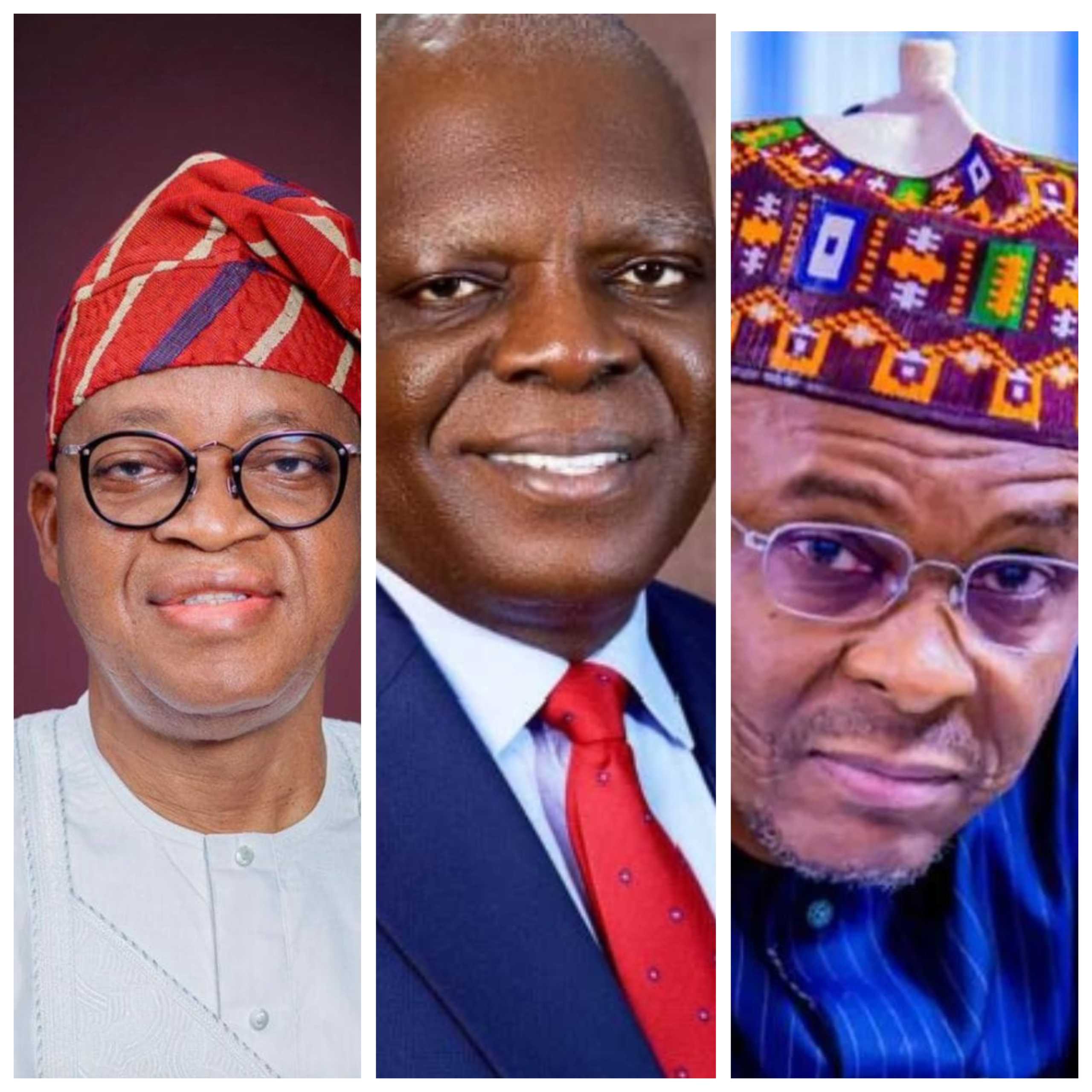
The recent technical discussions between the leadership of the newly transmuted Nigeria Ports Economic Regulatory Agency (NPERA) and the Nigerian Ports Authority (NPA) mark a critical turning point in the governance of Nigeria’s maritime sector.
Prompted by a definitive ministerial directive from the Minister of Marine and Blue Economy, Dr. Adegboyega Oyetola, the two agencies are moving to operationalize the transfer of Inland Dry Port functions from the old Nigerian Shippers’ Council architecture straight to the NPA.
For decades, Nigeria’s maritime ecosystem has been severely suffocated by overlapping institutional mandates, administrative friction, and a counterproductive confusion over who regulates commerce versus who drives infrastructure.
By enforcing this sweeping separation of port economic regulation from core operational development, the federal government is finally addressing the structural flaws that have long stopped Nigeria from becoming the dominant maritime hub of West Africa.
Under the fresh provisions of the NPERA Act 2026, particularly the critical alignment of Section 51, the administrative boundary lines are being redrawn with clinical precision.
The old regime, which forced the Shippers’ Council to simultaneously act as an economic referee and an active promoter of inland dry ports, was an unsustainable model that created inherent institutional contradictions.
You cannot effectively police a commercial market while actively building and managing its operational assets.
Shifting the promotion, development, and operational oversight of inland dry ports entirely to the NPA allows the authority to leverage its massive, existing deep-sea infrastructure and engineering competencies to rapidly scale up these hinterland Ports.
This clean realignment ensures that Inland Dry Ports stop being slow-moving administrative projects and finally become hyper-efficient logistics nodes that seamlessly extend the economic reach of our coastlines into the landlocked states of the North.
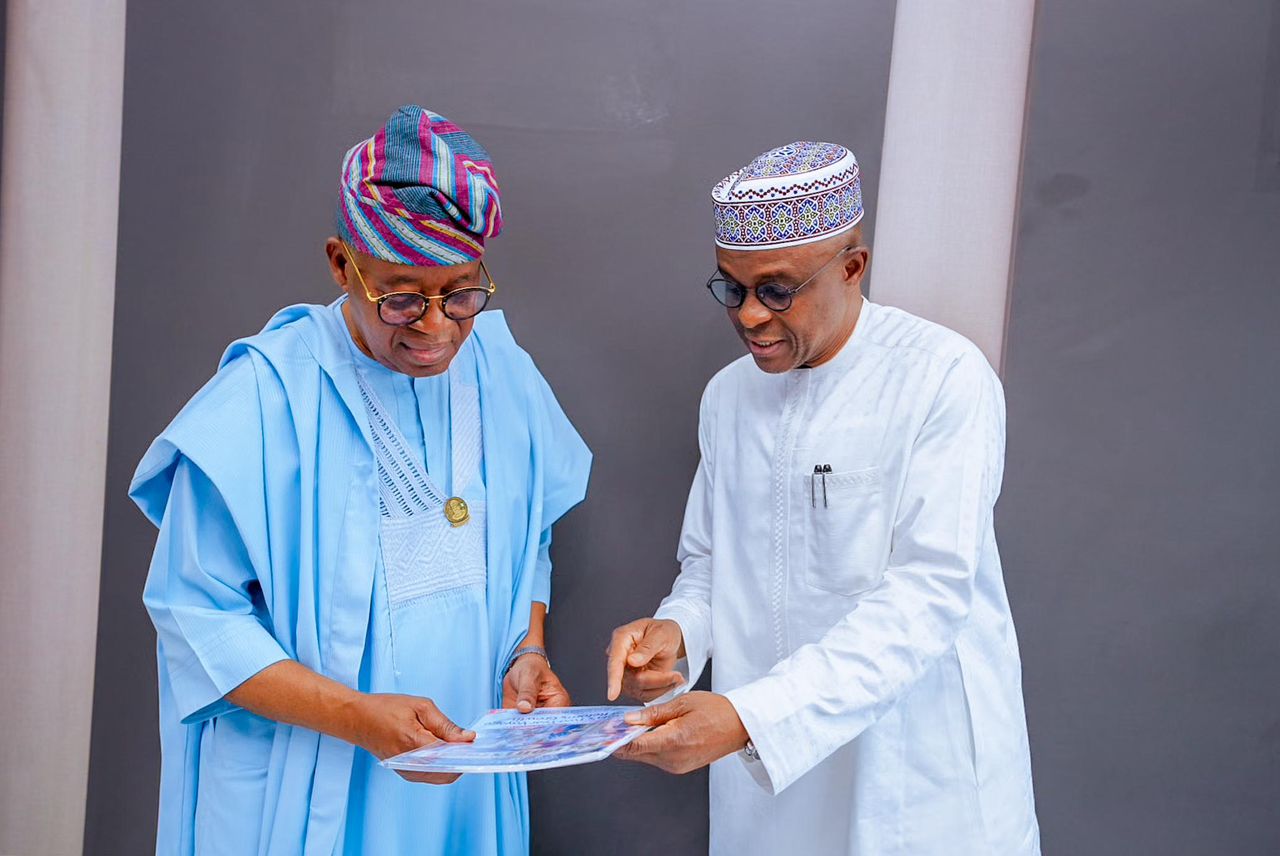
Consequently, the collaborative maturity demonstrated during the recent strategy session between NPERA Director-General, Dr. Pius Akutah, and the NPA Managing Director, Dr. Abubakar Dantsoho, signals a refreshing departure from the toxic inter-agency warfare that defined the past.
In previous dispensations, such a sweeping transfer of functions would have triggered fierce turf battles, with executives aggressively hoarding administrative powers to the detriment of national trade efficiency.
Akutah’s strategic proposal for a high-level joint committee—integrating NPERA, NPA, the National Inland Waterways Authority (NIWA), and the parent ministry, proactively tethers all moving parts to a single, accountable execution framework.
This coordinated approach is exactly what is needed to assure international shipping lines, domestic clearing agents, and private concessionaires that the transition will be frictionless, legally sound, and completely free from double-taxation trapdoors.
Ultimately, the successful execution of this structural unbundling will be the ultimate metric used to grade President Bola Ahmed Tinubu’s Marine and Blue Economy agenda.
If properly managed, freeing NPERA to focus strictly on economic regulation will create a fiercely competitive, transparently priced maritime marketplace that drives down the prohibitive cost of doing business at our Ports.
Simultaneously, placing the Inland Dry Ports within the NPA’s operational portfolio should accelerate cargo evacuation times, de-congest the chaotic Apapa and Tin Can corridors, and unlock the dormant multi-billion dollar trade potential of the hinterlands.
Minister Oyetola has laid down a courageous, legally backed blueprint for structural clarity. It is now up to the joint leadership of Akutah and Dantsoho to aggressively transform this institutional unbundling into a thriving, world-class economic reality.
Ibrahim Nasiru is a public affairs analyst
Commentaries
Blue Economy Engine: Decoding unstoppable rise of Nigeria’s maritime gateways
Monday Discourse with Ibrahim Nasiru
The latest operational data from Nigeria’s maritime sector shows a significant shift in trade capacity that deserves close attention.
In a period where national economic discourse is heavily focused on foreign exchange stability and trade balance, the Nigerian Ports Authority (NPA) recently released its operational performance report for the second quarter of 2026.
The figures indicate clear, measurable progress across our major shipping channels.
Under the current management led by Dr. Abubakar Dantsoho, total cargo throughput at the nation’s seaports grew by 12.3% year-on-year, moving from 31.83 million metric tonnes in the second quarter of 2025 to 35.74 million metric tonnes in Q2 2026.
This growth was closely supported by a 14.4% increase in ocean-going vessel traffic, which recorded 1,201 vessel calls during the three months under review.
These statistics are notable because they reflect actual operational changes rather than mere administrative adjustments.
For decades, Nigerian Ports were held back by slow container clearing times, heavy bureaucratic red tape, and severe traffic congestion around the Lagos Ports.
The current upward trend shows that the ongoing efforts toward Port modernization, including the digital integration of the National Single Window system, are beginning to show results on the ground.
By reducing physical bottlenecks and shortening the time cargo spends at the berths, terminal operations are becoming more reliable for international shipping lines and domestic businesses alike.
A highly encouraging aspect of the Q2 2026 data is the 22% increase recorded in export-related outward cargo.
For an economy that urgently needs to diversify away from absolute reliance on crude oil revenues, this rise in export volumes shows that the policy of establishing dedicated export terminals is functioning as intended.
Local manufacturing concerns, agricultural aggregators, and non-oil exporters are finding it relatively easier to move their goods out to global markets.
Additionally, the emergence of transshipment container traffic—which grew to 29,038 TEUs this quarter from zero in the same period last year—proves that Nigeria is regaining its position as a major logistics transit hub for the West African sub-region.
However, the report also highlights a persistent structural reality that economic planners must continue to address.
Out of the 35.74 million metric tonnes of cargo handled, inward cargo or imports still accounted for the larger share at 56.8%, while outward cargo stood at 41.9%.
While the gap is closing due to the 22% export growth, it reminds us that maritime efficiency must be backed by a strong domestic production base.
The Ports can only serve as efficient gateways; the real value lies in ensuring that what leaves our shores consists of processed, value-added Nigerian goods rather than just raw agricultural products or unrefined solid minerals.
The second-quarter performance numbers show that the maritime sector is currently serving as a stable and productive engine for the nation’s broader economic goals.
It demonstrates that clear policy direction and disciplined institutional management can stabilize critical national infrastructure even during periods of global trade volatility.
As the NPA works to sustain this momentum through the rest of the year, the priority must remain on full automation, eliminating unreceipted costs at the Ports, and strengthening rail connectivity to the hinterland.
By locking in these operational gains, Nigeria is steadily turning its maritime gateways into solid pillars of long-term commercial prosperity.
Chief Ibrahim Nasiru, a public affairs analyst, writes from Abuja

 Customs2 months ago
Customs releases final recruitment list for ASC II, ends nearly one-year wait for applicants
- Headlines3 months ago
As NRC recovers ₦200m stolen railway assets, Opeifa vows diligent prosecution of suspects
- Customs3 months ago
Nigeria Customs prepares 100 Deputy Comptrollers for leadership roles with strategic refresher course
- Headlines3 months ago
Nigerian Shippers’ Council prevents ₦90.6bn, $1.348m losses to Nigeria’s economy in less than three years — Akutah
- Customs2 months ago
Customs launches MIS file tracker at PTML in fresh digitalisation drive
- Commentaries3 months ago
The NIMASA claim of 150 percent salary raise for Nigerian Seafarers : A fiction or reality?