
Headlines
NIMASA yields to massive demand for participation in Blue Economy Hackathon, opens competition to all Nigerians, removes age barrier

Funso OLOJO, Editor
The Nigerian Maritime Administration and Safety Agency (NIMASA) has removed the age restriction for participation in its 2026 National Innovation Hackathon under the NIMASA Blue Economy Accelerator Programme (NIMASA-BEAP), opening the initiative to a wider pool of Nigerian innovators following growing public demand.
Under the revised eligibility criteria, Nigerians aged 18 and above can now apply, regardless of gender, ethnicity, religion or educational background.
The agency said the decision was taken in response to widespread calls from Nigerians seeking to participate in the initiative, which aims to identify, nurture and commercialise innovative solutions to challenges and emerging opportunities in the country’s maritime and blue economy.
The NIMASA-BEAP application portal opened on Monday, October 5, 2026, with applications free of charge.
NIMASA is urging innovators, entrepreneurs, researchers, software developers, engineers, artisans, graduates and students with promising ideas to take advantage of the opportunity and submit their applications before the deadline.
Scheduled for December 8–10, 2026, the National Innovation Hackathon will focus on developing practical, technology-driven and commercially viable solutions across 13 innovation tracks covering different segments of the maritime and blue economy.
The tracks include maritime technology and logistics; maritime safety, surveillance and security; green shipping and vessel decarbonisation; seafarer welfare; port digitisation and marine waste management
Other areas are aquaculture and sustainable fisheries; coastal and artisanal fishing; ocean data and analytics; nature-based coastal defence; marine tourism; marine biotechnology; and deep seabed mining technologies and research.
Beyond the hackathon, successful innovators will have the opportunity to advance to the 12-week NIMASA-BEAP Accelerator Programme, scheduled to run from January to April 2027.
Participants selected for the accelerator will receive structured mentorship, industry exposure and venture-development support to help transform their ideas into viable businesses and scalable solutions.
The programme will culminate in a National Demo Day in April 2027, where participating innovators will have opportunities to engage with investors, industry partners, prospective customers and other stakeholders capable of supporting the development and commercialisation of their solutions.
NIMASA-BEAP is designed to go beyond a conventional innovation competition by establishing a national pipeline for identifying promising Nigerian ideas, developing them into market-ready ventures and connecting them with opportunities across the marine and blue economy.
The programme is expected to encourage local innovation, strengthen entrepreneurship and expand participation in a sector with significant potential for investment, employment generation and economic diversification.
With the removal of the age restriction, NIMASA is encouraging Nigerians with innovative ideas capable of addressing maritime and blue economy challenges to seize the opportunity to contribute to the development of the sector.
Applications close on Friday, November 13, 2026.
Interested applicants can register free of charge through the official NIMASA-BEAP portal: https://nbeap.nimasa.gov.ng/.

Headlines
After Malabo: Dantsoho’s legacy and hard test ahead for West African ports
Monday Discourse with Ibrahim Nasiru
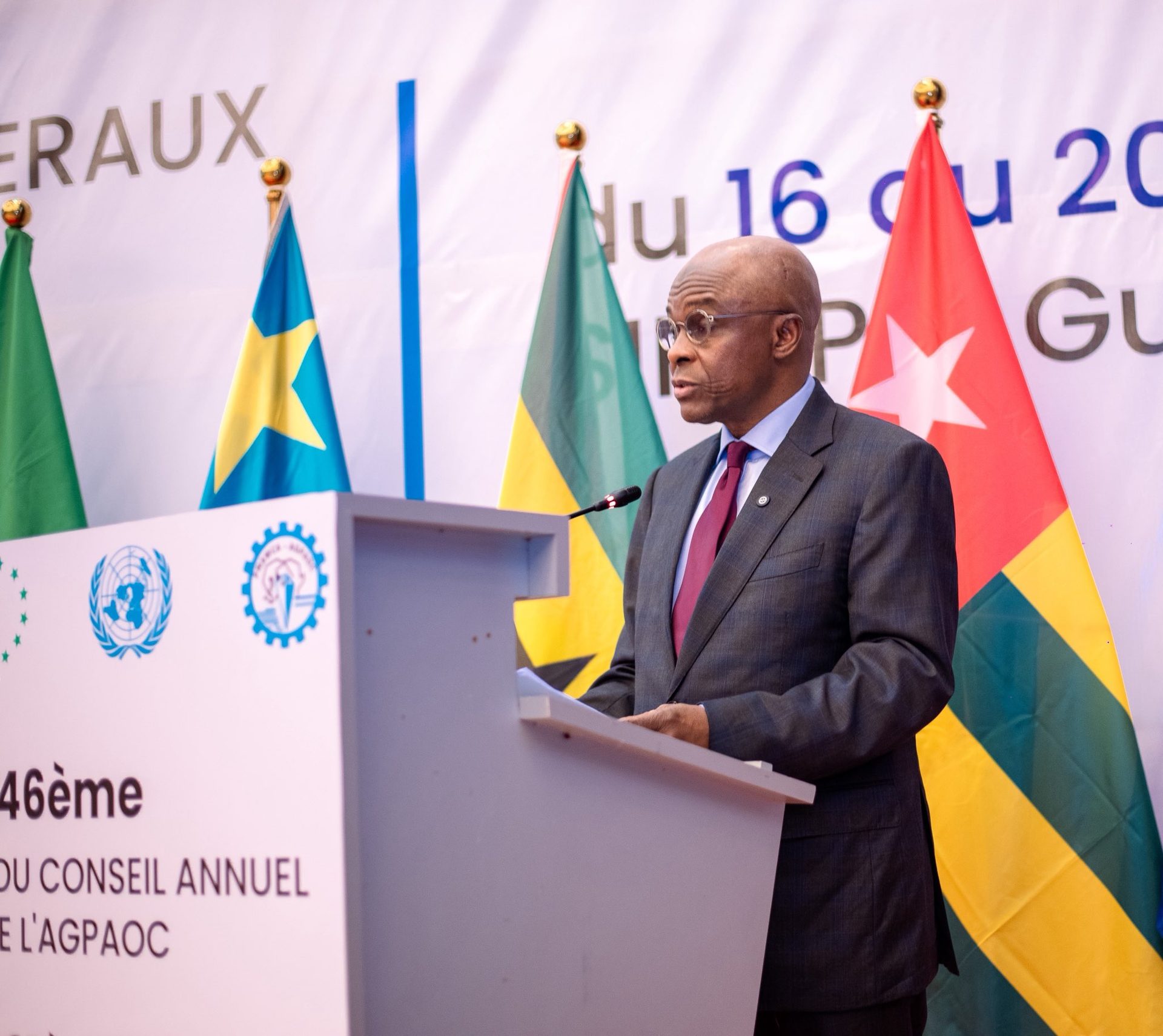
When the curtain fell on the 46th Annual Council Meeting and 21st Roundtable of Managing Directors of the Port Management Association of West and Central Africa (PMAWCA) in Sipopo, Malabo, Equatorial Guinea, one historic chapter closed and a harder test began.
After two eventful years as the first Nigerian President and Chairman of Council of PMAWCA, the Managing Director of the Nigerian Ports Authority (NPA), Dr. Abubakar Dantsoho, handed over the baton to Aly Koita, Director-General of the Autonomous Port of Conakry.
Representing 20 coastal countries and five landlocked nations, PMAWCA sits at the economic lifeline of over 400 million people.
Yet for decades, regional maritime bodies along the Gulf of Guinea were often criticized as polite talking shops where port chiefs met annually, read speeches, and returned home to the exact same bottlenecks.
Between November 2024 and November 2026, Dr. Dantsoho worked deliberately to change that culture—shifting PMAWCA from a ceremonial club into a reform-minded technical bloc.
What legacies did Dr. Dantsoho leave behind?
Dr. Dantsoho’s presidency stood on three practical pillars that reshaped both PMAWCA and Nigeria’s standing in global shipping:
Putting Digitalisation and Interoperability at the Centre:
Rather than treating technology as cosmetic window dressing, Dantsoho pushed the doctrine that modern ports win on turnaround time, lower cargo dwell time, and system interoperability.
By anchoring Nigeria’s own rollout of the Port Community System (PCS) and National Single Window alongside deeper regional data-sharing, he proved that West and Central African ports cannot afford fragmented, paper-heavy border clearance while global shipping lines automate.
Linking Port Efficiency to Maritime Security:
Hosting the Joint Gulf of Guinea Commission–PMAWCA Forum in Malabo underscored a vital truth: a modern port is useless if the sea lanes leading to it are unsafe or if subsea cables and offshore pipelines are vulnerable.
Bridging port operators with Gulf of Guinea security institutions elevated PMAWCA’s strategic relevance.
*Global Voice and Youth Capacity:
From elevating Africa’s voice within the International Association of Ports and Harbors (IAPH)—where he serves as Vice President for Africa to championing youth training through the PMAWCA Professional Training Centre in Cotonou, Dantsoho raised the association’s diplomatic weight in the international maritime comity of nations.
Dissecting the Malabo Message: Cooperation Over Cutthroat Rivalry
The core message emerging from the Malabo deliberations and communique is blunt and overdue: West and Central African ports must choose strategic collaboration over destructive rivalry.
For too long, neighbouring ports along the Nouakchott–Luanda coastline have viewed one another purely as competitors fighting for transshipment cargo—even as shippers across the sub-region suffer from high port charges, slow customs clearance, weak hinterland rail and road links, and expensive transit corridors.
Geopolitical disruptions in global shipping routes have recently diverted more vessel calls toward West and Central Africa.
Nigeria’s own port performance illustrates the scale of what is possible when capacity meets reform.
In Q1 2026 alone, Nigerian ports recorded an 83.1 percent surge in transshipment container volume alongside a sharp rise in total cargo throughput.
That momentum is a golden regional opportunity, yet it is also a stress test.
Ports operating near capacity with aging equipment and shallow drafts will lose diverted vessels to better-organized hubs unless regional standards improve together.
The Future of PMAWCA: Four Hard Tests for the New Leadership
As Conakry’s Aly Koita assumes the presidency, PMAWCA’s relevance in global shipping will not be judged by the warmth of its Malabo communique, but by four concrete benchmarks over the next two years:
Enforcing Accountability, Not Just Declarations:
In his parting charge in Malabo, Dr. Dantsoho proposed that a dedicated implementation progress report be tabled at the 47th Annual Council.
PMAWCA must adopt that discipline so member ports report measurable reductions in cargo dwell time and clearance costs rather than repeating old pledges.
.Seamless Customs and Hinterland Corridors
Digital single windows inside individual ports will fail if cargo still stalls for days at land borders or lacks efficient road and rail evacuation to the five landlocked member nations.
Green Ports and Climate Finance.
Global shipping is rapidly enforcing maritime decarbonisation rules.
As Dantsoho warned in Malabo, transitioning toward “green port” standards—shore power, clean marine fuels, and coastal erosion protection—is no longer optional; it is the ticket to accessing international climate and infrastructure finance.
Cybersecurity Resilience:
As West African ports digitize cargo clearance and vessel traffic management, they become prime targets for cyberattacks.
Shared regional cyber-defense protocols must become a core PMAWCA priority.
The Bottom Line
Dr. Abubakar Dantsoho leaves PMAWCA stronger, more visible, and better respected in global maritime circles than he met it.
Now, the association must prove that coastal solidarity across its 25 member states can lower the cost of doing business for ordinary traders, manufacturers, and consumers across West and Central Africa.
Ibrahim Nasiru, a public affairs analyst, writes from Abuja
Customs
Customs suspends training of recruits over dispute with Federal Character Commission on recruitment exercise

Headlines
NIWA clears water hyacinth on Jabi Lake to boost navigation, tourism

 Headlines3 months ago
Oyetola presents three-year score card as blue economy industry revenue hits ₦1.83trn

 Customs2 months ago
FOU Zone ‘A’: Aliyu retires after ₦3.19bn revenue recovery, Afeni takes over

 Customs3 weeks ago
FOU Zone A: Afeni intensifies anti-smuggling operations, seizes N511.4m drugs, rescues eight pangolins

 Customs2 months ago
Nigeria, Benin Customs move to harmonise trans-border trade, establish joint border post at Seme-Krake

 Headlines3 weeks ago
Tension heightens at Osborne Foreshore Estate over alleged environmental breach by property developer

 Commentaries4 weeks ago
Beyond Shiny Tech: Why Africa’s smart ports must build plumbing before AI