
Headlines
How NPA has sanitised port access roads with deployment of ETO, Electronic Barrier system

Funso OLOJO
Contrary to reports sponsored by entrenched interests in a bid to return the port access roads to the dark days, the Nigerian Ports Authority has, in collaboration with Trucks Transit Parks, recorded major improvements in port traffic management following the full deployment of electronic barrier systems across all terminal access points within the Lagos Port Complex.
At the peak of the Apapa traffic gridlock in 2018 and 2019, measures put in place to resolve the perennial problem failed until the Nigerian Ports Authority and Transit Parks Limited (TTP) introduced Electronic Call-Up System also known as Ètò.
Despite initial resistance by entrenched interests, the NPA stood its ground and enforced the system.
Since then, sanity has largely returned with commuters and residents who ply the roads on a daily basis applauding the NPA.
The Ètò Electronic Call-Up System, developed and managed by Trucks Transit Parks Limited, is a digital truck scheduling and access management platform designed to streamline traffic into and out of Nigerian ports.
Electronic barrier systems at port access roads offer enhanced security, improved traffic management, increased efficiency, and significant cost savings.
By replacing or supplementing manual processes, Ètò has provided a more reliable and modern solution for controlling and monitoring port entry points.
To implement the electronic call-up system, the NPA, in collaboration with the Lagos State Government and other relevant stakeholders, developed about 29 truck parks across Lagos State.
All of the 29 truck parks have fully deployed the Eto infrastructure, which includes automated gating systems and other information technology (IT) equipment.
The electronic call-up has been able to streamline cargo evacuation and truck movements, thereby bringing a level of sanity to the roads.
Apart from a few isolated cases where some truck drivers try to subvert the system by not adhering strictly to the truck manifest requirement, the electronic call-up has brought sanity to Apapa.
Aside from the call-up system, the NPA also started enforcing the use of railways in the movement of import and export cargoes in and out of states in the hinterland.
Recently, a Kano-based exporter moved about 100 tons of millet direct from Kano to Lagos Port via rail. The rail also had passengers on board the coaches.
“I spent almost 50 per cent less as haulage cost to move my millets in containers from Kano Railway Station to Lagos Port. If these cargoes are to be moved by trucks, the goods worth millions of naira, would have cost me more,” said the exporter, who did not give his name.
Addressing Long-Standing Challenges
The authority is promoting multi-modal transport systems through the use of railways and barges for the movement of cargo in and out of the ports.
The development has tremendously reduced congestion at most terminals at the ports, thereby helping to improve ports efficiency.
“Many barge operators have been licensed by the authority in order to ensure effective and safe operation.
” A regulatory framework has also been developed, which looks into the state of the barges being deployed.
“When we approve the deployment of the barges, we discovered that many of them did not have communication equipment and we directed them to install such equipment.
*We also insist that these barges must be seaworthy before they are allowed to sail in order to forestall a situation where they break down at the middle of the channels, which could cause disruptions,” said an official of the NPA.
Also, the NPA introduced a new policy for the management of empty containers. This policy compels shipping lines to take back at least 80 per cent of the loaded containers that they came with for every voyage in empties and export cargo.
Reacting to a recent report by fifth columnist who took sides with entrenched interests who wanted to sabotage the system and return the ports access roads to the dark days, the NPA said it has, in collaboration with Trucks Transit Parks, recorded major improvements in port traffic management following the full deployment of electronic barrier systems in all terminal access points within the Lagos Port Complex.
The system, which became fully operational in September 2025, is now a key part of daily port operations, ensuring that only authorised trucks with valid Ètò-issued call-up tickets can access designated terminals.
Integrated with the Ètò Electronic Call-Up System, the barriers have added a new layer of physical enforcement to digital scheduling, strengthened gate control, improved traffic coordination, enhanced the accuracy of port data, and overall traffic flow within the port.
Before the deployment of the integrated barrier system, the port operations were hampered by unauthorised truck diversions between terminals, with vehicles crossing from one terminal to another outside their scheduled bookings, idle trucks lingering in the port area seeking unscheduled jobs and congestion caused by non-compliance with standard operating procedures.
The barrier system has effectively closed these loopholes, providing a robust physical enforcement layer for the Ètò platform.
Each barrier automatically lifts only for trucks with verified call-up tickets assigned to a specific terminal, ensuring that all movements are scheduled, controlled, and traceable.
Enhanced Control, Data Integrity
According to the NPA, the deployment of electronic barriers represents a major leap in its automation of port operations.
“For years, unauthorised truck movements and human interference undermined efficiency in port operations. With the barrier system now active, we have end-to-end control from the point of booking to terminal access and exit,” the General Manager, Operations, Mrs. Stella Oladiran, said in a statement.
“Key benefits already recorded include: improved end-to-end control of the electronic call-up process, from booking to terminal exit, data integrity and accuracy in tracking port traffic and truck movements, transparent monitoring of inter-terminal traffic for better accountability and enhanced port productivity and efficiency through precise truck scheduling.
How The System Works
Each terminal gate is equipped with a fully automated electronic barrier connected to the Ètò platform.
Trucks with valid Ètò tickets are automatically verified and granted access.
Unauthorised trucks are denied entry, eliminating manual checks and reducing human interference.
The system provides real-time data on every truck’s entry, exit, and inter-terminal movement, enabling better coordination across the entire logistics chain.
Stakeholders’ Reaction
Meanwhile, stakeholders have denounced the reports of resurgence of gridlock on port access roads.
Port Manager, Lagos Port Complex, Mr Adebowale Lawal said the NPA, in line with its mandate to ensure the smooth operation of Port activities and the free flow of traffic around the Apapa Port Complex Corridor, remains fully committed to maintaining order and preventing any recurrence of the severe gridlock previously experienced along the access roads.
“We have recently undertaken a review and enhancement of the ETO system, which now integrates Terminal Gates directly with the ETO platform.
“This integration is designed to provide a structured sequencing of truck movements, both inbound and outbound within the Apapa Port Complex.
“The objective of this initiative is to ensure transparency, improve traffic efficiency, and maintain a sustainable operating environment around the ports.
“However, the success of this system depends largely on the cooperation and compliance of all Stakeholders, including Terminal Operators, Transport Unions, Drivers, Clearing Agents, and Government Agencies (Both Federal and State).
“Sequencing truck entry and exit is not rocket science. With sincerity of purpose and commitment from all concerned, we can achieve and maintain orderliness and prevent a return to the chaotic conditions of the past.
“It is in our best interest, because smooth Ingress and Egress of Trucks will, in the long run, bring about high turnover for all Stakeholders,” he stated.
On his part, the Chairman of the Association of Maritime Truck Owners (AMATO), Remi Ogungbemi said, “Our attention has been drawn to some misleading media reports alleging that gridlock has returned to the Apapa port corridor due to a collapse of the electronic call-up system.
“We wish to categorically state that such reports are false, exaggerated, and do not reflect the true situation on ground.
” All the road arteries leading to the Apapa Port — including Wharf Road, Creek Road, and other adjoining routes — remain orderly and passable.
“At present, trucks are moving in a single, regulated lane towards their designated terminals within the port in compliance with traffic and safety directives.
“This organised movement should not be mistaken for gridlock. We therefore urge the public, port users, and the media to disregard and debunk these unfounded rumours.
“The current traffic situation around the Apapa port corridor reflects improved discipline, better enforcement, and enhanced cooperation among stakeholders.”
He added, “We remain committed to continuous collaboration with relevant government agencies, traffic management authorities, and terminal operators to sustain the gains achieved so far in port access management.
“We commend the efforts of all stakeholders who have contributed to ensuring the smooth flow of trucks and cargoes in and out of the port.”
In his reaction, the General Manager of Corporate and Strategic Communications, NPA Ikechukwu Onyemekara said the era of all forms of illegality of the past as it concerns truck accessing the ports is over.
He said meddlesome interlopers would always find a way to discredit the NPA, adding that the authority was committed to its mandate of ensuring ports efficiency.
“The electronic call-up system is a global best practice, and in addition, with the electronic barrier being in place at all terminals, practices that encourage chaos along the port corridor will not be possible anymore.
“The NPA has been collaborating and will continue to engage all stakeholders who are genuinely committed to the growth of the maritime industry and the nation at large to ensure an efficient port system,” he said.

Continue Reading
Customs
Oyo/Osun Customs Command collects 27.2billon revenue in Q1 2026
Funso OLOJO, Editor
The Oyo/Osun Command of the Nigeria Customs Service (NCS) has posted an impressive 95% increase in revenue collection in the first quarter of 2026 compared to the same period in 2025.
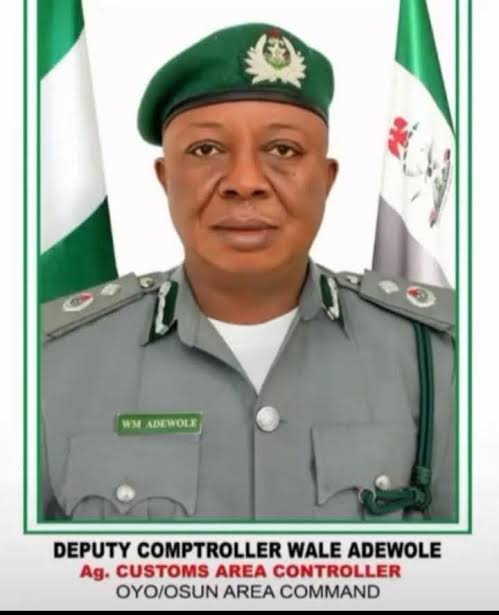
Led by Acting Comptroller Wale Moses Adewole, the command generated ₦27.2 billion between January and March 2026, up from ₦13.97 billion in Q1 2025.
A breakdown of the generated revenue revealed that the command raked in a total sum of N5,977,766,941.65 in January 2026 which was about N2 billion lower (23% down) than the total sum of N7,804,408,776.88 collected in the same period of 2025.
However, despite a dip in January, revenue rebounded strongly in February and March.
In February , the command’s revenue collection jumped up astronomically to a total sum of N8,767,974,864.40 against the very low total revenue of N2,289,193,870 realized in the corresponding period of 2025.
This year’s February revenue is over 383% higher than the revenue collected the same period last year.
February’s performance was the standout, with collections nearly quadrupling year-on-year.
In March 2026, Acting Comptroller Adewole’s administrative ingenuity and thoroughness further shored up the revenue generation of the command in the month under review to a total sum of N12,454,516,158.62.
In the corresponding period of last year, the command’s generated revenue was a patry sum of N3,877,668,667.
This year’s March revenue achievement represents 321% rise over last year’s.
Acting Comptroller Adewole’s administrative reforms and enforcement measures are credited with driving the surge.
Overall, the command’s Q1 results underscore a significant improvement in efficiency and compliance, positioning Oyo/Osun as one of the strongest performing Customs Commands in the country.
Headlines
NRC decries ceaseless attacks, vandalism on trains along Abuja- Kaduna rail corridor
Funso OLOJO, Editor
The Nigerian Railway Corporation (NRC) has lamented the ceaseless attacks on its train operations along the notorious Abuja–Kaduna rail corridor by suspected vandals and criminal elements.
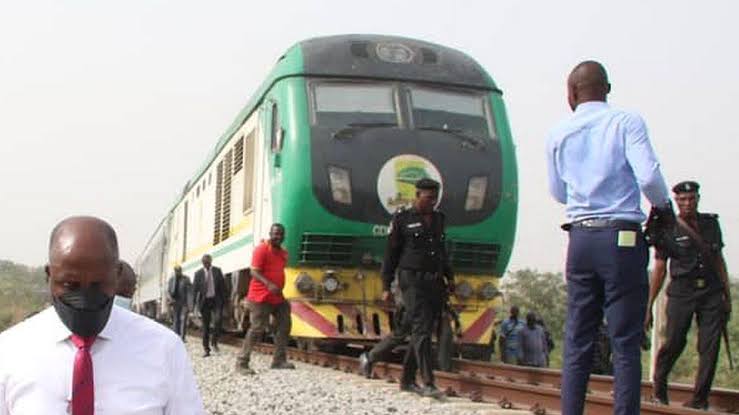
In a statement by the Corporation,the latest incident occurred around Kilometer 177 along the Abuja–Kaduna rail corridor, where some unknown persons reportedly gathered along the rail track and began pelting stones at a moving train, leading to damage to the windscreen of the leading locomotive.
The NRC noted with deep concern that within the last two weeks, similar attacks have also been witnessed in other locations, including Gidan Busa/Sarki Gora Village, Kakau District, Chikun Local Government Area of Kaduna State, among others, a development it feared is posing serious danger to railway operations, passengers, and operational personnel.
The NRC management disclosed that similar incidents have so far been recorded in more than six locations along the corridor, thereby worsening the already challenging and stressful operational conditions under which the Corporation continues to provide essential transport services to Nigerians.
The NRC stated that these persistent attacks not only endanger lives and damage critical railway infrastructure, but also constitute acts of economic sabotage capable of disrupting national transportation and undermining the huge investments of the Federal Government in the railway sector.
The Corporation however assured that despite the unfortunate development, train operations have continued with necessary safety precautions and strict operational vigilance by railway personnel who have continued to demonstrate commitment and professionalism in ensuring that passengers reach their destinations safely.
The Management of the Corporation specially acknowledged the efforts and support of security operatives working tirelessly with the NRC to secure railway corridors and safeguard passengers and railway assets despite the persistent attacks.
It said it is currently working closely with security agencies, community leaders, and other relevant stakeholders to strengthen surveillance along the corridor, identify the perpetrators, and bring them to justice.
The NRC therefore called on residents and communities along railway corridors to support efforts aimed at protecting railway infrastructure by reporting suspicious activities and discouraging criminal attacks on trains and railway installations.
NRC further expressed concerns that continuous attacks on railway operations could negatively affect smooth service delivery if urgent collective action is not taken to curb the menace.
“The Nigerian Railway Corporation remains committed to ensuring safe, secure, and efficient train operations across the country and assures passengers that every necessary measure is being taken to safeguard lives and railway assets” the statement concluded.
Headlines
Nigeria calls for equity, fairness, support for developing countries towards IMO’s shipping decarbornisation policy
Gloria Odion, Maritime reporter
Nigeria has urged the international maritime community to ensure fairness, equity, and targeted support for developing countries in the global transition to net-zero emissions in shipping.
The Minister of Marine and Blue Economy, Adegboyega Oyetola, made this position known while speaking at the 84th session of the Marine Environment Protection Committee (MEPC 84) of the International Maritime Organization (IMO) in London.
He reaffirmed Nigeria’s commitment to decarbonisation, noting that progress must be guided by frameworks that reflect the economic realities and capacities of developing nations.
Oyetola stressed that efforts to achieve net-zero emissions by 2050 should be aligned with broader sustainable development objectives.
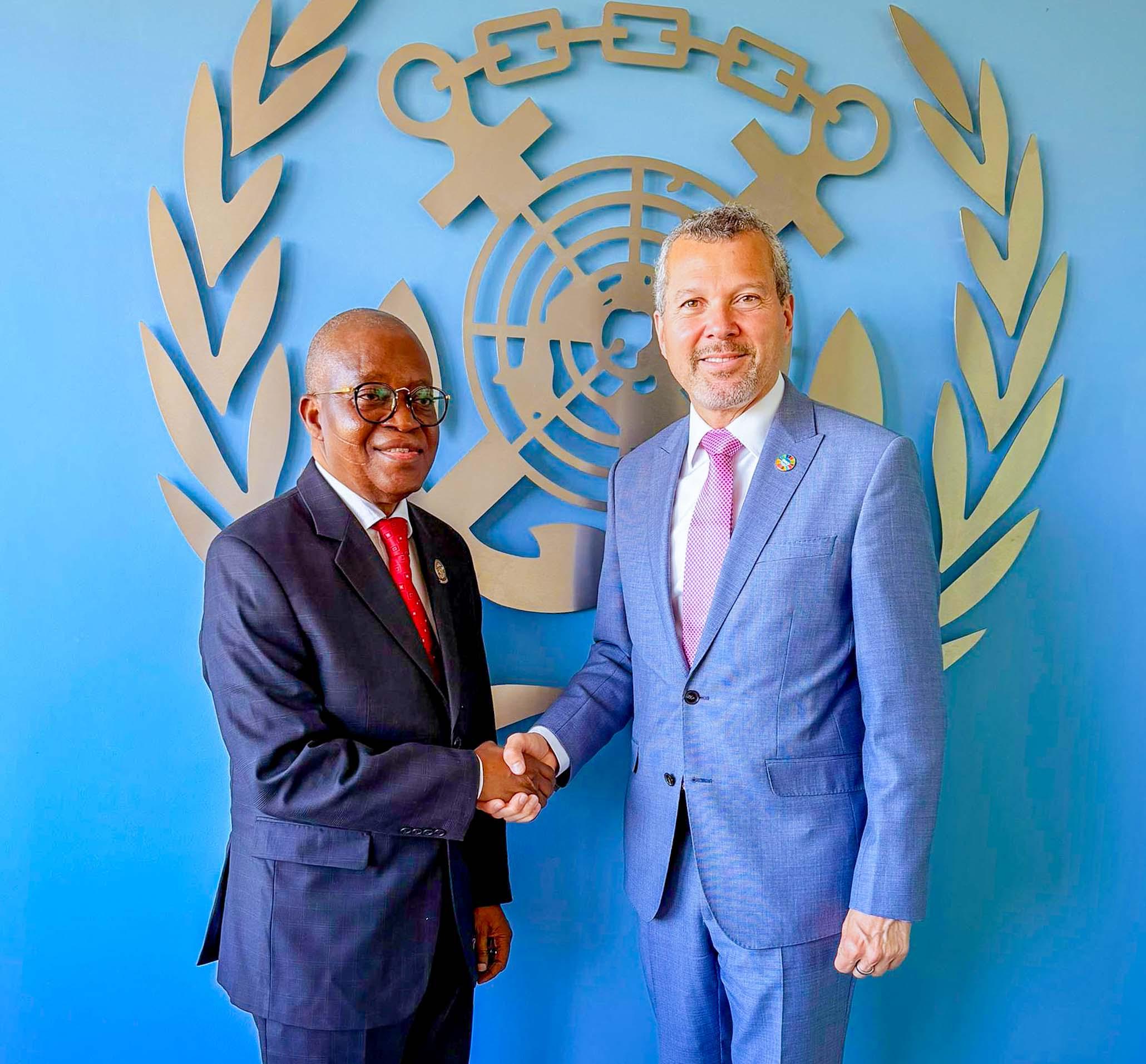
On the sidelines of the meeting, the Minister held high-level bilateral discussions with the IMO Secretary-General, Arsenio Dominguez, and the President of Saudi Arabia’s Transport General Authority, H.E. Fawaz Al Sehali.
The engagements focused on strengthening cooperation in key areas, including maritime security, capacity building, blue economy development, and promoting an inclusive and balanced energy transition.
He reiterated Nigeria’s commitment to a constructive partnership with the IMO, anchored on shared priorities such as maritime safety, institutional capacity development, and sustainable growth of the blue economy.
In his remarks, Dominguez commended Nigeria’s commitment to maritime governance and expressed appreciation for the warm reception during his recent visit, including his engagement with President Bola Ahmed Tinubu.
He described the visit as a strong indication of Nigeria’s dedication to advancing global maritime standards.
The IMO Secretary-General also praised Nigeria’s leadership in improving maritime security in the Gulf of Guinea, noting the significant reduction in piracy incidents and enhanced regional collaboration.
He added that Nigeria’s approach provides a useful model for other regions.
Discussions further addressed Nigeria’s growing role within the IMO Council, ongoing reforms in port modernisation and digitalisation, and initiatives to strengthen human capital in line with international maritime standards.
The bilateral meeting with Saudi Arabia highlighted the strengthening of relations between both countries, with a shared commitment to continued cooperation and mutual support within the IMO framework.
-

 Headlines3 months ago
FIFA sends Nigeria’s Super Eagles to 2026 World Cup, awards boardroom scoreline of 3 goals to nil against DR Congo
-

 Aviation3 months ago
Why we increased cargo tariff at Airports– FAAN
-

 Aviation3 months ago
Freight forwarders warn FAAN’s new charges regime could cripple airport operations
-
 Aviation3 months ago
Tension de-escalates at Lagos Airport as FAAN, Cargo agents reach truce over new tariff
-

 Headlines3 months ago
Customs agents seek clarification on status of B’Odogwu on National Single Window platform.
-

 Headlines3 months ago
NIWA pledges to enhance business operations of factories in Kogi state