Connect with us

Headlines

NRC attributes derailment incident on Warri- Itakpe train route to vandalism

— assures safety of all passengers.
Funso OLOJO 
The Nigerian Railway Corporation (NRC) has said that it has secured all passengers on board of the coaches which were  involved in derailment incident on November 1st, 2025 on Warri- Itakpe train route.
The unfortunately incident involved two of the seven coaches which travelled on the route on the day of the incident.
In a public statement issued by the Corporation and personally signed by its Managing Director, Dr Kayode Opeifa, no fatality was recorded in the incident as all passengers involved in the train derailment were accounted for, safely evacuated and taken to Agbor, the nearby town.
“The Management of the Nigerian Railway Corporation (NRC) wishes to inform the general public that a train derailment incident occurred yesterday at approximately 19:30 hours, involving two out of the seven coaches of our Warri–Itakpe Train Service (WITS) at Kilometer 212+8m, Agbor.
“Preliminary investigations indicate that the incident may have been caused by suspected track vandalism.
“We are pleased to confirm that all passengers on board were safely evacuated to Agbor, and everyone has been fully accounted for. No casualties or injuries were recorded.
“Our recovery team, supported by security personnel, has been at the site since last night carrying out recovery operations.
” These efforts are progressing steadily and are expected to be completed soon.
“As a precautionary measure, train services on the corridor have been temporarily suspended today, November 2nd, 2025 to enable a comprehensive security and safety audit of the track and related infrastructure.
“We sincerely regret any inconvenience this may cause our valued passengers and the general public.
“Normal operations will resume as soon as it is verified safe to do so” the statement concluded.
It would be recalled that train services only resumed last week Wednesday, October 29th, 2025 after initial suspension of operations on the route which the management said was necessary to carry out a routine repairs, maintenance and system checks on the track and rolling stock to ensure the comfort, reliability and safety of passengers.
Continue Reading
Click to comment

Leave a Reply

Your email address will not be published. Required fields are marked *

Headlines

NRC decries ceaseless attacks, vandalism on trains along Abuja- Kaduna rail corridor 
Funso OLOJO, Editor 
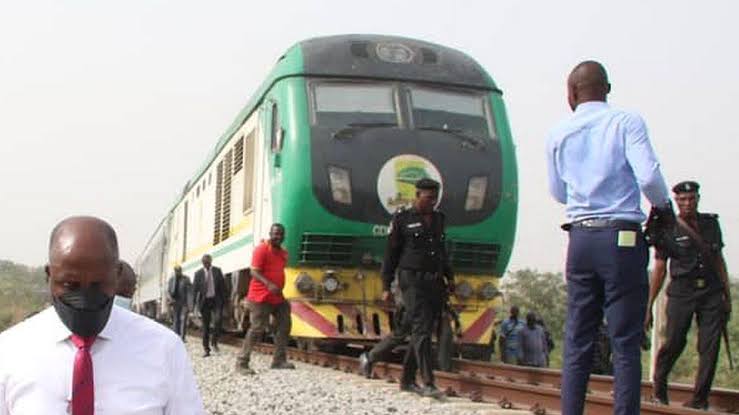
The Nigerian Railway Corporation (NRC) has lamented the ceaseless attacks on its train operations along the  notorious Abuja–Kaduna rail corridor by suspected vandals and criminal elements.
In a statement by the Corporation,the latest incident occurred around Kilometer 177 along the Abuja–Kaduna rail corridor, where some unknown persons reportedly gathered along the rail track and began pelting stones at a moving train, leading to damage to the windscreen of the leading locomotive.
The NRC noted with deep concern that within the last two weeks, similar attacks have also been witnessed in other locations, including Gidan Busa/Sarki Gora Village, Kakau District, Chikun Local Government Area of Kaduna State, among others, a development it feared is posing serious danger to railway operations, passengers, and operational personnel.
The NRC management disclosed that similar incidents have so far been recorded in more than six locations along the corridor, thereby worsening the already challenging and stressful operational conditions under which the Corporation continues to provide essential transport services to Nigerians.
The NRC stated that these persistent attacks not only endanger lives and damage critical railway infrastructure, but also constitute acts of economic sabotage capable of disrupting national transportation and undermining the huge investments of the Federal Government in the railway sector.
The Corporation however assured that despite the unfortunate development, train operations have continued with necessary safety precautions and strict operational vigilance by railway personnel who have continued to demonstrate commitment and professionalism in ensuring that passengers reach their destinations safely.
The Management of the Corporation specially acknowledged the efforts and support of security operatives working tirelessly with the NRC to secure railway corridors and safeguard passengers and railway assets despite the persistent attacks.
It said it is currently working closely with security agencies, community leaders, and other relevant stakeholders to strengthen surveillance along the corridor, identify the perpetrators, and bring them to justice.
The NRC therefore called on residents and communities along railway corridors to support efforts aimed at protecting railway infrastructure by reporting suspicious activities and discouraging criminal attacks on trains and railway installations.
NRC further expressed concerns that continuous attacks on railway operations could negatively affect smooth service delivery if urgent collective action is not taken to curb the menace.
“The Nigerian Railway Corporation remains committed to ensuring safe, secure, and efficient train operations across the country and assures passengers that every necessary measure is being taken to safeguard lives and railway assets” the statement concluded.
Continue Reading

Headlines

Nigeria calls for equity, fairness, support for developing countries towards IMO’s shipping decarbornisation policy 
Gloria Odion, Maritime reporter 
‎Nigeria has urged the international maritime community to ensure fairness, equity, and targeted support for developing countries in the global transition to net-zero emissions in shipping.
‎The Minister of Marine and Blue Economy, Adegboyega Oyetola, made this position known while speaking at the 84th session of the Marine Environment Protection Committee (MEPC 84) of the International Maritime Organization (IMO) in London.
He reaffirmed Nigeria’s commitment to decarbonisation, noting that progress must be guided by frameworks that reflect the economic realities and capacities of developing nations.
‎Oyetola stressed that efforts to achieve net-zero emissions by 2050 should be aligned with broader sustainable development objectives.
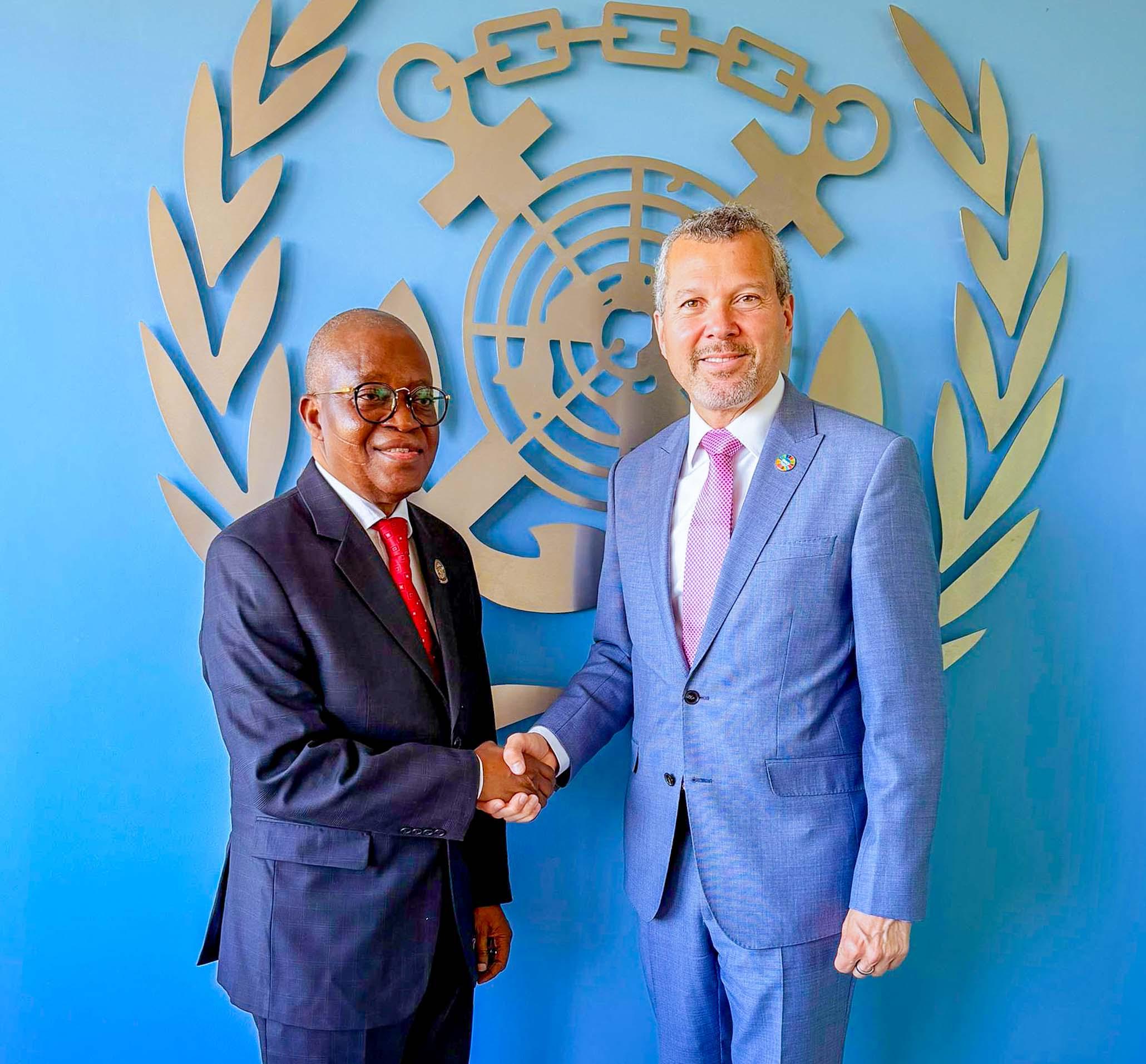
‎On the sidelines of the meeting, the Minister held high-level bilateral discussions with the IMO Secretary-General, Arsenio Dominguez, and the President of Saudi Arabia’s Transport General Authority, H.E. Fawaz Al Sehali.
 The engagements focused on strengthening cooperation in key areas, including maritime security, capacity building, blue economy development, and promoting an inclusive and balanced energy transition.
‎He reiterated Nigeria’s commitment to a constructive partnership with the IMO, anchored on shared priorities such as maritime safety, institutional capacity development, and sustainable growth of the blue economy.
‎In his remarks, Dominguez commended Nigeria’s commitment to maritime governance and expressed appreciation for the warm reception during his recent visit, including his engagement with President Bola Ahmed Tinubu.
He described the visit as a strong indication of Nigeria’s dedication to advancing global maritime standards.
‎The IMO Secretary-General also praised Nigeria’s leadership in improving maritime security in the Gulf of Guinea, noting the significant reduction in piracy incidents and enhanced regional collaboration.
He added that Nigeria’s approach provides a useful model for other regions.
‎Discussions further addressed Nigeria’s growing role within the IMO Council, ongoing reforms in port modernisation and digitalisation, and initiatives to strengthen human capital in line with international maritime standards.
‎The bilateral meeting with Saudi Arabia highlighted the strengthening of relations between both countries, with a shared commitment to continued cooperation and mutual support within the IMO framework.
Continue Reading

Headlines

Nigeria seeks regional dominance in cargo throughput through port modernisation, infrastructural upgrade
Gloria Odion, Maritime reporter 

Nigeria’s drive to unlock the full potential of its marine and blue economy is gaining traction, supported by a combination of policy reforms, infrastructure development, and institutional realignment under the administration of President Bola Ahmed Tinubu.

Central to this effort is a comprehensive overhaul of the nation’s port system aimed at expanding maritime capacity and positioning Nigeria as a leading trade hub in West Africa.

This multi dimensional strategy spanning legislative support, financing, regulatory reforms, and digital transformation represents what industry stakeholders describe as a long-overdue restructuring of Nigeria’s maritime framework.

The objective is to maximise opportunities under the African Continental Free Trade Area (AfCFTA) and strengthen Nigeria’s role in intra-African trade.

Historically, Nigeria’s ports have handled over 90 per cent of the country’s cargo by volume.

However, persistent challenges such as congestion, infrastructure deficits,inefficiencies and fragmented processes have constrained their competitiveness,allowing smaller regional economies to capture a larger share of maritime traffic.

Speaking at an industry forum in Lagos, the Managing Director of the Nigerian Ports Authority (NPA), Dr. Abubakar Dantsoho, emphasised the need for Nigeria’s ports to evolve in line with the demands of an increasingly integrated African market.

He noted that while Nigeria’s geographical advantage remains significant, it is no longer sufficient to guarantee leadership in regional trade.

According to him, efficiency, speed, innovation, and reliability will be the defining factors in determining dominance under AfCFTA.

The foundation for ongoing reforms was established with the creation of the Federal Ministry of Marine and Blue Economy, led by Adegboyega Oyetola.

The ministry is tasked with harmonising maritime functions and unlocking the country’s estimated $3 trillion blue economy potential.

As part of the reform agenda,the Federal Government has prioritised port modernisation.

The House of Representatives recently approved a $1 billion loan request to rehabilitate the Lagos Port Complex and Tin Can Island Port, addressing longstanding infrastructure challenges and enhancing operational efficiency.

The Nigerian Ports Authority has commenced targeted upgrades at key facilities,including berth expansion, improved cargo handling systems, and measures to reduce vessel turnaround time.

Modernisation efforts are also being extended to other ports such as Warri, Port Harcourt, Onne, and Calabar to ensure balanced national development.

In addition,new deep seaports are being developed across coastal states, including Bayelsa, Cross River, Akwa Ibom and Ondo to increase capacity and reduce pressure on existing infrastructure.

Facilities like Lekki Deep Sea Port are already transforming the maritime landscape by accommodating larger vessels and boosting cargo throughput.

Beyond physical infrastructure, the government is advancing digital reforms through the deployment of a Port Community System and the National Single Window platform.

These initiatives are designed to streamline documentation, enhance transparency, and significantly reduce cargo clearance times.

Efforts are also underway to improve multimodal connectivity through rail integration, inland dry ports, barging systems, and dedicated export corridors.

These measures aim to address long-standing bottlenecks in cargo evacuation and inland logistics.

On maritime security,Nigeria has recorded over four years without piracy incidents, largely attributed to the Deep Blue Project and improved surveillance capabilities.

This has strengthened investor confidence and created a more stable operating environment.

Private sector participation remains a key component of the reform strategy, with the NPA adopting project financing models to support infrastructure development and improve operational efficiency.

Early indicators suggest positive outcomes. Revenue generated by agencies under the Marine and Blue Economy Ministry increased significantly from approximately ₦700.79 billion in 2023 to about ₦1.83 trillion in 2025, reflecting gains from improved efficiency and regulatory reforms.

Despite its economic strength, Nigeria currently accounts for only about 25 per cent of cargo traffic in West Africa, despite contributing over 60 per cent of the region’s GDP.

Dantsoho described this disparity as evidence of underutilised potential and stressed the urgency of ongoing reforms.

With AfCFTA creating a more competitive trade environment, countries with efficient,technology driven port systems are better positioned to capture increased cargo flows.

Nigeria’s reform agenda is therefore critical to both closing existing gaps and establishing leadership in regional trade.

While challenges such as infrastructure gaps, funding constraints,and bureaucratic inefficiencies persist, stakeholders remain optimistic that sustained reforms will reposition Nigeria as a major maritime and logistics hub in Africa.

If effectively implemented and maintained,these initiatives are expected to enhance trade efficiency,reduce logistics costs,and strengthen Nigeria’s economic diversification efforts, ultimately transforming the country’s ports into key drivers of long term growth.

Continue Reading

Trending