Headlines
National Single Window, a marriage of strange bed fellows that may change nothing in cargo clearance process – Segun Musa
Funso OLOJO, Editor
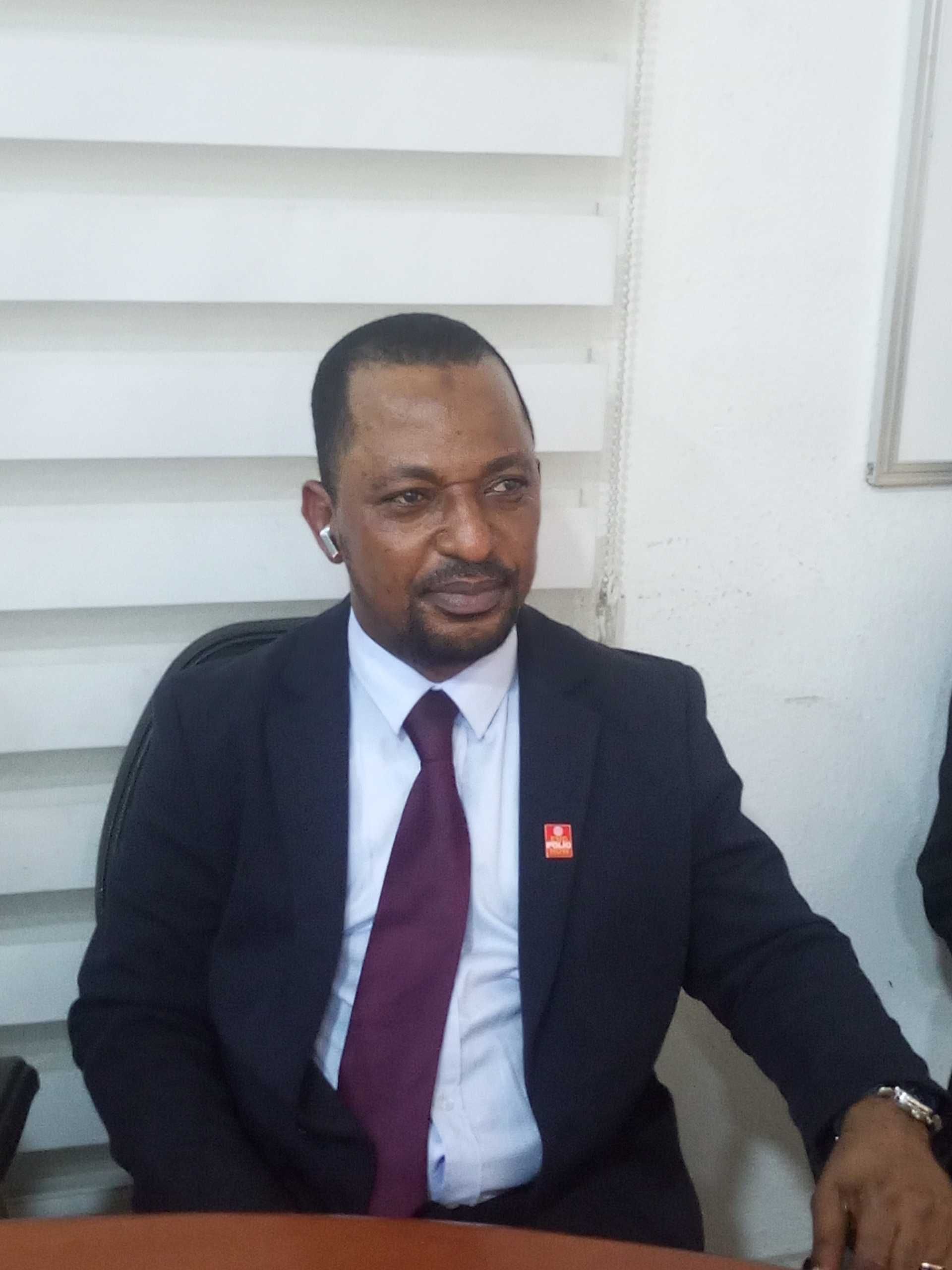
A maritime expert and the National Vice President of the National Association of Government Approved Freight Forwarders (NAGAFF), Dr Segun Musa, has taken a swipe at the celebrated National Single Window(NSW) programme of the Federal government, describing it as a ‘mere jamboree’ that may not have the desired impact on cargo clearance process at the Port.
Dr Musa, who was the guest at the weekly Maritime Reporters Association of Nigeria (MARAN) roundtable discussion programme held on Wednesday, February 4th, 2026, at Apapa , Lagos,said the NSW is like ‘an ordinary shell that houses different agencies’ that don’t have equal efficiency in trade facilitation.
He noted that SW is like a chain and it will be as strong as it’s weakest link.
The NAGAFF chief observed that if all the participating agencies are not ready and their operations are not automated, the whole essence will be a waste of time and resources because, according to him, one of the agencies in the link can delay the process due to inefficiency.
” What is the level of competence and efficiency of the participating agencies?
“If all of them are warehoused in a single window, an incompetent agency among them could frustrate the process.
“So let nobody deceive us that there’s going to be one single window that it’s going to be a game changer that will facilitate trade and everything will just be moving. It’s never true” Musa declared.
It could be recalled that the Federal government has fixed March 27th, 2026 as the official date for the launch of the first phase of the NSW.
On African Continental Free Trade Area (AfCFTA), Dr Musa said the programme would not deliver meaningful impact for Nigeria without clearly defined, holistic and measurable policies to drive its implementation, criticizing what he described as Nigeria’s ceremonial participation in the programme.
According to him, genuine participation under AfCFTA should reflect in export volumes and measurable benchmarks rather than media showcases of minimal shipments.
“If we were serious under this scheme, we should be talking about exporting 200,000 to 300,000 containers by now — even up to a million.
” Instead, we are celebrating one or two containers and gathering media houses to showcase them. Is that participation? It’s painful for a country of this size,” he said.
Musa argued that policy frameworks must be predictive and structured in a way that allows stakeholders to key into them with certainty of outcomes.
“A policy must be holistic. You should be able to key into it and predict what will happen. That is the essence of policy. What we are doing now is a waste of time and resources,” he stated.
Responding to question on policy gaps and measurable benchmarks required to reposition Nigeria under AfCFTA, Musa maintained that the challenge was not the absence of declarations but the lack of institutional readiness and structured participation.
He further compared Nigeria’s export performance with that of Europe and Asia, noting that serious trading economies focus on volume and competitiveness rather than symbolic shipments.
The maritime expert expressed concern that without concrete benchmarks, coordinated institutional reforms and export-driven strategies, Nigeria may struggle to maximise opportunities under AfCFTA.
The roundtable ended with renewed calls for actionable policies, institutional competence and measurable targets to ensure that the continental trade agreement translates into tangible economic gains for the country
Continue Reading
Headlines
Indigenous maritime investors seek partnership with NIWA for mutual development of inland waterways
Gloria Odion, Maritime Reporter
A coalition of indigenous maritime tourism and transportation investors has pledged to unlock strategic investment opportunities aimed at developing Nigeria’s vast but largely untapped maritime tourism economy for the benefit of littoral communities in Lagos and across the country.
The group, Allied Concessionaires and Blue Economy Alliance, made the commitment during a courtesy visit to the Lagos Area Manager of the National Inland Waterways Authority (NIWA), Engineer Sarat Braimah, on Tuesday at the NIWA Lagos Area Office.
Speaking during the visit, Chairman of the coalition, Bolaji Olasade, explained that the alliance is made up of reputable and experienced maritime tourism and transportation operators committed to redefining waterfront recreation and hospitality by integrating safe and efficient water transportation systems.
He noted that the initiative is designed to create jobs, boost coastal tourism, and expand economic opportunities within Lagos and beyond.
“We came to formally introduce our coalition, which is not a conventional association but a consortium of visible and tested operators, mostly concessionaires, who are willing and ready to collaborate with NIWA to grow and develop inland waterways tourism infrastructure.
“We are also focused on opening up littoral communities through destination marketing and the promotion of resorts,” Olasade stated.
He added that the group seeks to reposition Nigeria’s brown water and blue economy sectors by transforming the country’s waterfront hospitality and tourism landscape into a globally competitive industry.
In her remarks, the Secretary of the coalition, Barrister Dorcas Aderemi, emphasized that the Nigerian marine and blue economy sector can only thrive when the inland waterways ecosystem is strategically aligned for sustainable investment and funding.
She called for a structured public-private partnership model between the private sector and NIWA to fast-track development and enhance inland waterways utilization.
According to her, such collaboration would not only stimulate economic growth and job creation but also significantly boost government revenue and national development.
The group commended Engineer Braimah for her leadership and commitment to industry growth, particularly her zero-tolerance stance on boat transportation accidents and security infractions on inland waterways in Lagos.
They also congratulated her on her recent Nelson Mandela Pan-African Leadership Award, describing it as a testament to her dedication to national service.
Responding, Engineer Braimah welcomed the delegation and expressed appreciation for their interest in partnering with NIWA.
She assured them of the Authority’s willingness to collaborate in unlocking opportunities within the inland waterways corridor in Lagos and across Nigeria.
“We are pleased to receive you and have listened carefully to your intentions to collaborate with us.
“We recognize that NIWA cannot achieve its mandate alone without the private sector, especially serious investors with genuine financial commitments to the industry.
“We will communicate your proposals to our headquarters in Abuja to explore how your group can leverage existing opportunities,” she said.
The Area Manager further highlighted the need to modernize inland water transportation by introducing new boats and ferries to gradually phase out outdated watercraft, thereby enhancing safety, efficiency, and value across the waterways transportation and hospitality sectors.
She concluded by urging the coalition to remain united, avoid internal conflicts, and focus on delivering meaningful impact, particularly for littoral communities that must be actively engaged and empowered to benefit from maritime tourism and transportation opportunities within their environment.
Headlines
Lekki Port boosts Nigeria’s trade surge as NPA releases 2025 operational performance
Funso OLOJO, Editor
The Lekki Deep Sea Port played a significant role in the trade surplus recorded by the Nigerian ports Authority (NPA) in 2025 with a staggering 129.3m metric tons of cargo throughout over the 2024 figures of 103.6m metric tons, representing 24.8 percent increase.
According to the operational performance report released by the NPA, Lekki Port was identified as the leading port in Nigeria, handling 40.6 percent of the nation’s total cargo throughput.
Onne Port followed with 19.1 percent, and Apapa Port handled 16.7 percent.
In addition to volume, Lekki Port attracted the largest vessels, with an average Gross Registered Tonnage (GRT) of 55,712, slightly higher than Onne Port at 53,022 GRT.
Apapa and Tin Can Island Port received ships averaging 33,251 GRT and 36,909 GRT, respectively, while Delta Ports handled vessels averaging 17,414 GRT.
The report underscores a structural shift in vessel traffic: although Tin Can Island Port recorded the highest frequency of ship arrivals accounting for 22.7 percent of total ship calls, Lekki and Onne are increasingly receiving the industry’s “heavyweight” vessels, enhancing Nigeria’s capacity to handle larger, more valuable cargoes.
Overall, total ship calls rose by nearly 12 percent to 4,477 vessels, reflecting broad-based growth across all operational metrics.
The report revealed that total cargo throughput surged by 24.8 percent rising from approximately 103.6 million metric tons in 2024 to over 129.3 million metric tons in 2025.
The report emphasized that the Managing Director of the Nigerian Ports Authority (NPA), Dr. Abubakar Dantsoho, described the growth as one of the most significant annual increases in Nigeria’s maritime history, noting that the milestone strengthens the country’s position as a more competitive and strategic player in regional and global trade.
While imports continue to dominate overall cargo traffic, the report highlights a steady rise in outward trade, with exports accounting for 39.0 percent of total cargo throughput.
Inward traffic represented 59.2 percent, and transshipment contributed 1.8 percent.
Analysts view the growth in export volumes as a direct validation of the Federal Government’s economic diversification initiatives, aimed at reducing dependence on crude oil and promoting non-oil sector exports.
Containerized cargo, a key indicator of export trade activity, grew significantly.
Total container traffic increased by 25.7 percent, surpassing 2.1 million Twenty-foot Equivalent Units (TEUs).
Of this, export containers grew by 3.1 percent, while import-laden containers surged by 32.8 percent.
The report also noted a remarkable 205.8 percent increase in transshipment containers, signaling Nigeria’s emergence as a pivotal regional logistics and trade hub.
Liquid bulk cargo, including fuel and chemicals, remained the dominant commodity at 54.7 percent, while containerized cargo accounted for 24 percent.
Analysts note that the increasing size and sophistication of vessel traffic, coupled with container growth, points to a maritime sector gradually aligning with global shipping standards.
The report also highlights the rising importance of transshipment cargo, particularly for containerized goods destined for other West and Central African ports.
The 205.8 percent surge in transshipment containers positions Nigeria as a strategic regional hub, attracting international shipping lines and increasing revenue for the Nigerian Ports Authority.
The 2025 NPA Operational Performance Report signals a transformative phase in Nigeria’s maritime industry.
Export-led growth, rising container traffic, and the strategic role of Lekki Port illustrate that the nation is not only handling more cargo but is also diversifying the type of goods moving through its ports.
“This is a pivotal moment for Nigeria’s trade ecosystem,” maritime analysts said.
“The growth in exports and transshipment reflects the success of policy reforms aimed at reducing reliance on oil revenues, while enhancing the competitiveness of Nigerian ports in regional trade.”
With the nation’s ports showing resilience and dynamism, the report reinforces the Federal Government’s efforts to expand non-oil exports, attract investment into port infrastructure, and integrate Nigeria more fully into global supply chains.
As Nigeria continues to welcome larger vessels and diversify its cargo base, the 2025 NPA report positions Lekki Port and the broader port network as central to the country’s economic diversification strategy, regional trade prominence, and global maritime ambitions.
Looking ahead, Dantsoho expressed confidence that the next phase of growth will be driven by the Federal Government–approved bold port modernization programme and the implementation of the National Single Window system.
The comprehensive port modernization project is designed to overhaul ageing infrastructure, deepen berths, rehabilitate quays, expand cargo-handling capacity, and deploy advanced digital solutions across Nigeria’s port network.
The initiative is expected to improve vessel turnaround time, reduce cargo dwell time, enhance safety standards, and significantly boost operational efficiency across all terminals.
Headlines
Tinubu swears in new IGP, Tunde Disu on Wednesday as Police council endorses his appointment
Funso OLOJO, Editor
President Bola Ahmed Tinubu will on Wednesday, March 4th, 2026 swear- in the new Inspector – General of Police (IGP), Olatunji Rilwan Disu following the endorsement of his appointment by the Nigeria Police Council.
According to the Presidential spokesman, Bayo Onanuga, the ceremony will take place during the Federal Executive Council meeting, scheduled for the same day.
The Council’s meeting, which took place at the State House, was presided over by President Bola Ahmed Tinubu and had in attendance Vice President Kashim Shettima, state governors and the Chairman of the Police Service Commission, retired DIG Hashimu Argungu, in accordance with the constitution.
Others in attendance were the Secretary to the Government of the Federation, Senator George Akume; the National Security Adviser, Nuhu Ribadu; the Chief of Staff, Femi Gbajabiamila; the Minister of Police Affairs, Senator Ibrahim Gaidam; the FCT Minister, Nyesom Wike; and the head of service, Mrs Esther Didi Walson-Jack.
The President appointed Disu as the new police chief, following the resignation of the former Inspector-General of Police, Kayode Egbetokun.
Governor of Lagos State, Babajide Sanwo-Olu, who spoke glowingly about the Acting Inspector-General of Police, commended Disu for his exemplary services as a policeman, especially when he served as the Commander of the Rapid Response Squad in Lagos State between 2015 and 2021, where his tenure earned him and the RRS recognition for excellence in crime control.
Governor of Nasarawa State, Abdullahi Sule, commended the President’s appointment of Disu, noting that it was based on his excellent career record.
Minister of the Federal Capital Territory and former Governor of Rivers State, Nyesom Wike, also lauded Disu for his professionalism.
Disu served in Wike’s home state of Rivers as Assistant Commissioner, Criminal Investigation Department, and Officer-in-charge, anti-kidnapping unit, between 2014 and 2015.
He later served as Commissioner of Police in the FCT Command when Wike became the minister.
Wike commended him for his efficiency as a crime fighter and for ensuring the command’s strategic impact in addressing security concerns within the territory.
Governor Peter Mbah of Enugu State seconded the motion endorsing Disu’s appointment.
Disu was born on April 13, 1966, in Lagos State and joined the Nigeria Police Force on May 18, 1992, as a Cadet Assistant Superintendent.
He rose through the ranks with multiple qualifications in public administration, forensic investigation, criminology, security, legal psychology, and entrepreneurship-credentials that reflect his commitment to knowledge-driven, modern policing.
The Acting Inspector-General has held critical operational, investigative, and strategic command positions nationwide.
His last position was as Assistant Inspector-General of Police in charge of the Special Protection Unit and the Force CID Annex, Lagos.
-
Headlines2 weeks agoFIFA sends Nigeria’s Super Eagles to 2026 World Cup, awards boardroom scoreline of 3 goals to nil against DR Congo
-
Headlines3 months agoMARAN pulls industry’s stakeholders to unveil its iconic book on Maritime industry.
-
Headlines1 month agoAyobo residents protest deplorable road at LCDA, complain of 10- year neglect by successive local council administrations.
-
Headlines2 months agoFG approves 50 percent price slash on Yuletide train services
-
Customs3 months agoRelief as Customs grants January 31st, 2026 extension for fast track operators to migrate to AEO
-
Customs2 months agoApapa Customs stretches illicit drug seizures streak with another new year interdiction of 30.1 kg of cocaine on board vessel.