
Headlines
New wave of car imports set to hit terminals as new vehicle- carriers come on line

An expected jump in the number of car-carrying ships is set to flood ports with vehicles, making congestion at terminals even worse, the head of the industry’s biggest shipping line has said.
Lasse Kristoffersen, chief executive of Wallenius Wilhelmsen, made the comments in an interview after the Financial Times reported that many European car import terminals had turned into congested “car parks” following a big surge in vehicle exports from China.
The situation would have been even more difficult if there had been enough capacity to ship all the vehicles that manufacturers wanted to, he said. “We’re not able to lift all the volumes that our customers want.”
Car shipping capacity has been flat for the past 10 years but the number of vehicles moved last year increased by 17 per cent on the previous year, filling nearly all the available ships.
In response, operators have placed orders for 198 new ships that are due to arrive by the end of 2027, according to maritime consultancy MSI. These deliveries will increase capacity by 42 per cent.
Kristoffersen said it was unlikely terminal operators would increase port capacity at the same rate and that as a result, congestion at ports would worsen. “We think the next big bottleneck will be terminals and distribution.”
His comments come in the week that MSC, the world’s biggest container shipping line, announced its first sizeable investment in the car carrier sector, with a NKr7.64bn ($693mn) cash offer for Gram Car Carriers, an Oslo-listed owner of 18 car carriers leased to other operators.
‘The Red Sea situation materialised — 5% of our capacity disappeared overnight” said Lasse Kristoffersen: ’
Wallenius Wilhelmsen, meanwhile, is trying to avoid the congestion by investing in its own dedicated terminals.
Car-carrier companies operate a total of 776 ships for cars, trucks and other roll-on, roll-off cargo such as agricultural machinery. Wallenius Wilhelmsen operates 128 of the distinctive, boxlike ships.
The problems in ports had been exacerbated, Kristoffersen said, by changes in carmakers’ distribution systems. Many new manufacturers do not have traditional dealer networks, he pointed out. Some — including Polestar, an electric vehicle brand owned by Volvo Cars — had Wallenius Wilhelmsen handle their distribution, he said.
“When we get a Polestar at our terminal in Belgium, we’re the ones checking that car, making it ready to be delivered to a customer,” Kristoffersen said.
The trend had contributed to the build-up of vehicles in ports, he added, with some being prepared there for delivery to customers.
Kristoffersen also pointed out that the industry was feeling the effects of the volatile geopolitical environment.
From the end of last year, many car-carrier operators were forced to divert sailing between Asia and Europe to a longer route around the Cape of Good Hope, to avoid terror attacks in the Red Sea by Houthi militants. Because this has lengthened many journeys, the diversions have cut the number of vehicles shipped this year.
“The Red Sea situation materialised — 5 per cent of our capacity disappeared overnight,” Kristoffersen said.
He also expressed concern about the risks of sailing through the Strait of Hormuz after Iran’s Revolutionary Guards seized the MSC Aries, a large container ship, on April 13. Vessels have to pass through the strait to reach Gulf ports such as Dubai.
These ports have grown busier in recent months as Saudi Arabia’s main port at Jeddah, on the Red Sea, has become harder to serve.
“Whatever happens off Yemen and in the Strait of Hormuz is a big challenge for our ability to deliver,” Kristoffersen said.

Headlines
May Day: Mobereola salutes maritime workers for passion, dedication to building virile industry
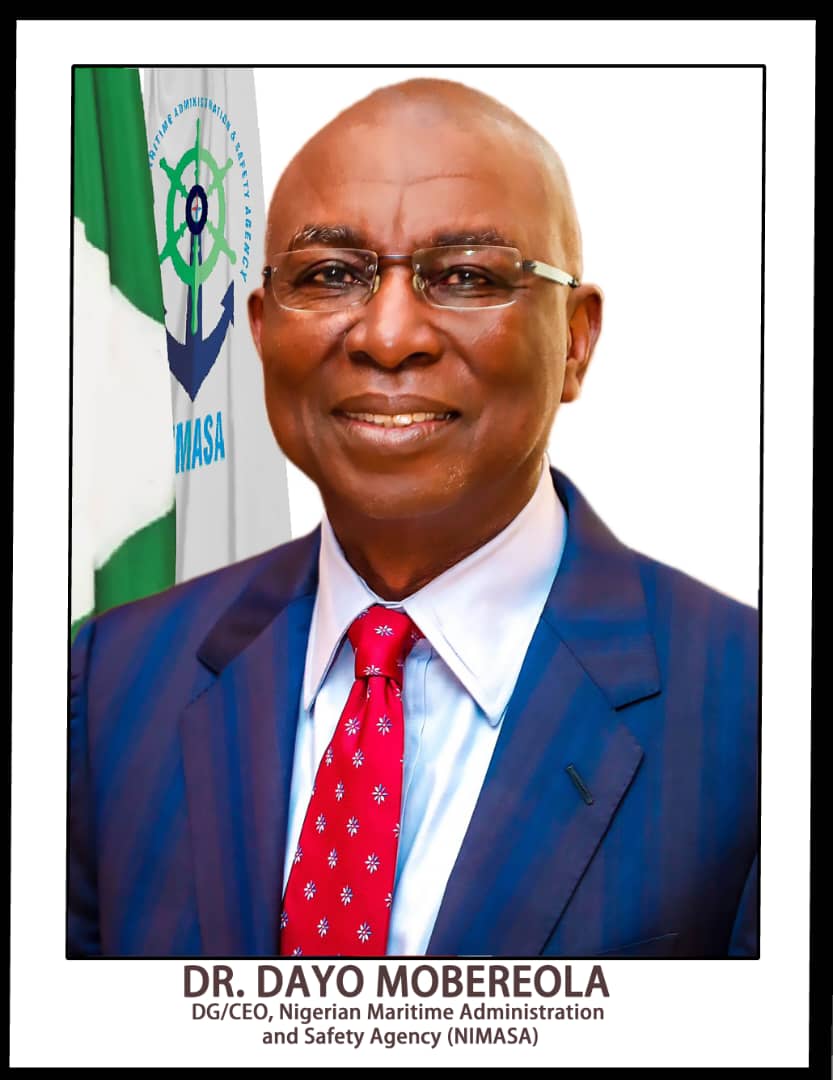
Gloria Odion, Maritime reporter
“Thank you for your dedication and invaluable contributions”.
He emphasized that as a regulator, the Agency remains committed to its oversight function of regulating maritime labour activities in the industry in line with extant instruments and the expectations of the theme of the 2026 Workers’ Day, which focuses on safety, dignity and productivity.
Customs
Kaila, Seme Customs CAC, seeks collaboration with stakeholders to achieve seemless trade along border corridor

Headlines
Opeifa decries encroachment on NRC properties across the country

-

 Headlines3 months ago
FIFA sends Nigeria’s Super Eagles to 2026 World Cup, awards boardroom scoreline of 3 goals to nil against DR Congo
-

 Aviation3 months ago
Why we increased cargo tariff at Airports– FAAN
-
 Aviation3 months ago
Tension de-escalates at Lagos Airport as FAAN, Cargo agents reach truce over new tariff
-

 Aviation3 months ago
Freight forwarders warn FAAN’s new charges regime could cripple airport operations
-
Aviation3 months ago
FAAN, freight forwarders in stand- off over new tariff regime at Lagos Airport
-

 Business3 months ago
National Single Window goes live in March, 2026