
Headlines
Oyebamiji, NIWA boss, raises alarm over drunken state of some boat drivers

– warns passengers to shun rickety boats
– calls of National Assembly to pass Coastal Guards bill
Funso OLOJO
The Managing Director of National Inland Waterways Authority (NIWA) , Mr Bola Oyebamiji, has expressed concerns over the state of mind of some boats drivers whom he accused of getting intoxicated through drinking alcohol before they drive.
Oyebamiji make this accusation while speaking at a technical meeting with boat manufacturers in Abuja.
The NIWA boss, who attributed about 90 percent of inland waterways mishaps in the country to human errors, blamed most of the accidents on untrained boats drivers, poorly maintained and dilapidated boats.
“I was at a training session with some boat drivers and discovered that we have a long way to go in this country,” Oyebamiji declared
“Many of them are not only untrained but also intoxicated in the early hours of the day.
” This is unacceptable, and we are working tirelessly to address these issues.” he pledged.
To stem the ugly trend, Oyebamiji called for legislative support, urging the National Assembly to expedite action on the passage of the Coastal Guards bill to enhance safety and security across the nation’s waterways.
He however advised Nigerians to avoid using substandard and poorly maintained boats for their own safety
Oyebamiji was speaking against the backdrop of the December 16, 2024, tragic boat mishap along the River Benue route in Agatu Local Government Area of Benue State, which claimed several lives.
To tackle the challenges posed by substandard wooden boats, NIWA has intensified its collaboration with indigenous boat builders to phase out these boats from the system.
” The initiative aims to encourage the production and use of safer, modern boats that meet global standards.
“This effort is part of NIWA’s broader strategy to improve the quality of water transportation and enhance safety.
“We are actively working with indigenous boat builders to replace wooden boats with durable, safer alternatives,” Oyebamiji noted.
“This collaboration is key to eliminating unsafe practices and ensuring the long-term safety of passengers on our waterways.”
Additionally, NIWA has intensified its sensitization campaigns across various riverine communities to raise awareness about the dangers of using unsafe boats and to promote adherence to safety protocols.
However, Mr. Oyebamiji stressed that these efforts need to be supported by legislative backing.
“We have visited numerous riverine villages and cities to advocate for safety on our waterways,” he said.
“But for us to achieve comprehensive safety and security, we appeal to the National Assembly to help prioritize and pass the Coastal Guards Bill.
“This will equip us with the necessary tools to regulate and secure our waterways effectively.”
NIWA reaffirmed its commitment to ensuring the safety of passengers using the country’s waterways, calling for collective efforts from boat operators, passengers, and policymakers to prevent future tragedies.

Continue Reading
Customs
Nigeria’s business community lauds Customs performance in Q1 2026, seeks improvement in service delivery
Funso OLOJO,Editor
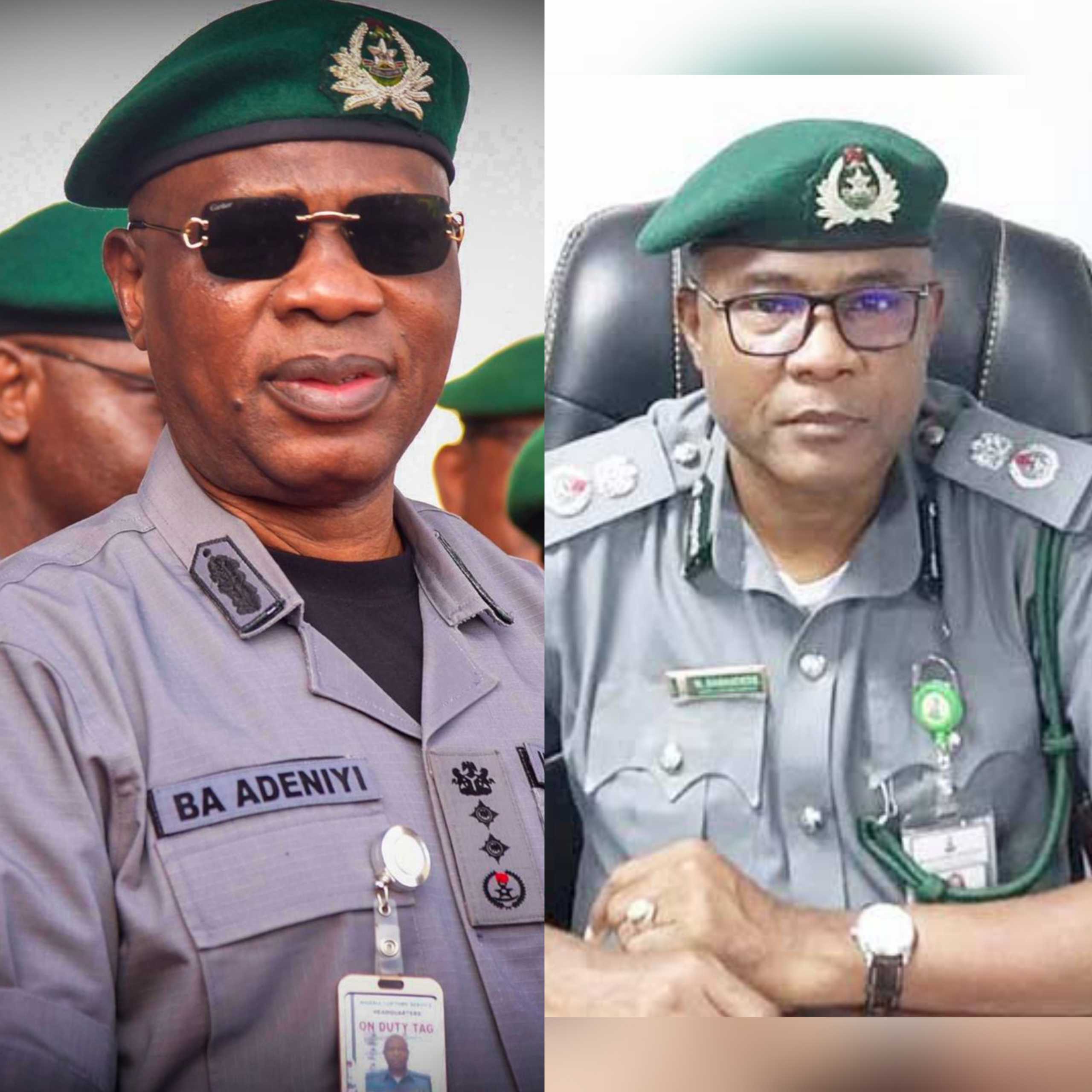
The critical section of stakeholders in the maritime and aviation industries have expressed satisfaction with the level of performance, service delivery and discipline among officers in the Zone A of the Nigeria Customs Service.
Their commendation was based of the performances of all the commands in the Zone in the last three months
Customs Commands in Zone ‘A’ are those located across the six states of the South west geopolitical zone, at the land, airport and sea port borders.
Some of the prominent Commands in Zone ‘A’ include the Apapa Port Command, Tincan Island Port (TCIP) Command, Ports and Terminals Multi-Services Limited (PTML) Command, Kirikiri Lighter Terminal (KLT) Command and the Western Marine Command.
Others are the Ijora Export Terminal, Federal Operations Unit (FOU) Zone ‘A’, Murtala Mohammed Cargo Airport Command, Seme Border Command, Idiroko Border Command, Ogun State, the Oyo/Osun Command and Ondo Command.
Many stakeholders who volunteered comments on the scorecard of the NCS Commands in Zone ‘A’ within the first three months of the year, said although Customs officers needed to improve in their service delivery, they however rated their performance high within the period under review.
The assessment focused mainly on resumption time, closing time, prompt attention to, and resolution of complaints from the business community, physical appearance, trade facilitation and revenue generation.
Many stakeholders scored the NCS in the Zone high on resumption time and closing time.
According to them, in most of the Commands, resumption time and closing time, as well as prompt response to complaints and physical appearance of officers are rated grade A.
A respondent, Uju Clifford, a freight forwarder who plies his business between the Seme Border Command and Apapa Area 1 Command, said he felt sorry for Customs officers because most of them resumed as early as 7.45 am and closed around 8 PM.
Clifford narrated a story of how his container was one day detained at the FOU for issues that related to documentation, but when he rushed to the Command in the evening to sort out the cargo, he witnessed that some officers closed by 8 PM. He said he felt sorry for the officers.
Clifford, who hinted that he normally pursues his jobs till late in the evening at the Apapa Area 1 Command, added that under the present management of the NCS led by Bashir Adewale Adeniyi,the Comptroller- General of the Nigeria Customs service, he has witnessed the highest level of discipline among officers.
According to him, “They look neat and decent. They talk to us politely, not like those days when they shouted at us. I commend the leadership of the current CG”.
The NCS has continued to demonstrate resilience and efficiency in the first and second quarters of 2026, with its performance scorecard reflecting strong achievements in revenue collection, enforcement, compliance, and strategic seizures across major commands.
Stakeholders were unanimous that from the Apapa Area Command to Tin Can Island and the Murtala Mohammed International Airport Command, operations have remained seamless, with service delivery running smoothly and unhindered.
At Apapa Area Command, revenue collection surged beyond projections, with recoveries from under-declarations and infractions reinforcing the Service’s vigilance.
In the same vein, the Tin Can Island Command recorded significant seizures of contraband, including restricted goods and counterfeit products, underscoring the Service’s commitment to safeguarding national security and economic interests.
Similarly, the Murtala Mohammed International Airport Command maintained its reputation for precision enforcement, intercepting illicit consignments while ensuring legitimate trade flows without disruption.
The Idiroko Border Command led by Deputy Comptroller Oladapo Afeni, was scored high on enforcement drives, discipline, wellness activities and officers welfare.
Stakeholders across the maritime and aviation sectors also commended the Service’s performance.
“The Customs Service has shown remarkable consistency in revenue generation and enforcement.
“Their efficiency in Q1 and Q2 ,2026 has been a stabilizing factor for the economy,” said Mrs. Adeola Ogunleye, a maritime industry player.
Assessing the Service’s performance scorecard within the period under review, the National Publicity Secretary of the Association of Nigerian Licensed Customs Agents (ANLCA), Mr. Emmanuel Onyeme, noted that men and officers of the NCS attended to their duties with passion and commitment.
He also saluted the high-level of professionalism displayed by personnel, while encouraging management and operatives within the zone to maintain the traction.
“The reality on the ground is that the Officers and men of the Nigeria Customs Service in Zone ‘A’ have been very patriotic and professional in the discharge of their duties in recent months, particularly as regards promptness to duty and attending to clearing agents with courtesy and professionalism.
“I commend the officers in the commands across the zone for discharging their duties so well.
“This shows that the high-level professionalism and patriotism of the Comptroller General Bashir Adewale Adeniyi is running off down the ladder.
“I also want to commend all the Customs Area Controllers in the zone for being a very good example to their officers.
“The implication of this good development will be more revenue for the government and enhanced trade facilitation, and it will boost the cordial relationship existing between Customs and the stakeholders, especially Clearing Agents and Freight Forwarders”, Onyeme said.
Mr. Chinedu Okafor, a freight forwarder at Tin Can Island, also evaluating service delivery in the cargo clearance system said: “The seizures recorded this year are proof of Customs’ vigilance.
” Beyond that, clearance procedures have become faster, and revenue recoveries are impressive.
” Why we can speak of the need for improvement across board, we must commend the Customs for taking the lead and continue to incline to its appeal for other players like us to step up.”
Also speaking, Dr. Ibrahim Musa, an aviation logistics expert, emphasized the Service’s resilience:
“At the airport command, operations have been seamless. Revenue targets are being met, enforcement remains strong, and compliance levels are high.
” The Service deserves commendation for balancing trade facilitation with security.”
The Nigeria Customs Service posted a strong performance in Q1 and Q2 2026, surpassing revenue targets, recording billions in recoveries, and executing major seizures across key commands.
Stakeholders have lauded the Service’s efficiency, noting its resilience in revenue collection, enforcement, and compliance.
Revenue Performance:
While Q1 2026 export earnings hit $925.84 million, a 38.68% increase compared to Q1 2025, container throughput amounted to 19,014 for Q1 2026, up 95.58% from 9,722 in Q1 2025.
In the same vein, export surcharge collections grossed ₦199.36 million in Q1 2026, with an upswing of 21.81% year-on-year.
This is even as the Nigeria Export Supervision Scheme (NESS) collections amounted to ₦6.03 billion for Q1 2026, amounting to a 20.15% increase, up from ₦5.01 billion collected in Q1 2025.
Instructively, there’s a projected ₦9 trillion revenue for 2026, based on ₦7.28 trillion collected in 2025; with a projected target increase of ₦697 billion.
Enforcement & Seizures
With a total of 473 smuggling operations foiled in 8 weeks, the Federal Operations Unit Zone A, Lagos seizures included 8,794 bags of rice (15 trailer loads), 22 used vehicles, 1,863 refrigerator compressors, 328 bales of clothing, and 531 cartons of frozen poultry.
Drug Interceptions records indicate that while 3,340 parcels of cannabis (1,540kg), plus 6.4kg of cocaine and methamphetamine valued at ₦2.35 billion was made within the period under review, revenue recovery by the unit amounted to ₦5.5 billion in Duty Paid Value (DPV) and ₦97.7 million recovered via Demand Notices.
Command Highlights:
While Apapa Area Command surpassed revenue projections, with strong recoveries from under-declarations, Tin Can Island the second largest command recorded significant seizures of contraband and counterfeit goods, reinforcing compliance.
This is even as Murtala Mohammed International Airport Command maintained a seamless enforcement trajectory, intercepting illicit consignments, while facilitating legitimate trade.
With stakeholders affirming the Service’s credibility and efficiency, the Nigeria Customs Service continues to uphold its reputation as a cornerstone of trade facilitation and national revenue generation. Its Q1 and Q2 2026 scorecard reflects not only resilience but also a forward-looking commitment to excellence in service delivery.
Customs
FOU A bursts 473 smuggling operations in 8 weeks, records major seizures with N5.5billion DPV

– plans relocation to new ultra- modern Iperu headquarters
Gloria Odion, Maritime reporter
The Federal Operations Unit of the Nigeria Customs Service, Zone A, Lagos, has foiled about 473 major smuggling operations across its areas of coverage within the last eight week.
Making this disclosure on Tuesday, May 5th, 2026 was the Comptroller of the Unit, Comptroller Gambo Aliyu while giving account of the performance of the Unit.
According to him, the operations led to the seizure of a wide range of prohibited and contraband items, including 8,794 bags of foreign parboiled rice (equivalent to 15 trailer loads), 22 used vehicles, 1,863 used refrigerator compressors and 328 bales of used clothing.
Others were 1,188 kegs of vegetable oil, 31,705 litres of Premium Motor Spirit (PMS), 485 used tyres, 69 cartons of foreign spaghetti, sugar and other food items, as well as 531 cartons of frozen poultry products.
In a major crackdown on drug trafficking, Comptroller Aliyu disclosed that the Unit launched a special operation codenamed Operation Hawk, targeting illicit drug networks.
This resulted in the seizure of 3,340 parcels of cannabis indica, popularly known as “Ghanaian Loud,” weighing 1,540kg.
He emphasized that the operation reflects the Unit’s resolve to dismantle drug trafficking syndicates and curb the spread of illicit substances.
In a related development, officers at the Gbaji outpost, acting on credible intelligence, intercepted a vehicle along the Lagos-Abidjan corridor conveying hard drugs.
The suspect arrested with the prohibited items, a 71-year-old Nigerian, was found in possession of 6.4kg of cocaine and methamphetamine with an estimated street value of ₦2.35 billion.
Several arrests were made across Lagos, Ogun, Oyo, and Ondo States in connection with these seizures.
Comptroller Aliyu disclosed that the seized narcotics have been handed over to the National Drug Law Enforcement Agency (NDLEA) for further investigation and prosecution, in line with existing inter-agency collaboration frameworks.
The Unit also recorded the seizure of four cylinders of high-grade mercury, a controlled substance under the Minamata Convention, concealed in a vehicle.
The suspect and items has been transferred to the National Environmental Standards and Regulations Enforcement Agency (NESREA) for further action.
Beyond seizures, the Unit achieved significant revenue recovery, recording a Duty Paid Value (DPV) of ₦5,504,039,720 within the review period.
Additionally, ₦97,703,596.55 was recovered through the issuance of Demand Notices on improperly declared consignments.
Comptroller Aliyu highlighted ongoing efforts to modernize operations through the deployment of advanced technologies, including Geographic Information Systems (GIS), satellite imagery, drone surveillance, and predictive analytics.
These tools, he noted, are enhancing intelligence-led enforcement, improving response times, and disrupting smuggling networks across the Zone.
He further disclosed that the Unit will soon commence a phased relocation to its newly commissioned ultra-modern headquarters in Iperu, Ogun State.
The facility is equipped with a state-of-the-art Command and Control Centre designed to support real-time monitoring, data analytics, and improved inter-agency coordination.
Reaffirming the Unit’s dual mandate, Comptroller Aliyu stressed that while enforcement remains a priority, the FOU Zone ‘A’ is equally committed to facilitating legitimate trade and ensuring that compliant traders are not unduly hindered.
He expressed appreciation to the Comptroller-General of Customs, Dr. Bashir Adewale Adeniyi, for his leadership and strategic direction, as well as to stakeholders and the media for their continued support.
The Comptroller reiterated the Unit’s determination to sustain its crackdown on economic sabotage, protect national revenue, and uphold the integrity of Nigeria’s trade environment.
The Comptroller of the Federal Operations Unit (FOU) Zone ‘A’, Nigeria Customs Service (NCS), Comptroller Gambo Aliyu, has reaffirmed the Unit’s commitment to combating smuggling and safeguarding Nigeria’s economy across the South-West region.
Addressing the media on Tuesday, 5 May 2026, Comptroller Aliyu stated that the Unit has strengthened enforcement measures in line with the Federal Government’s fiscal policies and the provisions of the Nigeria Customs Service Act, 2023. He noted that through enhanced surveillance, intelligence sharing, and inter-agency collaboration, the Unit successfully intercepted 473 smuggling attempts within an eight-week period.
Headlines
Greg Ogbeifun confirms chairmanship of 10th AMSAY Conference Anniversary on May 27th.

Gloria Odion, Maritime reporter
The organisers of the Annual Maritime Students and Youth (AMSAY) Conference have announced that renowned ship owner and Chairman of Starzs Investment Company Ltd, Engr Greg Ogbeifun will chair the 10th anniversary of the event scheduled to hold in Lagos on May 27, 2026.
The announcement comes as preparations intensify for what is widely regarded as a landmark edition of the youth-focused maritime conference.
The 10th AMSAY Conference marks a decade of sustained youth engagement, innovation, and impact in Nigeria’s maritime sector.
It is expected to bring together industry leaders, policymakers, stakeholders, and young professionals from across the maritime ecosystem.
Engr. Ogbeifun’s confirmation as Chairman adds significant weight to the anniversary event.
He previously served as the Pioneer Chairman during the maiden edition of the conference in 2016, and his return ten years later is described by the organisers as both symbolic and strategic.
According to the Convener and CEO of Platforms Communications, Mr Sylvanus Obasi, the decision reflects a deliberate effort to connect the conference’s origins with its current status, noting that the AMSAY Conference has evolved significantly over the past decade.
He highlighted that several key initiatives now associated with the conference were not part of its original design.
Among these are the Best Graduating Maritime Students Awards (BEGMASA); the Fola Ojutalayo Annual Maritime Speech-Making Competition (FOAMSC), including the Maritime Career Mentoring Program (M-CAMP).
These programmes, according to him, have become integral components and offshoot of the AMSAY Conference brand.
Speaking further, Obasi stated that the initiatives have delivered measurable impact in youth development and professional capacity building, even as he further described the growth of these programmes as evidence of the conference’s commitment to continuous improvement.
“Bringing Engr. Ogbeifun back after ten years is a strategic move. It gives us the opportunity to reflect on our journey and showcase our achievements.”, the Convener said, adding that the anniversary edition will also provide a platform to draw from Engr Greg’s wealth of experience and industry insight.
Also speaking, the Chairman, Central Planning Committee of AMSAY Conference, Mr Nnamdi Eronini hinted that the 10th AMSAY Conference is expected to feature robust discussions, mentorship engagements, and knowledge-sharing sessions.
He reaffirmed the organisers commitment to advancing the maritime sector through sustained youth engagement and innovation, noting that the event is positioned as a leading platform for shaping the future of Nigeria’s maritime industry.
-

 Headlines3 months ago
FIFA sends Nigeria’s Super Eagles to 2026 World Cup, awards boardroom scoreline of 3 goals to nil against DR Congo
-
 Aviation3 months ago
Tension de-escalates at Lagos Airport as FAAN, Cargo agents reach truce over new tariff
-

 Headlines3 months ago
Customs agents seek clarification on status of B’Odogwu on National Single Window platform.
-

 Headlines3 months ago
Niger- Delta activist defends Tantita pipeline surveillance contract, warns against sabotage
-
 Headlines3 months ago
Oyetola, NIWA’s top managers celebrate Oyebamiji as he receives Media -Friendly CEO award in Abuja.
-

 Headlines3 months ago
Oyetola leads top government dignitaries to award ceremony of Oyebamiji as most media- friendly maritime CEO