Foreign
Puzzle over mysterious death of six Russian billionaires, executives at oil giant Gazprom who “committed suicide” within three months.

Four billionaires and two executives at state-owned gas and oil giant Gazprom have died since Russian troops began preparing to invade their neighbour in late January.
They include Mikhail Watford, a Ukraine-born gas and property tycoon who told friends he feared Putin’s hit list ‘for years.
Three days beforehand, Joe Biden told Volodymyr Zelensky to ‘prepare for impact’.
Less than a month after Shulman’s death, Gazprom Deputy Director, Alexander Tyulakov was found hanged at the same St Petersburg housing complex.
Three days later Mikhail Watford was found dead – and three weeks after that, medical supplies tycoon, Vasily Melnikov, was killed in the alleged murder-suicide of his wife and children.
The billionaire owner of MedCom, 43, is thought to have murdered his wife, 41, and two children aged ten and four before taking his own life.
Local investigators said there were ‘no signs of unauthorized entry into the apartment.
‘We are considering several versions of what happened, police in a Western city, Nizhny Novgorod added.
On April 18, Gazprombank Vice-President, Vladislav Avayev was found dead with his wife and daughter in their Moscow apartment.
Russian reports said the gas executive shot and killed his family before turning the gun on himself. He was reported to have tortured his wife for hours.
But Avayev’s ex-colleague Igor Volobuev said the suicide is ‘hard to believe’ and alleged it was staged.
Mr Volobuev denied that Avayev – who may have had FSB links and was found with an FSB gun after his death – had left his role as the senior Vice-President at Gazprombank, as had been widely reported.
Mr Avayev was still at the bank and would have had access to the accounts of its most elite clients, including Putin’s circle and possibly the president himself, his co-worker added.
Mr Volobuev told CNN: ‘Did he kill himself? I don’t think so. I think he knew something and that he posed some sort of risk.’
The next day, billionaire gas Executive, Sergey Protosenya was found dead in his Spanish holiday home, with his wife and daughter ‘hacked to death with an axe’.
Spanish authorities suggested that Mr Protosenya, 55, executed the pair before killing himself in an uncharacteristic fit of rage while the family enjoyed an Easter break on the Costa Brava last week.
But Protosenya’s son Fedor, 22, said his father ‘could never harm’ his family in that way.
He told MailOnline: ‘He loved my mother and especially Maria my sister. She was his princess.
‘He could never do anything to harm them. I don’t know what happened that night but I know that my dad did not hurt them.’
Mr Protosenya did not leave a suicide note and no fingerprints were found on the weapons – an axe and a knife – used to kill. There were no bloodstains on his body.
Fedor, a 22-year-old student, said the police had told him not to discuss the case.
Protosenya’s friend, Anatoly Timoshenko also told MailOnline: ‘Sergey did not do it. Sergey did not kill his family. It is impossible. I do not want to discuss what may have happened at the house that night but I know that Sergey is not a killer.’
Another friend, Roman Yuravich, added: ‘Sergey did not kill his family. I have known him for ten years. He was a happy man.
‘He loved his family. He did not kill his wife and child. I am sure.’

Foreign
Oil prices expected to crash as President Trump announces reopening of Strait of Hormuz
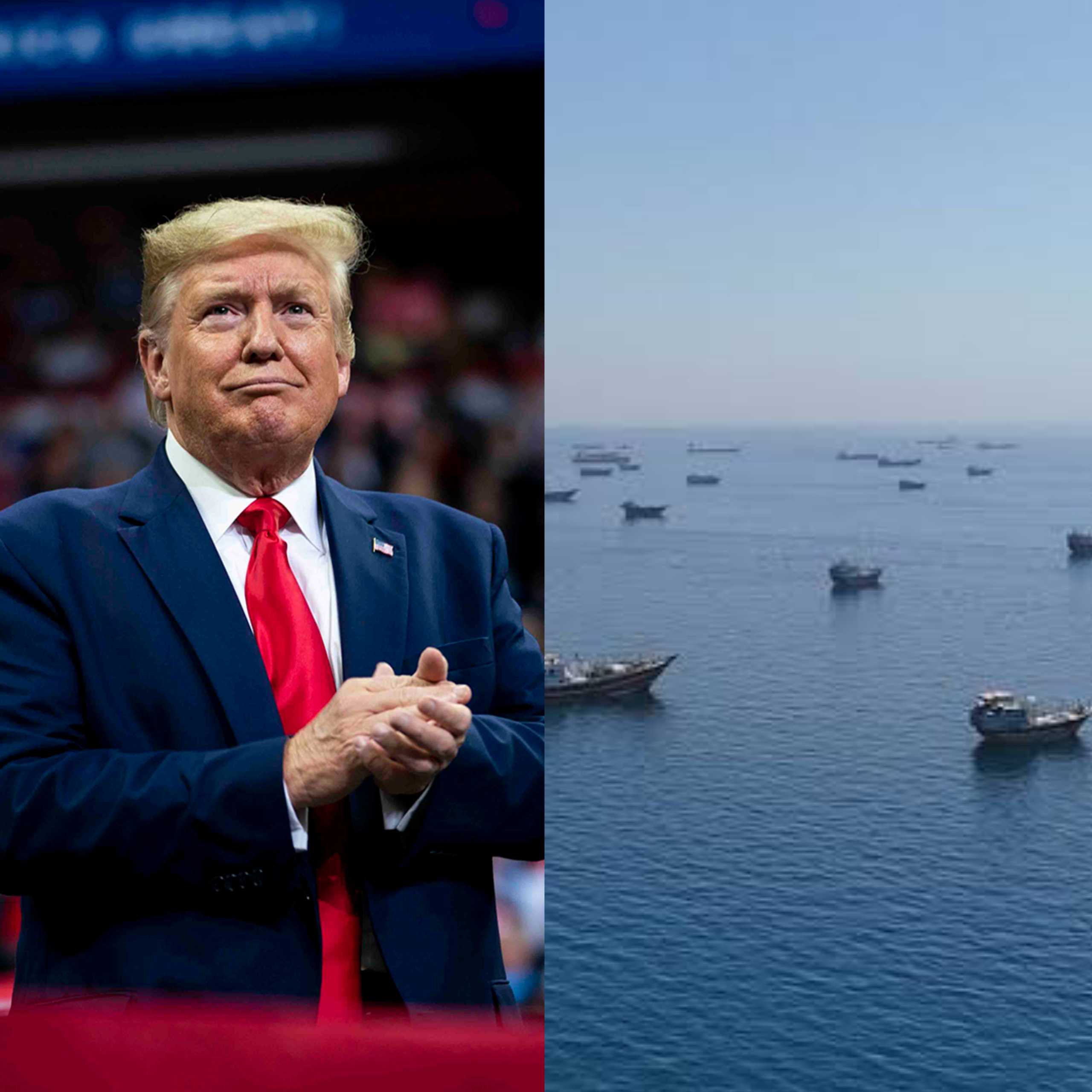
“I hereby fully authorize the toll free opening of the Strait of Hormuz, and, simultaneously herewith, authorize the immediate removal of the United States Naval blockade,” he added.
Trump also signaled the resumption of maritime traffic and energy shipments through the strategic waterway, writing: “Ships of the World, start your engines. Let the oil flow!”
He did not provide additional details about the agreement or implementation of the measures in his statement.
Pakistani Prime Minister, Shehbaz Sharif, also announced early Monday that the US and Iran have reached a peace agreement following intensive negotiations.
“Following intensive talks, we are pleased to announce that the Peace Deal between the United States of America and Islamic Republic of Iran has been REACHED,” Sharif said in a post on the US social media platform X.
He added that “both sides have declared the immediate and permanent termination of military operations on all fronts, including in Lebanon.”
According to Sharif, the official signing ceremony is scheduled to take place on June 19 in Switzerland.
Foreign
David Nwamini, Ekweremadu accuser, seeks asylum in UK

” they will kill me if I come to Nigeria” — he pleads to court
The three were found guilty at the Old Bailey of conspiring to arrange the travel of a young man with a view to exploiting him for his body part.
The Ekweremadus’ 25-year-old daughter, Sonia, has a severe kidney disease. It was for her the donor was sourced and brought to the UK.
According to David, he was approached with an opportunity to work in the UK, which he had always dreamed of but never thought would happen.
“He (Dr Obina Obeta) did not tell me he brought me here for this reason. He did not tell me anything about this.
“I would have not agreed to any of this. My body is not for sale.
“I worry for my safety in Nigeria. Those people can do anything. I think they could arrest me or kill me in Nigeria.
“My plan now is to work and to get an education and to play football,” David said, adding that he does not want to claim compensation from the “bad people” as it would be “cursed and bad luck”.
He also said someone visited his father in Nigeria and asked the father to get him to drop the case.
Although it is lawful to donate a kidney, it becomes criminal if there is a reward.
The Ekweremadus were arrested on June 21 last year as they arrived at Heathrow Airport.
Foreign
UK court shuns Nigeria, ECOWAS pleas as it sentences Ekweremadu to 10 years imprisonment for organ trafficking


 Customs2 months ago
Customs releases final recruitment list for ASC II, ends nearly one-year wait for applicants
- Headlines3 months ago
As NRC recovers ₦200m stolen railway assets, Opeifa vows diligent prosecution of suspects
- Customs3 months ago
Customs launches MIS file tracker at PTML in fresh digitalisation drive
- Customs2 months ago
Apapa Customs sets new record of monthly revenue haul with ₦323bn collection in July
- Customs2 months ago
Apapa Customs sets new single-day revenue record with ₦28.1bn collection
- Headlines1 month ago
Oyetola presents three-year score card as blue economy industry revenue hits ₦1.83trn