Connect with us

Customs

Funso Olojo
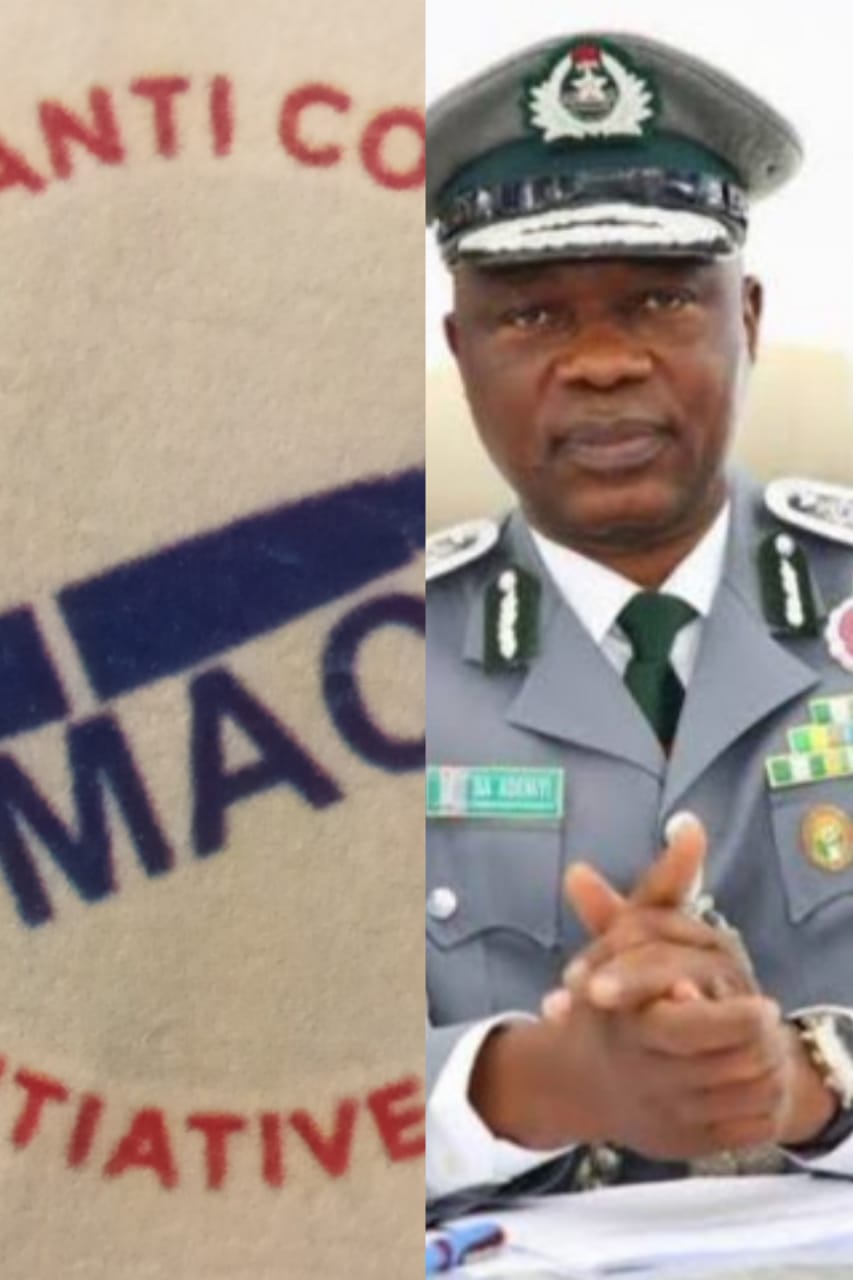
With his towering stature, Wale Adeniyi, the 14th indigenous Comptroller General of the Nigeria Customs service, bestrides the landscape of the service with maximum impact in the last one year of stewardship.
In a blistering performance which has left many in admiration and awe, Adeniyi has revolutionized the administration and operations of the NCS in the last one year in office.
The new Customs Sheriff clocks one year in office today, July 19th, 2024.
His appointment as the Comptroller General of Customs on 19th, June, 2023 by President Bola Ahmed Tinubu, marked a turning point in the annal of the agency.
The last eight years in the Nigeria Customs Service have been characterised by undulating performance.
It has been a mixed bag of fortunes and misfortunes, rise and fall and tragicomedy in the performance of the service.
During those years, the rating of the service plummeted in the eye of the public and the stakeholders who were detached from the cold attitude of the top hierarchy of the Customs were not amused.
Most of the policies and actions of the service, most of which were devoid of human face, brought the agency into direct conflict with the public and the stakeholders due to the leadership style of the man who directed the affairs of the service for those years.
During those years, the officers were muffled and the stakeholders were ruffled.
Then came Adewale Adeniyi, the new Sheriff in town.
Adeniyi ascended the high stool of Customs as the Customs Comptroller General at a time when the morale of officers was at the lowest ebb.
However, his coming, within a year in office,  has brought hope, joy and renewed enthusiasm among the officers while it has sparked off a newfound love among the stakeholders who are elated over the crowning of the home-grown officer.
The fortune of the service which dipped during the last eight years and its public rating which plummeted within that period due to the rein of a non-customs officer as the head, have now suddenly sprang to life with the coming of the new Sheriff.
In June 2023, the appointment of Adeniyi as the new CGC by President Bola Ahmed Tinubu marked a turning point in the affairs of the Customs.
It signalled a rebirth of the service which has been grappling with unfavourable public opinion.
As expected, the appointment of the new Sheriff sparked a spontaneous jubilation and exhilaration among the staff of the service and the stakeholders.
This was expected given the professional acumen of the new CGC and his impressive track record in a service he had held sway for the past 30 years.
Stakeholders, especially the confraternity of the freight forwarders, are unanimous in their assessment of the one year in office of Adeniyi.
Babatunde  Mukaila Abdulazeez, the former  National Secretary of the Association of Nigerian Licensed Customs Agents (ANLCA) couldn’t hide his feelings over the inspiring leadership of Adeniyi.
“It is a personal roller coaster feeling for me. We have never had it so good.”, he declared when he was asked to assess the performance of Adeniyi in his first year in the saddle as the CGC.
Ada Ozomena Akpunonu, another frontline freight forwarder and a top-notch member of the ANLCA, was no less impressed by the performance of Adeniyi as the CGC.
“He could eventually emerge as the best CGC customs ever had” she declared.
Ibrahim Tanko, the Vice President, the Western Zone of the National Association of Government Approved Freight Forwarders (NAGAFF) who is also the National Coordinator of the 100 compliance team of the association, also acknowledged the uncommon professional ingenuity of the new CGC.
“He has done well so far”, he stated tersely.
Dr Boniface Aniebonam, the legendary founder of NAGAFF was no less enamoured by the sparkling leadership qualities of Adeniyi as displayed within his first year in office.
“He is a communication strategist” he declared as a matter of fact.
Adeniyi, as a thoroughbred professional in customs administration and human relations, immediately brought remarkable changes from the stiff and top-of-horse leadership approach of the last eight years.
As an astute public relations expert, Adeniyi immediately went on an extensive engagement with all his officers and critical stakeholders.
He first engaged the powers that be with his direct engagement of Mr President, Governor of Lagos state, Babajide Sanwolu and the National Security Adviser, Nuhu Ribadu.
He also paid homage to the traditional rulers, including the Oni of Ife, Oba Adeyeye Enitan Ogunwusi.
He thereafter engaged the officers, one-on-one at the Headquarters, interacting with them in their various offices under the air of camaraderie, displaying a rare leadership style that was alien in the last years in the service.
He then followed this up with a tour of the commands where he met with the officers before he headed to the border communities where he made a lot of efforts to create an atmosphere of mutual trust, support and harmonious relationship with the host communities and the customs, a vital ingredient that have long been lost to the last eight years of deep-seated suspicion and acrimony that were engendered by the unfriendly posture of the last regime.
Not done, the new CGC also engaged the members of the maritime media, his constituency during his almost two-decade-long impressive rein as the super public relations officer of the service.
Adeniyi was not unmindful of his counterpart across the border in the Benin Republic to whom he paid homage in a bid to foster a harmonious working relationship that would promote trade and discourage smuggling between the two West African neighbours.
The lawmakers were also not left out in his extensive and strategic engagement as he hosted the members of the Senate Committee on Customs.
In addition, members of various government organizations and private bodies tasted the irresistible lure of Wale’s hospitality.
He didn’t leave the freight forwarders out of his public engagement as he made direct contact with them in their areas of operations.
Adeniyi also reinvigorated the  Corporate Social Responsibility(CRS) of the service by visiting a motherless baby home in Ibadan where he promised to reactivate the milk of human kindness in the Customs under his leadership.
There was hardly any segment of society that Adeniyi did not court its cooperation and support to have an inclusive administration that is anchored on the goodwill of the people.
Adeniyi also thrust the NCS to the consciousness of the global community with his visit to China recently where he sold the boulstered the international image of the agency.
That is the hallmark of leadership excellence.
Adeniyi, as a versatile public relations expert, achieved a dual purpose with this extensive and strategic engagement.
First, he used it to reunite the customs with the critical stakeholders who had hitherto felt alienated by the detached managerial style of the last administration in customs.
Secondly, it used the engagement to launch the customs into a new path of operational rebirth where the new management he leads will carry out its onerous task with full cooperation and collaboration of critical stakeholders.
Similarly, the disbandment of the controversial CGC strike force and streamlining of the mushroom customs checkpoints has also endeared the new Sheriff to the stakeholders, especially the freight forwarders, who had had cause to complain in the past about the excesses of those special forces.
According to Babatunde Mukaila Abdulazeez “It is a personal roller coaster feeling for me. We had never had it so good.
“Wale has shown that he has the capacity and what it takes to take Nigeria Customs to the next level.
“He has shown that Nigeria can be at par with the rest of the advanced world in the deployment of trade tools.
“Within his first year in office,  he has shown uncommon courage, commitment and uncanny knowledge of customs operations and processes that are meant to facilitate trade.
“For instance, he introduced what is called the Advance Ruling which holds Customs officers accountable for whatever their position is on pre-importation requests.
“I can tell you that it takes courage to do that as no officer would want to be held responsible for his action.
“But Adeniyi has done that.
”He was the first CG to bell the cat on this novel idea.
“This shows his courage and passion to transform customs.
“Also, he introduced another novel idea by partnering with the Japanese government to establish a laboratory for Nigeria Customs.
“The issue of argument on chemical imports will be a thing of the past. This will not only help the customs but the NAFDAC as well.
“Adeniyi, in his first one year in office, has shown us that he knows what needs to be done and that he is a core professional customs officer.
“We can only pray for him to succeed. He has put on the table accountability and transparency, he declared
For Ada Ozomena Akpunonu, Wale is a professional customs officer and “we all know his rich antecedents”.
“Unfortunately, he came at a time when Nigeria’s economy is in comatose. This will make his task a bit difficult.
“For instance, the exchange rate is too high and the Customs duties are equally high which have both combined to make goods clearance at the port very exorbitant.
“Wale is a team player. He carries everyone along.
“Through the deployment of his Area Controllers, he has shown the depth of his managerial acumen because his men at the Area Commands are square pegs in square holes.
“By the time he spends four years in office,  he will perform wonders.
“The atmosphere in the customs now is that of conviviality and sanity.
“If not for the instability of the naira and the bastardized economy, Wale could emerge as the best CGC ever.
Ibrahim Tanko believed Wale is doing well as the CGC.
“He has done well in terms of reducing the bottleneck in clearance procedures by reducing the number of units.
“For instance, he has disbanded the notorious CG strike force as well as border drills.
“He is also working hard to restore the core values of the Federal Operations Units ( FOUs) of the service by enhancing their professionalism.
“He is also doing well in the area of checking the excesses of officers.
“He is also doing well in attending to pending cases such as seizures, detentions, dismissals and suspensions.
“However, I would like him to define and delineate the functions of Customs Police, FOU and Provosts.
”Their functions and duties should be well-defined and clearly stated to avoid overlap and clash.
Boniface Aniebonam said Wale is a master communication strategist.” I commend him on the disbandment of the CG strike force.
“The interventionist squad had abused the customs process under previous customs administrations.
“We appreciate him for that. He should also take a very strong stance against avoidable trade alerts from different customs units.
“This does not facilitate trade
”He should coordinate and hamonise the alert system and I know as a listening officer, he shall look into this disturbing issue.
“There are lot to still be done.However, his one year in office is well and good.
“He should, however, contact critical stakeholders and partner them by using established platforms such as ANLCA and NAGAFF to reach out to the trading public.
“His one year in office has been avoidably aggressive in revenue target and collection.
“But the modern-day customs practice is not about revenue but trade facilitation. If you raise the compliance level of the trading public, this will lead to high revenue.
”He should de-emphasize revenue and emphasize trade facilitation which leads to high revenue” retorted Aniebonam.
But Wale’s one year in office has raised the compliance level of the trading public.
The deployment of one of the trading tools which is the Authorized Economic Operator (AEO) is an eloquent testimony to that.
Adeniyi also showed his vast understanding of customs operations when he made trade facilitation the fulcrum of his administration.
All over the world, the Customs has duties to facilitate trade, collect revenue, detect and prevent smuggling, with none of the functions running counter against the others.
But over the years, especially in the last eight years, trade facilitation has been subjugated to revenue collection to the chagrin of stakeholders, but the decision of the new CAC not to injure trade facilitation in pursuit of revenue and smugglers is welcomed by the appreciative freight forwarders.
It is more gratifying to note that the new CGC has promised to break away from the past crude method of anti-smuggling tactics which had led to the avoidable death of officers and innocent people.
He hoped to achieve this by relying more on the deployment of technology which will maximise performance and minimise casualties.
The triumph of brain over brawn.
As the 14th indigenous Comptroller-General of Customs and 31st since its establishment in 1891, Wale Adeniyi, a brilliant public relations expert who is well grounded in Customs operations, is fast becoming a new face of the customs, a beckon of hope for the officers and stakeholders who have been yarning for a change from the last eight years of mutual suspicion and acrimony between the customs and its publics.
Stakeholders have therefore hailed the  Nigerian Customs Service Act, especially Section 14(1)(a) of the Act,  which states that “The President shall appoint a career officer from the Service, not below the rank of Assistant-Comptroller General (who shall be responsible for the overall management of the service) and be accountable for all revenue collections and all expenditures made under this Act”.
It was this new Act that enabled President Bola Ahmed Tinubu to discover and unleash the talents and professional acumen of Wale Adeniyi on the customs for maximum impact.
Until his appointment, Adeniyi was in charge of Strategic Research and Policy at the Customs Headquarters in Abuja.
A professional who is conscious of the need to build a solid image for the agency, Adeniyi once served as customs spokesman for almost two decades until January 2017 when he was redeployed to the Apapa Area Command as a Deputy Comptroller.
He was promoted to the rank of Comptroller in 2017 and appointed Deputy Commandant of the Nigeria Customs Command and Staff College, Gwagwalada, Abuja.In 2019, he was redeployed to serve as the Controller of the Murtala Muhammed International Airport (MMIA) Command, Lagos where he made the famous seizure of $8.07m cash.

He was promoted to the rank of Assistant Comptroller General in February 2020 shortly after he supervised the seizure of $8.07 million cash being illegally taken out of Nigeria through the E-Wing of the international airport tarmac.

 He was subsequently posted to head the Nigeria Customs Command and Staff College, Gwagwalada, Abuja as Commandant.

In recognition of his service, former President Muhammadu Buhari, on October 11, 2022, conferred the national honour of Member of the Order of the Federal Republic (MFR) on Adeniyi.

Stakeholders are unanimous in their conviction that the Nigeria Customs Service will witness a galloping development, turn around of fortunes and professional excellence under the stewardship of  Adeniyi.

Continue Reading
Click to comment

Leave a Reply

Your email address will not be published. Required fields are marked *

Customs

Apapa Customs sets new single-day revenue record with ₦28.1bn collection

Gloria Odion Maritme reporter

The Nigeria Customs Service (NCS), Apapa Area Command, has smashed its previous single-day revenue record, raking in ₦28.102 billion in just 24 hours on Tuesday, August 18, 2026.

The record ₦28,102,000,914.61 collection is the highest single-day revenue haul ever recorded by the Command, eclipsing the previous benchmark of ₦20.1 billion, achieved in September 2025, shortly after Comptroller Emmanuel Oshoba assumed office as Customs Area Controller.

The latest feat comes barely three weeks after the Command posted another landmark performance, collecting an unprecedented ₦323 billion in July 2026.

The successive records point to a sustained revenue surge at Nigeria’s premier port command, driven by tighter compliance, improved trade facilitation, intelligence-led interventions and greater efficiency in digital Customs processes.

Reacting to the latest milestone, Comptroller Oshoba said the record should not be viewed merely as a collection figure, but as a reflection of Customs’ contribution to Nigeria’s economic development.

He noted that revenue generated by the Service forms part of government resources deployed to finance critical national priorities, including infrastructure, security, education, healthcare and other public services.

Oshoba dedicated the achievement to the government and people of Nigeria, while commending the Comptroller-General of Customs, Bashir Adewale Adeniyi and the management team for their continued support for automation, modernisation and reforms designed to make Customs operations more efficient, transparent and business-friendly.

The Apapa CAC also acknowledged the cooperation of compliant importers, exporters, licensed Customs agents and other stakeholders, as well as Nigerians whose actionable intelligence has supported the Command’s enforcement and revenue-collection efforts.

He stressed that every compliant transaction contributes to national development, urging stakeholders to continue embracing legitimate trade.

According to him, a stronger revenue base gives government greater capacity to respond to citizens’ needs, provide critical infrastructure and create an environment in which businesses can thrive.

However, Oshoba cautioned officers and men of the Command against complacency, saying the latest record should be regarded not simply as an achievement but as a greater responsibility to deliver even better results.

He directed personnel to ensure that revenue collection remains balanced with trade facilitation, professionalism, transparency and respect for legitimate stakeholders.

The CAC further ordered officers to resolve genuine disputes promptly and ensure that Customs procedures do not unnecessarily frustrate lawful businesses.

With the latest record coming on the heels of its ₦323 billion July haul, the Apapa Area Command is increasingly emerging as a major engine of Customs revenue mobilisation, while simultaneously seeking to deepen compliance and facilitate legitimate trade.

The Command said it would sustain the momentum through enhanced revenue collection, improved trade facilitation, professionalism, digitalisation and stronger collaboration with stakeholders.

For Oshoba, the message behind the numbers is clear: every legitimate naira collected strengthens government’s capacity to deliver on its development agenda and improve the welfare of Nigerians.

Continue Reading

Customs

How Afeni is repositioning Idiroko trans- border trade route for economic prosperity, smugglers nightmare

Funso OLOJO, Editor 

For decades, the Idiroko border corridor has existed at the intersection of legitimate commerce and the informal economy, serving simultaneously as a gateway for legitimate trans-border trade and a lucrative passage for smugglers exploiting Nigeria’s long and porous western frontier.

But that business environment appears to be undergoing a gradual transformation.

At the centre of the emerging change is the Ogun I Area Command of the Nigeria Customs Service, where the Acting Customs Area Controller, Deputy Comptroller Olukayode Afeni, has adopted a more aggressive intelligence-led enforcement strategy aimed at altering the risk-reward equation that has historically sustained illicit commerce along the corridor.

Afeni’s philosophy is relatively straightforward: legitimate trade should be facilitated, but smuggling, drug trafficking and other forms of economic sabotage must become increasingly difficult, expensive and dangerous.

The latest operational scorecard presented by the Command on Thursday, August 13th, 2026 provides an insight into the scale of that campaign.

The Command paraded seizures with a combined Duty Paid Value of N3.574 billion, covering agricultural products, petroleum products, textiles, consumer goods and narcotics.

Among the intercepted items were 2,339 bags of foreign parboiled rice, 70 cartons of basmati rice, 6,035 parcels of Ghana Loud/Indica, 30 bags of foreign sugar, 11,450 litres of PMS in kegs, 1,750 litres of PMS in drums, 30 kegs of diesel, 100 bags of fertilizer and 67 bales of second-hand clothing.

The seizure list also included thousands of pieces of new clothing, drinks, cosmetics, hair accessories, fire extinguishers, purses and other consumer products.

But the significance of the figures does not lie merely in their monetary value. They provide an indication of the variety of commercial activities that the Command is now confronting along the border—and of the extent to which enforcement is beginning to influence the operating environment for both legitimate traders and illicit networks.

The Idiroko corridor has never been simply a Customs enforcement zone. It is a commercial ecosystem connecting communities and businesses on both sides of the Nigeria-Benin frontier.

For legitimate traders, the border provides access to markets, goods and opportunities for cross-border commerce.

For smugglers, however, the same geography presents opportunities to bypass formal import procedures and exploit differences in prices, taxes, restrictions and market demand between the two countries.
That is where Afeni’s intervention becomes significant.

Rather than viewing seizures as isolated enforcement events, the current strategy increasingly appears designed to disrupt the underlying business model of smuggling.

Every intercepted truck, vehicle, petroleum consignment, rice shipment or narcotics parcel represents not only a seizure but a potential interruption of a supply chain.

The objective is to make illegal trade less predictable and less profitable.

Rice and the economics of local production

Foreign parboiled rice remains one of the most visible commodities in the border enforcement equation.

The interception of more than 2,300 bags in the latest operation reinforces the persistent pressure on domestic rice production from illicit imports.

Afeni’s argument is that smuggling should be viewed through the prism of economic protection rather than merely customs prohibition.

When imported rice enters Nigeria outside the approved channels, it competes directly with Nigerian farmers, millers and distributors without necessarily bearing the same regulatory and fiscal obligations.

For a government attempting to strengthen domestic agricultural production, such competition can undermine investment and discourage farmers from expanding production.

The Ogun I campaign therefore places border enforcement within the broader question of Nigeria’s food-security strategy.
In Afeni’s formulation, protecting the border is also protecting the farmer.

The narcotics economy

If rice represents the agricultural dimension of the border challenge, narcotics represent its darker security dimension.

The Command’s interception of 6,035 parcels of Ghana Loud/Indica in the latest operation is significant, but the larger figure disclosed by Afeni is even more revealing.

From January to date, he said, Ogun I has handed over 32,412 parcels of hard drugs and 92 sacks of raw Cannabis sativa to the NDLEA Idiroko Special Command.

That figure places narcotics enforcement firmly among the Command’s major operational priorities.

It also demonstrates why border security increasingly requires agencies to work beyond traditional institutional boundaries.

Customs officers may intercept the shipment, but the investigation, drug intelligence and prosecution process require the specialised capabilities of the NDLEA and other security agencies.

The formal handover of the seized narcotics during Thursday’s event therefore symbolised the growing importance of inter-agency collaboration in securing the corridor.

The border as an export gateway

Perhaps one of the less discussed aspects of the Ogun I story is the Command’s export performance.

While considerable attention is naturally attracted by seizures, the Command also recorded 10,110 metric tonnes of exports, with a Free On Board value of N2.594 billion.
White talc, crushed thermal coal and CNG were identified as the principal drivers of the export volume.

That statistic is important because it challenges the perception of Idiroko principally as a route for imported goods.
The corridor is also capable of serving as a platform for Nigerian exports.

This creates a potentially important policy distinction. The objective of effective border management should not be to suppress cross-border commerce; rather, it should be to differentiate legitimate commerce from illicit trade and create an environment where compliant businesses can operate with greater certainty.

For Customs, that means enforcement and trade facilitation must move together.

Revenue from the corridor

The Command’s fiscal contribution also offers another measure of its economic relevance.
In July alone, Ogun I collected N90.066 million from baggage assessments, auctions of perishable items, PMS and other charges.

Although the figure is modest when compared with the revenue generated by Nigeria’s major seaport commands, it illustrates the multiple revenue streams available within the border environment.

More importantly, it demonstrates that the border economy extends beyond the conventional importation of goods.

A new risk calculation for smugglers

The central question surrounding Afeni’s tenure may therefore not be how many seizures the Command records in a particular month.

It may be whether the enforcement campaign is succeeding in changing the underlying calculation made by those who contemplate using the Idiroko corridor for illegal trade.

For years, smuggling has survived because its potential returns could outweigh the risks of interception.

That equation changes when intelligence improves, surveillance becomes more effective, inter-agency coordination becomes stronger and seized goods are followed by investigation and prosecution.

Afeni’s repeated warning that the Command intends to make Ogun I “hostile” to smugglers is therefore more than rhetoric.

It represents an attempt to change the commercial environment in which illicit operators make their decisions.
But legitimate trade must remain protected

There is, however, another side to the equation. Idiroko’s importance cannot be measured only by the volume of contraband intercepted.

Thousands of Nigerians depend on legitimate cross-border commercial activity, while manufacturers, exporters, transporters, farmers and traders require an efficient and predictable border environment.

This makes Afeni’s appeal to the media to distinguish legitimate trade from illicit activity particularly important.

An aggressive enforcement regime that succeeds in deterring smuggling but inadvertently discourages legitimate commerce would produce an incomplete outcome.

The real measure of success would be a corridor where legitimate traders face greater certainty while smugglers face greater uncertainty.

That distinction will be critical to the long-term economic impact of the current enforcement drive.

From border enforcement to economic protection

Afeni’s presentation ultimately places the Ogun I Command at the intersection of three major national priorities: security, economic protection and trade facilitation.

The seizure of foreign rice speaks to agricultural protection.
The interception of narcotics speaks to public safety and national security.

The export figures point towards the untapped commercial potential of the corridor.
The revenue figures demonstrate its fiscal relevance.

Taken together, the figures suggest that what is happening at Ogun I is bigger than a succession of seizure announcements.
It is a contest over the character of the Idiroko border economy itself.

Whether the emerging model can permanently shift the corridor from an environment where illicit commerce flourishes to one where legitimate trans-border trade becomes the dominant business model will depend on the sustainability of enforcement, the efficiency of Customs procedures, infrastructure, inter-agency cooperation and the willingness of border communities to support lawful commerce.

For now, however, Afeni appears determined to push the equation in one direction.
Make legitimate trade easier to identify and protect—and make smuggling increasingly difficult to sustain.

That could ultimately prove to be the most consequential change taking place along the Idiroko corridor.

Continue Reading

Customs

Apapa Customs sets new record of monthly revenue haul with ₦323bn collection in July

Funso Olojo, Editor 

The Nigeria Customs Service (NCS), Apapa Area Command, has smashed its previous revenue record, collecting a staggering ₦323 billion in July 2026, the highest monthly revenue ever recorded by the Command.

The landmark performance eclipses the Command’s previous record of ₦304 billion achieved in October 2025, further cementing Apapa Customs’ position as the NCS’s revenue powerhouse.

The Customs Area Controller, Comptroller Emmanuel Oshoba, disclosed the figure on Tuesday, August 11, 2026, during the Command’s monthly meeting with Deputy Comptrollers in charge of terminals and Unit Heads.

Oshoba attributed the unprecedented revenue haul to a combination of policy support, operational reforms, improved trade facilitation and stronger compliance by stakeholders.

He particularly commended the Comptroller-General of Customs, Adewale Adeniyi, and the NCS management team for driving reforms aimed at modernising customs administration and improving the business environment.

“We recognise and acknowledge the CGC’s devotion and dedication to the modernisation project of the Nigerian Customs Service. The management team has introduced several innovations that have streamlined our activities and given us clear direction,” Oshoba said.

According to him, the reforms are beginning to translate into measurable operational and revenue gains, citing the improved performance of the B’Odogwu customs management system.

Oshoba acknowledged that the digital platform initially encountered operational challenges but said subsequent improvements had significantly enhanced its performance and contributed to the Command’s revenue growth.

He also credited the One-Stop Shop (OSS) initiative with reducing cargo delivery time and creating a more predictable trading environment that encourages legitimate importation.

Another major contributor, he said, was the Authorised Economic Operator (AEO) framework, which currently has more than 200 beneficiaries.

The CAC noted that the AEO programme had strengthened trust between Customs and compliant businesses while positively impacting the Command’s revenue profile.

Enforcement drives compliance

Beyond trade facilitation, Oshoba said intelligence-led enforcement remained critical to protecting government revenue.

He disclosed that officers and men of the Command had intensified interventions against false declarations and other infractions while ensuring strict compliance with approved valuation principles.

He stressed that the objective was not merely to increase revenue but to ensure that legitimate trade was protected and government revenue was not lost through deliberate evasion.

Oshoba also linked the improved performance to the more stable foreign exchange environment under the administration of President Bola Ahmed Tinubu.

He said greater predictability in the forex market had enabled importers and other business operators to plan more effectively, make informed commercial decisions and undertake international trade with increased confidence.

The CAC, however, challenged officers to look beyond routine revenue collection and measure their individual contributions through meaningful interventions.

“In your area of responsibility, you must ask yourself, apart from the normal revenue generated by your unit, what is your own contribution in terms of intervention? What have I added?” he asked.

‘Give stakeholders hope’

Oshoba also placed strong emphasis on trade facilitation and the ease of doing business, urging officers to ensure that legitimate businesses are not unnecessarily frustrated.

He directed officers to resolve disputes promptly where consignments require further scrutiny and ensure that proper documentation and the Post Clearance Audit (PCA) process are deployed appropriately.

On stakeholder relations, he gave officers a simple but pointed directive: “When you interact with stakeholders, let them leave your office with hope rather than despair.”

“As a leader, do not allow anyone who comes to you to depart feeling hopeless or depressed. Give people hope,” he added.

The CAC acknowledged the cooperation of stakeholders and sister government agencies, saying their support had contributed to improved compliance and greater order within the Apapa business environment.

He urged officers to sustain the confidence by maintaining professionalism, respect and collaboration in their dealings with stakeholders.

Sustaining the momentum

Oshoba charged personnel to uphold transparency and discipline while adapting continuously to evolving digital customs processes.

He urged officers to consult more experienced colleagues when necessary, undertake continuous professional development and work smarter to improve productivity.

He also called on Staff Officers to support Deputy Comptrollers in maintaining discipline and building a healthy workplace founded on compassion, empathy, teamwork and concern for the welfare of subordinates.

The CAC further directed the Command to maintain heightened security consciousness, strengthen supervision, intensify in-house training and ensure strict compliance with approved procedures.

While commending officers and compliant stakeholders for the record-breaking performance, Oshoba cautioned that the ₦323 billion milestone should not be treated as an end in itself.

Rather, he described it as a springboard for greater achievements as the year 2026 enters its final months.

The July performance therefore represents not only a new revenue benchmark for Apapa Customs but also a significant test of whether the Command can sustain the momentum through stronger compliance, smarter enforcement and faster cargo clearance in the months ahead.

Continue Reading

Trending