
Customs
Customs, WCO train officers in technology- driven border security



Customs
Customs intercepts five live Pangolins in Ogun, goes after wildlife traffickers
Funso OLOJO, Editor
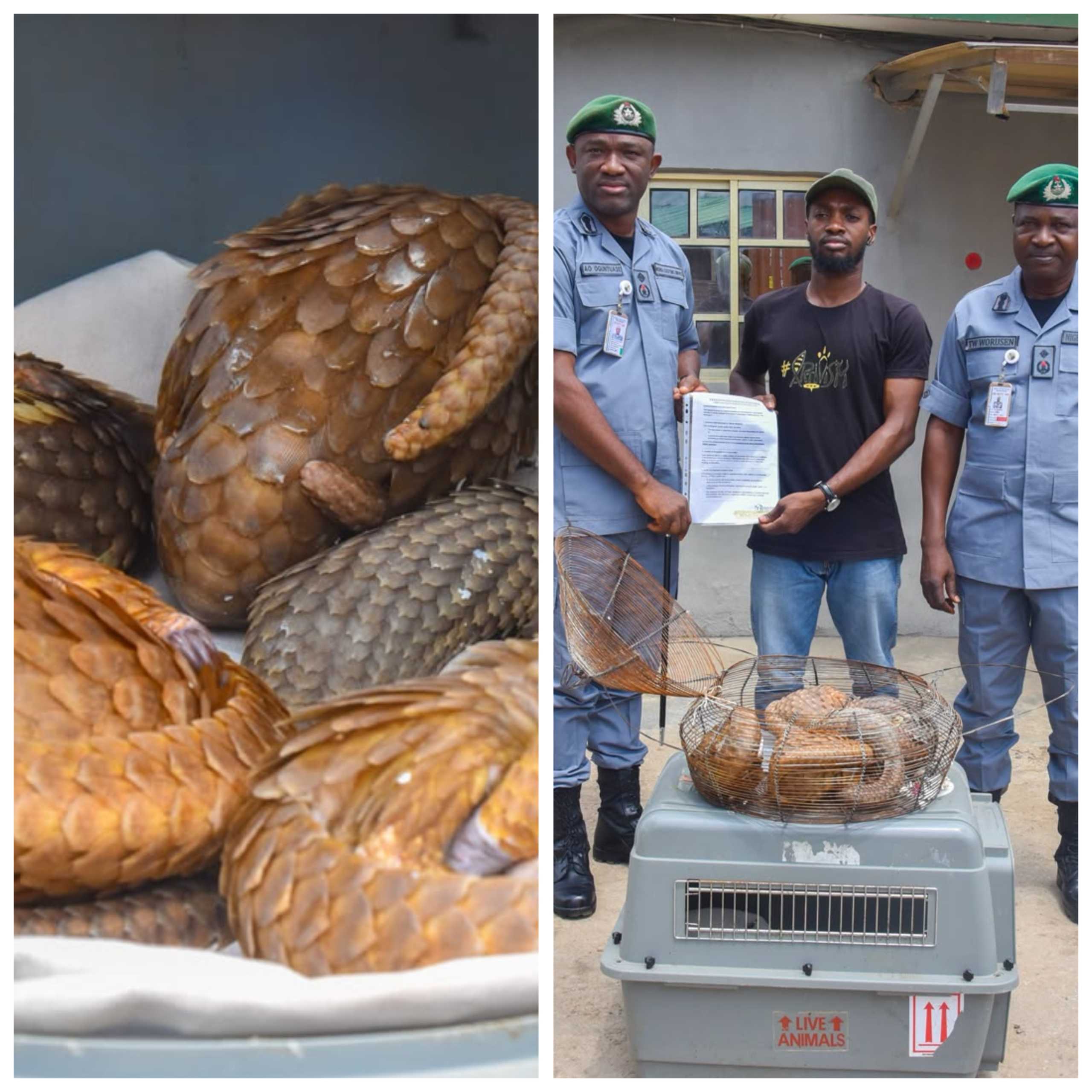
The Nigeria Customs Service (NCS), Federal Operations Unit (FOU) Zone ‘A’, has rescued five more live pangolins in Ogun State, intensifying its crackdown on the illegal wildlife trade and raising fresh concerns about the activities of endangered-species trafficking syndicates.
The latest interception, carried out at about 1:18 a.m. on Friday, October 23, 2026, along the Igbo-Ora/Imeko-Afon axis of Ogun State, followed intelligence reports on the suspected movement of endangered wildlife.
Acting on the intelligence, Customs officers intercepted the five pangolins confined in wire-mesh cages and concealed in a manner suspected to have been designed to evade detection.
The suspected traffickers reportedly abandoned the animals and fled upon sighting the patrol team.
The rescue marks another intervention by the Unit against wildlife trafficking within approximately seven days, prompting calls for an extensive investigation to identify and dismantle the criminal networks behind the illicit trade.
In line with its commitment to wildlife protection, FOU Zone ‘A’ formally handed over the rescued animals to the Greenfingers Wildlife Initiative Centre for safekeeping, rehabilitation and eventual release into a protected habitat.
The handover was conducted by the Deputy Comptroller in charge of Enforcement, Oluwaseun Oguntuase, on behalf of the Acting Controller of the Unit, Deputy Comptroller Oladapo Afeni.
Speaking at the handover ceremony, Oguntuase said the interception of multiple wildlife consignments within a short period underscored the need for sustained investigations and stronger enforcement measures against those involved in the illegal capture, transportation and trafficking of endangered species.
He reaffirmed the Service’s commitment to combating wildlife trafficking, protecting endangered animals and enforcing Nigeria’s obligations under the Convention on International Trade in Endangered Species of Wild Fauna and Flora (CITES), alongside relevant national legislation.
“Pangolins are among the world’s most trafficked mammals. This seizure is another clear warning to those involved in the illegal wildlife trade that Nigeria’s borders and transport corridors remain under active surveillance,” Oguntuase said.
Pangolins are listed under Appendix I of CITES, which generally prohibits international commercial trade in wild-caught specimens and their derivatives, subject to the Convention’s applicable provisions.
Nigeria’s Endangered Species (Control of International Trade and Traffic) Act also provides a legal framework for protecting endangered wildlife and regulating activities involving listed species.
Oguntuase said FOU Zone ‘A’ would sustain intelligence-led operations, deepen collaboration with conservation organisations and other relevant stakeholders, and ensure that rescued animals receive appropriate care.
He warned that individuals involved in wildlife trafficking would face the full weight of the law.
“Those who engage in wildlife trafficking will be made to face the full weight of the law,” he declared.
Receiving the rescued pangolins, Dr. Austin Tochukwu of the Greenfingers Wildlife Initiative Centre commended the Nigeria Customs Service for its vigilance and prompt intervention.
He assured the Service that the organisation would provide the animals with the necessary care and undertake efforts towards their rehabilitation and eventual release into a safe, protected environment.
The latest rescue underscores the importance of collaboration between law enforcement agencies and wildlife conservation organisations in confronting the illegal wildlife trade.
The Nigeria Customs Service reiterated that protecting the country’s biodiversity is a shared national responsibility requiring sustained cooperation among government institutions, conservation partners and citizens.
As enforcement operations continue, attention is expected to focus on identifying the individuals and networks responsible for the movement of endangered wildlife through Nigeria’s transport corridors.
Customs
FOU ‘A’ seeks stronger security synergy with sister agencies ahead of presidential elections
— as Acting Comptroller Afeni visits Police, Army, DSS, NDLEA, Immigration
Funso OLOJO, Editor
The Acting Comptroller of the Nigeria Customs Service (NCS), Federal Operations Unit (FOU), Zone ‘A’, Ikeja, Lagos, Deputy Comptroller Oladapo Olukayode Afeni, has called for stronger collaboration among security agencies to combat smuggling, cross-border crimes and other threats to national security, particularly as the country approaches another election period.
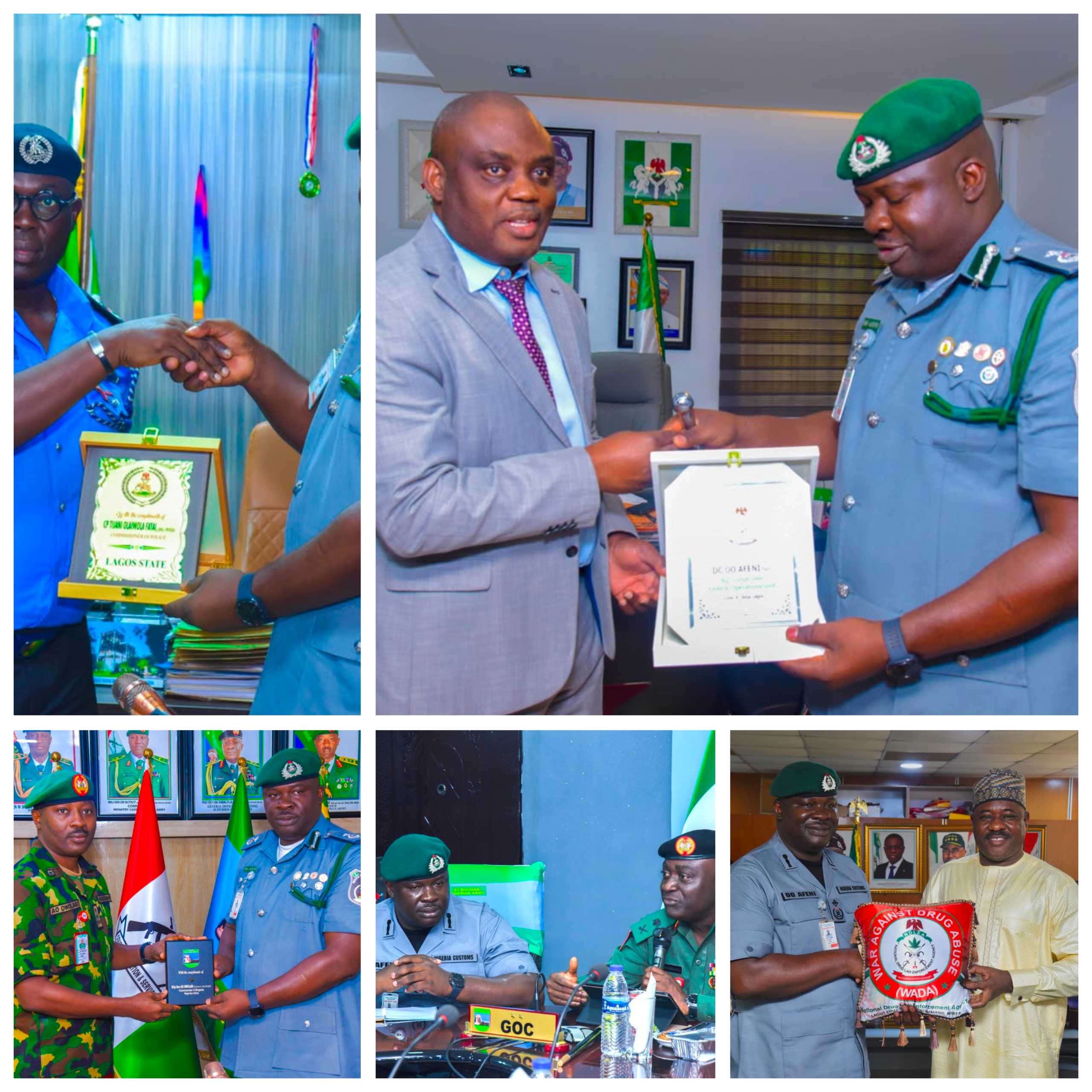
Afeni made the call during a familiarisation tour of sister security and law enforcement agencies in Lagos, which commenced on Wednesday, October 14, 2026.
The tour took him to the Lagos State Police Command Headquarters, Ikeja; the Department of State Services (DSS); Headquarters, 81 Division, Nigerian Army; the National Drug Law Enforcement Agency (NDLEA) Strategic Command; the Nigeria Immigration Service (NIS); and the 9 Brigade, Nigerian Army, Ikeja.
The visits were aimed at strengthening existing institutional relationships and identifying practical areas of cooperation in intelligence sharing, joint operations, information exchange and the enforcement of relevant laws across Lagos State and the wider operational jurisdiction of FOU Zone ‘A’.
At the Lagos State Police Command Headquarters, Afeni was received by the Commissioner of Police, CP Tijani Fatai, where he stressed the importance of coordinated security operations in preventing criminal elements from exploiting the election period to undermine public safety.
“We know that crime rates often increase as the country approaches the election period, as some people may attempt to take advantage of the period to perpetrate illicit activities capable of causing crises during the elections.
“Therefore, we are here to call for closer synergy so that these bad elements do not have their way,” he said.
The Customs chief emphasised that the responsibilities of FOU Zone ‘A’ extended beyond border protection to include collaboration with other security institutions in safeguarding national interests.
He noted that no security agency could effectively discharge its responsibilities in isolation, stressing that sustained cooperation was essential to tackling the increasingly complex nature of criminal activities.
Afeni particularly acknowledged the Nigeria Police Force’s intelligence-gathering capabilities, describing effective information sharing and coordinated operations as critical to achieving better security outcomes.
In his response, CP Fatai welcomed the visit, describing sustained engagement among security agencies as an established practice that had contributed to their operational successes over the years.
“In Lagos, we have a very strong and robust relationship with all security agencies, notwithstanding the huge population of the state,” the police commissioner said.
The Customs delegation also visited the Headquarters of the Nigerian Army’s 81 Division, where Afeni was received by the General Officer Commanding (GOC), Major General Adebayo Abdulrahman Babalola.
Babalola underscored the importance of joint operations and inter-agency cooperation in combating criminality, while cautioning against unnecessary administrative bottlenecks that could impede operational effectiveness.
The engagement highlighted the need for security institutions to streamline their operational processes, improve coordination and ensure that bureaucratic procedures do not frustrate timely responses to security threats.
Other agencies visited equally reaffirmed their commitment to sustaining cooperation with the Nigeria Customs Service in the collective effort to combat smuggling and other unlawful activities.
The familiarisation tour underscores FOU Zone ‘A’s commitment to strengthening inter-agency partnerships as a vital instrument for effective enforcement, national security and economic protection.
Beyond combating smuggling and trans-border crimes, the initiative is expected to reinforce efforts to protect government revenue, facilitate legitimate trade and safeguard Nigeria’s broader economic interests through coordinated security operations.
Customs
Calabar Customs seeks strong collaboration with sister agencies for enhanced security
Gloria Odion, Maritme reporter
The Nigeria Customs Service (NCS), Cross River/Calabar Free Trade Zone/Akwa Ibom (CR/CFTZ/AK) Area Command, has reaffirmed its commitment to strengthening inter-agency collaboration and intelligence sharing to address security challenges, facilitate legitimate trade and enhance operational efficiency.
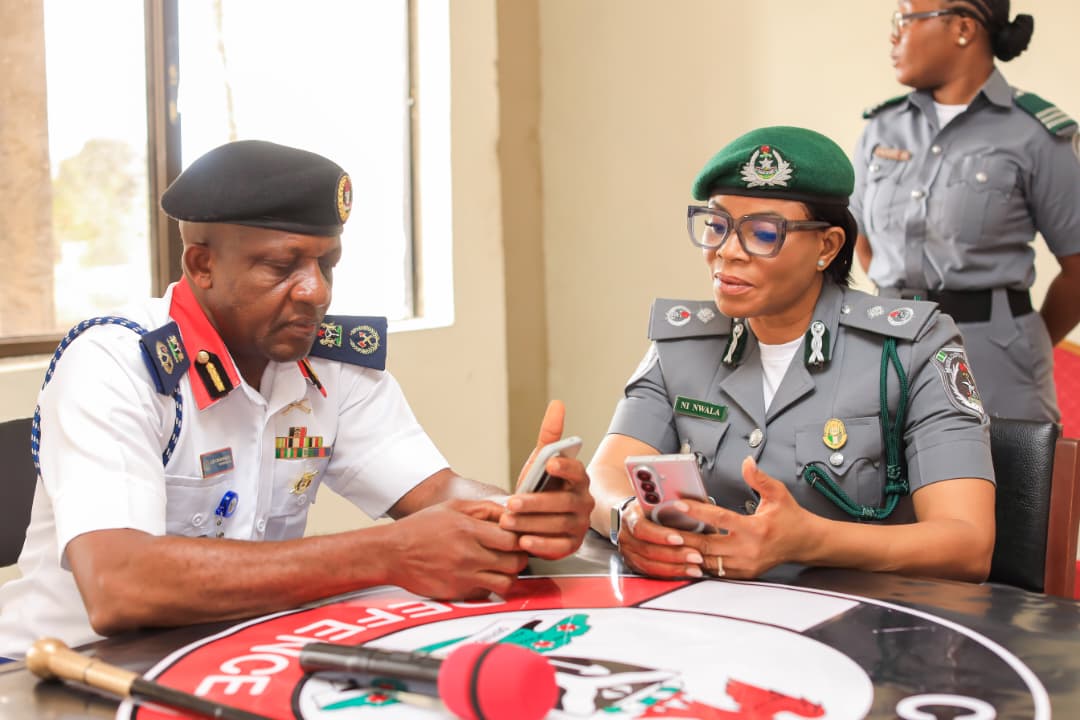
The commitment was reinforced during a series of familiarization visits by the Acting Area Controller of the Command, Deputy Comptroller Dr Nkiru Nwala to the leadership of the Nigeria Security and Civil Defence Corps (NSCDC), the Nigerian Correctional Service and the Department of State Services (DSS) on Tuesday, October 13, 2026.
During the visits, Nwala held discussions with the NSCDC Commandant, C. E. Okarazu; the Controller of Corrections, Nigerian Correctional Service, Aniekan Archibong Nya; and the State Director of the DSS, Dr Faluyi Oluwole.
The engagements provided an opportunity to strengthen existing institutional relationships, establish direct communication channels and explore practical ways to improve cooperation among the agencies following Nwala’s assumption of duty.
The Acting Area Controller emphasised the importance of sustained collaboration among security and law enforcement agencies in tackling common security threats, promoting compliance with relevant laws and protecting the nation’s economic and security interests.
The visits emphasised the importance of intelligence sharing and coordinated operations in tackling security threats, safeguarding national assets and facilitating legitimate trade.
The Command noted that stronger partnerships among the agencies would enhance operational coordination, support the enforcement of relevant laws and contribute to the protection of critical national assets and infrastructure.
The initiative aligns with the Comptroller-General of Customs’ strategic mantra of Consolidation, Innovation and Collaboration, which prioritises strengthening existing partnerships, embracing innovative approaches to operational challenges and promoting effective cooperation among relevant institutions.
The Command reaffirmed its commitment to working closely with sister security agencies to strengthen national security, facilitate legitimate trade and advance the broader objectives of national development.

 Headlines2 months ago
Oyetola presents three-year score card as blue economy industry revenue hits ₦1.83trn

 Customs2 months ago
Apapa Customs sets new single-day revenue record with ₦28.1bn collection

 Customs2 months ago
Apapa Customs sets new record of monthly revenue haul with ₦323bn collection in July
 Customs3 months ago
NCS intercepts container concealing pump-action rifle parts, seizes ₦373.8m worth of cannabis products at Tincan Port
 Customs3 months ago
FG exempts CNG, electric vehicles from Customs duty, VAT

 Customs4 weeks ago
FOU Zone ‘A’: Aliyu retires after ₦3.19bn revenue recovery, Afeni takes over