
Headlines
NRC gears up for resumption of Abuja–Kaduna train services, opens platform for ticket payment


Headlines
Bayelsa Boat Mishap: We pray it never happens again, but prayer alone cannot save us

Coalition of Maritime Journalists of Nigeria warns
Another boat mishap. Another community in mourning. Another list of lives lost on our waterways, leaving families devastated and communities in grief.
On Friday, November 20, 2026, a wooden passenger boat conveying mourners from Ayama to Ukubie for a burial ceremony capsized near the river junction between Oweikorogha and Otuan communities in Southern Ijaw Local Government Area of Bayelsa State.
The incident reportedly occurred at about 11 a.m. after the boat developed a mechanical fault and capsized.
The National Emergency Management Agency (NEMA) confirmed that 24 people died while another 24 were rescued. However, other reports put the death toll at 29.
We extend our heartfelt condolences to the bereaved families, the Bayelsa State Government and the entire people of the state. Our thoughts are particularly with the mothers, fathers, children and relatives who waited at the jetty for their loved ones, only to receive the devastating news that they would never return.
But condolences alone are not enough. Nigeria must move beyond mourning and take decisive action to prevent the recurrence of these avoidable tragedies.
WHAT REALLY HAPPENED IN BAYELSA?
Preliminary findings announced by Bayelsa State Governor, Senator Douye Diri, indicated that the boat was overloaded, no passenger manifest was available, and most of the passengers were not wearing life jackets.
These revelations are deeply troubling.
Overloading. Absence of a passenger manifest. Failure to wear life jackets. A reported mechanical fault. These are serious safety concerns that must be thoroughly investigated.
The tragedy raises fundamental questions about compliance with established water transportation safety regulations and the effectiveness of enforcement at departure points.
Governor Diri also confirmed that neither the passengers nor the boat operator wore life jackets.
This is particularly unfortunate given the Federal Government’s previous interventions to improve safety awareness and provide life-saving equipment to water transport users in Bayelsa and other riverine communities.
THE FEDERAL GOVERNMENT HAS NOT FOLDED ITS ARMS
For the sake of accuracy, it is important to acknowledge the interventions already undertaken by the Federal Government to address boat mishaps across the country.
On May 2, 2025, the Minister of Marine and Blue Economy, Dr. Adegboyega Oyetola, personally visited Bayelsa State to distribute 3,500 life jackets to water transport users as part of efforts to promote safety and protect lives on inland waterways.
This was part of a broader nationwide campaign across the 28 littoral states, aimed at encouraging compliance with safety regulations and reducing avoidable deaths.
Following the Bayelsa tragedy, the Minister promptly ordered an investigation into its immediate and remote causes, directing the National Inland Waterways Authority (NIWA) to conduct a thorough investigation and submit its findings.
He also instructed NIWA to collaborate with relevant government agencies and the Bayelsa State Government to ensure a comprehensive, transparent and credible investigation.
In his reaction, Oyetola said:
“Safety lapses on our waterways are no longer acceptable. The Federal Government will not fold its arms and watch its citizens perish on the waterways.
“We must get to the root of this tragedy and ensure that those responsible for enforcing safety regulations do their jobs.”
The Minister also expressed concern over the reported absence of a passenger manifest, emphasising that proper passenger documentation remains a critical safety requirement that must be strictly enforced.
These interventions demonstrate that the Federal Government recognises the dangers confronting inland water transportation and has taken steps to address them.
However, the Bayelsa incident underscores the need to translate policy interventions into consistent compliance and effective enforcement at the grassroots.
The objective of the Bola Ahmed Tinubu administration should be to ensure that no Nigerian loses his or her life to preventable negligence on the waterways.
NIWA: FROM BOLA OYEBAMIJi TO YUSUF GIREI — SUSTAINING THE SAFETY AGENDA
The National Inland Waterways Authority has continued to play a central role in the Federal Government’s efforts to improve safety standards, eliminate substandard vessels and promote responsible operations across Nigeria’s inland waterways.
Under the leadership of former Managing Director, Bola Oyebamiji, water transportation safety received renewed attention through stakeholder engagement, regulatory advocacy and efforts to strengthen operational procedures at jetties across the country.
Appointed in October 2023, Oyebamiji was given the responsibility of driving the implementation of the National Inland Waterways Transportation Code to reduce boat accidents and standardise water transportation operations.
During his tenure, reported fatalities on Nigeria’s waterways declined from 330 in 2022 to 92 in the first eight months of 2025.
This represented significant progress, although sustaining and improving on the gains requires continuous commitment from regulators, operators and passengers.
Oyebamiji also encouraged a nationwide engagement initiative involving the Coalition of Maritime Journalists of Nigeria, particularly in states such as Niger, to investigate the socio-cultural factors contributing to boat mishaps and identify practical solutions.
The engagements examined the roles of traditional institutions and community leaders in influencing public attitudes towards water safety.
The positive outcomes reported from these engagements in Niger State, including improved community support for safety measures, demonstrated the importance of combining public enlightenment with traditional institutions and regulatory enforcement.
The lesson is clear: when communities understand and embrace safety regulations, when traditional rulers lend their voices to compliance, and when regulators enforce the rules, the risk of accidents can be significantly reduced.
THE ACCIDENT PREVENTION COMMITTEE: A BLUEPRINT FOR REFORM
In a further demonstration of its commitment to addressing boat mishaps, the Ministry of Marine and Blue Economy inaugurated a Special Committee on the Prevention of Boat Mishaps in Nigeria, chaired by former NIWA Managing Director, Bola Oyebamiji.
The committee, inaugurated on February 27, 2025, included representatives of the Association of Tourist Boat Operators and Water Transporters of Nigeria (ATBOWATON), led by Dr. Gani Tarzan Balogun, and the Waterways Boat Operators and Transporters Association of Nigeria (WABOTAN), led by Tope Fajemirokun.
It was mandated to undertake a comprehensive review of commercial boat operations, identify the underlying causes of boat mishaps and recommend sustainable solutions.
The committee produced a six-chapter report containing 64 recommendations, with 17 key proposals highlighted.
Among its recommendations were the establishment of a Coastal Guard to enforce waterway safety regulations; the development of a National Boat Design Policy to standardise permitted vessel types; mandatory certification and formal training for boat operators; increased funding for NIWA to strengthen its hydrographic and marine engineering functions; and the establishment of search and rescue stations at strategic locations across inland waterways.
The recommendations provide a framework for addressing the structural, operational and regulatory challenges responsible for recurring boat accidents.
Beyond the committee’s work, Oyetola also approved a nationwide distribution of life jackets to riverine and coastal communities.
NIWA has reportedly distributed 42,000 life jackets across states including Bayelsa, Anambra, Akwa Ibom and Ogun, while the Minister has been acknowledged for distributing 45,000 life jackets across 12 states.
Other interventions include the deployment of more than 1,500 navigational buoys in parts of River Niger, the introduction of a Water Transportation Code to sanction offenders, an increase in the number of water marshals responsible for enforcing safety regulations, and the clearance of water hyacinths in Omu Creeks, Lekki and Ikorodu in Lagos State.
NIWA has also taken enforcement action against operators whose negligence resulted in fatalities. In Kogi State, two boat operators were prosecuted over the deaths of 19 passengers following their failure to heed warnings against night journeys and travelling without life jackets.
These initiatives are commendable. However, the Bayelsa incident reminds us that the existence of safety policies and interventions must be matched by strict compliance and sustained enforcement.
YUSUF GIREI: SUSTAINING THE QUEST FOR SAFER WATERWAYS
The Acting Managing Director of NIWA, Yusuf Girei, is expected to sustain the momentum of the Federal Government’s drive to eliminate avoidable deaths on Nigeria’s inland waterways.
Girei recently led an initiative to clear water hyacinths on the iconic Jabi Lake in Abuja to improve navigation and sustain water-based recreational activities.
He also directed Area Managers across the country to intensify safety awareness campaigns, oversight and monitoring activities as part of efforts to achieve zero accidents on the nation’s waterways.
Water hyacinth clearance is not merely an environmental intervention. It improves navigability, reduces operational risks and supports tourism and other economic activities on inland waterways.
Following the Bayelsa tragedy, Girei also dispatched a high-powered delegation to the state at the directive of the Minister of Marine and Blue Economy.
These actions are welcome and should be complemented by sustained monitoring, stronger enforcement and community engagement, particularly in riverine areas where water transportation remains an essential means of mobility.
THE HARD QUESTION: ARE OUR PEOPLE WILLING TO OBEY?
Beyond government interventions, there is an uncomfortable question that Nigerians must confront: Are passengers and boat operators willing to take responsibility for their own safety by complying with established regulations?
The Coalition of Maritime Journalists of Nigeria has, on several occasions, reported incidents in which NIWA officials and river marshals were allegedly attacked by passengers and boat operators during routine safety inspections before departure.
Some of these confrontations reportedly resulted in serious injuries to enforcement personnel.
This situation is unacceptable.
The same officers tasked with protecting lives are sometimes attacked for insisting that passengers wear life jackets, operators avoid overloading and boats comply with safety requirements.
An enforcement officer who insists on compliance is not an enemy of the people. Such an officer is performing a responsibility that could ultimately save lives.
Safety regulations are not designed to inconvenience passengers or frustrate boat operators. They exist because the consequences of non-compliance can be fatal.
Water is not our enemy. It is a blessing, a means of transportation, a source of livelihood, a tourism asset and an important component of Nigeria’s emerging Blue Economy.
However, its benefits can only be fully realised when users respect the rules governing safe navigation.
No life jacket, no boarding. No passenger manifest, no departure. No overloading. No night travel between 6 p.m. and 6 a.m. No substandard passenger vessel. No unlicensed operator. No departure without the necessary safety checks.
These are not arbitrary restrictions. They are essential safeguards for human lives.
WHAT THE TINUBU ADMINISTRATION WANTS FOR NIGERIA’S WATERWAYS
The Bola Ahmed Tinubu administration’s ambition for inland water transportation should be anchored on a clear objective: safer waterways, modern vessels, responsible operators and zero avoidable fatalities.
This vision requires sustained action in six critical areas.
Zero avoidable deaths: Reducing fatalities is important, but the ultimate objective must be to eliminate preventable deaths on Nigerian waterways. Every life lost through negligence is one too many.
Safe and modern boats:
Oyetola has repeatedly advocated the gradual phasing out of wooden boats by state governments and their replacement with safer, more durable and better-equipped fibreglass or fibre-reinforced plastic vessels, particularly for passenger transportation.
A Coastal Guard
The proposed establishment of a Coastal Guard would strengthen safety enforcement and ensure effective monitoring of activities at jetties and departure points.
Certified operators
Boat operators must possess the necessary training, competence and certification to operate passenger vessels. The era of untrained and unqualified operators must end.
Search and rescue stations.
Strategic search and rescue facilities are necessary to ensure that emergency response is swift and that assistance reaches accident scenes without unnecessary delays.
A thriving Blue Economy: Safe waterways will encourage water transportation, tourism, investment and employment opportunities. Safety must therefore be recognised as a foundation for the successful implementation of Nigeria’s Blue Economy agenda.
It would be unfair to conclude that the Federal Government has done nothing because another tragedy has occurred in Bayelsa.
Equally, it would be wrong to suggest that the provision of life jackets and the issuance of safety directives automatically absolve regulatory authorities of responsibility.
Government has a duty to provide the necessary safety infrastructure, strengthen regulation and ensure effective enforcement. Passengers and operators also have a responsibility to comply with the rules.
Providing life jackets is important, but ensuring that they are worn is equally critical. Issuing warnings is necessary, but enforcing those warnings is indispensable.
The Bayelsa tragedy must therefore lead to a comprehensive examination of the conduct of the boat operator, the circumstances surrounding the mechanical failure, the reported overloading, the absence of a passenger manifest and the effectiveness of safety checks at the point of departure.
Accountability must accompany condolence.
OUR CALL: A COALITION APPEAL
The Coalition of Maritime Journalists of Nigeria makes the following appeal to all stakeholders:
To Nigerians: Take safety regulations seriously whenever you travel by water. Wear your life jacket, refuse to board overloaded boats, avoid night journeys and insist on a passenger manifest. Report reckless operators and refuse to compromise your safety for convenience.
If a boat is overloaded, do not board. If life jackets are unavailable, do not embark on the journey. If an operator is unlicensed or appears unfit to operate, report the situation to the relevant authorities.
It is better to arrive late than never to arrive.
To the 28 littoral states: Invest in modern passenger boats and ferries to transform water transportation in your respective states. The responsibility for safer waterways cannot rest on the Federal Government alone.
State governments must support the gradual replacement of unsafe wooden passenger boats, develop functional jetties, invest in safety infrastructure and provide the necessary resources to protect their citizens.
To traditional institutions, community leaders and religious organisations: Make water safety an integral part of community sensitisation. Use your influence to encourage compliance and discourage attacks on enforcement personnel.
Help NIWA protect lives. Support the river marshals who are working to ensure that passengers return safely to their families.
To boat operators .
Recognise that you are not merely transporting passengers; you are responsible for human lives.
Do not overload your vessels for additional revenue. Do not compromise safety to meet schedules or maximise profits. Ensure that your boats are properly maintained, that passengers wear life jackets and that all required safety procedures are observed before departure.
One reckless decision can destroy lives, livelihoods and reputations.
To NIWA
Do not relent in your efforts to improve safety on Nigerian waterways. Intensify public enlightenment, strengthen monitoring and enforcement, sustain life jacket distribution, prosecute offenders where necessary and ensure that safety regulations are applied consistently across all operational areas.
The authority must also ensure that its personnel are adequately protected and equipped to discharge their responsibilities without intimidation or attacks.
CONCLUSION: WATER IS NOT OUR ENEMY
The Coalition of Maritime Journalists of Nigeria sympathises with the families of the victims, the Bayelsa State Government and the entire people of the state over this painful tragedy.
We pray that such an incident never happens again. But prayer must be accompanied by responsibility, discipline and obedience to safety regulations.
The Bayelsa tragedy must not become another statistic that attracts public outrage for a few days before the nation moves on.
Let it be a turning point in Nigeria’s approach to inland water transportation safety.
Let it compel passengers to insist on life jackets, operators to prioritise safety over profit, state governments to invest in modern vessels, and regulatory authorities to enforce existing laws without compromise.
Let us collectively say no to avoidable deaths, overloaded boats, unprotected passengers, reckless operations and attacks on safety officers.
The responsibility to save lives on our waterways belongs to all of us.
Wear the life jacket. Obey the rules. Arrive alive.
Headlines
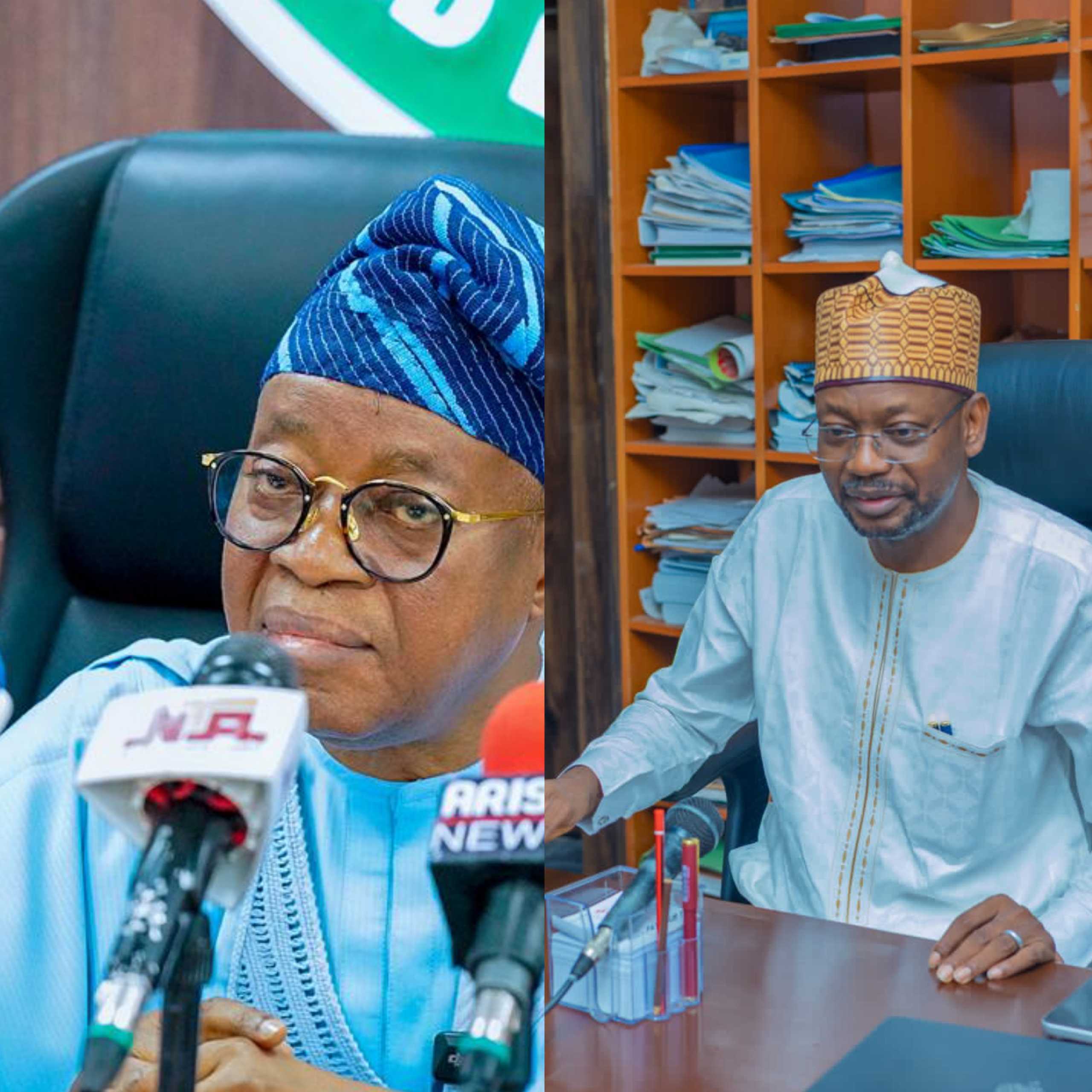
Oyetola mandates NIWA to investigate Bayelsa boat mishap
Headlines
After Malabo: Dantsoho’s legacy and hard test ahead for West African ports
Monday Discourse with Ibrahim Nasiru
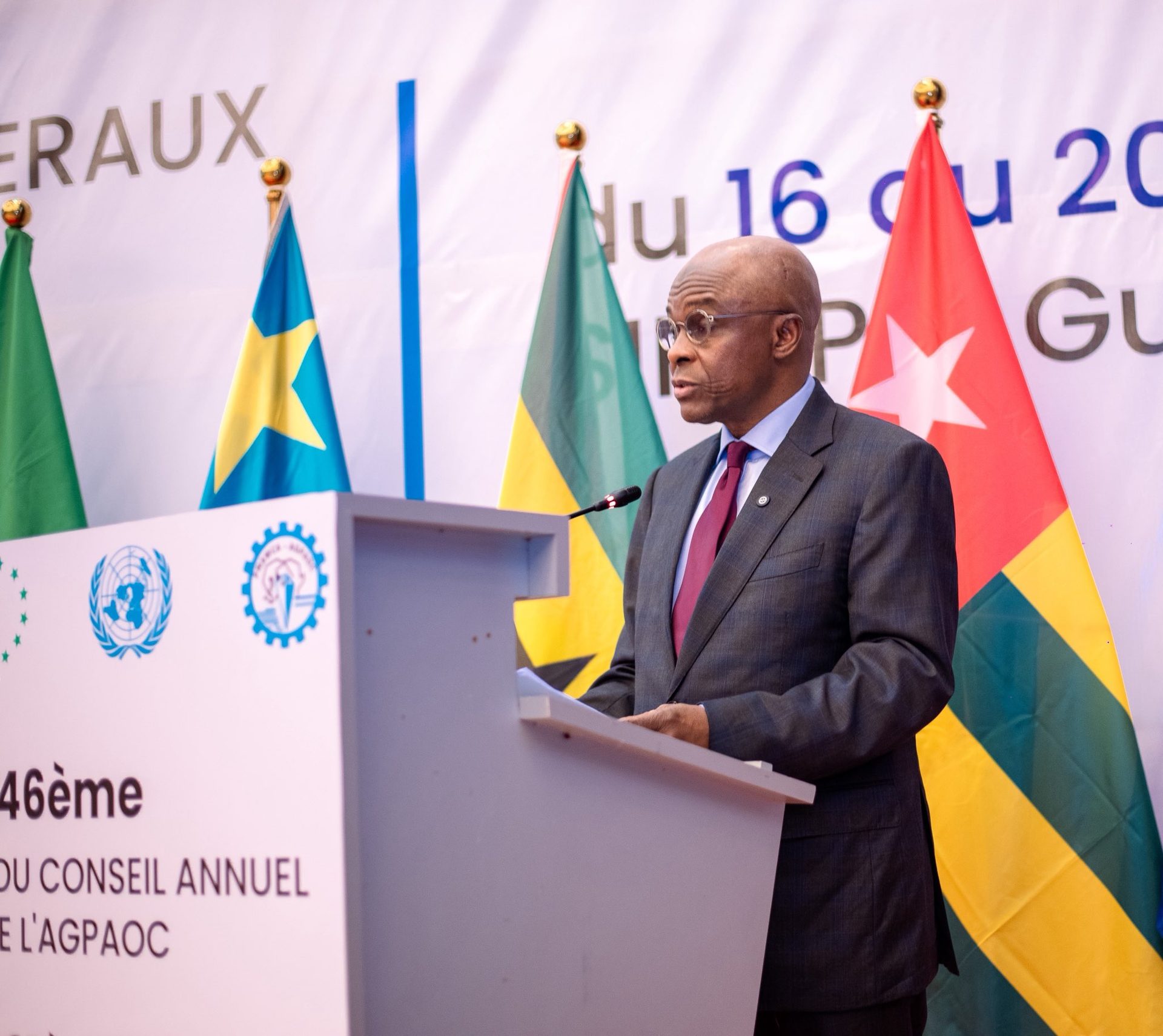
When the curtain fell on the 46th Annual Council Meeting and 21st Roundtable of Managing Directors of the Port Management Association of West and Central Africa (PMAWCA) in Sipopo, Malabo, Equatorial Guinea, one historic chapter closed and a harder test began.
After two eventful years as the first Nigerian President and Chairman of Council of PMAWCA, the Managing Director of the Nigerian Ports Authority (NPA), Dr. Abubakar Dantsoho, handed over the baton to Aly Koita, Director-General of the Autonomous Port of Conakry.
Representing 20 coastal countries and five landlocked nations, PMAWCA sits at the economic lifeline of over 400 million people.
Yet for decades, regional maritime bodies along the Gulf of Guinea were often criticized as polite talking shops where port chiefs met annually, read speeches, and returned home to the exact same bottlenecks.
Between November 2024 and November 2026, Dr. Dantsoho worked deliberately to change that culture—shifting PMAWCA from a ceremonial club into a reform-minded technical bloc.
What legacies did Dr. Dantsoho leave behind?
Dr. Dantsoho’s presidency stood on three practical pillars that reshaped both PMAWCA and Nigeria’s standing in global shipping:
Putting Digitalisation and Interoperability at the Centre:
Rather than treating technology as cosmetic window dressing, Dantsoho pushed the doctrine that modern ports win on turnaround time, lower cargo dwell time, and system interoperability.
By anchoring Nigeria’s own rollout of the Port Community System (PCS) and National Single Window alongside deeper regional data-sharing, he proved that West and Central African ports cannot afford fragmented, paper-heavy border clearance while global shipping lines automate.
Linking Port Efficiency to Maritime Security:
Hosting the Joint Gulf of Guinea Commission–PMAWCA Forum in Malabo underscored a vital truth: a modern port is useless if the sea lanes leading to it are unsafe or if subsea cables and offshore pipelines are vulnerable.
Bridging port operators with Gulf of Guinea security institutions elevated PMAWCA’s strategic relevance.
*Global Voice and Youth Capacity:
From elevating Africa’s voice within the International Association of Ports and Harbors (IAPH)—where he serves as Vice President for Africa to championing youth training through the PMAWCA Professional Training Centre in Cotonou, Dantsoho raised the association’s diplomatic weight in the international maritime comity of nations.
Dissecting the Malabo Message: Cooperation Over Cutthroat Rivalry
The core message emerging from the Malabo deliberations and communique is blunt and overdue: West and Central African ports must choose strategic collaboration over destructive rivalry.
For too long, neighbouring ports along the Nouakchott–Luanda coastline have viewed one another purely as competitors fighting for transshipment cargo—even as shippers across the sub-region suffer from high port charges, slow customs clearance, weak hinterland rail and road links, and expensive transit corridors.
Geopolitical disruptions in global shipping routes have recently diverted more vessel calls toward West and Central Africa.
Nigeria’s own port performance illustrates the scale of what is possible when capacity meets reform.
In Q1 2026 alone, Nigerian ports recorded an 83.1 percent surge in transshipment container volume alongside a sharp rise in total cargo throughput.
That momentum is a golden regional opportunity, yet it is also a stress test.
Ports operating near capacity with aging equipment and shallow drafts will lose diverted vessels to better-organized hubs unless regional standards improve together.
The Future of PMAWCA: Four Hard Tests for the New Leadership
As Conakry’s Aly Koita assumes the presidency, PMAWCA’s relevance in global shipping will not be judged by the warmth of its Malabo communique, but by four concrete benchmarks over the next two years:
Enforcing Accountability, Not Just Declarations:
In his parting charge in Malabo, Dr. Dantsoho proposed that a dedicated implementation progress report be tabled at the 47th Annual Council.
PMAWCA must adopt that discipline so member ports report measurable reductions in cargo dwell time and clearance costs rather than repeating old pledges.
.Seamless Customs and Hinterland Corridors
Digital single windows inside individual ports will fail if cargo still stalls for days at land borders or lacks efficient road and rail evacuation to the five landlocked member nations.
Green Ports and Climate Finance.
Global shipping is rapidly enforcing maritime decarbonisation rules.
As Dantsoho warned in Malabo, transitioning toward “green port” standards—shore power, clean marine fuels, and coastal erosion protection—is no longer optional; it is the ticket to accessing international climate and infrastructure finance.
Cybersecurity Resilience:
As West African ports digitize cargo clearance and vessel traffic management, they become prime targets for cyberattacks.
Shared regional cyber-defense protocols must become a core PMAWCA priority.
The Bottom Line
Dr. Abubakar Dantsoho leaves PMAWCA stronger, more visible, and better respected in global maritime circles than he met it.
Now, the association must prove that coastal solidarity across its 25 member states can lower the cost of doing business for ordinary traders, manufacturers, and consumers across West and Central Africa.
Ibrahim Nasiru, a public affairs analyst, writes from Abuja

 Headlines3 months ago
Oyetola presents three-year score card as blue economy industry revenue hits ₦1.83trn
 Customs2 months ago
FOU Zone ‘A’: Aliyu retires after ₦3.19bn revenue recovery, Afeni takes over

 Customs3 weeks ago
FOU Zone A: Afeni intensifies anti-smuggling operations, seizes N511.4m drugs, rescues eight pangolins

 Customs2 months ago
Nigeria, Benin Customs move to harmonise trans-border trade, establish joint border post at Seme-Krake

 Headlines3 weeks ago
Tension heightens at Osborne Foreshore Estate over alleged environmental breach by property developer

 Commentaries4 weeks ago
Beyond Shiny Tech: Why Africa’s smart ports must build plumbing before AI