Headlines
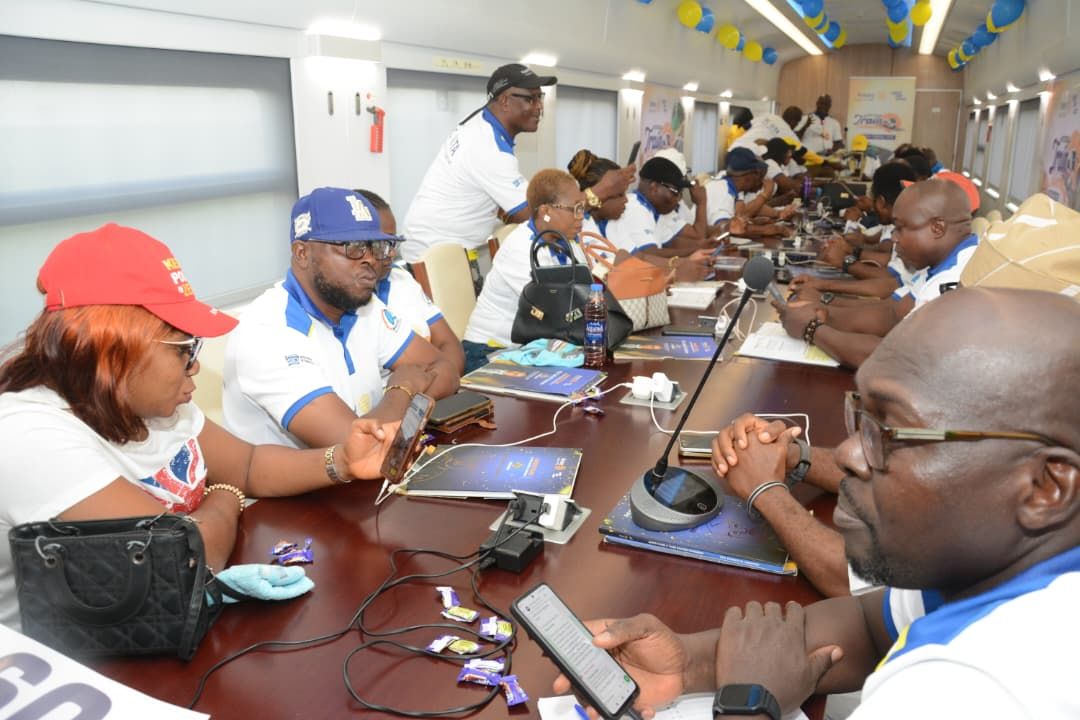
NRC hosts Rotary Club on mobile train


Headlines
Oyetola visits Ghana, seeks regional collaboration to tackle illegal fishing, protect marine resources.
Gloria Odion Maritme reporter
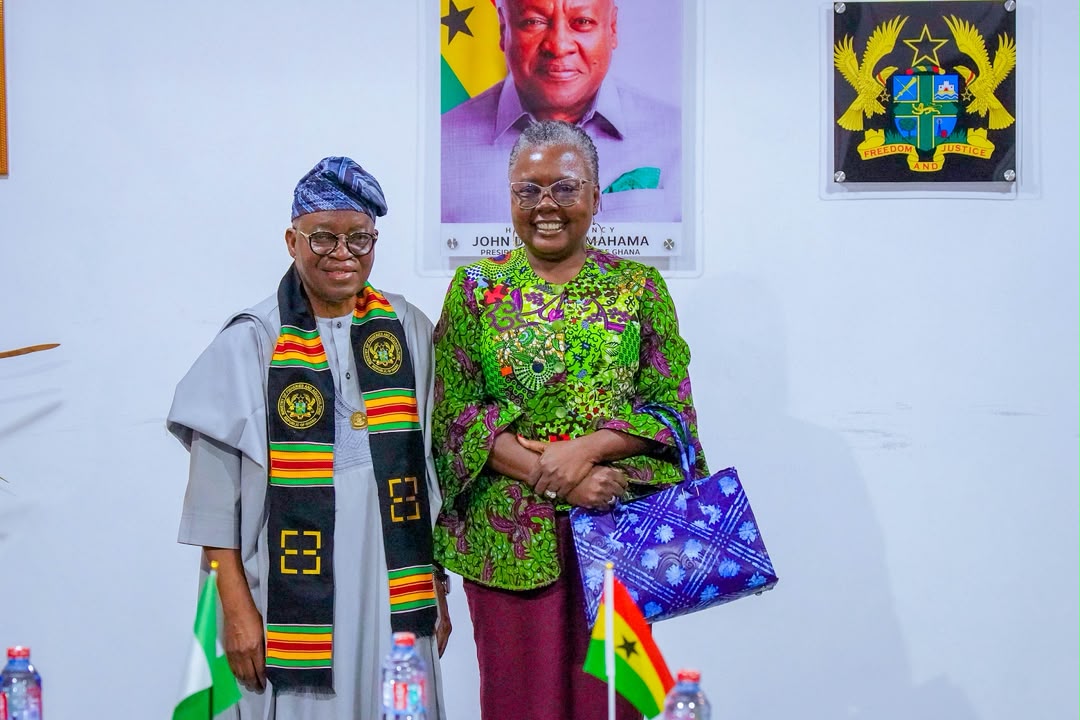
Nigeria’s Minister of Marine and Blue Economy, Adegboyega Oyetola, has called for stronger bilateral cooperation between Nigeria and Ghana to combat Illegal,Unreported and Unregulated (IUU) fishing, improve fisheries governance and ensure the sustainable management of shared marine resources.
Oyetola made the call on Wednesday, 14th, October 2026, during a meeting with Ghana’s Minister for Fisheries and Aquaculture Development, Hon. Emelia Arthur, in Accra, where both countries explored ways to strengthen collaboration in fisheries management and address the challenges posed by illegal fishing.
The meeting focused on strengthening collaboration in fisheries management, improving vessel authorisation procedures and enhancing regional efforts to address illegal fishing across the West Central Gulf of Guinea.
Oyetola, who is also the President of the Fisheries Committee for the West Central Gulf of Guinea (FCWC), said closer cooperation between both countries was essential to protecting marine resources, safeguarding food security,boosting government revenue and supporting the livelihoods of fishing communities.
He noted that IUU fishing remained a shared challenge requiring coordinated action,effective information sharing and stronger enforcement mechanisms among countries in the subregion.
The Minister identified Nigeria’s pilot implementation of the Regional Record of Authorised Fishing Vessels as a practical mechanism for strengthening cooperation with Ghana,particularly in verifying vessel authorisations and facilitating the exchange of relevant information through the FCWC framework.
He proposed that technical teams from both countries work together to identify discrepancies in vessel authorisation records and establish agreed procedures for resolving them.
He said the initiative would promote transparency, ensure compliance with fisheries regulations and strengthen monitoring across the region.
“Our shared interest is to protect fisheries resources, expand sustainable production and strengthen the livelihoods of our people.
Nigeria remains committed to working with Ghana towards these objectives,” Oyetola said.
In her remarks, Arthur commended Nigeria for its efforts in combating piracy and acknowledged the progress recorded in the Marine and Blue Economy sector.
She reaffirmed Ghana’s commitment to tackling IUU fishing and pledged her country’s cooperation with Nigeria in addressing the challenge.
The Ghanaian Minister also disclosed that Ghana had developed its own Marine and Blue Economy policy, seeking Nigeria’s support in sharing knowledge and experience, given its pioneering efforts in developing a similar policy framework.
The request highlights the importance of policy exchange and technical cooperation between both countries in advancing sustainable ocean governance, strengthening fisheries management and unlocking opportunities within their respective blue economy sectors.
As part of his official engagements, Oyetola visited the FCWC Secretariat in Tema, Ghana, where he met with the Secretary-General,Dr. Antoine Djihinto, and other members of staff.
The Minister commended the Secretariat for its achievements over the past year and reaffirmed Nigeria’s commitment to working with other member states to strengthen regional fisheries governance and intensify efforts to eliminate IUU fishing across the West Central Gulf of Guinea.
He emphasised the need for sustained cooperation among member countries, noting that coordinated monitoring, control and surveillance,improved information sharing and effective implementation of regional initiatives were critical to protecting marine resources and ensuring their long-term sustainability.
The FCWC comprises six member countries: Benin, Côte d’Ivoire, Ghana, Liberia, Nigeria and Togo.
The regional body provides a framework for cooperation in fisheries management, maritime security and the promotion of sustainable fishing practices across the West Central Gulf of Guinea.
Oyetola’s visit underscores Nigeria’s commitment to strengthening regional partnerships, improving fisheries monitoring and enforcement, and promoting a sustainable Marine and Blue Economy that supports food security, economic growth and the livelihoods of coastal communities across the subregion.
Customs
Calabar Customs seeks strong collaboration with sister agencies for enhanced security
Gloria Odion, Maritme reporter
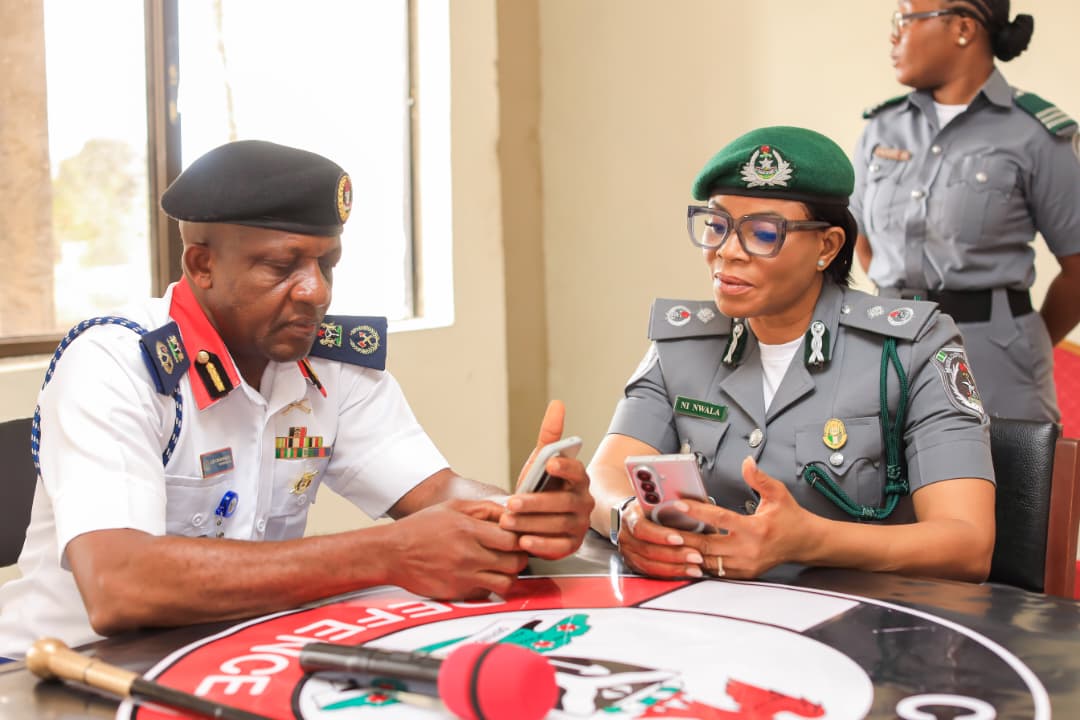
The Nigeria Customs Service (NCS), Cross River/Calabar Free Trade Zone/Akwa Ibom (CR/CFTZ/AK) Area Command, has reaffirmed its commitment to strengthening inter-agency collaboration and intelligence sharing to address security challenges, facilitate legitimate trade and enhance operational efficiency.
The commitment was reinforced during a series of familiarization visits by the Acting Area Controller of the Command, Deputy Comptroller Dr Nkiru Nwala to the leadership of the Nigeria Security and Civil Defence Corps (NSCDC), the Nigerian Correctional Service and the Department of State Services (DSS) on Tuesday, October 13, 2026.
During the visits, Nwala held discussions with the NSCDC Commandant, C. E. Okarazu; the Controller of Corrections, Nigerian Correctional Service, Aniekan Archibong Nya; and the State Director of the DSS, Dr Faluyi Oluwole.
The engagements provided an opportunity to strengthen existing institutional relationships, establish direct communication channels and explore practical ways to improve cooperation among the agencies following Nwala’s assumption of duty.
The Acting Area Controller emphasised the importance of sustained collaboration among security and law enforcement agencies in tackling common security threats, promoting compliance with relevant laws and protecting the nation’s economic and security interests.
The visits emphasised the importance of intelligence sharing and coordinated operations in tackling security threats, safeguarding national assets and facilitating legitimate trade.
The Command noted that stronger partnerships among the agencies would enhance operational coordination, support the enforcement of relevant laws and contribute to the protection of critical national assets and infrastructure.
The initiative aligns with the Comptroller-General of Customs’ strategic mantra of Consolidation, Innovation and Collaboration, which prioritises strengthening existing partnerships, embracing innovative approaches to operational challenges and promoting effective cooperation among relevant institutions.
The Command reaffirmed its commitment to working closely with sister security agencies to strengthen national security, facilitate legitimate trade and advance the broader objectives of national development.
Headlines
NIMASA yields to massive demand for participation in Blue Economy Hackathon, opens competition to all Nigerians, removes age barrier

Funso OLOJO, Editor
The Nigerian Maritime Administration and Safety Agency (NIMASA) has removed the age restriction for participation in its 2026 National Innovation Hackathon under the NIMASA Blue Economy Accelerator Programme (NIMASA-BEAP), opening the initiative to a wider pool of Nigerian innovators following growing public demand.
Under the revised eligibility criteria, Nigerians aged 18 and above can now apply, regardless of gender, ethnicity, religion or educational background.
The agency said the decision was taken in response to widespread calls from Nigerians seeking to participate in the initiative, which aims to identify, nurture and commercialise innovative solutions to challenges and emerging opportunities in the country’s maritime and blue economy.
The NIMASA-BEAP application portal opened on Monday, October 5, 2026, with applications free of charge.
NIMASA is urging innovators, entrepreneurs, researchers, software developers, engineers, artisans, graduates and students with promising ideas to take advantage of the opportunity and submit their applications before the deadline.
Scheduled for December 8–10, 2026, the National Innovation Hackathon will focus on developing practical, technology-driven and commercially viable solutions across 13 innovation tracks covering different segments of the maritime and blue economy.
The tracks include maritime technology and logistics; maritime safety, surveillance and security; green shipping and vessel decarbonisation; seafarer welfare; port digitisation and marine waste management
Other areas are aquaculture and sustainable fisheries; coastal and artisanal fishing; ocean data and analytics; nature-based coastal defence; marine tourism; marine biotechnology; and deep seabed mining technologies and research.
Beyond the hackathon, successful innovators will have the opportunity to advance to the 12-week NIMASA-BEAP Accelerator Programme, scheduled to run from January to April 2027.
Participants selected for the accelerator will receive structured mentorship, industry exposure and venture-development support to help transform their ideas into viable businesses and scalable solutions.
The programme will culminate in a National Demo Day in April 2027, where participating innovators will have opportunities to engage with investors, industry partners, prospective customers and other stakeholders capable of supporting the development and commercialisation of their solutions.
NIMASA-BEAP is designed to go beyond a conventional innovation competition by establishing a national pipeline for identifying promising Nigerian ideas, developing them into market-ready ventures and connecting them with opportunities across the marine and blue economy.
The programme is expected to encourage local innovation, strengthen entrepreneurship and expand participation in a sector with significant potential for investment, employment generation and economic diversification.
With the removal of the age restriction, NIMASA is encouraging Nigerians with innovative ideas capable of addressing maritime and blue economy challenges to seize the opportunity to contribute to the development of the sector.
Applications close on Friday, November 13, 2026.
Interested applicants can register free of charge through the official NIMASA-BEAP portal: https://nbeap.nimasa.gov.ng/.

 Customs3 months ago
Customs releases final recruitment list for ASC II, ends nearly one-year wait for applicants
- Headlines3 months ago
As NRC recovers ₦200m stolen railway assets, Opeifa vows diligent prosecution of suspects
- Headlines2 months ago
Oyetola presents three-year score card as blue economy industry revenue hits ₦1.83trn
- Customs2 months ago
Apapa Customs sets new record of monthly revenue haul with ₦323bn collection in July
- Customs2 months ago
Apapa Customs sets new single-day revenue record with ₦28.1bn collection
- Customs3 months ago
Customs launches MIS file tracker at PTML in fresh digitalisation drive