
Headlines
Secure lanes, higher revenue: Dantsoho’s new deal with Navy
Ibrahim Nasiru
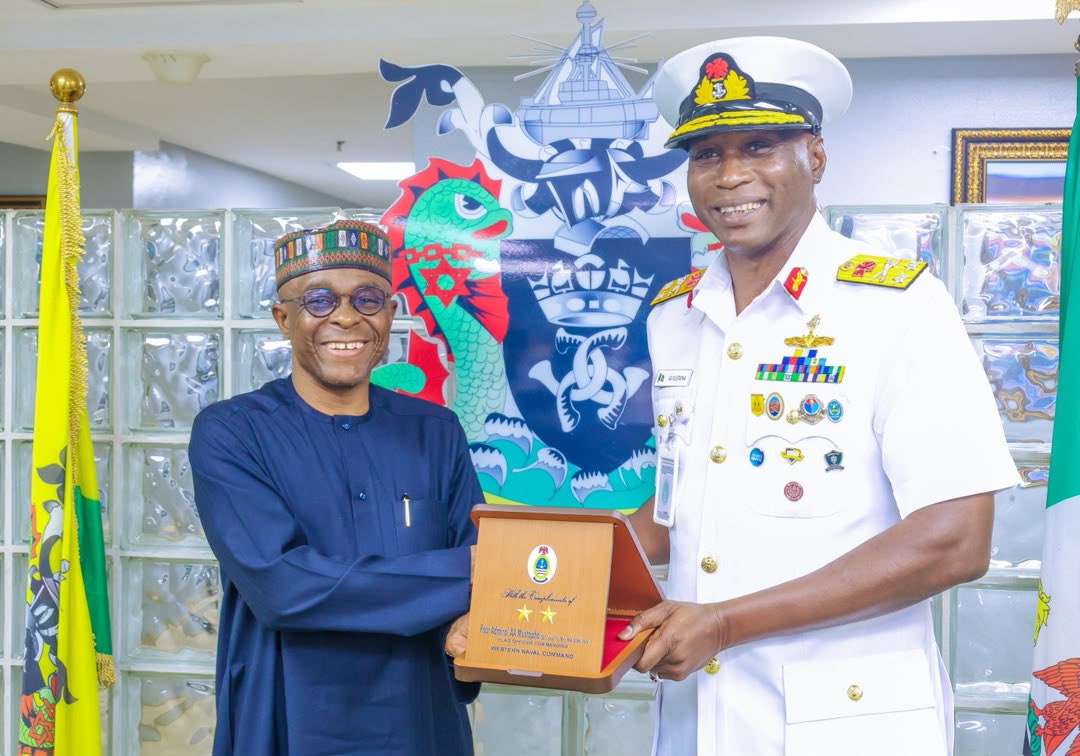
The recent courtesy visit of the new Flag Officer Commanding (FOC) Western Naval Command, Rear Admiral Abubakar Abdullahi Mustapha, to the Nigerian Ports Authority (NPA) headquarters in Marina, Lagos, has signaled a profound shift in the governance of Nigeria’s littoral assets.
On the surface, the high-level meeting presents as a traditional inter-agency military visit.
However, beneath the protocol lies the active execution of what industry analysts are calling the Dantsoho Doctrine: an aggressive, strategic alignment where the multi-billion dollar physical assets of the NPA are directly backed by the absolute kinetic and surveillance firepower of the Nigerian Navy.
By positioning the NPA not merely as a landlord of terminal complexes but as a key stakeholder in national security, Managing Director Dr. Abubakar Dantsoho is systematically building an ironclad environment where global trade can thrive without interruption.
During the deliberations, Rear Admiral Mustapha conveyed the deep institutional alignment of the Chief of the Naval Staff, Vice Admiral Idi Abbas, praising Dantsoho’s innovative leadership in driving rapid Port efficiency and structural reform.
This endorsement from the highest echelons of Nigeria’s maritime defense architecture is a massive validation of the current management’s fiscal and operational direction.
For an administrator currently steering the authority toward a historic ₦1.489 trillion revenue generation peak for the fiscal year, securing a secure, crime-free shipping lane is not an option—it is a baseline financial requirement.
Through this consolidated partnership, Dantsoho is directly plugging the NPA into elite defense networks, including the Falcon Eye Maritime Surveillance System and the Regional Maritime Awareness Capability (RMAC), effectively creating an uninterrupted digital shield over Nigerian waters.
What sets Dantsoho apart as a premier technocrat is his ability to convert defensive military cooperation into aggressive trade facilitation advantages.
In his response to the Naval Command, Dantsoho moved completely past standard pleasantries to demand immediate, expanded operational deployments, specifically targeting the Eastern Zone.
This tactical request demonstrates a deep understanding of regional trade mechanics.
By demanding enhanced naval visibility around vital gateways like Onne, Port Harcourt, Warri, and Calabar, Dantsoho is actively de-risking the eastern shipping corridors.
This strategy will drive down the exorbitant war-risk insurance premiums that have historically frustrated international shipping lines, ultimately reducing the cost of doing business and curbing the marketplace inflation hitting everyday citizens.
Ultimately, this high-level naval alliance proves that the current leadership understands that true Port efficiency cannot exist in a security vacuum.
You can purchase the best automated terminal software and build the deepest berths, but if the shipping lanes are insecure, the entire investment collapses.
By integrating naval surveillance with Port operations, Dr. Abubakar Dantsoho is building a hyper-resilient, globally competitive maritime gateway.
This latest milestone demonstrates that his administration is not just managing Ports; they are actively re-engineering the security and economic DNA of the entire West African sub-region, ensuring that Nigeria remains the undisputed capital of maritime trade.
Chief Ibrahim Nasiru, a public affairs analyst, writes from Abuja





Customs
Cole celebrates DC Akanni on birthday, KLT appointment, commends DC Adigun on Onne deployment
Gloria Odion, Maritme Reporter
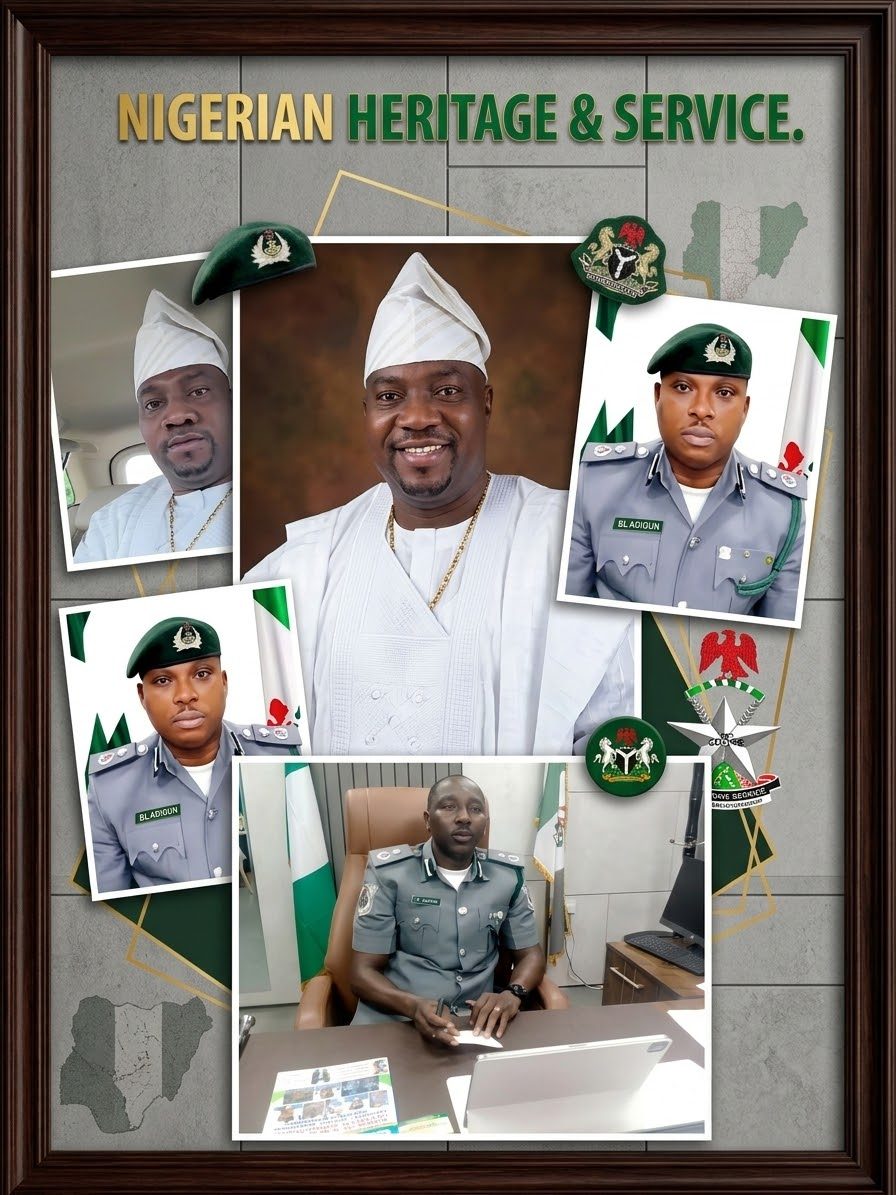
The Chairman of the Tin Can Island Chapter of the Association of Nigerian Licensed Customs Agents (ANLCA), Prince Olawale Cole, has congratulated Deputy Comptroller Femi Felix Akanni on his birthday and appointment as Acting Customs Area Controller of the Kirikiri Lighter Terminal (KLT) Command of the Nigeria Customs Service (NCS).
Cole described the twin occasions as significant milestones in Akanni’s personal and professional life, expressing confidence that his wealth of experience, administrative competence and professional commitment would translate into effective leadership at the Command.
He said Akanni’s appointment presented an opportunity to further contribute to the growth of the Nigeria Customs Service, particularly in strengthening operational efficiency, facilitating legitimate trade and deepening engagement with critical stakeholders.
The ANLCA chairman expressed optimism that the new Acting Controller would sustain a cordial and productive relationship with licensed customs agents and other port operators, noting that effective collaboration between Customs and the business community was indispensable to efficient port operations.
Cole also congratulated the outgoing Acting Customs Area Controller of KLT, Deputy Comptroller Bolaji Lukman Adigun, on his redeployment to the Port Harcourt Area II Command, Onne Port.
He commended Adigun for his contributions during his tenure at KLT, particularly his efforts towards fostering harmonious relationships with stakeholders and members of the licensed customs agents community.
According to Cole, leadership in the maritime sector requires more than the discharge of official responsibilities, as effective stakeholder engagement, mutual understanding and cooperation remain essential to institutional performance and improved service delivery.
He expressed confidence that Adigun would bring his wealth of experience, dedication and professionalism to bear on his new assignment at Onne Port, wishing him greater accomplishments in his career.
Reaffirming ANLCA’s commitment to a constructive partnership with the Nigeria Customs Service, Cole stressed that a harmonious relationship between Customs officers and licensed customs agents was critical to seamless cargo clearance, trade facilitation, revenue generation and the creation of a business-friendly port environment.
He urged stakeholders at both KLT and Onne Port to extend maximum cooperation and support to the respective officers, emphasising that collaboration between public institutions and private-sector operators remained central to the development of Nigeria’s maritime industry.
Cole wished Akanni good health, wisdom and a successful tenure as Acting Customs Area Controller of KLT, while expressing confidence in Adigun’s ability to deliver on his new assignment at Onne Port.
Headlines
Oyetola mandates NPA, Terminal Operators to support Customs over evacuation of abandoned power equipment at ports
Funso OLOJO,Editor
The Minister of Marine and Blue Economy, Adegboyega Oyetola, has directed the Nigerian Ports Authority (NPA) and seaport terminal operators to provide urgent operational support for the evacuation of hundreds of containers of critical electricity equipment stranded at Nigerian ports for nearly two decades.
The directive is part of efforts to implement President Bola Tinubu’s order to clear the abandoned cargoes, some of which have remained at the nation’s seaports since 2007, following years of administrative and bureaucratic bottlenecks that prevented their release.
Oyetola said the successful execution of the presidential directive would require close collaboration among the NPA, terminal operators, the Nigeria Customs Service (NCS) and the Federal Ministry of Power.
He consequently instructed the NPA and terminal operators to accord the assignment top priority by making adequate arrangements for cargo positioning, handling and evacuation.
“Mr President’s directive is clear, and our responsibility is to ensure its effective implementation.
“NPA and terminal operators are to give this assignment the highest priority, work seamlessly with Customs and the Ministry of Power, and provide every necessary operational support to achieve the desired result,” the Minister said.
The intervention is expected to remove operational obstacles that have kept the critical electricity equipment at the ports for years, while facilitating its eventual deployment to support Nigeria’s power infrastructure.
Oyetola reaffirmed the Ministry’s commitment to improving port efficiency, reducing cargo dwell time and ensuring that the nation’s maritime infrastructure facilitates rather than frustrates critical national development objectives.
He stressed that seaports must function as strategic gateways for economic growth, industrial expansion and infrastructure development, rather than become storage facilities for cargoes whose release is vital to national progress.
The Minister urged all relevant agencies and stakeholders to sustain the momentum of the clearance exercise, noting that prompt compliance with the presidential directive would demonstrate the government’s determination to dismantle institutional bottlenecks and accelerate the delivery of essential infrastructure projects.
The exercise also presents an opportunity to strengthen inter-agency coordination and address the operational weaknesses that have allowed critical cargoes to remain trapped in the nation’s ports for such an extended period.
Headlines
LASWA, Iterferry deepen ferry safety expertise, complete sixth training module
Gloria Odion, Maritme Reporter
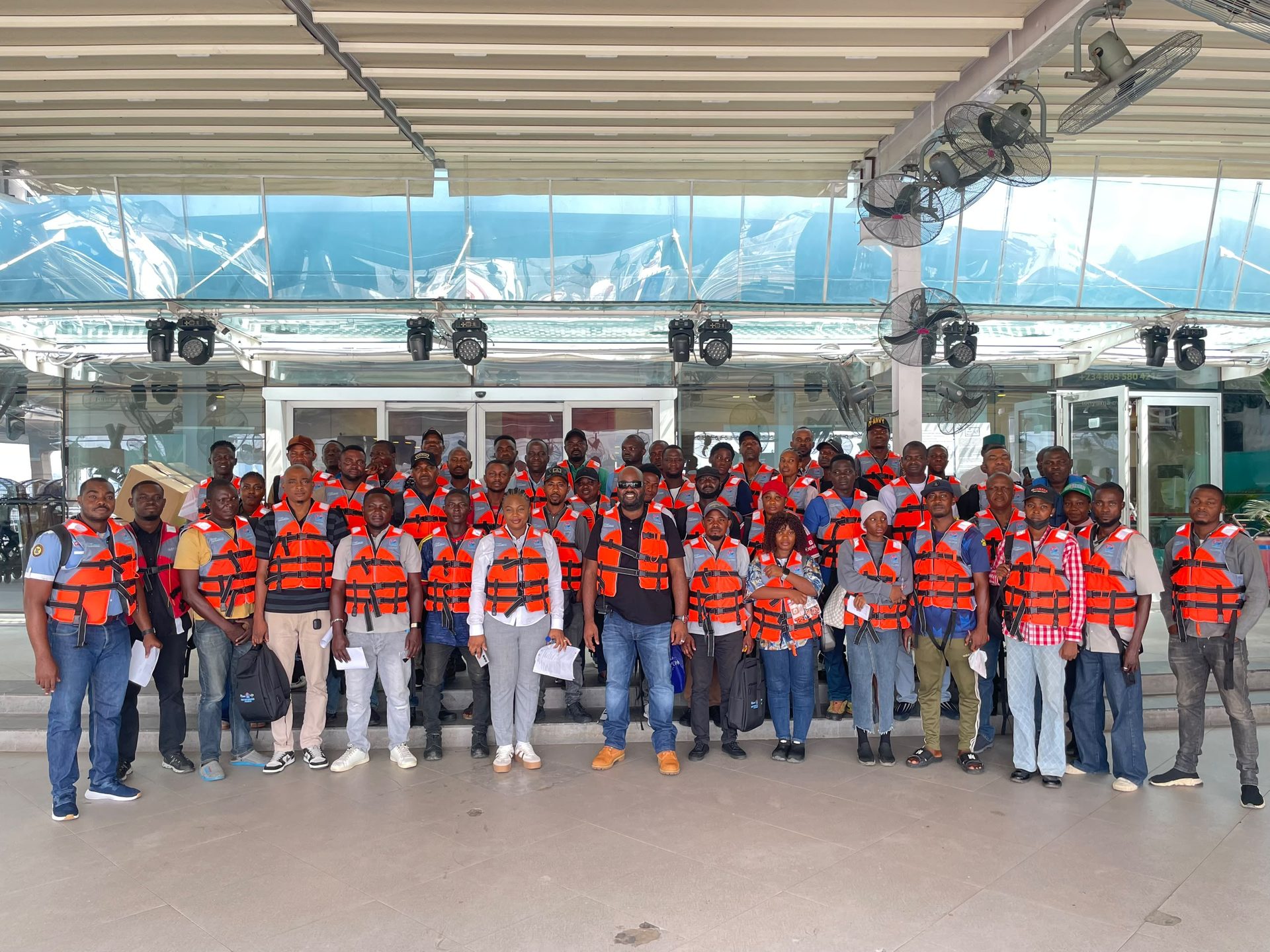
The Lagos State Waterways Authority (LASWA), in partnership with Interferry, has completed Module 6 of the Africa Ferry Safety Development and Mentoring Programme, reinforcing efforts to improve technical competence, strengthen vessel inspection and enhance passenger safety across Africa’s ferry transportation sector.
The latest module, which focused on Survey and Inspection and ran throughout October 2026, provided participating mentees with practical knowledge and technical skills required to assess vessel conditions, identify safety deficiencies and ensure compliance with established international maritime safety standards.
The training combined self-paced theoretical sessions facilitated by class surveyors from the American Bureau of Shipping (ABS) and Lloyd’s Register with interactive virtual mentorship and supervised practical field exercises.
A major component was the virtual Ask the Expert session held on October 21, featuring Interferry maritime professionals Joep Bollerman, Francesco Ruisi and Darren Johnston.
The session exposed participants to international ferry safety regulations, professional surveying techniques and industry best practices, while providing an opportunity to engage directly with experienced practitioners.
The theoretical component was complemented by a practical field exercise on October 28, during which participants conducted live Condition and Safety Compliance Audits at operational passenger ferry terminals.
Supervised by Sandra (Okoli) Ubong of ABS and Engr. Frank Fayinto of Lloyd’s Register, the exercise enabled participants to apply international classification standards and established inspection procedures in real operational environments.
A key highlight was the application of an eight-step survey methodology, covering the entire inspection process, from preliminary preparations and onboard assessments to documentation and field reporting.
Participants also received hands-on training in identifying safety deficiencies relating to hull integrity, life-saving appliances, fire protection systems and machinery installations.
Other critical areas covered included evidence-based reporting using the 5W+1H principle, systematic documentation of inspection findings, deficiency logging and risk prioritisation.
The programme also strengthened participants’ capacity to evaluate and classify identified deficiencies according to their level of urgency, distinguishing between immediate, medium-term and low-priority interventions.
The approach is designed to facilitate timely corrective action, minimise operational risks and improve safety across ferry services.
The completion of Module 6 marks another milestone in LASWA’s efforts to strengthen technical capacity, improve professional competence and entrench a sustainable safety culture within Lagos State’s inland waterways and the wider African ferry transportation industry.
LASWA acknowledged the contributions of Interferry mentors Joep Bollerman, Francesco Ruisi and Darren Johnston, as well as field facilitators Sandra (Okoli) Ubong and Engr. Frank Fayinto.
The Authority also recognised the support of Interferry Chief Executive Officer, Mike Corrigan, and Ferrysafe Executive Sponsor, Shari Corrigan, whose contributions helped ensure the successful delivery of the module.
The programme continues to enjoy institutional support from LASWA and the Lagos State Government, alongside the strategic guidance of the Special Adviser to the Governor on Blue Economy, Mr. Oluwadamilola Emmanuel.
With the successful conclusion of Module 6, attention now shifts to Module 7, which will focus on Watchkeeping and is scheduled for November 2026.
The next phase will equip participants with improved knowledge of vessel operations, navigational safety and effective watchkeeping practices, all of which are critical to safe, efficient and reliable ferry transportation.
Through its partnership with Interferry, LASWA is seeking to develop a pool of skilled maritime professionals, raise operational safety standards and promote a more reliable, efficient and sustainable water transportation system in Lagos State and across Africa.

 Headlines2 months ago
Oyetola presents three-year score card as blue economy industry revenue hits ₦1.83trn
 Customs3 months ago
Apapa Customs sets new record of monthly revenue haul with ₦323bn collection in July
 Customs3 months ago
Apapa Customs sets new single-day revenue record with ₦28.1bn collection
 Customs1 month ago
FOU Zone ‘A’: Aliyu retires after ₦3.19bn revenue recovery, Afeni takes over
 Customs2 weeks ago
FOU Zone A: Afeni intensifies anti-smuggling operations, seizes N511.4m drugs, rescues eight pangolins

 Customs2 months ago
Nigeria, Benin Customs move to harmonise trans-border trade, establish joint border post at Seme-Krake