Headlines
Stakeholders seek comprehensive port modernisation to boost Nigeria’s competitive edge in Africa sub- region
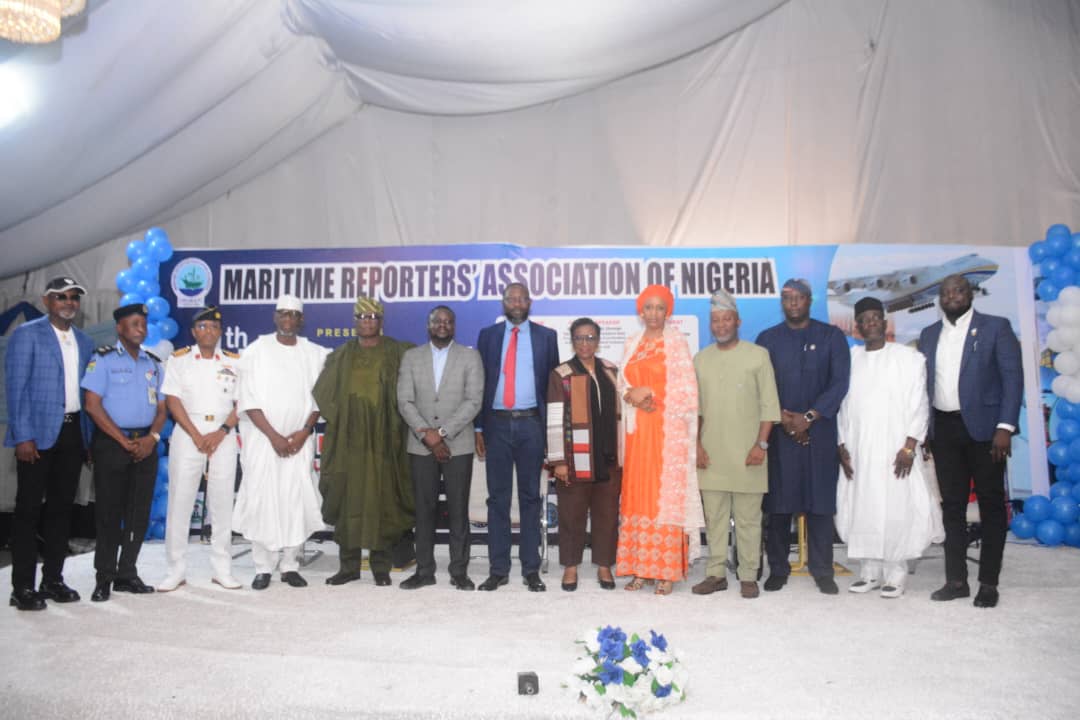
Funso OLOJO with Gloria Odion
Nigeria’s ambition to emerge as the dominant maritime and trade gateway in West and Central Africa could remain elusive unless the Federal Government modernises the entire port logistics chain—from quayside infrastructure and digital systems to tariffs, regulation, security, roads, rail, barges and hinterland connectivity.
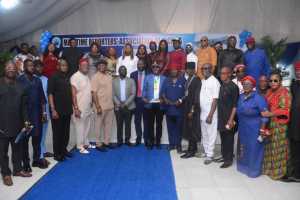
Stakeholders who spoke at the 2026 Annual Maritime Lecture of the Maritime Reporters Association of Nigeria (MARAN) held in Lagos on Thursday September 10th, 2026, warned that pouring billions of naira into port infrastructure without fixing the systems that move cargo out of the ports would only produce limited results.
They said the competitiveness of Nigerian ports must be measured not by the scale of infrastructure spending but by how quickly, cheaply and efficiently cargo moves from ships to factories, markets and export destinations.
The warning came against the backdrop of persistent concerns over high port charges, congestion, cargo evacuation bottlenecks, fragmented regulation and the rising competition from neighbouring West African ports.
Delivering the keynote address, former Managing Director of the Nigerian Ports Authority (NPA) and Special Adviser to President Bola Ahmed Tinubu on Policy Coordination and Head of the Central Delivery Coordination Unit, Hadiza Bala Usman, said port modernisation must ultimately translate into measurable improvements in cargo movement, vessel and truck turnaround times, logistics costs and export capacity.
She identified six critical pillars of modernisation: infrastructure and operational models; modern equipment; digitalisation; institutional reform; human capital development; and commercial modernisation covering tariffs, concessions, investment and service quality.
According to Usman, Nigerian seaports handle more than four-fifths of the country’s physical imports and exports, making their efficiency central to national economic growth.
“When port costs are high, they travel into the price of rice on the trader’s stall, the landed cost of raw materials for the manufacturer and into the exchange rate pressure created when importers pay dollar-denominated charges on top of naira-denominated uncertainties,” she said.
Tin Can, Apapa Improvements Not Enough
Usman acknowledged improvements in Nigerian port performance, citing the World Bank and S&P Global Market Intelligence Container Port Performance Index, which ranked Tin Can Island Port 10th globally and Lagos Port Complex, Apapa, 12th among the world’s most improved container ports between 2020 and 2025.
She also pointed to rising cargo throughput, digitalisation initiatives and rehabilitation of major port infrastructure as evidence that ongoing reforms were beginning to yield results.
But she cautioned that the gains could only be sustained through continuous investment, effective regulation and measurable performance standards.
She said the reconstruction of Apapa and Tin Can Island ports, rehabilitation of Eastern ports and expansion of Lekki Deep Sea Port would not deliver their full economic potential unless backed by efficient road, rail, barge, inland logistics and dry-port connections.
“A port cannot be globally competitive if its hinterland is not competitive,” she said.
High Charges Threaten Port Competitiveness
The former NPA boss also called for a comprehensive review of Nigeria’s port tariff structure, arguing that attention should move away from isolated charges to the total cost of moving cargo through the supply chain.
She expressed concern over reports that clearing a standard 20-foot container through Apapa could cost between N14 million and N15 million, compared with lower costs at some competing West African ports.
Usman, however, noted that the overall cost of cargo movement encompasses statutory port tariffs, terminal handling charges, shipping-line charges, detention, demurrage, haulage, documentation and clearing costs.
She argued that eliminating duplicated and obsolete charges, as well as unnecessary regulatory interventions, could significantly reduce the cost of doing business at Nigerian ports.
“Charges cannot remain frozen indefinitely while infrastructure deteriorates, but neither can users be required to pay any amount demanded. Tariffs must be linked to value and performance,” she said.
She advocated a predictable, transparent and performance-based tariff regime, with tariff adjustments supported by published methodologies, international benchmarks and measurable improvements in service delivery.
Usman also proposed an annual Port Economic Performance Report covering vessel and truck turnaround times, cargo-handling productivity, equipment availability, Customs clearance, total logistics costs, digital transactions, export connectivity, customer satisfaction and dispute-resolution timelines.
FG: Port Renewal Will Be Structural
The Minister of Marine and Blue Economy, Adegboyega Oyetola, said the Federal Government was implementing an ambitious programme to transform Nigeria’s maritime infrastructure and position the country as a major maritime hub for West and Central Africa.
Oyetola, who was represented by the General Manager, Corporate and Strategic Communications, Nigerian Ports Authority, Seyi Iyawe, said government had secured approval for the comprehensive modernisation of Apapa, Tin Can Island and other ports.
He described the programme as structural renewal rather than cosmetic rehabilitation.
According to him, the programme would involve reconstruction of critical infrastructure, deepening of channels to accommodate larger vessels, replacement of obsolete equipment and an overhaul of port operations.
“Our objective is to create ports that can move cargo, accommodate larger vessels, reduce turnaround time and lower the cost per unit of cargo handled,” the Minister said.
He said Nigeria could no longer depend exclusively on traditional ports, stressing that the development of deep-sea ports was essential to decentralise cargo flows, ease pressure on existing facilities and create new economic corridors.
The Minister also cited investments in tugboats, mooring boats and pilot boats as part of efforts to improve vessel movement, safety and operational efficiency.
He said Nigeria’s improved maritime security record was another critical component of the competitiveness strategy, noting that the country had maintained a zero-piracy record in its territorial waters for four consecutive years.
NPERA to Tackle Tariffs, Anti-Competitive Practices
Oyetola identified the establishment of the Nigerian Ports Economic Regulatory Agency(NPERA) as a major institutional reform designed to strengthen economic regulation in the sector.
He said the agency would enforce service standards, monitor tariffs, promote fair competition, tackle anti-competitive practices and protect port users against arbitrary and unpredictable charges.
“The more competitive our ports become, the greater the volume of legitimate trade they will attract. The more efficient our ports become, the more attractive Nigeria becomes to investors,” he said.
The Minister said government’s objective was to move the maritime sector “from a culture of collecting charges to a culture of creating value.”
‘Modernise the Exit, Not Just the Port’
Executive Director, Operations and Technical, Tantita Security Services Nigeria Limited, Capt. Dr. Warredi Enisuoh, took the argument further, warning that modernising the port itself would achieve little if the cargo evacuation system remained dysfunctional.
“You cannot modernise a port without modernising your exit point,” he noted.
Enisuoh argued that automating operations inside Apapa or Tin Can Island would not eliminate congestion if cargo continued to face delays outside the terminal gates.
He called for an integrated system covering cargo evacuation, roads, rail, inland waterways, truck management and the elimination of multiple checkpoints and collection points.
He cited the Port of Lomé in Togo as an example of how strategic investment in deeper channels and streamlined processes could improve port competitiveness.
According to him, the increasing size of vessels in global shipping makes deeper and more efficient ports indispensable, with some modern container vessels now exceeding 20,000 TEUs in capacity.
He therefore urged Nigeria to deepen and expand its ports urgently to accommodate larger vessels and compete more effectively with neighbouring maritime gateways.
Fragmented Regulation Adds to Cargo Costs
Enisuoh also criticised the multiplicity of agencies and procedures confronting shipping agents and port users.
He said operators often had to interface separately with the NPA, Nigerian Maritime Administration and Safety Agency (NIMASA), Nigeria Customs Service and other agencies, creating delays and additional costs.
He called for a genuine one-stop-shop system through which port users could complete multiple regulatory, documentation and payment requirements on an integrated platform.
Develop Eastern, Alternative Ports
The Tantita executive also urged the Federal Government to look beyond Lagos and develop Nigeria’s ports as part of a coordinated national maritime strategy.
He argued that viable alternative ports along the coastline should be strengthened to distribute cargo, reduce pressure on Lagos and establish more efficient trade corridors into the hinterland.
He warned that poor urban infrastructure around Lagos could undermine even massive investments in port facilities.
“If city infrastructure is poor, spend all the millions of dollars you want to maintain the port. It’s not going to work. You will still get congestion,” he said.
He consequently called for a national plan integrating ports, roads, bridges, rail, inland waterways, logistics hubs and cargo evacuation systems.
From Infrastructure to Value Creation
The stakeholders were united in their assessment that Nigeria’s port competitiveness would not be secured by infrastructure investment alone.
While Usman focused on predictable tariffs, transparency, institutional coordination and performance measurement, Oyetola highlighted infrastructure renewal, maritime security, deep-sea port development, marine assets, digitalisation and economic regulation.
Enisuoh, meanwhile, stressed that the modernisation agenda must extend beyond the port gates and encompass the entire logistics chain, while alternative maritime gateways across the country must be developed.
Usman said the ultimate test of reform should be how much time and money Nigeria could save businesses moving cargo from ships to factories and Nigerian products to international markets.
She also challenged maritime journalists to play a stronger accountability role by monitoring port performance, investigating the actual cost of cargo movement and benchmarking Nigerian ports against competing African gateways.
“Behind every statistic is a business, behind every delay is a cost, and behind every efficiency gain is an opportunity for national growth,” she said.
The stakeholders maintained that only an integrated approach combining infrastructure, technology, regulation, security, tariffs and hinterland connectivity can position Nigerian ports to attract regional and international cargo, support manufacturing and exports, create jobs and strengthen Nigeria’s place in global trade.





Headlines
Tinubu reaffirms support for tourism reforms, receives Nigeria’s highest tourism honour
Funso OLOJO, Editor
President Bola Ahmed Tinubu has reaffirmed his administration’s commitment to tourism development and hospitality sector reforms, pledging continued support for initiatives aimed at unlocking the industry’s economic potential and positioning it as a major contributor to Nigeria’s non-oil economy.
The President gave the assurance on Thursday, October 22nd, 2026, during a meeting with the Director-General and Chief Executive Officer of the National Institute for Hospitality and Tourism (NIHOTOUR), Aare Abisoye Fagade, who briefed him on ongoing efforts to strengthen professional standards, develop industry skills and improve service delivery across the tourism, hospitality and travel sectors.
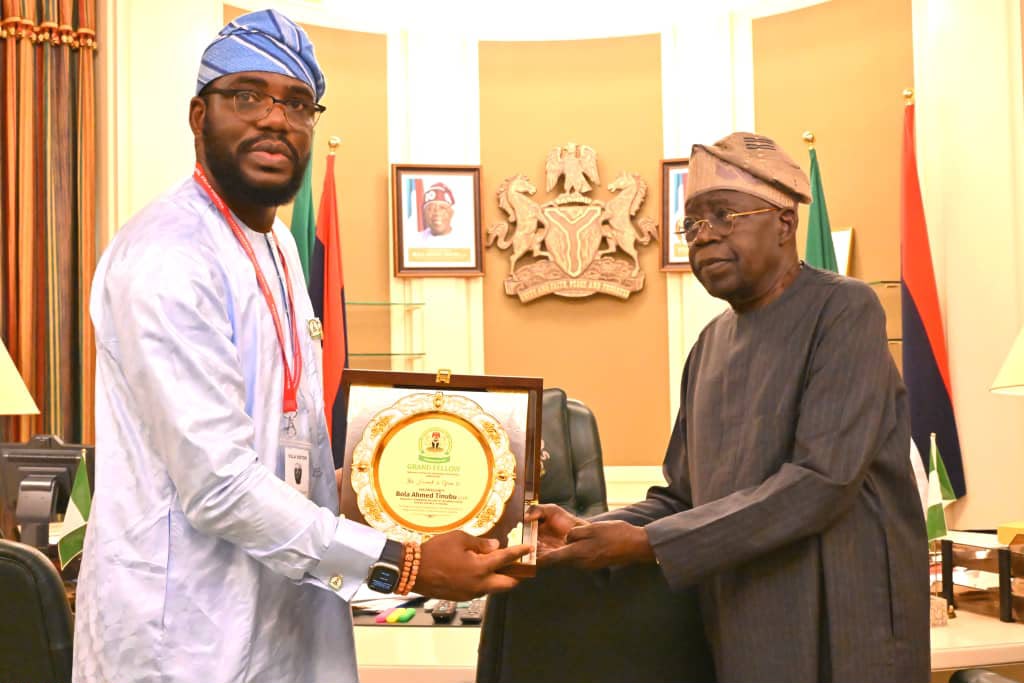
The engagement also featured the presentation of the Grand Fellow of National Hospitality and Tourism (GFNHT) to President Tinubu by Fagade.
The distinction, conferred by NIHOTOUR, is described by the institute as the highest singular honour in Nigeria’s tourism sector.
The meeting comes amid efforts to reposition tourism as a viable instrument for economic diversification, employment generation, investment attraction and enterprise development.
During his briefing, Fagade highlighted the institute’s ongoing reforms, particularly the implementation of the NIHOTOUR Act 2022, which provides a framework for strengthening professional standards, promoting accountability and improving the quality of services across the industry.
He explained that the reforms were designed to build a more structured and professional tourism ecosystem capable of attracting investment, creating jobs and enhancing Nigeria’s competitiveness in the global tourism market.
According to him, Nigeria’s tourism potential extends far beyond leisure and recreation, offering significant opportunities for economic growth through hospitality, travel services, skills development and related businesses.
Fagade stressed that unlocking these opportunities would require sustained investment in human capital, effective institutional oversight and closer collaboration between government and private-sector operators.
“Our responsibility is to build the professional and institutional foundations that will enable Nigeria’s tourism potential to translate into jobs, investment and sustainable economic growth. ”
The President’s continued support is important to advancing these reforms and positioning the sector for greater national impact,” he said.
He noted that improving professional competence and establishing credible regulatory standards were essential to building public confidence, strengthening service delivery and creating an environment in which tourism businesses could thrive.
The NIHOTOUR chief executive added that a more professional and competitive industry would enhance Nigeria’s capacity to attract domestic and international visitors while expanding opportunities for entrepreneurs and other stakeholders across the tourism value chain.
The President’s pledge of continued support, according to the institute, underscores the importance of tourism within the Federal Government’s broader economic development strategy.
The sector aligns with the objectives of the Renewed Hope Agenda, particularly its emphasis on diversifying the economy, generating employment and developing productive sectors beyond oil.
With its potential to stimulate hospitality businesses, transport services, cultural enterprises and other supporting industries, tourism is increasingly being viewed as an avenue for broadening Nigeria’s economic base and creating opportunities for small and medium-sized enterprises.
NIHOTOUR reaffirmed its commitment to working with government institutions and private-sector stakeholders to advance the reforms, strengthen professional training and promote standards that can support a globally competitive tourism industry.
The institute said its objective was to build a more professional, accountable and internationally recognised sector capable of generating sustainable economic value and delivering lasting benefits to Nigerians.
Headlines
NIMASA goes tough on Cabotage defaulting operators, arrests four non- compliant vessels, promises tougher sanctions
Funso OLOJO, Editor
The Nigerian Maritime Administration and Safety Agency (NIMASA) has intensified its enforcement of Nigeria’s Cabotage regime, detaining several vessels over alleged regulatory infractions in the Lagos maritime domain.
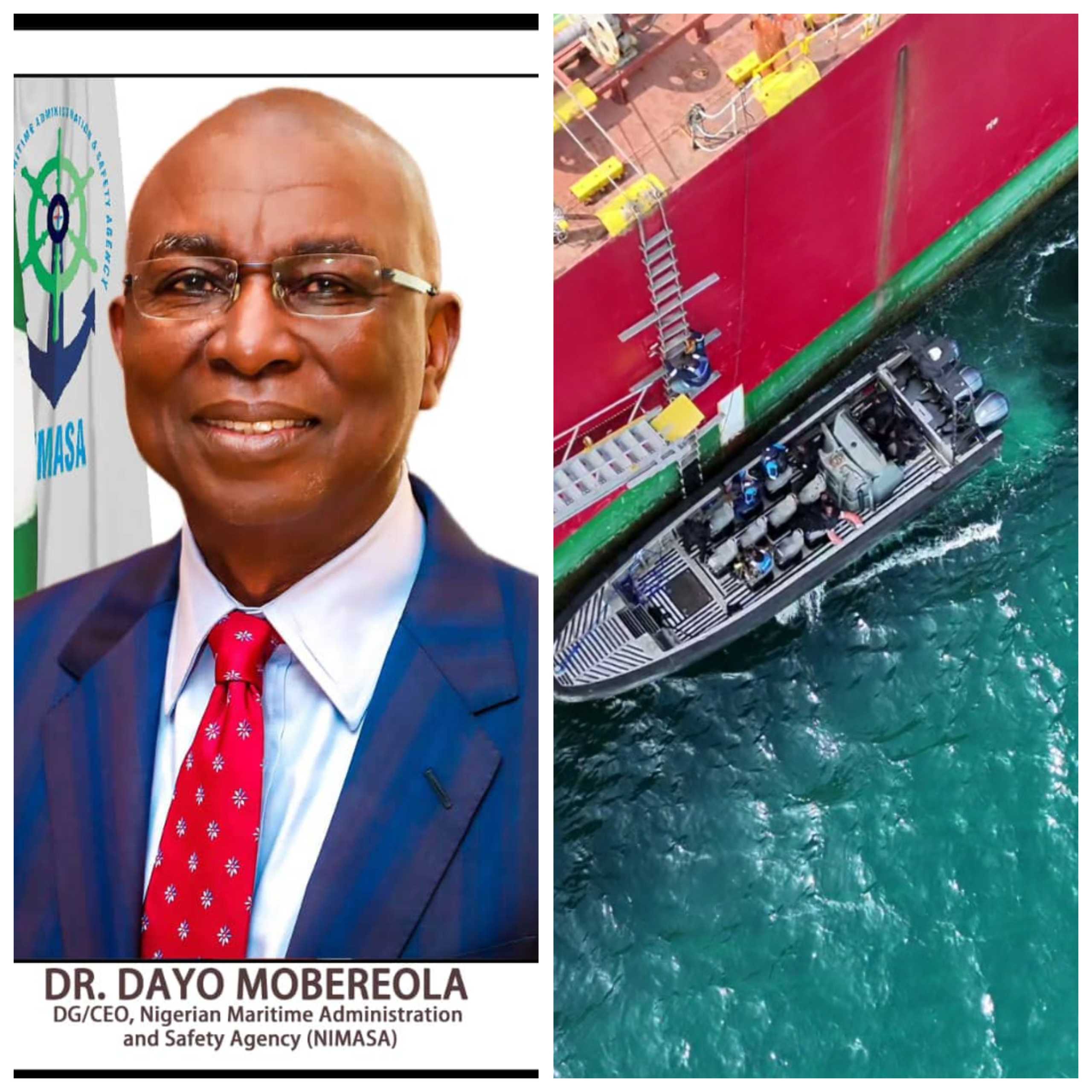
The vessels, identified as MT Holmes, MT Fujairah Energy, JS Gratitude and MT Bora, were apprehended during a targeted enforcement operation codenamed Operation Sea Guardian, launched to strengthen compliance with Nigeria’s maritime laws and indigenous participation requirements in coastal shipping.
Some of the detained vessels have since been released after regularising their respective infractions, while the enforcement drive underscores NIMASA’s renewed determination to ensure that operators comply with applicable maritime regulations.
The operation was designed to verify compliance with Cabotage obligations, assess adherence to applicable surcharges and levies, and ensure that vessels operating within Nigerian waters meet statutory requirements.
To achieve these objectives, NIMASA deployed assets under the Deep Blue Project to track, board, inspect and verify vessels identified through intelligence reports, surveillance profiling and other compliance indicators.
The operation also involved coordinated efforts by NIMASA enforcement personnel, the Nigerian Navy, the Maritime Guard Command and C4i intelligence personnel, reinforcing inter-agency collaboration in maritime law enforcement.
According to the Agency, the operation adopted an intelligence-driven approach to identify vessels considered to have a high likelihood of defaulting on Cabotage obligations.
The identified vessels were prioritised for further scrutiny and incorporated into a broader Target Bank established during an earlier enforcement operation.
The Target Bank serves as a consolidated repository of vessels of interest, providing a strategic reference for planning subsequent enforcement activities and enabling the Agency to concentrate operational resources on high-risk targets.
Reacting to the development, the Director-General of NIMASA, Dr. Dayo Mobereola, said the Agency would sustain and intensify such operations to compel compliance with the country’s maritime laws.
He warned that operators who disregard the provisions of the Cabotage Act and other applicable regulations would face the full consequences of the law.
“We had earlier served notice of enhanced enforcement of indigenous participation in our coastal and inland trade, and this is exactly what we are doing.
“It is therefore in the interest of operators to ensure total compliance because defaulters will be visited with stiff sanctions in line with the law,” Mobereola said.
The Director-General’s warning signals a tougher enforcement posture by NIMASA as the Agency seeks to strengthen indigenous participation in Nigeria’s coastal and inland shipping trade.
The operation also follows a marine notice issued by NIMASA on August 26, 2026, in furtherance of its statutory mandate to promote the development of indigenous capacity in international and coastal shipping.
The notice restated the conditions governing participation in Cabotage trade and warned vessel owners, shipping companies, operators, charterers and other stakeholders against violating the Cabotage Act or any applicable requirements.
It further made clear that violations would attract appropriate enforcement action by the Agency in accordance with the law.
By combining intelligence-led surveillance, coordinated maritime patrols and targeted inspections, NIMASA is seeking to close compliance gaps and strengthen oversight of vessels operating in Nigerian waters.
The sustained enforcement of the Cabotage regime is also critical to protecting opportunities for Nigerian shipowners and operators, encouraging investment in indigenous shipping capacity and ensuring that the country’s coastal trade contributes more effectively to national economic development.
With Operation Sea Guardian, NIMASA has reinforced its position that compliance with Nigeria’s maritime regulations is mandatory, warning that operators who fail to regularise their activities risk detention and other statutory sanctions.
Headlines
LASWA: Where innovation meets People

John Alabi
Lagos State Deputy Governor, Dr Obafemi Hamzat, recently struck a chord at an event in Lagos when he emphasised that scaling up innovation to empower the people remains a critical pathway to sustainable development.
Innovation itself may not be a challenge for leaders across Nigeria’s economic and political landscape.
The real test, however, lies in translating promising ideas into tangible outcomes that improve the welfare, prosperity and happiness of the people.
This is the very essence of people-centred governance and a fundamental pillar of national development.
In a littoral state like Lagos, where waterways remain an important economic asset, the Lagos State Waterways Authority (LASWA) has evolved beyond the conventional role of regulation and compliance.
Under Damilola Emmanuel leadership, the agency is increasingly positioning itself as a strategic bridge connecting underserved waterfront communities to economic opportunities, improved mobility and broader socioeconomic development.
As Lagos prepares for another political transition in 2027, the LASWA experience offers an important perspective on how purposeful innovation can bring previously overlooked communities into the mainstream of the state’s development agenda.
LASWA’s vision in this regard is neither whimsical nor accidental. It reflects a deliberate effort to empower littoral communities beyond the traditional movement of people and goods, integrating them into a broader governance and economic framework capable of unlocking new opportunities for livelihoods, commerce, tourism and investment.
So, what exactly does LASWA do, and how is it redefining the relationship between waterways and community development?
First, the agency promotes safety on Lagos inland waterways through strategic regulatory measures designed to ensure that vessels operating on the state’s waterways meet established safety requirements.
Beyond this statutory responsibility, however, LASWA is increasingly demonstrating how effective water transportation planning can unlock other economic opportunities for communities situated along the state’s extensive network of waterways.
Through the leadership of Damilola Emmanuel, Special Adviser to the Lagos State Governor on Marine and Blue Economy, LASWA has continued to explore how water transportation can become a catalyst for broader socioeconomic transformation.
Emmanuel’s approach reflects a recognition that waterways are not merely routes for boats and ferries. Properly developed and connected, they can serve as corridors for commerce, tourism, employment generation and community integration.
Consider what LASWA has reportedly achieved through its mapping of Lagos’ littoral communities.
The agency has identified approximately 134 littoral communities across seven local government areas in the state’s three senatorial districts, with an estimated combined population of 502,002 residents.
Beyond the numbers, the exercise reveals an extensive network of communities whose economic potential could be significantly enhanced through improved transportation infrastructure, connectivity and targeted development initiatives.
In Lagos West, the mapping covers Amuwo-Odofin, Badagry and Ojo, with a combined 56 littoral communities and an estimated population of 290,987.
These communities represent a significant economic constituency whose proximity to waterways offers opportunities for commercial expansion, marine tourism, fisheries-related activities and other blue economy enterprises.
With the right infrastructure and policy support, this axis could become an increasingly attractive destination for investors and tourists, drawing on the kind of waterfront economic dynamism associated with established maritime cities such as New York and Venice.
In Lagos East, LASWA has identified 75 littoral communities across Epe and Ibeju-Lekki, with an estimated population of 187,018. Some of these settlements remain relatively underdeveloped, presenting opportunities for strategic interventions that could improve access to markets, expand local businesses and stimulate new economic activities.
The Lagos Central district, covering communities in Eti-Osa and Apapa, accounts for three identified littoral communities with an estimated population of 23,997.
Despite their proximity to important commercial and maritime centres, these communities also stand to benefit from improved connectivity and targeted investments capable of strengthening their economic participation.
Taken together, these figures point to the enormous development possibilities embedded in Lagos’ waterfront settlements.
They also reinforce the need to view water transportation as more than an alternative means of commuting.
It is a potential instrument for opening up new economic frontiers and connecting communities to the opportunities available across the state.
The significance of Lagos West is particularly noteworthy, given its substantial share of the mapped population.
Improved connectivity across this axis could strengthen access to employment, commercial activities and tourism, while creating new opportunities for investors seeking to participate in Lagos’ expanding marine and blue economy.
For Emmanuel, LASWA’s mandate extends beyond boats, engines and safety regulations.
It is also about building an institutional framework through which communities surrounded by water can participate more meaningfully in the state’s economic development.
This understanding is reflected in the identification of approximately 34 rural settlements described as “anchor littoral communities”.
According to the information provided by the agency, these communities have populations exceeding 5,000 residents and could benefit from improved access through water transportation initiatives.
Connecting such settlements to established commercial centres could improve access to markets, reduce mobility constraints and encourage economic activities that might otherwise remain limited by inadequate transportation infrastructure.
Similarly, LASWA has identified 64 feeder communities with varying population sizes, reportedly ranging from about 1,000 to more than 200,000 residents.
These settlements present additional opportunities for infrastructure development and economic linkages with inland communities and other urban destinations.
The identification of anchor and feeder communities is particularly important because it introduces a more structured approach to planning.
Rather than treating every waterfront settlement as an isolated location, the strategy creates room for a network of connected communities, with transportation routes supporting the movement of people, goods and services.
This is where the broader value of satellite settlements becomes apparent. By integrating communities that have historically faced limited access to essential economic opportunities, Lagos can expand the reach of development, encourage local enterprise and create new pathways to prosperity.
Ultimately, leadership must be measured by its impact on people’s lives.
It must deliberately connect welfare, economic empowerment and improved access to opportunities with a development agenda that enables communities to become productive contributors to the economy rather than passive recipients of government intervention.
One practical illustration of this approach is the reported connection between Ibeshe Jetty and Majidun.
The initiative provides an alternative route for ferry operations to bypass waterways affected by water hyacinth, potentially improving connectivity and creating additional travel options for residents.
Beyond its immediate transportation benefits, such interventions demonstrate how relatively targeted infrastructure solutions can address specific geographical challenges while opening up opportunities for tourism and other economic activities.
The experience also offers a glimpse into the possibilities of integrating environmental realities into transportation planning.
In communities where water hyacinth can disrupt navigation, alternative routes and carefully planned infrastructure can help sustain mobility and improve access.
Where, then, does the European Union- and Agence Française de Développement (AFD)-backed Omi Eko project fit into this development framework?
The initiative is designed to support the development of climate-smart water transportation in Lagos, with the potential to strengthen the state’s inland waterways system.
Its relevance extends beyond improving the efficiency of existing routes. It also raises the prospect of expanding connectivity and making water transportation more accessible to communities that have remained outside the mainstream of infrastructure development.
For the littoral communities identified by LASWA, the project’s broader promise lies in the possibility of connecting transportation planning with environmental sustainability, improved mobility and inclusive economic growth.
If effectively implemented alongside complementary infrastructure and community-focused policies, Omi Eko could help strengthen the foundations for a more integrated inland waterways network, allowing the benefits of improved transportation to reach a wider segment of Lagos’ population.
LASWA’s infrastructure development efforts provide another indication of this evolving agenda. Since 2023, seven jetties have reportedly been commissioned, while another 13 are under construction or awaiting commissioning.
These projects are significant not merely as physical structures but as potential gateways to economic participation.
A well-planned jetty can improve access to transportation, support local businesses, encourage tourism and make it easier for residents to connect with commercial centres.
The real measure of success, however, will be the extent to which these investments translate into safer journeys, reduced travel difficulties, stronger local economies and improved living conditions for the people who depend on the waterways.
As Lagos continues to explore the opportunities presented by its marine and blue economy, LASWA’s community-mapping initiative and infrastructure interventions offer a useful example of how innovation can be directed towards inclusive development.
The challenge ahead is to sustain this momentum through effective implementation, adequate maintenance, reliable ferry services, environmental protection and partnerships that encourage private-sector participation. Equally important is ensuring that the communities identified through the mapping exercise become active participants in the development process.
For Damilola Emmanuel and LASWA, the task is therefore much bigger than managing water transportation.
It is about demonstrating how an institution can use innovation, planning and connectivity to bring overlooked communities into the state’s socioeconomic development framework.
Lagos’ rivers, creeks and coastal waters have often been viewed primarily as geographical barriers or operational challenges.
With the right policies, investments and institutional commitment, however, these same waterways can become valuable assets for commerce, tourism, employment and community development.
That is the larger promise of LASWA’s evolving role: transforming waterways from obstacles into opportunities and connecting people not only to destinations, but also to the economic possibilities that lie beyond them.
In the final analysis, innovation achieves its greatest value when its benefits are felt by ordinary people. And where waterways meet purposeful leadership, the possibilities for inclusive growth in Lagos are considerable.

 Customs3 months ago
Customs releases final recruitment list for ASC II, ends nearly one-year wait for applicants
- Headlines2 months ago
Oyetola presents three-year score card as blue economy industry revenue hits ₦1.83trn
- Customs2 months ago
Apapa Customs sets new single-day revenue record with ₦28.1bn collection
- Customs2 months ago
Apapa Customs sets new record of monthly revenue haul with ₦323bn collection in July
- Customs3 months ago
NCS intercepts container concealing pump-action rifle parts, seizes ₦373.8m worth of cannabis products at Tincan Port
- Customs3 months ago
FG exempts CNG, electric vehicles from Customs duty, VAT