
Customs
FOU ‘A’ seeks stronger security synergy with sister agencies ahead of presidential elections
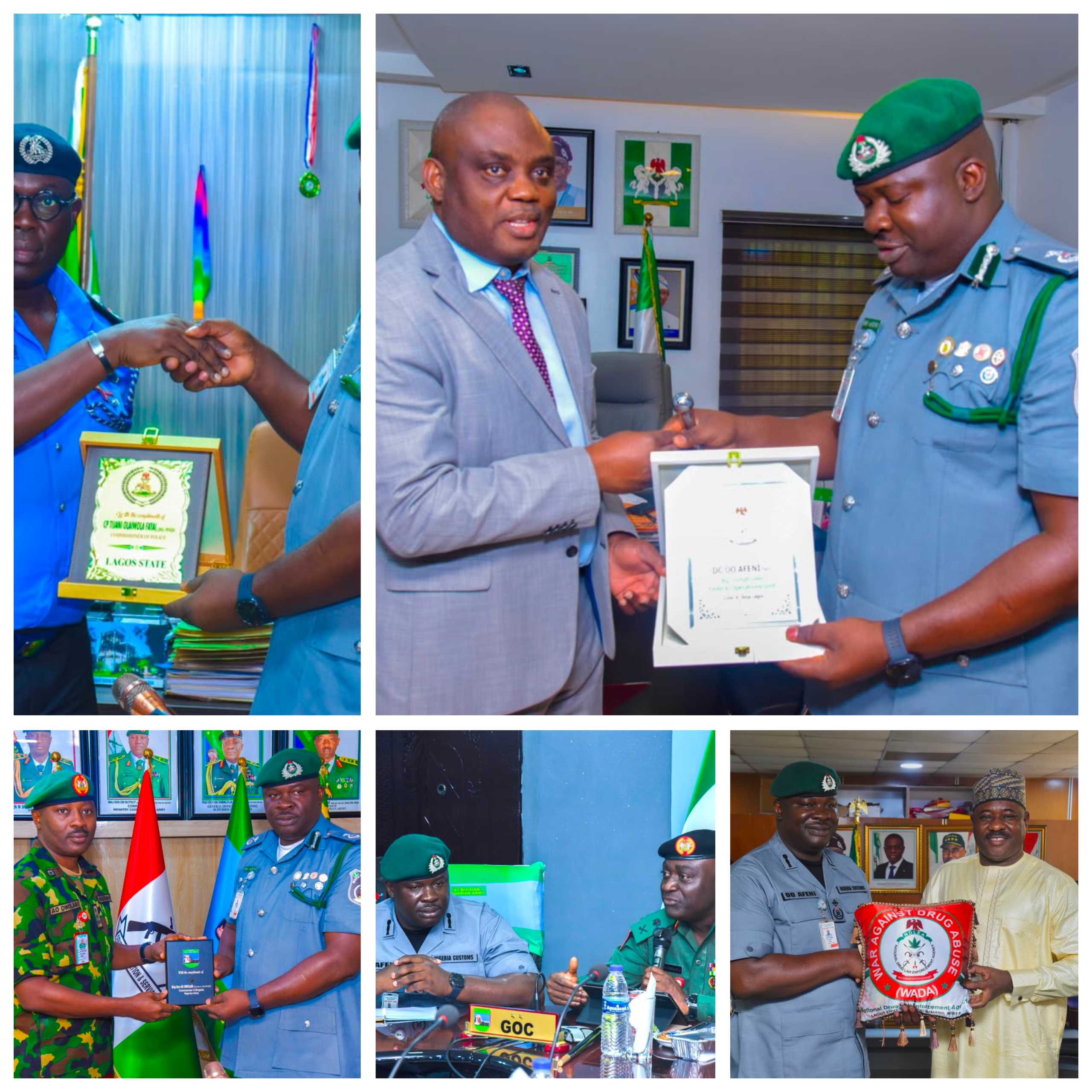
— as Acting Comptroller Afeni visits Police, Army, DSS, NDLEA, Immigration
Funso OLOJO, Editor
The Acting Comptroller of the Nigeria Customs Service (NCS), Federal Operations Unit (FOU), Zone ‘A’, Ikeja, Lagos, Deputy Comptroller Oladapo Olukayode Afeni, has called for stronger collaboration among security agencies to combat smuggling, cross-border crimes and other threats to national security, particularly as the country approaches another election period.
Afeni made the call during a familiarisation tour of sister security and law enforcement agencies in Lagos, which commenced on Wednesday, October 14, 2026.
The tour took him to the Lagos State Police Command Headquarters, Ikeja; the Department of State Services (DSS); Headquarters, 81 Division, Nigerian Army; the National Drug Law Enforcement Agency (NDLEA) Strategic Command; the Nigeria Immigration Service (NIS); and the 9 Brigade, Nigerian Army, Ikeja.
The visits were aimed at strengthening existing institutional relationships and identifying practical areas of cooperation in intelligence sharing, joint operations, information exchange and the enforcement of relevant laws across Lagos State and the wider operational jurisdiction of FOU Zone ‘A’.
At the Lagos State Police Command Headquarters, Afeni was received by the Commissioner of Police, CP Tijani Fatai, where he stressed the importance of coordinated security operations in preventing criminal elements from exploiting the election period to undermine public safety.
“We know that crime rates often increase as the country approaches the election period, as some people may attempt to take advantage of the period to perpetrate illicit activities capable of causing crises during the elections.
“Therefore, we are here to call for closer synergy so that these bad elements do not have their way,” he said.
The Customs chief emphasised that the responsibilities of FOU Zone ‘A’ extended beyond border protection to include collaboration with other security institutions in safeguarding national interests.
He noted that no security agency could effectively discharge its responsibilities in isolation, stressing that sustained cooperation was essential to tackling the increasingly complex nature of criminal activities.
Afeni particularly acknowledged the Nigeria Police Force’s intelligence-gathering capabilities, describing effective information sharing and coordinated operations as critical to achieving better security outcomes.
In his response, CP Fatai welcomed the visit, describing sustained engagement among security agencies as an established practice that had contributed to their operational successes over the years.
“In Lagos, we have a very strong and robust relationship with all security agencies, notwithstanding the huge population of the state,” the police commissioner said.
The Customs delegation also visited the Headquarters of the Nigerian Army’s 81 Division, where Afeni was received by the General Officer Commanding (GOC), Major General Adebayo Abdulrahman Babalola.
Babalola underscored the importance of joint operations and inter-agency cooperation in combating criminality, while cautioning against unnecessary administrative bottlenecks that could impede operational effectiveness.
The engagement highlighted the need for security institutions to streamline their operational processes, improve coordination and ensure that bureaucratic procedures do not frustrate timely responses to security threats.
Other agencies visited equally reaffirmed their commitment to sustaining cooperation with the Nigeria Customs Service in the collective effort to combat smuggling and other unlawful activities.
The familiarisation tour underscores FOU Zone ‘A’s commitment to strengthening inter-agency partnerships as a vital instrument for effective enforcement, national security and economic protection.
Beyond combating smuggling and trans-border crimes, the initiative is expected to reinforce efforts to protect government revenue, facilitate legitimate trade and safeguard Nigeria’s broader economic interests through coordinated security operations.






Customs
Adeniyi highlights role of effective communication in institutional success , operational efficiency
Gloria Odion Maritme Reporter
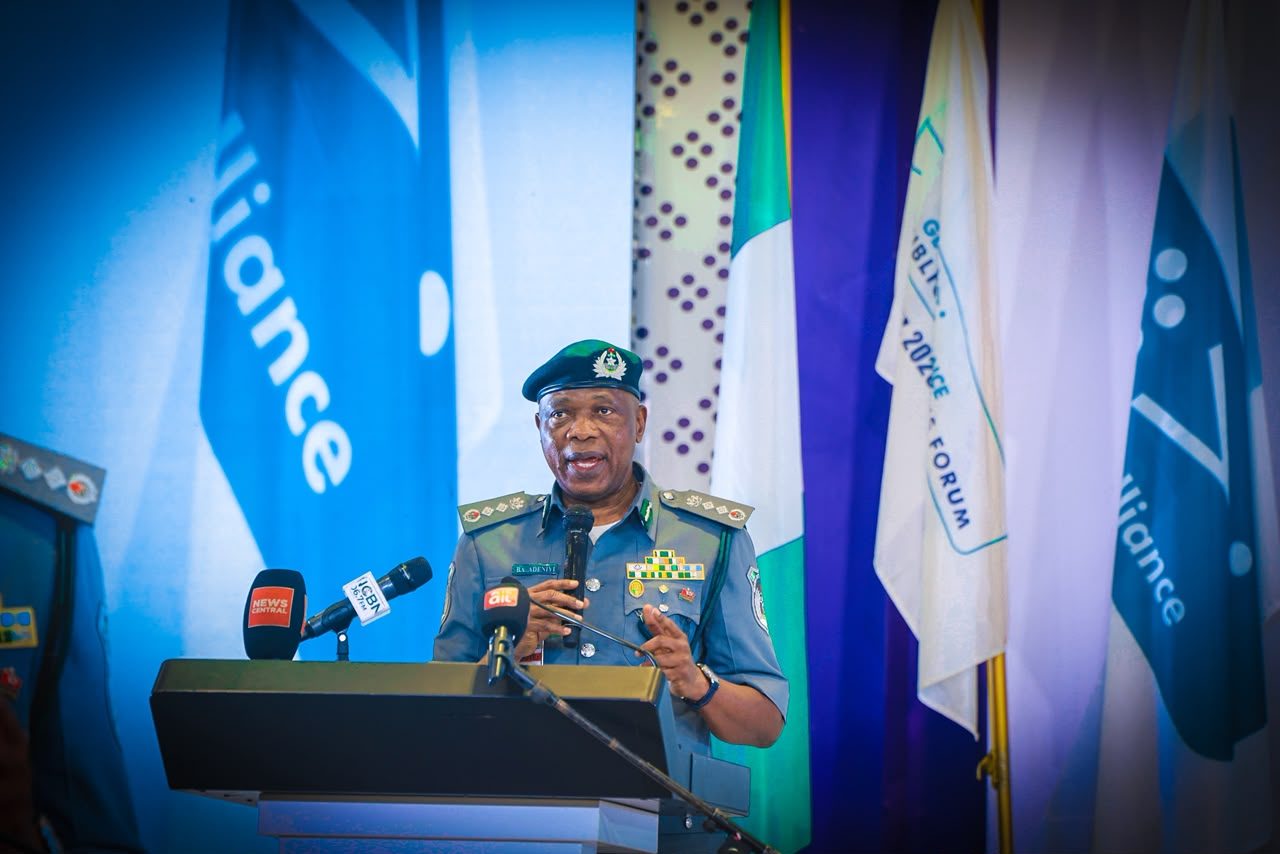
The Comptroller-General of Customs, Adewale Adeniyi, has called on public institutions to integrate effective communication into their decision making processes, warning that poorly communicated policies could undermine implementation and weaken public trust.
Adeniyi made the call on November 17th, 2026, at the World Public Relations Forum (WPRF) in Abuja, where he shared five key public relations lessons drawn from the Nigeria Customs Service’s (NCS) reform experience.
He stressed that the success or failure of institutional policies often depends not only on their objectives but also on how effectively they are communicated to stakeholders and the general public.
The Customs boss explained that an institution’s reputation is shaped by its everyday interactions with the public, noting that a rude officer at an airport, an unanswered complaint or a poorly managed encounter could influence public perception more than official statements and publicity campaigns.
Drawing from the Service’s ongoing reforms, Adeniyi outlined five key lessons for public relations professionals: communicating before implementing changes, telling the truth even when it is uncomfortable, verifying information before speaking, ensuring that promises align with actual results, and actively listening to stakeholders.
On the importance of communicating ahead of reforms, he cited the introduction of the B’Odogwu platform, which replaced the Nigerian Integrated Customs Information System (NICIS) II.
He explained that early engagement with importers, licensed customs agents, terminal operators and Customs officers, supported by helpdesks and a phased implementation strategy, helped improve stakeholders’ understanding and acceptance of the new platform.
He added that the initiative had also attracted recognition from the African Continental Free Trade Area (AfCFTA) Secretariat as a model for the continent.
Addressing the need for transparency, Adeniyi cited the Time Release Study, which revealed that cargo spent an average of about five days at Nigerian ports, with more than 90 per cent of the time spent idle.
According to him, making the findings public helped identify operational bottlenecks and demonstrate that delays in cargo clearance were not attributable to a single agency but involved multiple stakeholders across the port value chain.6
On the importance of verifying information before making public statements, the CGC referenced major enforcement operations, including the seizure of 844 rifles at Onne in June 2024, as well as the interception of 399 rifles from a Mitsubishi Delica vehicle and another 389 rifles aboard MV Vega.
He emphasised that accurate information, proper verification and effective inter-agency collaboration were essential to maintaining credibility, particularly when communicating sensitive enforcement activities.
“Communication must not be treated as an afterthought in institutional reforms; it must be part of the decision making process from the beginning. When people understand a policy’s purpose, they are more likely to support its implementation.
“For us in the Nigeria Customs Service, our experience has shown that effective communication, transparency, stakeholder engagement and listening are essential to building public trust and achieving sustainable reforms,” Adeniyi said.
The Customs chief further cited the Authorised Economic Operator (AEO) programme as a practical demonstration of how promoting compliance can enhance trade facilitation, accelerate cargo clearance and foster stronger collaboration between the Service and the private sector.
He disclosed that 51 companies had attained AEO status, with cargo clearance time reduced from 168 hours to 41 hours, while more than 200 other companies had also benefited from the programme.
Adeniyi concluded by urging public relations professionals to take their rightful place at the decision making table, stressing that communication alone cannot conceal poor institutional performance.
He maintained that an organisation’s relevance and reputation are ultimately determined by the relationship between what it says, what it does and the actual experiences of the people it serves.
Customs
Customs suspends training of recruits over dispute with Federal Character Commission on recruitment exercise

Customs
Customs reviews B’Odogwu system in Lisbon, targets faster cargo clearance, higher revenue

 Headlines3 months ago
Oyetola presents three-year score card as blue economy industry revenue hits ₦1.83trn

 Customs2 months ago
FOU Zone ‘A’: Aliyu retires after ₦3.19bn revenue recovery, Afeni takes over

 Customs4 weeks ago
FOU Zone A: Afeni intensifies anti-smuggling operations, seizes N511.4m drugs, rescues eight pangolins

 Customs2 months ago
Nigeria, Benin Customs move to harmonise trans-border trade, establish joint border post at Seme-Krake

 Headlines3 weeks ago
Tension heightens at Osborne Foreshore Estate over alleged environmental breach by property developer

 Commentaries4 weeks ago
Beyond Shiny Tech: Why Africa’s smart ports must build plumbing before AI