
Headlines
Oyetola reiterates commitment to extend port modernisation beyond Lagos, names Onne, Warri, Calabar as beneficiaries
Funso OLOJO, Editor
The Federal Government has reaffirmed its commitment to modernising Nigeria’s seaports outside Lagos, with Onne, Warri and Calabar among the ports earmarked for improved infrastructure and operational efficiency in a renewed drive to decentralise maritime activities and unlock the country’s blue economy potential.
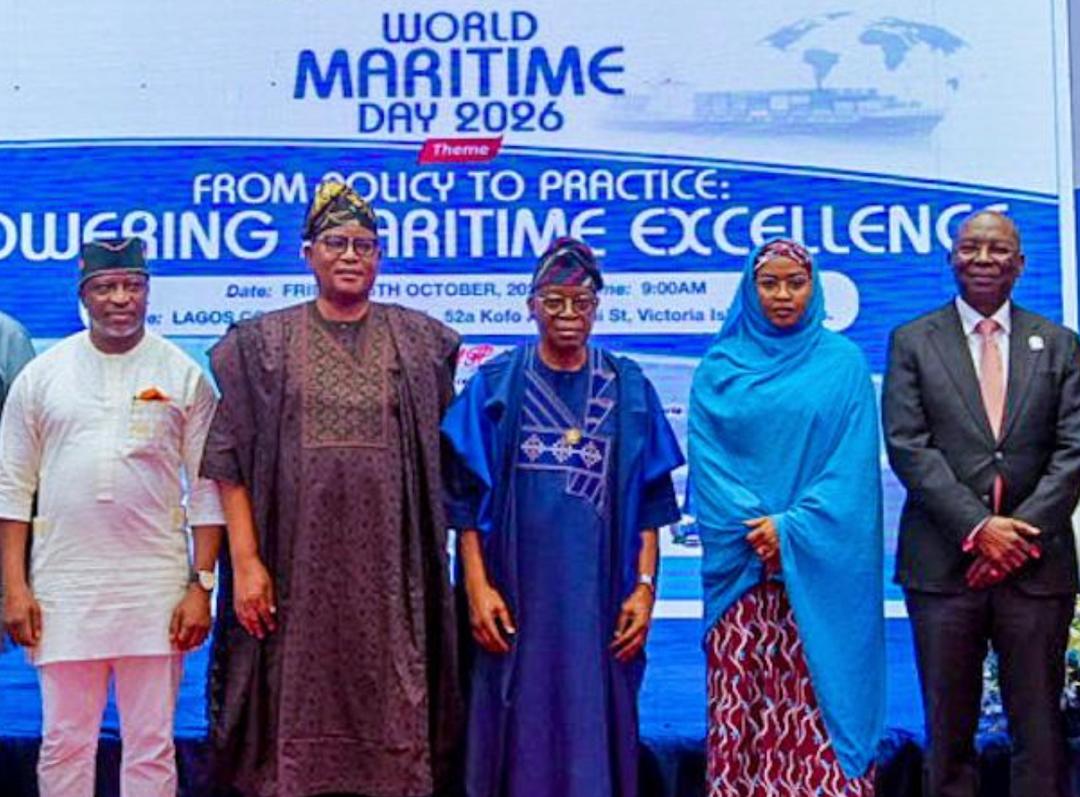
The Minister of Marine and Blue Economy, Adegboyega Oyetola, gave the assurance on Friday, October 16th, 2026 at the 2026 World Maritime Day celebration held at the Lagos Continental Hotel, Victoria Island, Lagos.
He said the port modernisation drive formed a critical component of the Federal Government’s broader blue economy agenda, aimed at expanding cargo-handling capacity, improving trade efficiency and distributing maritime-driven economic opportunities more evenly across the country.
According to the minister, the programme complements ongoing efforts to modernise the Apapa and Tin Can Island ports in Lagos, while extending infrastructure development to other strategic maritime gateways.
Oyetola also reaffirmed the government’s commitment to its deep seaport development agenda, which includes proposed projects at Agge, Bakassi, Bonny, Gateway, Ibom and Ondo.
“This is a deliberate effort to expand capacity, improve efficiency and build a more balanced national network of maritime gateways,” he said.
The minister stressed that developing ports outside Lagos was essential to reducing the concentration of cargo traffic in the commercial capital, lowering transportation costs and bringing maritime services closer to businesses, manufacturers and consumers across the country.
He explained that the ministry’s broader vision was to establish an integrated transport system connecting seaports, inland dry ports and production centres through road, rail and inland waterways.
“By linking our seaports to Inland Dry Ports and production centres through an integrated multimodal network of road, rail and inland waterways, we are bringing cargo closer to producers and consumers, reducing haulage costs, easing pressure on Lagos, strengthening exports and stimulating industrial and logistics clusters across the Federation,” Oyetola said.
He further emphasised that Nigeria’s maritime development strategy extended beyond coastal communities, highlighting the importance of inland ports and waterways in connecting businesses and production centres to domestic and international markets.
According to him, facilities such as the Onitsha and Baro ports are important to efforts to expand access to maritime transportation, improve cargo movement and stimulate economic activities in the hinterland.
Oyetola said the government was collaborating with relevant agencies and private investors to ensure that its port development plans translated into functional infrastructure, efficient cargo-handling operations, navigable channels and reliable transport connections.
He noted that the success of port modernisation depended not only on upgrading terminals but also on improving the supporting infrastructure required to move cargo seamlessly between ports and their hinterlands.
Oyetola also highlighted the Nigerian Ports Economic Regulatory Agency Act, 2026, as a significant component of ongoing reforms to strengthen economic regulation, promote fair competition and improve service delivery across the port system.
He maintained that sustained investment in port infrastructure, supported by effective regulation and improved multimodal connectivity, would help lower logistics costs, attract private investment, boost exports and create employment opportunities across different parts of the country.
The development of additional maritime gateways is expected to provide businesses with more port options, improve access to international shipping routes and strengthen the competitiveness of Nigeria’s trade and logistics sector.
The 2026 World Maritime Day celebration attracted maritime industry leaders, heads of government agencies, lawmakers and other stakeholders to deliberate on the development of Nigeria’s maritime sector.
In a goodwill message, the Chairman of the Senate Committee on Marine Transport, Senator Wasiu Eshinlokun, called for an end to attacks on seafarers in the Strait of Hormuz, drawing attention to the security risks confronting maritime workers and the importance of protecting seafarers on international shipping routes.




Customs
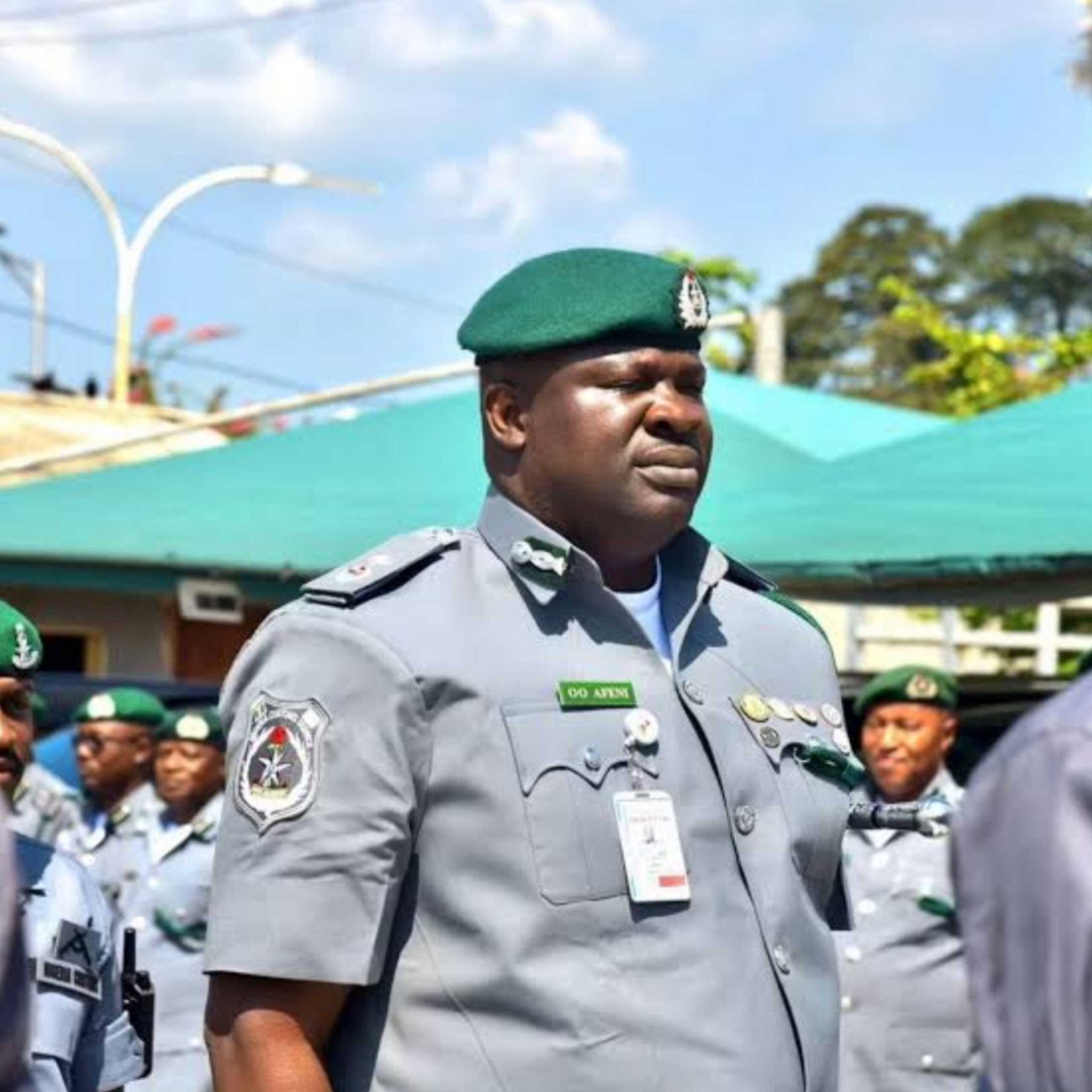
How Afeni combines hybrid mandate of anti-smuggling with revenue mobilisation at FOU A
Funso OLOJO, Editor
When Deputy Comptroller Oladapo Olukayode Afeni took over the Federal Operations Unit (FOU), Zone A, of the Nigeria Customs Service (NCS) on September 30, 2026, he inherited an enforcement formation with an established record of anti-smuggling operations. But his early actions suggest that he intends to broaden the Unit’s traditional operational focus by placing revenue protection and compliance enforcement firmly alongside its anti-smuggling responsibilities.
His first four weeks in office have offered a glimpse of this emerging strategy.
At his maiden press briefing in Ikeja, Lagos, on November 3, Afeni disclosed that FOU Zone A recorded 195 interceptions involving prohibited and restricted goods with a combined Duty Paid Value (DPV) of ₦6.194 billion. In a parallel revenue mobilisation exercise, the Unit recovered ₦683.661 million through compliance checks, scrutiny of import declarations, corrections of under-valuations and demand notices.
The figures tell two different but complementary stories.
While the ₦6.194 billion represents the DPV of goods intercepted during enforcement operations, the ₦683.661 million represents revenue actually recovered through interventions in the Customs assessment and compliance process.
That distinction is significant. It suggests that Afeni is seeking to move the performance conversation beyond the familiar measurement of Customs enforcement by the volume and monetary value of seizures to include the less visible but equally important business of plugging revenue leakages.
For an enforcement formation whose responsibilities extend across Lagos, Ogun and other parts of the South-West, this represents an important operational dimension.
Afeni’s approach appears to rest on a simple proposition: Customs must not only prevent prohibited goods from entering the country; it must also ensure that government collects every legitimate revenue due from importation and other regulated trade activities.
Revenue mobilisation beyond seizures
Afeni’s growing emphasis on revenue protection is particularly evident in his engagement with officers occupying strategic positions in the Customs clearance chain.
His recent intervention with the leadership of various entry points, including Releasing Officers and Compliance Seats, was accompanied by a clear warning that officers must take their revenue responsibilities seriously and ensure optimal revenue collection.
His insistence that Customs revenue must be jealously guarded goes beyond routine management rhetoric. It reflects an understanding that significant revenue losses can occur within the regular import clearance process, long before any consignment becomes the subject of an enforcement operation.
Incorrect tariff classification, deliberate under-declaration, undervaluation, false documentation, improper concessions and other forms of non-compliance can undermine government revenue without necessarily attracting the immediate attention generated by physical seizures.
This is where the responsibilities of Releasing Officers, compliance personnel, examination officers and supervisors become critical.
Their decisions determine whether import declarations are properly scrutinised, applicable duties accurately assessed and statutory requirements satisfied before consignments are released.
A weakness at any of these points can create opportunities for revenue leakage.
Afeni’s decision to bring these officers into sharper focus suggests an effort to make revenue consciousness an integral part of everyday Customs administration rather than an occasional management directive.
The ₦683.661 million recovered within four weeks provides an early indication of the practical implications of this approach.
According to Afeni, the recovery resulted from enhanced risk profiling, targeted examination of questionable declarations, teamwork and closer collaboration with relevant stakeholders.
The emerging strategy is therefore not limited to chasing smugglers. It also involves identifying revenue deficiencies within the legitimate importation process and ensuring that identified infractions translate into actual recoveries for government.
The Ogun I experience: A foundation for the new assignment
Afeni’s current disposition is not entirely unexpected. His record at the Ogun I Area Command, Idiroko, provides useful insight into the operational philosophy he appears to be bringing to FOU Zone A.
Between January and August 2026, Ogun I generated ₦896.539 million against an assigned revenue target of ₦545.348 million.
The command also processed 31,177 metric tonnes of exports valued at ₦4.64 billion Free on Board (FOB), compared with no recorded export activity during the corresponding period of 2025.
These figures demonstrated the revenue and trade facilitation possibilities of a border command operating in an environment where legitimate commercial activities coexist with persistent smuggling challenges.
The enforcement record was equally substantial.
Between December 4, 2025 and September 29, 2026, the command recorded 327 seizures with a combined DPV of approximately ₦14.75 billion.
The interceptions included foreign parboiled rice, petroleum products, illicit drugs, arms and ammunition, endangered wildlife and other prohibited items.
The significance of this record lies not merely in the figures but in the combination of responsibilities reflected in them.
At Idiroko, Afeni’s administration pursued revenue generation, export facilitation and anti-smuggling enforcement as complementary aspects of Customs operations.
His transfer to FOU Zone A therefore presents an opportunity to apply that experience within a considerably broader enforcement structure.
However, the operational scale and complexity of FOU Zone A mean that the challenge is not simply to replicate the Idiroko experience but to adapt its underlying principles to a different institutional environment.
Consolidating an established enforcement legacy
Afeni also inherited a Unit with a significant performance record under his predecessor, retired Comptroller Gambo Aliyu.
At the September 30th handover ceremony, Aliyu disclosed that FOU Zone A recovered ₦3,192,511,547.52 between December 10, 2025 and September 24, 2026, representing 798 per cent of its ₦400 million annual revenue recovery target.
The Unit also recorded 779 interceptions involving goods with a combined DPV of ₦13.075 billion.
These figures constitute the operational baseline against which Afeni’s administration will eventually be assessed.
They also underscore the importance of recognising the foundation inherited by the new leadership rather than presenting subsequent achievements as though they emerged from an entirely new enforcement structure.
Afeni’s immediate task is to sustain the existing operational momentum while strengthening the revenue recovery and compliance dimensions of the Unit’s activities.
His first four-week performance report suggests that both responsibilities are receiving attention.
The ₦683.661 million recovered during the period is particularly noteworthy because it demonstrates that revenue mobilisation is being pursued alongside conventional anti-smuggling operations.
The challenge ahead will be to institutionalise the processes responsible for these recoveries and ensure that they deliver consistent results.
Beyond economic crime: The wider security implications of smuggling
Afeni’s maiden briefing also provided a revealing account of the public health, environmental and national security implications of smuggling.
The 195 interceptions recorded within four weeks covered narcotics, food products, petroleum products, pharmaceutical substances, used vehicles, wildlife and other restricted imports.
Among the most significant seizures were 5,986 parcels of Cannabis sativa and Cannabis indica weighing 3,407.83 kilogrammes, alongside 400 grammes of cocaine and 100 grammes of methamphetamine.
The Unit also intercepted 57 cartons, 37 packs and six pieces of codeine syrup, as well as 1,250 rounds of 12-calibre Red Star cartridges.
Another notable interception involved 23,220 pieces of new machetes imported without the requisite End User Certificates and permits.
Afeni expressed concern over the possible security implications of such a consignment, particularly as the country approaches another electoral cycle.
He warned that illegally imported weapons and implements could provide materials for organised violence.
“Election violence is rarely an isolated incident but facilitated and aided by smuggling activities like the one thwarted by our operatives,” he cautioned.
The statement underscores the growing recognition that smuggling is not merely a trade-related offence. Depending on the nature of the goods involved, it can create pathways for activities that threaten public safety and national security.
The cannabis seizure also attracted particular attention from the Acting Controller, who referenced the 2025 World Drug Report of the United Nations Office on Drugs and Crime (UNODC).
He noted that cannabis remains the most widely available and commonly used illicit drug globally, accounting for an estimated 42 per cent of drug use disorder cases worldwide.
Afeni expressed concern about the growing availability of increasingly potent cannabis varieties, particularly the strain popularly marketed as Colorado, warning of their consequences for young people, families and the healthcare system.
His position was captured in a declaration that provides an important insight into his enforcement philosophy:
“We will not measure our success by how much we seize, but by how much harm we prevent.”
The statement shifts attention from the monetary value of intercepted merchandise to the broader social and economic consequences of preventing dangerous goods from entering the country.
Other interceptions during the period included eight live pangolins, 21 foreign-used vehicles, 11 means of conveyance and a 40-foot container, number SEGU 5347239, containing 2,760 pieces of office chairs in completely knocked-down condition.
The Unit also intercepted 173 cartons of imported frozen poultry products, 6,949 cartons of smuggled spaghetti, 459 bales and 39 jumbo sacks of second-hand clothing, 1,236 used tyres, 33 used rims and 8,025 litres of Premium Motor Spirit.
Food-related seizures included 3,028 bags of 50kg imported rice, 995 bags of 25kg, 104 bags of 20kg and 207 bags of 5kg; 101 bags of imported sugar weighing 50kg each; eight bags of imported creamer powdered milk; 12 bags of grain oat products; 20 cartons of couscous and 250 cartons of Lotus sardine without NAFDAC registration numbers.
The breadth of these interceptions illustrates the multiple dimensions of the smuggling challenge, ranging from economic sabotage and public health risks to environmental degradation and national security concerns.
For FOU Zone A, the task is to sustain enforcement pressure while ensuring that intelligence gathered from these operations contributes to a more effective Customs compliance and revenue protection system.
Intelligence sharing and inter-agency cooperation
Afeni’s early engagements with other security and regulatory agencies indicate that he recognises the limitations of an enforcement strategy built exclusively around Customs patrols and interceptions.
On October 14, he commenced a familiarisation tour of strategic security and law enforcement agencies in Lagos, including the Nigeria Police Force, Department of State Services, Nigerian Army’s 81 Division, National Drug Law Enforcement Agency, Nigeria Immigration Service and 9 Brigade.
The engagements were aimed at strengthening intelligence sharing, information exchange and joint operations against smuggling and other trans-border crimes.
At his maiden briefing, he reiterated the importance of collaboration with the NDLEA, Police, DSS, Immigration Service, Nigerian Army, National Agency for Food and Drug Administration and Control (NAFDAC) and National Environmental Standards and Regulations Enforcement Agency (NESREA).
He explained that narcotics and suspects intercepted by the Unit would be handed over to the NDLEA for further investigation and prosecution, while other prohibited items would be transferred to the appropriate agencies in accordance with their statutory responsibilities.
The October interception of illicit drugs and pharmaceutical products valued at ₦511.4 million, subsequently handed over to the NDLEA and NAFDAC for appropriate action, illustrates the operational importance of these institutional relationships.
Similarly, the rescue of eight live pangolins in two separate operations in Ogun State demonstrates the environmental protection responsibilities that increasingly form part of Customs enforcement.
For Afeni, the value of inter-agency cooperation goes beyond the immediate apprehension of smugglers and seizure of prohibited goods.
Effective intelligence sharing can help uncover smuggling networks, identify recurring patterns of fraudulent importation and expose weaknesses that criminal operators exploit across institutional boundaries.
It can also strengthen the risk management process, allowing Customs to direct enforcement resources towards consignments and operators presenting greater compliance risks.
The next challenge will be to translate these intelligence relationships into a more systematic approach to identifying revenue exposure and preventing repeat violations.
Administrative discipline as a revenue protection instrument
An important but sometimes overlooked dimension of Customs performance is the quality of internal administration.
In FOU Zone A, where enforcement activities frequently intersect with the commercial interests of importers, manufacturers, transport operators and licensed Customs agents, administrative discipline is essential to maintaining institutional credibility.
Afeni has emphasised firm but lawful enforcement, respect for human dignity and constructive engagement with legitimate businesses.
This position is important because revenue mobilisation must remain anchored on the law, established procedures and professional standards.
The pursuit of government revenue cannot justify arbitrary assessments, unnecessary delays or indiscriminate restrictions on legitimate commercial activities.
At the same time, officers cannot afford to approach their responsibilities as routine administrative exercises detached from the broader performance objectives of the Service.
Releasing Officers must ensure that consignments satisfy applicable requirements before release. Compliance personnel must scrutinise declarations thoroughly, while examination and assessment officers must remain alert to irregularities that could result in revenue losses.
Supervisory officers, in turn, must ensure that established procedures are followed and that administrative lapses do not create opportunities for abuse.
This is particularly relevant in an increasingly technology-driven Customs environment where risk profiling, data analysis and electronic compliance systems are becoming central to modern Customs administration.
The ₦683.661 million recovered through compliance interventions reinforces the importance of these administrative responsibilities.
It demonstrates that revenue protection is not exclusively an enforcement activity conducted on highways, border routes and warehouses. It also takes place within the Customs assessment and clearance system.
For Afeni, strengthening this internal culture could prove as consequential as increasing the frequency of physical interceptions.
The trade facilitation imperative
Afeni’s experience at Idiroko also offers another important dimension to his new assignment: the need to protect legitimate trade while maintaining strict enforcement against smuggling.
His previous assignment demonstrated the potential of border commands to contribute to economic development through legitimate export processing and constructive engagement with traders and border communities.
At FOU Zone A, that experience should inform an approach that avoids treating enforcement and trade facilitation as competing responsibilities.
Nigeria’s ambitions to expand non-oil exports, improve industrial competitiveness and strengthen its participation in regional and international trade require a Customs administration capable of distinguishing legitimate commercial activities from fraudulent practices.
For businesses operating in the import and export value chain, unnecessary delays and indiscriminate enforcement can increase transaction costs and undermine commercial confidence.
Conversely, ineffective enforcement exposes compliant businesses to unfair competition from smugglers who evade duties, disregard import regulations and introduce prohibited products into the domestic market.
At his November 3 briefing, Afeni assured importers, licensed Customs agents and the trading public that FOU Zone A would continue to distinguish between legitimate trade and fraudulent activities.
He maintained that compliant businesses would receive the necessary support, while duty evasion, falsification of declarations and other economic crimes would attract firm enforcement.
This is an important operational distinction.
The ultimate objective should be an environment in which legitimate businesses can operate within predictable regulatory conditions, government receives the revenue legally due to it and smugglers are denied the commercial advantages of operating outside the law.
From impressive early figures to sustainable performance
Ultimately, Afeni’s leadership at FOU Zone A will be judged by more than the volume of seizures recorded or the number of warnings issued to officers.
Neither should the ₦683.661 million recovered within his first four weeks become the sole measure of his administration.
The more enduring test will be whether the Unit can institutionalise a stronger compliance culture, reduce revenue leakages, improve intelligence-led enforcement, strengthen inter-agency coordination and protect legitimate commercial activities.
His first four-week scorecard provides an early picture of the priorities emerging under his leadership.
The 195 interceptions with a combined DPV of ₦6.194 billion reflect an active enforcement posture, while the ₦683.661 million revenue recovery demonstrates a parallel effort to strengthen compliance and protect government earnings.
The two figures represent complementary dimensions of Customs performance, but their long-term significance will depend on the sustainability of the processes behind them.
There is also a larger institutional expectation.
The Comptroller-General of Customs, Bashir Adewale Adeniyi, has consistently emphasised modernisation, improved revenue performance, professional standards and the protection of national economic interests.
Afeni’s responsibility is to translate these institutional priorities into practical outcomes within FOU Zone A, ensuring that officers understand the relationship between operational efficiency, revenue protection and the wider economic mandate of the Service.
His previous record at Ogun I provides useful context for understanding the expectations surrounding his appointment. However, FOU Zone A presents a different scale and complexity of responsibility, requiring an approach that combines intelligence gathering, enforcement, administrative discipline and revenue consciousness.
The emerging picture is that of an administration seeking to make anti-smuggling enforcement and revenue mobilisation mutually reinforcing responsibilities.
But the real measure of this approach will be its ability to move beyond impressive opening statistics and establish a sustainable system in which revenue leakages are detected early, legitimate trade is protected and enforcement intelligence consistently produces measurable economic value.
Afeni’s assignment, therefore, is about more than keeping smugglers on the run. It is equally about ensuring that government does not lose revenue to avoidable administrative weaknesses, that compliant businesses are not disadvantaged and that every component of Customs enforcement contributes to national economic interests.
The bigger test is whether FOU Zone A can become not only a formidable anti-smuggling formation but also a more effective instrument of revenue protection. That is the broader meaning of Afeni’s emerging hybrid mandate: fighting what must not enter the economy while ensuring that government collects what is legally due from what legitimately does.
Headlines
Nigeria’s 10,000 km of Gold: Why 28 states are sitting on water but dying of thirst?
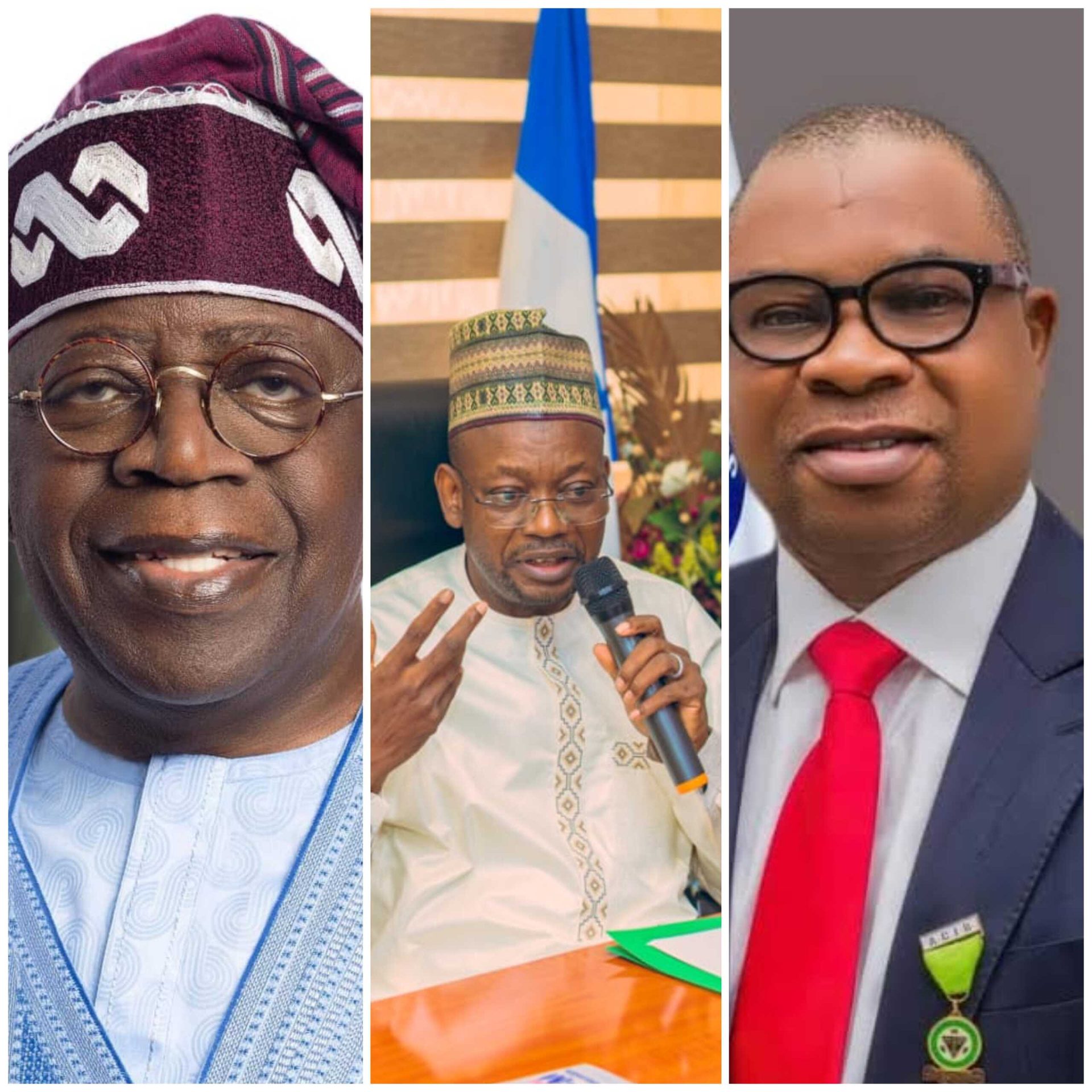
-Our Inland waterways can generate ₦12trn annually if 28 states think differently
Frank Meke
Listen, my people. Let me ask a simple question.
What kind of country has 10,000 kilometres of waterways, with 28 of its 36 states accessible by water, and waterways connecting it to five neighbouring countries, yet continues to struggle with transportation infrastructure and overdependence on roads?
That country is Nigeria.
We are sitting on water, yet dying of thirst.
For years, I have travelled across this country, from Badagry to Calabar, Lokoja to Makurdi, and Onitsha to Yenagoa.
Everywhere, I see the same contradiction: rivers with the potential to drive economic growth, yet largely underutilised for transportation, tourism and commercial activities.
Today, I sound both an alarm and a message of hope. Nigeria’s inland waterways are more than bodies of water. They represent wealth, tourism opportunities, food security, transportation, real estate development and a significant pathway to economic diversification.
The 28 states with access to navigable waterways must wake up, collaborate with the National Inland Waterways Authority (NIWA), and develop a coordinated investment blueprint capable of transforming these waterways into viable, bankable investment destinations.
If we fail to act, another generation may watch countries such as Egypt maximise the economic potential of the Nile while Nigeria continues to underutilise the Niger and Benue rivers.
THE FACTS THAT SHOULD SHAME US
Let us begin with the facts.
Nigeria has approximately 10,000 kilometres of waterways with the potential to support year-round navigation for the transportation of bulk cargo and passengers. Of this figure, about 3,000 to 3,800 kilometres are seasonally navigable, according to NIWA.
Twenty-eight of Nigeria’s 36 states are accessible through inland waterways. This is a significant national economic asset that remains largely untapped.
The River Niger and River Benue constitute the country’s major inland waterways. Other important channels and water bodies include Cross River, the Porto Novo-Badagry-Lagos waterways, Lekki and Lagos Lagoons, Ogun-Ondo waterways, Benin River, Escravos Channel, Nun River, Imo River, Orashi River, Ethiope River, Oguta Lake, Lake Chad and the numerous creeks of the Niger Delta.
Combined with an 853-kilometre coastline, these waterways position Nigeria to strengthen its participation in regional and international maritime trade.
Yet, less than one per cent of the country’s freight reportedly moves through inland waterways, while about 61 per cent is transported by road. The consequences are evident: deteriorating roads, road accidents, high logistics costs and increasing pressure on existing transportation infrastructure.
Industry estimates suggest that Nigeria could generate as much as ₦12 trillion annually from its inland waterways if the necessary investments are made to unlock their potential.
That is ₦12 trillion! A significant economic opportunity capable of changing the fortunes of several states.
The World Aquaculture Society has also projected that Nigeria’s aquaculture sector holds the potential to generate $296 billion annually.
The question, therefore, is not whether Nigeria has the resources. The question is why we have continued to underutilise them.
THE MARITIME TOURISM VALUE CHAIN: NIGERIA’S NILE IS WAITING
Consider what Egypt has achieved with the River Nile.
The Nile supports significant cargo and passenger movements, including cruise tourism, with some four-day cruise packages reportedly costing as much as $500 per person. Egypt has successfully transformed its river into an economic and tourism corridor.
What, then, are we doing with the Niger and Benue?
Dredging the River Benue to Lokoja and the River Niger from Baro in Niger State towards the Atlantic Ocean to a minimum draught of 10 feet could significantly improve inland navigation and reduce travel time along key routes.
For instance, the proposed improvement in navigation could make it possible to travel from Baro to Onitsha by speedboat in about 90 minutes, compared with the estimated nine hours by existing means.
Imagine a Niger-Benue cruise linking the Lokoja Confluence, where the Niger and Benue meet, to Onitsha, Asaba, the Delta creeks and Lagos Lagoon.
Imagine tourists enjoying a river cruise, exploring the cultural attractions and natural beauty of communities along these waterways, including Oguta Lake and the beaches of Badagry.
There is also the opportunity to develop Lagos Lagoon tourism. The Allied Concessionaries and Blue Economy Alliance is already partnering with NIWA to promote marine tourism in Lagos through safe water transportation, recreation and hospitality services.
Our fishing festivals also offer enormous tourism potential. The Argungu Fishing Festival, which Runsewe worked to revive after 10 years of abandonment, could attract even more visitors if supported by safe and accessible waterways.
Nigeria can equally develop cultural river routes connecting historical communities, traditional institutions and riverine settlements, from the palaces along the Niger to the creeks of Bonny.
This is the maritime tourism value chain: boat builders, jetty operators, tour guides, waterfront hotels, restaurants, photographers, craft sellers, festival organisers and cruise operators.
The economic impact could be substantial. Each tourism corridor has the potential to support thousands of direct and indirect jobs across participating communities.
Yet, we still lack properly developed cruise services, organised riverine tourism packages and effective destination marketing. The opportunity is there, but the necessary investments and coordination are still missing.
FISHING AND AQUACULTURE: OUR WATER IS OUR FARM
Fish is a major component of the Nigerian diet, yet the country continues to rely heavily on imported fish to meet domestic demand.
One of the challenges is that many local fishermen operate with inadequate equipment, limited cold-chain facilities, insufficient processing infrastructure and inadequate access to modern aquaculture technology.
Nigeria’s waterways are naturally endowed with fish resources, including catfish, tilapia, croaker, shrimps, oysters and periwinkles. From Lake Chad to Oguta Lake, Cross River and the creeks of Bayelsa, the opportunities are enormous.
But we must begin to think differently.
The 28 states should consider developing aquaculture clusters along suitable waterways. Kogi could explore cage aquaculture, Ogun could develop pond clusters, Delta could promote shrimp farming, while Lagos Lagoon offers opportunities for oyster farming.
Fish processing must also become a priority. Establishing waterfront facilities for smoking, drying, packaging and preservation would create employment, reduce post-harvest losses and improve the export potential of locally produced fish.
There is equally an opportunity to develop water-based cold-chain transportation. A self-propelled barge transporting fish from Makurdi to Onitsha could help reduce spoilage and logistics costs compared with trucks navigating poor roads.
NIWA’s ongoing waterway clean-up programme, being implemented in partnership with Parts Central Limited, is an important step in this direction.
The project recognises that environmental sanitation goes beyond keeping waterways clean. It is also about creating safer and more productive waterways that can support commerce, transportation, fisheries, tourism and investment.
The principle is simple: cleaner water supports healthier fisheries, stronger livelihoods and greater economic returns.
FERRY AND WATER TRANSPORTATION: THE CHEAPEST ROAD WE ALREADY HAVE
Let me be blunt: Nigeria’s overdependence on road transportation has become increasingly expensive.
The country has approximately 195,000 kilometres of roads, with only about 30 per cent reportedly paved. Rising fuel prices, road congestion, accidents and deteriorating infrastructure continue to increase the cost of moving people and goods.
Inland water transportation offers an alternative. For bulk cargo, it can be 20 to 30 per cent cheaper than road transportation under suitable operating conditions. It also offers environmental advantages through lower emissions compared with road haulage.
The River Niger connects Niger, Kogi, Anambra, Delta and Bayelsa, while the River Benue links Benue, Taraba and parts of Kogi. Coastal states, including Lagos, Ogun, Delta, Rivers, Bayelsa, Cross River and Akwa Ibom, share interconnected waterways, creeks and lagoons.
Why, then, should a yam farmer in Makurdi struggle to transport produce to Onitsha when the waterways offer an alternative?
The answer lies in inadequate infrastructure, insufficient vessels and limited investment.
There is, however, a beginning. The Federal Government has approved approximately ₦14.6 billion for the procurement of modern boats and ferries to replace unsafe and obsolete wooden vessels. The initiative targets Niger, Benue, Kogi, Kwara and Kebbi, where waterways remain important transportation routes.
Lagos State has also demonstrated what is possible through its structured ferry transportation system, operated by Lagos State Ferry Services (LAGFERRY) through the Lagos State Waterways Authority (LASWA).
Its ferry network connects communities and terminals around Ikorodu, Apapa, Marina, CMS, Badore and other locations.
Lagos demonstrates that sustained investment in terminals, vessels, safety infrastructure and regulation can make water transportation a viable alternative.
If Lagos can do it, why can’t Kogi, Anambra, Delta and Cross River?
Minister of Marine and Blue Economy, Adegboyega Oyetola, has consistently emphasised the cost advantages of water transportation and the need for state governments to complement Federal Government initiatives.
The 28 states must not wait for Abuja to provide everything. They must invest in boats, construct jetties, develop terminals and establish mutually beneficial partnerships with NIWA.
Kogi State, under Governor Ahmed Usman Ododo, has already expressed support for NIWA’s efforts to reposition the state’s waterways as a major driver of the Blue Economy.
As the confluence state, Kogi occupies a strategic position in Nigeria’s inland waterway network. If Kogi gets it right, it could provide an important model for other states.
LITTORAL ESTATES AND RECREATIONAL HOLIDAYS: THE WATERFRONT IS THE NEW LEKKI
Let me tell us where the next Lekki could emerge. It may not necessarily be on land. It could be along our waterways.
Across the world, waterfront properties command significant value. From Dubai to Miami, Cape Town and London, people pay premium prices to live, work and relax close to water.
In Nigeria, however, many waterfronts remain underdeveloped. Several littoral communities are neglected, while beaches and recreational waterfronts struggle with inadequate infrastructure and environmental challenges.
We must begin to see these locations differently.
Planned waterfront estates could be developed in Lokoja, Onitsha, Makurdi, Yenagoa, Calabar, Epe, Badagry and Ikorodu. Such developments could incorporate private jetties, boat clubs, waterfront promenades and other recreational facilities.
There is also considerable potential for recreational holidays.
Oguta Lake could support weekend resorts and fishing lodges. The River Benue could accommodate fishing tourism facilities. Lagos Lagoon could host floating restaurants, while Ibeno Beach and other coastal destinations could be developed into accessible beach resorts.
Water sports, including kayaking, jet skiing and boat regattas, could become major attractions in suitable littoral communities.
Destination marketing is equally important. As the Blue Economy Alliance has communicated to NIWA, opening up littoral communities through destination marketing and resort promotion is central to developing Nigeria’s waterfront tourism potential.
Today’s tourists are looking beyond conventional city-centre hotels. They want unique experiences, natural scenery and opportunities to connect with local culture.
Nigeria’s 28 water-accessible states can offer these experiences if the right infrastructure and investment framework are established.
ENVIRONMENTAL STEWARDSHIP AND SUSTAINABILITY: IF WE KILL THE WATER, WE KILL OURSELVES
I will not pretend that all is well with our waterways. Many are facing serious environmental challenges.
Indiscriminate waste disposal, oil spills, environmental degradation, plastic pollution and uncontrolled sand dredging continue to threaten the health and productivity of our rivers and creeks.
The consequences are not merely environmental. They are human and economic.
More than 300 lives were reportedly lost on Nigerian waterways in 2023. Drowning accounts for more than two-thirds of boat fatalities, while available figures indicate that 90 per cent of victims were not wearing life jackets.
In 2024, under the leadership of NIWA’s former Managing Director, Bola Oyebamiji, reported fatalities reduced by 30 per cent, from an average of 330 to 231.
This was attributed to measures that included the deployment of 350 water marshals across the country to enforce the ‘No Life Jacket, No Boarding’ policy, reaching more than 300 communities.
However, waterway safety must go beyond life jackets. It requires clean waterways, dredged channels, properly marked navigation routes, effective waste management and the removal of dangerous debris.
Sustainability must become an integral part of every inland waterway investment plan.
Plastic waste should be converted into economic opportunities through waste-to-wealth initiatives. NIWA’s clean-up programme is already promoting approaches capable of creating employment for communities along the waterways.
There is also a need for marine spatial planning to establish clearly defined fishing zones, shipping lanes, conservation areas, tourism destinations and renewable energy zones.
Mangrove protection must be prioritised, particularly in the Niger Delta, where mangrove ecosystems serve as important carbon sinks and natural environmental buffers.
Most importantly, the communities that depend on these waterways must be actively involved in their protection and management.
Environmental stewardship is not merely an NGO concern. It is an economic necessity. No serious investor will commit resources to a polluted river, and no tourist will willingly patronise a contaminated lagoon.
Clean water is bankable. Dirty water is dead capital.
WHY THE 28 STATES MUST THINK DIFFERENTLY AND JOIN HANDS WITH NIWA NOW
Here is the crux of the matter.
For years, disagreements between some state governments and NIWA over the control of inland waterways have hindered effective collaboration and development.
The Supreme Court has affirmed NIWA’s regulatory authority over Nigeria’s inland waterways, providing a legal framework for the agency to discharge its responsibilities.
The focus must now shift from jurisdictional disagreements to economic cooperation.
The 28 states must embrace a different approach.
First, from competition to collaboration.
States must stop treating NIWA as an adversary and begin to see the agency as a strategic partner.
NIWA provides regulatory oversight and technical coordination, while states can drive infrastructure investment.
NIWA facilitates the regulatory framework, states develop jetties and terminals, and private investors operate commercially viable ferry services.
Second, from individual action to collective planning.
The 28 states cannot afford to pursue disconnected waterway development policies. Nigeria needs a National Inland Waterways Investment Blueprint, coordinated by NIWA and the Federal Ministry of Marine and Blue Economy, with clear responsibilities for federal, state and private-sector participants.
Third, from budget dependence to bankable investment.
States must look beyond annual budgetary allocations and develop projects capable of attracting private capital through public-private partnerships.
The SEALINK project, promoted with the involvement of NEXIM Bank, offers an important opportunity to improve regional and hinterland connectivity through the Niger-Benue waterway network. Its proposed infrastructure development presents significant investment potential.
Inland water transportation can move bulk cargo at a fraction of the cost of road transportation under suitable conditions. This is the kind of economic proposition investors must be encouraged to explore.
Fourth, from road-only transportation to multimodal connectivity.
Nigeria must integrate inland waterways with road, rail and seaport infrastructure.
The historical connection between waterways, roads and railways demonstrated the importance of an integrated transportation network.
Today, the country must reconnect these modes to create an efficient logistics chain: road to jetty, jetty to rail, and rail to port.
Countries such as Vietnam and Bangladesh have demonstrated the economic value of inland water transportation, with significantly higher freight shares moving through their waterways than Nigeria’s less than one per cent.
Fifth, from neglect to investment promotion through NIMBEX.
The inauguration of the committee for the Nigeria Marine and Blue Economy Expo (NIMBEX) provides another opportunity to attract investment into the sector.
The 28 states must approach the expo with bankable projects rather than speeches. They should present proposed jetty developments, ferry services, aquaculture parks, waterfront estates and tourism corridors.
Investors need viable projects, clear regulatory frameworks and credible partnerships.
THE BLUEPRINT I PROPOSE
As a journalist who has followed developments in the maritime sector for three decades, I believe Nigeria needs a practical and coordinated investment blueprint for its inland waterways.
Such a blueprint should include:
A comprehensive dredging programme:
Systematic dredging of the Niger and Benue rivers to the proposed 10-foot draught, alongside the development of suitable intra-coastal routes connecting Lagos, Badagry and Calabar.
Modern inland ports:
Upgrade Onitsha, Lokoja, Makurdi, Baro, Oguta and Ikorodu river ports through public-private partnerships.
A national waterway safety code:
Enforce compulsory life-jacket use, prohibit night sailing without appropriate navigation lights, prevent overloading and provide professional training for at least 10,000 boat captains.
A modern ferry fleet:
The 28 states should explore a joint programme to procure 500 modern ferries within five years, while encouraging local boat builders to participate in the supply chain.
Tourism corridors:
Develop five major tourism corridors: Lagos-Badagry, Niger-Benue Confluence, Onitsha-Delta Creeks, Cross River-Calabar and the Lake Chad Basin.
Aquaculture zones:
Establish 28 aquaculture clusters, one in each water-accessible state, supported by financing opportunities from institutions such as the Bank of Industry.
Littoral estates:
Identify suitable waterfront locations for planned residential estates, recreational facilities and resorts, supported by transparent land administration and secure titles.
Transparent revenue sharing:
Establish a framework for the equitable sharing of revenue from tolls, ferry services, fishing licences and tourism activities among NIWA, state governments and host communities.
If properly implemented, these initiatives could unlock enormous economic opportunities and contribute significantly towards the estimated ₦12 trillion annual revenue potential of Nigeria’s inland waterways.
The choice is ours: invest in this resource or continue to allow its economic value to go unrealised.
CONCLUSION: WATER IS LIFE, WATER IS WEALTH
I have said it before: Tourism is Life. Today, I add that Water is Life. Water is Wealth.
Nigeria has approximately 10,000 kilometres of waterways running through or connecting 28 states.
We have NIWA as the regulatory institution, a Federal Ministry dedicated to Marine and Blue Economy development, a national policy direction that recognises the importance of the sector, and investors who could be attracted by viable projects.
What we urgently need is the political will, institutional cooperation and strategic commitment of the 28 state governments.
Governors, I appeal to you: Do not allow your rivers to remain economic liabilities. Turn them into blessings.
Work with NIWA. Develop the jetties. Invest in modern ferries. Clean the waterways. Promote your waterfront.
Headlines
Africa to the World: AITEC World launches globally at WTM London, urges stronger Africa-World tourism partnership
Funso OLOJO, Editor
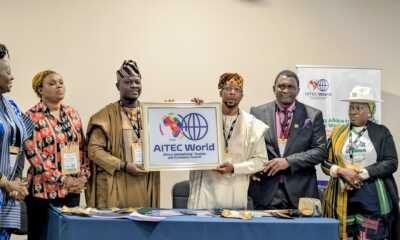
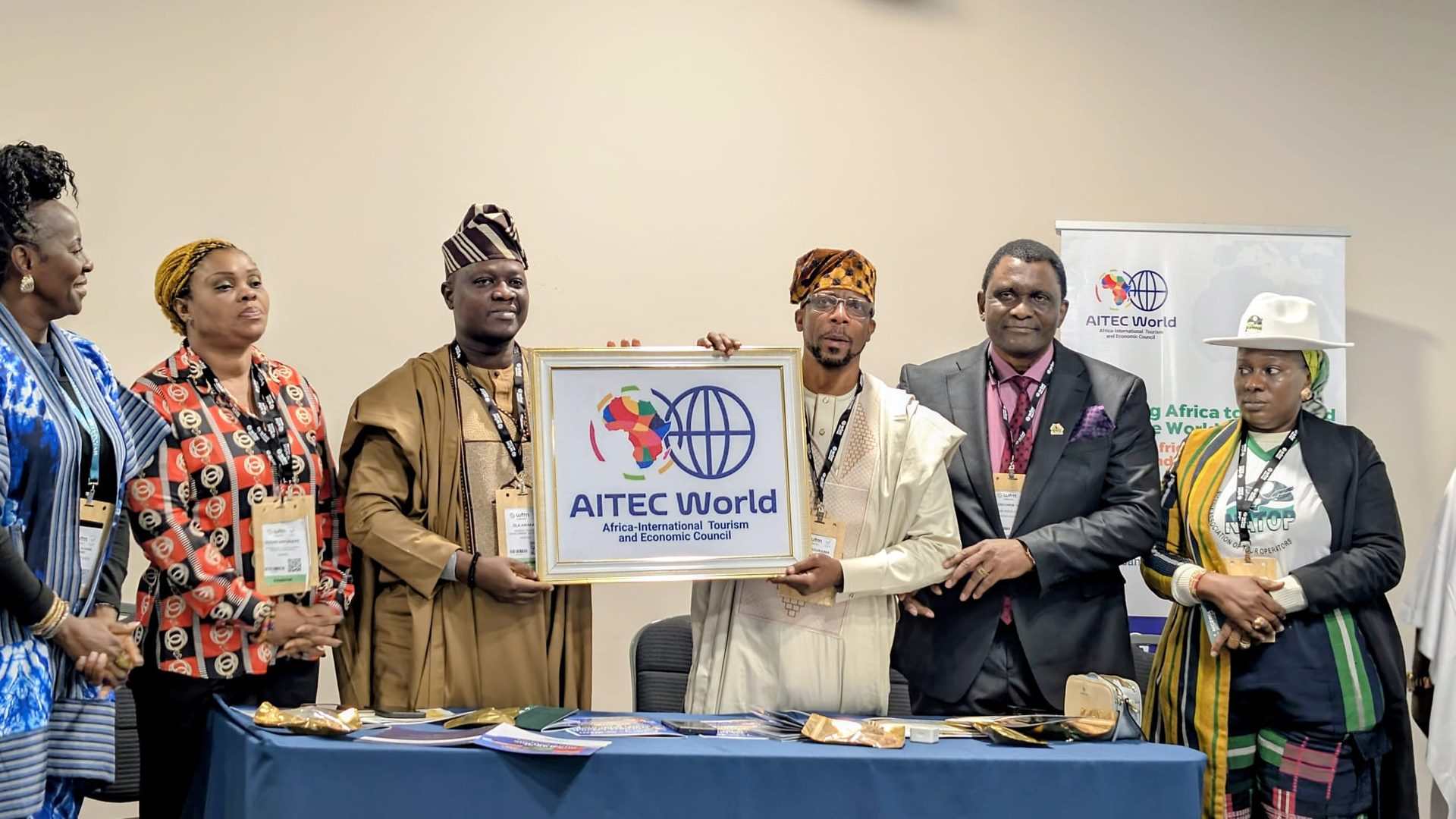
The African International Tourism and Entertainment Council (AITEC World) has officially launched on the global stage at the World Travel Market (WTM) London, calling for stronger international partnerships, collaboration and investment to unlock Africa’s vast tourism potential.
The global launch, held on Wednesday, November 4th, 2026, at the South Gallery, Room 20, ExCeL London, United Kingdom, brought together African tourism stakeholders, government representatives, tour operators, investors and media organisations participating in the international tourism marketplace.
The event marked the Council’s third major unveiling, following its regional launch in Abuja and continental launch in Addis Ababa, Ethiopia.
Headlining the event was AITEC World’s Global Adviser and Honorary Senior Special Adviser on Culture and Tourism to the Governor of Akwa Ibom State, Mr. Nkereuwem Onung, who challenged the international tourism community to move beyond conventional destination marketing and embrace investment-driven partnerships with African countries.
Speaking on the theme, “Come. Connect. Collaborate. Invest,” Onung described the message as a strategic call to action for building stronger tourism relationships between Africa and the rest of the world.
He explained that while the Abuja launch was designed to connect Nigeria and the Addis Ababa event to unite the continent, the London launch was intended to establish a stronger bridge between African destinations and the global tourism market.
“We launched regionally in Abuja to connect Nigeria. We launched continentally in Addis Ababa to connect Africa. Today, we launch globally here in London to connect Africa to the World and the World to Africa,” he said.
Addressing concerns about accessibility to African destinations, Onung rejected the perception that the continent was difficult to reach, insisting that Africa already possessed the necessary transportation and digital infrastructure to support international tourism.
According to him, the real challenge was no longer physical connectivity but the need to build meaningful relationships and partnerships capable of translating the continent’s tourism resources into economic opportunities.
“Africa is connected. From Uyo, where I arrived from a few days ago, to London where I am today, it is six hours. We have airports, we have seaports, we have fibre optics. What we need is not connection of cables, but connection of minds,” he stated.
Onung also spotlighted Akwa Ibom State’s tourism potential, citing its 129-kilometre Atlantic coastline, Ibeno Beach, the Oron Museum, which houses some of Africa’s oldest wood carvings, and the hospitality of its people.
He said the state, under Governor Umo Eno, was open to international partnerships and investment, adding that ongoing infrastructure development was positioning it to attract more visitors and tourism investors.
Making a strong case for genuine collaboration, the AITEC World adviser urged international tour operators and investors to see Africa as a destination for business partnerships and product development rather than merely a place for sightseeing.
“Africa does not need pity tourism. Africa needs partnership tourism. Do not come to Africa to take pictures of poverty. Come to Africa to build products with us. Collaborate with our tour operators, our museums, our cultural festivals,” he declared.
He explained that such partnerships would stimulate employment, strengthen local enterprises, promote cultural institutions and improve the economic wellbeing of host communities.
Describing AITEC World as a council rather than a travel agency, Onung said the organisation was established to bridge the gap between African tourism destinations and international markets.
He argued that increased tourist arrivals alone would not deliver the full economic benefits of tourism unless accompanied by investments in infrastructure, cultural assets and tourism enterprises.
“Visit is good. But investment is better. Africa has 1.4 billion people, 60 per cent under 25. The future of global tourism is African. The world will come to Africa because Africa has what the world no longer has: authentic culture, untapped destinations and natural warmth,” he added.
He identified investments in Akwa Ibom’s tourism and supporting infrastructure, including Arise Park, Ibom Hotels and the state’s road network, as evidence of the state’s readiness to engage international partners.
Using a colourful analogy towards the end of his address, Onung likened African tourism to a hidden Manchester United trophy in a London home, arguing that the continent’s immense tourism potential remained largely underappreciated despite its rich cultural and natural heritage.
He maintained that Africa was ready not only to showcase its tourism attractions but also to invite the international community to participate in developing them.
“Africa is not just inviting the world to visit. Africa is inviting the world to partner, to participate, and to prosper,” he said.
Also speaking, the Director-General of the Nigeria Tourism Development Authority (NTDA), Mr. Ola Awakan, called for greater unity and collaboration among African tourism stakeholders, stressing that the continent could achieve more through collective action.
Awakan advocated a strategic approach to developing a sustainable cultural tourism economy that transcends national boundaries.
“I believe in the philosophy of togetherness and unity, key ingredients to personal growth and national development. Our industry must adopt a strategic process to sustain the vision of African cultural tourism economy across our borders. I must commend the President of AITEC for this great initiative,” he said.
Similarly, the immediate past President of the National Association of Nigeria Travel Agencies (NANTA) and Deputy President of the Federation of Tourism Associations of Nigeria (FTAN), Mrs. Susan Akporiaye, stressed the need for practical action plans to transform Africa’s tourism potential into measurable economic gains.
Akporiaye cautioned against relying on elaborate declarations without concrete implementation, noting that the international community was watching how African countries and industry stakeholders would translate their cultural and tourism assets into viable investment opportunities.
Meanwhile, the President of the National Association of Tour Operators (NATOP), Mrs. Bolaji Mustapha, reaffirmed her association’s commitment to positioning Nigeria as a competitive destination in the global tourism market.
She said NATOP would continue to leverage strategic platforms and international partnerships to attract more tourists to Nigeria.
Mustapha also commended AITEC World President, Mr. Dine Bouraima, for his commitment to establishing a continental platform for advancing cultural tourism.
At the event, NATOP unveiled its Nigerian Tourism Passport, a handbook showcasing major tourist destinations across the country.
The publication, designed in Nigeria’s national colours and bearing the country’s identity, attracted the attention of the NTDA Director-General, who commended the association for its initiative and efforts to promote domestic tourism.
Awakan, however, expressed the desire for similar initiatives to incorporate the input and endorsement of the national tourism authority as a way of strengthening institutional collaboration and ensuring greater coordination within the industry.
Earlier, AITEC World President, Mr. Dine Bouraima, welcomed participants and reiterated the need for Africa to take greater ownership of its tourism narrative and give its cultural assets stronger visibility in the global marketplace.
Bouraima said the Council’s previous unveiling in Abuja had demonstrated Nigeria’s diplomatic and economic relevance within Africa and the wider international community.
He called on African governments, development partners and international donor agencies to support AITEC World’s vision of expanding the global visibility of African cultural tourism while creating opportunities for international engagement, collaboration and investment.
AITEC World is a global council dedicated to connecting Africa with international markets through tourism, culture, entertainment and investment partnerships. It seeks to provide a platform for cooperation between African destinations and global stakeholders to promote the continent’s tourism resources and facilitate sustainable economic opportunities.

 Headlines2 months ago
Oyetola presents three-year score card as blue economy industry revenue hits ₦1.83trn
 Customs3 months ago
Apapa Customs sets new single-day revenue record with ₦28.1bn collection
 Customs3 months ago
Apapa Customs sets new record of monthly revenue haul with ₦323bn collection in July
 Customs1 month ago
FOU Zone ‘A’: Aliyu retires after ₦3.19bn revenue recovery, Afeni takes over
 Customs1 week ago
FOU Zone A: Afeni intensifies anti-smuggling operations, seizes N511.4m drugs, rescues eight pangolins

 Customs2 months ago
Nigeria, Benin Customs move to harmonise trans-border trade, establish joint border post at Seme-Krake