Connect with us

Headlines

At 2026 Shippers’ Council retreat, Anifowose calls for performance – driven strategy for efficient service delivery 
Gloria Odion in Abeokuta 
The Nigerian Shippers’ Council has been challenged to translate its bold reforms in the maritime industry to measurable performance backed by clinical execution that will ensure efficient service delivery to port operators.
This admonition was given by Mr Rotimi Anifowose , the Director of Planning, Research and Statistics of the NSC at its management retreat in Abeokuta on Thursday, March 5th, 2026.
Anifowose, in his welcome address at the event,  noted the bold vision of the Council as embedded in its 2030 strategic planning, saying such vision positions the agency as a credible port Economic Regulator, a technology-enabled institution, a proactive stakeholder partner and a measurable contributor to Nigeria’s trade competitiveness and marine economy development.
However, he warned that if this vision is not backed by performance and clinical execution, it will remain a dream.
“Strategy alone does not create impact, execution does. The difference between institutions that plan and institutions that perform lies in execution discipline” Anifowose observed.
He noted that one of the greatest risk a public institution can take in its strategic execution is to allow fragmentation of information, priorities and accountability.
He advised that under NSC 2030, fragmentation must give way to integration.
According to him, integration means that planning aligns with operations, operations align with regulatory objectives, regulatory outcomes align with stakeholder expectations and performance reporting aligns with measurable results collaboration must therefore be intentional and beyond cordial interaction.
He said innovation must also be deliberate within the Council to enhance regulatory efficiency, strengthen data analytics, simplify stakeholder processes, reduce turnaround times, and improve transparency.
“It must be practical, measurable and outcome-driven” he admonished.
 The NSC Director appealed that the agency could not afford to fail and disappoint the stakeholders whose expectations ‘are increasing and government priorities are becoming more performance-driven’
“The demand for efficiency, predictability, and transparency is rising.
” In this environment, execution is not optional, it is essential. If we execute effectively, Stakeholder confidence deepens, Institutional credibility strengthens, regulatory authority becomes respected and our contribution to national economic objectives becomes visible and measurable”
He further warned that if the NSC fails in the execution of its vision, the consequences will be grave that can lead to lose of momentum
“If we fail in execution, even a strong mandate can lose momentum” he noted.
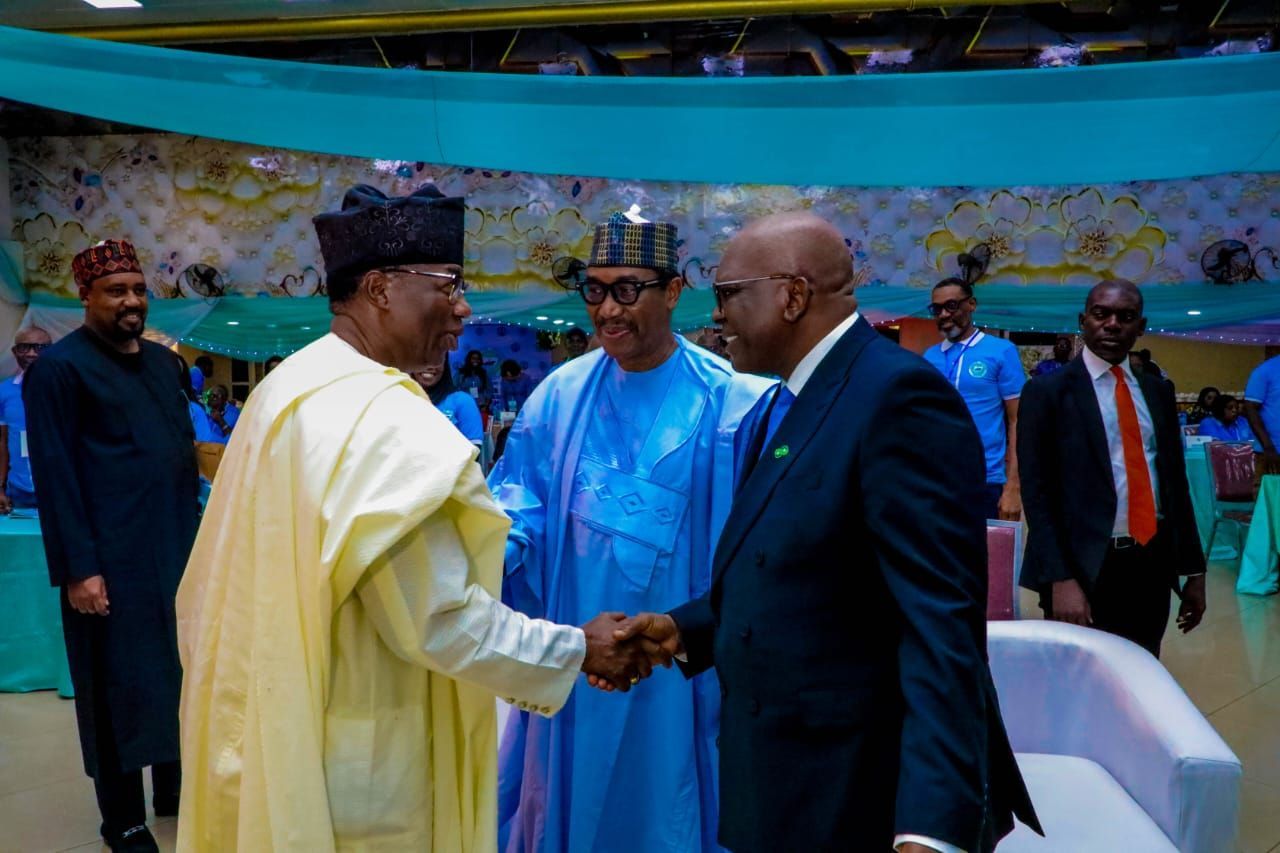
The  2026 NSC management retreat was attended by Chairman of the Board, board members, management staff led by the Executive Secretary, Pius Akutah.
The 5- day event which started on March 4th will end on March 8th, 2026.
Continue Reading
Click to comment

Leave a Reply

Your email address will not be published. Required fields are marked *

Headlines

Why President Tinubu refused to sign NSC’s NPERA bill into law

– as NSC administers oath of secrecy on staff to engender ethical conduct 
Gloria Odion in Abeokuta 
The Executive Secretary of the Nigerian Shippers’ Council, Pius Akutah, has given an insight into the reason why the much- awaited Nigeria Port Economic Regulatory Agency (NPERA) Bill has still not being signed into law by President Bola Ahmed Tinubu since last year the instrument was transmitted to him by the National Assembly.
It could be recalled that the bill, which seeks to transform the NSC  into a powerful, independent economic regulator for Nigerian ports, has obtained concurrent approval from the House of Representatives and the Senate before it was transmitted to President Tinubu for presidential assent.
However, Akutah, while speaking at the 2026 management retreat for the NSC in Abeokuta on Thursday, March 5th, 2026, disclosed that the President refused to sign the much awaited bill into law due to some of its provisions which conflict with 2025 tax law.
As a result, the President had to send it back to the National Assembly for amendment.
“As you are aware, the Bill had earlier been passed by the National Assembly and transmitted for Presidential assent.
“During the review process, however, certain provisions were observed to conflict with the Nigerian Tax Administration Act (NTAA) 2025.
“In line with the observations communicated by Mr. President, the Bill was returned to the National Assembly for the necessary corrections” Akutah disclosed.
He however stated that the House of Representatives had done the necessary corrections and sent it to the Senate for concurrence
“I am pleased to inform you that the House of Representatives has addressed the areas of conflict, amended the Bill in line with the President’s comments, and passed the revised version, which is now awaiting concurrence of the Senate”
” Once assented to, this legislation will provide the statutory foundation for strengthening Nigeria’s port economic regulatory framework and further reposition the Council for its expanded mandate.” the NSC boss assured.
Meanwhile, Akutah has charged the staff of the agency to imbibe ethical conduct, shun gossip, side- talks and misinformation, which he said are capable of destroying institutional integrity of the Council.
He disclosed that it was as a result to safeguard the sanctity and integrity of the Council that made the management to administer an oath of secrecy on the staff.
“The Nigerian Shippers’ Council is a regulatory institution of national importance.
“The reputation, credibility and authority of this institution depend greatly on the conduct, integrity and professionalism of its staff.
“Every member of this organisation must therefore uphold the highest standards of professionalism, discipline confidentiality and institutional responsibility.
“It is important to remind us all that last year, staff of the Council formally took an Oath of Secrecy and Allegiance, which remains binding on every staff member of this organisation.
“That oath was not merely ceremonial. It was a solemn commitment to uphold the principles of confidentiality, loyalty and integrity in the discharge of our duties as public servants.
“Let me therefore emphasise clearly that confidentiality in official matters is not optional; it is a core obligation of public service.
“Equally important is the need to avoid gossip, rumour-mongering and the spread of lies, falsehoods and misinformation within the organisation.
“Such behaviours create mistrust among colleagues, undermine teamwork and collaboration, distort management decisions, weaken morale and productivity and damage the integrity and reputation of the institution.
“No serious organisation can thrive where rumours replace responsible communication and professionalism
He however warned that the management of the agency will not hesitate to weild the big stick on any staff found culpable in any act of unethical conduct, no matter how highly placed.
Akutah reminded the participants of the need to imbibe the theme of this year’s retreat, “Advancing Strategic Execution: Driving Collaboration, Innovation and Excellence for a Future-Ready NSC.” which he said must shape the thinking and conduct of every staff.
“This theme highlights three strategic imperatives that must guide the next phase of the Council’s institutional development.
“Collaboration, because no regulatory institution can operate effectively in isolation within a complex maritime ecosystem.
“Innovation, because the dynamics of global trade and logistics require institutions that are adaptive, technology-driven and forward-looking.
“And Excellence, because the credibility and authority of a regulator ultimately depend on the professionalism, integrity and performance of its people.
“These three pillars must therefore shape how we think, how we lead and how we execute our responsibilities as an institution
He admonished the management staff, Directors and Unit Heads to back the Council’s  2025–2029 Strategic Plan which was produced in Ibadan  retreat in 2025 with measurable performance rooted in clinical execution.
Akutah therefore urged them to work in tandem with the vision of the council while there must be coordination across all the units and departments for harmonised results.
“The strength of any institution is not measured by the quality of its plans, but by the discipline with which those plans are executed.”
“Directors and Heads of Units must therefore see themselves not merely as administrators of departments but as drivers of institutional transformation.
“In practical terms, this transformation requires stronger collaboration across departments and units, greater innovation in the way we deploy technology and regulatory tools, and an uncompromising commitment to excellence in service delivery and institutional performance.
The NSC disclosed that the management considered the staff as critical components that will make the agency achieve its vision.
As a result, he said adequate incentives and welfare packages have been approved for the staff to motivate them.
Such incentives include review of staff salaries, enhanced allowances and benefits and capacity trainings
“Institutional transformation must also be supported by improved staff welfare and motivation.
 “I am pleased to inform you that the proposed salary review for staff of the Council has already received approval from the Ministry and the OHCSF.
“The proposal is currently undergoing vetting and clearance by the Budget Office of the Federation, after which it will be considered by the National Salaries, Incomes and Wages Commission for final approval prior to implementation.
“Management remains optimistic that the process will soon be concluded.
 “In addition, several welfare improvements have been introduced, including, Upward review of the Children Education Grant to per term, introduction of Health and Social Club allowances; and introduction of Proficiency Allowances to encourage professional development.
“These initiatives reflect management’s commitment to strengthening staff welfare and institutional morale.
“Last year also recorded a significant expansion in staff capacity development programmes.
“A larger number of staff were sponsored to attend international conferences,
professional meetings, specialised training programmes and local capacity development workshops.
“Indeed, the scale of staff participation in these programmes was unprecedented in the history of the Council.
“Our objective remains to build a workforce that is professionally competent, globally competitive and capable of supporting the Council’s expanding mandate” Akutah enthused.
He therefore charged all the staff to take full ownership of the council’s transformation agenda.
“This retreat is not merely an opportunity for discussion. It is a call to leadership.
“I therefore call on every Director and Head of Unit to take full ownership of the Council’s transformation agenda.
“Each department/unit must align its priorities with the strategic objectives of the Council.
“Each leader must inspire their teams toward higher performance. And each unit must commit itself to delivering measurable results.
“Let us remember that institutions do not transform themselves, people transform institutions, and the responsibility for that transformation begins with us” Akutah admonished.
The management retreat was attended by the Board Chairman of the Council, his members, management staff of the council, Directors and Heads of the various units.
The 5- day  event will end on March 8th, 2026.
Continue Reading

Headlines

Stakeholders kick against renewal of ETO contract with TTP as NPA reviews agreement 

Funso OLOJO, Editor 
There is a groundswell of opposition among maritime stakeholders against any plan for  renewal of Electronic Call- Up System, otherwise called ETO,
contract with the Truck Transit Park(TTP).
TTP company was the pioneer contractor engaged by the Nigerian Ports Authority (NPA) in February 2021  to drive the e- call up system at its commencement at the Nigerian ports.
However, the five- year contract expired last February while the NPA is set to review the contract again.
While the TTP have started lobbying the NPA management to get a renewal of the lucrative contract, stakeholders have called on the agency to shun the request of the contractor and instead give it out to a more competent company which is not suseptible to corruption.
The stakeholders argued that, though the electronic truck movement system was a laudable initiative but was married by fraud , corruption and gross  inefficiency as the TTP officials used the system to extort truckers.
The Council of Maritime Transport Unions and Associations (COMTUA) has expressed strong opposition to the contract renewal, citing allegations of fraud, extortion, and inefficiency in the TTP.
COMTUA noted that the system has caused financial burden and, at times, worsened, rather than improved, the waiting times for trucks.
COMTUA  therefore urged  the NPA to consider other more efficient solutions for managing port access.
Stakeholders readily pointed to the plate number and ticket frauds which rocked the system
During the crisis period, plate number and cloning fraud emerged as major methods used to sabotage the Electronic Call-up System (“Eto”) at Nigerian ports, enabling unapproved trucks to gain access to port terminals.

Syndicates and fraudulent truckers have been caught using fake, duplicated, or borrowed license plates to match Eto tickets, a practice that undermined the automated system intended to manage traffic congestion

Truckers often duplicate the plate number of a vehicle with a valid Eto ticket and attached it to an unauthorized truck.

Fraudsters engage in “proxy booking,” where they generated tickets for fake or non-existent trucks and then use those tickets for other vehicles by swapping plate numbers at the gate.

Due to the scarcity of spots,, valid Eto tickets were frequently resold at inflated prices (up to ₦450,000 against a ₦21,000 official rate), with the forged plate numbers used to bypass security checks.

The Nigerian Ports Authority (NPA)  intercepted hundreds of fake plate numbers and counterfeit Minimum Safety Standard (MSS) stickers in single raids, particularly around the MPS pre-gate in Apapa.

It was these and other fraudulent acts perpetrated under the management of ETO by the TPP that made stakeholders to advised the NPA not to renew the contract with the company.

“Renewal of the TPP contract will be a monumental error by the NPA because the company used the system to extort and overburdened the truckers.

A more competent company should be engaged to drive the process”  one of the truckers union executives told our reporter.

However, the NPA has reaffirmed its dedication to a “congestion-free” port environment and is actively assessing the performance of the Eto system.

The agency emphasized that the electronic call-up is now a cornerstone of their digital agenda, aimed at increasing transparency and minimizing human interaction.

The review process is ongoing, with significant pressure from stakeholders to either continue with the current system (with improvements) or seek a new, more efficient solution to maintain sanity on the Apapa and Tin Can Island port access road

But the Authority  has assured port users and industry stakeholders that there will be no disruption to operations as it reviews the expired agreement governing the Electronic Truck Call-Up System (ETO)

The contract between the NPA and Truck Transit Park Ltd (TTP), which manages the ETO platform, reached its term at the end of February and is currently under review.

Nevertheless ,the Authority has moved swiftly to calm concerns, emphasizing that port efficiency and seamless cargo movement remain top priorities.

In a statement, the NPA’s General Manager, Corporate Communications, Ikechukwu Onyemekara, said there are clear provisions within the expired agreement to guarantee operational stability.

“There are options under the expired agreement to be adopted to ensure that necessary arrangements are in place for business continuity by the parties that would ensure that operations are not disrupted in any way,” Onyemekara said.

He described the review as a routine administrative process consistent with global best practices, noting that the Authority is committed to safeguarding the gains recorded since the introduction of the digital call-up system.

The ETO platform was introduced in 2021 at the height of the Apapa gridlock crisis to regulate truck movement into the Lagos ports corridor.
By requiring pre-booked access slots before trucks approach the ports, the system restored order to the once chaotic logistics chain and significantly reduced traffic congestion along port access roads.
Industry observers noted that under the NPA’s supervision, the digital regime has contributed to improved cargo evacuation, enhanced vessel turnaround time, and greater predictability in port operations.
They however warned that renewing the contract with TTP will reverse the gains of the system and stagnate the process of electronic movement of trucks in and out of the Ports.
While the review process continues, the NPA has reiterated its commitment to transparency, efficiency, and stakeholder engagement in determining the next phase of the call-up system.
Continue Reading

Headlines

National Single Window, a marriage of strange bed fellows that may change nothing in cargo clearance process – Segun Musa 

Funso OLOJO, Editor 
A maritime expert and the National Vice President of the National Association of Government Approved Freight Forwarders (NAGAFF), Dr Segun Musa, has taken a swipe at the celebrated National Single Window(NSW) programme of the Federal government, describing it as a ‘mere jamboree’ that may not have the desired impact on cargo clearance process at the Port.
Dr Musa, who was the guest at the weekly Maritime Reporters Association of Nigeria (MARAN) roundtable discussion programme held on Wednesday, February 4th, 2026, at Apapa , Lagos,said the NSW is like ‘an ordinary shell that houses different agencies’ that don’t have equal efficiency in trade facilitation.
He noted that SW is like a chain and it will be as strong as it’s weakest link.
The NAGAFF chief observed that if all the participating agencies are not ready and their operations are not automated, the whole essence will be a waste of time and resources because, according to him, one of the agencies in the link  can delay the process due to inefficiency.
” What is the level of competence and efficiency of the participating agencies?
“If all of them are warehoused in a single window, an incompetent agency among them could frustrate the process.
“So let nobody deceive us that there’s going to be one single window that it’s going to be a game changer that will facilitate trade and everything will just be moving. It’s never true” Musa declared.
It could be recalled that the Federal government has fixed March 27th, 2026 as the official date for the launch of the first phase of the NSW.
On African Continental Free Trade Area (AfCFTA), Dr Musa said the programme would not deliver meaningful impact for Nigeria without clearly defined, holistic and measurable policies to drive its implementation, criticizing what he described as Nigeria’s ceremonial participation in the programme.
According to him, genuine participation under AfCFTA should reflect in export volumes and measurable benchmarks rather than media showcases of minimal shipments.
“If we were serious under this scheme, we should be talking about exporting 200,000 to 300,000 containers by now — even up to a million.
” Instead, we are celebrating one or two containers and gathering media houses to showcase them. Is that participation? It’s painful for a country of this size,” he said.
Musa argued that policy frameworks must be predictive and structured in a way that allows stakeholders to key into them with certainty of outcomes.
“A policy must be holistic. You should be able to key into it and predict what will happen. That is the essence of policy. What we are doing now is a waste of time and resources,” he stated.
Responding to question on policy gaps and measurable benchmarks required to reposition Nigeria under AfCFTA, Musa maintained that the challenge was not the absence of declarations but the lack of institutional readiness and structured participation.
He further compared Nigeria’s export performance with that of Europe and Asia, noting that serious trading economies focus on volume and competitiveness rather than symbolic shipments.
The maritime expert expressed concern that without concrete benchmarks, coordinated institutional reforms and export-driven strategies, Nigeria may struggle to maximise opportunities under AfCFTA.
The roundtable ended with renewed calls for actionable policies, institutional competence and measurable targets to ensure that the continental trade agreement translates into tangible economic gains for the country
Continue Reading

Trending