Gloria Odion, Maritime Reporter
The lingering stand-off between the aggrieved freight forwarders and the shipping companies over the hike in service charges at the Nigerian ports is far from over as the peace talk brokered by the House Committee on Shipping Services was deadlocked.
It could be recalled that the Nigerian Shippers’ Council (NSC) has recently approved 30 percent increase in service charges by terminal operators and shipping companies to reflect the economic realities of the country.
However, the importers, through their agents, kicked against the increment, describing it as insensitive in the face of the crushing economic situation in the country.
After a sustained protest by the irate freight forwarders which resulted to the picketing of some shipping companies, the NSC suspended the implementation, urging the service providers to open negotiations and consultation with the aggrieved users of their services.
However, this apparently did not assuage the frayed nerves of the freight forwarders who insisted that the level of increment be scaled down or a complete reversal of the hike, a possibility both the Shippers’ Council and the Shipping companies rejected.
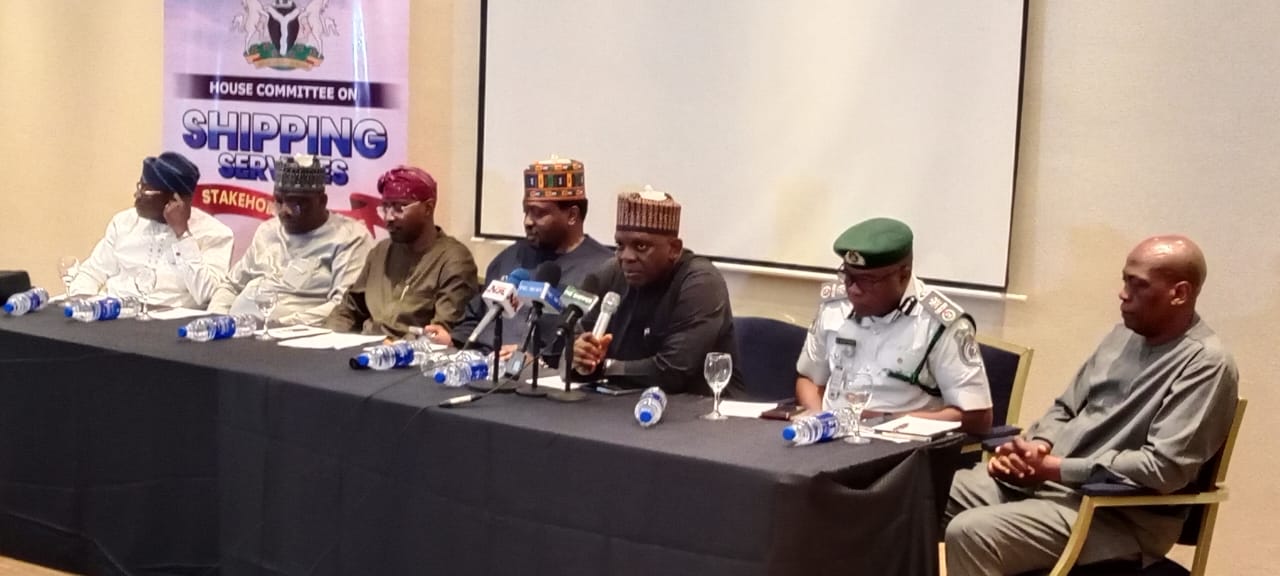
As the tension continued to escalate, the House Committee on Shipping Services waded into the matter and called for a stakeholders meeting in Lagos on Monday, April 20th, 2026 in a bid to dis-escale the tension.
At the meeting attended by all the relevant stakeholders including the NSC, Nigeria Customs Service, Nigerian Ports Authority (NPA) and the shipping companies, parties to the tariff dispute seamed to maintain hardline stance on their positions.
Pius Akutah, the Executive Secretary of NSC, recounted why the Council granted the approval for increase in tariff due to the economic realities in the country and the fact that there has not been any hike in tariff in the past two years.
He however said in order not to trigger spiralling inflation , the Council granted tariff increase to the maximum of 30 percent.
Akutah disclosed that the council was forced to suspend the implementation of the increase due to the resistance of the freight forwarders.
However, the shipping companies stated that the 30 percent increase was not inadequate as it falls below the inflation mark in the country.
The service providers therefore sought for higher percentage in increment in order to reflect the economic realities in the country.
The Chairman of the Shipping Association of Nigeria (SAN), Boma Alabi, expressed dissatisfaction with the outcome of the talks, noting that no significant progress had been made.
She called for the establishment of a transparent and consistent tariff review mechanism, similar to frameworks used in regulated sectors such as telecommunications and energy.
The freight forwarders however rejected the call for higher percentage in tariff hike above 30 percent which they described as inordinate and insensitive.
A member of the Africa Association of Professional Freight Forwarders and Logistics (APFFLON) said stakeholders were unanimous in opposing the 30 per cent increment, warning that any further increase would worsen inflationary pressure and raise the cost of doing business at the ports.
“It is not acceptable to us or our importers. We have rejected the call as an act of insensitivity to the plight of Nigerians, importers and clearing agents,” the freight forwarder declared.
Apparently sensing that none of the parties wanted to shift ground on their positions, the Chairman, House Committee on Shipping Services, Abdusamad Dasuki, directed that the Nigerian Shippers’ Council should convene another meeting in a week’s time with the two warring parties where all the grey areas should be resolved and their resolutions brought to an enlarged stakeholders meeting where a new date for the implementation of the new tariff would be finalized.
“We expect that at the next meeting, there will be a clear framework, including timelines and participation of regulatory representatives, to guide the process towards implementation,” Dasuki stated.
He added that a new implementation date for any agreed tariff adjustment would be announced after consultations are concluded.
Meanwhile, the NSC boss has advocated for an automatic tariff adjustment mechanism that would put an end to the manual practice that usually sparks off a crisis.
In his address during the meeting, Akutah disclosed that the Council is currently working on this automated system which would be transmitted to all the stakeholders.
“The second point would be the aspect of the automatic system for tariff adjustment, which the Nigerian Shippers’ Council is promoting.
“So rather than always have a manual process for tariff adjustment, let us have an automatic system.
“And in our country, most times when prices of things go up, they have to come down.
“But it is in our interest to have an automatic system whereby, when the indices arising from volatility
in exchange rates, general operational costs, like inflation, and all of those ones, would occur, at the higher margins, the adjustment can go up.
“And when they come down, or some of the necessary factors have changed for better, then the tariff should automatically adjust itself downwards.
That is a process that is ongoing. And very soon, we will be sharing the technology component with the relevant stakeholders to look at it and to see what conclusions can be made to that platform” Akutah disclosed.








 Headlines2 months ago
 Aviation3 months ago

 Aviation3 months ago
 Business3 months ago