
Headlines
How Soccer match in Libya turned to shocker for Super Eagles

1) The chartered ValueJet aircraft departed from the Victor Attah International Airport, Uyo at 11.55hours on Sunday, 13th October 2024, and landed at the Aminu Kano International Airport, Kano at 13.10hours, for the completion of immigration formalities and for the aircraft to refuel.2) The aircraft took off from Kano at 15.18hours, for the 3 hours and 35 minutes flight to Benghazi, Libya, expecting to arrive a few minutes before 8pm Libya time.
3) Just as he was about to commence his initial approach into Benghazi, the captain (pilot) was instructed by the control tower that he could not land in Benghazi (despite having all the required landing papers and having completed all formalities before leaving Uyo and later, Kano, but should proceed to the Al-Abraq International Airport, even though the airport lacked the control navigators for landing at such hours. He complained that he was short on fuel but his words fell on deaf ears as he was told in stern manner that the directive was from ‘higher authorities.’
4) On landing at the Al-Abraq International Airport, in the small town of Labraq, at 19.50hours, it was clear that the airport was not a well-utilized facility. There were no scanning machines or the usual equipment for this service, and officials had to make do with mobile phones to scan passport data pages.
5) The delegation, which included 22 players and team officials; NFF President Alh. Ibrahim Musa Gusau; Deputy Governor of Edo State, Comrade Philip Shaibu; a couple of NFF Board members; NFF General Secretary, Dr Mohammed Sanusi; a couple of parliamentarians; a couple of NFF Management; a couple of media representatives and; a couple of stakeholders, was shown scant respect by the airport authorities who applied curt manners and stern tones.
6) It took over one hour for the team’s luggage to roll through the carousel, despite the fact that the bags and other items had already been hauled from the aircraft immediately on arrival.
7) No official of the Libyan Football Federation was at the airport to receive the delegation, as is the best practice globally. Airport officials could not answer the simple question on where the buses that would take the delegation members back to Benghazi (where the NFF had booked hotel rooms) were.
8) When delegation members including the NFF President, Comrade Shaibu and Dr Sanusi attempted to venture outside the airport to ascertain if there were vehicles waiting for the team, they were stopped in the most uncouth of manners by airport security personnel.
9) Calls to the General Secretary of LFF, Mr. Abdul-Nasser by Dr. Sanusi yielded no fruits as the former kept promising that the buses would arrive in ‘10 minutes’, which later became ‘two hours’, and afterward, ‘three hours.’ Later in the evening, it was no longer possible to reach him on the phone. Frustrated by this attitude, Dr Sanusi approached the security operatives to request that the team be allowed to go out and board the buses the NFF eventually hired. This request was rejected with insults. It took the intervention of the NFF dignitaries to prevent what would have escalated into a row as the NFF President himself was not spared when he heard an exchange of voices between the security personnel and his General Secretary. This aggravated the tension and further frustrated the team.
10) Hour after hour, and with mounting frustration, delegation members, particularly the players, grew restless. There was no food or water provided by the LFF, or where to even procure these items, and there was no network or internet connection at the airport. These swiftly increased the level of frustration and anger.
11) At past midnight, it was learnt that there had been word from ‘higher authorities’ (Libya is a jurisdiction governed by two different administrations – an UN-recognized cabinet in Tripoli and a self-imposed team over Eastern Libya including places like Benghazi and Labraq) that the Nigeria delegation should be delayed for a minimum of 10 hours at the airport for what they falsely claimed was done to their team in Nigeria. (All conversations between the NFF General Secretary and the LFF General Secretary on the match in Uyo, both written text and voice notes, are still in the NFF General Secretary’s phone)

12) The NFF team was shocked because the incident referred to in Nigeria was entirely generated by the Libyans. They informed the NFF that their contingent would be landing in Port Harcourt, and not Uyo, only two hours to the team’s arrival in Nigeria. Despite this, the NFF moved swiftly to get authorities to grant their aircraft movement permit from Port Harcourt to Uyo, but this was jettisoned as the LFF apparently did not cherish the additional fee dispatched by the charter company. They opted to travel by road, refused to use the buses hired by the NFF and instead hired their own, and disrespected advice not to travel by night. When they stuck to their guns to move by night, the NFF provided security. The NFF even provided the team training facility the day after the match and secured a direct flight permit from Uyo to Benghazi for the delegation.
13) Infuriated, the NFF President reacted: “We anticipated some shocks here given the false account of what happened in Nigeria as narrated by their team captain. But we did not expect these shenanigans. What I am seeing is despicable and has no place in the game of football which is meant to foster excellent relationships among nations and bring peoples from diverse cultures, religious persuasions and economic and political interests together in an ambience of peace and joy.”
14) The NFF learnt that the Embassy of Nigeria in Tripoli had written, a fortnight earlier, to the authorities in Benghazi that they would want to welcome the Nigeria delegation on arrival. This application was said to have been rejected outright.
15) In a conscious effort to play down their frustration, anger and hunger, players and officials resorted to playing games, listening to music, chatting themselves up, scanning through the airport exit door to see if any vehicles had arrived, and generally looked forward to daybreak, which they hoped would bring much-sought-after relief.
16) Many calls were made to higher authorities in Nigeria to apprise them of the situation, and these persons all expressed fears for the safety and security of the team. These fears were real and justified given the plethora of threats thrown by the Libyans on legacy and social media in the days before and after the match in Uyo. At 2 am, Captain William Ekong met the NFF President in the company of the NFF General Secretary to inform the President that the team may not be able to go ahead with the match, due to trauma, fatigue and body aches that resulted from lack of food, dehydration and very cruel and unimaginable treatment, which had led to some players falling ill.
17) The NFF repeated calls to officials of the Confederation of African Football, Nigeria’s FIFA Council Member Mr. Amaju Melvin Pinnick and higher authorities in Nigeria. It dispatched a letter to CAF in which it detailed the antics of the hosts and hoped that the continental governing body would go ahead to “punish this rare bestiality visited on the beautiful game.” It noted that the Super Eagles had traveled hoping to enjoy a great game of football but had been sorely disappointed and frustrated by the unprecedented level of hostility and poor attitude of the hosts.
18) At daybreak, Mr. Maurice Eromosele, president of the Nigerian community in Eastern Libya, arrived with words of empathy from the Ambassador of Nigeria to Libya, His Excellency Alhaji Muhammad Muhammad. He expressed shock at the treatment meted out to the Nigeria delegation, who were made to spend the entire night inside the departure lounge of the Al-Abraq Airport. He said His Excellency ordered him to get a few things for the team, and he later returned with plastic bags loaded with croissants and drinks. These served as breakfast for the team.
19) More calls were made and eventually, it was agreed by all parties that the team should not go ahead with the match, but return to Nigeria to await the decision of CAF (who were briefed in detail on the situation) with regards to the un-played match.
20) After spending many more hours waiting for the Al-Abraq airport authorities to sell fuel to refill the chartered ValueJet aircraft (which was initially proving to be some sort of robotic engineering), the Nigeria delegation departed the Al-Abraq Airport (not worth the toga of ‘international’ by any scale) at exactly 15.05hours, bound for the city of Kano, and onwards to the Federal Capital, Abuja.



Headlines
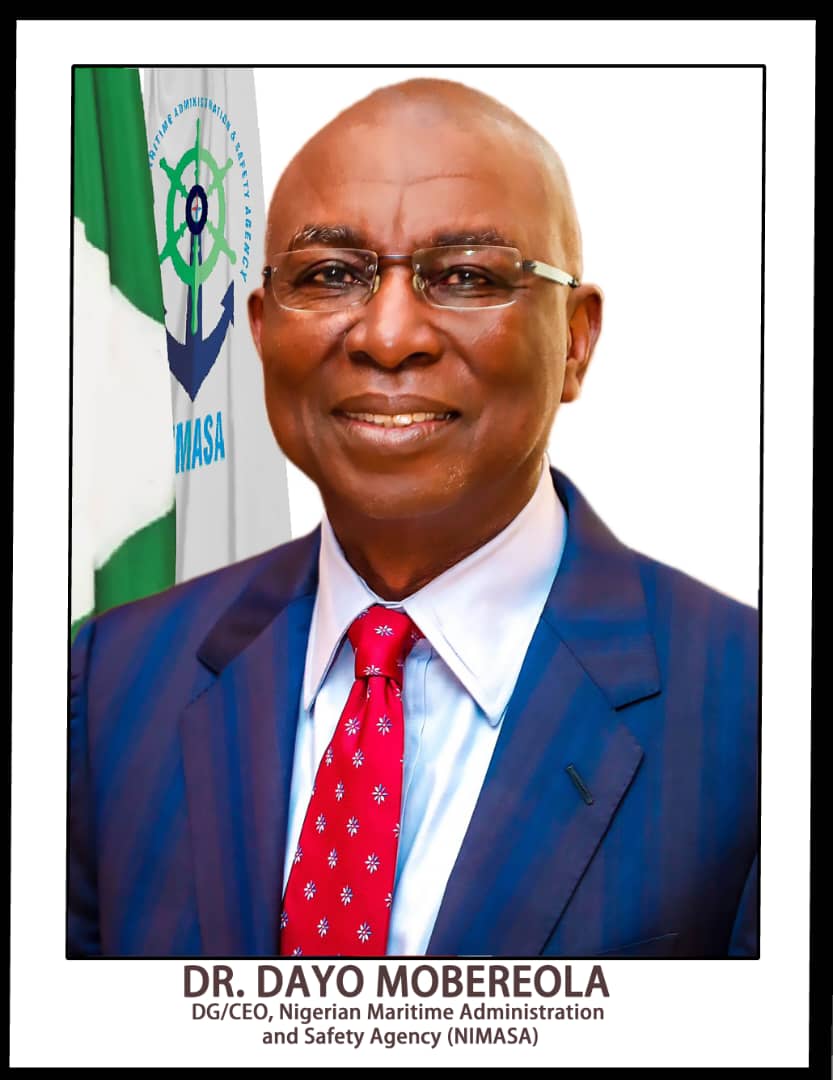
May Day: Mobereola salutes maritime workers for passion, dedication to building virile industry
Gloria Odion, Maritime reporter
“Thank you for your dedication and invaluable contributions”.
He emphasized that as a regulator, the Agency remains committed to its oversight function of regulating maritime labour activities in the industry in line with extant instruments and the expectations of the theme of the 2026 Workers’ Day, which focuses on safety, dignity and productivity.
Customs
Kaila, Seme Customs CAC, seeks collaboration with stakeholders to achieve seemless trade along border corridor
Headlines
Opeifa decries encroachment on NRC properties across the country
-
 Headlines2 months ago
FIFA sends Nigeria’s Super Eagles to 2026 World Cup, awards boardroom scoreline of 3 goals to nil against DR Congo
-

 Aviation3 months ago
Why we increased cargo tariff at Airports– FAAN
-
 Aviation3 months ago
Tension de-escalates at Lagos Airport as FAAN, Cargo agents reach truce over new tariff
-

 Aviation3 months ago
Freight forwarders warn FAAN’s new charges regime could cripple airport operations
-
Aviation3 months ago
FAAN, freight forwarders in stand- off over new tariff regime at Lagos Airport
-
 Business3 months ago
National Single Window goes live in March, 2026