Connect with us

Headlines

30 Police detectives storm Lagos to unravel gruesome murder of  Police officer, abduction of others

Usman Alkali Baba, IGP

Exclusive by Owolola Adebola 

No fewer than thirty carefully selected homicide detectives drawn from the Force Criminal Investigations Department (FCID) Abuja, the Federal Capital Territory (FCT) arrived in Lagos Monday to investigate the remote causes of blood-letting activities that led to the loss of life of a police officer who died in the line of duty during an unprovoked attack by some heartless social miscreants at Elegbin community in Lagos.
The blood-thirsty hounds were also said to have been responsible for the sudden disappearance of twelve others whose whereabouts remain a mystery.
The arrival of the top-rated police officers was said to have the blessings of the Inspector General of Police who mandated the officers to carry out a discreet investigation with the view to fishing out those who were responsible for the dastardly act.
The office of the IGP  had earlier received a flurry of petitions in connection with the heart-shattering incident which occurred weeks back.
It was initially suspected that the casualty-ridden incident was the handiwork of some hoodlums who disguised as land grabbers.
Week-long checks by our correspondent revealed that some yet to be identified gangsters who were said to have armed themselves with guns, machetes, axes, charms and other dangerous weapons, penultimate week, pounced on some duty policemen stationed in the community to see to the smooth possession of a disputed land by one Adeoku family after which a competent court declared the family as the rightful owner of the landed property.
The clash was said to have raised unprecedented dust as people ran helter-skelter.
It was learnt that when the dust finally settled, the attackers, who reportedly rode in a convoy of unmarked vehicles,  reportedly killed a mobile police sergeant, identified as  Edison Fulman, with Force Number 500314.
Eye witness accounts have it that, the unsuspecting police officer was not only dispossessed of his rifle but as well made to pay with his life.
As his lifeless body was openly displayed on the street, his other colleagues who accompanied him to the scene were not equally spared as they sustained varying degrees of life-threatening injuries.
 “The colleagues of the slain policeman, numbering sixteen, were later placed on emergency admission from where they have since been recuperating”.
One of the petitioners to the office of the IGP, Chief Morof  Owonla,.during our investigation disclosed that over  13 of his workers were, against their wish, abducted by the hoodlums and ferried away through a deep sea to an unknown destination.
According to the visibly agitated businessman, the missing workers include the following: Ganiyu Ogunbakinde; Olumide Omoakin; Jamiu Osama; Azeez Oloye; Akeem; Taiwo; Dayo, Wasiu, whose surnames are not known.
He however added that others who escaped death by the whiskers were macheted by the unprovoked attackers.
“The others who were wounded in the clash were promptly rescued by men of the policemen attached to Ajangbadi Division.
It was feared that those said to have been abducted by the criminal elements may have been killed as some fishermen reportedly sighted headless bodies floating in the area.
Further checks revealed that one, Mrs. Omowunmi Adewale, a local caterer was caught unawares by the hoodlums who attempted to hack her to death.
Adewale told our correspondent that she works as a caterer at the site only for her to be suddenly attacked by armed thugs who were chanting war songs.

“One of them attempted hacking me with a cutlass. It was mother luck which saved my life for as some policemen arrived from a nearby division which made my attackers flee”.

In-depth investigations revealed that there had been a lingering tussle between one Adeoku family and another family over the legal ownership of hectares of land in the community.

The matter was adjudicated upon by Justice O. Oshodi of the Lagos High Court sitting in Ikeja, who, after listening to the two parties, delivered judgment in favour of the Adeoku Family.
That was in the year  2013 which consequently led to a  possession order given by the court.
A pile of documents made available to our correspondent also indicated that a certificate of warrant of possession otherwise called Form ‘O’ was consequentially issued to the family of Adeoku to take legally, the possession of the expanse of land.
Subsequently, a team of 17 policemen drafted from the Zone 2 Police Headquarters, Lagos and the court sheriffs executed the warrant of possession on February 11, 2022.
It was in the course of taking repossession of the landed property by the victorious family that a spurious alarm signal was sent to the state authorities informing them that some persons suspected to be land grabbers had illegally stormed the quiet  Elegbin community to foment trouble.
The unsuspecting state government, it was gathered, wasted little or no time in dispatching a delegation led by the Commissioner for Local Government and Community Affairs, Dr. Wale Ahmed, to Etegbin with the view to confirming, assessing, and report back their findings of the alleged invasion by hoodlums with the view to averting a breakdown of law and order.
Also on the entourage was the State Chairman of the All Progressives Congress (APC) Cornelius Ojelabi,
who, during the visit, had suggested that the parties to the tussle would be invited to a roundtable to resolve the matter amicably.

A concerned resident in the community had earlier hinted that some persons behind the bloody attack had actually raised the false signal to the state government after the possession of the landed property was taken on February 11, 2021, for which the State government officials visited.
The visitation made by the delegation was said to have apparently provided a leeway for the hoodlums to raise the bar of violence against the police officers and other law-abiding citizens, just as both economic and social activities were paralysed for several hours.
” The bloody clash took place after the delegates had departed”, a source revealed.
The gun-totting hoodlums, according to some residents who pleaded for anonymity, destroyed multi-million naira properties in the wake of the mayhem.
‘Some of the properties include hotels and filling stations, as they (the hoodlums) moved around the community with other dangerous weapons to harass and intimidate law-abiding residents and people perceived to be related to the victorious family.
Meanwhile,  a leading petitioner to the office of the Inspector General of Police, whose petition was routed through the Force Criminal Investigation Department (FCID), Alagbon, Lagos, Chief Owonla and who claimed his workers were illegally abducted and injured by the rampaging hoodlums, had pleaded with the Assistant Inspector General of Police (AIG) in charge of the investigative department to order a high-level investigation into the incident with a view to arresting the perpetrators and their sponsors by bringing them to justice.
Owonla, in a chat with our correspondent, said he got ownership of his property through the judgment given in favour of his landlords, the Adeoku Family.
According to him:“It was quite a pathetic situation and with a heavy heart to lay my complaint concerning what happened to my workers and manager at Etegbin and the event that led to the gruesome murder of Sergeant Edison Fulman and so many of my workers that are missing and yet to be confirmed dead.
“The fact in issue was that my landlord from whom I derived my title to Etegbin property got a judgment in their favour which was fully guaranteed and confirmed with a certificate of warrant of possession, Form ‘O’ given in favour of  Adeoku Family of Etegbin in suit no ID/2370/94; CA/L/415/03  and BDM /6M/2009 dated 8th September 2013 and revalidation of possession to give credence to the judgment for the second time was carried out on Friday, February 11, 2022.
“Immediately after the possession, peace and tranquillity pervaded the village without let or hindrance and we have started enjoying peaceful possession since then.
“On Monday, February 14, 2022, my manager, who was at my gas station to oversee my real estate property, equally at Etegbin, briefed me adequately about the dastardly destruction of lives and properties and arson which took place that day in a high-level conspiracy and scheming orchestrated and executed by hired armed hoodlums led by the suspects, despite the peaceful possession given to us by a court of competent jurisdiction as the judgment creditors, to enjoy the fruit of our lawful possession.”
He added: ”The moment the suspects came into the village with hired armed thugs and hoodlums (including) dreaded cultists, they started shooting sporadically in scaring tactics to create panic and confusion in the relatively peaceful village and began to terrorise our workers and standby policemen from Zone 2 Police Command.`
“In the process, Sergeant Edison Fulman from Zone 2 Command dropped dead while many of our workers were missing but yet to be confirmed dead, and these among others include Ganiyu Ogunbakinde; Olumide Omoakin; Jamiu Osama; Azeez Oloye; Akeem; Taiwo; Dayo and Wasiu.”
Owonla claimed that one Shakiru and over 50 others were complicit in the matter, urging the police to “apprehend the culprits via conducting a wide-angle investigation into this report to know the degree of their complicity in crime and notoriety in criminality, lawlessness, extra-judicial conducts, conspiracy over time and to allow me unfettered access to my gas station and real estate property at Etegbin devoid of hired hoodlums attack, intimidation and harassment whatsoever”

Continue Reading
Click to comment

Leave a Reply

Your email address will not be published. Required fields are marked *

Headlines

Marine Platforms hails impact of Cabotage regime on indigenous shipping 

—as NIMASA reiterates its commitment to its implementation

Funso OLOJO, Editor

The Federal Government has reaffirmed its commitment to using Nigeria’s Cabotage regime to deepen indigenous participation in the maritime sector, with the Nigerian Maritime Administration and Safety Agency (NIMASA) declaring the development of local shipping capacity a priority.

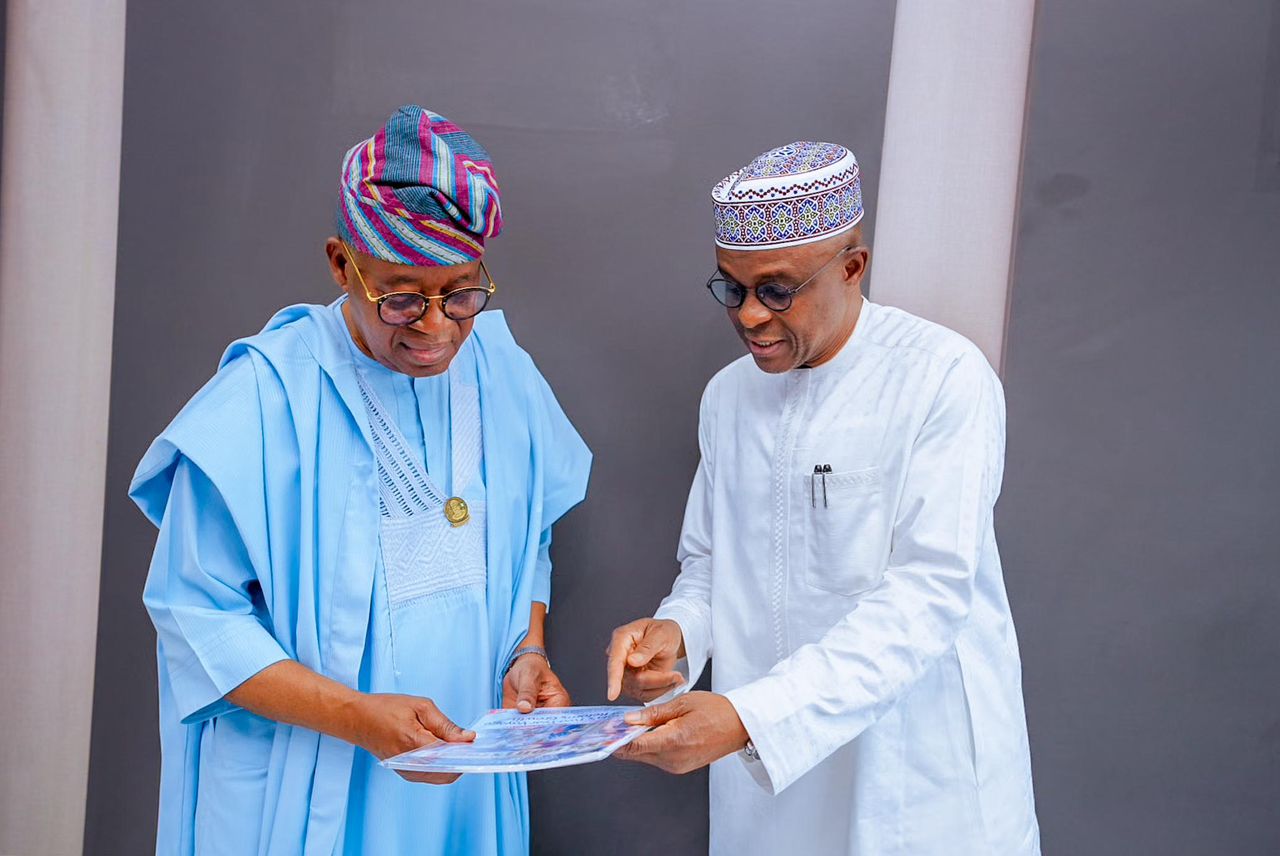
The Director-General of NIMASA, Dr. Dayo Mobereola, stated this during an inspection tour of the African Pioneer Lagos, a specialised offshore Diving Support Vessel (DSV) operated by Marine Platforms Limited.

The visit, according to the NIMASA DG, underscored the growing capacity of Nigerian-owned and Nigerian-flagged vessels to undertake highly specialised offshore operations that were traditionally dominated by foreign operators.

The African Pioneer Lagos, with IMO Number 9808613, is a Nigerian-flagged DSV measuring approximately 143 metres in length, with a deadweight of about 8,000 metric tonnes.

The vessel is equipped for specialised deep-water subsea construction, diving, inspection and offshore oil and gas operations.

Mobereola said he was impressed by the vessel’s capabilities, stressing that Nigerian-flagged vessels with such capacity should enjoy priority in the nation’s maritime space.

“I’m quite happy at what I have seen today after the tour of this 8,000 metric tonnes African Pioneer Specialised Vessel.

“A vessel such as this flying the Nigerian flag should have priority over any foreign vessel.

“We are automating the Nigerian Ship Registry to make it more attractive and to ensure that more vessels like this fly the Nigerian flag.”

The NIMASA boss said improving the attractiveness and efficiency of the Nigerian Ship Registry was critical to encouraging more shipowners to register their vessels under the Nigerian flag.

He added that strengthening the Cabotage regime remained central to the Federal Government’s efforts to build indigenous shipping capacity and ensure that Nigerian companies and professionals occupy a greater share of opportunities in the country’s maritime and offshore sectors.

For the Chief Executive Officer of Marine Platforms Limited, Mr. Taofeek Adegbite, the company’s experience demonstrates the impact that the Cabotage regime and Nigerian Content legislation can have on indigenous shipping companies.

Adegbite said Marine Platforms had benefited significantly from the policy since acquiring its first vessel, Mt. African Vision, in 2012.

He said the company was proud to operate its vessels under the Nigerian flag and encouraged other Nigerian shipowners to embrace the Nigerian Ship Registry.

“Since 2012, when we got our very first vessel, ‘Mt. African Vision’, we are happy and proud to say NIMASA’s Cabotage Regime and the Nigerian Content Development and Monitoring Board Act has played a major role in ensuring that our vessels have contracts on a regular basis.

“We have no regret flying the Nigerian flag and I will invite more ship owners to register their flags in the Nigerian Ship Registry.”

Adegbite, however, called for greater attention to the classification and certification of crews operating large and highly specialised vessels.

“At the moment, we would appreciate a classification in such a way that the crew who are operating very big vessels are given special attention so that more very large vessels can fly the Nigerian flag,” he said.

He commended NIMASA for its support, stressing that the African Pioneer Lagos demonstrated that Nigerian companies and maritime professionals possess the technical capacity to operate sophisticated vessels to international standards.

According to him, the continued development of Nigerian-flagged vessels would also create greater opportunities for indigenous maritime manpower and professional development.

Adegbite said Nigeria could learn from countries that had successfully developed specialised niches within the global maritime industry.

He cited the Philippines, which has established a strong global reputation in seafaring, and Norway, renowned for shipbuilding, arguing that Nigeria could equally develop a globally recognised area of maritime specialisation.

He stressed that sustained government policies, effective implementation of the Cabotage regime, access to finance, appropriate regulation and development of maritime manpower would be essential to achieving that objective.

Continue Reading

Headlines

MAMAL 2026: Anishere, Ani demand stronger maritime media, more women in leadership

Gloria Odion, Maritme reporter 

President of the Maritime Arbitrators Association of Nigeria (MAAN), Chief Jean Chiazor Anishere, SAN, and President of the Women’s International Shipping and Trading Association (WISTA) Nigeria, Dr. Odunayo Ani, have called for a stronger and more professional maritime media and greater representation of women in leadership and decision-making positions across Nigeria’s maritime and blue economy sectors.

The two industry leaders made the call at the 4th Annual Maritime Lecture of the Maritime Reporters Association of Nigeria (MARAN), where they stressed that credible journalism and inclusive leadership were critical to ensuring accountability, transparency and sustainable growth in the maritime industry.

Represented at the event by Mrs Oyeyemi Jimi-Salami, Anishere said an informed, independent and professionally grounded maritime press was indispensable to the development of the sector, particularly as Nigeria intensifies efforts to unlock the economic opportunities inherent in the Blue Economy.

She commended MARAN for its sustained engagement with critical maritime issues and what she described as its commitment to responsible reportage.

According to her, the association’s annual lecture had become an important platform for industry stakeholders to interrogate emerging challenges, exchange ideas and seek practical solutions to the problems confronting the maritime sector.

Anishere noted that although sound policies, effective regulation and infrastructure investment were essential to maritime development, these could not deliver the desired results without a knowledgeable media capable of educating the public, scrutinising government policies, promoting transparency and demanding accountability from industry players.

She urged MARAN to continue using its platform to promote professionalism, innovation, accountability and sustainable development in the maritime industry.

“Journalism remains a key pillar of a vibrant maritime sector because it strengthens public confidence, supports informed decision-making and ensures that critical industry issues receive the attention they deserve,” she said.

Meanwhile, Ani called for a fundamental shift in the approach to women’s participation in the maritime industry, arguing that it was no longer sufficient merely to promote inclusion without creating clear pathways for women to attain leadership and decision-making positions.

She said WISTA Nigeria would continue to expand its mentorship, networking, advocacy and leadership development programmes to equip women with the skills, experience and opportunities required to advance in the sector.

Ani challenged government agencies, private-sector operators and other maritime stakeholders to go beyond rhetoric by recruiting, retaining, promoting and sponsoring qualified women, while adopting inclusive workplace policies and setting measurable targets for gender diversity.

She also called for concerted action against discrimination, unequal access to opportunities and unsafe workplace practices which, she said, continued to impede the advancement of women in the maritime industry.

The WISTA Nigeria president further urged male professionals and industry leaders to become active allies in promoting gender equality by mentoring, sponsoring and advocating for women in their organisations.

Ani stressed that women should not be regarded as mere participants in Nigeria’s maritime development but as critical drivers of innovation, leadership and sustainable economic growth.

She argued that providing women with equal opportunities to lead and contribute would not only advance fairness but also strengthen Nigeria’s ability to fully harness the enormous economic potential of its maritime and blue economy.

The speakers’ interventions at the MARAN lecture underscored the growing recognition that Nigeria’s maritime transformation requires not only infrastructure, policy and investment, but also a credible media that can hold the industry to account and a leadership structure that draws fully on the talents of both men and women.

Continue Reading

Commentaries

Blue Economy Engine: Decoding unstoppable rise of Nigeria’s maritime gateways

Monday Discourse with Ibrahim Nasiru

The latest operational data from Nigeria’s maritime sector shows a significant shift in trade capacity that deserves close attention.

In a period where national economic discourse is heavily focused on foreign exchange stability and trade balance, the Nigerian Ports Authority (NPA) recently released its operational performance report for the second quarter of 2026.

The figures indicate clear, measurable progress across our major shipping channels.

Under the current management led by Dr. Abubakar Dantsoho, total cargo throughput at the nation’s seaports grew by 12.3% year-on-year, moving from 31.83 million metric tonnes in the second quarter of 2025 to 35.74 million metric tonnes in Q2 2026.

This growth was closely supported by a 14.4% increase in ocean-going vessel traffic, which recorded 1,201 vessel calls during the three months under review.

These statistics are notable because they reflect actual operational changes rather than mere administrative adjustments.

For decades, Nigerian Ports were held back by slow container clearing times, heavy bureaucratic red tape, and severe traffic congestion around the Lagos Ports.

The current upward trend shows that the ongoing efforts toward Port modernization, including the digital integration of the National Single Window system, are beginning to show results on the ground.

By reducing physical bottlenecks and shortening the time cargo spends at the berths, terminal operations are becoming more reliable for international shipping lines and domestic businesses alike.

A highly encouraging aspect of the Q2 2026 data is the 22% increase recorded in export-related outward cargo.

For an economy that urgently needs to diversify away from absolute reliance on crude oil revenues, this rise in export volumes shows that the policy of establishing dedicated export terminals is functioning as intended.

Local manufacturing concerns, agricultural aggregators, and non-oil exporters are finding it relatively easier to move their goods out to global markets.

Additionally, the emergence of transshipment container traffic—which grew to 29,038 TEUs this quarter from zero in the same period last year—proves that Nigeria is regaining its position as a major logistics transit hub for the West African sub-region.

However, the report also highlights a persistent structural reality that economic planners must continue to address.

Out of the 35.74 million metric tonnes of cargo handled, inward cargo or imports still accounted for the larger share at 56.8%, while outward cargo stood at 41.9%.

While the gap is closing due to the 22% export growth, it reminds us that maritime efficiency must be backed by a strong domestic production base.

The Ports can only serve as efficient gateways; the real value lies in ensuring that what leaves our shores consists of processed, value-added Nigerian goods rather than just raw agricultural products or unrefined solid minerals.

The second-quarter performance numbers show that the maritime sector is currently serving as a stable and productive engine for the nation’s broader economic goals.

It demonstrates that clear policy direction and disciplined institutional management can stabilize critical national infrastructure even during periods of global trade volatility.

As the NPA works to sustain this momentum through the rest of the year, the priority must remain on full automation, eliminating unreceipted costs at the Ports, and strengthening rail connectivity to the hinterland.

By locking in these operational gains, Nigeria is steadily turning its maritime gateways into solid pillars of long-term commercial prosperity.

Chief Ibrahim Nasiru, a public affairs analyst, writes from Abuja 

Continue Reading

Trending