Headlines
Beyond the Fog: Can ICTN and $5 billion mandate finally secure Nigeria’s Ports?
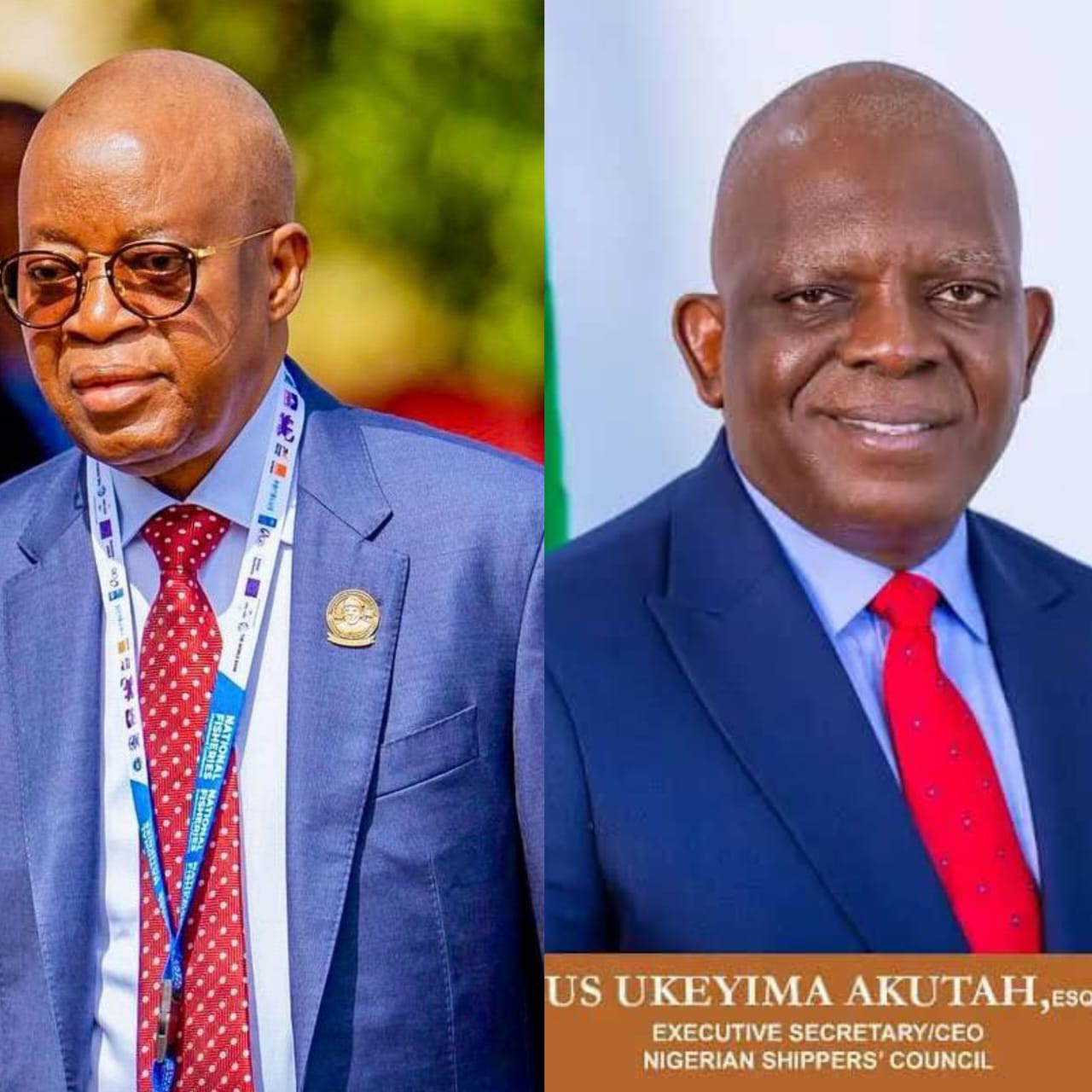
Ibrahim Nasiru
“Whatever is hidden by the fog of the sea is eventually revealed by the light of the shore.”
This maritime maxim captures the true essence of the International Cargo Tracking Note (ICTN), a tool designed to pull back the veil on what truly enters Nigeria’s waters.
For over a decade, however, the ICTN itself remained hidden in the fog of Nigerian bureaucracy, promised by successive administrations but never quite reaching the shore of actual implementation.
As the Federal Government makes its latest push to activate this system in 2026, the maritime community is watching with a mix of hope and hard-earned skepticism.
This skepticism is not born of a lack of patriotism, but of a long memory of “governmental rhetoric” and a history of legal warfare.
In 2010, the initial attempt to introduce the ICTN was unceremoniously scrapped following a massive outcry from the organized private sector, who viewed it as an extra tax offering no real value.
By 2015, the conversation returned, only to be swallowed by a protracted “supremacy battle” between the Nigerian Shippers’ Council (NSC) and Nigerian Maritime Administration and Safety Agency (NIMASA) over who should control the pulse of our maritime data.
This inter-agency rivalry was a “teapot of confusion” that cost Nigeria an estimated $500 million in annual revenue losses during the height of the friction, leaving our Ports vulnerable while neighbours in Ghana and Togo moved ahead.
The 15 year delay of the ICTN was never just about technology; it was a high-stakes struggle that left the national economy as the primary casualty.
Today, roughly $3.0 billion is lost annually to trade mis-invoicing, where exporters and importers “ghost” the true value of cargo to bypass Customs duties.
Another $1.2 billion vanishes through seaport fraud and cargo concealment, a practice that also poses a grave security risk by allowing the smuggling of small arms and dangerous drugs.
Furthermore, manual verification processes cost shippers $500 million in unnecessary demurrage, while the lack of transparency forces us to pay $300 million in “Perception Tax”, the high insurance premiums charged by international underwriters who cannot see the reality of our increasingly safe waters.
With presidential approval now secured and the procurement process officially underway, the NSC is under immense pressure to deliver on a binding commitment reinforced by recently signed ministerial performance bonds.
These bonds are no longer ceremonial; progress is monitored quarterly, with agency budgets directly linked to concrete results, including moving from the historic 21-day clearance cycle down to a 48-hour target.
The ICTN is, in theory, a masterclass in transparency, serving as a digital fingerprint for every container from the Port of loading to the point of discharge.
For this vision to truly reach the shore, it must be the data engine fueling the National Single Window (NSW).
Since Phase One of that project launched on March 27, 2026, the mandate has been clear: move Nigeria toward a global-standard clearance cycle.
The ICTN provides the pre-arrival intelligence that allows the system to process cargo before the ship even berths. This “pre-arrival intelligence” turns the tide on security by flagging high-risk shipments at their Port of origin, neutralizing “cargo concealment” and ensuring that substandard products do not flood local markets.
The goal is to move from “maritime blindness” to a proactive shield that protects both the economy and the borders. Central to this transformation is the creation of the “Green Lane,” an elite operational tier for Nigeria’s most trusted traders.
By marrying the ICTN with the Authorised Economic Operator (AEO) program which fully replaced the old Fast Track scheme on February 1, 2026, the government has created a fast track corridor that rewards transparency with speed.
For Green Lane participants, physical inspections are waived at the point of import, allowing cargo to move straight from the quay to the warehouse in as little as 41 hours. This privilege is earned through rigorous validation by the AEO Helpdesk, ensuring that only firms with a clean security record and financial solvency can bypass the bottlenecks.
This system proves that security and efficiency are not mutually exclusive; by allowing trusted cargo to fly through, it frees up the Nigeria Customs Service to focus 100% of their physical resources on the “Red Lane” where the ICTN has flagged unverified shipments.
Nigeria’s digital upgrade has sent ripples through the Lomé-Cotonou-Tema corridor, intensifying the regional “Port War.” Historically, neighbouring Ports flourished by handling cargo diverted away from Nigeria’s manual systems.
As Nigeria finally leverages its weight, analysts project that neighbours could lose up to 25% of their traffic.
This shift is not just happening at the coast; the ICTN and NSW are transforming the hinterland through Inland Dry Ports (IDPs) like Funtua and Dala.
By digitizing the “umbilical cord” between the sea and the interior, cargo can now be tracked and cleared at dry Ports as if they were seaside terminals, supported by a paperless Enterprise Content Management platform.
The light is now on the shore. If the 2026 targets are met and the government ensures this system remains a “security and efficiency project” rather than a “revenue grab,” Nigeria will finally reclaim its economic sovereignty and its natural status as the maritime hub of Africa, South of the Sahara.
Chief Ibrahim Nasiru, a former General Manager, Corporate and strategic communications, NPA, writes from Abuja.






Commentaries
Choking in Apapa, idle in Calabar: Fixing Nigeria’s one-sided maritime system
Monday Discourse with Ibrahim Nasiru
For decades, Nigeria has been doing something completely upside down with its maritime business
We have over 850 kilometers of beautiful coastline, yet we force almost all our international trade to squeeze through just two choked locations: Apapa and Tin Can Island in Lagos.
The result? Nightmare traffic jams, crazy demurrage fees, and local businesses dying because their goods are trapped at sea for weeks.
But from what we saw at the World Maritime Day celebration in Lagos, a real, common-sense change might finally be on the horizon.
The Minister of Marine and Blue Economy, Adegboyega Oyetola, laid out a very clear plan under the theme, “From Policy to Practice: Powering Maritime Excellence.” ,
He promised that the government is fully committed to modernizing ports outside Lagos—specifically Onne, Warri, and Calabar—while building new deep seaports in places like Ondo, Ibom, and Bonny.
He also unveiled a big drive to train young Nigerian sailors to global standards so they can compete for jobs anywhere in the world.
As an analyst who looks at the actual numbers, this is where we need to pay close attention.
The ministry has already scored some big wins. Getting the United States Coast Guard to lift its long-standing security restrictions on ships coming from Nigeria is a massive deal.
It means fewer delays, lower shipping insurance costs, and cheaper goods for ordinary Nigerians when those savings drop down the supply chain.
Also, moving our local fish production from 1.1 million to 1.4 million metric tonnes shows that things are actually moving.
However, during her keynote presentation at the event, maritime expert, Mrs. Mfon Ekong Usoro, hit the nail on the head.
She reminded stakeholders that Nigeria’s maritime future depends entirely on moving from sound paperwork to actual, visible results.
Let’s tell ourselves the home truth: the real success of Oyetola’s ministry will not be judged by the fine speeches or brilliant policies presented at luxury hotels.
It will be judged by how quickly we can break the monopoly of the Lagos ports.
Opening up the eastern and southern ports is no longer just a good idea; it is a matter of economic survival.
When you make Onne, Warri, and Calabar fully functional, you instantly bring life back to regional economies, create thousands of local jobs, and make things cheaper for tens of millions of citizens living outside the South-West.
But a port is completely useless if you cannot get goods out of it. You cannot run a modern port if you rely only on heavy trucks fighting broken roads.
Oyetola’s ministry must work hand-in-hand with the Ministry of Transport. We need to see working rail lines laid straight into the ports of Onne and Calabar, connecting them directly to Inland Dry Ports like Baro and Onitsha.
Also, the government must use the new Nigerian Ports Economic Regulatory Agency(NPERA) Act to completely crush the official corruption, crazy hidden charges, and delays that have historically scared international shipping lines away from our eastern ports.
The roadmap is there, and the international community is already noticing through the lifted US security restrictions.
Now, the federal government needs the political muscle to build the rail and road connections to back it up.
It is time to move from policy to practice, open up our eastern waterways, and let the whole country breathe.
Ibrahim Nasiru, a public affairs analyst, writes from Abuja
Headlines
NIWA reaffirms commitment to safer waterways, maritime excellence

Funso OLOJO, Editor
The National Inland Waterways Authority (NIWA) has reaffirmed its commitment to safer waterways, improved navigation infrastructure and sustainable economic growth, declaring that effective implementation of maritime policies remains critical to unlocking Nigeria’s marine and blue economy potential.
The Acting Managing Director of NIWA, Alhaji Yusuf Girei, gave the assurance in his goodwill message to mark the 2026 World Maritime Day celebration, themed “From Policy to Practice: Powering Excellence.”
Girei congratulated maritime stakeholders on the occasion and commended their contributions to the development of Nigeria’s maritime industry.
He stressed that policies could only deliver meaningful value when translated into concrete actions that improve operational efficiency, strengthen safety and stimulate economic growth.
“This year’s theme reminds us that strong policies create value only when they are translated into meaningful action. In the maritime sector, that means safer waterways, reliable infrastructure, environmental stewardship and services that support trade and economic growth,” he said.
The celebration was attended by the Minister of Marine and Blue Economy, Adegboyega Oyetola; the Permanent Secretary of the Ministry, Mrs. Fatima Sugra Mahmood; the chairperson and keynote speaker, Mrs. Mfon Usoro; directors and heads of departments; chief executives of agencies under the Ministry; members of the diplomatic corps; maritime industry stakeholders; and the media.
The NIWA chief executive reiterated the Authority’s resolve to strengthen collaboration with state governments, industry operators, host communities and development partners to improve navigation, enhance safety standards, modernise facilities and safeguard the waterways that sustain millions of livelihoods.
According to him, excellence in the maritime sector requires collective commitment, supported by skilled professionals, effective regulation, investment in innovation and an operational culture that prioritises safety and environmental sustainability.
He added that sustained collaboration among stakeholders would help build a maritime industry capable of competing globally while responding to the needs of local communities and emerging economic opportunities.
“By working together, we can build a maritime sector that is competitive, inclusive and prepared for the future,” Girei stated.
He also commended President Bola Ahmed Tinubu, the Minister of Marine and Blue Economy, the Permanent Secretary and other stakeholders for their contributions to the growth and advancement of Nigeria’s maritime industry.
The NIWA boss urged participants at the celebration to move beyond shared commitments and translate their collective vision into practical initiatives capable of delivering measurable improvements across the sector.
A major highlight of the celebration was the presentation of awards to winners of the Primary School Children’s Essay Competition, sponsored by NIWA as part of efforts to encourage young Nigerians to develop an interest in the maritime sector.
Girei participated in the presentation of prizes to the winners, who received cash awards and laptop computers in recognition of their outstanding performances.
Idris Jibril Oladimeji of Holy Cross Primary School, Lagos, emerged first and received ₦200,000 and a laptop computer.
Suleiman Aisha of St. Paul’s Anglican School, Lagos Island, came second, winning ₦150,000 and a laptop computer, while Yahaya Aliyah of St. Mathias Girls Primary School, Lagos, took third position, receiving ₦100,000 and a laptop computer.
The initiative underscored the importance of engaging younger generations in maritime development and encouraging early awareness of the sector’s economic, environmental and social significance.
Girei, on behalf of the NIWA Board, Management and staff, wished maritime stakeholders a successful World Maritime Day celebration, reiterating the Authority’s commitment to safer inland waterways, operational excellence and sustainable development.
Headlines
World Maritime Day 2026: NIMASA DG calls for action to translate policies into maritime gains

Funso OLOJO,Editor
The Director-General of the Nigerian Maritime Administration and Safety Agency (NIMASA), Dr Dayo Mobereola, has called for stronger implementation of maritime policies to translate Nigeria’s vast maritime potential into tangible economic benefits, improved operational efficiency and greater opportunities for Nigerians.
Mobereola made the call while addressing stakeholders at the commemoration of World Maritime Day 2026 on Friday, October 16th, 2026 with the themed “From Policy to Practice: Powering Maritime Excellence.”
He stressed the need for government institutions and private-sector operators to focus on measurable results that would strengthen the maritime industry and contribute to national economic development.
According to him, the strength of a maritime nation is determined not only by the policies it formulates but also by its ability to implement them effectively and deliver meaningful outcomes for its citizens.
He described Nigeria’s maritime sector as a critical pillar of economic growth, noting that it serves as a gateway to international trade, a driver of investment and employment, and a major contributor to the activities of businesses and industries across the country.
The NIMASA chief said this year’s theme challenged stakeholders to look beyond policies, regulations and institutional frameworks and assess the extent to which their implementation improves the performance of the maritime industry and the livelihoods of Nigerians.
He disclosed that Nigeria accounted for more than 46 per cent of total port calls in the Gulf of Guinea region in 2025, underscoring the country’s strategic importance in regional maritime activities and the need to strengthen the institutions, infrastructure and human capacity required to sustain its position.
Mobereola, however, maintained that maritime excellence should not be measured by shipping traffic and operational statistics alone, but also by the safety and security of Nigerian waters, the efficiency of port and shipping operations, environmental protection, seafarers’ welfare and the participation of Nigerians in maritime asset ownership, management and operations.
The Director-General stated that NIMASA remained committed to ensuring that maritime regulations and government policies translated into practical results capable of improving safety, efficiency, professionalism and economic opportunities within the sector.
He noted that, over the past two years, Nigeria had recorded significant progress in several critical areas with the support and strategic leadership of the Minister of Marine and Blue Economy.
Among the achievements highlighted were four consecutive years without reported piracy incidents in Nigerian waters, Nigeria’s successful re-election to the International Maritime Organization (IMO) Council after a 14-year absence, and the lifting of United States Condition of Entry restrictions after 12 years.
Other milestones included the establishment of the Cabotage Vessel Financing Fund (CVFF) application portal and ongoing preparations for fund disbursement, the full automation of the Nigerian Ship Registry, and the implementation of the IMO Standards of Training, Certification and Watchkeeping for Seafarers (STCW) Compliance Audit after 18 years.
Mobereola described these developments as important milestones that demonstrated the impact of sustained institutional reforms and strategic interventions in the maritime sector.
He explained that improved maritime security strengthens the confidence of shipowners, operators, workers and investors, while the automation of the Nigerian Ship Registry enhances operational efficiency and strengthens the country’s participation in the global maritime system.
Similarly, he said improved seafarer training and certification standards would enhance the professional competence of Nigerian maritime personnel and expand their employment opportunities within the international maritime labour market.
On maritime financing, the NIMASA boss noted that access to funds through the CVFF could enable indigenous operators to acquire vessels, expand their businesses, create employment and improve Nigeria’s capacity to participate in shipping activities.
He emphasised that the real value of government policies lies in their practical implementation and their ability to deliver measurable benefits to individuals, businesses and the wider economy.
Despite the progress recorded, Mobereola cautioned against complacency, stressing that existing gains must be sustained through continuous investment, stronger collaboration among government agencies, technological innovation, capacity development and modern maritime infrastructure.
He maintained that achieving maritime excellence required a collective commitment from the Federal Ministry of Marine and Blue Economy, its agencies, other government institutions, terminal operators, shipowners, seafarers, maritime labour unions, financial institutions, academic institutions, development partners and private-sector operators.
According to him, effective collaboration among these stakeholders would be essential to addressing industry challenges, strengthening institutional capacity and unlocking the full economic potential of Nigeria’s maritime domain.
He also highlighted the importance of the Blue Economy in promoting sustainable resource management, expanding economic opportunities and ensuring that the country’s marine and maritime resources contribute more significantly to national development.
Looking ahead, Mobereola urged stakeholders to prioritise practical actions that would transform Nigeria’s maritime potential into sustainable economic value, noting that the success of maritime policies must ultimately be reflected in improved industry performance and better opportunities for citizens.
The Director-General also acknowledged the contributions of maritime workers and professionals, describing them as central to the effective functioning of the maritime industry and the continuity of global trade.
He recognised the dedication of seafarers, dockworkers, port workers, ship operators, regulators, security personnel, engineers and other maritime professionals whose efforts sustain shipping operations and international commerce.
Mobereola stressed that their safety, welfare, professional development and dignity must remain central to the formulation and implementation of maritime policies.
He also commended the Minister of Marine and Blue Economy for providing strategic direction and appreciated government institutions and industry stakeholders for their continued contributions to the growth of Nigeria’s maritime sector.
As the country marked World Maritime Day 2026, the NIMASA chief called for renewed commitment to building a maritime industry that is safe, secure, efficient, environmentally sustainable and globally competitive, with strong indigenous participation.
He urged stakeholders to work collectively towards translating policies into practical achievements that would strengthen Nigeria’s maritime position, create economic opportunities and deliver lasting benefits to the nation.
Mobereola concluded by reiterating the need for stakeholders to move beyond policy formulation and focus on effective implementation as the foundation for sustainable maritime development.

 Customs3 months ago
Customs releases final recruitment list for ASC II, ends nearly one-year wait for applicants
- Headlines2 months ago
Oyetola presents three-year score card as blue economy industry revenue hits ₦1.83trn
- Customs2 months ago
Apapa Customs sets new single-day revenue record with ₦28.1bn collection
- Customs2 months ago
Apapa Customs sets new record of monthly revenue haul with ₦323bn collection in July
- Customs3 months ago
Customs launches MIS file tracker at PTML in fresh digitalisation drive
- Customs2 months ago
NCS intercepts container concealing pump-action rifle parts, seizes ₦373.8m worth of cannabis products at Tincan Port