
Customs
Tin Can Customs nets N574.3 billion in 2022 —–records N242.365 billion in exports

Oloyede said the figure represented an increase of N80.90 billion or 16.39 percent when compared with N493.4 billion recorded in 2021.
“This feat can be attributed to the constant rejigging of the existing measures geared toward sustaining the command’s revenue profile.
“It is as well as utilisation of some disruptive strategic measures such as: periodic capacity building, reshuffling and redeployment of officers using the Strengths, Weaknesses, Opportunities, and Threats (SWOT) analysis and implementation of the Vehicle Identification Number (VIN) valuation,” he said.
He noted that the command also ensured robust and continuous stakeholder engagements and collaborations with all sister government agencies and maritime associations.
“These led to timely intelligence sharing, utilisation and voluntary compliance to government’s extant laws by the trading public,” Oloyede said.
He added that the command increased surveillance on declarations made in order to sniff out improper declarations as well as offending items.
He pointed out that the system paid off with the command recording a total of 38 seizures with a Duty Paid Value (DPV) of N1.85 billion.
“These seizures comprise 763kgs of Colorado (Cannabis Sativa) weighing 345.1kg with a street market value of N714.6 million only as given by the National Drug Law Enforcement Agency (NDLEA), 5 x 40 containers of used motor tyre (5,060 pieces).
“Also among seized items are 1,150 bales of second-hand clothing, 1,190 cartons of 20 per carton of potassium bromate and baking powder, 11,392 cartons of 1,200 per carton Pharmacol injection chloroquine phosphate 322.5mg.5ml (IV and IM), 206,000 pieces of finished machetes.
“Also, 1,383 cartons of 50 rolls per carton of cigarettes, 650 cartons of 50 pieces per carton of new ladies shoes, 2,666 pieces in 36 pallets of new starter Ex-Premium Inverter Battery, 1,980 cartons of assorted non-alcoholic beverages and 1,048 cartons of Tilda basmati rice,” he said.
Oloyede listed others as 2,594 pieces of ammunition and 20 pieces of arms comprising of one pistol with 611090 (S/W) model JCP 40mm, one used Co2 air pistol with accessories cal 117(4.5m)BM, one marksman repeater pistol, six Mace pepper gun and 10 suspected arms of various types.
He said that the seizures when compared with the 2021 record of 27 seizures with a Debit Note of N607.27 only, show an increase of 11 seizures and N1.24 billion.
He said that the increase in the DPV rate could be associated with increased surveillance and intensified anti-smuggling drive, the high value of seized items and Naira depreciation that led to higher exchange rates on imported items.
“These prohibited items were seized and forfeited to the Federal Government in line with the provision of Sections 46 and 161 of the Customs & Excise Management Act (CEMA) Cap 45 LFN 2004 and Absolute Prohibition List of CET 2022- 2026.
“The command pertinently acknowledges the prominent roles played by the Customs Intelligence Unit, Valuation Unit, Federal Operations Unit, CGC Strike Force as well as interventions of Sister Regulatory Agencies like the NDLEA, Standards Organisation of Nigeria SON, the Nigeria Police and others in ensuring these seizures and detentions were made.
“A total of 60 suspects were detained in 2022 and were granted administrative bail while the command has 8 cases pending in court,” he said.
Oloyede said the command recorded a significant increase in the Free On Board (FOB) of exports in the period under review to the tune of $589,696,648 (N242,365,322,333.00) as against the $496,075,796 (N141,985,109,159.00) recorded in 2021.
He attributed the increase of 34.4 percent in the FOB to the high quality and value of exported commodities.
“However, the export report shows a decrease in tonnage of export from 1,723,986.8 in 2021 to 336,179.5 in 2022.
“The decrease in tonnage could be connected to current government fiscal policy which prohibited the export of wood and wood products as well as the global unrest with its concomitant economic challenges,” he said
He listed the commodities exported through the command to include: cocoa beans, insecticides, dried ginger, empty bottles, soya beans, cashew nuts, cigarettes, rubbers, cocoa butter, frozen shrimps, copper ingots, aluminum ingots, sesame seeds and other manufactured items.
“Cocoa beans were the highest exported commodity while the legend stout was the least exported commodity.
“The future of export in the command looks brighter as the command in line with the headquarter circular on Export Standard Operating Procedure (SOP) released a Port Order on the Command’s harmonised SOP for the seamless facilitation of Export Trade in strict compliance with Extant Laws and guidelines on Export,” he said.

Customs
FOU Zone A: Afeni intensifies anti-smuggling operations, seizes N511.4m drugs, rescues eight pangolins

Gloria Odion, Maritme reporter
The Nigeria Customs Service (NCS), Federal Operations Unit (FOU), Zone ‘A’, has intensified its anti-smuggling operations across the South-West, recording major seizures of illicit drugs and pharmaceutical products valued at N511.4 million and rescuing eight endangered pangolins under the leadership of its Acting Comptroller, Deputy Comptroller Oladapo Afeni.
The latest achievements reflect a renewed enforcement strategy anchored on intelligence gathering, strategic patrols and strengthened collaboration with sister security agencies to disrupt smuggling networks and combat transnational organised crime across the region.
Since assuming leadership of the unit, Afeni has intensified efforts to tackle the illegal movement of prohibited goods through major highways, border corridors and waterways, with operations targeting illicit drugs, unapproved pharmaceutical products, endangered wildlife, foreign parboiled rice, frozen poultry products and other prohibited items.
The recent interceptions, particularly the recovery of drugs and pharmaceutical products worth N511.4 million and the rescue of eight live pangolins in two separate operations, underscore the unit’s determination to protect public health, safeguard national security, preserve wildlife and strengthen compliance with Nigeria’s trade regulations.
Beyond the financial value of the seizures, the operations highlight the wider economic, environmental and security consequences of smuggling and the need for sustained enforcement against criminal networks operating across the South-West.
One of the major breakthroughs recorded under Afeni’s leadership was the interception of assorted illicit drugs and pharmaceutical products with a Duty Paid Value (DPV) of N511.4 million.
The seized items were subsequently handed over to the National Drug Law Enforcement Agency (NDLEA) and the National Agency for Food and Drug Administration and Control (NAFDAC) for further investigation and necessary regulatory and legal action.
The exhibits included 121 parcels of cannabis sativa weighing 65.9 kilogrammes, 100 grammes of crystal methamphetamine, 400 grammes of cocaine, 900 grammes of ground synthetic cannabis, 4.3 kilogrammes of hybrid cannabis and 57 cartons of codeine syrup.
Other items handed over included 86 packs of polythene bags allegedly used to conceal the illicit substances, two vehicles a Toyota Hiace bus and a Toyota Sienna and two male suspects linked to separate interceptions.
According to the unit, one of the operations took place at approximately 1 p.m. on October 10, 2026, when an intelligence led patrol team intercepted a Toyota Hiace bus conveying suspected illicit drugs concealed in polythene bags along the Lagos-Benin Expressway, around Ore, Ondo State.
Following the interception, NDLEA officials conducted further examination and analysis, which confirmed the nature of the substances.
In a separate operation on October 7, 2026, Customs officers intercepted another vehicle along the Lagos-Ibadan Expressway.
A thorough search of the vehicle led to the discovery of 57 cartons of assorted brands of codeine syrup.
The interceptions demonstrate the unit’s commitment to preventing the transportation and distribution of prohibited substances through major commercial routes, where traffickers often conceal illegal consignments among legitimate goods.
Speaking on behalf of Afeni during the handover, the Deputy Comptroller in charge of Enforcement,Oluwaseun Oguntuase, attributed the successes to sustained intelligence driven operations across the unit’s area of responsibility.
He explained that the seizures and subsequent transfer of the exhibits to the relevant agencies reflected the Service’s determination to secure the nation’s borders, protect public health and strengthen national security.
The collaboration with NDLEA and NAFDAC also reinforces the importance of inter-agency cooperation in tackling drug trafficking and the circulation of unapproved pharmaceutical products.
In addition to its operations against drug trafficking and other prohibited imports, FOU Zone ‘A’ has strengthened its efforts to combat illegal wildlife trafficking, recording two separate interceptions that resulted in the rescue of eight live pangolins within approximately 11 days.
The first operation occurred on October 12, 2026, when Customs officers intercepted three live pangolins during an anti-smuggling operation around Oyo Dam, Igbo-Ora, Ogun State.
Acting on credible intelligence, the patrol team discovered the animals concealed inside a sack and a wire mesh cage.
The suspected traffickers reportedly abandoned the consignment and escaped into a nearby swamp upon sighting the officers.
Similarly, in the early hours of October 23, 2026, another patrol team intercepted five additional live pangolins along the Igbo-Ora/Imeko-Afon axis.
The animals were found confined in wire mesh cages and allegedly concealed to evade detection.
The suspects reportedly fled the scene, abandoning the animals as Customs officers moved in.
The two operations highlight the growing enforcement attention being given to illegal wildlife trade and the need to dismantle the networks responsible for trafficking protected species.
Pangolins are among the world’s most trafficked mammals, largely targeted by illegal traders for their scales and meat.
Their international commercial trade is prohibited under the Convention on International Trade in Endangered Species of Wild Fauna and Flora (CITES), which lists all pangolin species under Appendix I.
The rescued animals were handed over to the Greenfingers Wildlife Initiative Centre for safekeeping, rehabilitation and appropriate management, with the possibility of eventual release into a protected natural habitat where feasible.
Speaking during the second handover, Oguntuase, who represented Afeni, stressed the need for comprehensive investigations to identify and dismantle the criminal networks behind the repeated attempts to traffic endangered wildlife.
He reaffirmed the unit’s commitment to intelligence led enforcement, collaboration with conservation organisations and the strict enforcement of relevant laws against illegal wildlife trade.
The repeated interceptions also underscore the importance of identifying the individuals and networks financing, transporting and facilitating the illegal trade, rather than limiting enforcement efforts to recovering abandoned consignments.
Recognising the importance of coordinated security operations in tackling organised crime, Afeni has also intensified engagement with sister security agencies across the South-West.
On October 14, 2026, the Acting Comptroller commenced a familiarization tour of security and law enforcement agencies in Lagos State as part of efforts to strengthen institutional relationships and improve cooperation in intelligence sharing, information exchange and joint enforcement operations.
The agencies visited included the Lagos State Police Command, Department of State Services (DSS), Headquarters of the Nigerian Army’s 81 Division, the NDLEA Lagos State Strategic Command, the Nigeria Immigration Service and the Army’s 9 Brigade in Ikeja.
During the engagements, Afeni emphasised the need for stronger collaboration among security institutions to effectively address smuggling, cross-border criminal activities and other threats to national security.
At the Lagos State Police Command, where he was received by the Commissioner of Police, CP Tijani Fatai, Afeni noted that the Customs Service’s responsibilities extended beyond border protection and required sustained cooperation with other security agencies.
He expressed concern that the approaching election period could create opportunities for criminal elements to exploit heightened political activities and engage in illegal operations capable of threatening public peace.
“We know that crime rates often increase as the country approaches the election period, as some people may attempt to take advantage of the period to perpetrate illicit activities capable of causing crises during the elections. Therefore, we are here to call for closer synergy so that these bad elements do not have their way.”
Afeni maintained that no security agency could effectively confront complex criminal activities in isolation, stressing that regular intelligence sharing and coordinated operations remained essential to achieving lasting security outcomes.
In his response, the Lagos State Commissioner of Police welcomed the initiative and described the relationship between the police and other security agencies in the state as strong and productive, despite the security challenges associated with Lagos’s large population and complex operating environment.
At the Nigerian Army’s 81 Division Headquarters, the General Officer Commanding, Major General Adebayo Abdulrahman Babalola, also emphasised the importance of joint security operations.
He cautioned against unnecessary administrative bottlenecks that could affect operational efficiency and called for effective coordination among relevant institutions.
The engagements reflect the growing recognition that smuggling networks often operate across multiple jurisdictions, exploiting highways, waterways, border communities and distribution centres to move prohibited goods.
Strengthening institutional cooperation and intelligence exchange is therefore critical to identifying criminal movements, closing security gaps and ensuring timely responses to emerging threats.
The intensified operations by FOU Zone ‘A’ also carry significant economic and public health implications.
Smuggling undermines legitimate businesses by creating unfair competition for compliant importers and traders who fulfil their statutory obligations, including the payment of duties and compliance with regulatory requirements.
Similarly, the illegal movement of narcotics and unapproved pharmaceutical products exposes Nigerians to serious health risks,while wildlife trafficking threatens biodiversity and undermines international conservation efforts.
For the Nigeria Customs Service, effective enforcement therefore requires a balanced approach that prevents prohibited trade while facilitating legitimate commercial activities.
The N511.4 million worth of intercepted drugs and pharmaceutical products represents more than the financial value of the seized items.
It also reflects the potential harm prevented by keeping dangerous substances away from the public.
Likewise, the rescue of eight pangolins demonstrates the Service’s expanding role in environmental protection and the fight against organised wildlife trafficking.
However, the long-term success of these operations will depend on the ability of relevant agencies to conduct effective investigations, secure successful prosecutions and dismantle the networks responsible for the illegal activities.
The escape of suspects during both pangolin interceptions further highlights the need to strengthen intelligence gathering and surveillance to ensure that those behind the illegal trade are identified and brought to justice.
The Acting Comptroller has assured that FOU Zone ‘A’ will sustain its enforcement operations, intelligence driven patrols and strategic partnerships with relevant security and regulatory agencies across its area of responsibility.
His approach centres on strengthening intelligence gathering, improving inter-agency coordination and maintaining operational pressure on routes frequently exploited by smugglers.
The recent seizures indicate that the unit’s enforcement activities cover multiple categories of prohibited goods, ranging from illicit drugs and unapproved pharmaceutical products to endangered wildlife and other restricted commodities.
Sustaining these achievements, however, will require continuous investment in operational capacity, reliable intelligence networks, effective investigations and stronger engagement with communities along vulnerable smuggling corridors.
Equally important is continued cooperation with regulatory institutions and conservation organisations to ensure that seized products undergo appropriate investigations and rescued wildlife receives adequate care.
As the Nigeria Customs Service continues to discharge its statutory responsibilities, the effectiveness of Afeni’s enforcement strategy will ultimately be measured not only by the volume and value of seizures but also by its ability to dismantle criminal networks, protect public health, preserve biodiversity, safeguard government revenue and create a more secure environment for legitimate trade.
For smugglers operating across the South-West, the message from FOU Zone ‘A’ remains clear: the Service is strengthening its intelligence capacity, intensifying patrols and deepening security partnerships to make the region increasingly hostile to illicit trade.
Customs
Nigeria Customs, US Business Community strengthen partnership to boost trade facilitation
Gloria Odion, Maritme reporter
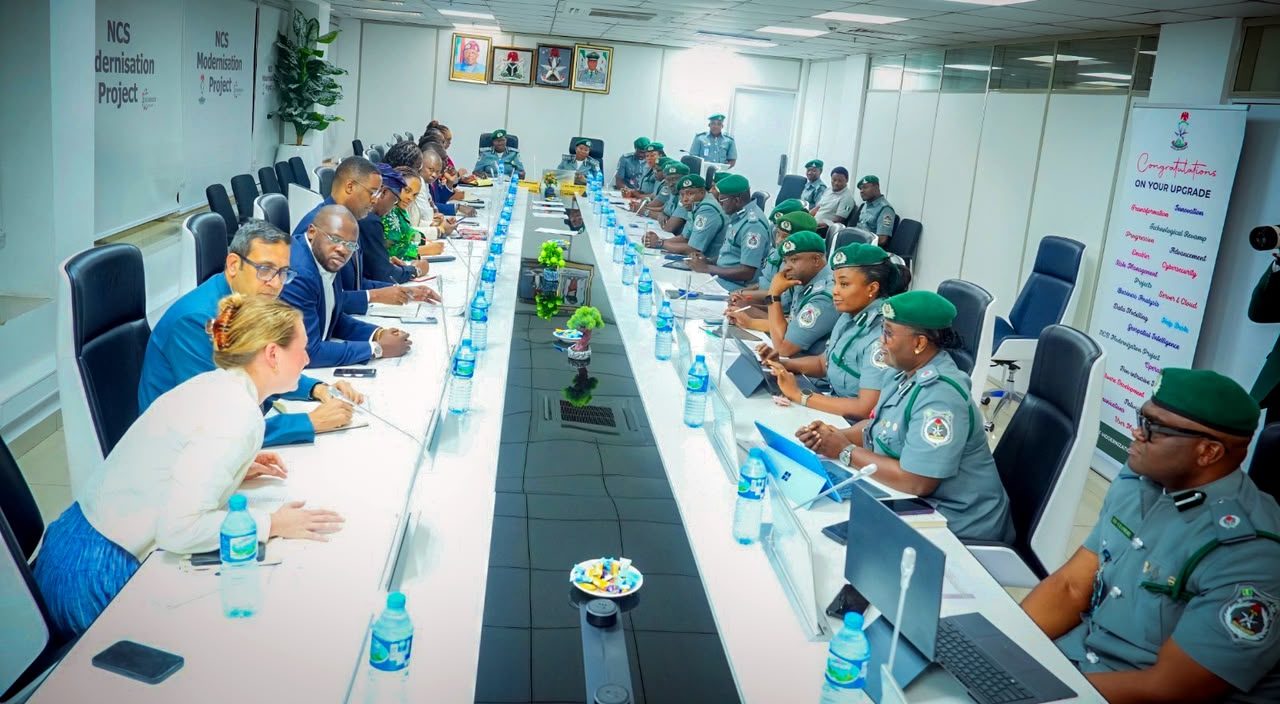
The Nigeria Customs Service (NCS) and key American business organisations have reaffirmed their commitment to strengthening bilateral economic relations, improving trade facilitation, and creating a more transparent and predictable business environment for investors in Nigeria.
The commitment was reiterated during a quarterly stakeholder engagement held on 28 October 2026 at the NCS Headquarters’ ICT Auditorium in Maitama, Abuja.
The meeting brought together the Service, the US Chamber of Commerce, the US-Africa Business Centre (USAfBC), and the American Business Council (ABC) to discuss ways to improve trade processes, address business concerns, and deepen economic cooperation between Nigeria and the United States.
Speaking on behalf of the Comptroller-General of Customs, Adewale Adeniyi, the Deputy Comptroller-General of Customs in charge of Tariff and Trade, Caroline Niagwan, said the engagement provided an important platform for strengthening collaboration and promoting mutually beneficial economic relations between both countries.
Niagwan reaffirmed the Service’s commitment to institutional reforms, operational efficiency, digital transformation, and improved stakeholder engagement, noting that these initiatives were central to building a modern Customs administration.
“Our objective is to build a modern, transparent, and responsive Customs administration that facilitates trade while ensuring effective revenue collection, border security, and compliance with applicable rules and regulations,” she said.
She explained that regular engagements with the business community would enable the Service to exchange ideas, address emerging concerns, and improve its operations to meet the needs of businesses operating in Nigeria and those seeking investment opportunities in the country.
According to her, predictable Customs procedures, transparent tariff administration, timely cargo clearance, and effective dispute resolution mechanisms are essential to improving the ease of doing business and strengthening investor confidence.
The Deputy Comptroller-General of Customs in charge of ICT and Modernisation, Oluyomi Adebakin, highlighted the Service’s ongoing digital transformation initiatives, including the automation of licence and permit applications to simplify procedures and improve operational efficiency.
She also disclosed plans to deploy 22 additional scanners across seaports, airports, and border stations to strengthen cargo examination, enhance operational effectiveness, and support trade facilitation.
Adebakin further emphasised the Service’s transition towards paperless administrative processes and encouraged members of the business community to provide feedback on their experiences with Customs procedures.
She noted that constructive engagement with stakeholders would help the Service identify operational challenges, address bottlenecks, and develop practical solutions to improve service delivery.
The President of the US-Africa Business Centre at the US Chamber of Commerce, Kendra Gaither, commended the Nigeria Customs Service for its contributions to economic development, particularly through the facilitation of legitimate trade.
She observed that the importance of efficient Customs operations is often overlooked when trade processes run smoothly, despite their significant impact on businesses, consumers, and the wider economy.
“When Customs works well, when trade is facilitated, people are the ultimate beneficiaries,” Gaither said.
She stressed that efficient Customs administration was critical to attracting investment and expanding business opportunities across key sectors, including agriculture, energy, critical minerals, healthcare, and the digital economy.
Gaither also expressed appreciation for the continued partnership between the Service and the American business community, noting the importance of sustained dialogue in addressing trade related challenges and creating an enabling environment for investment.
Similarly, the Chief Executive Officer and Executive Secretary of the American Business Council Nigeria, Margaret Olele, praised the Service for its progress in trade facilitation, transparency, and stakeholder engagement.
Olele also congratulated the Nigeria Customs Service on its recognition as a top performing agency in the Presidential Enabling Business Environment Council (PEBEC) Compliance Assessment.
She highlighted improvements in the Authorised Economic Operator (AEO) Programme, Advance Rulings, and dispute resolution mechanisms, noting that the quarterly engagements had contributed to resolving longstanding challenges faced by businesses.
The meeting reaffirmed the importance of sustained collaboration between the Nigeria Customs Service and the American business community in promoting efficient trade procedures, addressing private sector concerns, and strengthening Nigeria’s attractiveness as an investment destination.
Through continued dialogue, digital innovation, and institutional reforms, both sides are expected to build on existing progress towards a more transparent, efficient, and business friendly trade environment.
Customs
Export activities surge at Lilypond Export Command, records export value of US$752.9m in Q3 of 2026
— as Agricultural, Solid minerals exports plunge
Funso OLOJO, Editor
The Lilypond Export Command of the Nigeria Customs Service (NCS), Ijora, Lagos, recorded export transactions valued at $752.9 million in the third quarter of 2026, representing a 22.14 per cent increase over the $586.152 million recorded in the corresponding period of 2025.
The growth was driven largely by a sharp increase in manufactured goods exports, which more than doubled during the period, offsetting declines in agricultural produce and solid minerals exports.
The Acting Controller of the Command, Deputy Comptroller Olusola Oluyemi Salako, attributed the overall improvement to favourable government export policies, the Customs Service’s commitment to trade facilitation and the support of the NCS management under the Comptroller-General of Customs, Adewale Adeniyi.
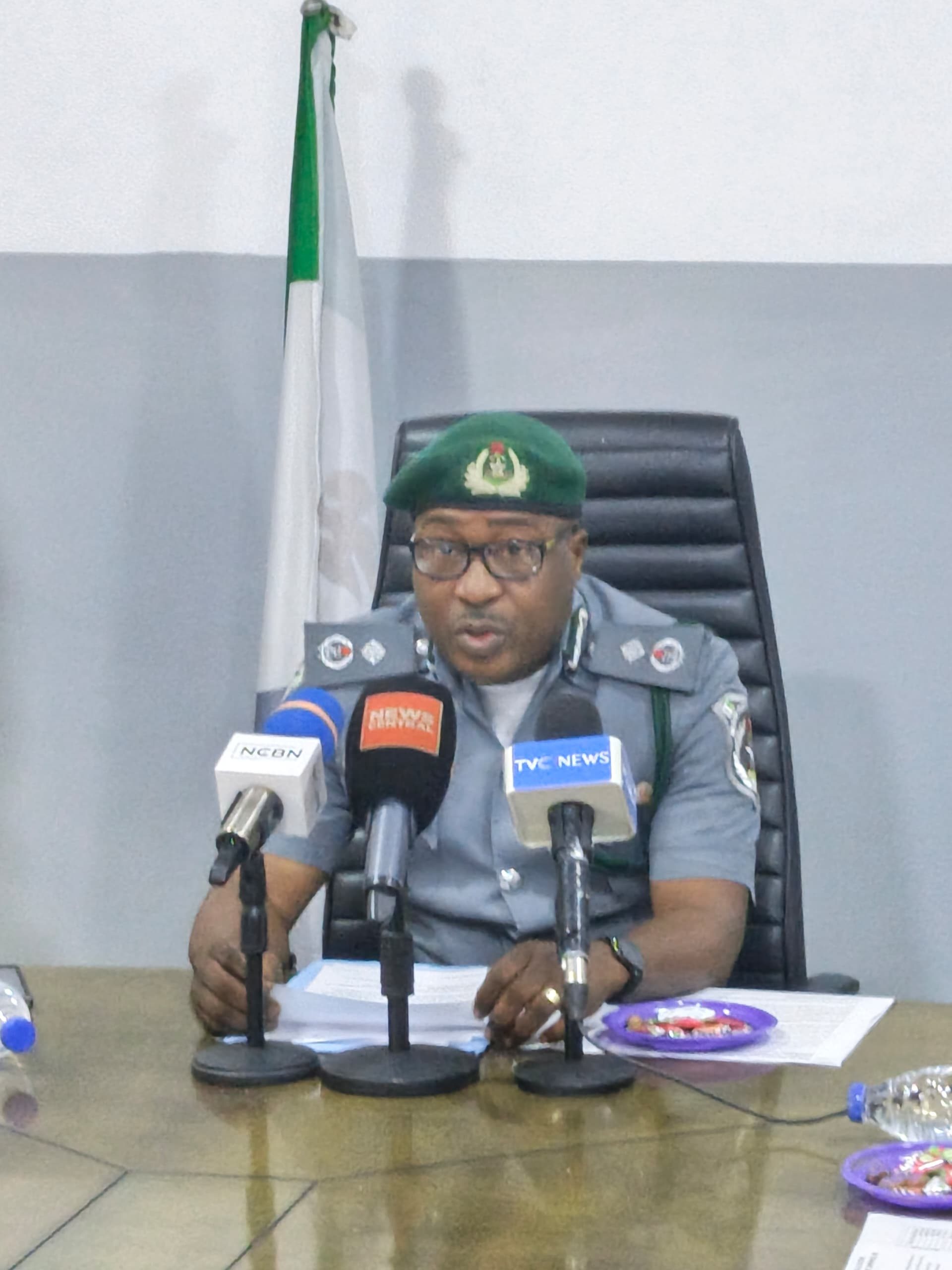
Salako disclosed the figures while briefing the media on the Command’s third-quarter performance on October 28, 2026.
A breakdown of the monthly figures showed that export value rose from $202.604 million in July 2025 to $217.526 million in July 2026, representing a 6.86 per cent increase.
In August, exports increased from $176.628 million to $297.919 million, reflecting a reported growth of 40.71 per cent, while September exports rose from $206.919 million to $237.406 million, representing a 12.84 per cent increase.
Manufactured goods drive export growth
An analysis of the sectoral performance showed that manufactured goods emerged as the leading driver of export growth, with export value increasing from $169.902 million in the third quarter of 2025 to $402.520 million in the corresponding period of 2026.
The performance underscores the growing contribution of manufactured and value-added products to Nigeria’s non-oil export earnings.
Salako said the trend reflected the Federal Government’s drive to encourage domestic processing and value addition rather than continued dependence on the export of raw commodities.
“This performance underscores the growing contribution of manufactured and value-added products to Nigeria’s non-oil export earnings,” he said.
According to the Acting Controller, the Customs Command has continued to sensitise exporters on the need to move beyond the export of raw agricultural produce and embrace processing and value-added production.
He explained that more agricultural commodities were being processed into manufactured and value-added products for export, a development that he said was contributing to the growth in manufactured goods exports and supporting greater foreign exchange repatriation into the Nigerian economy.
Agricultural exports suffer decline
Despite the overall growth in export value, agricultural exports recorded a decline, falling from $346.107 million in the third quarter of 2025 to $310.981 million in the corresponding period of 2026.
Salako, however, maintained that agriculture remained a significant component of the Command’s export portfolio.
He attributed the decline partly to the Federal Government’s increasing emphasis on processing agricultural commodities and improving their value before export.
The policy direction, he said, was intended to encourage domestic value addition, expand manufacturing activities and improve the returns Nigeria earns from its exports.
The Command, he added, would continue to engage exporters and provide guidance on compliance with government policies aimed at strengthening the country’s non-oil export base.
Solid minerals exports plunge
Solid minerals exports recorded the steepest decline among the major export categories, falling from $62.271 million in the third quarter of 2025 to $6.487 million in the same period of 2026.
Salako attributed the sharp drop to government policies discouraging the export of unprocessed solid minerals and requiring greater processing and conversion into derivatives before export.
He also cited efforts to curb illegal mining activities, particularly those involving foreign operators, as another factor contributing to the decline.
The Acting Controller said the Command would continue engaging stakeholders in the solid minerals sector to better understand operational challenges and support legitimate export activities within the framework of existing government policies.
In contrast, exports classified under the other-products category increased from $7.870 million to $32.863 million during the period under review, reflecting improved performance.
Export container throughput rises
Beyond the increase in export value, the Command recorded significant growth in export container throughput.
The number of export containers processed rose from 10,987 in the third quarter of 2025 to 16,345 in the corresponding period of 2026, an increase of 5,358 containers.
The growth points to increased cargo movement through the facility and an expansion in the volume of export transactions handled during the quarter.
The Command also reported increases in export-related collections.
According to Salako, the 2.5 per cent re-export surcharge increased by ₦90.019 million, while the Nigerian Export Supervision Scheme (NESS) charges rose by ₦517.923 million during the period.
He said the increase in collections highlighted the importance of efficient cargo processing, accurate documentation and compliance with established Customs procedures in supporting legitimate trade.
Customs pledges faster processing, stronger compliance
Salako commended compliant exporters, licensed Customs agents, export processing terminals, relevant government agencies and other stakeholders for their cooperation and commitment to the export process.
He said the Command would sustain its support for legitimate trade through improved trade facilitation, timely dissemination of relevant information and consistent enforcement of applicable Customs regulations.
“The Command will continue to support legitimate trade through effective trade facilitation, timely dissemination of relevant information and consistent application of extant rules and regulations. At the same time, we will sustain our commitment to enforcing compliance with all applicable Customs laws and government policies,” he said.
Looking ahead, the Acting Controller said the Command would intensify efforts to sustain export growth through faster and more efficient cargo processing, stakeholder engagement, advocacy and the effective deployment of the Unified Customs Management System (UCMS), also known as B’Odogwu.
He said the system continued to support Customs operations and trade facilitation by improving the management of export transactions.
The Command would also leverage World Customs Organization (WCO) trade facilitation instruments, including the Time Release Study (TRS), where applicable, to identify operational bottlenecks and improve efficiency.
Salako said the third-quarter performance demonstrated the potential of manufactured and value-added products to strengthen Nigeria’s non-oil export base, even as the declines in agricultural and solid minerals exports highlighted the need to address sector-specific challenges.
“Our commitment remains to facilitate legitimate trade, strengthen compliance, enhance revenue collection and contribute meaningfully to the growth of Nigeria’s non-oil economy,” he said.

 Headlines2 months ago
Oyetola presents three-year score card as blue economy industry revenue hits ₦1.83trn

 Customs2 months ago
Apapa Customs sets new single-day revenue record with ₦28.1bn collection

 Customs3 months ago
Apapa Customs sets new record of monthly revenue haul with ₦323bn collection in July
 Customs3 months ago
NCS intercepts container concealing pump-action rifle parts, seizes ₦373.8m worth of cannabis products at Tincan Port

 Customs1 month ago
FOU Zone ‘A’: Aliyu retires after ₦3.19bn revenue recovery, Afeni takes over

 Headlines3 months ago
Osun 2026:The shinning path of AMBO to electorial victory