Connect with us

Customs

Our commitment towards trade facilitation, interventions to plug revenue leakages has set Apapa Customs on comfortable trajectory to achieving N2.3 trillion 2024 revenue target—- Comptroller Olomu


Comptroller Olomu, Apapa, CAC
Funso Olojo 
The new Area Comptroller of the Apapa command of the Nigeria Customs service, Babatunde Olomu, has expressed confidence in the ability of the Command to meet its 2024 revenue target of N2. 3trillion.
Comptroller Olomu, who assumed duties at the flagship command of the service a month ago, is therefore consolidating on the achievements of his predecessor, retired Comptroller Babajide Jaiyeoba, who bowed out of the service in May, 2024.
According to Comptroller Olomu, the command, under his leadership, has embarked on a number of measures to further consolidate the achievements of his predecessor in order to take the revenue performance of the command to the next level.
Towards this, the command has set monthly, weekly and daily revenue targets for its revenue officers to energise them toward meeting the N2. 3trillion 2024 target.
It was learned that the sum of N193 billion was set as a monthly target, N44 billion as the weekly target and N8.9 billion as a daily target.
The CAC met a template for enhanced revenue collection which he is now building on.
In the first quarter of the year, before he assumed duties, the command surpassed its target for that period.
In the month of April, it generated N182 billion, in May, the revenue dropped due to some challenges as it collected N175 billion.
However, Comptroller Olomu is ambitious as he has set a target of N200 billion for the month of June.
“We are seriously working towards this target and we are confident of achieving it due to the diligence and dedication of our revenue officers who are constantly being kept on their toes by the CAC and the Headquarters” a source close to the crack revenue team of the command, whispered to our reporter.
” We have plugged a lot of revenue leakages and made a lot of interventions which keep our revenue increasing” the source declared.
” We do all these without impeding trade as we do everything to facilitate genuine transactions by compliant traders”
” We know the high propensity of an average Nigerian trader to evade duty payment.
“So we do a lot of scanning and physical examinations without necessarily compromising trade facilitation”
” Because of our diligence and thoroughness in checking declarations and consignments through the use of non-intrusive technology( scanning) and physical examinations, non-compliant traders are not comfortable.
“As a result, some of them resort to blackmail and all sorts of antics to compromise and dampen the morale of our revenue officers without success” an inside source declared.
” We raised a lot of queries on suspicious consignments but without wasting time to ensure that importers and their agents make honest declarations”
” So, a compliant trader has no reason to be apprehensive at the command”
It was also gathered that to further boost fast delivery of cargo to decongest the terminals and at the same time, reduce traffic gridlock on the port access road, Comptroller Olomu has initiated a programme that will encourage the maximum use of barges to evacuate cargo from the port.
” The CAC is desirous of encouraging the use of barges.
” To this end, he has commenced an engagement with barge operators and terminal operators to enhance the use of barges.
” In addition, he wanted to co-opt other commands at the Lagos port into the initiative” a source stated.
On the issue of alerts on cargo, the command said it was a means of flagging any cargo whose owner either wants to evade payment of duties or engage in under payment.
” A compliant trader has no cause for worry as there’s no alert without justification because an average Nigerian does not want to pay tax.
The command also clarified the issue of scanning which has evoked some negative reactions in some quarters, especially among non-compliant traders.
” It is the system that randomly selects containers meant for scanning.
” There is no way our scanning officers could influence containers that will go to the scanning site.
” This is impracticable due to the volume of containers they are supposed to scan daily which are between 150 – 200.
” There won’t be time to subject any  of such container to physical examinations given the volume of containers they are to scan each day”
“Non-instructive inspection (scanning) is the best technology we have all over the world.
” But some Nigerians are aversed to this type of technology that will not allow them to cut corners because of their high propensity to evade payment of duties” our reporter learned.
Continue Reading
Click to comment

Leave a Reply

Your email address will not be published. Required fields are marked *

Customs

Customs reviews B’Odogwu system in Lisbon, targets faster cargo clearance, higher revenue
Gloria Odion Maritime Reporter 
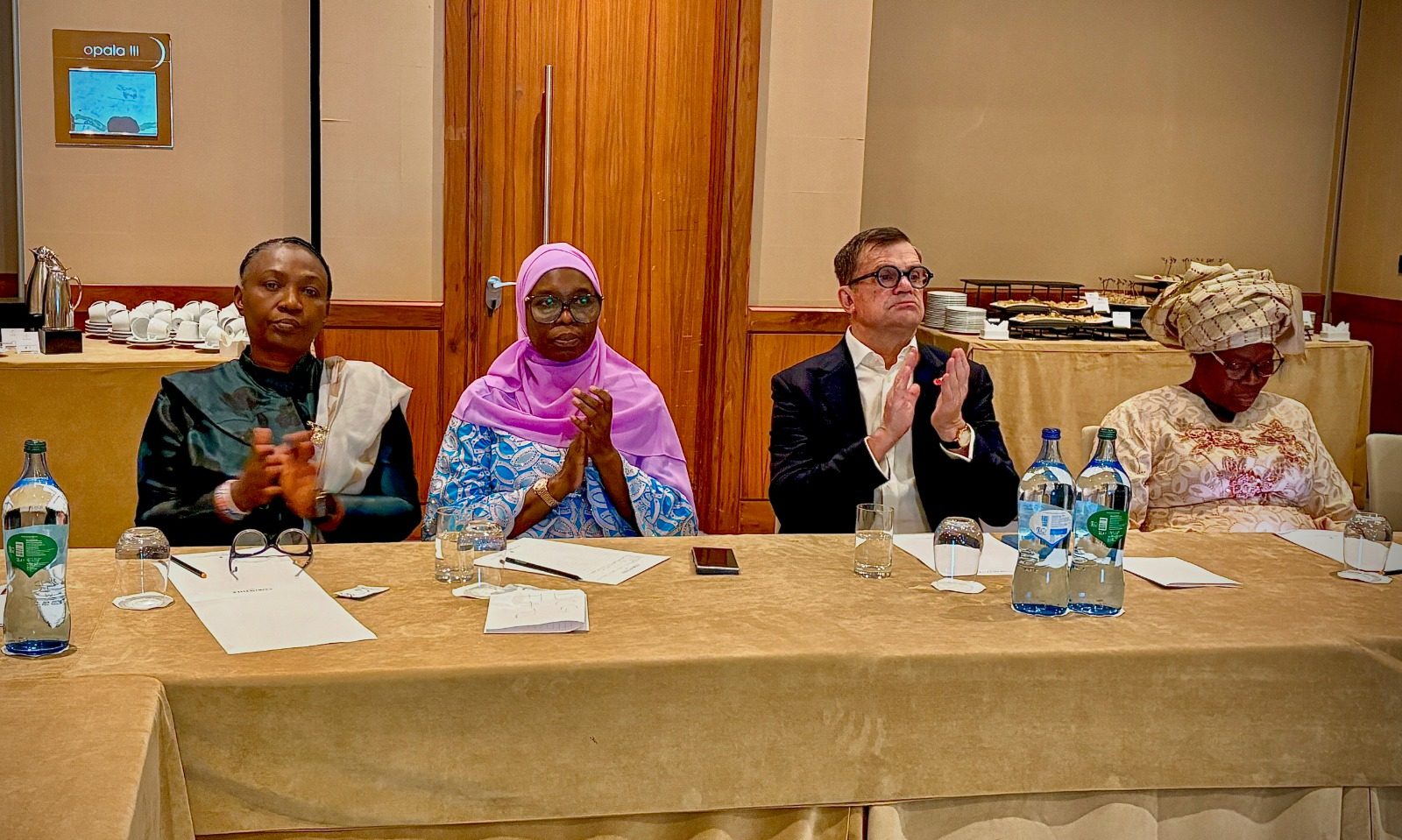
The Nigeria Customs Service (NCS) has concluded a three-day strategic review of its B’Odogwu Unified Customs Management System in Lisbon, Portugal, with a series of resolutions designed to address operational bottlenecks, accelerate cargo clearance, strengthen cargo tracking and optimise revenue collection.
The workshop, held from November 9 to 11, 2026, at the Corinthia Hotel, brought together senior NCS management and officers, Trade Modernisation Project Limited (TMPL) and CB-XP representatives to assess the system’s performance, identify implementation gaps and develop a roadmap for improving its efficiency.
The review focused on consolidating the gains recorded since the introduction of B’Odogwu while addressing technical and operational challenges affecting its deployment across Customs commands.
Speaking at the opening ceremony on November 9, the Deputy Comptroller-General of Customs in charge of ICT Modernisation, Oluyomi Adebakin, commended the Comptroller-General of Customs, Adewale Adeniyi, for his commitment to technological innovation and capacity development within the Service.
The Managing Director of TMPL, Jummai Umar-Ajijola, who represented the company’s Chairman, Saleh Ahmadu, disclosed that the B’Odogwu platform had attracted the attention of the African Continental Free Trade Area (AfCFTA) Secretariat, reflecting its growing relevance to regional trade facilitation.
She added that improvements to the system had contributed to increased revenue generation and strengthened the Customs revenue ecosystem.
Umar-Ajijola said the workshop provided an opportunity to develop a concrete roadmap for consolidating the achievements recorded over the past three years and identifying priorities for the next phase of the project.
“We are to work to find a concrete plan not only to consolidate but to build a change roadmap going forward at the assessment of the three years so far,” she said.
She also commended the NCS Public Relations Unit for its consistent communication and reporting on the project.
Among the major resolutions reached was the upgrading of the Electronic Cargo Tracking System (ECTS), alongside measures to strengthen bond and transit management, automate Customs Procedure Code approvals and streamline the processing of import, export, re-importation and transit declarations.
Participants also agreed on the need to harmonise Customs Procedure Code nomenclature to promote uniformity, operational efficiency and accountability across Customs operations.
On cargo monitoring, the workshop considered plans to integrate the upgraded ECTS with B’Odogwu and replace 200 obsolete electronic seals with 2,000 newly procured units.
The proposed improvements also include individual container tracking for applicable transit declarations, enhanced bond registration and validation processes, and tighter monitoring of bonded cargo movements to curb diversion and other transit-related infractions.
In another major area of deliberation, participants examined the proposed integration of B’Odogwu with the Nigeria Export Processing Zones Authority (NEPZA), as well as improvements to the Transire Processing System.
The workshop further identified the need to upgrade the platform’s reporting dashboard, search filters and Harmonised System (HS) Code search functionality to make information retrieval and transaction monitoring more efficient.
Other proposed enhancements include providing access to previously processed declarations, improving the monitoring of procedure code applications, introducing system alerts to reduce processing errors and incorporating Time Release Study requirements into the platform.
The resolutions also addressed operational procedures, with participants reviewing Standard Operating Procedures (SOPs) for Bond Management, Transire Commands and Export Commands to ensure conformity with the Nigeria Customs Service Act 2023.
To strengthen project governance and prevent unauthorised system changes, the workshop resolved that all requests for modifications to B’Odogwu must undergo review and receive approval from the Officer in Charge of the Project Management Office before deployment.
Participants also reviewed the project’s communication plan, emphasising the importance of stronger engagement with stakeholders to ensure effective implementation and wider acceptance of the system.
At the closing ceremony on November 11, the Deputy Comptroller-General of Customs in charge of Finance, Administration and Technical Services (FATS), Kikelomo Adeola, stressed the importance of translating the workshop’s resolutions into measurable operational improvements.
The closing session featured a presentation by the Customs Area Controller, Comptroller Murtala Mu’azu, while the Chairman of CB-XP, Edward Bowen, delivered goodwill remarks.
To ensure effective implementation, specific responsibilities were assigned to relevant NCS and TMPL units, with the expectation that the agreed technical and operational interventions would translate into improved system performance.
The Lisbon review marks another phase in the NCS’s efforts to strengthen digital Customs administration through B’Odogwu, with the ultimate objective of reducing cargo clearance delays, improving transparency, tightening cargo monitoring and enhancing revenue optimisation.
Continue Reading

Customs

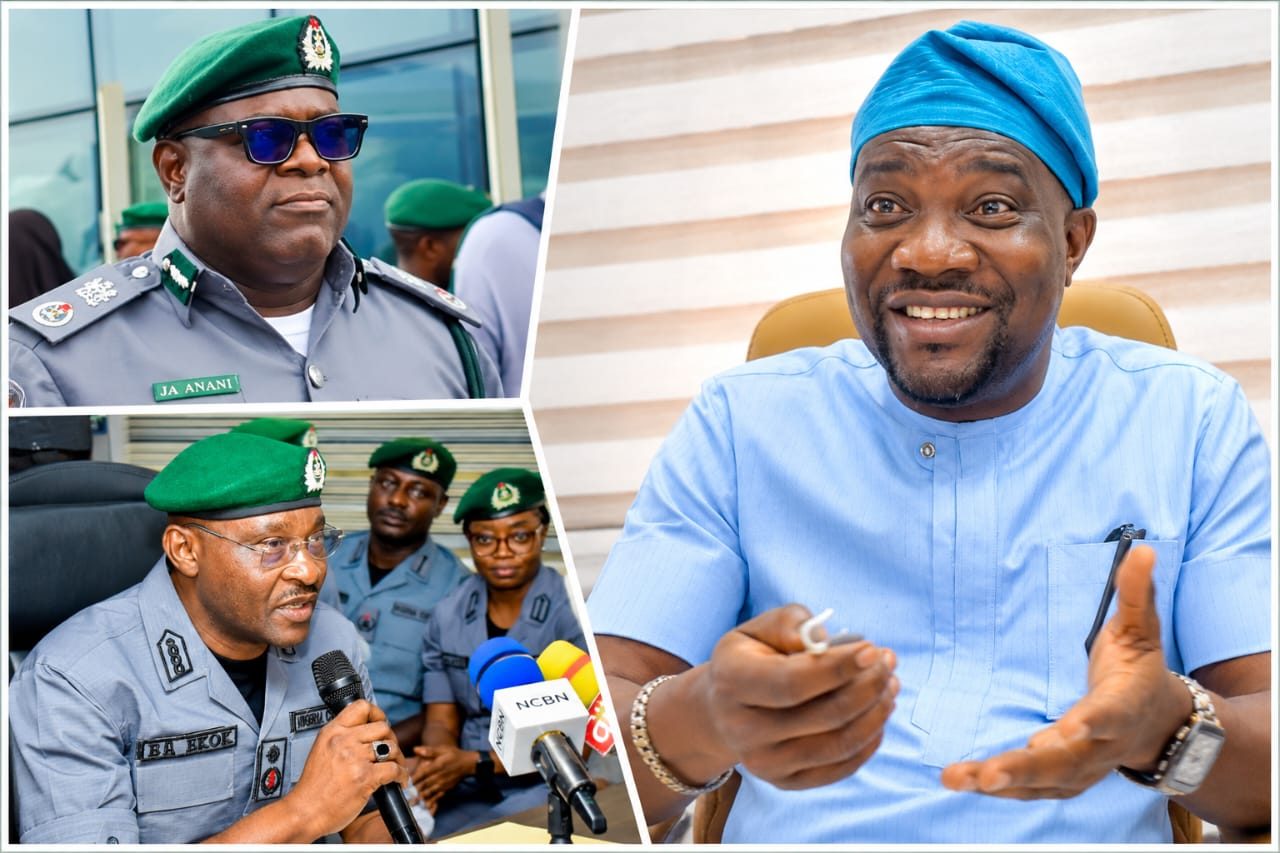
Cole congratulates Anani on promotion, welcomes Ekok as new Tin Can Customs Controller
Gloria Odion, Maritme Reporter

The Chairman of the Tin Can Island Chapter of the Association of Nigeria Licensed Customs Agents (ANLCA), Prince Olawale Cole, has congratulated the immediate past Customs Area Controller of Tin Can Island Port Command, Assistant Comptroller-General (ACG) Joseph Anani, on his promotion to the rank of Assistant Comptroller-General, while welcoming Deputy Comptroller Emmanuel Agbor Ekok as the new Acting Customs Area Controller of the command.

Cole described Anani’s elevation as a well-deserved recognition of his dedication, professionalism and contributions to the Nigeria Customs Service (NCS), noting that his tenure at Tin Can Island was characterised by cordial stakeholder relations and constructive engagement with port operators.

In a congratulatory message, the ANLCA chairman commended the newly promoted ACG for his accessible leadership style, openness to dialogue and willingness to engage licensed customs agents on issues affecting port operations and trade facilitation.

He said Anani’s commitment to stakeholder collaboration helped foster mutual understanding and cooperation between Customs officers and licensed customs agents, creating an enabling atmosphere for addressing operational challenges at the port.

Cole expressed confidence that Anani’s wealth of experience and professional expertise would continue to benefit the Nigeria Customs Service and the wider maritime industry in his new capacity.

He wished the former Tin Can Customs Controller success in his elevated position, describing his promotion as a source of pride to stakeholders who had worked with him during his tenure at the command.

The ANLCA chairman also congratulated Deputy Comptroller Emmanuel Agbor Ekok on his assumption of office as Acting Customs Area Controller of Tin Can Island Port Command, expressing optimism that his administration would consolidate existing stakeholder relationships and further improve operational efficiency.

Cole assured the new Acting Controller of the chapter’s readiness to sustain a productive working relationship with the command, particularly in advancing efficient port operations, facilitating legitimate trade and addressing challenges confronting customs agents and other port stakeholders.

He emphasised that effective collaboration between the Nigeria Customs Service and licensed customs agents remained essential to achieving faster cargo clearance, improving revenue generation and creating a more business-friendly port environment.

Cole urged Ekok to sustain regular consultations with stakeholders and maintain an open-door policy, especially in resolving operational concerns relating to cargo examination, customs valuation, documentation and clearance procedures.

He expressed the hope that the new Acting Controller would build on the achievements of his predecessor while introducing initiatives to strengthen stakeholder confidence, promote transparency and improve service delivery.

Cole reaffirmed the Tin Can Island Chapter of ANLCA’s commitment to supporting policies and initiatives that promote professionalism, trade facilitation, efficient port operations and the overall development of Nigeria’s maritime sector.

Continue Reading

Customs

Seme Customs intercepts live olive ridley sea turtle, reaffirms commitment to combating wildlife trafficking
Gloria Odion, Maritme Reporter 

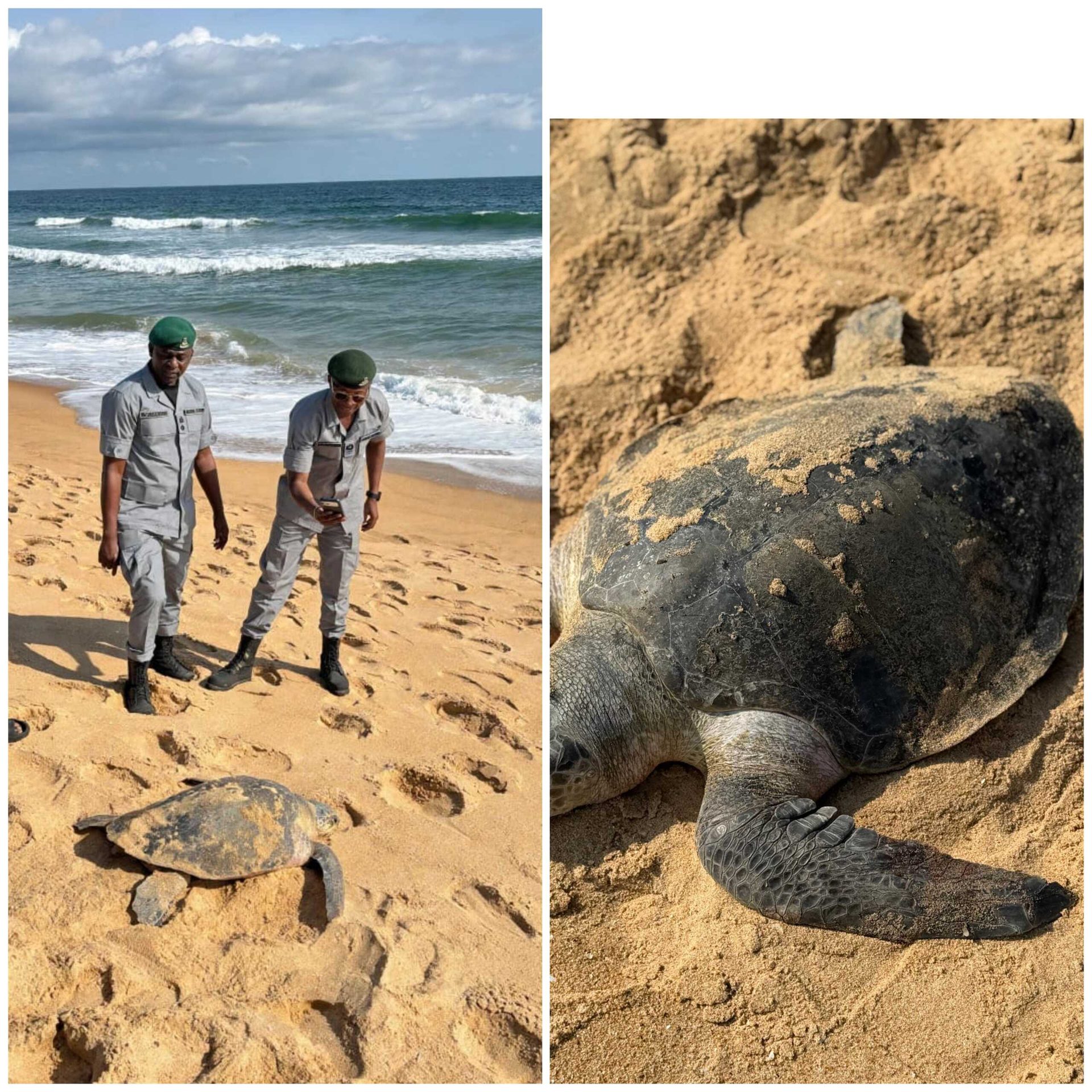
The Nigeria Customs Service (NCS), Seme Area Command, has recorded another significant achievement in its ongoing efforts to combat smuggling and protect endangered wildlife following the interception of a live Olive Ridley Sea Turtle along the Nigeria-Benin border.

The interception was made on Thursday, November 12, 2026, at about 10:30 p.m., during a routine patrol by officers along a footpath linking Nigeria and the Republic of Benin.

According to the Command, officers on patrol sighted a suspicious individual carrying a sack.

On noticing the approaching officers, the individual abandoned the sack and fled into a nearby bush, escaping arrest despite efforts by the patrol team to apprehend him.

A search of the abandoned sack led to the discovery of a live Pacific Ridley Sea Turtle, also known as the Olive Ridley Sea Turtle (Lepidochelys olivacea), concealed inside.

The animal was immediately rescued and placed in safe custody before being handed over to the appropriate wildlife authorities for professional care, rehabilitation and eventual release into its natural habitat in accordance with established conservation procedures.

Wildlife trafficking remains a major form of transnational organised crime, posing serious threats to biodiversity, ecological balance and environmental sustainability.

Sea turtles, particularly the Olive Ridley species, face increasing threats from illegal exploitation and trafficking for their meat, eggs, shells, traditional medicine and the exotic pet trade.

Such activities continue to undermine conservation efforts and threaten the survival of vulnerable wildlife species.

The Nigeria Customs Service recognises wildlife trafficking as a serious environmental offence and remains committed to supporting national and international efforts aimed at protecting endangered species and preserving the country’s natural heritage.

Nigeria is a signatory to the Convention on International Trade in Endangered Species of Wild Fauna and Flora (CITES), adopted in 1973 to ensure that international trade in wild animals and plants does not threaten their survival.

The country domesticated the Convention through the Endangered Species (Control of International Trade and Traffic) Act, Cap E9, Laws of the Federation of Nigeria, 2004, which prohibits unauthorised hunting, capture, possession, trade, importation and exportation of protected species.

Similarly, the Nigeria Customs Service Act, 2023, empowers the Service to enforce relevant laws and regulations governing international trade, including measures against smuggling and the illicit movement of endangered wildlife across the nation’s borders.

Speaking on the interception, the Acting Customs Area Controller, Seme Area Command, Deputy Comptroller of Customs Norman Olisah Alumanah, reaffirmed the Command’s determination to tackle wildlife trafficking and other forms of illegal cross-border activities.

He described the successful interception as a reflection of the vigilance, discipline and professionalism of officers, stressing that the Service would not allow Nigeria’s borders to become safe corridors for the illegal exploitation and trafficking of protected wildlife.

Alumanah expressed appreciation to the Comptroller-General of Customs, Bashir Adewale Adeniyi, PhD, MFR, DSM, fnipr, fniia, psc+, and the Management of the Service for providing the Command with improved logistics and operational equipment to strengthen its enforcement capacity.

He also called on residents of border communities and other stakeholders to support the Service with credible and timely information, emphasising that the fight against wildlife trafficking requires collective commitment and cooperation.

The Acting Controller warned smugglers, poachers and their collaborators to desist from activities capable of endangering wildlife and violating conservation laws.

He further disclosed that the Command had intensified patrols, surveillance and intelligence-gathering operations across its area of responsibility to prevent the illegal movement of prohibited goods and protected species.

He added that the Command would complement its enforcement activities with increased stakeholder engagement, public education and sensitisation on the importance of endangered species, their role in maintaining ecological balance and the legal consequences of their unauthorised exploitation and trade.

The Nigeria Customs Service, Seme Area Command, reiterated its commitment to its statutory responsibilities of revenue generation, suppression of smuggling, trade facilitation and border security, while strengthening its contribution to environmental protection and the preservation of Nigeria’s biodiversity for present and future generations.

Continue Reading

Trending