Connect with us

Headlines

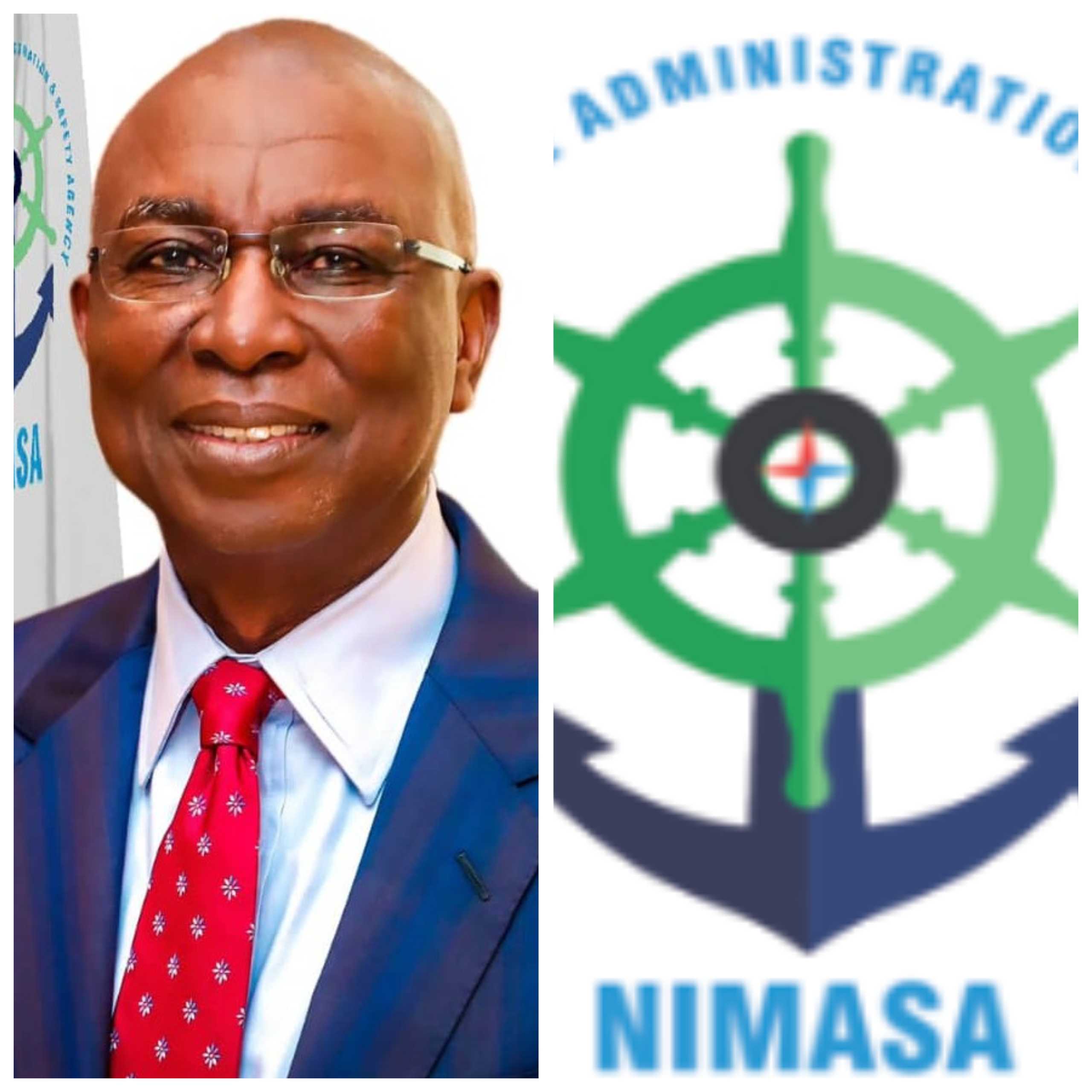
My interest is to ensure whoever succeeds me would not destroy the legacy we have built over the years– Adewale Adeyanju.

In 2017, Prince Adewale Adeyanju Waheed  was first elected as the President – General of the Maritime Workers Union of Nigeria (MWUN) and was returned unopposed in March 2021, the first ever PG to enjoy such rare privilege.
By March 2025, he would have completed 8 momentous years of effective leadership as the number one maritime worker in the Nigeria’s maritime industry.
Those years the stakeholders unanimously agreed heralded peace and  industrial harmony in the maritime industry.
Those years which stakeholders, in the years to come, will look back at with nostalgia as years that were clear departure from the tenures of his predecessors which were characterised by thuggery, violence, industrial unrest and blood shed.
On Monday January 6th, 2025, Prince Adeyanju, the outgoing and indefatigable PG, MWUN ,spoke to FUNSO OLOJO in his office where he revealed his unique  style of leadership that has endeared him to the leaders and the led.
He disclosed what he has done differently that has enthroned discipline in the union, peace and industrial harmony in the port industry.
He also spoke about his legacy of negotiations rather than confrontation which he prayed his successor preserves.
He however concluded that he has a strong succession plan that will ensure the emergence of who will consolidate on his achievements as the next President -General of the union.
It is a must read

 By March, 2025, you would have spent years as the President- General of the Maritime Workers Union of Nigeria (MWUN). 

Those years are generally regarded as peaceful marked by industrial harmony in the maritime industry which was a clear departure from years of thuggery and industrial crises that was the hallmark of tenure of your predecessors.
What did you do differently?
 If you have a father who trained you, you will be a good child and perform excellently on behalf of the father.
You know this industry is sensitive and peculiar and global in nature .
Over the years, I have worked with trusted and tested union leaders in the industry under whom I cut my teeth as a unionist.
I have worked with Chief Ogunleye who was the first President of the Dockworkers branch of the union.
He trained us in so many ways.
Also,if you have an employer who believes in management and unionism, it is better for you.
I am going to leave a vibrant union, a union that believes in negotiations, a union that believes in working with the management, protecting the interests of workers and not selling the rights of workers before the management.
We believe in open dialogue where you put all the options on the table so that we will be able to convince our members on the true position of things without any compromise or deceit.
Unlike in those days whenever elections were coming, there would be tension, thuggery and violence.
But not now. As you can see, three months to the elections, every where is peaceful. No gunshot, no thuggery.
That is the legacy of peace and tranquility we are leaving behind.
I have learnt the rope from the successive leadership of the union.
I was a defence minister under Irabor and  Tony Nted both the former PG of the union and now as the PG, I rose through the ranks.
Tony was the PG while I was the President of the Dockworkers branch . I was the Treasurer when Irabor emerged as PG in 2001.
Even, when Ukammuna was the President of Dockworkers before he eventually became the PG, I was an Operation manager in the Port.
This has put me in good stead  and given me enough experience to study the dynamics of the politics of the MWUN.
I have understood the complexity of the union and its members to be able to forge a synergy between the union and the employers that has now resulted to the industrial harmony we have now.
I didn’t just become PG by default.I came prepared for it.
These experiences really helped me to manage the union and restore sanity and order at the Ports.
I don’t believe in shutting down the port which is an essential part of the Nigeria’s economy, second only to oil and gas in terms of revenue and disrupting the activities of such important sector will hurt the economy.
Yes, strike is the weapon of any union leader but it should be the last resort when all negotiations failed.
Even at that, it has to be applied with wisdom.
In our own case, in order to avoid shutting down the port, we issue ultimatum which is a warning, a kind of awareness  for the employers, government and employees.
If they cannot meet the first ultimatum, we issue another one while negotiations continue.
By this method, you avoid  disruption of operations at the ports which is not healthy to the economy.
That is just part of the wisdom we applied that enthroned peace and industrial harmony we enjoy at the ports today.
Also, I have a vibrant executives who are from all our four branches such as NPA, Dockworkers, seafarers and Shipping branches.
They believed in my leadership style and keyed into my vision of negotiations and reconciliation to enthrone industrial harmony.
And as a leader, you must be disciplined, transparent, humble, approachable, proactive and sensitive to the welfare of members.
You must also run an interactive and open administration devoid of deceit and the one that inspires confidence in those you are leading.
Don’t disconnect with your workers, tell them the truth, don’t lie to them.
Those are part of the qualities they see in us that make them believed in our leadership which makes it easy to pursue our vision of peace and industrial harmony.
This has helped the system and it has also helped me.
I give God the glory.
The major cause of friction between the workers and management is the issue of welfare.
More often than not, negotiations break down and some union leaders resort to strike, especially when dealing with recalcitrant employers.
Have you met with such difficult employers in the cause of your negotiations for better welfare of your members?
They are many.
Then how do you bend them to agree to your terms of negotiations without any crisis?
It’s God. When you know your job and what you are doing.
There is no way you will not face those challenges but at the end of the day, you will still prevail.
But you give time for me to win, time for me to lose.
It is win win situation.
If you won today, I prepare for you next time.
So it helps. You can’t be rigid all the time by saying you must get what you want by all means. It is not done like that if you want peace.
I also believe that it is the employer who do not value his employees that deny them what rightfully belongs to them.
If one terminal is shut down today, it will affect the economy of the country.
So it’s give and take. You win some, you lose some.
Some of them are funny, they will tell you they will give you this but not this.
Ok, give me what you have and when next we are coming, you know we are coming to collect the remaining ones you didn’t give us the other time.
That was how we do it that makes us to achieve peace and industrial harmony.
How do you often calm down your members whenever their demands are not met or fully met.
A. We tell them the true situation of this, what we met and we ask for their opinions.
The workers too have their opinions, let them be part of the negotiations, let them make inputs. Let them speak out their mind.
I connect with my members, I engage them in open discussions at meetings held regularly to feel their pulse.
I will ask them if I make mistakes,they should tell me.
A leader should not be too big or bossy to be corrected.
I run an all inclusive administration that involves the participation of every one, from the leaders to the led.
 By March, this year, you would have put in 8 years of hard work when you build a union that is disciplined, peaceful and devoid of violence.
Now that you are leaving, are you not scared that a person who does not share your vision of peace and industrial harmony may emerge as the next PG of the union 
The person who handed over to me was not scared, so am not scared about who is likely to succeed me.
However, I should know who will succeed me.
I should be interested in who succeeds me. A good leader must have a good succession plan.
I must ensure that whoever wants to succeeds me would not destroy the legacy we have built over the years.
A legacy of peace, industrial harmony and sanity.
He must be the one who will not drag the ports into violence, who will not introduce tribalism, who will not introduce thuggery and someone who will not sell the birth rights of workers on the negotiation table.
The person should not be arrogant, he should be humble to the employers and members. He should be the one that will respect the constituted authority.
I should know who is coming.
I pray the person who succeeds me will perform.
We would give the necessary guidance to ensure the suitable candidate emerges as the next PG of the union.
 What happens if the person who possesses all these leadership qualities you want to succeeds you is not popular
How can I bring a person who is not popular?
I am popular, so the person too will be popular.
I will not impose anyone who is not popular or doesn’t know the job.
It is one thing to become PG , it is another thing to have the capacity to manage the four branches of the union.
The person must be ready to work because he is taking over from a workaholic.
We have transformed the union into a global brand, as the Vice president, global, executive board member , worldwide, Chairman, Africa, ITF and the Vice President of NLC.
We can beat our chest and say we have done well.
So whoever wants to succeeds me should possess the requisite capacity and competence to lead a global brand as Maritime Workers Union of Nigeria.
I won’t support any candidate again the others, we are all family members but we must ensure that the right person who will preserve the legacies we have built over the years emerges as the next PG.
Also, I shall be available to offer guidance and advice when necessary.
Am aware that some of them have indicated interest to become the next PG, they are all presentable but we know who is qualified to become the next PG, according to our constitution.
We learnt that eight people have come out to contest for the headship of the Union.
Who do you think is most suitable among them.
 It is only one of them who can become the next PG, the rest can go for Deputy PG, Treasurer and the like.
We have 12 elective offices in the union.
However, we are organized body.
We have our tradition of negotiations and compromise to ensure suitable candidates emerge from the for unions for all the 12 elective positions, including the PG.
But if anyone doesn’t want the special arrangement through which we negotiate the positions and decides to go to the poll, so be it.
We leave the person to go and test his popularity at the poll.
So there wouldn’t be imposition but the founding fathers of the union will speak.
 Do you have anointed candidate among those jostling to succeed you?
 We are unionists. We have our tradition as I have told you.
I can’t say whether I have anointed candidate or not but I must have a successor.
About the anointed, let God speak to me concerning that.
I am neutral as a father to study the situation.
But when it is time for us to sit down as a family, them we can speak.
As it is now, let them be playing their game.
But what is sacrosanct, what is my major concern is that whoever emerges as my successor should preserve my legacy which is the prayer of any leader.
I pray that whoever emerges will do better than me.
 What is your most challenging period during your tenure as the PG?
The most challenging time for me is when we had crisis with our former PG, Chief Ukammuna.
Several years when his tenure was cut short by government and Irabor took over, he still held that grudge against all his successors, including me to the extent that when I was to take over as the the PG in 2017, hell was let loose.
I believe it was his lieutenants who were manipulating himself to forment trouble.
For 23 years after he left unceremoniously, he was still bitter.
However, my happiest day was when he came to the Secretariat and we struck a truce. We were able to resolve the age- long rift and there was a reconciliation.
We have forgiven ourselves and become one large family.
 After the PG of MWUN, what next 
God takes care of that. He will direct me. He has always been my mentor.
Are you planning to become the President of the NLC now that you are the Vice President.
Let’s wait for His time
However, after my tenure as the PG, am still in the Port industry. I am a stakeholder and am still the VP of NLC, VP of ITF.
I only step down as PG of MWUN because my tenure expires in March.
I have an international office as the ITF VP, African Chairman, Executive member, ITF.
So am still around and busy.
Last Word
I want to thank the maritime press who have contributed to the success of my administration as the PG of the Maritime Workers Union of Nigeria.
I thank all other stakeholders for their support.
I want to say that our election doesn’t require external forces unlike the way it was before.
We have our mechanism we apply for the conference.
It is going to be a peaceful quadrennial Delegate conference devoid of crisis.
But we shall notify the government.
 Whoever wants to bring out what we have buried would be handed over to the authority to face the full wrath of the law.
Let me assure all the industry stakeholders that the elections will not bring crisis.
Whoever wants to bring trouble, we shall trouble them.
It is going to be a family election that will usher in the next executives that will build on our legacy of peace and industrial harmony.
Continue Reading
Click to comment

Leave a Reply

Your email address will not be published. Required fields are marked *

Customs

KLT Customs reaffirms commitment to stronger maritime stakeholder engagement

Deputy Comptroller Bolaji Adigun

Gloria Odion, Maritime reporter

‎The Acting Customs Area Controller (CAC) of the Kirikiri Lighter Terminal (KLT) Area Command of the Nigeria Customs Service (NCS), Deputy Comptroller Bolaji Adigun, has reaffirmed the Command’s commitment to deepening engagement with stakeholders across the maritime industry in line with efforts to promote trade facilitation, transparency, and sustainable economic growth.

‎Adigun gave the assurance through the Deputy Comptroller in charge of Administration, Comptroller T.A. Jonah, who represented him during a courtesy visit by the newly elected Executive Committee of the Maritime Reporters Association of Nigeria (MARAN) to the Command in Lagos.

‎The Acting CAC, who was unavoidably absent, underscored the importance of sustained collaboration between the Nigeria Customs Service and key industry stakeholders, particularly the maritime media, in advancing the Service’s mandate and supporting national economic development.

‎He described the media as a critical partner in disseminating information on government policies, customs reforms, trade facilitation initiatives, revenue generation, and anti-smuggling operations.

‎According to him, maritime journalists occupy a strategic position in shaping public understanding and perception of activities within the port and maritime sector, stressing the need for professionalism, accuracy, and balanced reportage in the discharge of their duties.

‎Adigun further assured the MARAN delegation that the KLT Area Command would continue to operate an open-door policy while fostering cordial and productive relationships with stakeholders within the maritime community.

‎Earlier in his remarks, the President of MARAN, Mr. Oluyinka Onigbinde, stated that the visit formed part of the association’s ongoing stakeholder engagement initiative following the inauguration of its newly elected executive committee.

‎Onigbinde explained that the purpose of the visit was to formally introduce the new leadership of the association to the Command and strengthen the longstanding relationship between MARAN and the Nigeria Customs Service.

‎He commended the KLT Area Command for its contributions to trade facilitation, revenue generation, and enforcement activities, describing the Command as a vital component of Customs operations within Nigeria’s port system.

‎The MARAN President also reaffirmed the association’s commitment to professional, objective, and development-driven journalism, noting that maritime reporters play a significant role in promoting informed discourse on issues affecting the industry.

‎He further assured the Command of MARAN’s continued support for initiatives aimed at enhancing efficiency, transparency, and competitiveness within Nigeria’s maritime sector through responsible and factual reporting.

Continue Reading

Headlines

One infant, three adults die, several others sustain injuries in fatal train derailment along Warri- Itakpe route 

Funso OLOJO,  Editor 
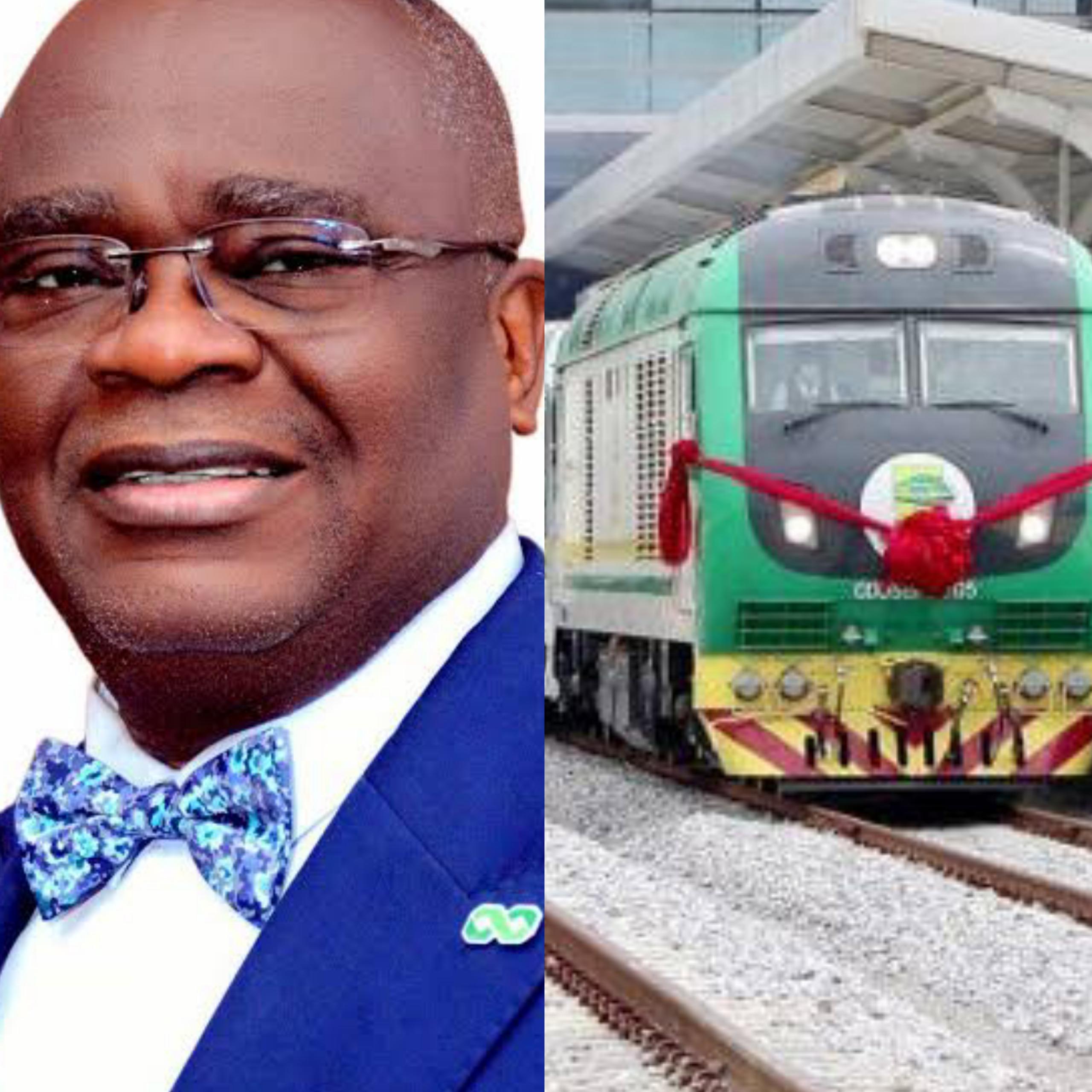
The Nigerian Railway Corporation (NRC) has confirmed the death of four passengers in a train derailment along the Warri–Itakpe Train Service (WITS) corridor near Agbor, Delta State on Monday, June 8th, 2026.
Several others suffered various degrees of injuries.
In a statement by the Ministry of Transportation  and signed by its Permanent Secretary, Engr. Funsho Adebiyi, the victims included two female adults, one male adult and one infant.
The accident involved four coaches which reportedly capsized while one coach derailed, resulting in the unfortunate loss of four lives.
The statement confirmed that a total of 442 passengers were booked on the train, while 40 crew members, security personnel, and third-party service providers were also on board, bringing the total number of persons on the train to 482.
The NRC had activated immediate rescue and evacuation operations with the support of the Delta State Government, NEMA, FRSC, the Police, Civil Defence, local authorities, security agencies, and other emergency responders, and were completed by 6:30 p.m on Monday .
The Injured passengers were evacuated to medical facilities in Agbor for treatment.
 Other notable individuals on board included the Senator representing Delta Central Senatorial District, Senator Ede Dafinone, and former Delta State Secretary to the State Government, Hon. Patrick Ukah, among others.
As of the time of this release, 24 serious injuries have been recorded, while several other passengers sustained varying degrees of injuries and are receiving medical attention.
One NRC staff member suffered a traumatic limb injury and is currently receiving treatment and is reported to be in stable condition.
“The Ministry and the NRC extend their deepest condolences to the families of the deceased and pray for the quick recovery of all those injured.
“The Corporation also appreciates the swift intervention of the Delta State Government, emergency responders, security agencies, the NRC Mechanical Directorate, the Special Rescue and Emergency Team, medical personnel, and members of the public who assisted in the rescue efforts” the statement declared.
The ministry said full onboard manifest has been retrieved and will be made available upon request by the relevant authorities while efforts are ongoing to identify all the injured and deceased persons for proper documentation.
The Ministry in conjunction with the NRC have commenced a full investigation into the cause of the accident while efforts will continue to account for all passengers and provide the necessary support to those affected.
Continue Reading

Commentaries

Why Nigeria must prioritize competency development and standards to harness gains of  blue economy

Funso OLOJO,  Editor 
Nigeria is endowed with vast maritime resources which offer enormous opportunities for economic growth, employment generation, food security, and environmental sustainability.
With its fabled over 850 kilometers of coastline, extensive inland waterways, and strategic access to the Gulf of Guinea, the country is naturally blessed to emerge as a hub for maritime activities in Africa.
However , taking advantage of these huge massive maritime opportunities should be the priority of Nigerian government which must be intentional on developing competency level of its Maritime professionals and raise their
adherence to international standards.
The blue economy encompasses diverse sectors including shipping, fisheries, aquaculture, marine tourism, offshore energy, maritime logistics, shipbuilding, and marine environmental management.
 These sectors are highly knowledge-driven and require a workforce equipped with specialized skills and globally recognized certifications.
Without competent professionals, Nigeria risks losing economic opportunities to countries with better-trained maritime personnel and stronger institutional frameworks.
Competency development is essential for enhancing productivity, safety, and operational efficiency across the maritime sector.
Skilled seafarers, marine engineers, port operators, logistics professionals, and environmental experts are critical to ensuring that maritime activities meet international best practices.
 As global shipping and offshore industries become increasingly technology-driven, continuous training and capacity building are necessary to keep Nigerian professionals competitive in the international labour market.
Skilled maritime professionals such as seafarers, marine engineers and allied personnel in the sector could be sources of foreign exchange earnings for Nigeria as they could be exported to the international community.
Philippines and India are the world’s top exporters of skilled maritime personnel such as seafarers where they get the chunk of their foreign exchange.
If Nigeria could develop such capacity in skilled labourers in the sector and export their expertise, the country could harvest bountifully from such venture.
Equally important is the adoption and enforcement of internationally recognized standards.
Standards provide the framework for quality assurance, safety management, environmental protection, and operational excellence.
Compliance with global maritime standards established by organizations such as the International Maritime Organization(IMO) and the Nautical Institute enhances Nigeria’s credibility as a maritime nation and attracts foreign investment.
Investors and international partners are more likely to engage with institutions and businesses that demonstrate compliance with recognized benchmarks.
That is why the recent certification of the Maritime Centre of Excellence operated by NLNG Shipping and Marine Services Limited by the  UK Nautical Institute is germaine to Nigeria’s quest to develop training capacity and build compliance with standard procedures
This feat also underscores the importance of world-class training institutions in building local capacity.
That is why the  government should give necessary assistance to training institutions in Nigeria such as Maritime Academy of Nigeria(MAN),  Oron and the Maritime Centre of Excellence operated by NLNG Shipping and Marine Services Limited.
Such government patronage and assistance will not only improve the quality of maritime training in Nigeria but also position the country as a regional centre  for maritime education and professional development.
Prioritizing competency development and standards will also contribute significantly to maritime safety and environmental sustainability.
Well-trained personnel are better equipped to prevent accidents, manage maritime risks, and respond effectively to emergencies.
 Furthermore, adherence to environmental standards helps reduce marine pollution, protect biodiversity, and ensure the sustainable utilization of ocean resources, which are fundamental pillars of the blue economy.
From an economic perspective, a competent workforce and strong standards framework can increase Nigeria’s participation in global maritime trade, create high-value jobs, reduce dependence on foreign expertise, and improve the country’s competitiveness.
 It also supports local content development by enabling Nigerian professionals and companies to meet the requirements of international contracts and projects.
In conclusion, competency development and standards are not optional components of Nigeria’s blue economy strategy; they are foundational requirements for its success.
 By investing in human capital, strengthening training institutions, and enforcing internationally accepted standards, Nigeria can fully harness the immense potential of its maritime resources and transform the blue economy into a major driver of national development, economic diversification, and sustainable growth.
Continue Reading

Trending