Headlines
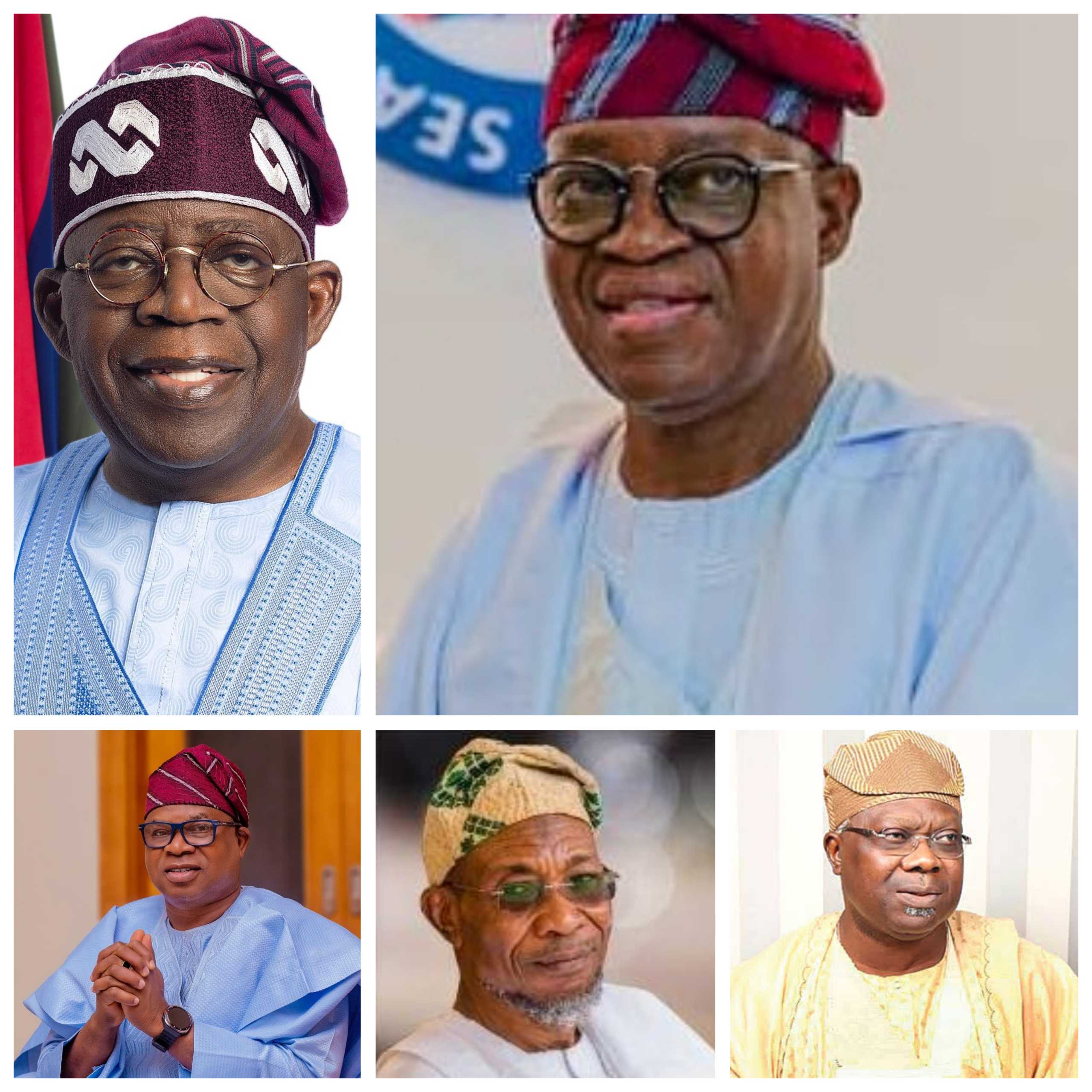
Osun election: How Oyebamiji lost to Osun APC internal power struggle
Funso Olojo, Editor
The defeat of Asiwaju Munirudeen Bola Oyebamiji in the August 15th, 2026 Osun governorship election may ultimately be remembered as more than a failure at the ballot box.
It was, in many respects, the latest chapter in the long-running struggle for control, influence and political direction within the Osun State chapter of the All Progressives Congress (APC).
Oyebamiji fought a formidable campaign and came within striking distance of Governor Ademola Adeleke.
But when the votes were finally counted, Adeleke emerged with 511,067 votes against Oyebamiji’s 444,815, winning by 66,252 votes and taking 19 of the state’s 30 local government areas, while the APC candidate won 11.
For a party that entered the contest determined to reclaim Osun, the result raises a painful question: Did the APC lose the election at the polling booths—or did it lose vital ground much earlier, in the battles within its own ranks?
The evidence suggests that the answer is a combination of both.
The ghost of 2022
The greatest weakness of Osun APC has always been its inability to completely bury its internal wars.
The party’s 2022 experience remains instructive. The feud between the camps associated with former Governor Gboyega Oyetola and former Governor Rauf Aregbesola fractured the APC before the election.
Political analysts subsequently identified the division within the party as one of the factors that contributed to Oyetola’s defeat by Adeleke.
Four years later, the APC entered another election under the shadow of unresolved factional relationships.
This time, the principal fault lines included the longstanding rivalry involving Oyetola and former deputy governor and former APC National Secretary, Iyiola Omisore.
By mid-2026, the party was still making efforts to reconcile the two camps. A peace meeting reportedly brokered by former APC National Chairman Bisi Akande was held to resolve the lingering rift between Omisore and Oyetola.
That fact alone was significant.
A political party preparing for a major governorship election should ideally be discussing how to defeat its opponent, mobilise voters and sell its candidate.
Instead, substantial political energy was still being expended on reconciling influential actors within the party.
Oyebamiji inherited a fractured and divided house. Oyebamiji himself was not necessarily the cause of the crisis.
Indeed, he emerged as the APC’s consensus candidate after an internal process in which he was widely regarded as acceptable across several political interests within the party.
His candidacy therefore offered the APC an opportunity to put its factional history behind it.
But choosing a consensus candidate and building a genuinely united political machine around him are two different things.
The APC needed all its major blocs to translate their individual structures into one coordinated campaign organisation.
The challenge was not simply getting party leaders to appear together at rallies. It was ensuring that their supporters, ward leaders, local government structures and grassroots networks were equally committed to the same candidate.
That is where the war within became electorally consequential.
The Omisore question
Few issues illustrated the APC’s internal dilemma more clearly than the place of Omisore in the campaign.
Omisore remained an important political figure in Osun APC, but reports of defections by some of his associates raised questions about the extent of his influence and whether the party had successfully integrated all its competing tendencies ahead of the election.
In June, THISDAY reported the resignation of Kolawole Ismaila, described as one of the strong pillars in Omisore’s camp.
Other reports similarly documented defections and resignations from the APC as the election approached.
For an opposition party trying to unseat an incumbent, every prominent defection mattered—not necessarily because one politician alone could determine an election, but because defections could signal deeper dissatisfaction among networks of ward leaders, local organisers and grassroots loyalists.
The danger was that the APC could appear united at the top while remaining fragmented below.
A party fighting yesterday’s battles
The deeper problem was structural.
Osun APC spent years fighting over who controlled the party, who should determine its leadership and which political tendency should dominate its affairs.
That history did not disappear merely because the party selected Oyebamiji.
Indeed, earlier in 2026, THISDAY described the Osun APC as a party “fighting itself”, with its internal disagreement becoming a major political issue ahead of the election.
The irony is striking.
Oyebamiji was campaigning to reclaim the Government House from Adeleke, but the APC itself had not completely resolved the struggle for ownership of the political house.
That distinction matters in Nigerian elections, where victory is often determined not only by the popularity of a candidate but by the efficiency of the party’s grassroots machinery.
Adeleke exploited what APC left unresolved
While the APC wrestled with internal cohesion, Adeleke had an important advantage: incumbency and an established grassroots political structure.
The election ultimately became a battle between a governor seeking another term and an opposition candidate attempting to build a coalition broad enough to remove him.
Oyebamiji ran a competitive race. But defeating an incumbent in Osun required more than an attractive candidate and federal backing.
It required an exceptionally disciplined statewide machine.
The APC had federal visibility and national political weight. But Adeleke had the advantage of incumbency, local visibility and a political family whose influence remains deeply rooted in Osun politics.
The result showed the limits of federal political leverage when it is not matched by complete grassroots cohesion.
The numbers tell the story
The final figures make the defeat difficult to dismiss as a narrow accident.
Adeleke’s 511,067 votes represented a substantial statewide mobilisation.
Oyebamiji’s 444,815 votes were also significant and demonstrated that the APC remained a powerful force in Osun.
But the 66,252-vote gap was large enough to show that the APC still had considerable work to do before it could translate its strength into victory.
The geographical spread was equally revealing.
Adeleke carried 19 LGAs, while Oyebamiji won 11.
The APC was therefore not annihilated. It was beaten by an incumbent who was able to assemble a broader electoral coalition.
That distinction is important because it means the APC’s defeat was not simply a rejection of Oyebamiji.
Rather, the result suggests that the party had the capacity to compete but failed to convert that capacity into the winning coalition required to capture the state.
The lesson from 2022 was not fully learned.
Perhaps the most disturbing aspect of the defeat is that the warning signs had been visible.
In 2022, the APC lost the governorship amid bitter internal divisions. Analysts explicitly linked the party’s internal crisis to its electoral setback.
In 2026, the party again entered an election with questions about internal cohesion.
There were even public calls from within the party for unity.
In May, APC chieftain Olatunbosun Oyintiloye said unity among party members was crucial to securing victory in the August 15 election.
That warning now looks prophetic.
The party apparently understood the problem. What it struggled to achieve was a sufficiently deep and lasting solution.
It would be unfair to blame everything on the APC crisis.
Yet attributing Oyebamiji’s defeat entirely to internal APC politics would be too simplistic.
Elections are multidimensional.
Adeleke’s performance as incumbent mattered. His campaign strategy mattered. His political network mattered.
Voter perceptions of the state government mattered. The candidates’ individual appeal mattered. Local political calculations mattered.
The election was also fought in an environment characterised by intense political competition, defections, court battles, accusations and counter-accusations.
There was also the presence of the ADC’s Najeem Salam, who competed for the same broad political space and potentially affected the distribution of opposition votes.
Therefore, the APC’s internal crisis should be seen not as the only reason for defeat, but as a force that weakened the party’s ability to maximise its other advantages.
The painful irony of the campaign
Perhaps the greatest irony is that Oyebamiji had entered the race as a unifying figure.
His emergence was meant to provide the APC with a candidate around whom the different tendencies could rally.
He was not carrying the baggage of the old political wars in the same way as some of the party’s older combatants.
But a candidate can only unite a party to the extent that the party’s leaders are prepared to subordinate personal ambitions to collective victory.
That appears to have been the central challenge.
The APC needed its leaders to make Oyebamiji’s victory bigger than their individual political calculations.
The result suggests that the process was incomplete.The real loser may be the old APC structure.
Oyebamiji has lost the governorship election, but the larger question concerns the future of Osun APC.
The party remains competitive. Its candidate secured 444,815 votes—an impressive figure that shows the APC cannot be dismissed in Osun politics.
But the defeat has exposed a fundamental weakness. The APC cannot continue to approach every governorship election as another contest between old factions.
If the party wants to win in Osun in the January Presidential election and other future elections, it must move from factional politics to institutional politics.
That means building a party structure in which ward leaders matter as much as political godfathers; where defeated aspirants genuinely work for the candidate; where former office holders do not operate parallel structures; and where reconciliation happens months before an election—not weeks before polling day.
Oyebamiji’s defeat is therefore a warning.
The APC’s problem in Osun is not a shortage of politicians.
It is a shortage of political cohesion.
The party has influential personalities, experienced former governors, ministers, senators, former national officers and a large grassroots base.
Yet these assets become liabilities when they are deployed in competing directions.
The August 15 election has once again demonstrated a brutal rule of Nigerian politics: A divided opposition can have the better candidate and still lose to an incumbent.
Oyebamiji came close. But close was not enough.
Adeleke’s 511,067 votes against Oyebamiji’s 444,815 have now written another chapter in Osun’s political history.
For the APC, the message from the electorate is unmistakable.
The party cannot keep fighting yesterday’s battles and expect to win tomorrow’s election.
If Osun APC fails to settle its internal wars, rebuild trust among its factions and create a genuinely united grassroots structure, the defeat of Oyebamiji may not be remembered as an isolated electoral setback.
It could become a pattern.
And that would make the real casualty of the August 15 election not Bola Oyebamiji alone but the APC’s unfinished struggle to become a truly united political force in Osun.

Headlines
Oyetola pledges Independent port regulation as he unveils NPERA Act, Logo in Lagos
– directs transition committee as FG targets balanced modernisation of ports nationwide
Funso OLOJO with Gloria Odion
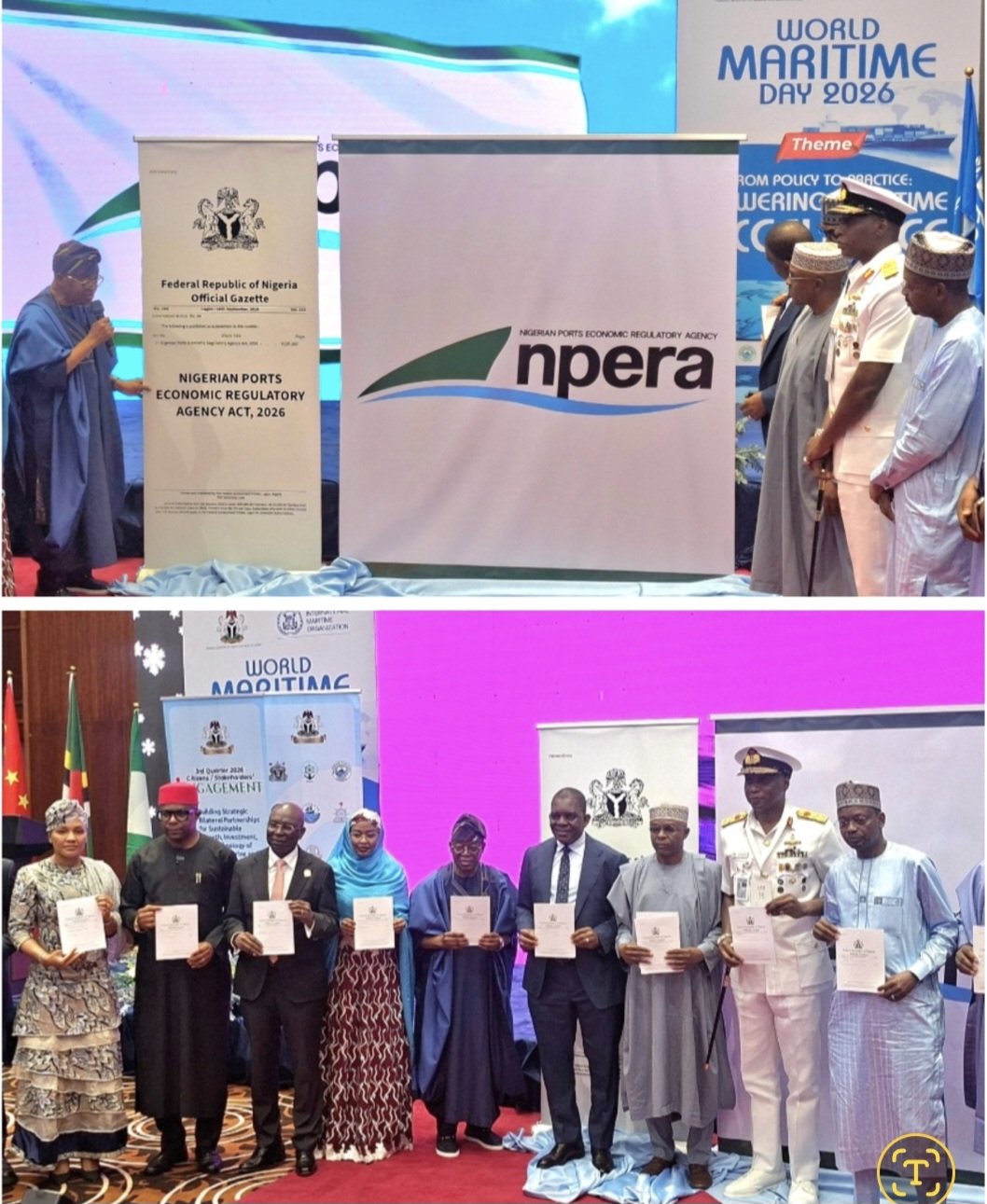
The Minister of Marine and Blue Economy, Adegboyega Oyetola, has unveiled the gazetted Nigeria Ports Economic Regulatory Agency (NPERA) Act, 2026, alongside the agency’s official logo, signalling the Federal Government’s move to establish a substantive framework for economic regulation of Nigeria’s port industry.
Oyetola, who made the announcement on Friday, October 16th,2026 at the Third Quarter 2026 Citizens’ and Stakeholders’ Engagement of the Federal Ministry of Marine and Blue Economy in Victoria Island, Lagos, said the new regulatory framework would strengthen investor confidence, promote fair competition and improve the global competitiveness of Nigerian ports.
The development follows President Bola Ahmed Tinubu’s assent to the NPERA Act in June 2026, bringing nearly two decades of efforts to institutionalise port economic regulation closer to fruition.
Speaking at the engagement, themed “Building Strategic Bilateral Partnerships for Sustainable Growth, Investment, and Technology of Nigeria’s Marine and Blue Economy,” the minister disclosed that he had directed the immediate constitution of a ministerial committee to oversee the transition of the Nigerian Shippers’ Council, which has served as the interim port economic regulator since 2014, into the new agency.
Under the new framework, NPERA will regulate port tariffs and charges, promote competition, enforce service standards, resolve commercial disputes and protect the interests of port users.
Oyetola stressed that the effectiveness of the agency would depend largely on its independence, impartiality and ability to discharge its statutory responsibilities without conflicts of interest.
“The credibility of an economic regulator rests, in no small measure, on its independence, impartiality and freedom from responsibilities that could give rise to actual or perceived conflicts of interest,” he said.
He therefore directed the agency to operate as an impartial arbiter, insulated from competing regulatory and operational responsibilities.
The establishment of NPERA is expected to provide a more structured framework for addressing commercial disputes, improving transparency in port pricing and strengthening accountability across the maritime value chain.
Beyond regulatory reforms, Oyetola reaffirmed the Federal Government’s commitment to modernising ports across the country, stressing that the programme would not be concentrated in Lagos at the expense of other maritime gateways.
He identified Apapa, Tin Can Island, Onne, Rivers, Delta and Calabar ports among the facilities earmarked for modernisation, describing balanced port development as essential to expanding trade opportunities and stimulating economic activities across Nigeria.
“No part of our national port system will be left behind in this modernisation programme,” the minister declared.
He emphasised that ports outside Lagos remained critical to Nigeria’s economic future and would play important roles in improving cargo distribution, strengthening regional trade and reducing pressure on the country’s busiest maritime gateways.
Oyetola also disclosed that the Federal Government had approved the development of six deep seaport projects at Ibom, Bakassi, Agge, Gateway, Ondo and Bonny.
According to him, the proposed projects are intended to expand the country’s maritime capacity, improve logistics infrastructure and strengthen Nigeria’s position as a regional shipping and trade hub.
The projects, alongside the planned modernisation of existing ports, form part of the government’s broader strategy to improve the efficiency of the maritime sector and unlock the economic potential of the nation’s coastline and inland waterways.
On maritime security, the minister said Nigeria had maintained zero piracy incidents in its territorial waters through the Deep Blue Project, describing the achievement as evidence of progress in securing the country’s maritime domain.
He also highlighted the removal, in August 2026, of the 12-year United States Coast Guard Condition of Entry imposed on vessels arriving in the United States from Nigeria.
The restriction, which had been in place since 2014, required affected vessels to comply with additional security measures before arriving at US ports.
Oyetola said its removal reflected improvements in Nigeria’s maritime security architecture and compliance with the International Ship and Port Facility Security Code.
The development is expected to ease additional security requirements previously imposed on affected vessels and support the competitiveness of Nigerian shipping and international trade.
The minister also reiterated the Federal Government’s commitment to strengthening indigenous shipping capacity through improved access to financing for qualified Nigerian shipowners.
He disclosed that he had directed the Nigerian Maritime Administration and Safety Agency (NIMASA) to work with approved Primary Lending Institutions to accelerate the processing and disbursement of the Cabotage Vessel Financing Fund (CVFF) to eligible applicants.
The fund was established to support the development of indigenous capacity in coastal and inland shipping, including the acquisition and operation of vessels by Nigerian operators.
Faster access to the fund is expected to help address financing constraints facing local shipping companies and improve their ability to participate in the maritime transport market.
Oyetola further underscored the importance of international cooperation in advancing Nigeria’s marine and blue economy, citing the country’s election into Category C of the International Maritime Organization Council in November 2025.
He also highlighted ongoing engagements with Denmark, India, Norway and the United Kingdom as part of efforts to attract investment, facilitate technology transfer and strengthen institutional capacity.
“Our approach to international cooperation is purposeful and results-oriented,” he said, adding that partnerships must strengthen local capabilities and deliver measurable, sustainable outcomes.
As part of the engagement, Denmark’s Ambassador to Nigeria, Jens Ole Bach Hansen, delivered a presentation on “Denmark’s Experience in Building a Sustainable Blue Economy: Lessons for Strategic Partnerships, Investment and Technology Transfer with Nigeria.”
The presentation provided a platform for discussions on how Nigeria could draw on international experience to develop its marine resources, attract investment and expand technology-driven opportunities across the blue economy.
The stakeholders’ engagement brought together government officials, industry leaders, development partners and other participants to deliberate on investment opportunities, regulatory reforms and strategic partnerships capable of advancing Nigeria’s maritime industry.
With the unveiling of the NPERA Act and the planned transition to a substantive port economic regulator, the Federal Government is seeking to strengthen the institutional foundations of the port sector while pursuing infrastructure modernisation, indigenous shipping development and international cooperation.
Headlines
Oyetola reiterates commitment to extend port modernisation beyond Lagos, names Onne, Warri, Calabar as beneficiaries
Funso OLOJO, Editor
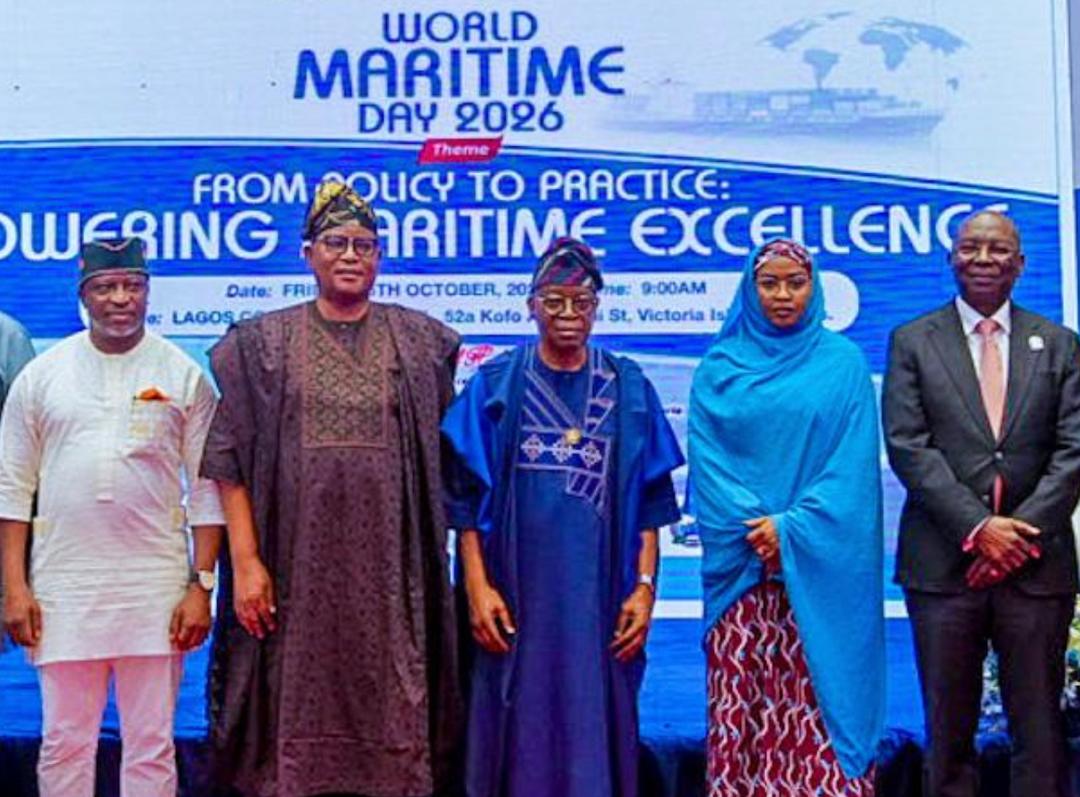
The Federal Government has reaffirmed its commitment to modernising Nigeria’s seaports outside Lagos, with Onne, Warri and Calabar among the ports earmarked for improved infrastructure and operational efficiency in a renewed drive to decentralise maritime activities and unlock the country’s blue economy potential.
The Minister of Marine and Blue Economy, Adegboyega Oyetola, gave the assurance on Friday, October 16th, 2026 at the 2026 World Maritime Day celebration held at the Lagos Continental Hotel, Victoria Island, Lagos.
He said the port modernisation drive formed a critical component of the Federal Government’s broader blue economy agenda, aimed at expanding cargo-handling capacity, improving trade efficiency and distributing maritime-driven economic opportunities more evenly across the country.
According to the minister, the programme complements ongoing efforts to modernise the Apapa and Tin Can Island ports in Lagos, while extending infrastructure development to other strategic maritime gateways.
Oyetola also reaffirmed the government’s commitment to its deep seaport development agenda, which includes proposed projects at Agge, Bakassi, Bonny, Gateway, Ibom and Ondo.
“This is a deliberate effort to expand capacity, improve efficiency and build a more balanced national network of maritime gateways,” he said.
The minister stressed that developing ports outside Lagos was essential to reducing the concentration of cargo traffic in the commercial capital, lowering transportation costs and bringing maritime services closer to businesses, manufacturers and consumers across the country.
He explained that the ministry’s broader vision was to establish an integrated transport system connecting seaports, inland dry ports and production centres through road, rail and inland waterways.
“By linking our seaports to Inland Dry Ports and production centres through an integrated multimodal network of road, rail and inland waterways, we are bringing cargo closer to producers and consumers, reducing haulage costs, easing pressure on Lagos, strengthening exports and stimulating industrial and logistics clusters across the Federation,” Oyetola said.
He further emphasised that Nigeria’s maritime development strategy extended beyond coastal communities, highlighting the importance of inland ports and waterways in connecting businesses and production centres to domestic and international markets.
According to him, facilities such as the Onitsha and Baro ports are important to efforts to expand access to maritime transportation, improve cargo movement and stimulate economic activities in the hinterland.
Oyetola said the government was collaborating with relevant agencies and private investors to ensure that its port development plans translated into functional infrastructure, efficient cargo-handling operations, navigable channels and reliable transport connections.
He noted that the success of port modernisation depended not only on upgrading terminals but also on improving the supporting infrastructure required to move cargo seamlessly between ports and their hinterlands.
Oyetola also highlighted the Nigerian Ports Economic Regulatory Agency Act, 2026, as a significant component of ongoing reforms to strengthen economic regulation, promote fair competition and improve service delivery across the port system.
He maintained that sustained investment in port infrastructure, supported by effective regulation and improved multimodal connectivity, would help lower logistics costs, attract private investment, boost exports and create employment opportunities across different parts of the country.
The development of additional maritime gateways is expected to provide businesses with more port options, improve access to international shipping routes and strengthen the competitiveness of Nigeria’s trade and logistics sector.
The 2026 World Maritime Day celebration attracted maritime industry leaders, heads of government agencies, lawmakers and other stakeholders to deliberate on the development of Nigeria’s maritime sector.
In a goodwill message, the Chairman of the Senate Committee on Marine Transport, Senator Wasiu Eshinlokun, called for an end to attacks on seafarers in the Strait of Hormuz, drawing attention to the security risks confronting maritime workers and the importance of protecting seafarers on international shipping routes.
Customs
FOU ‘A’ seeks stronger security synergy with sister agencies ahead of presidential elections
— as Acting Comptroller Afeni visits Police, Army, DSS, NDLEA, Immigration
Funso OLOJO, Editor
The Acting Comptroller of the Nigeria Customs Service (NCS), Federal Operations Unit (FOU), Zone ‘A’, Ikeja, Lagos, Deputy Comptroller Oladapo Olukayode Afeni, has called for stronger collaboration among security agencies to combat smuggling, cross-border crimes and other threats to national security, particularly as the country approaches another election period.
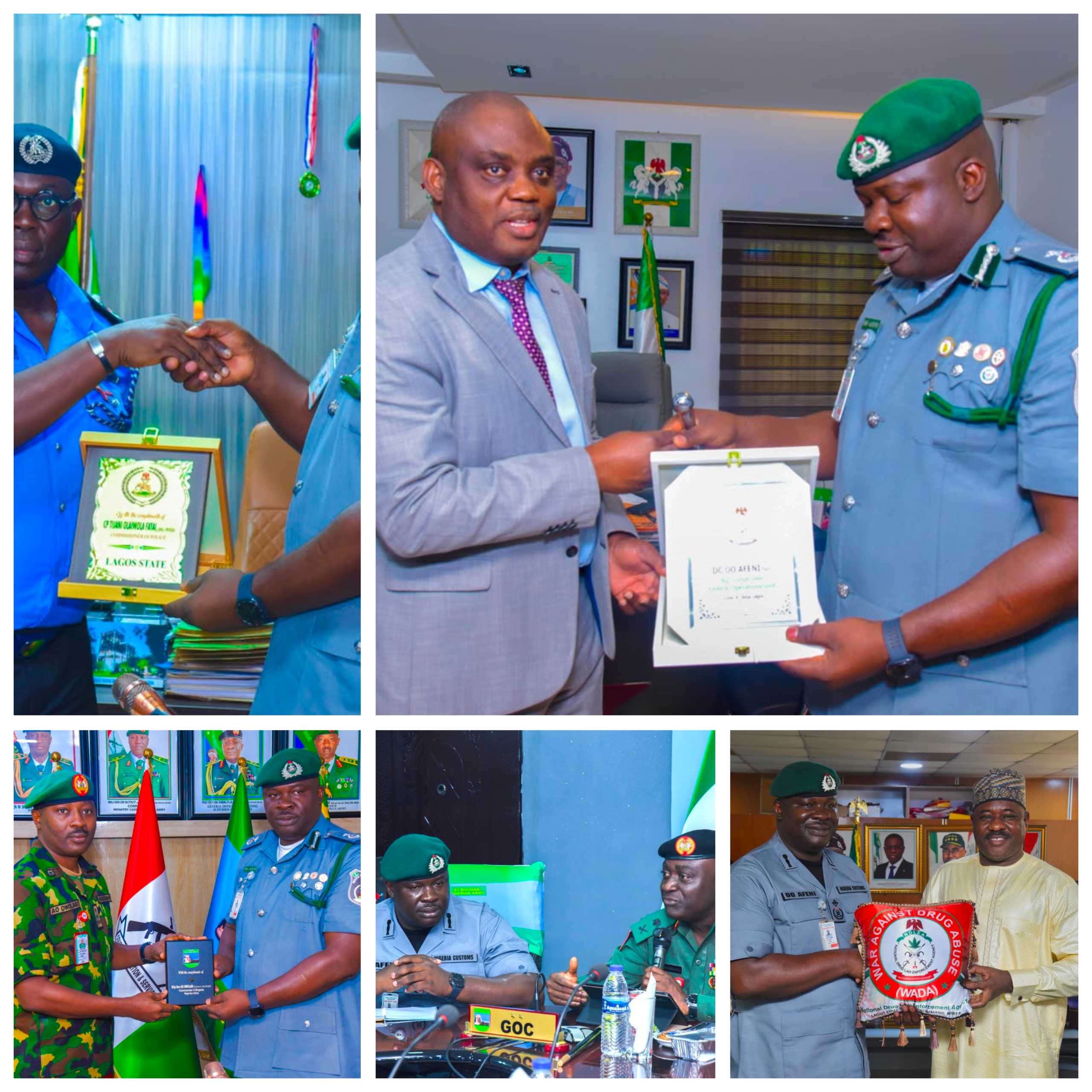
Afeni made the call during a familiarisation tour of sister security and law enforcement agencies in Lagos, which commenced on Wednesday, October 14, 2026.
The tour took him to the Lagos State Police Command Headquarters, Ikeja; the Department of State Services (DSS); Headquarters, 81 Division, Nigerian Army; the National Drug Law Enforcement Agency (NDLEA) Strategic Command; the Nigeria Immigration Service (NIS); and the 9 Brigade, Nigerian Army, Ikeja.
The visits were aimed at strengthening existing institutional relationships and identifying practical areas of cooperation in intelligence sharing, joint operations, information exchange and the enforcement of relevant laws across Lagos State and the wider operational jurisdiction of FOU Zone ‘A’.
At the Lagos State Police Command Headquarters, Afeni was received by the Commissioner of Police, CP Tijani Fatai, where he stressed the importance of coordinated security operations in preventing criminal elements from exploiting the election period to undermine public safety.
“We know that crime rates often increase as the country approaches the election period, as some people may attempt to take advantage of the period to perpetrate illicit activities capable of causing crises during the elections.
“Therefore, we are here to call for closer synergy so that these bad elements do not have their way,” he said.
The Customs chief emphasised that the responsibilities of FOU Zone ‘A’ extended beyond border protection to include collaboration with other security institutions in safeguarding national interests.
He noted that no security agency could effectively discharge its responsibilities in isolation, stressing that sustained cooperation was essential to tackling the increasingly complex nature of criminal activities.
Afeni particularly acknowledged the Nigeria Police Force’s intelligence-gathering capabilities, describing effective information sharing and coordinated operations as critical to achieving better security outcomes.
In his response, CP Fatai welcomed the visit, describing sustained engagement among security agencies as an established practice that had contributed to their operational successes over the years.
“In Lagos, we have a very strong and robust relationship with all security agencies, notwithstanding the huge population of the state,” the police commissioner said.
The Customs delegation also visited the Headquarters of the Nigerian Army’s 81 Division, where Afeni was received by the General Officer Commanding (GOC), Major General Adebayo Abdulrahman Babalola.
Babalola underscored the importance of joint operations and inter-agency cooperation in combating criminality, while cautioning against unnecessary administrative bottlenecks that could impede operational effectiveness.
The engagement highlighted the need for security institutions to streamline their operational processes, improve coordination and ensure that bureaucratic procedures do not frustrate timely responses to security threats.
Other agencies visited equally reaffirmed their commitment to sustaining cooperation with the Nigeria Customs Service in the collective effort to combat smuggling and other unlawful activities.
The familiarisation tour underscores FOU Zone ‘A’s commitment to strengthening inter-agency partnerships as a vital instrument for effective enforcement, national security and economic protection.
Beyond combating smuggling and trans-border crimes, the initiative is expected to reinforce efforts to protect government revenue, facilitate legitimate trade and safeguard Nigeria’s broader economic interests through coordinated security operations.

 Customs3 months ago
Customs releases final recruitment list for ASC II, ends nearly one-year wait for applicants
- Headlines2 months ago
Oyetola presents three-year score card as blue economy industry revenue hits ₦1.83trn
- Customs2 months ago
Apapa Customs sets new record of monthly revenue haul with ₦323bn collection in July
- Customs2 months ago
Apapa Customs sets new single-day revenue record with ₦28.1bn collection
- Customs3 months ago
Customs launches MIS file tracker at PTML in fresh digitalisation drive
- Customs2 months ago
NCS intercepts container concealing pump-action rifle parts, seizes ₦373.8m worth of cannabis products at Tincan Port